Close-ups
Framed and on the wall
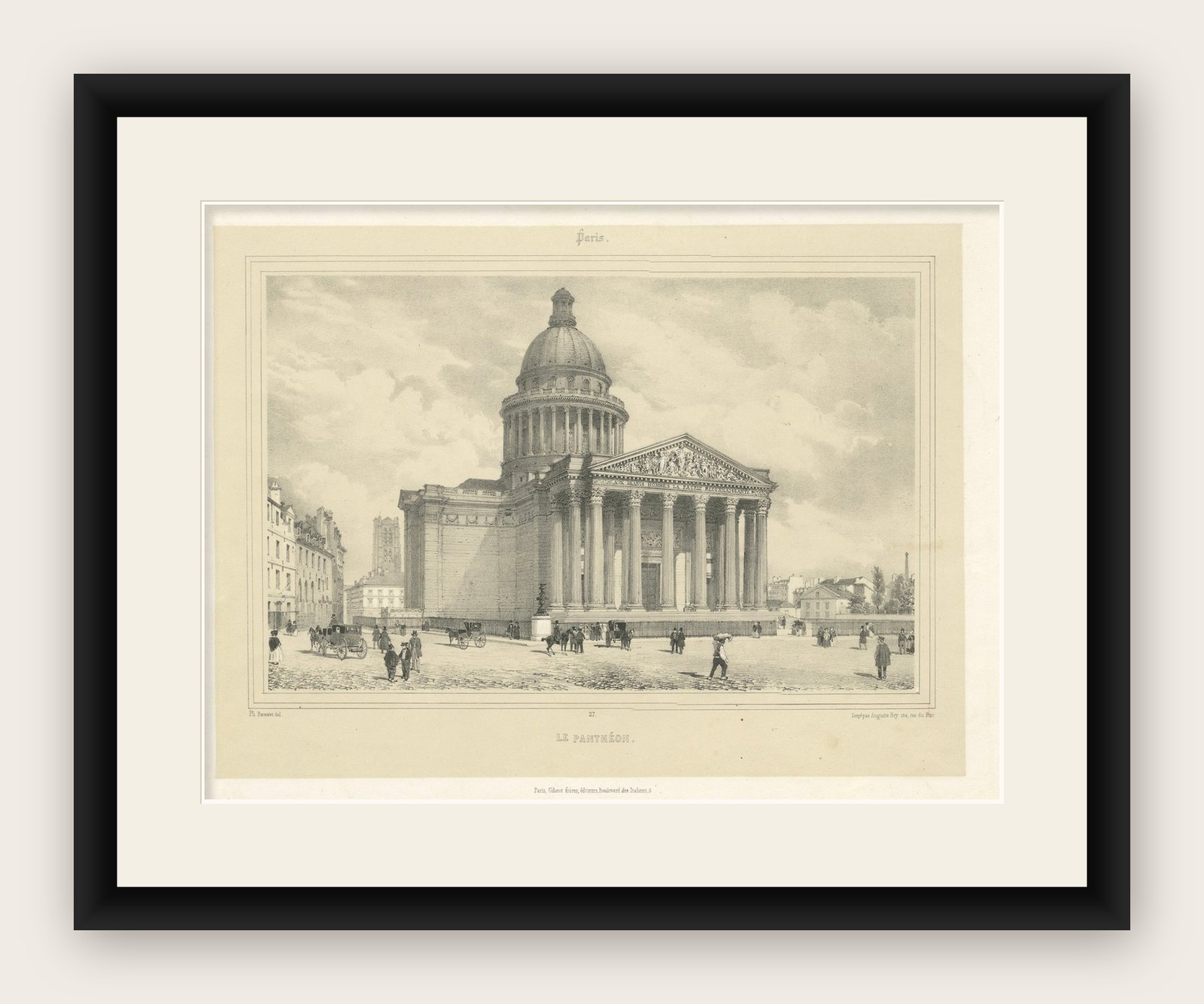

Frame and rooms are illustrations of how the print could look, drawn to its real size; it is sold unframed unless the description says otherwise.
Bridges & monuments
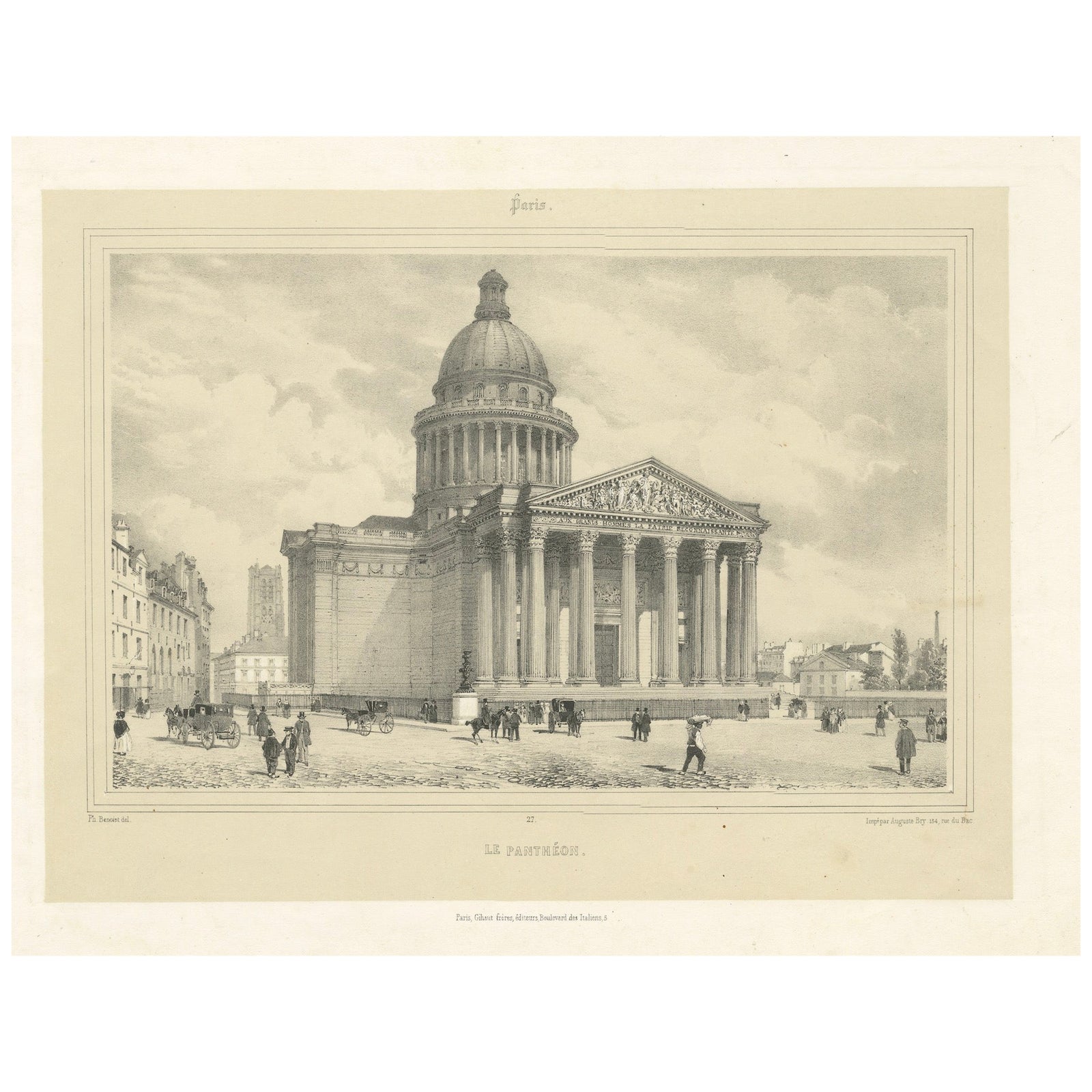
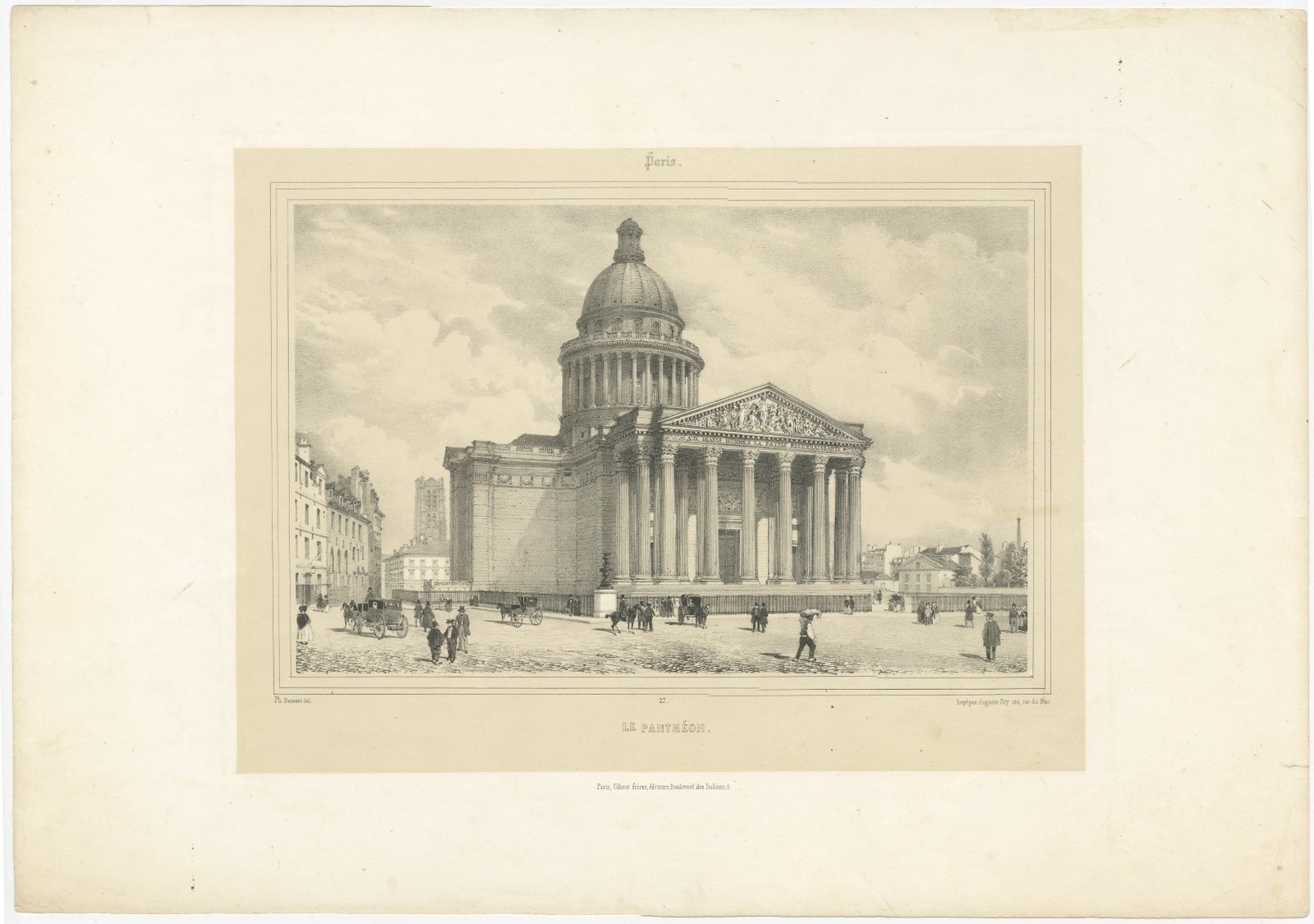
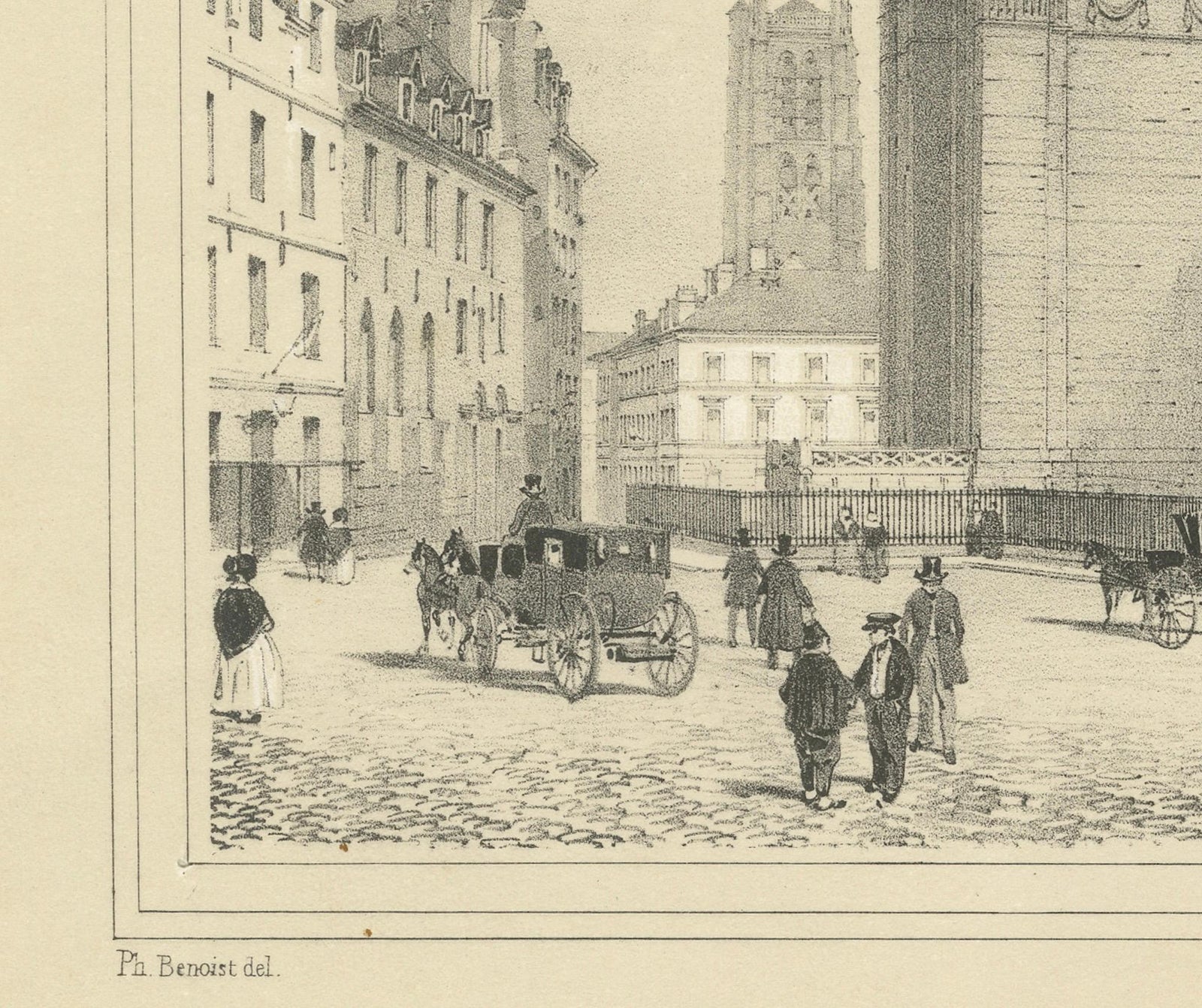
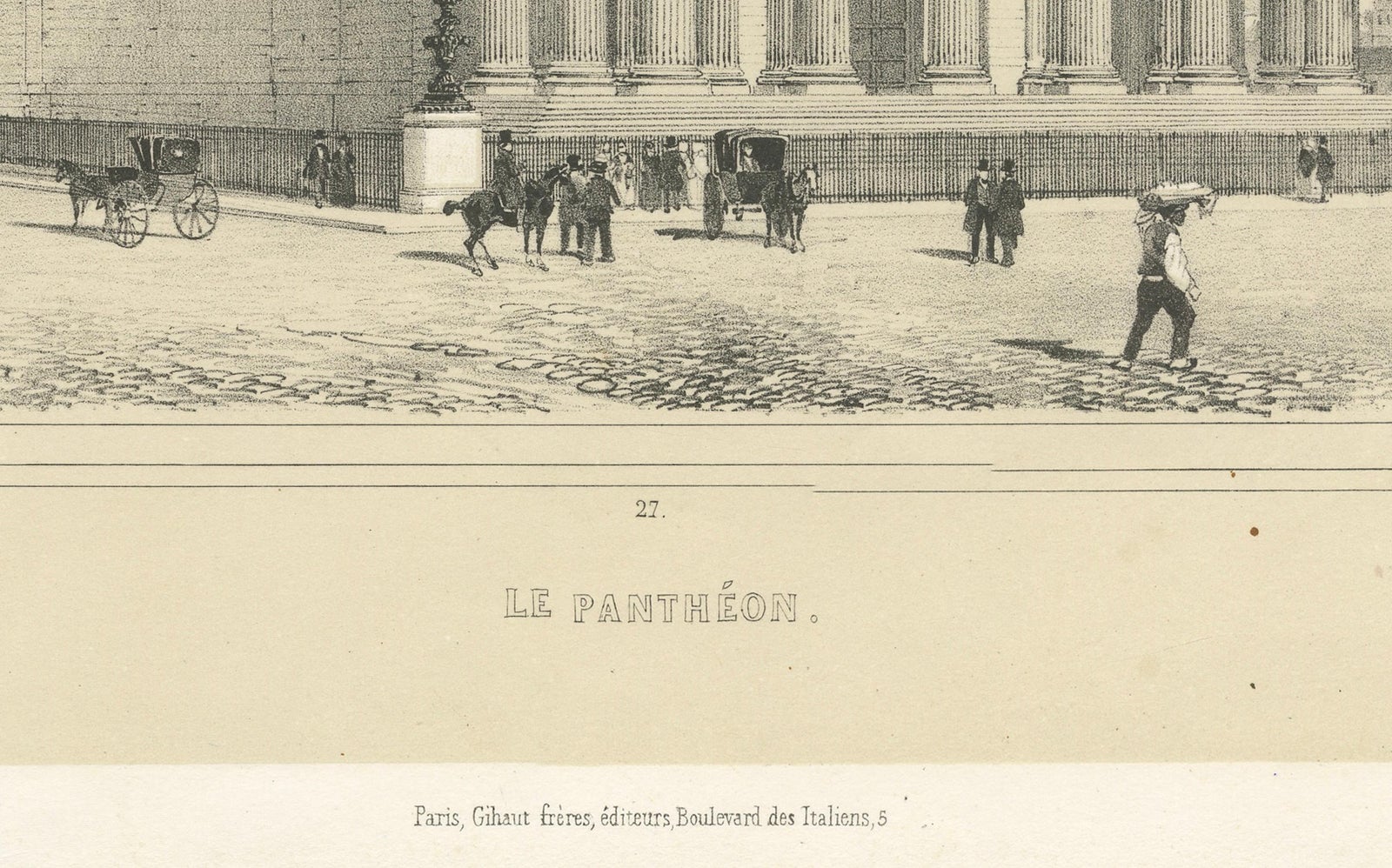
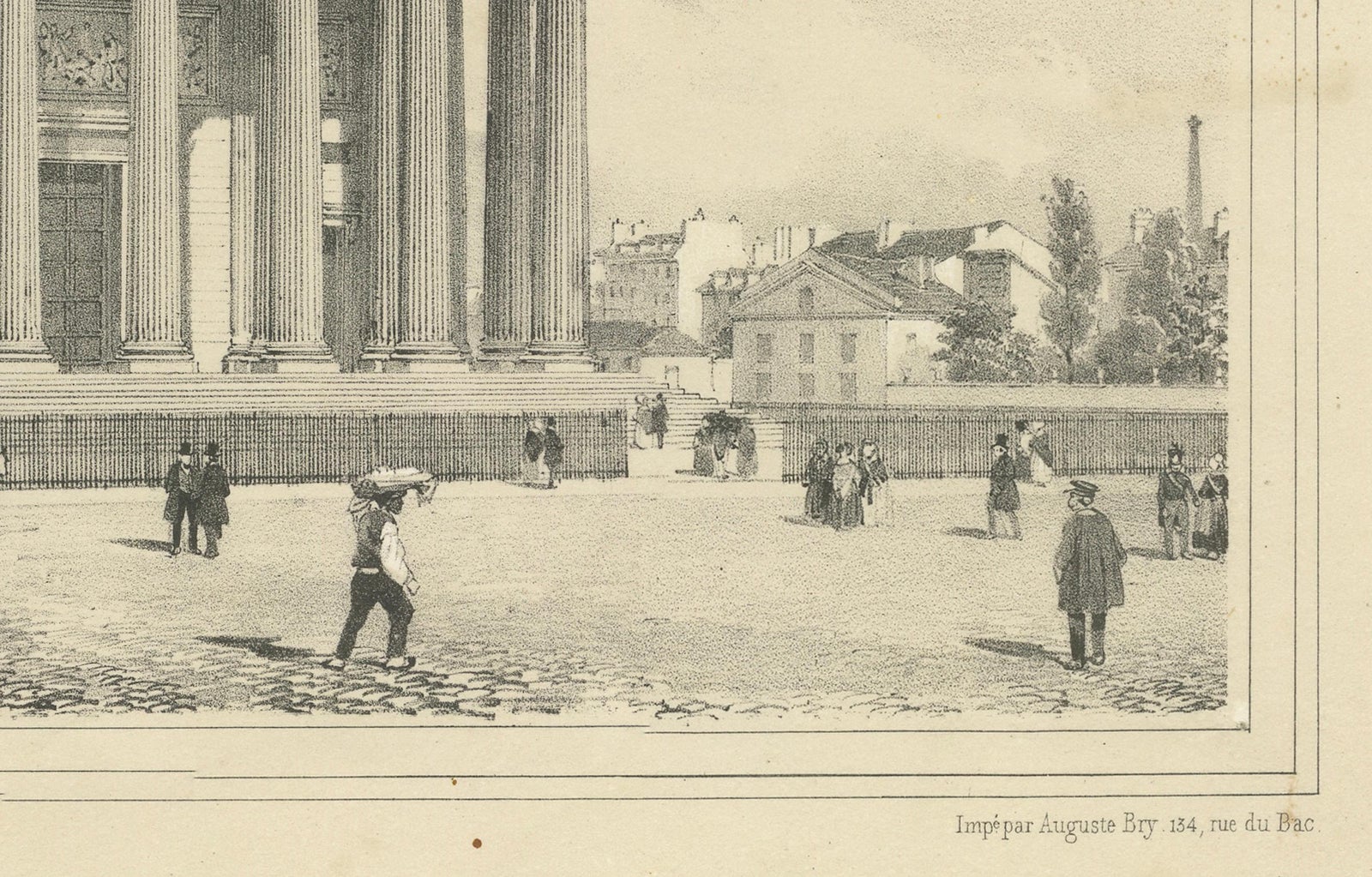
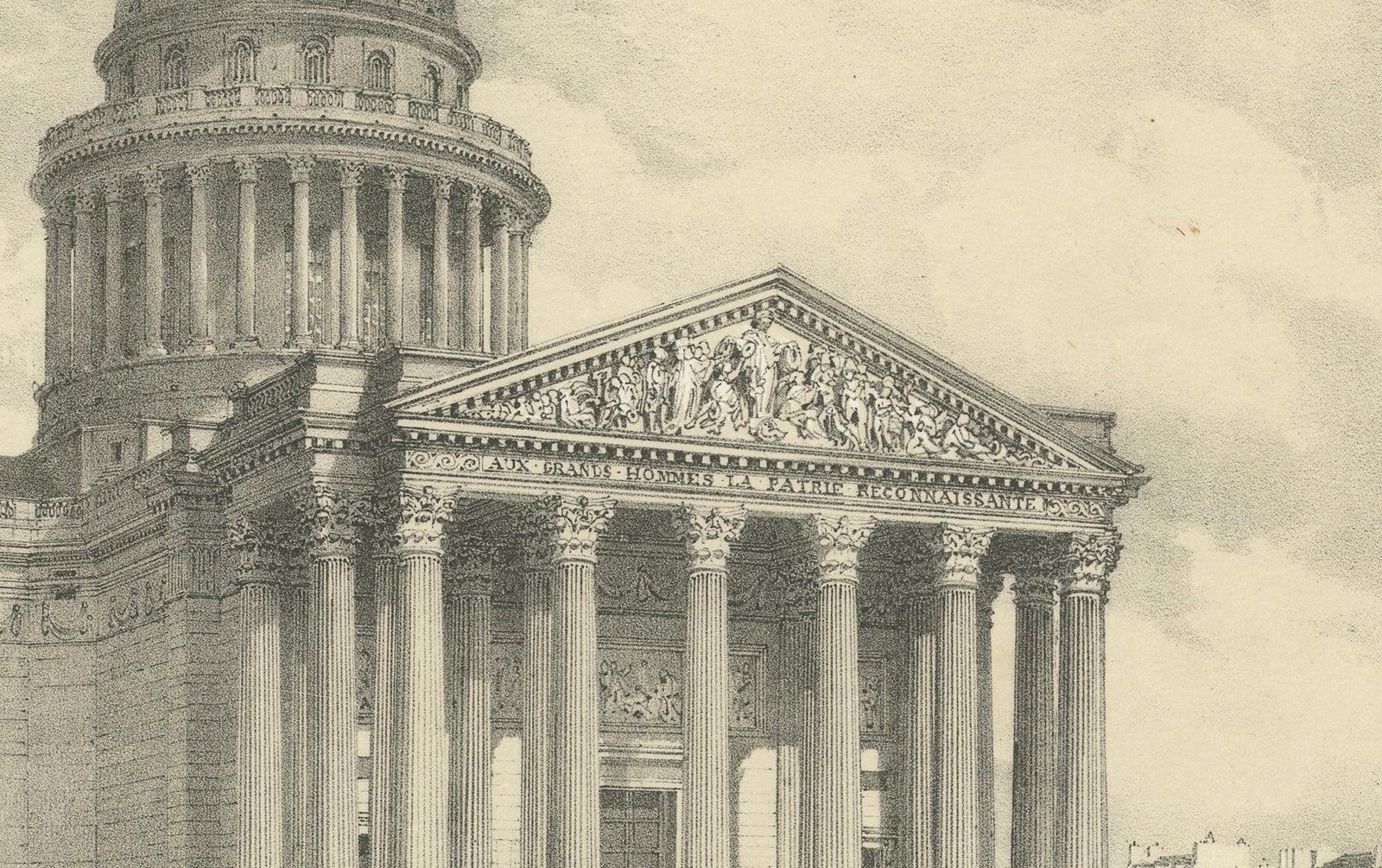
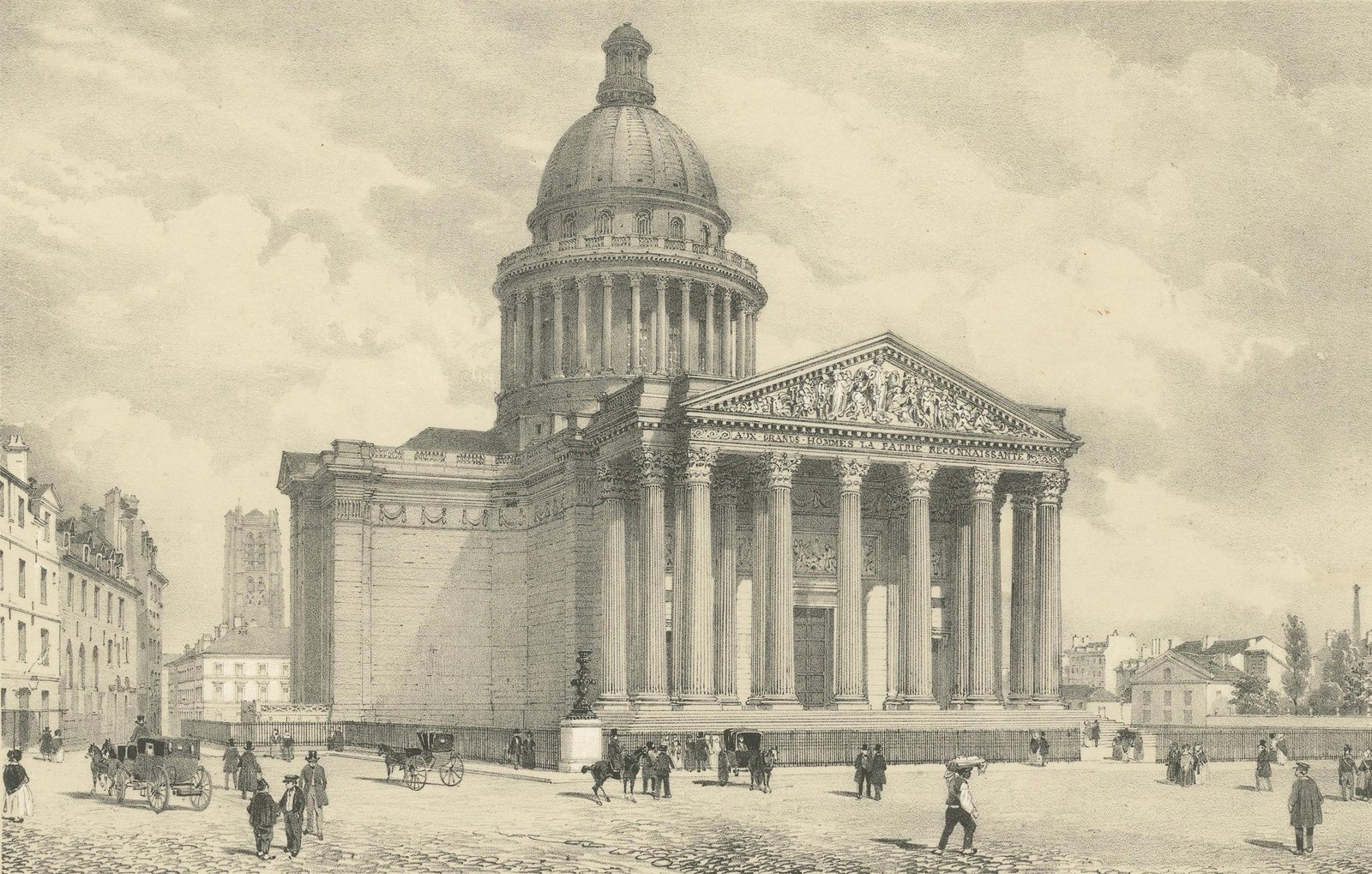
Decorative Engraved Panthéon Paris in the 1800s by Bry & Benoist
€270
$305 · £230
Original print, not a reproduction
Ships worldwide from the Netherlands, flat, insured and tracked. 14-day returns. To buy, use Ask a question (info@antiquearchitectureprints.com) and we will reserve it for you.
- Date
- Not stated
- Sheet size
- 12.4 × 17.7 in (31.5 × 45 cm)
- Condition
- Good. Good, given age. Paper edges a bit browned and small tears in border. General age-related toning and/or occasional minor defects from handling. Please study scan carefully.
- Collection
- Bridges & monuments
- Stock no.
- f_38317872
The image is an engraving of the Panthéon in Paris, created by Auguste Bry (1805 to 1880) and Philippe Benoist (1813–).
The Panthéon originally served as a church dedicated to St. Genevieve but now functions as a mausoleum containing the remains of distinguished French citizens. The print showcases the neoclassical architectural style of the building, characterized by its Corinthian columns and large dome, reminiscent of the Pantheon in Rome.
This type of engraving was a common way to document and share the grandeur of important architectural works in the 19th century, often found in books or as standalone pieces for educational or decorative purposes. It reflects the artists' attention to detail and the importance of the Panthéon as a national symbol of France.
The Panthéon in Paris is the final resting place of many of France's most illustrious individuals, a tradition that began as a way to honor those who had made significant contributions to French society, culture, and politics. Some of the notable figures buried there include:
1. **Voltaire** (1694 to 1778), One of the Enlightenment's most influential writers and philosophers.
2. **Jean-Jacques Rousseau** (1712 to 1778), A prominent philosopher, writer, and composer of the 18th century.
3. **Victor Hugo** (1802 to 1885), Renowned writer best known for his novels "Les Misérables" and "The Hunchback of Notre-Dame."
4. **Émile Zola** (1840 to 1902), A major French novelist and the most important exemplar of the literary school of naturalism.
5. **Alexandre Dumas** (1802 to 1870), Author of classic works such as "The Three Musketeers" and "The Count of Monte Cristo," transferred to the Panthéon in 2002.
6. **Marie Curie** (1867 to 1934), The Nobel Prize-winning scientist known for her research on radioactivity.
7. **Louis Braille** (1809 to 1852), Inventor of Braille, a system of reading and writing used by people who are visually impaired.
8. **Jean Jaurès** (1859 to 1914), French socialist leader.
9. **Jean Moulin** (1899 to 1943), A high-profile member of the French Resistance during World War II.
10. **André Malraux** (1901 to 1976), A novelist, art theorist, and Minister for Cultural Affairs.
The Panthéon continues to be a revered place of interment for French luminaries, symbolizing the nation's respect and recognition for those who have shaped its identity and legacy.
The print of the Panthéon does not have a specific creation date visible in the image provided. However, given that the artists Auguste Bry and Philippe Benoist were active in the 19th century, with Bry's years listed as 1805 to 1880 and Benoist's birth in 1813, the print would have been created sometime in the mid to late 19th century, most likely between the 1830s and the end of the century.