Close-ups
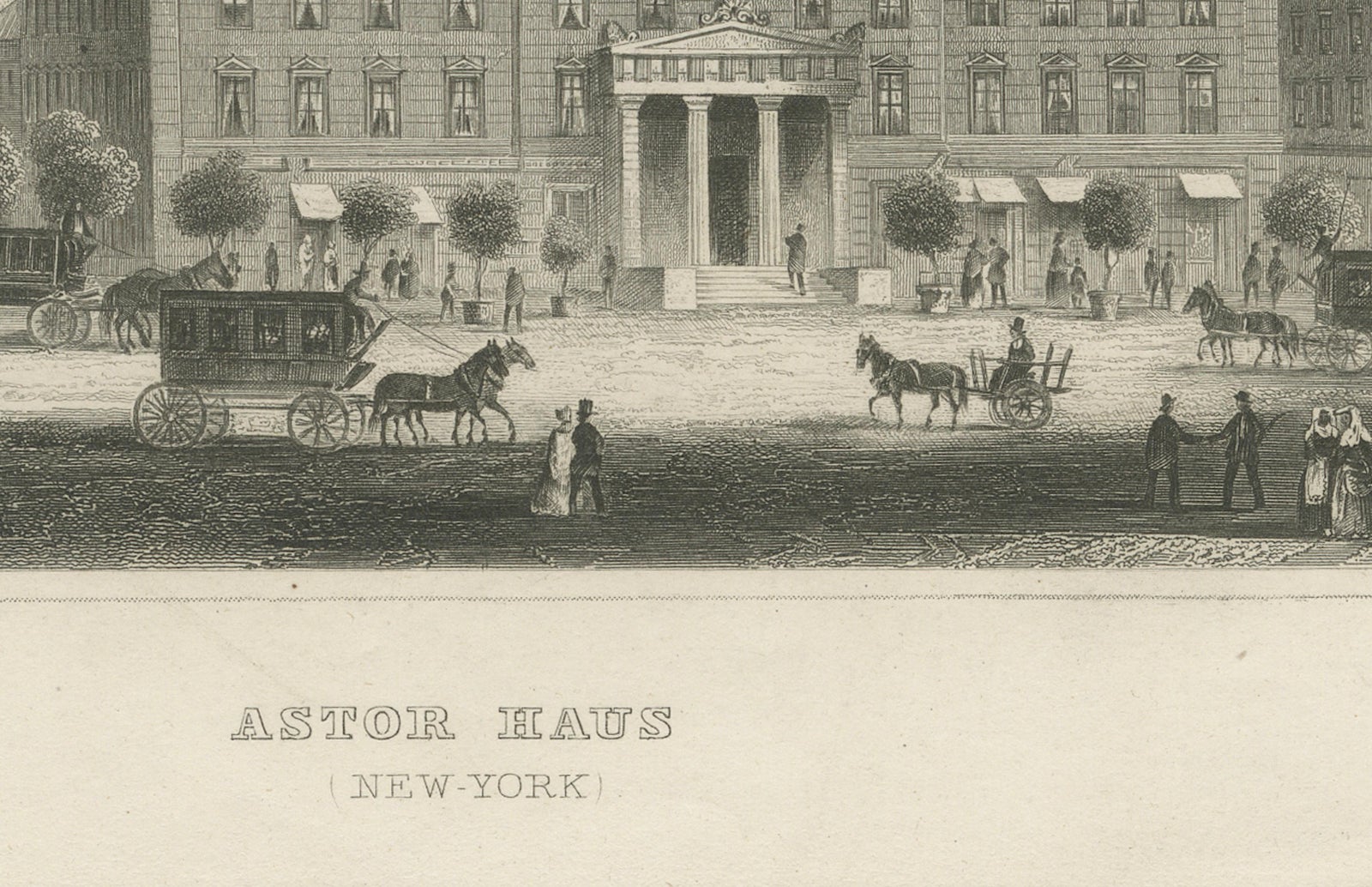
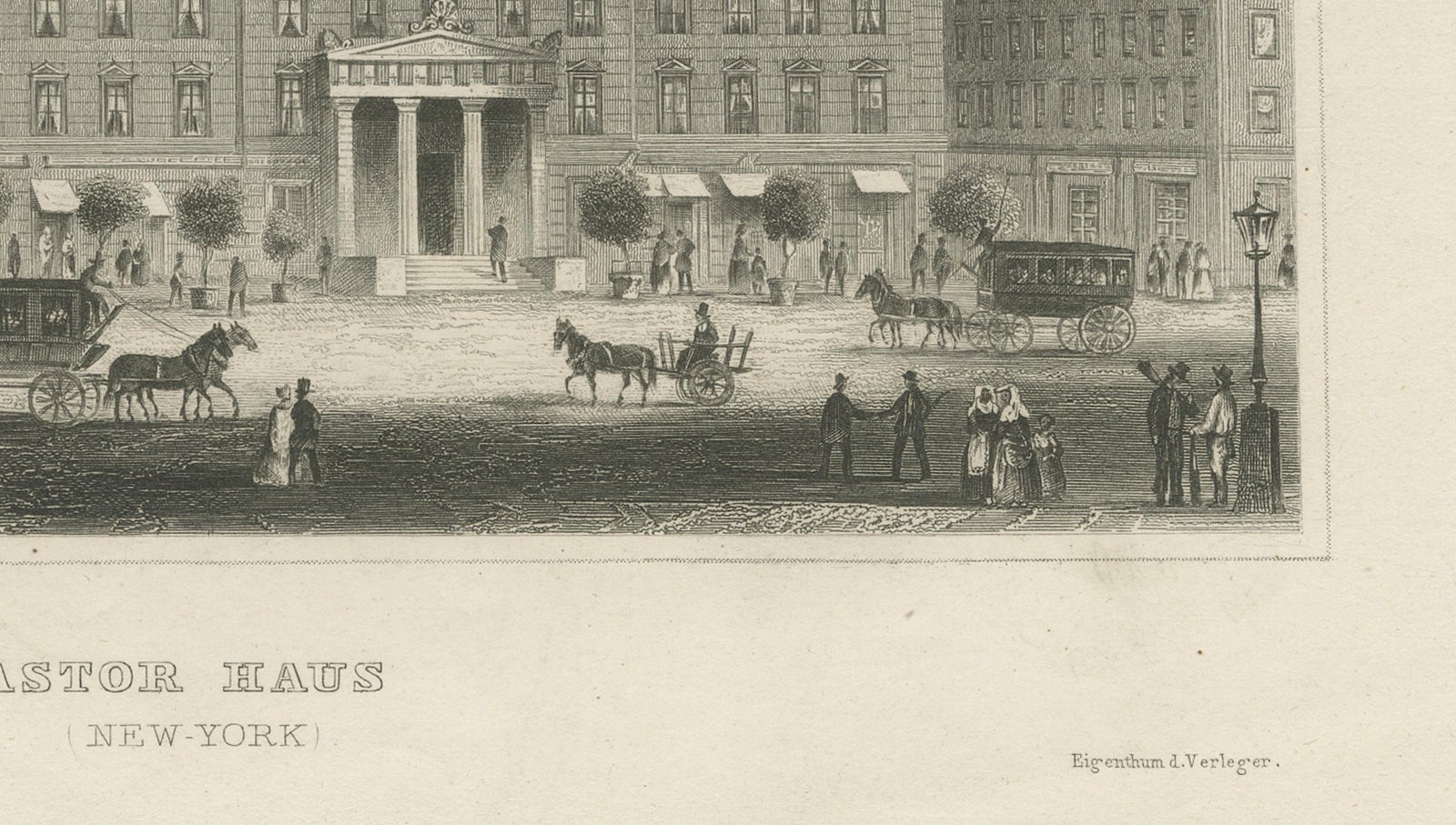
Framed and on the wall
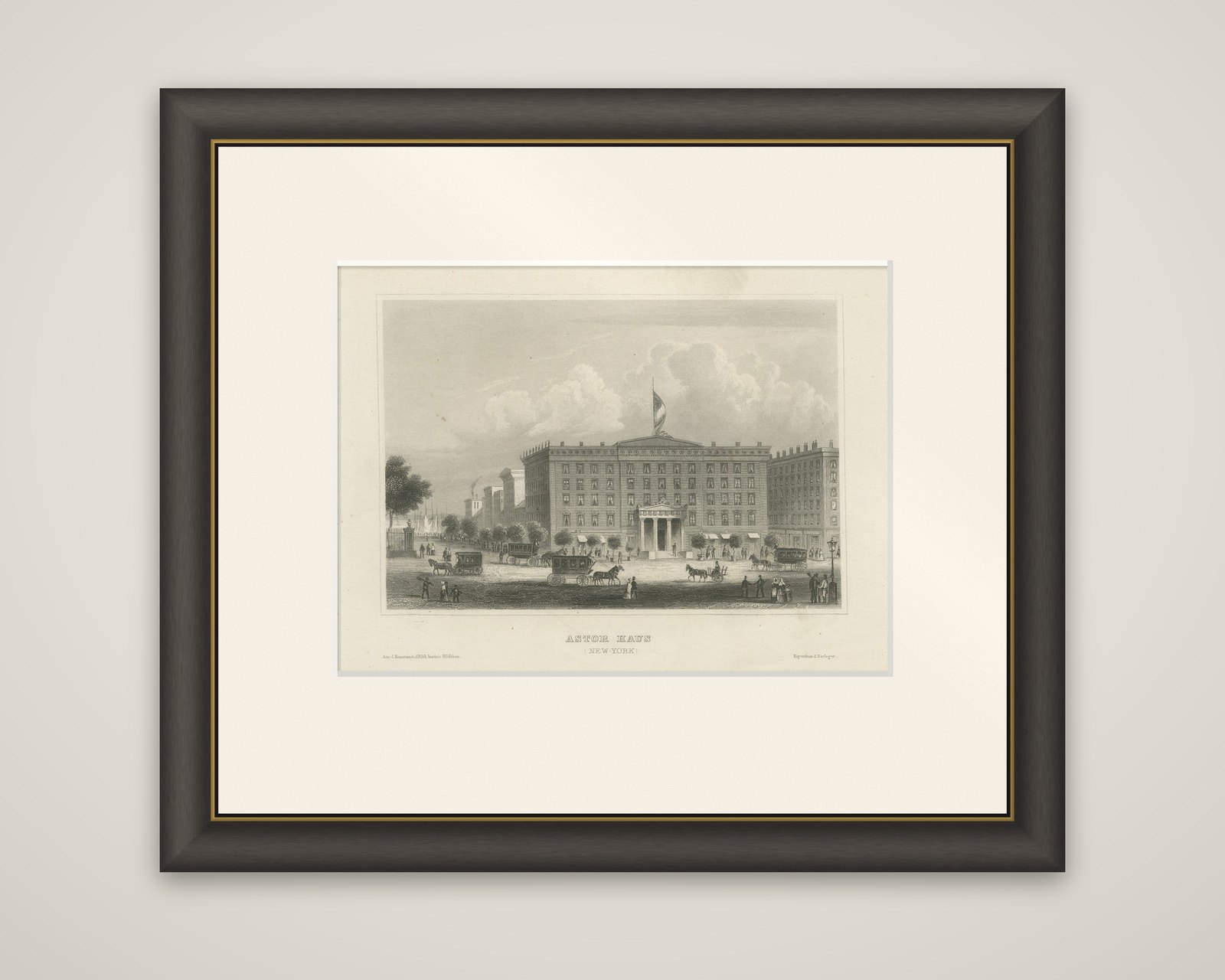


Frame and rooms are illustrations of how the print could look, drawn to its real size; it is sold unframed unless the description says otherwise.
Bridges & monuments
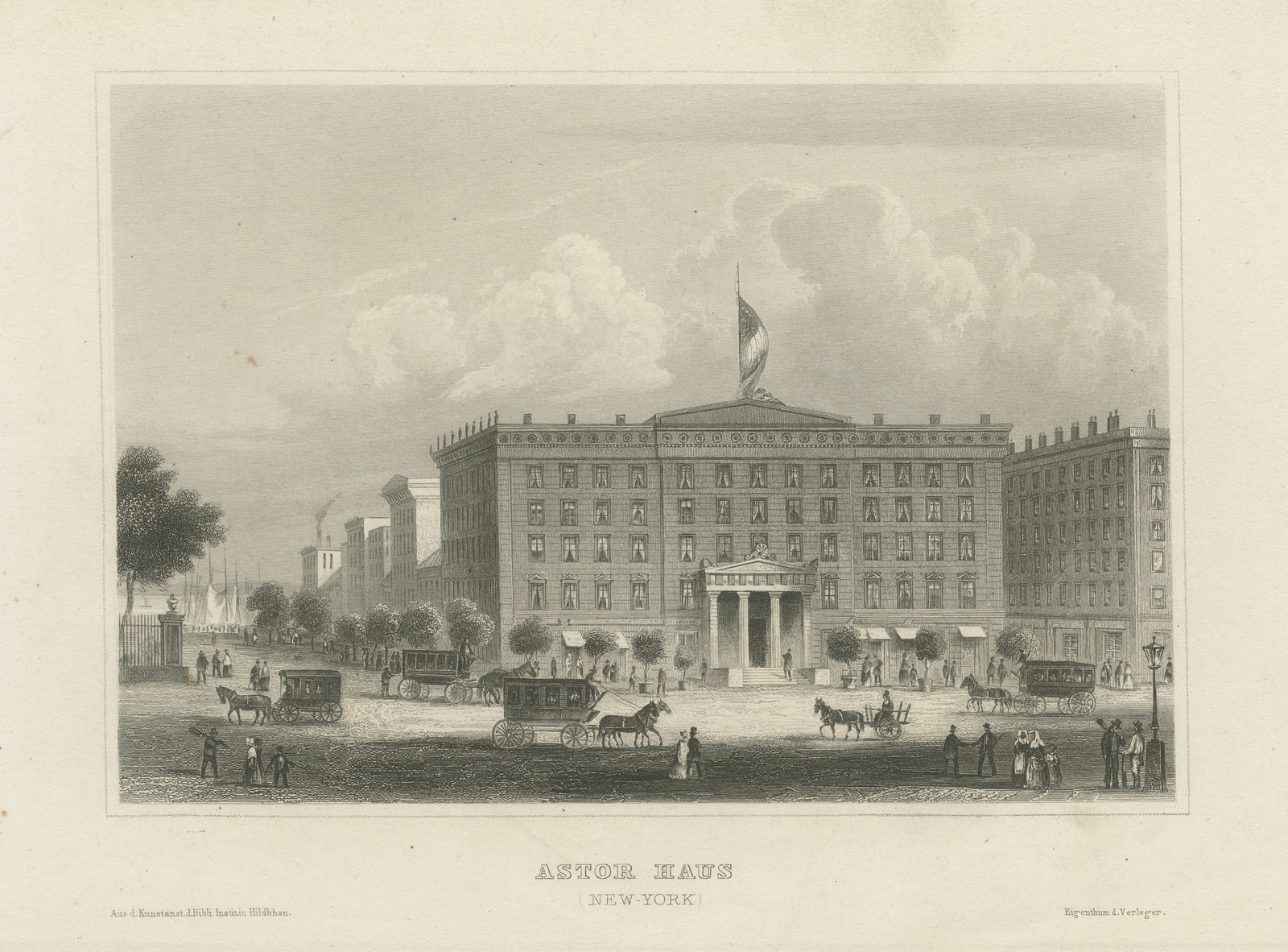
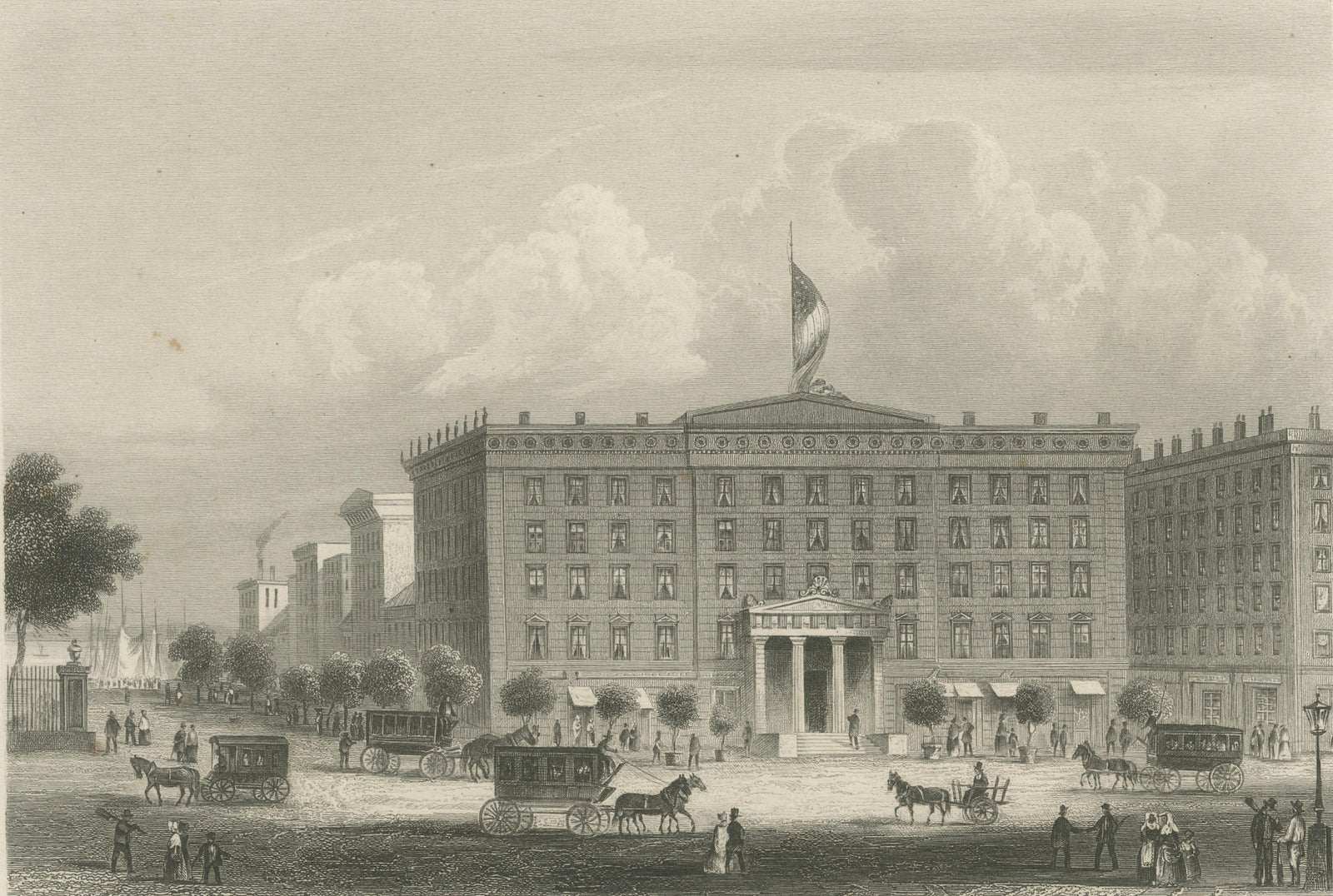
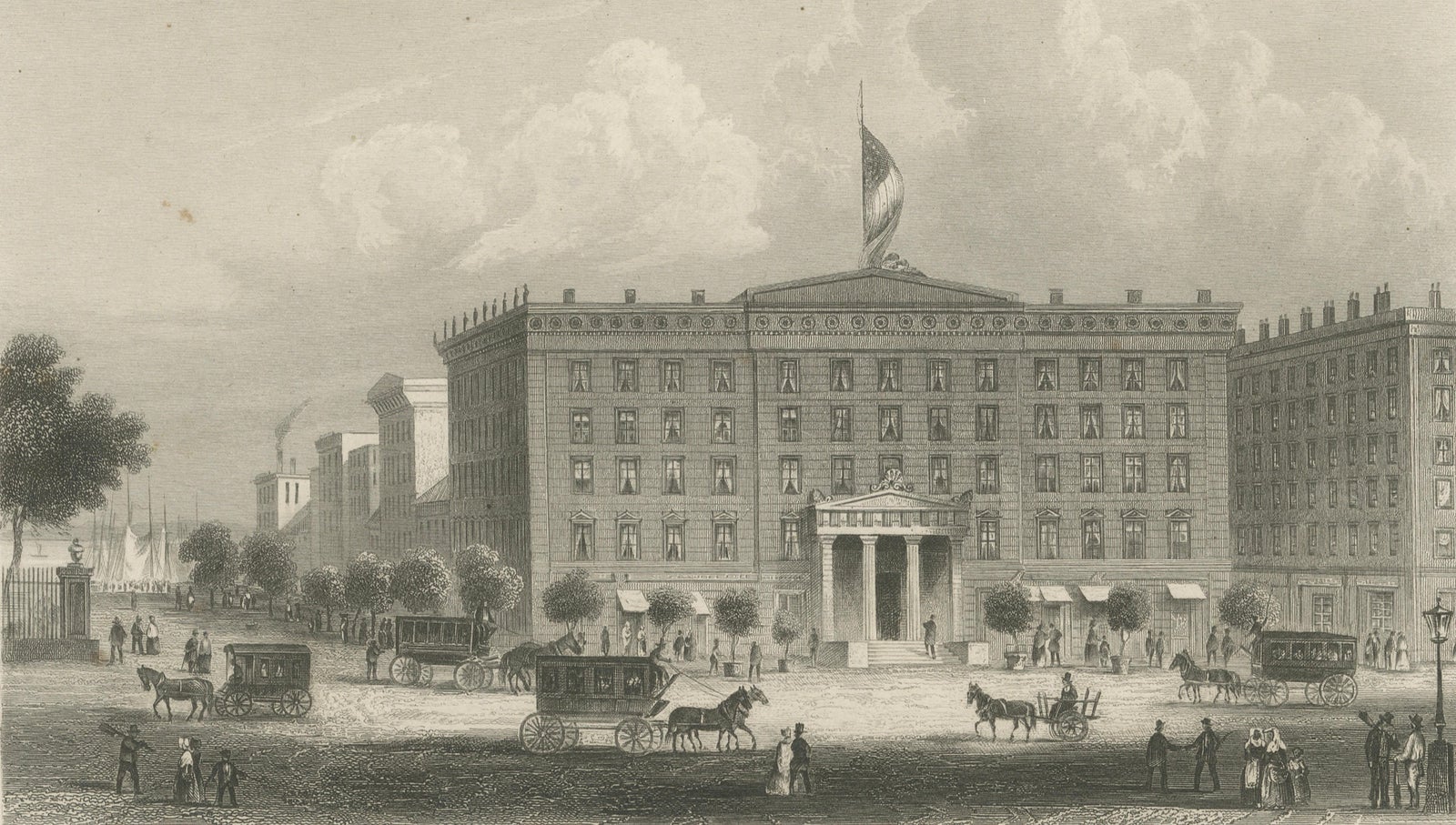
Astor House New York, Antique Broadway Hotel Steel Engraving 1850s
€335€25225% off
$275 · £210
Original print, not a reproduction
Ships worldwide from the Netherlands, flat or rolled, insured and tracked. 14-day returns.
- Date
- Not stated
- Sheet size
- 5.7 × 9.3 in (14.4 × 23.7 cm)
- Condition
- Good. Good condition for its age with light age toning and minor spotting mainly in the margins. Plate mark visible. Paper remains strong and well preserved.
- Collection
- Bridges & monuments
- Stock no.
- BG-14038-108
What the condition grades mean
- Excellent
- Bright and clean, with no faults worth mentioning.
- Very good
- Only light signs of age, such as faint toning.
- Good
- Normal signs of age for a sheet of this period: toning, some foxing, small marks or neat old repairs.
- Fair
- Clear faults such as staining, tears or repairs, priced to match.
Every fault we see is written in the condition note, and the whole sheet is shown uncropped in the photos.
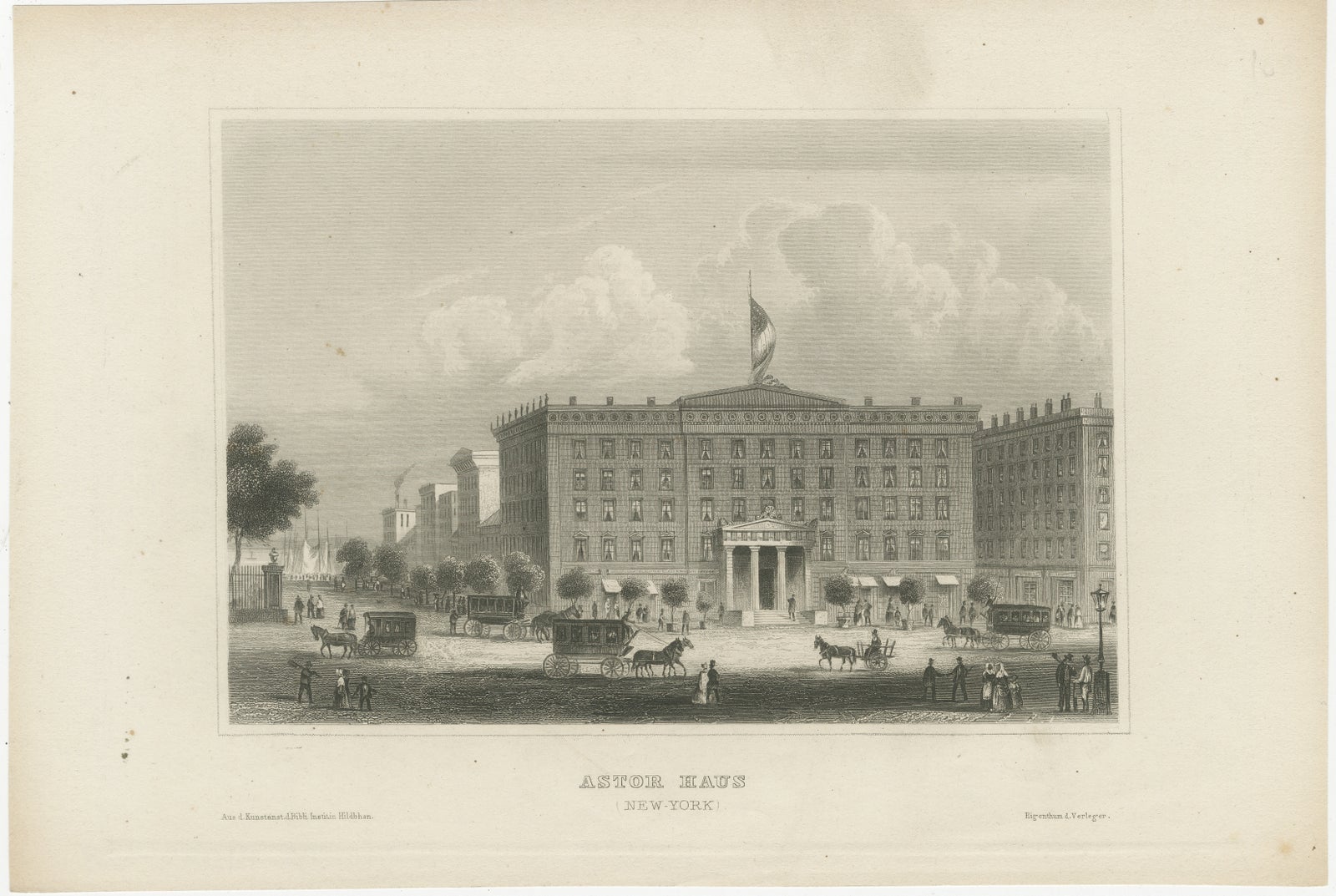
The Astor House hotel on Broadway in New York, an original steel engraving from Meyers Universum, published by the Bibliographisches Institut in Germany in the 1850s. The plate is printed in black on cream paper and lettered below the image "Astor Haus (New-York)."
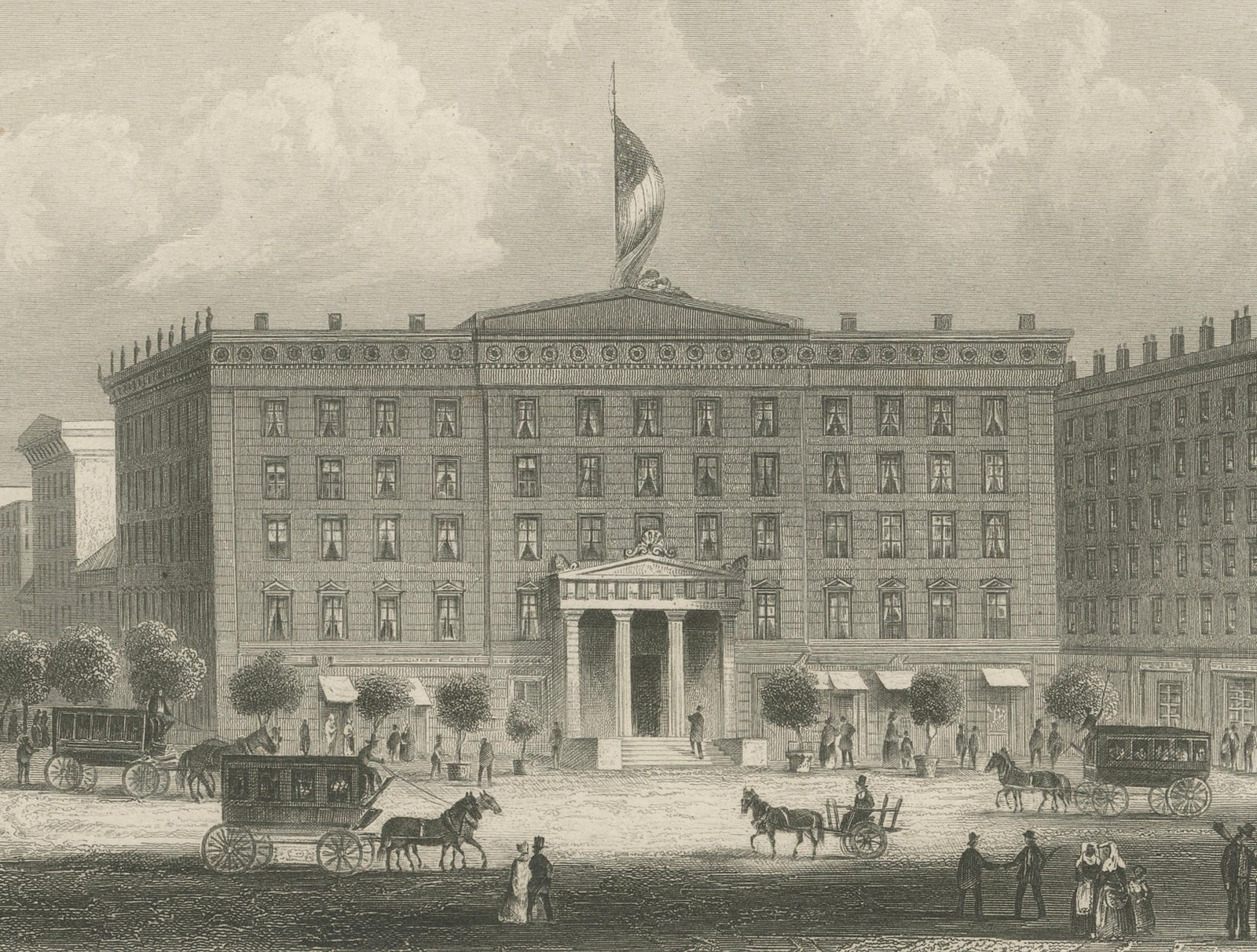
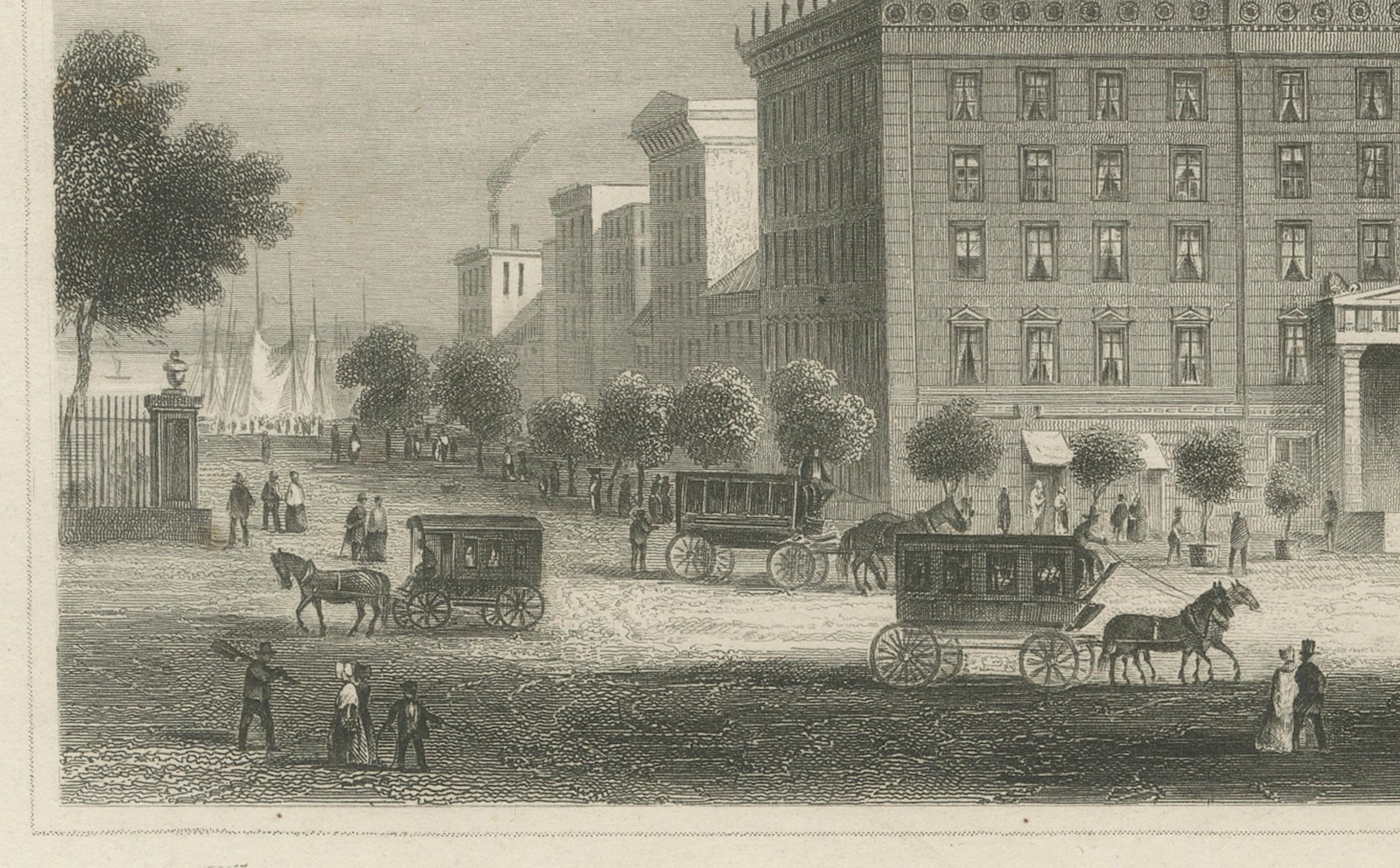
The view looks across the street to the granite façade of the hotel, with its rows of small windows, a central portico of columns and a large American flag flying from the roof. Horse-drawn omnibuses and carriages cross the foreground, pedestrians and children in period dress stroll along the street, and trees and a lamp post mark the edges of the scene, with factory chimneys and ships' masts visible on the left.
The Astor House, built by John Jacob Astor, opened in 1836 on the block between Vesey and Barclay streets and for decades was one of the leading hotels in the United States. Part of the building was demolished in 1913 for subway construction and the rest in 1926.
Explore