Close-ups
Framed and on the wall
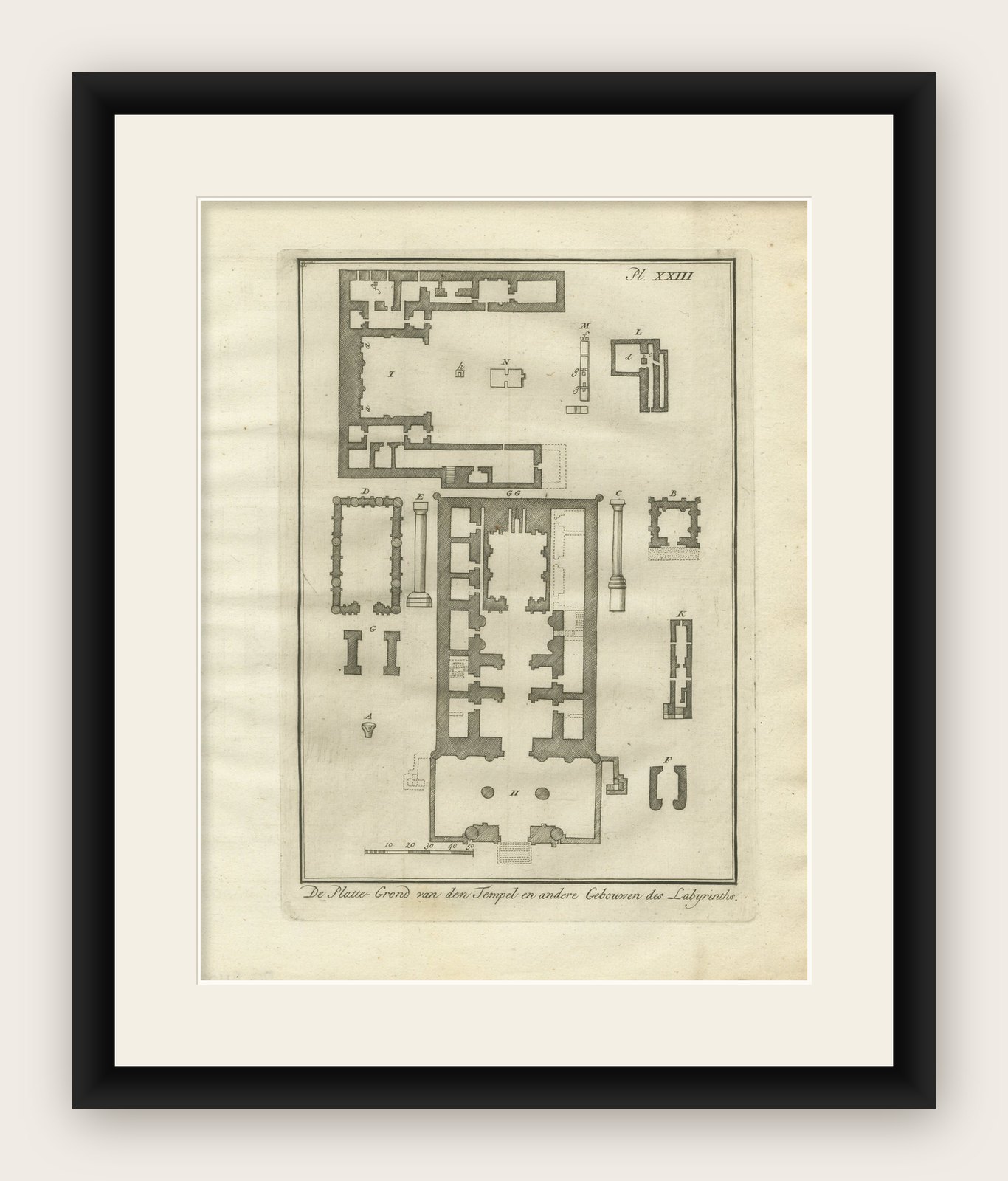


Frame and rooms are illustrations of how the print could look, drawn to its real size; it is sold unframed unless the description says otherwise.
Antiquity & ruins
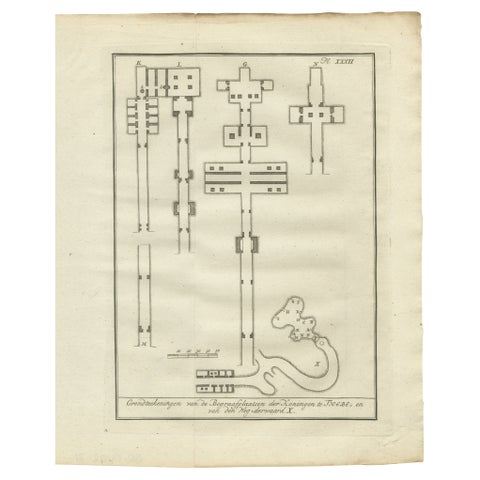
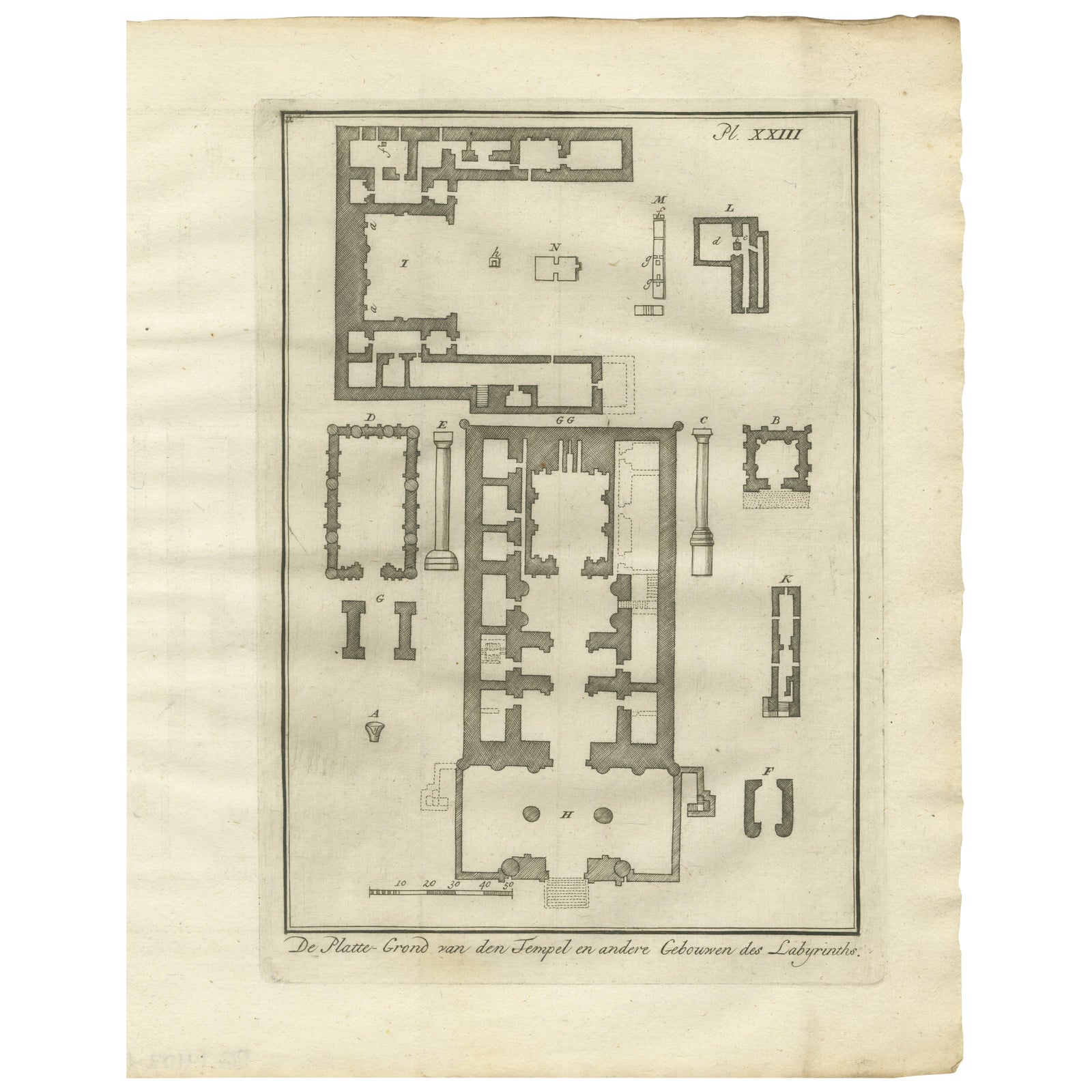
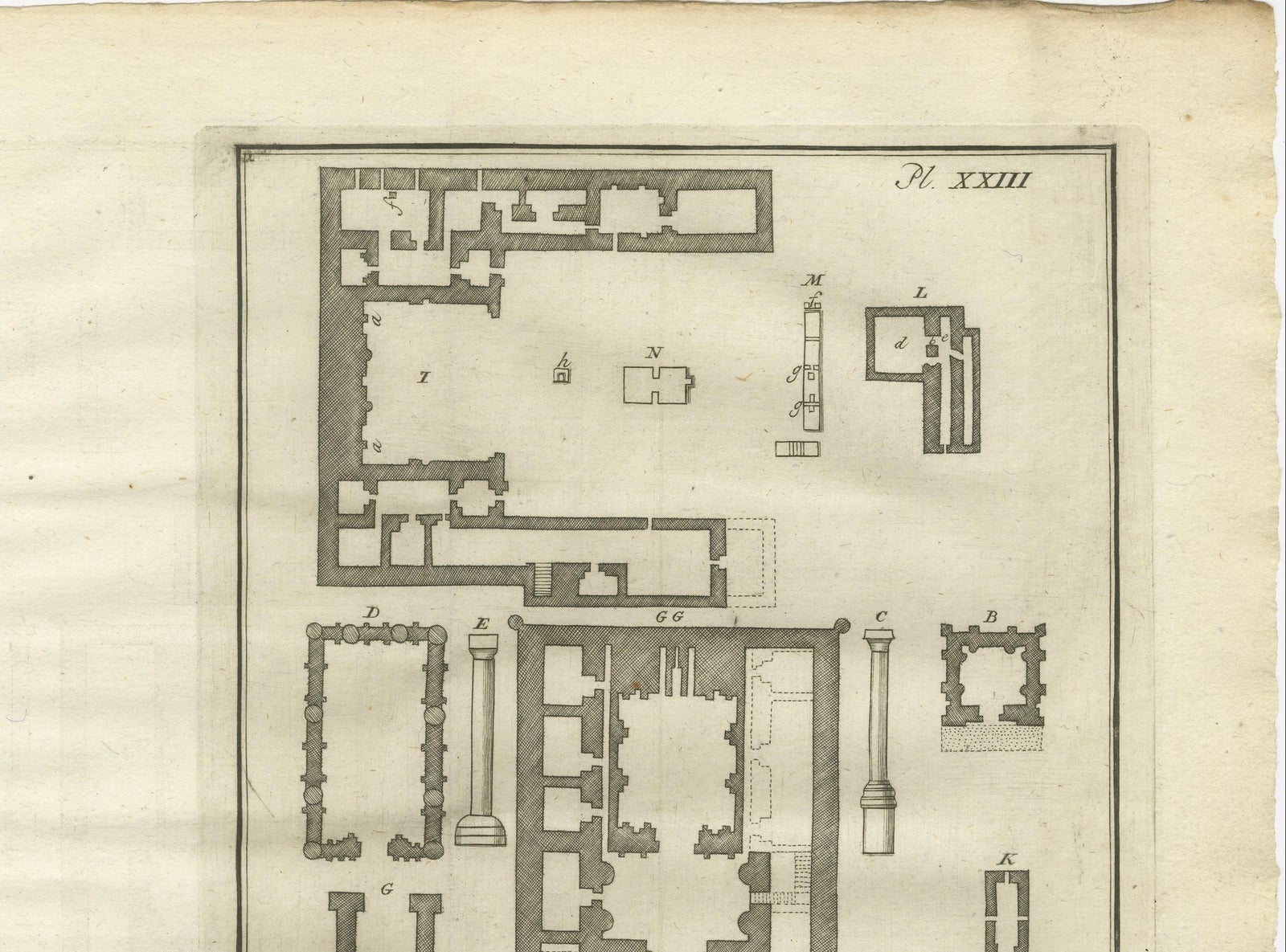
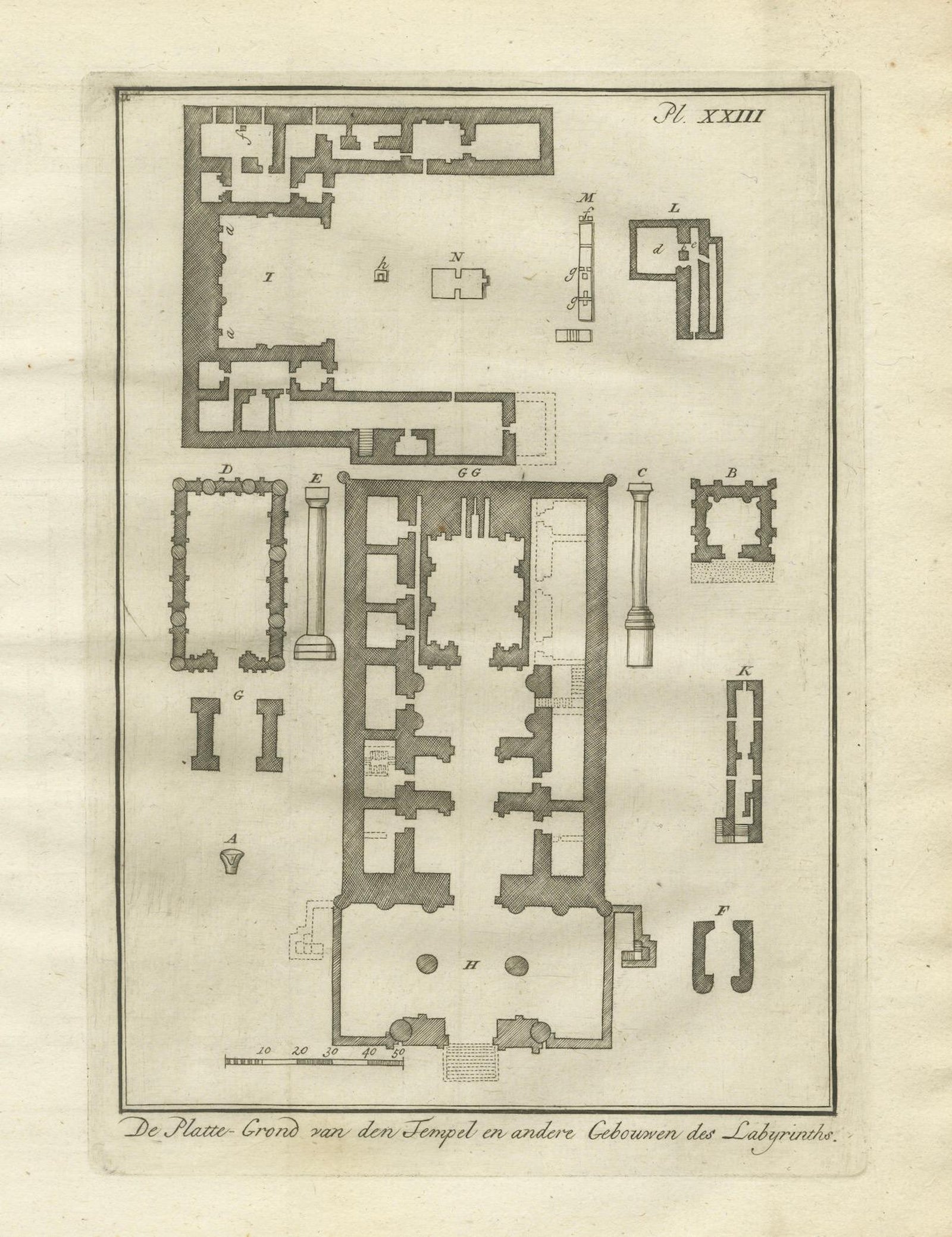
Temple and Buildings of the Labyrinth, Hawara, Floor Plan Engraving, Egypt 1776
€240
$270 · £205
Original print, not a reproduction
Ships worldwide from the Netherlands, flat, insured and tracked. 14-day returns. To buy, use Ask a question (info@antiquearchitectureprints.com) and we will reserve it for you.
- Date
- 1776
- Sheet size
- 10.7 × 9.8 in (27.3 × 25 cm)
- Condition
- Good. Excellent condition. Slight toning at the edges, with minimal spotting. Central vertical fold from original binding. Strong plate mark and crisp detail. Verso blank.
- Collection
- Antiquity & ruins
- Era
- 1700 to 1789, Baroque to Neoclassical
- Stock no.
- f_46043732
Title: Temple and Buildings of the Labyrinth at Hawara, Floor Plan Engraving, Egypt 1776
Description:
This 1776 architectural engraving presents a detailed floor plan of the legendary Egyptian Labyrinth near Hawara, believed to have once stood near the Fayum region. Numbered Plate XXIII, this engraving comes from the Dutch edition of Richard Pococke’s influential travel account documenting his exploration of Egypt and the Middle East.
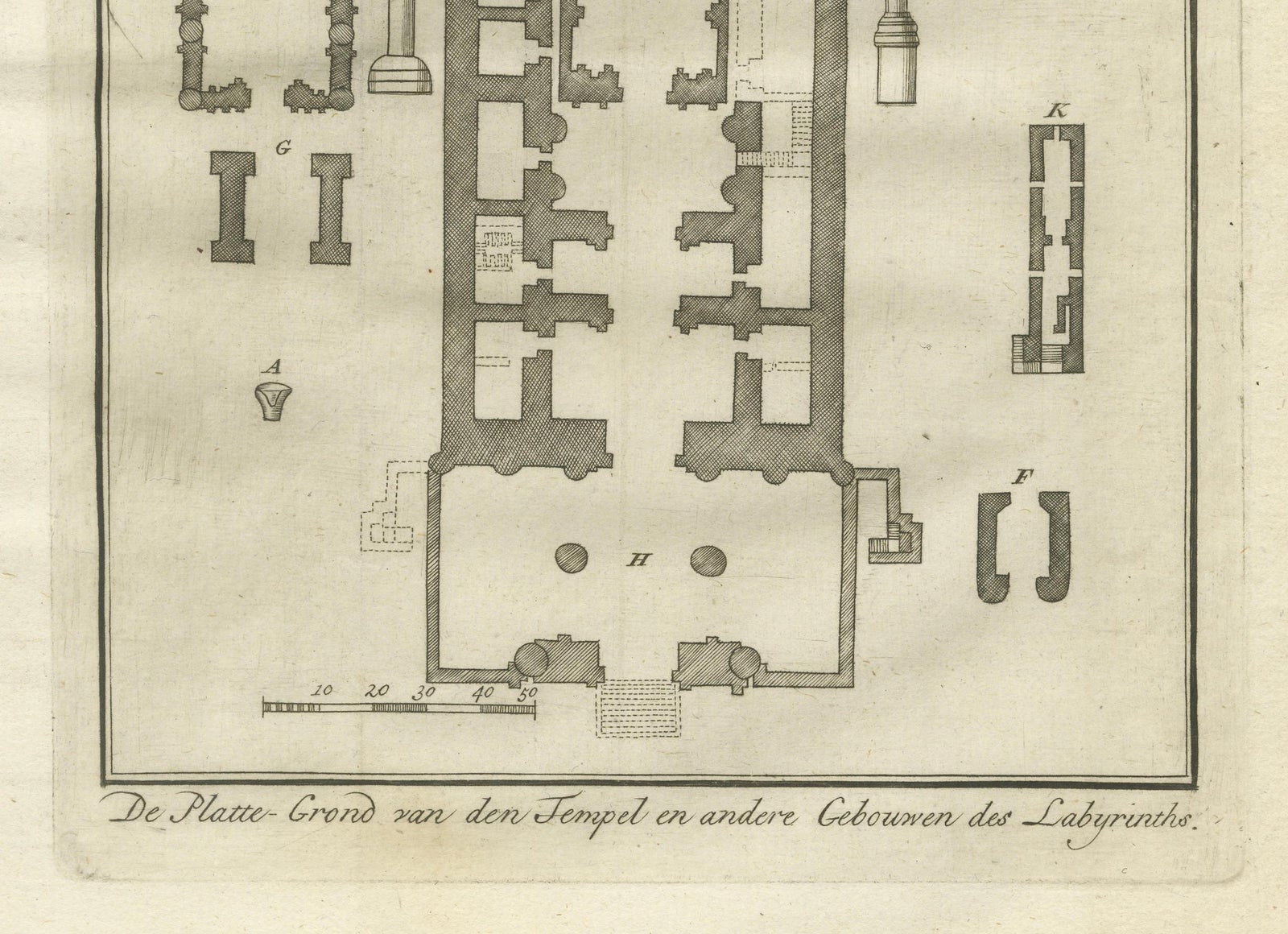
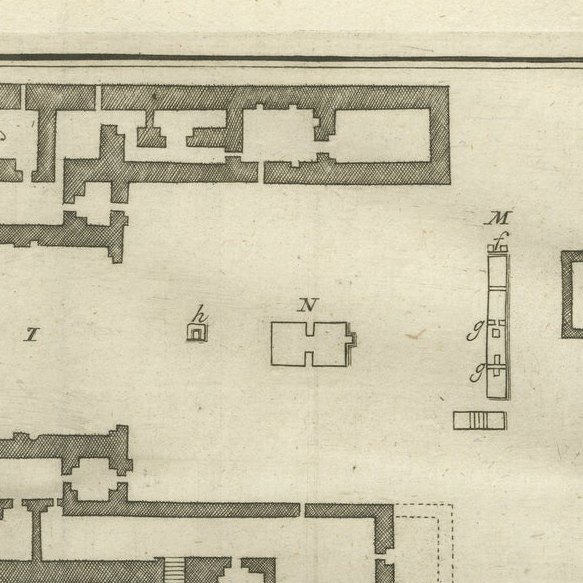
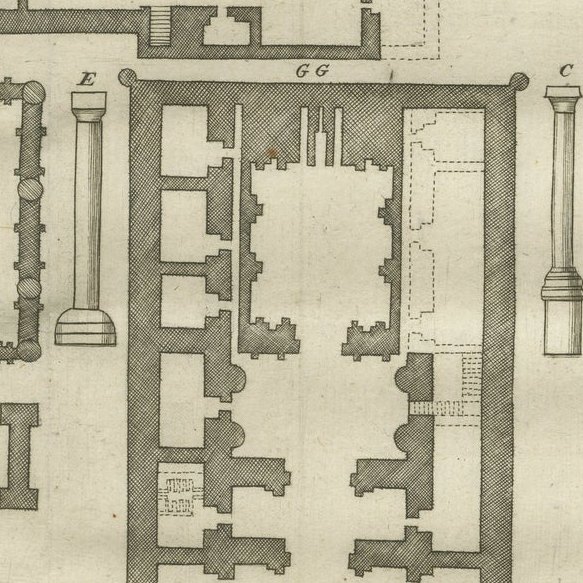
The main structure, occupying the central portion of the plan, is a vast rectangular temple complex laid out with symmetrical corridors, columned halls, and chambers. Labeled areas include structural features such as walls, inner courtyards, sanctuaries, and freestanding elements like columns and statues. Numerous parts of the plan are identified with letters for reference, such as A, B, D, F, and M, likely corresponding to a legend in the accompanying text.
This plan reflects the enduring fascination with the Egyptian Labyrinth described by ancient Greek historians like Herodotus, who considered it one of the most astonishing architectural feats of antiquity. Thought to be part of the mortuary temple of Pharaoh Amenemhat III (12th Dynasty, c. 19th century BCE), the complex was mostly destroyed by the time of Pococke’s visit. Still, its ruins were of significant interest to early travelers and antiquarians, who sought to reconstruct its former grandeur based on surviving walls and foundations.
The Dutch caption reads, "De Platte-Grond van den Tempel en andere Gebouwen des Labyrinths," which translates to "The ground plan of the temple and other buildings of the Labyrinth."
This engraving was published in *Beschryving van het Oosten en van eenige andere landen* (Description of the East and Some Other Lands), translated and annotated by Ernst Willem Cramerus, and published in Utrecht, Rotterdam, and Amsterdam in 1776.
Condition report:
Excellent condition. Slight toning at the edges, with minimal spotting. Central vertical fold from original binding. Strong plate mark and crisp detail. Verso blank.
Framing tips:
This plan suits a black or dark oak frame with a wide ivory mat to emphasize the geometric design. An ideal piece for display in a library, office, or collection focused on ancient architecture or early Egyptology.
Technique: Engraving
Maker: Unknown engraver after Richard Pococke, Netherlands, 1776
Explore