Close-ups
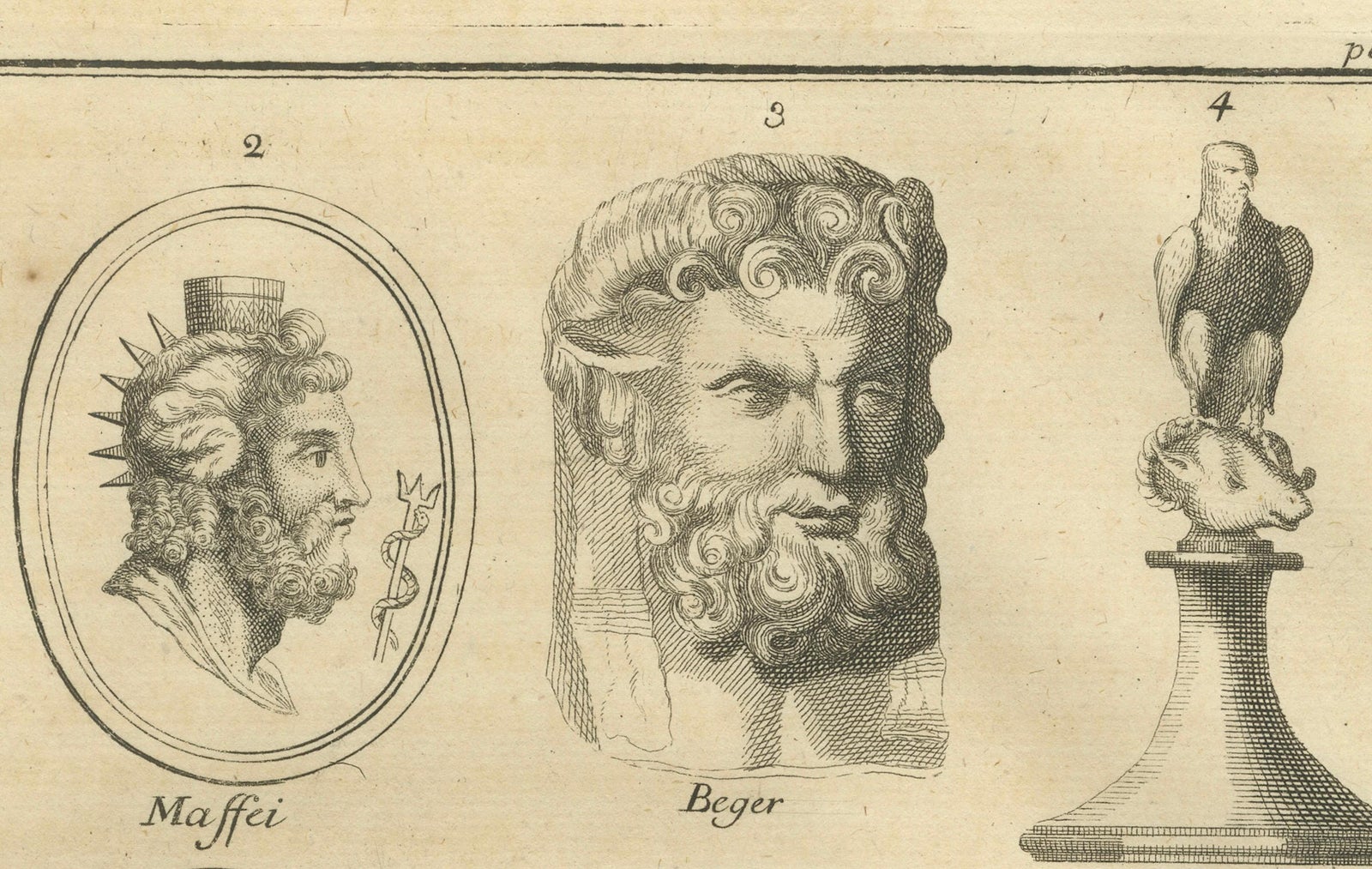
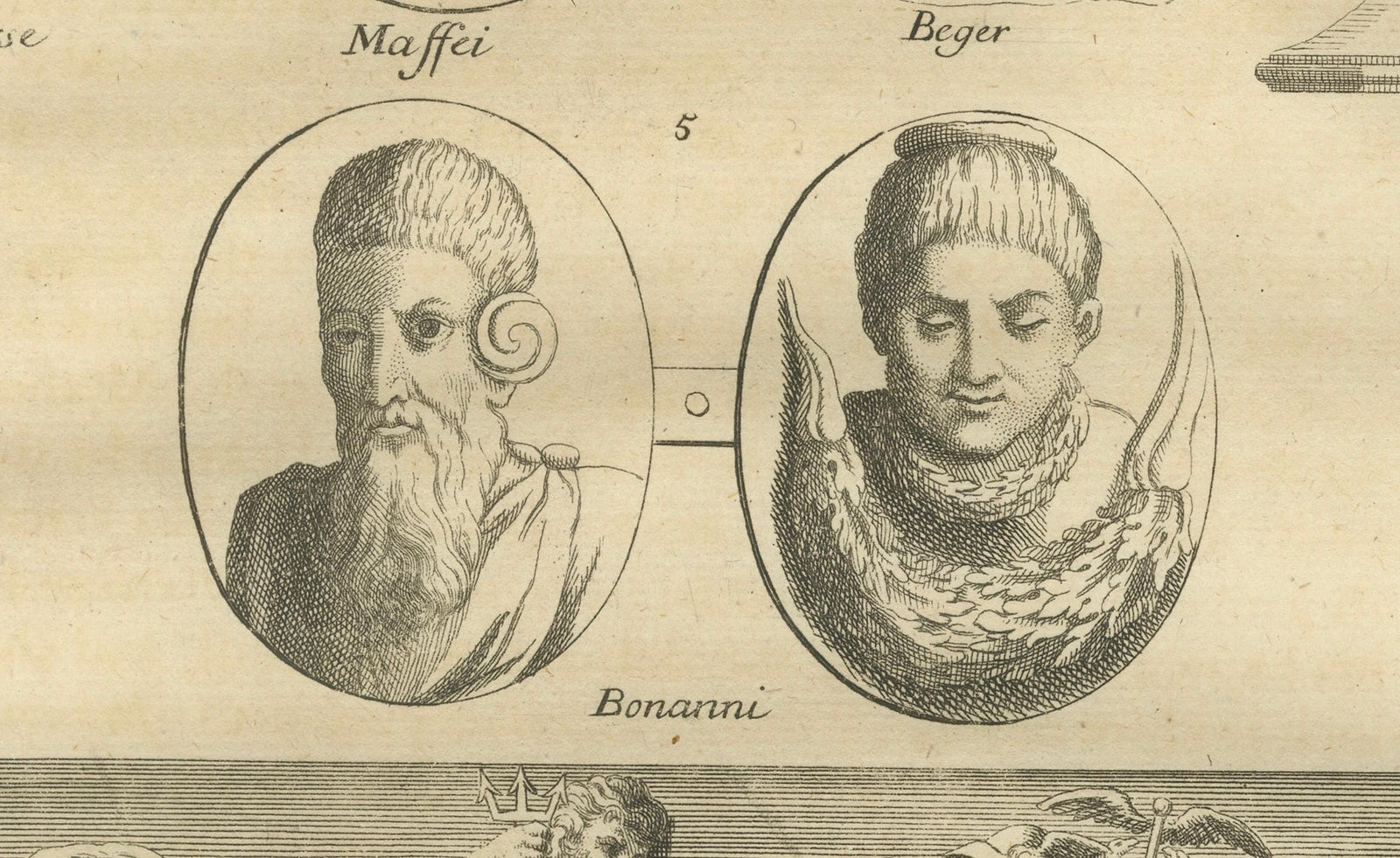
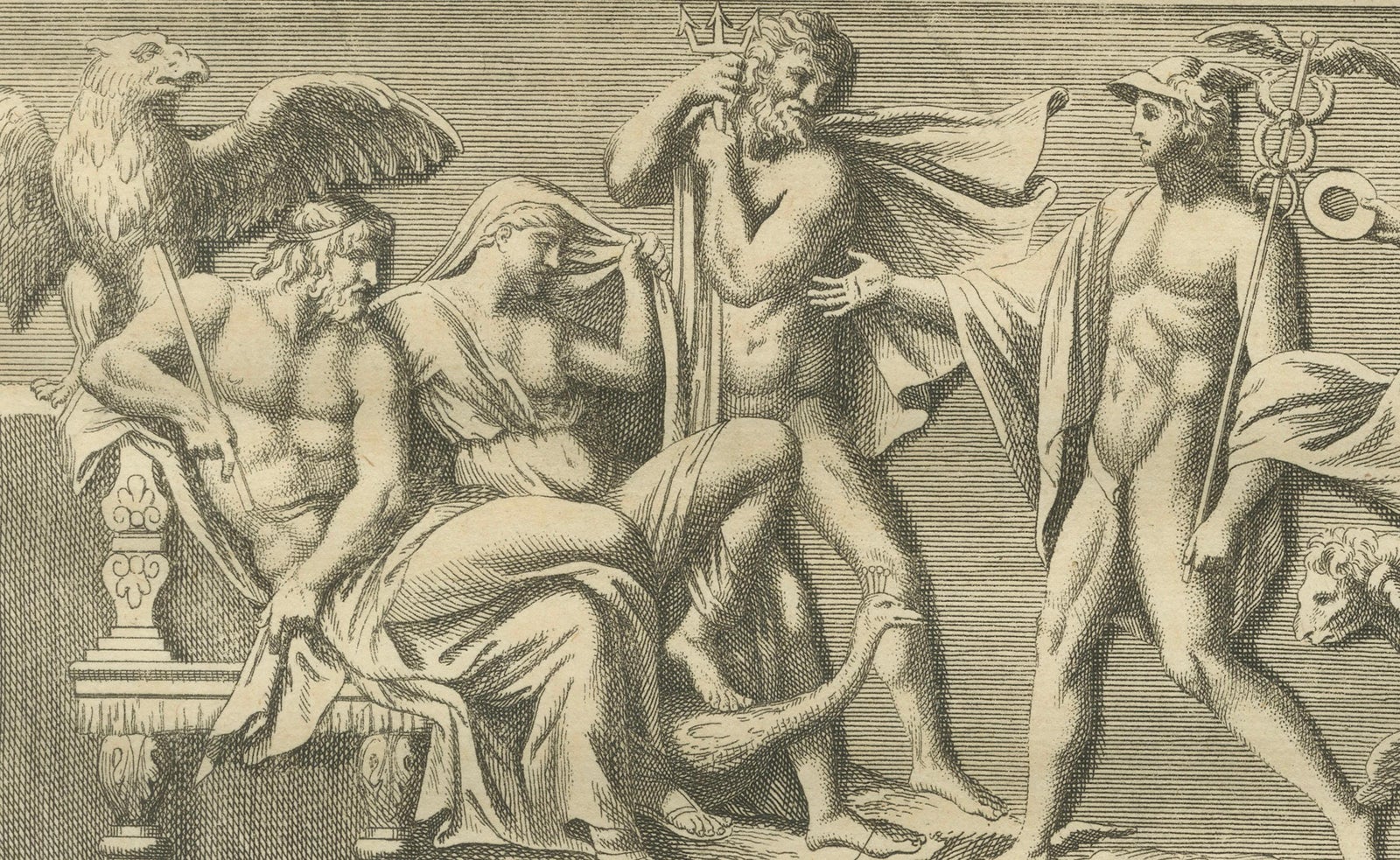
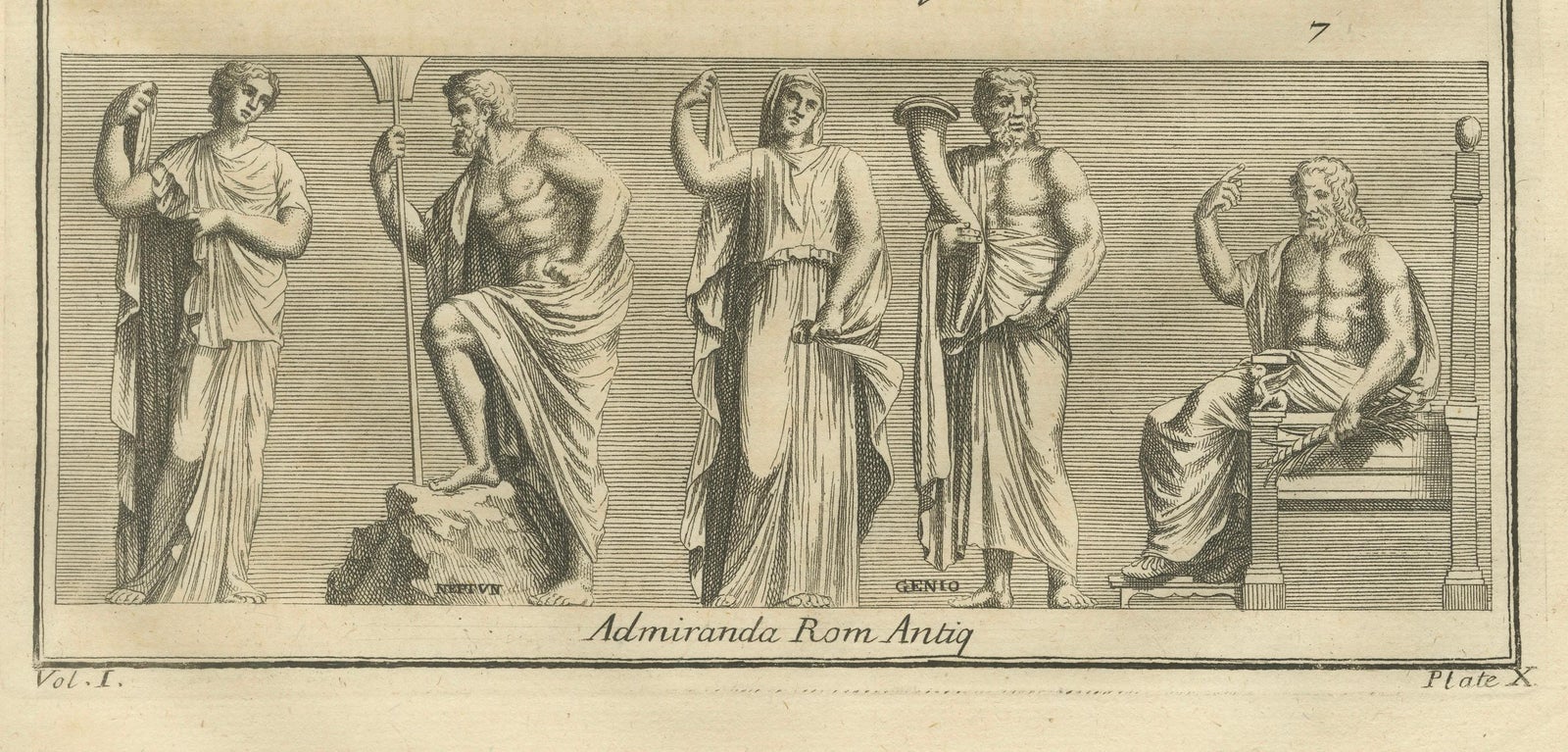
Framed and on the wall
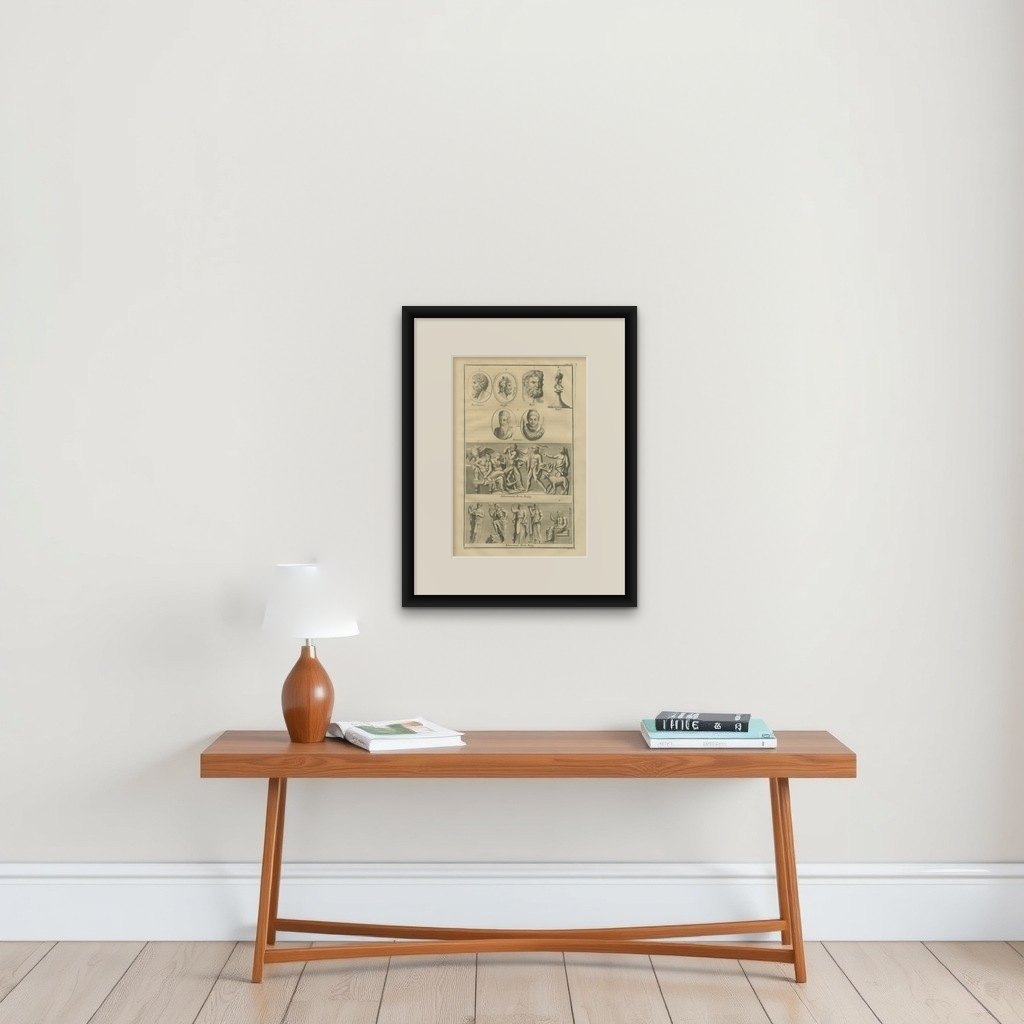

Frame and rooms are illustrations of how the print could look, drawn to its real size; it is sold unframed unless the description says otherwise.
Antiquity & ruins
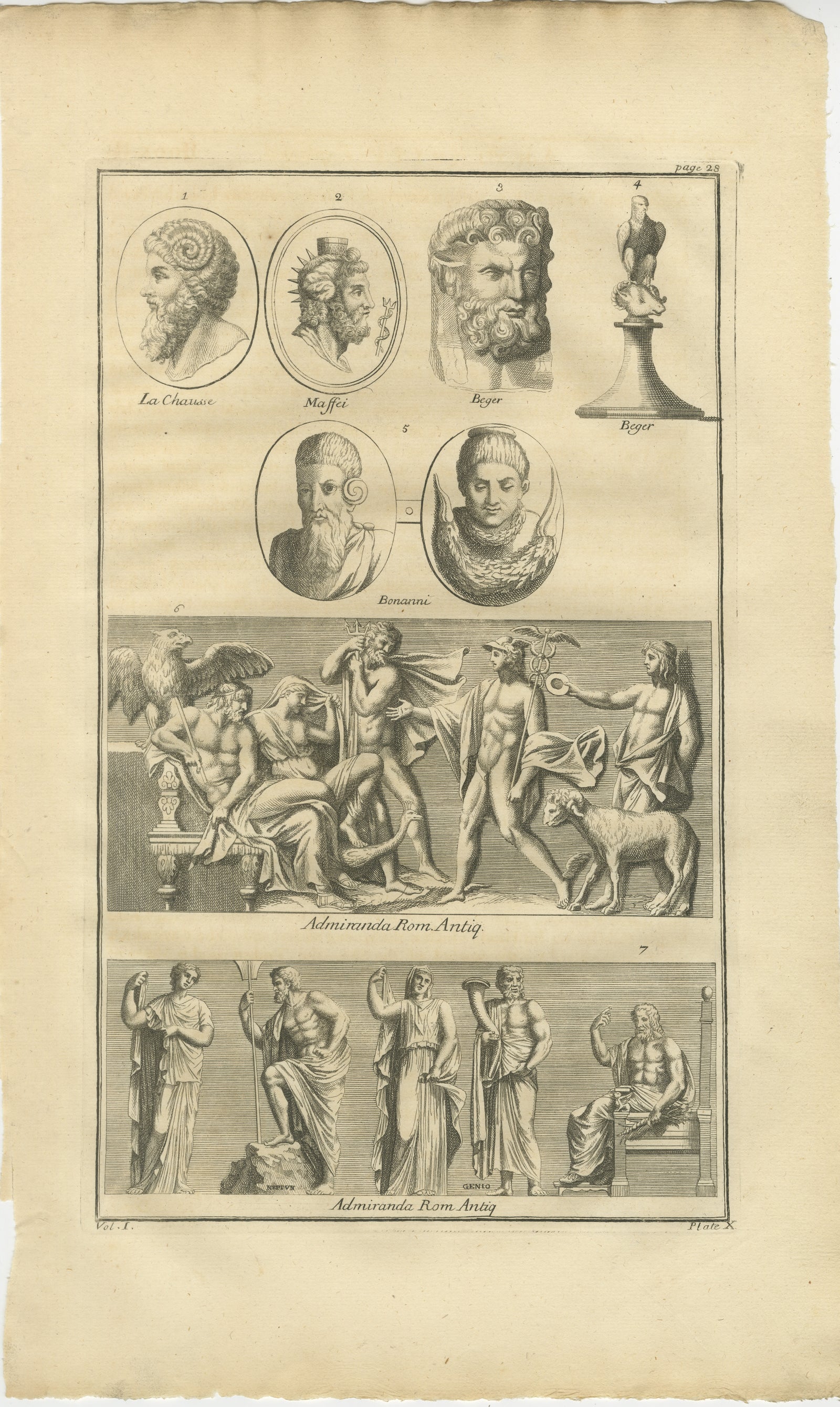
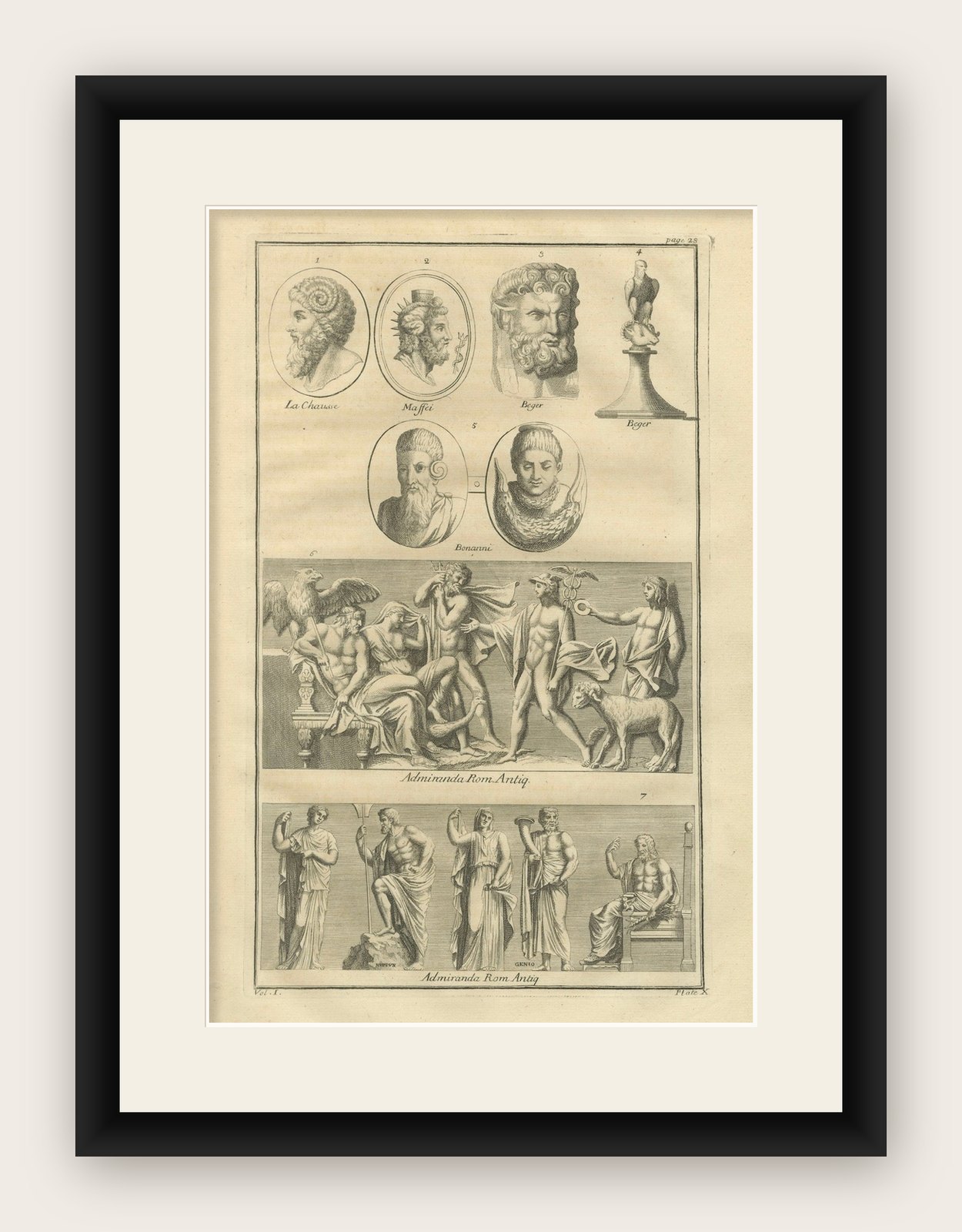
Roman Sculptures & Portrait Heads, Composite Antiquities Plate, Montfaucon 1721
$810
€725 · £615
Original print, not a reproduction
Ships worldwide from the Netherlands, flat, insured and tracked. 14-day returns. To buy, use Ask a question (info@antiquearchitectureprints.com) and we will reserve it for you.
- Date
- 1721
- Sheet size
- 16.7 × 10.2 in (42.4 × 25.8 cm)
- Condition
- Good. Good overall condition. Light, even age toning and minor edge wear consistent with early 18th-century paper. Plate impression remains strong and clear. No significant tears, losses, or restorations observed.
- Collection
- Antiquity & ruins
- Era
- 1700 to 1789, Baroque to Neoclassical
- Stock no.
- f_48016002
Roman Sculptures and Portrait Heads, Composite Antiquities Plate, Montfaucon 1721
Description:
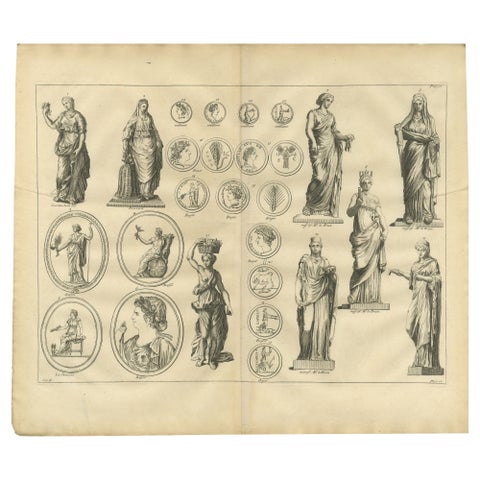
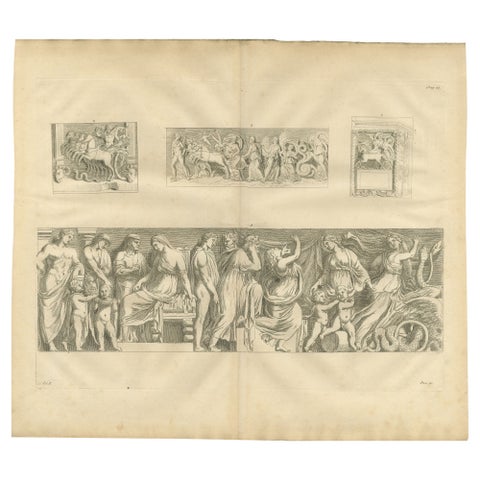
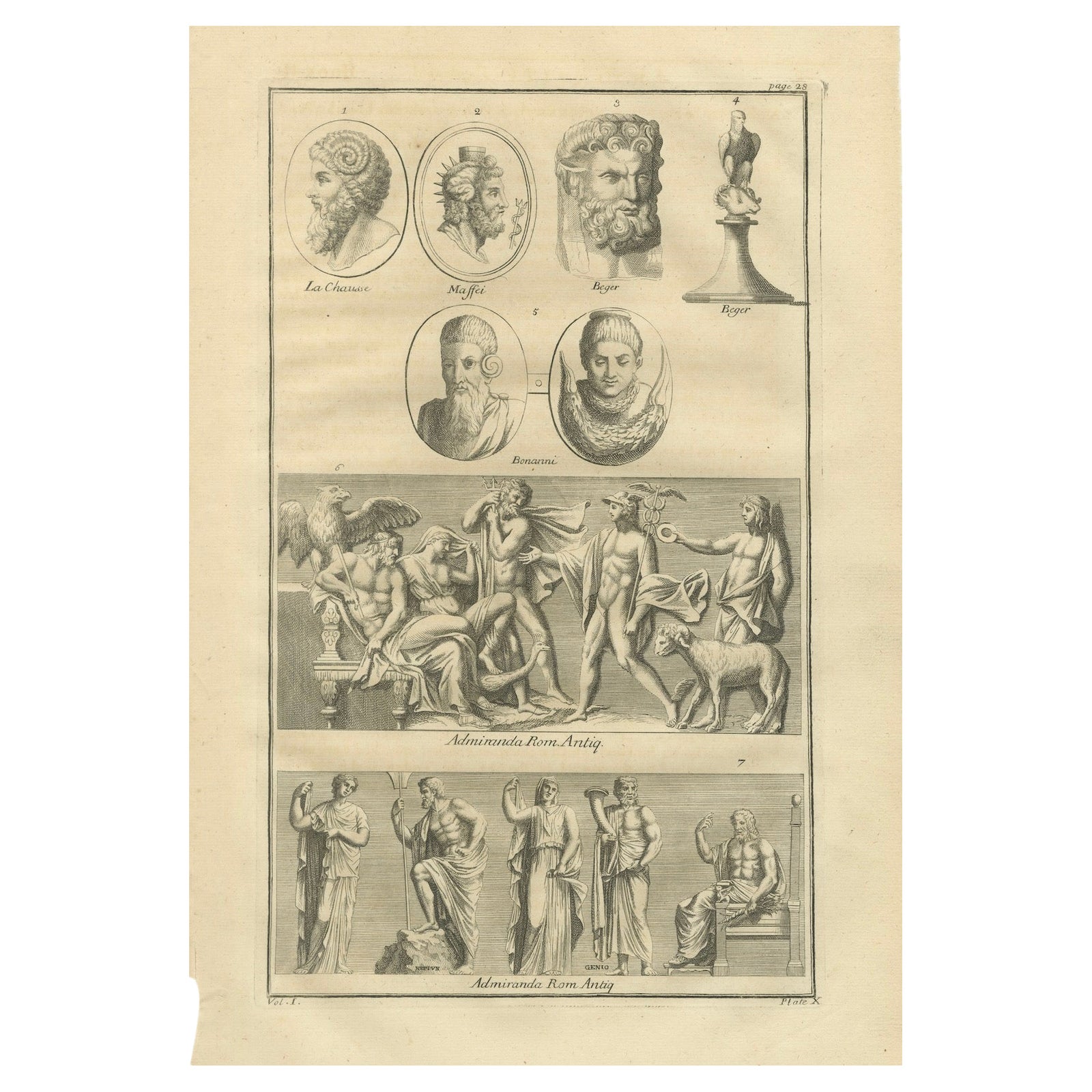
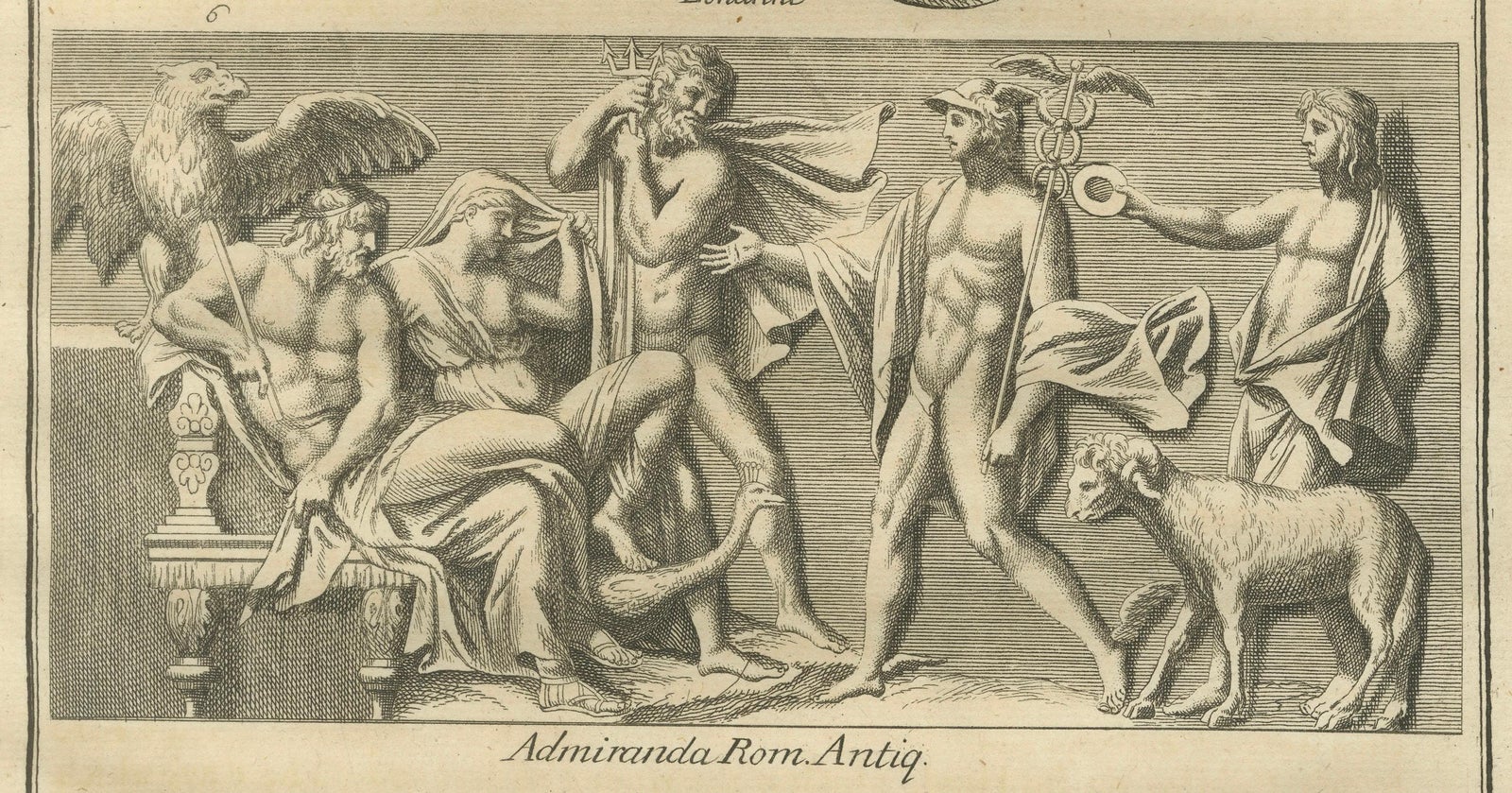
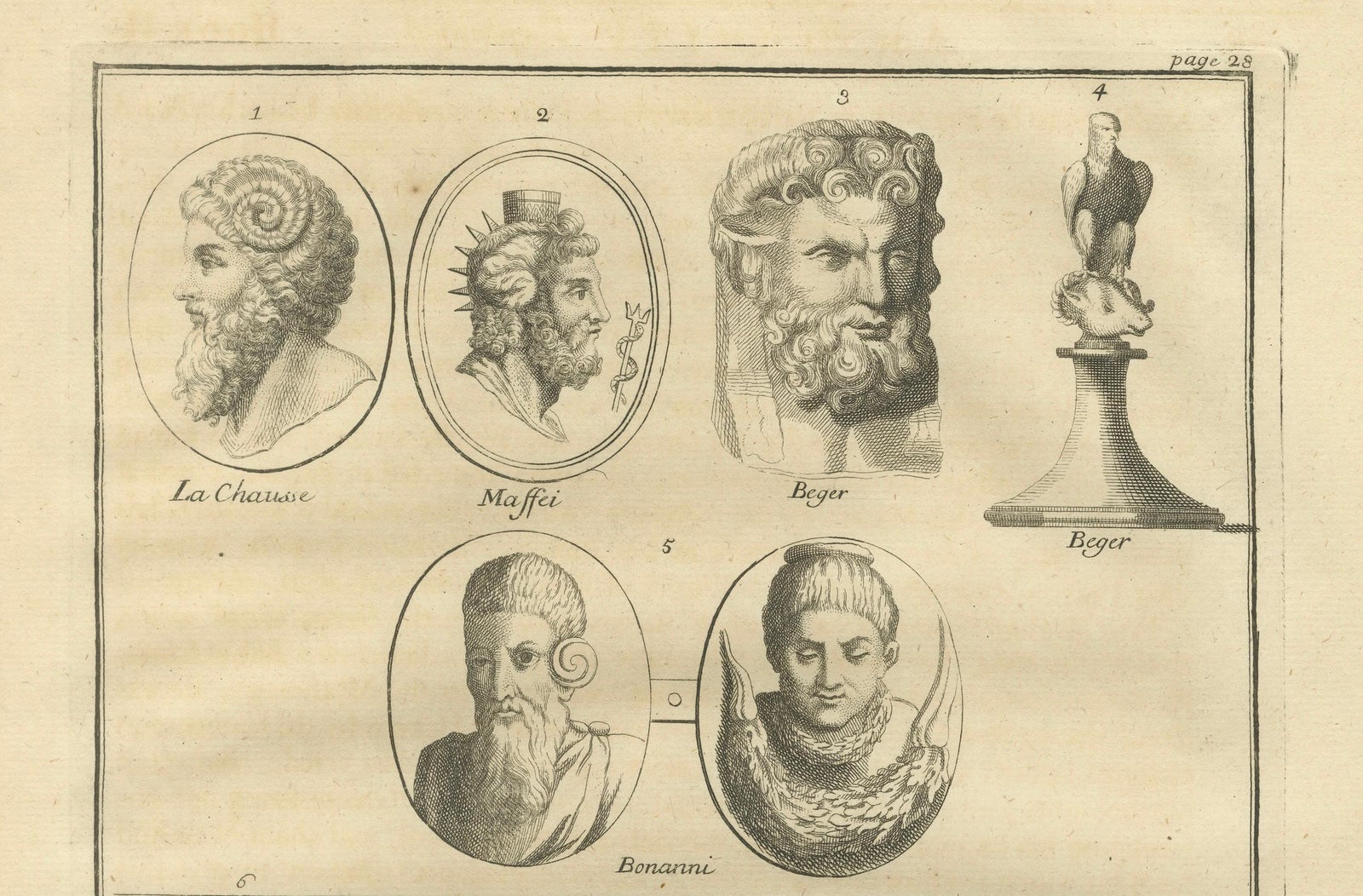
This finely engraved composite plate originates from the first English edition of Bernard de Montfaucon’s monumental antiquarian work Antiquity Explained and Represented in Sculptures, published in London in 1721. The sheet brings together a carefully curated selection of Roman sculptural material, combining portrait heads, bust fragments, statuettes, and two horizontal relief scenes after admired Roman antiquities.
The upper section presents a series of engraved portrait heads and sculptural fragments, documenting variations in hairstyle, beard forms, and physiognomy as preserved in Roman marble sculpture. These studies reflect the antiquarian interest in typology and identification, central to early modern attempts to classify and understand ancient portraiture. Below, two elongated relief scenes depict standing and seated classical figures in dynamic poses, likely derived from Roman reliefs and statues admired in early collections. The figures are rendered with clarity and balance, emphasizing drapery, contrapposto, and idealized anatomy.
Plates of this kind functioned as visual reference tools for scholars, artists, and architects, illustrating how fragmented remains and complete sculptural groups could be studied side by side. Although printed in England, the imagery is rooted in Italian antiquarian scholarship and the Roman tradition of studying ancient sculpture, closely associated with the work of Giovanni Pietro Bellori. Today, such sheets are valued for their intellectual density, refined engraving, and strong decorative appeal, making them particularly suitable for libraries, studies, and classically inspired interiors.
This example comes from the same 1721 volume as the other plates in this Montfaucon series and represents an authentic early English issue of one of the foundational works of classical archaeology.
Condition report:
Good overall condition. Light, even age toning and minor edge wear consistent with early 18th-century paper. Plate impression remains strong and clear. No significant tears, losses, or restorations observed.
Framing tips:
This plate works well with a generous off-white or soft ivory mat to separate the detailed upper portrait studies from the narrative relief scenes below. A dark walnut, mahogany, or black frame reinforces the scholarly, classical character, while a slimmer frame suits more contemporary interiors.
Technique: Engraving
Maker: Bernard de Montfaucon, France (published London, 1721)