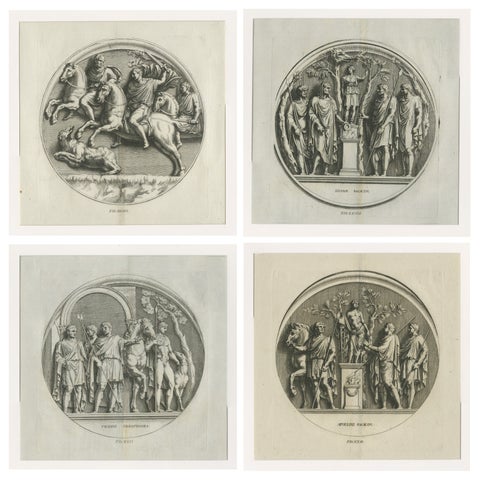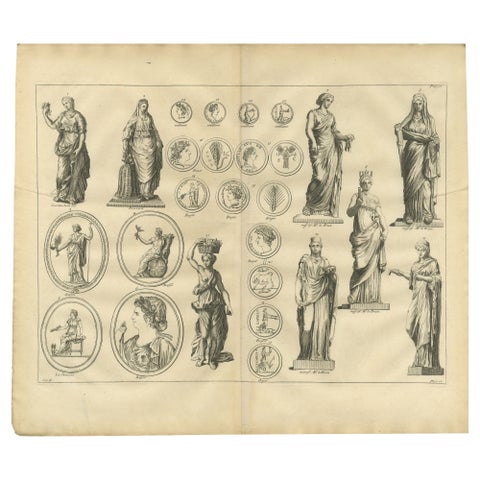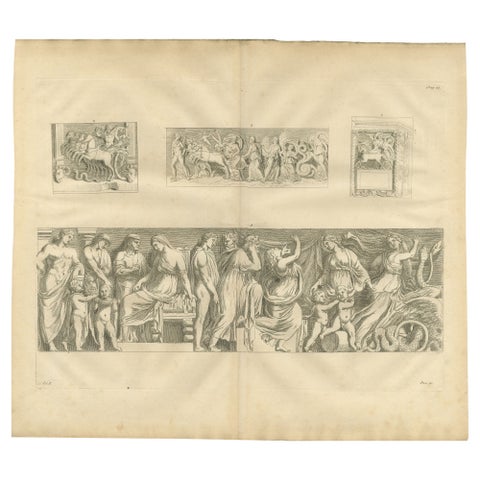
Close-ups
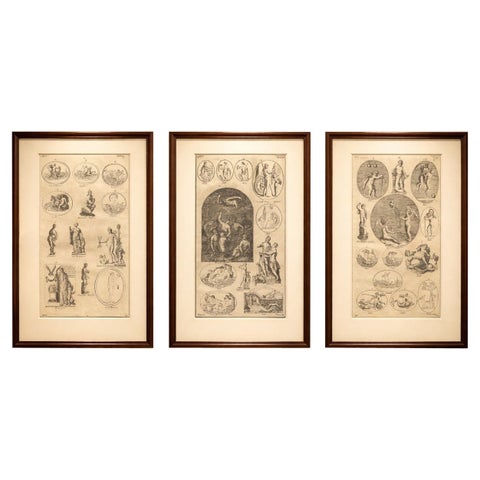
Framed and on the wall
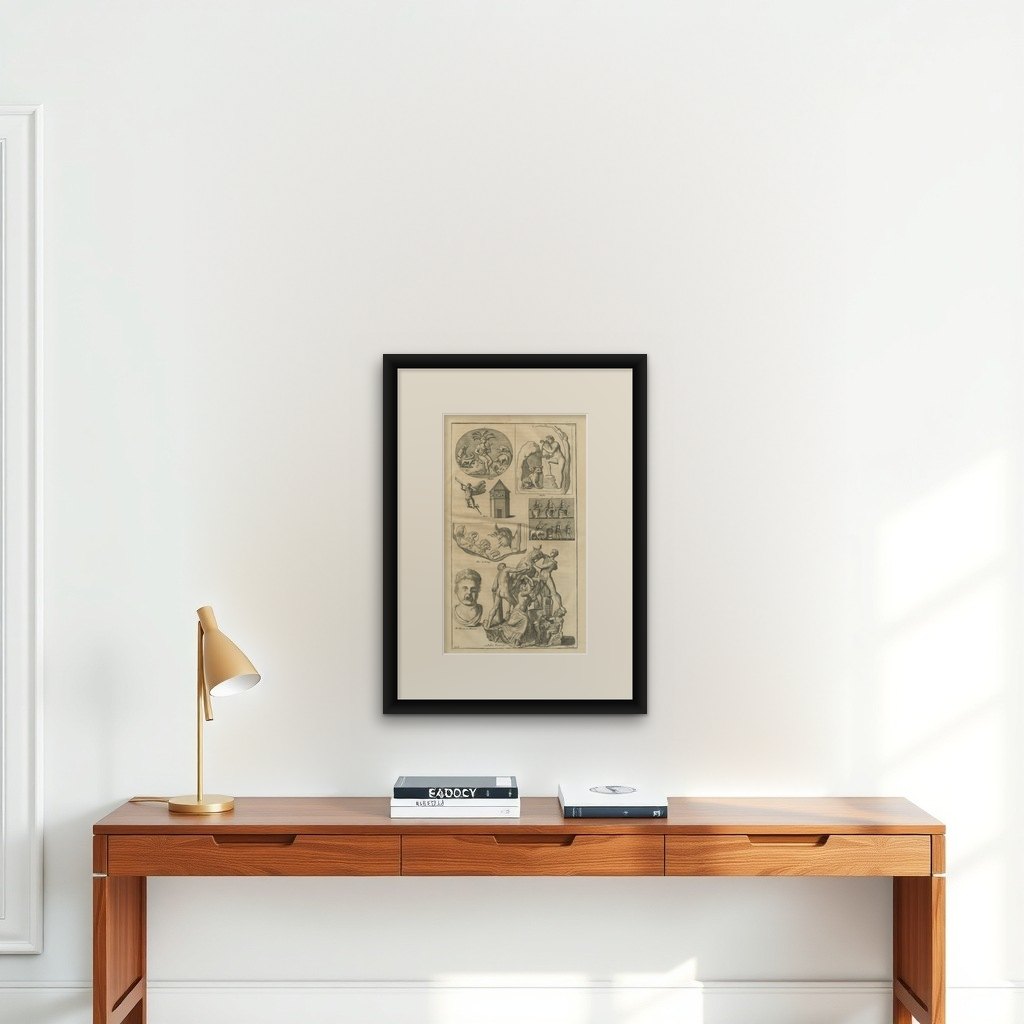

Frame and rooms are illustrations of how the print could look, drawn to its real size; it is sold unframed unless the description says otherwise.
Antiquity & ruins
Monumental Classical Sculpture Studies, Montfaucon Antiquity Explained, 1721
$1,295
€1,150 · £975
Original print, not a reproduction
Ships worldwide from the Netherlands, flat, insured and tracked. 14-day returns. To buy, use Ask a question (info@antiquearchitectureprints.com) and we will reserve it for you.
- Date
- 1721
- Sheet size
- 16.7 × 10 in (42.3 × 25.5 cm)
- Condition
- Good. Good antique condition. Even age toning throughout. Minor edge wear and light surface creasing consistent with age. The engraved image remains complete and well preserved.
- Collection
- Antiquity & ruins
- Era
- 1700 to 1789, Baroque to Neoclassical
- Stock no.
- f_48028072
Classical Sculpture Studies, Montfaucon Antiquity Explained, Rome & Mythology, 1721
Description:
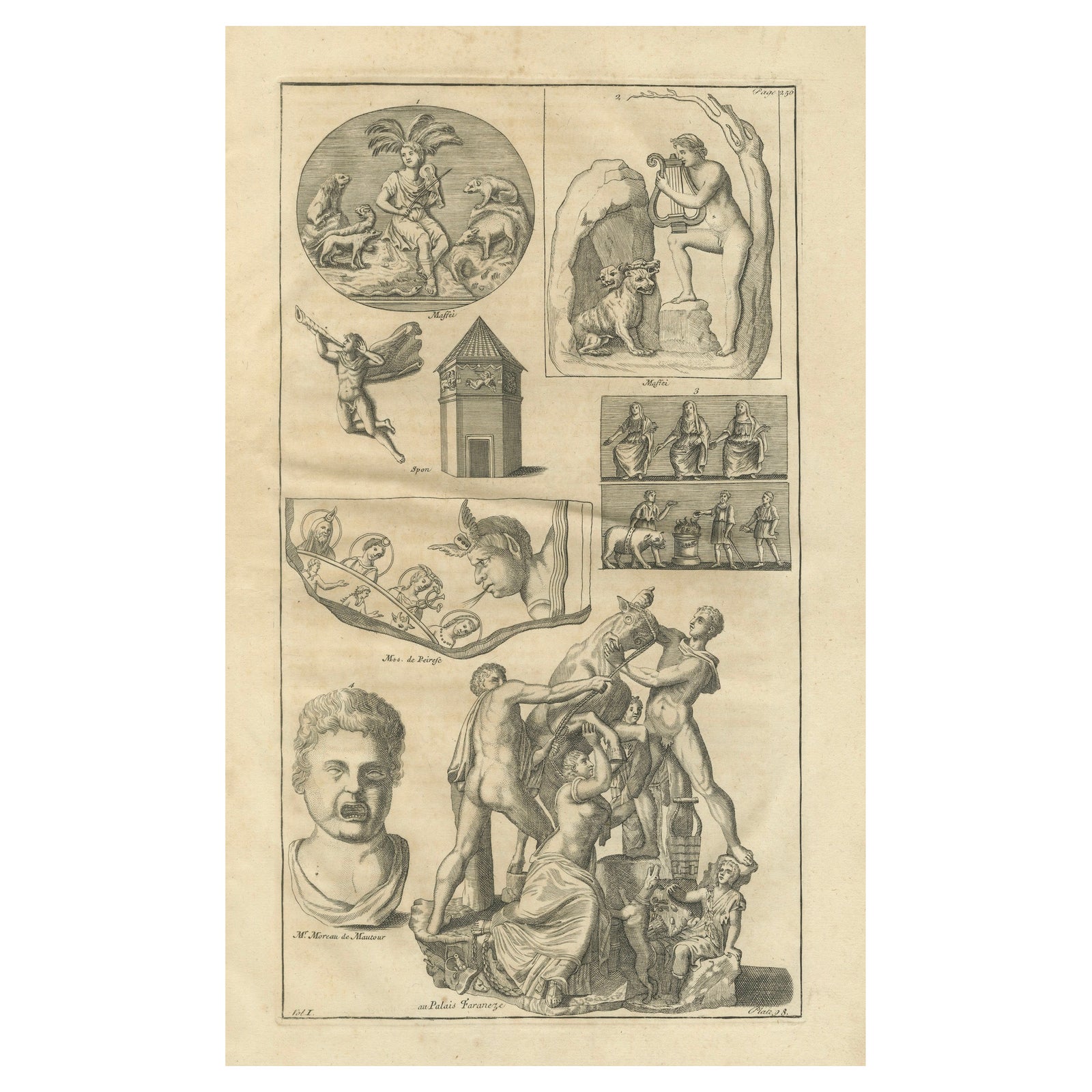
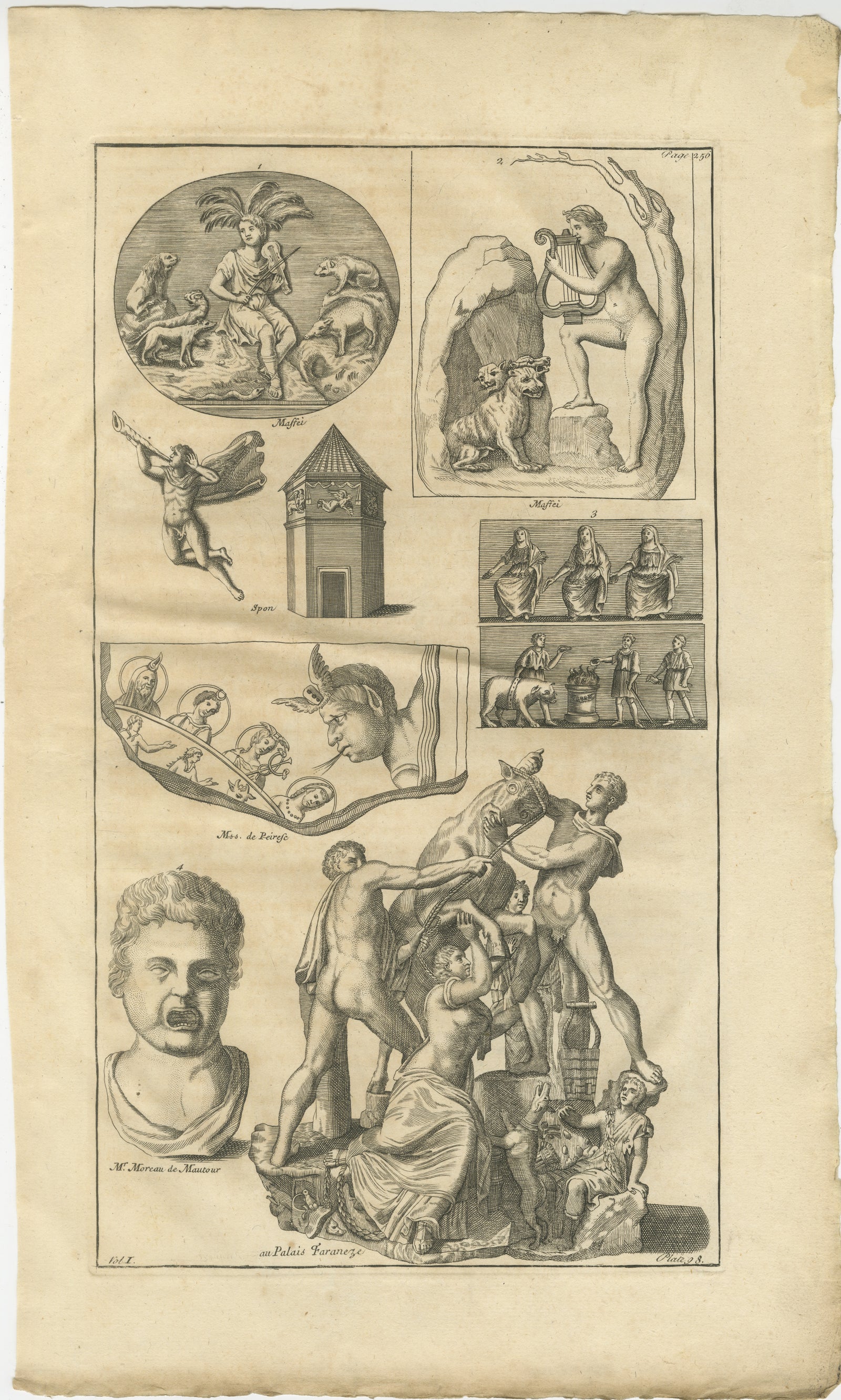
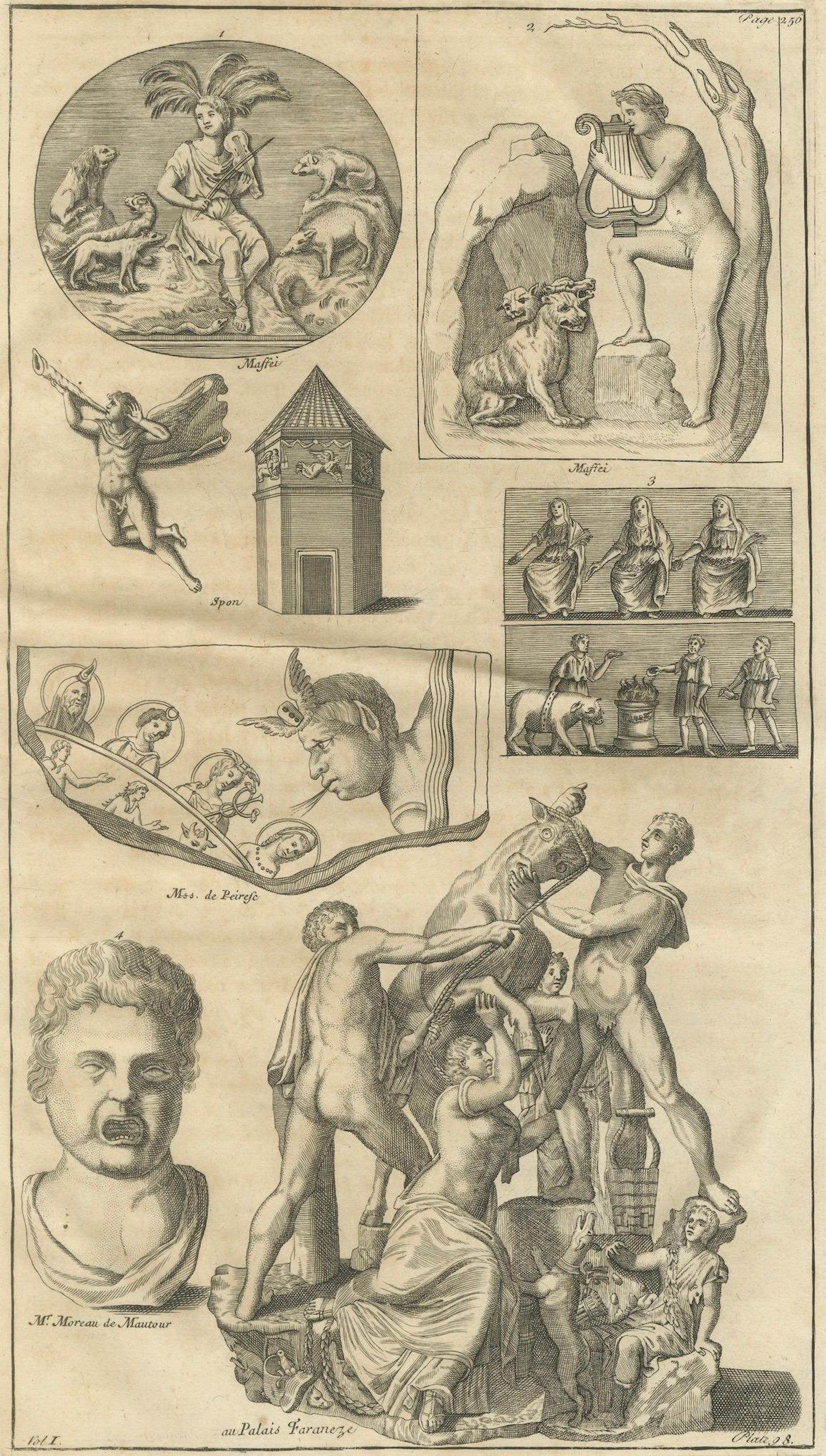
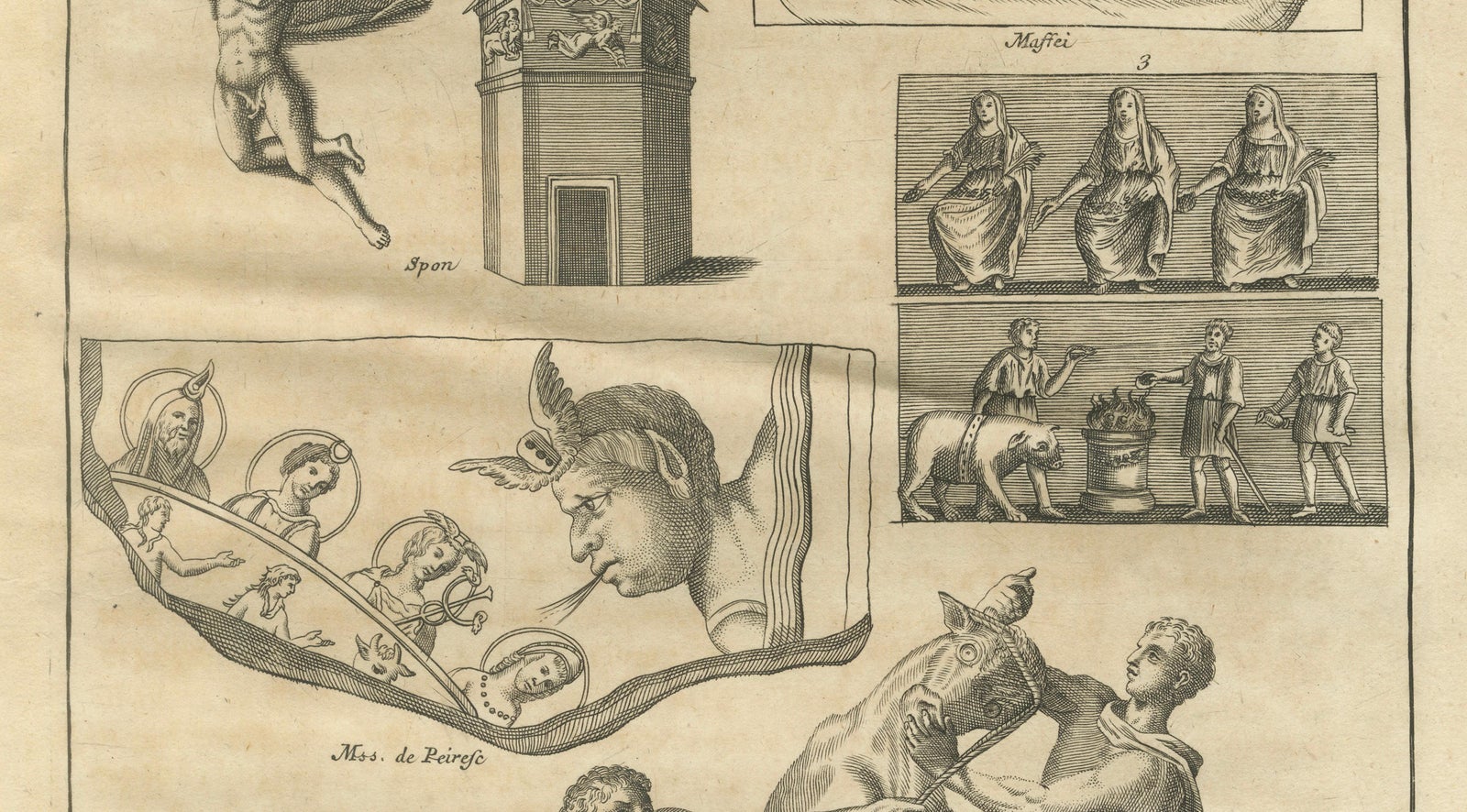
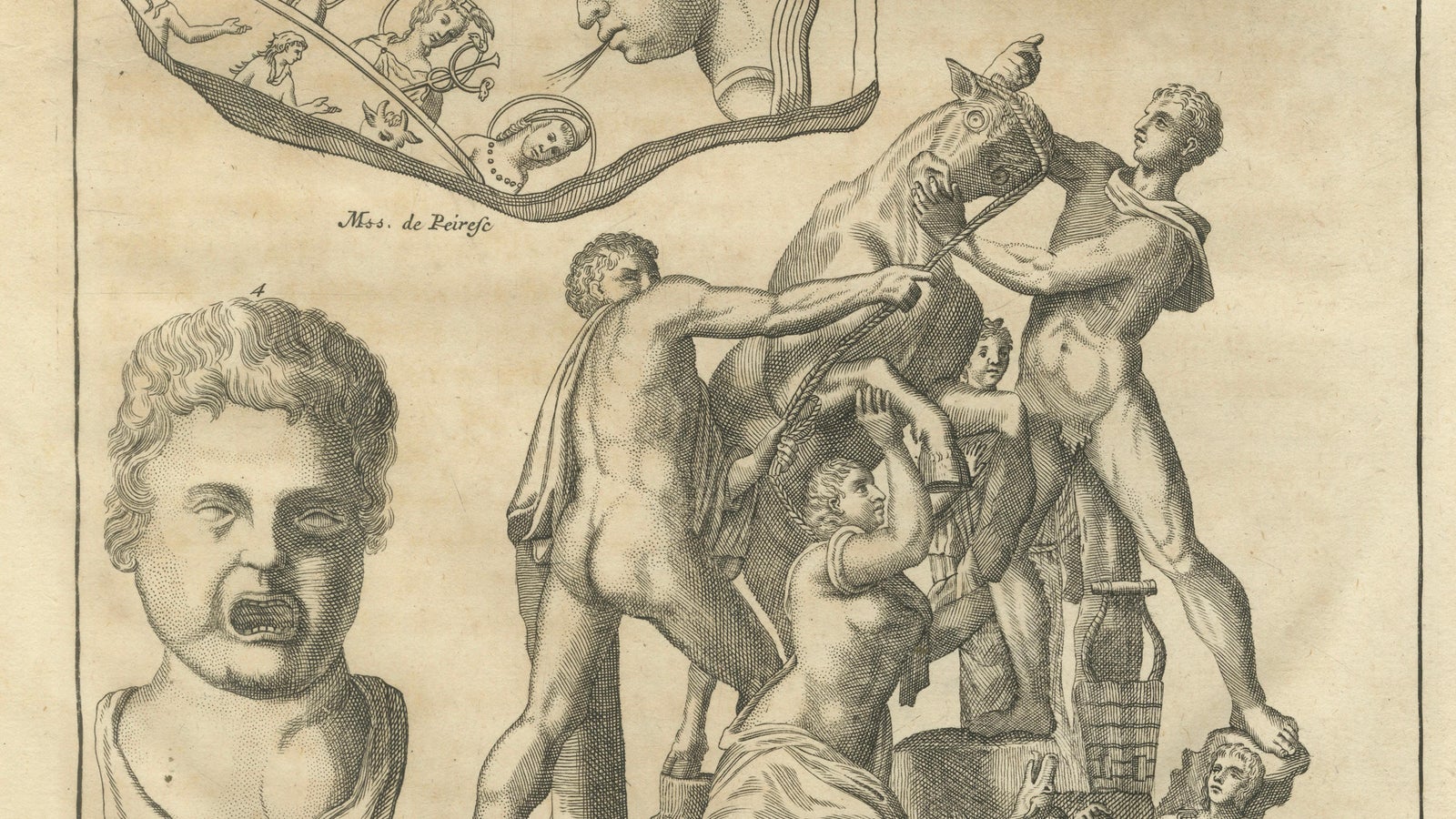
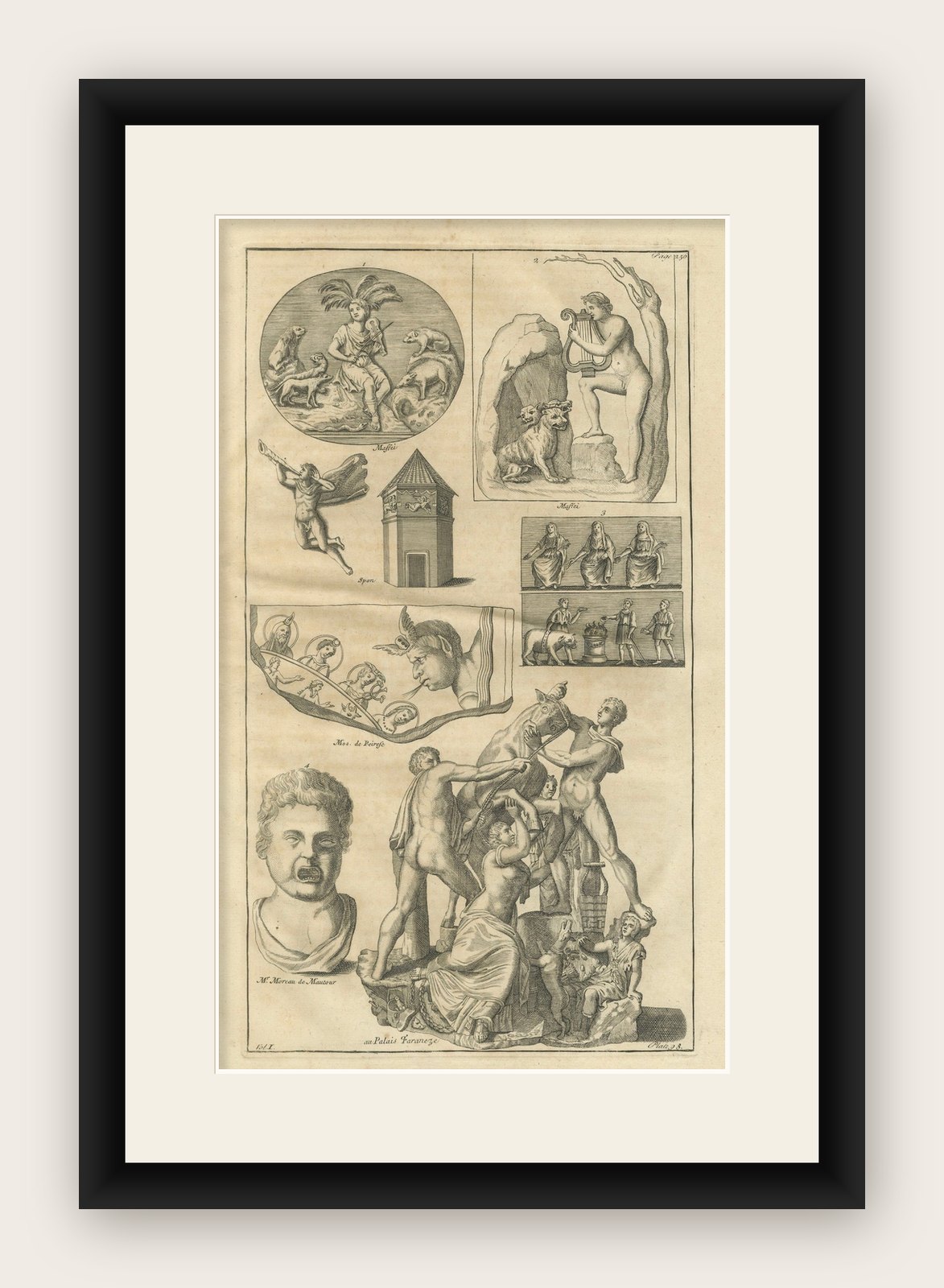
This impressive early 18th-century engraving originates from Bernard de Montfaucon’s seminal antiquarian publication Antiquity Explained and Represented in Sculptures, Volume I, printed in London in 1721. The plate presents a carefully curated ensemble of classical sculptural subjects, combining mythological scenes, architectural fragments, reliefs, and celebrated Roman statues into a single, vertically structured composition.
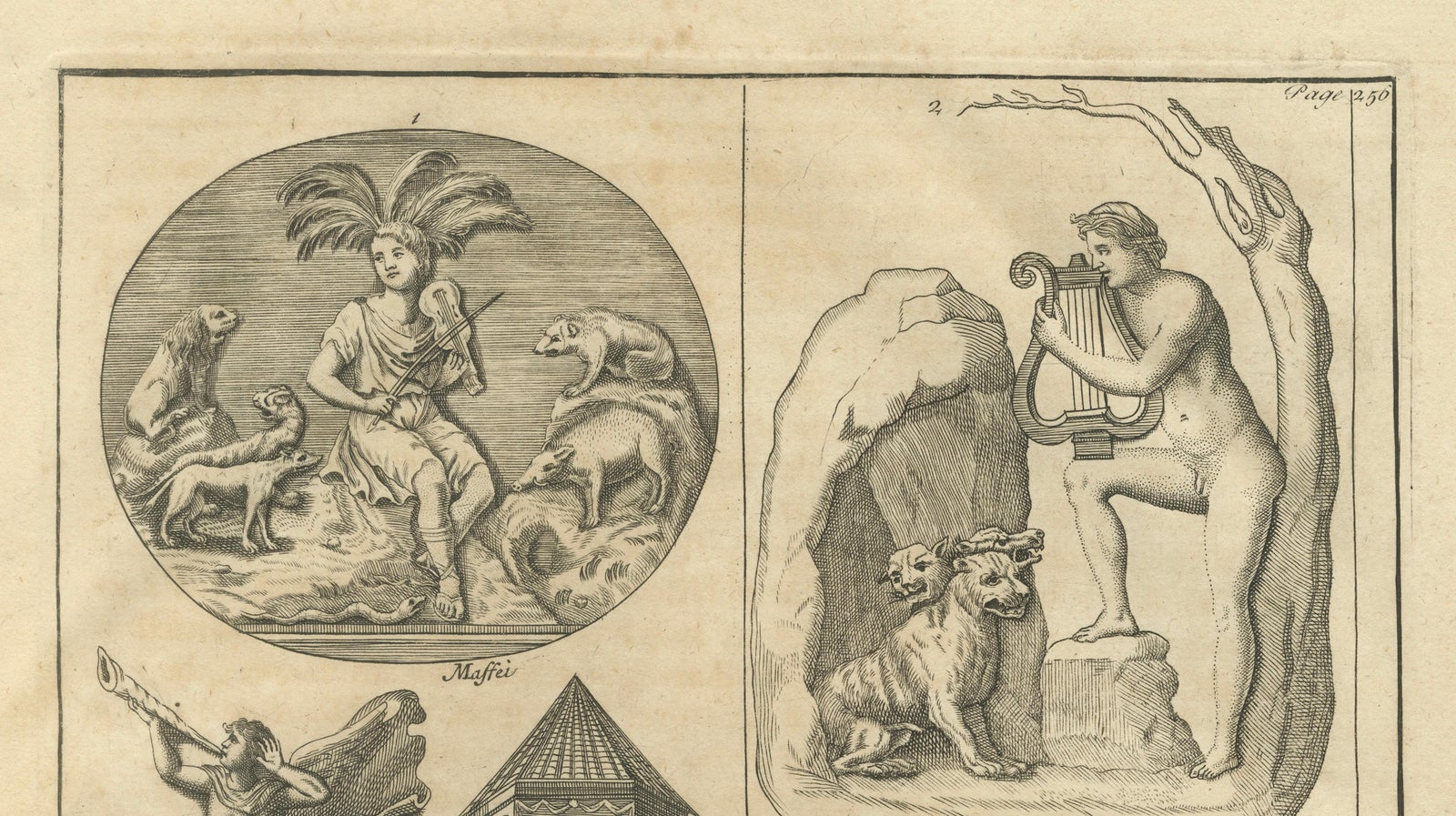
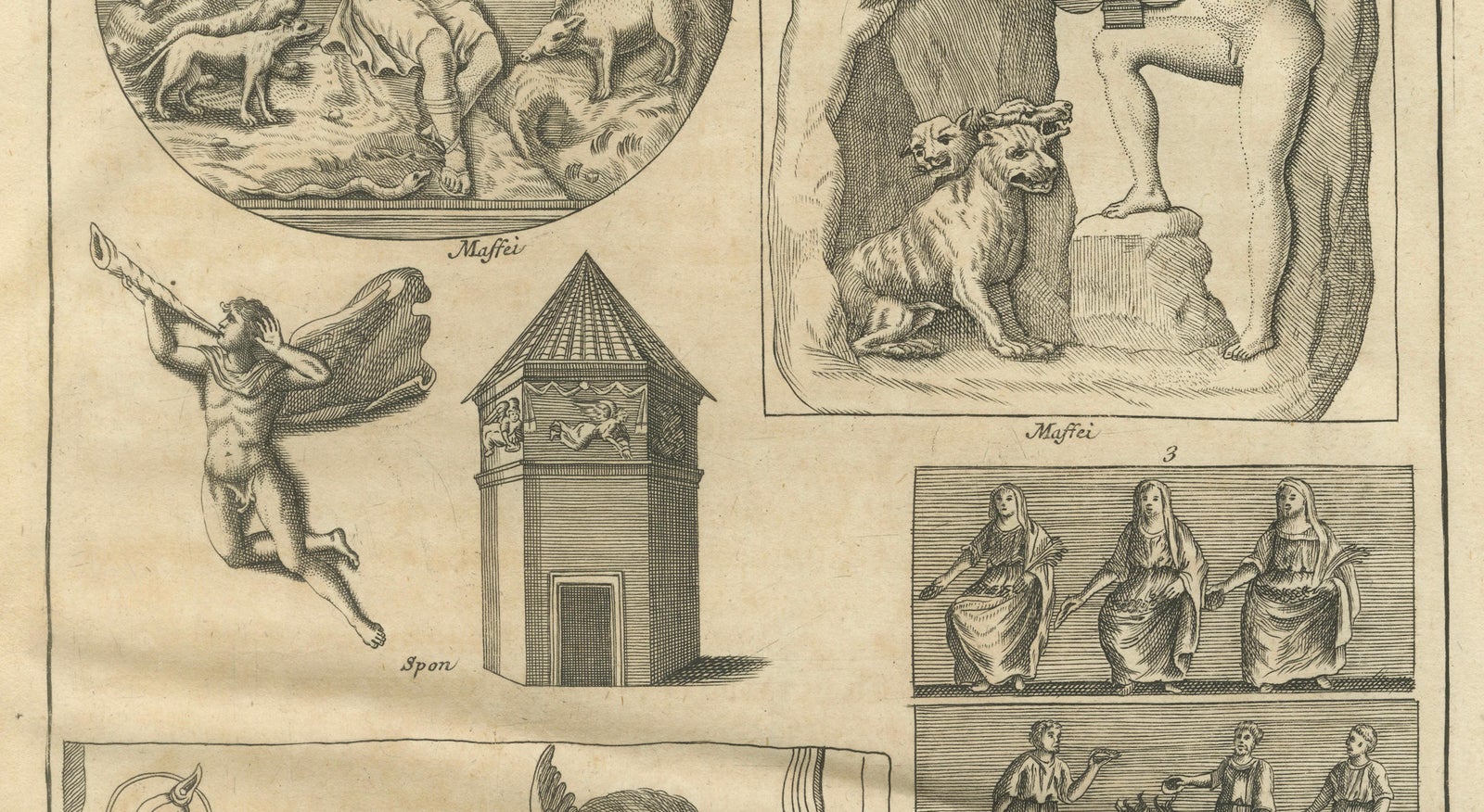
At the upper register, the viewer encounters mythological and pastoral imagery, including a circular relief of a youthful figure playing a lyre among animals, as well as a standing nude figure beside a tree, rendered in the calm, idealised language of classical sculpture. These scenes transition downward into smaller narrative reliefs and fragmentary antiquities, illustrating Montfaucon’s method of visual scholarship: presenting ancient art not as isolated masterpieces, but as a coherent material culture.
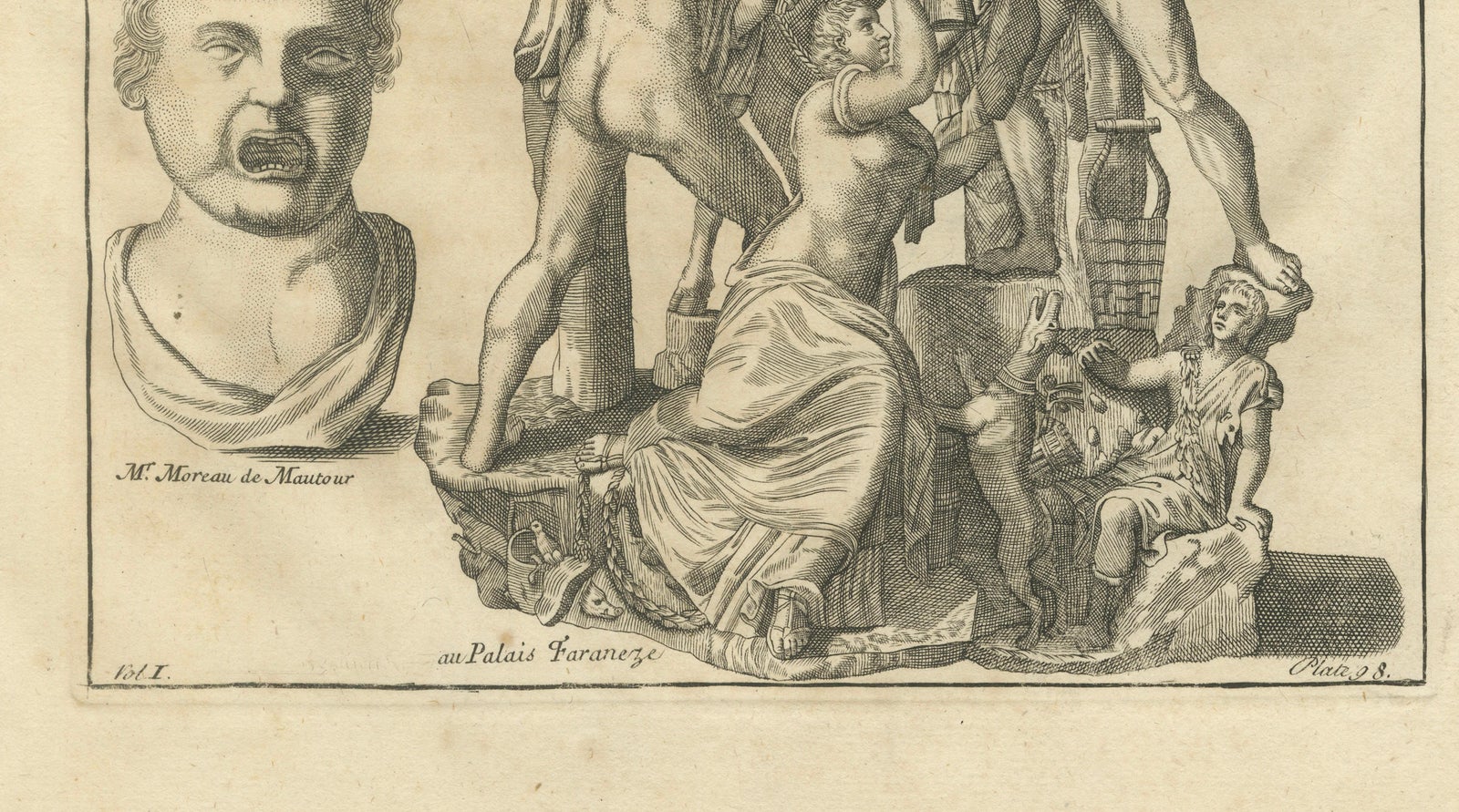
The lower half of the plate is dominated by a powerful sculptural group depicting multiple figures engaged in dramatic physical interaction, likely referencing a renowned Roman marble group formerly in the Palazzo Farnese. This monumental scene anchors the composition both visually and thematically, lending the engraving strong architectural weight. The inclusion of a sculpted head study at left further reinforces the academic, comparative intent of the plate, inviting close study of expression and form.
As with all Montfaucon plates, the engraving was intended as a documentary record rather than a decorative fantasy. The line work prioritises clarity and scale over softness, resulting in a composition that reads exceptionally well from a distance. When framed, the plate functions as a commanding wall piece, ideally suited for libraries, studies, hotel corridors, or refined classical interiors where scholarly gravitas and visual presence are key.
Condition
Good antique condition. Even age toning throughout. Minor edge wear and light surface creasing consistent with age. The engraved image remains complete and well preserved.
Framing tips
This plate benefits from generous framing. A wide mount in warm off-white or light parchment tones will enhance the verticality of the composition. Recommended frames include dark walnut, ebonised wood, or restrained antique gilt for a museum-style presentation.
Technique: Copperplate engraving
Maker: Bernard de Montfaucon, published in London, 1721