Close-ups
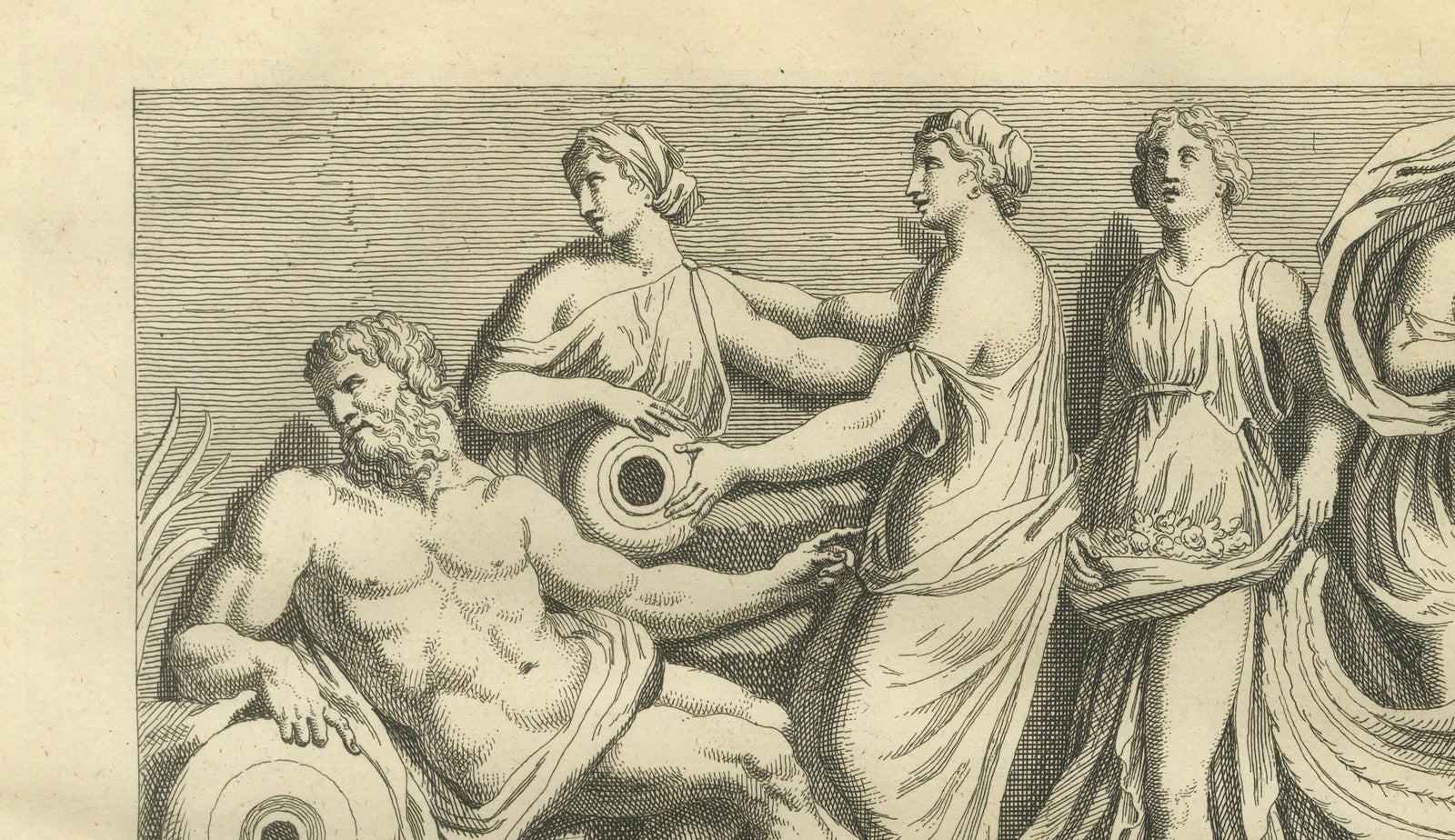
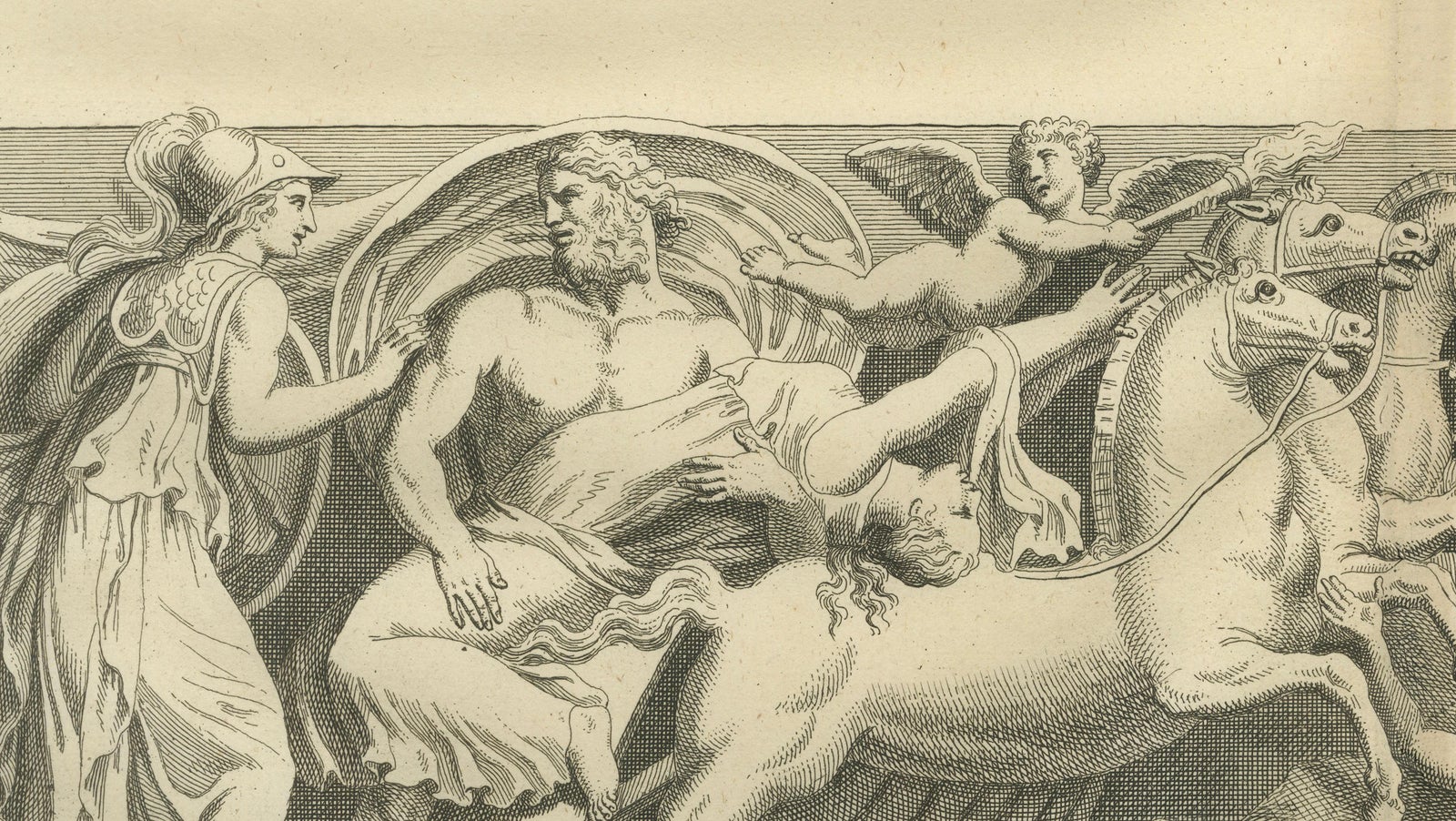
Framed and on the wall
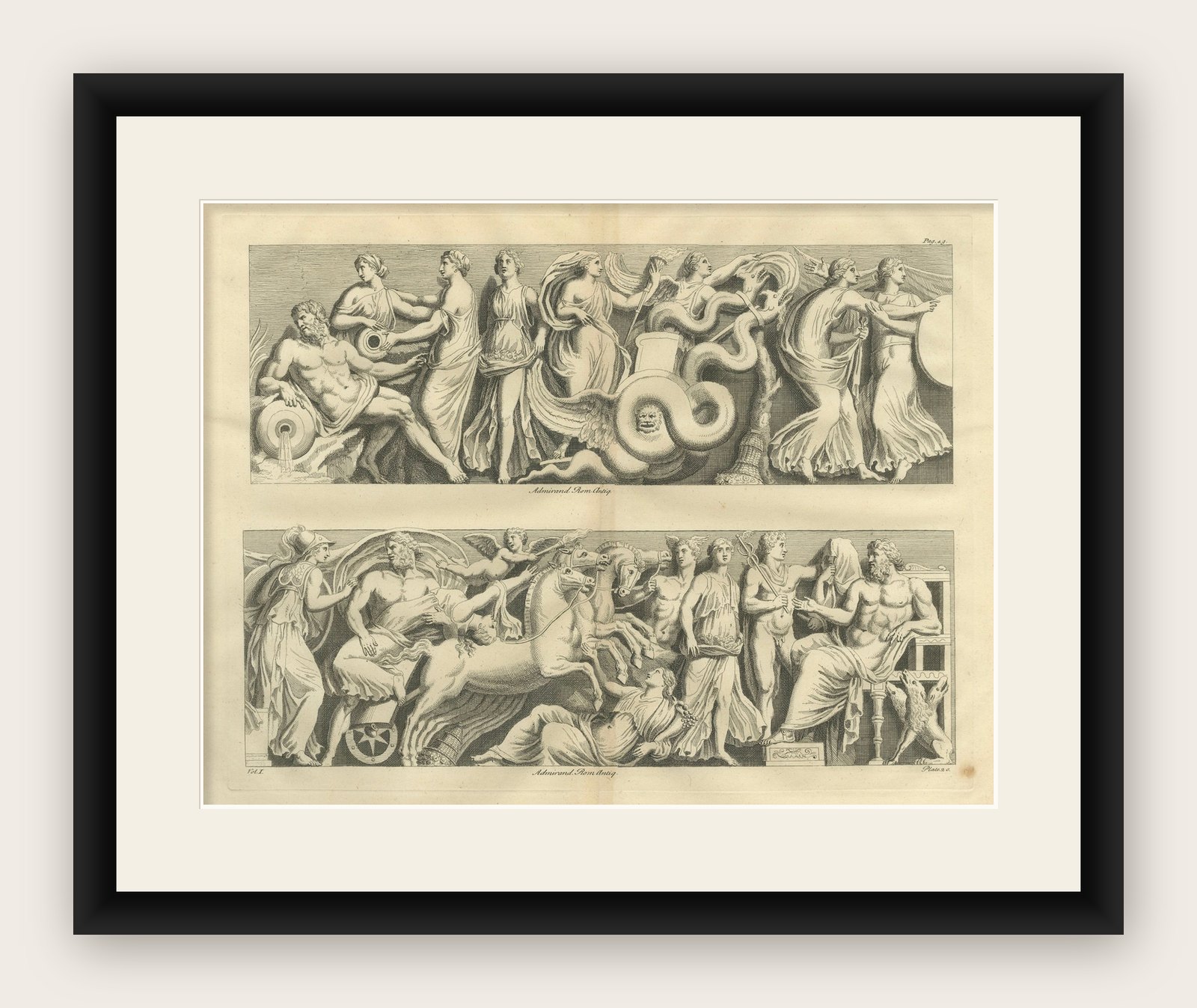
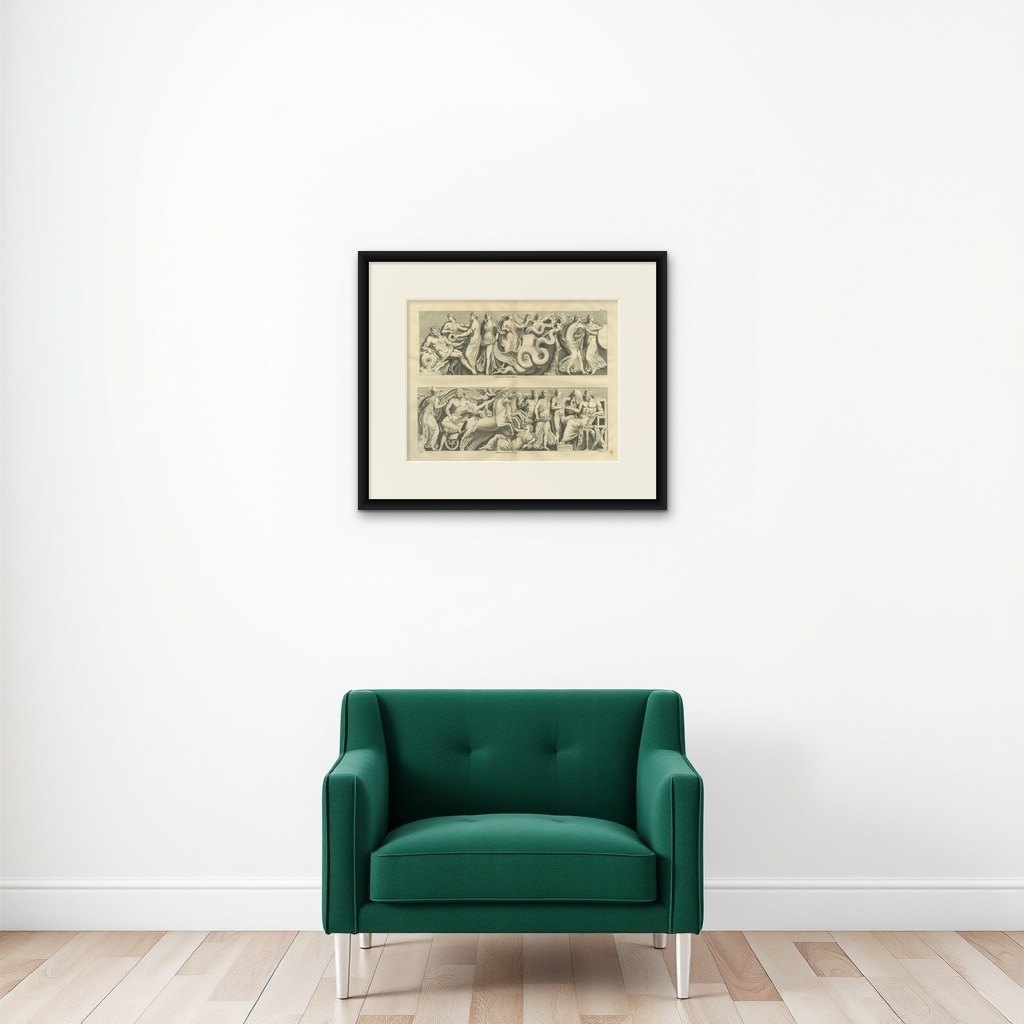

Frame and rooms are illustrations of how the print could look, drawn to its real size; it is sold unframed unless the description says otherwise.
Antiquity & ruins
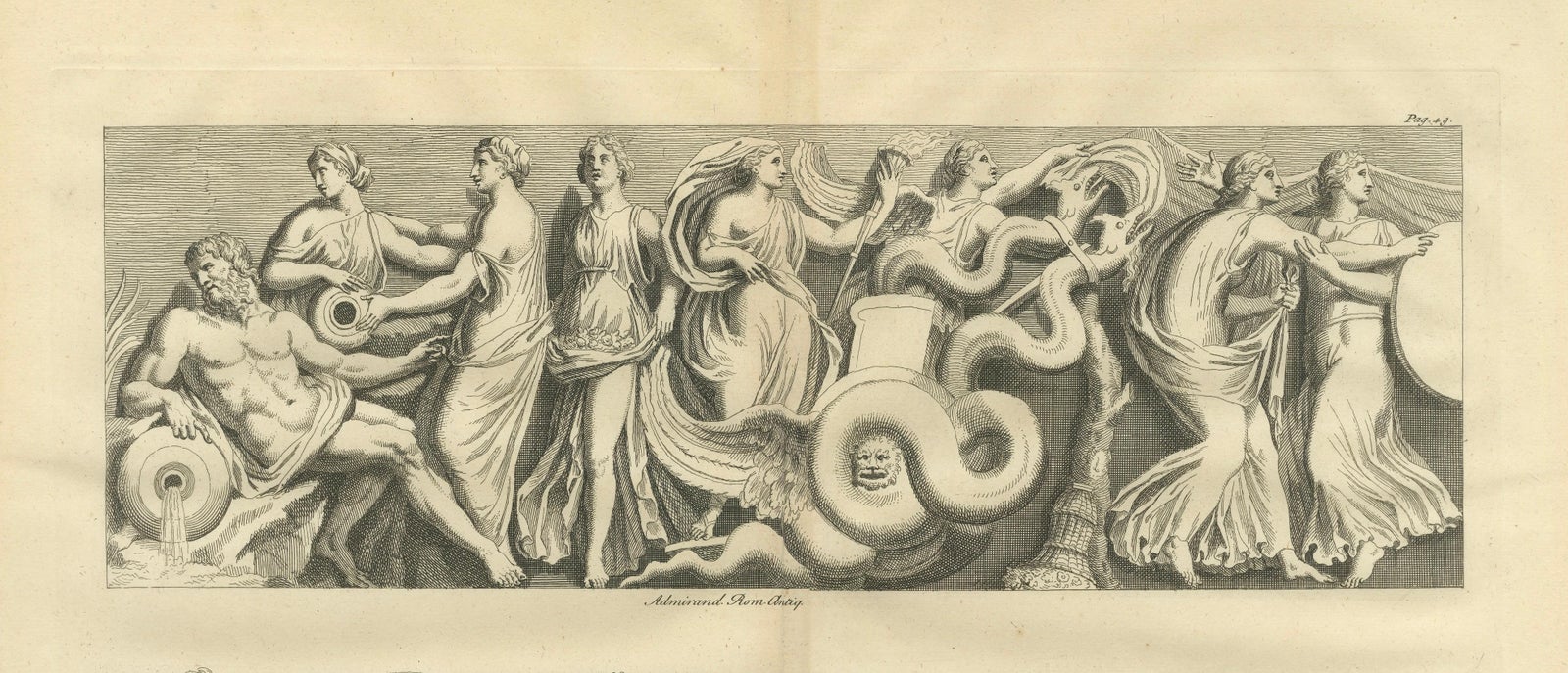
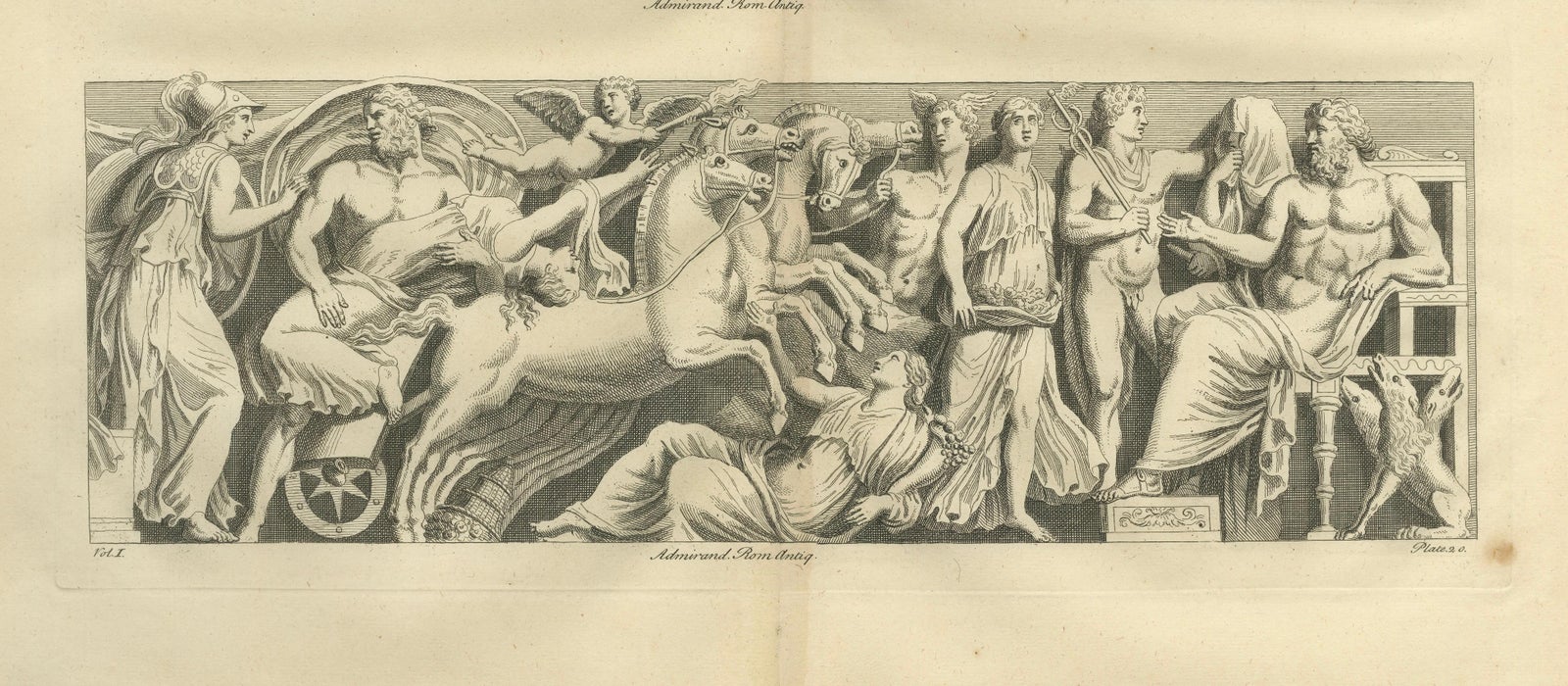
Monumental Classical Frieze, Montfaucon Antiquity Explained, London 1721
£840
$1,115 · €990
Original print, not a reproduction
Ships worldwide from the Netherlands, flat, insured and tracked. 14-day returns. To buy, use Ask a question (info@antiquearchitectureprints.com) and we will reserve it for you.
- Date
- 1721
- Sheet size
- 16.6 × 19.7 in (42.1 × 50 cm)
- Condition
- Good. Original 18th-century engraving with light age toning, a central vertical fold as issued, and minor edge wear. No losses to the engraved image. Plate mark visible.
- Collection
- Antiquity & ruins
- Era
- 1700 to 1789, Baroque to Neoclassical
- Stock no.
- f_48177212
Monumental Classical Frieze, Montfaucon Antiquity Explained, London 1721
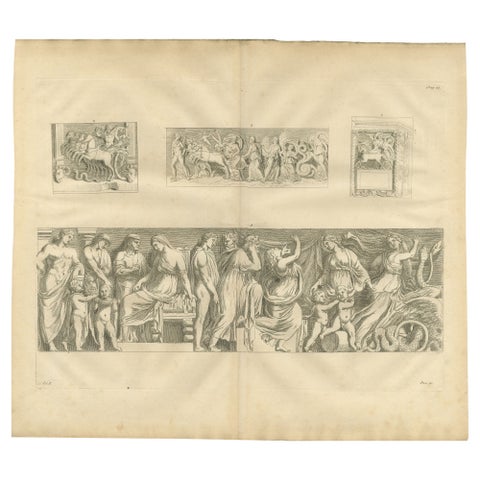
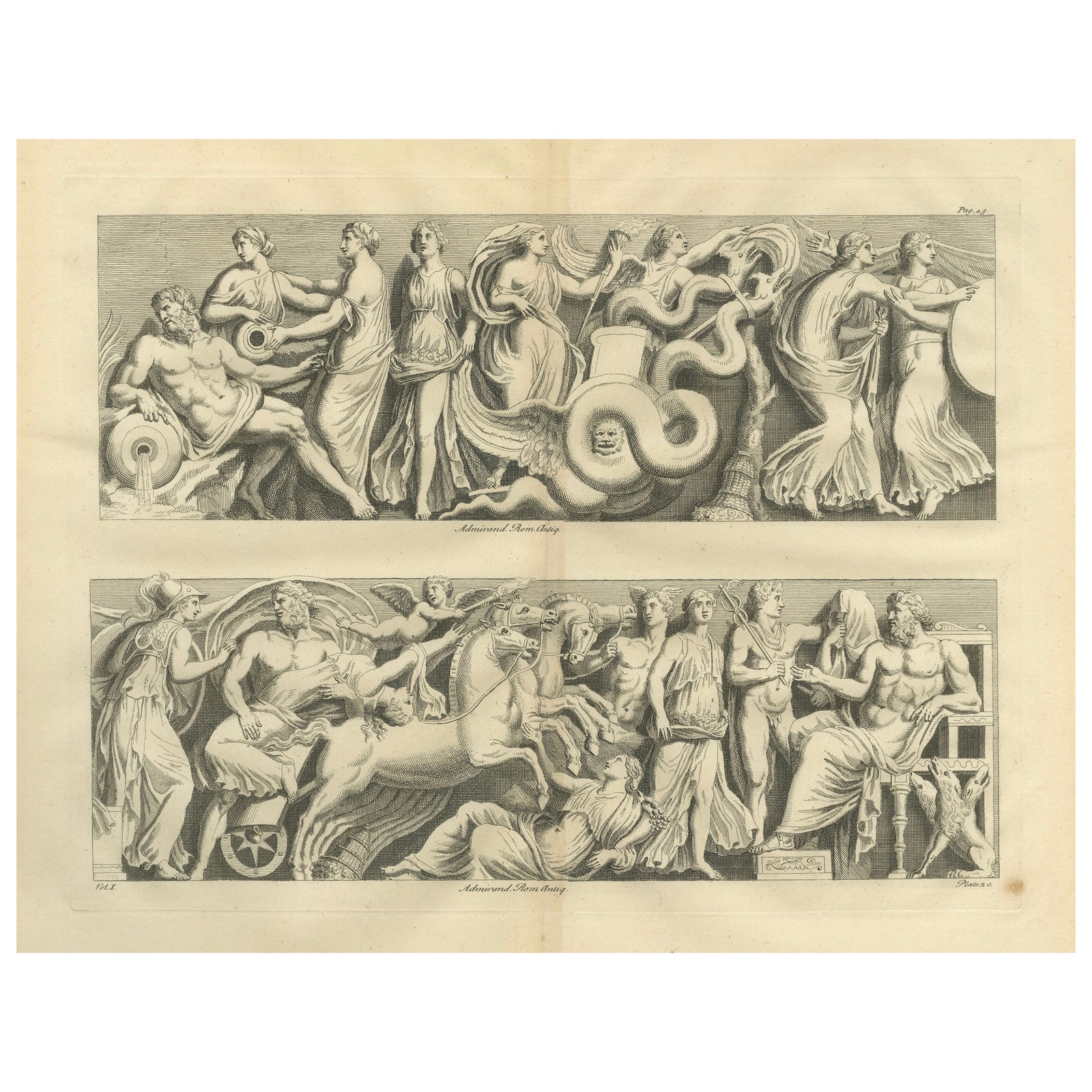
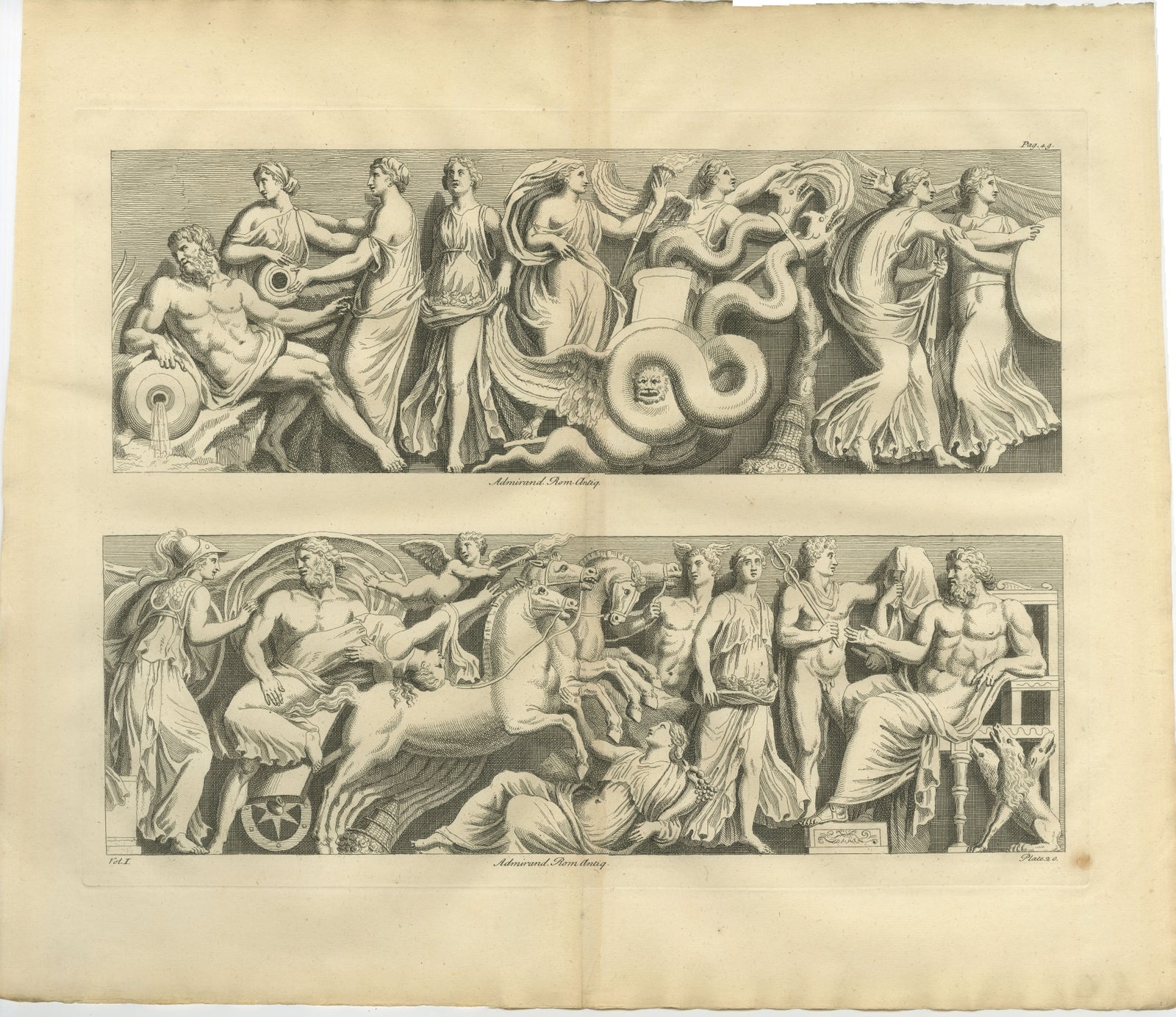
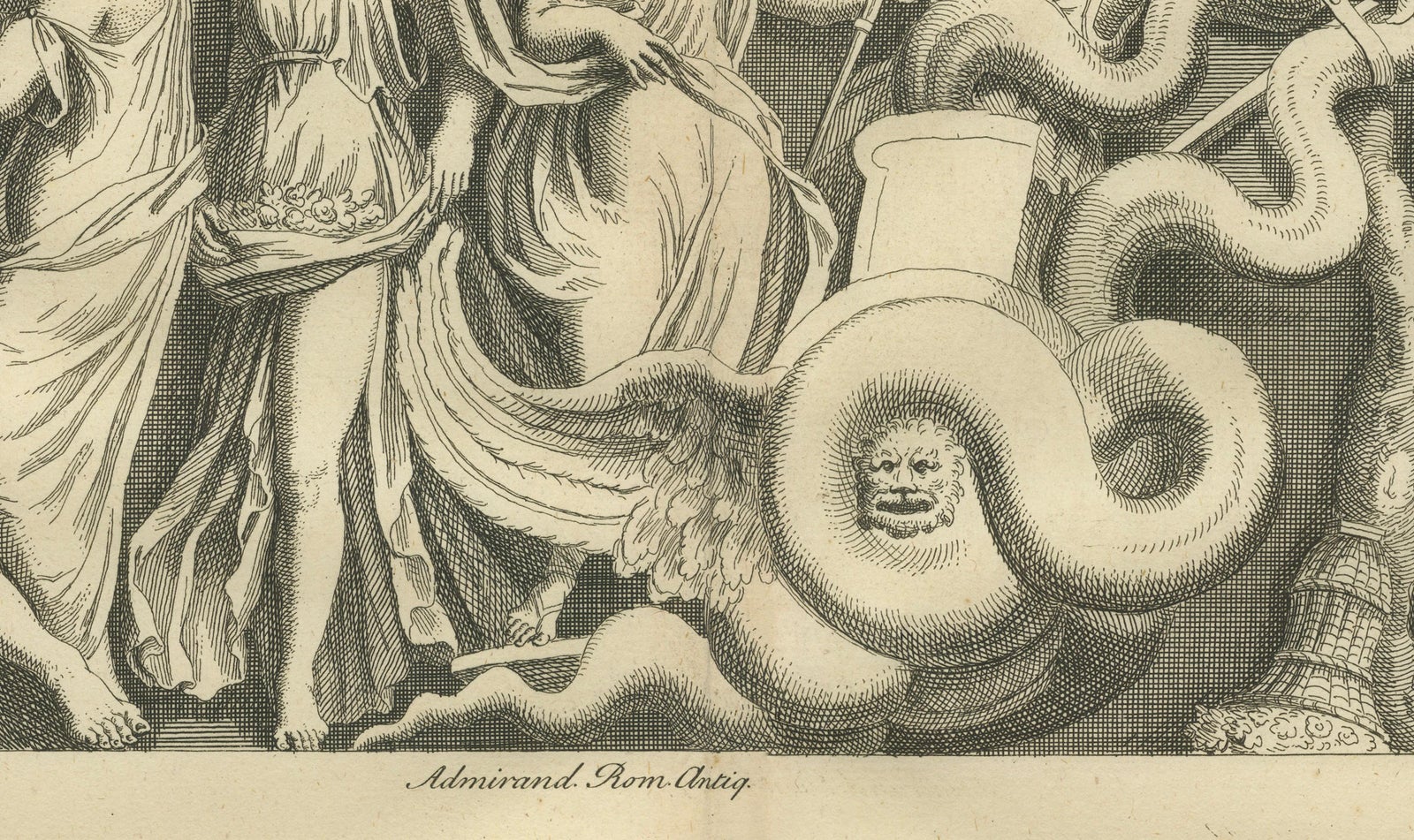
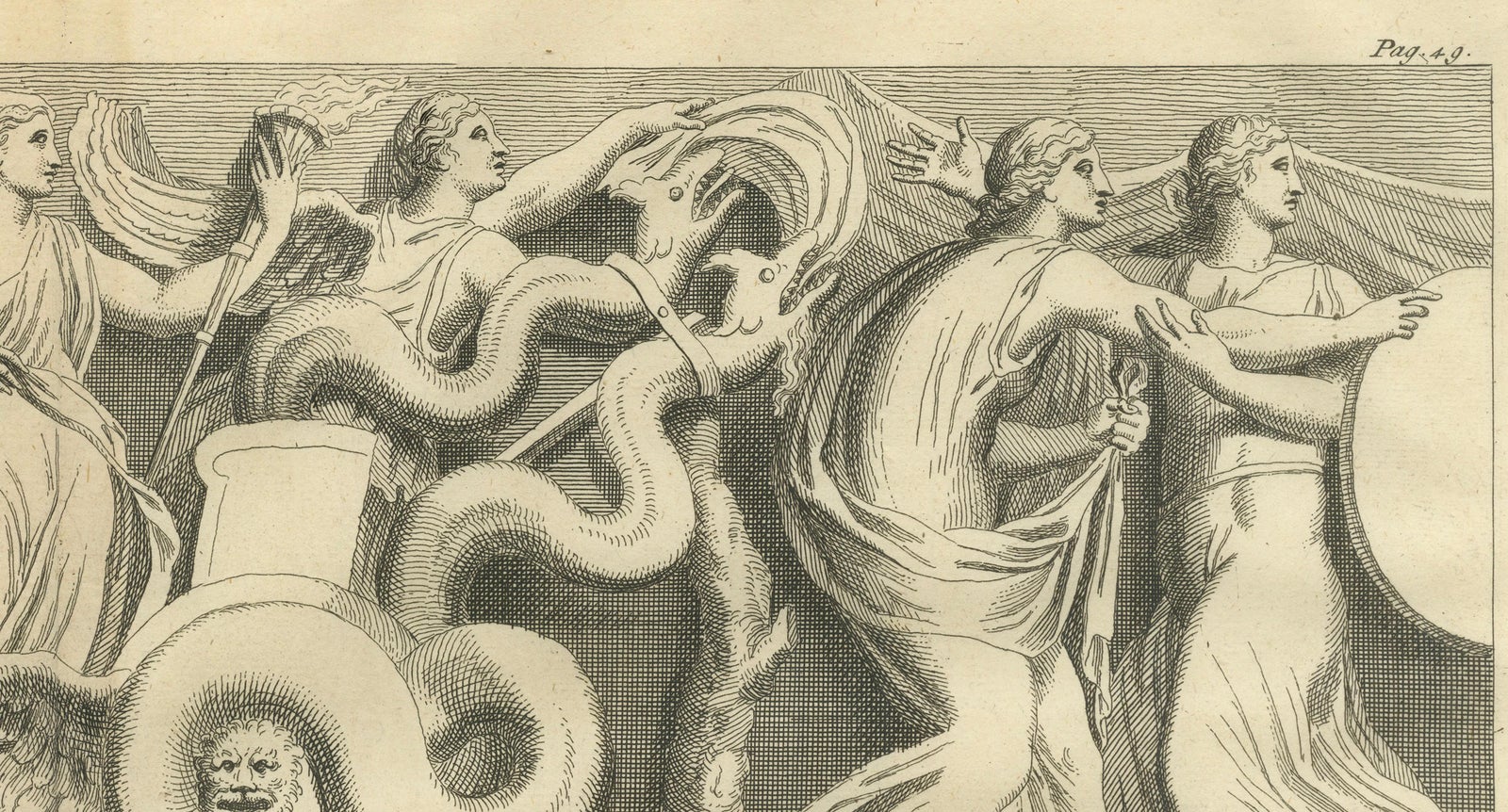
This striking and unusually large copper engraving comes from Bernard de Montfaucon’s landmark archaeological publication Antiquity Explained and Represented in Sculptures, Volume I, published in London in 1721. Presented as a wide, double-register frieze, the composition reproduces ancient Roman relief sculpture with exceptional scale and decorative authority.
The plate depicts two continuous classical processions populated by gods, allegorical figures, mythological beasts, chariots, and flowing drapery, rendered with a strong horizontal rhythm that immediately recalls carved stone reliefs from antiquity. When framed, the engraving reads less like a print and more like an architectural element, almost a sculpted wall panel, making it particularly compelling for interior designers seeking historic gravitas and visual impact.
Montfaucon’s work is regarded as one of the foundational achievements of early archaeology and art history. His engravings systematically documented ancient sculpture, reliefs, medals, and monuments at a scale previously unseen in printed form. Plates of this size were intended to convey monumentality, and this example succeeds remarkably well, commanding attention even in large rooms, corridors, or above furniture.
The engraving is printed on substantial early 18th-century laid paper with generous margins, allowing for bold framing options. Its horizontal format makes it ideal above a sofa, console, or credenza, or as a focal piece in a study or library interior. While the impression reflects its period origin rather than later steel-engraved sharpness, the visual strength lies in scale, composition, and historical presence.
An excellent choice for collectors of classical imagery, Grand Tour material, or designers seeking a powerful antique statement piece with genuine scholarly pedigree.
Condition report:
Original 18th-century engraving with light age toning, a central vertical fold as issued, and minor edge wear. No losses to the engraved image. Plate mark visible.
Framing tips:
Best presented in a wide, understated frame, black, dark walnut, or ebonized wood, with a deep off-white or warm grey mat to emphasize the frieze-like proportions and sculptural effect.
Technique: Copper engraving
Maker: Bernard de Montfaucon, Paris / London, 1721