Close-ups
Framed and on the wall

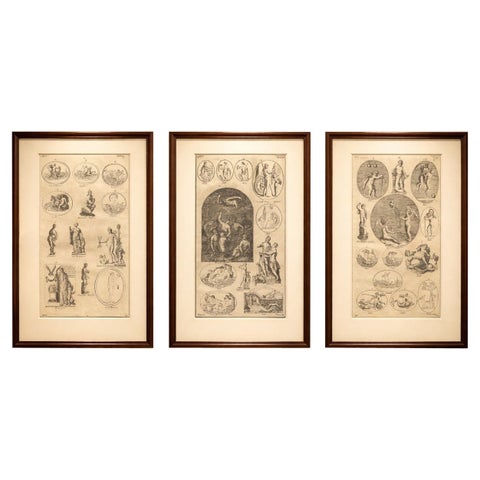
Frame and rooms are illustrations of how the print could look, drawn to its real size; it is sold unframed unless the description says otherwise.
Antiquity & ruins
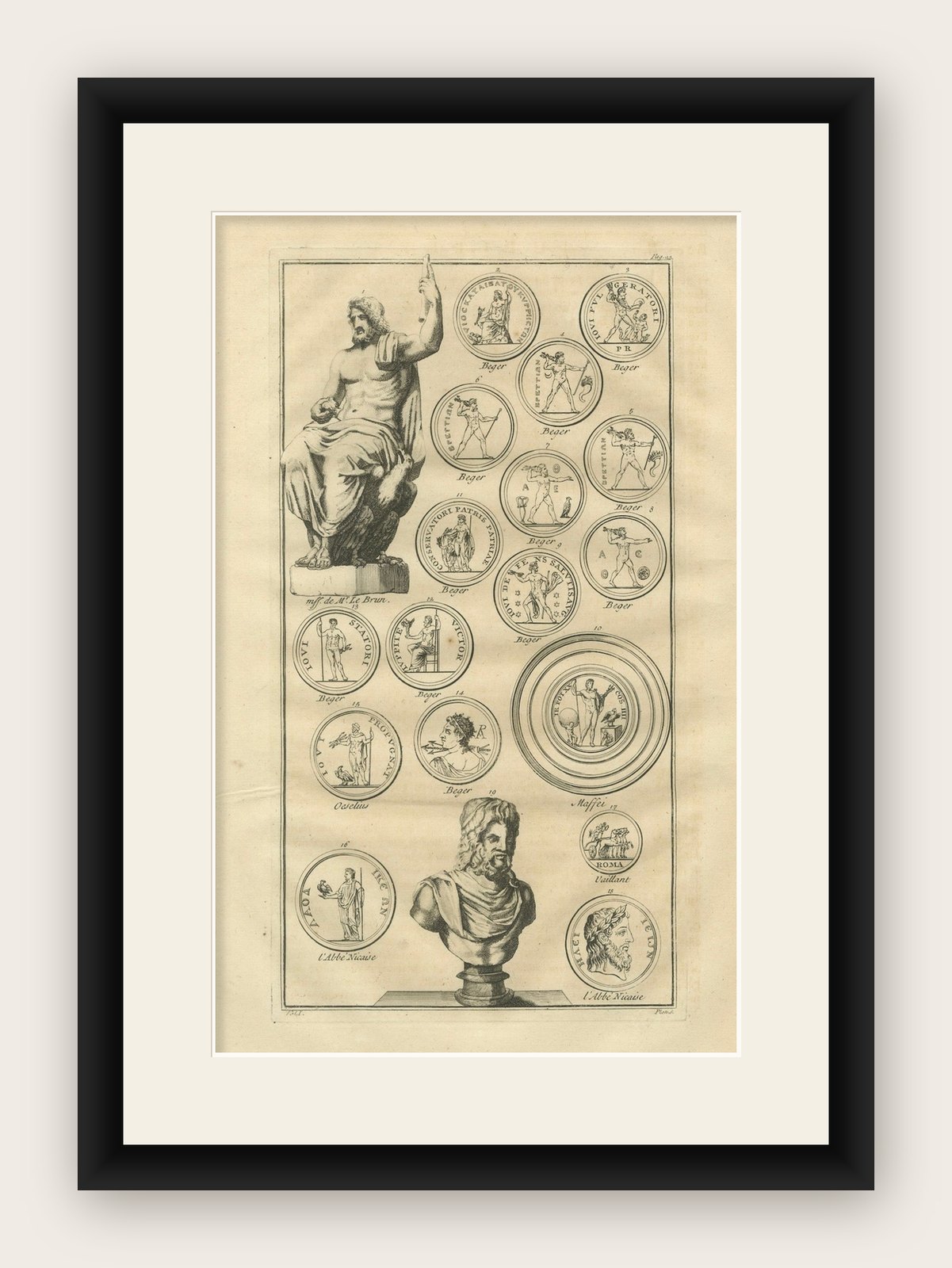
Jupiter and Roman Coin Types, Antique Classical Engraving, Montfaucon, 1721
€845
$950 · £715
Original print, not a reproduction
Ships worldwide from the Netherlands, flat, insured and tracked. 14-day returns. To buy, use Ask a question (info@antiquearchitectureprints.com) and we will reserve it for you.
- Date
- 1721
- Sheet size
- 16.7 × 10.2 in (42.4 × 25.8 cm)
- Condition
- Good. Good overall condition. Light age-related toning and minor edge wear consistent with an early 18th-century engraving. Plate impression remains strong and clear. No significant tears or losses observed.
- Collection
- Antiquity & ruins
- Era
- 1700 to 1789, Baroque to Neoclassical
- Stock no.
- f_48015922
Jupiter and Roman Coin Types, Antique Classical Engraving, Montfaucon 1721
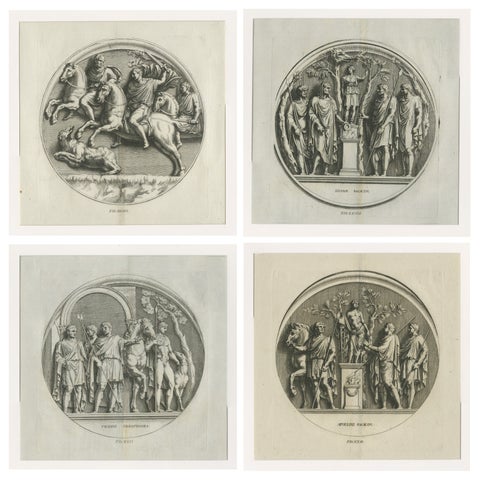
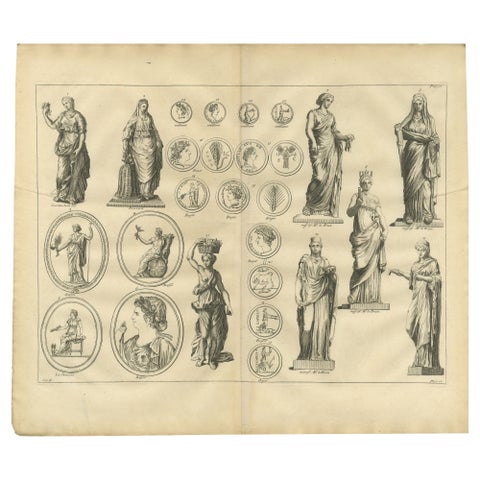
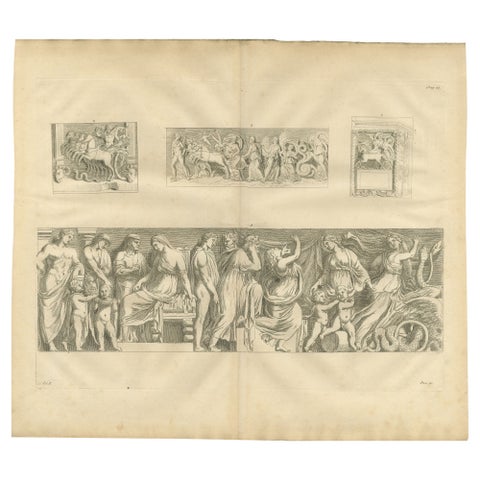
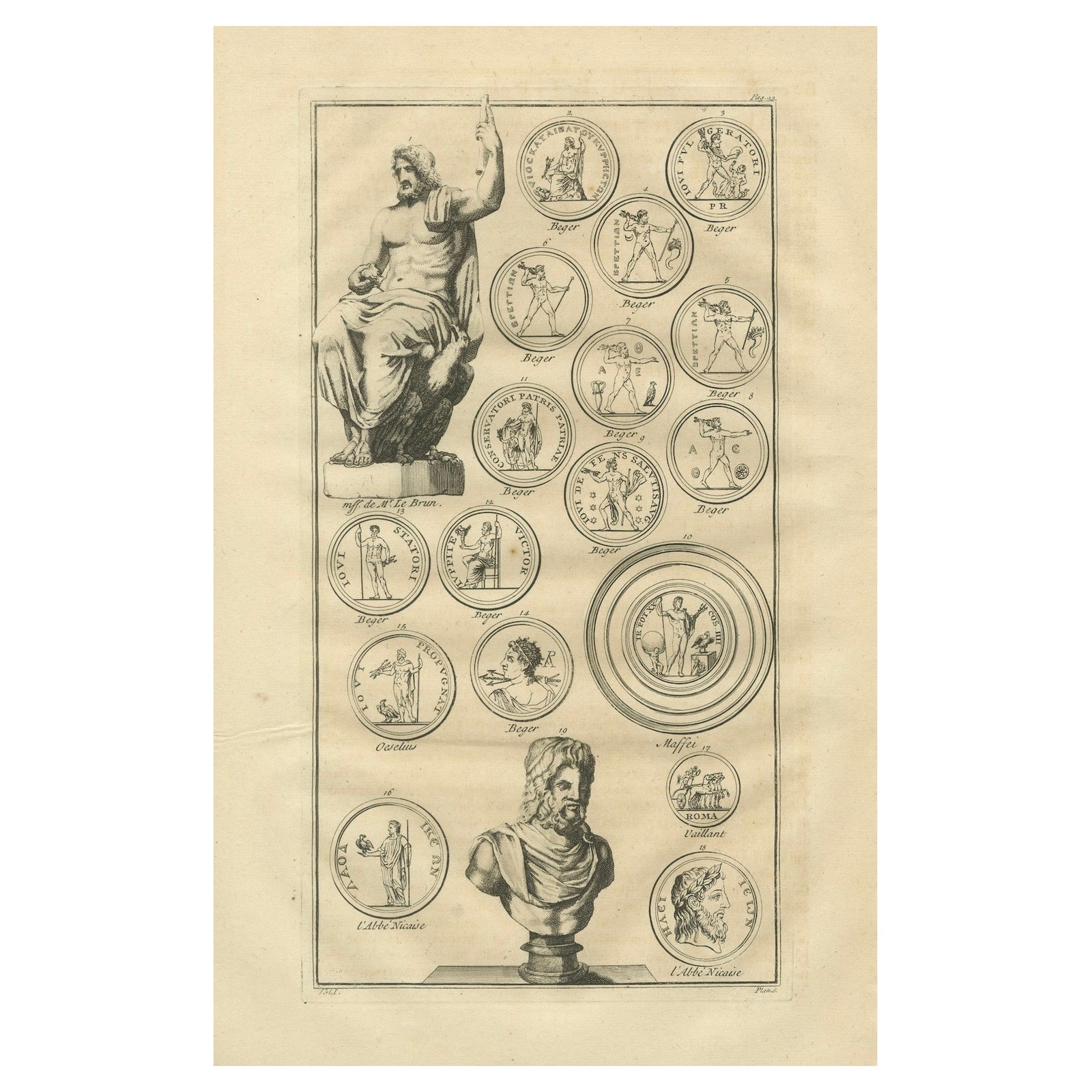
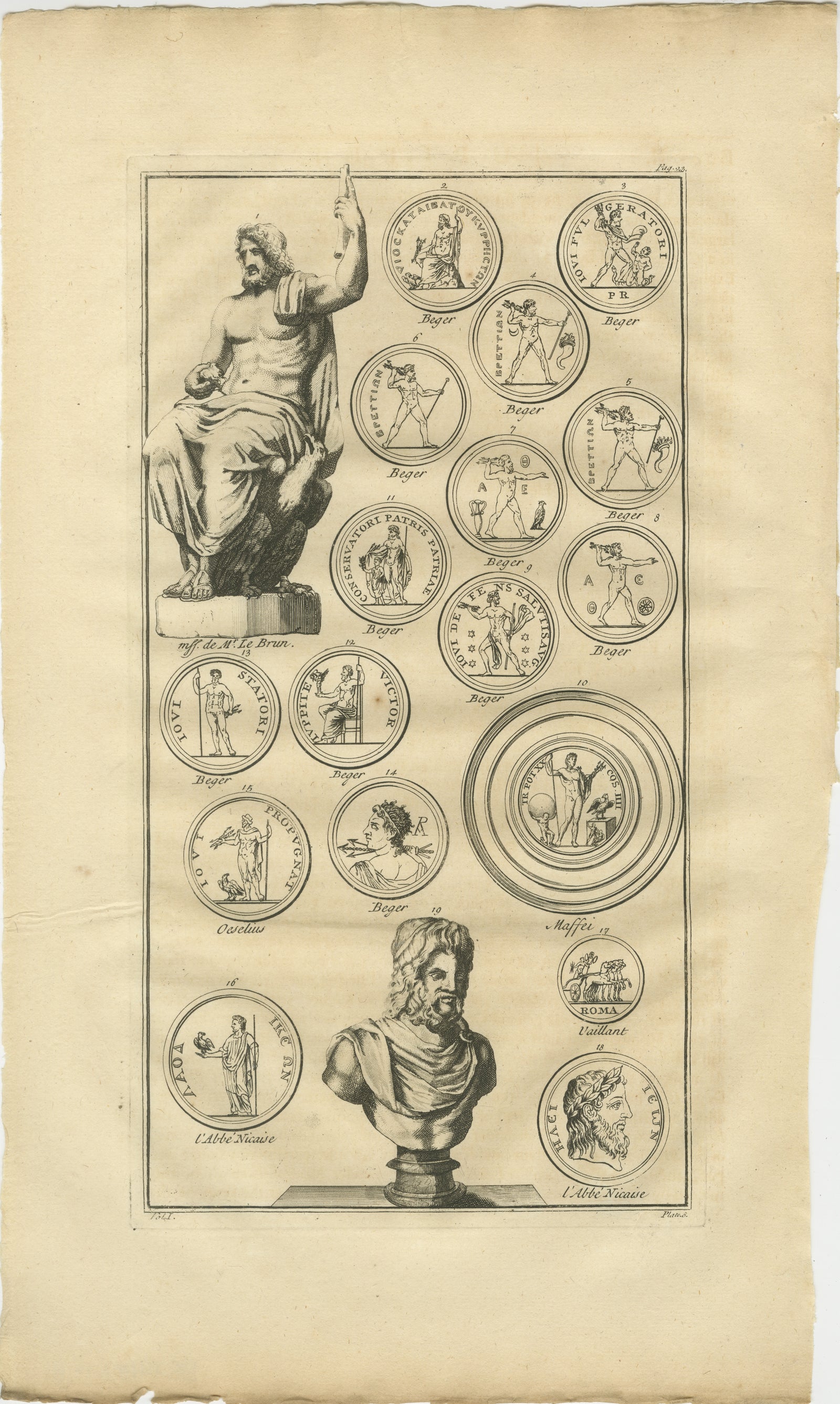
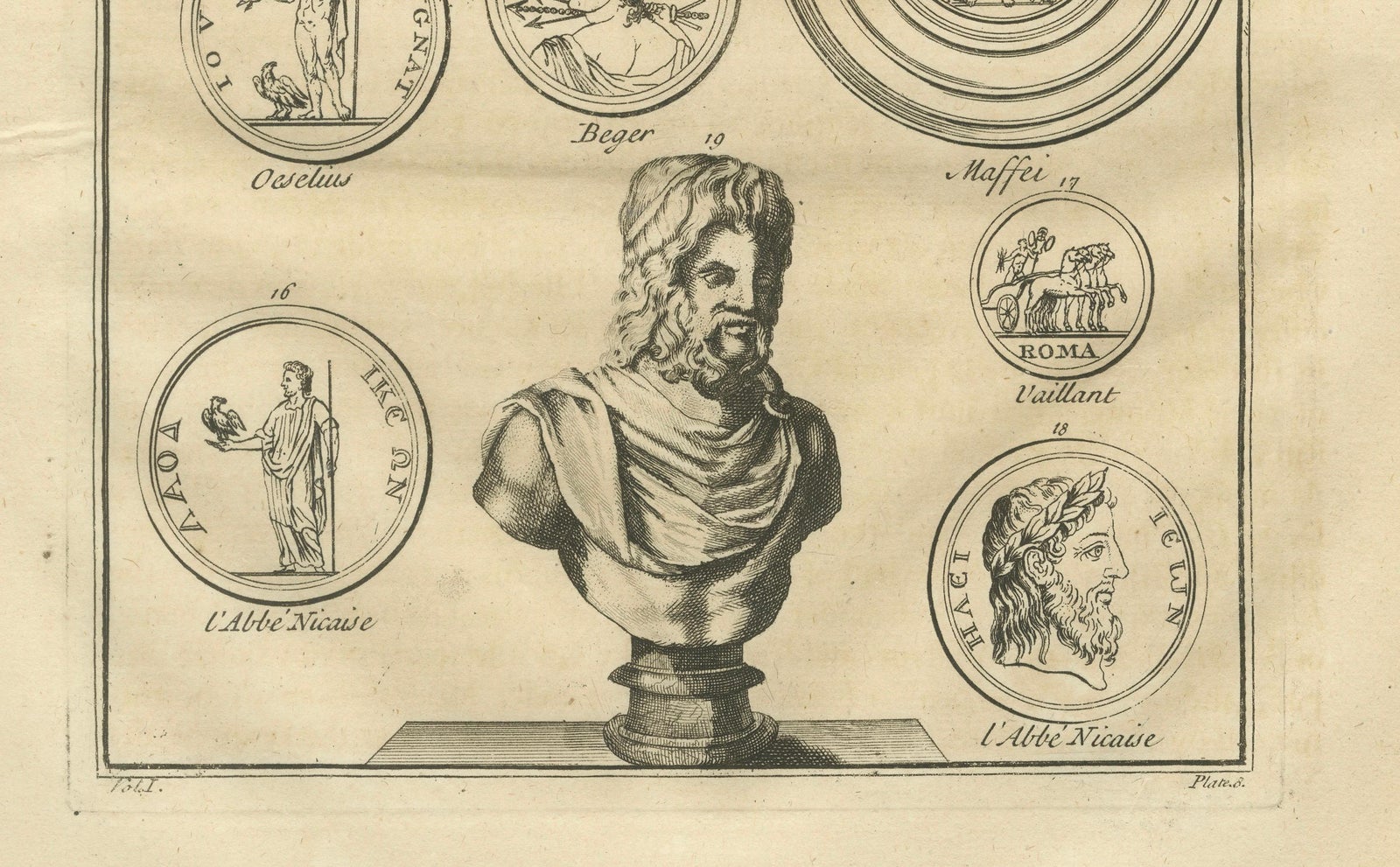
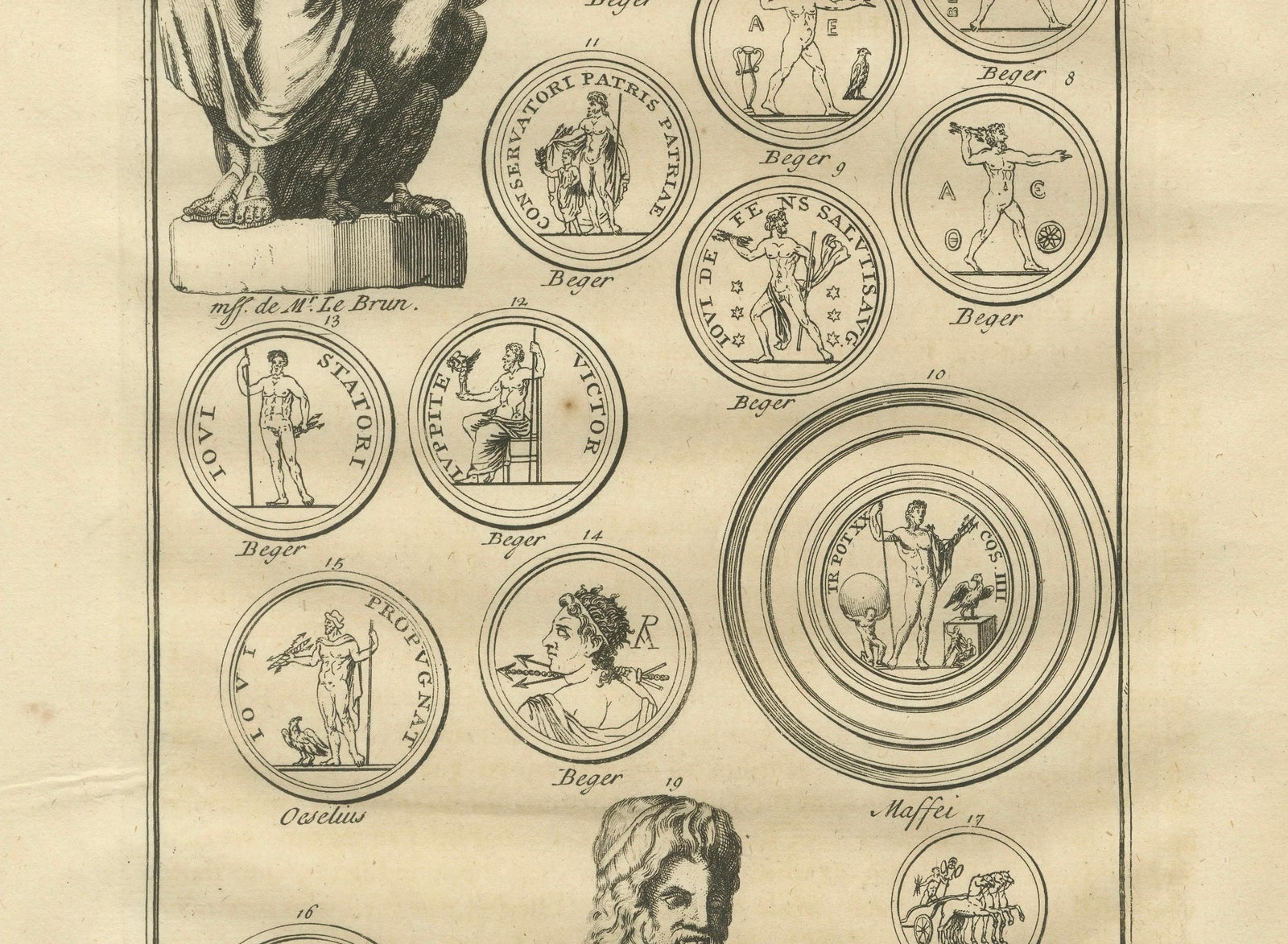
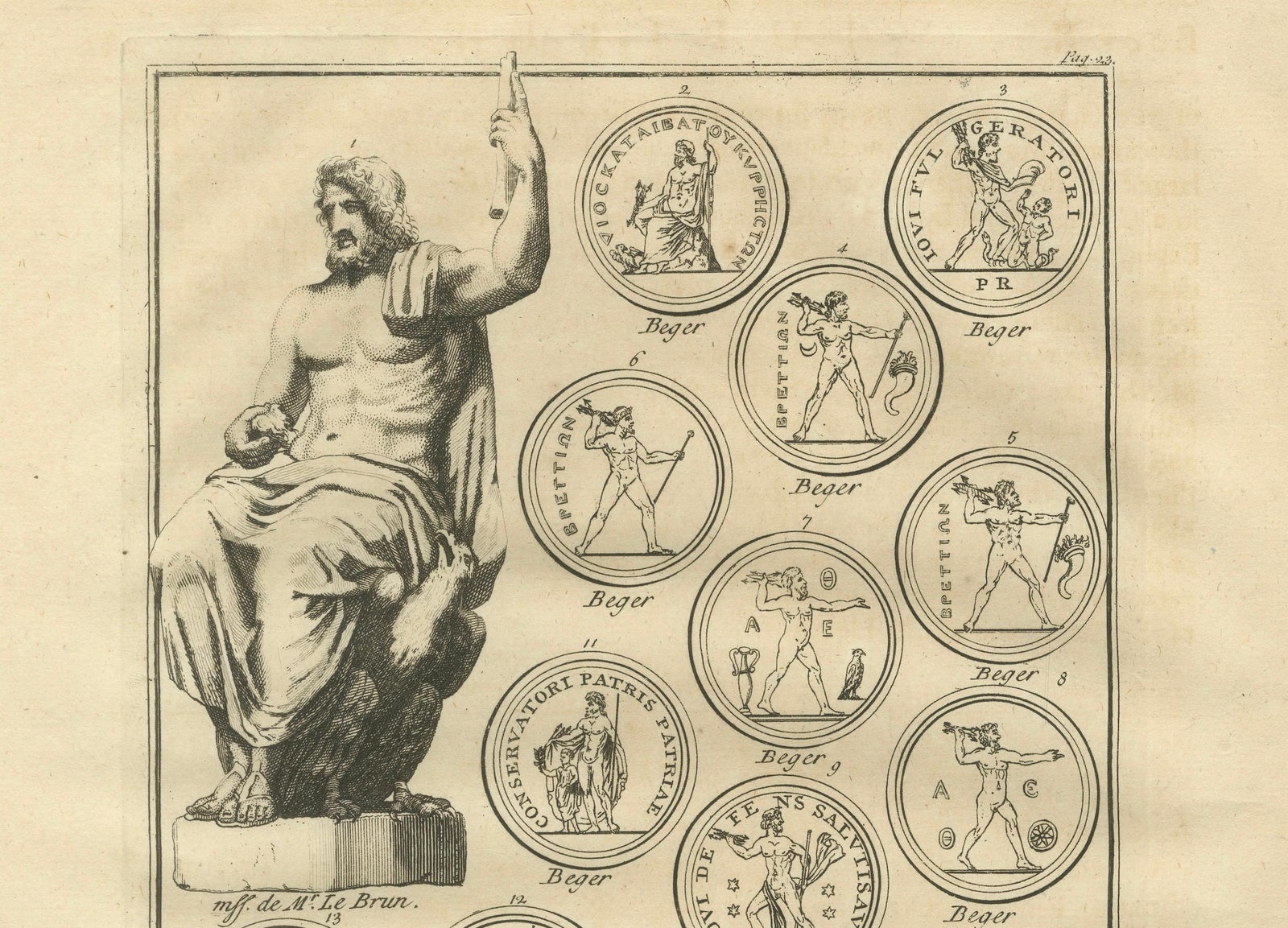
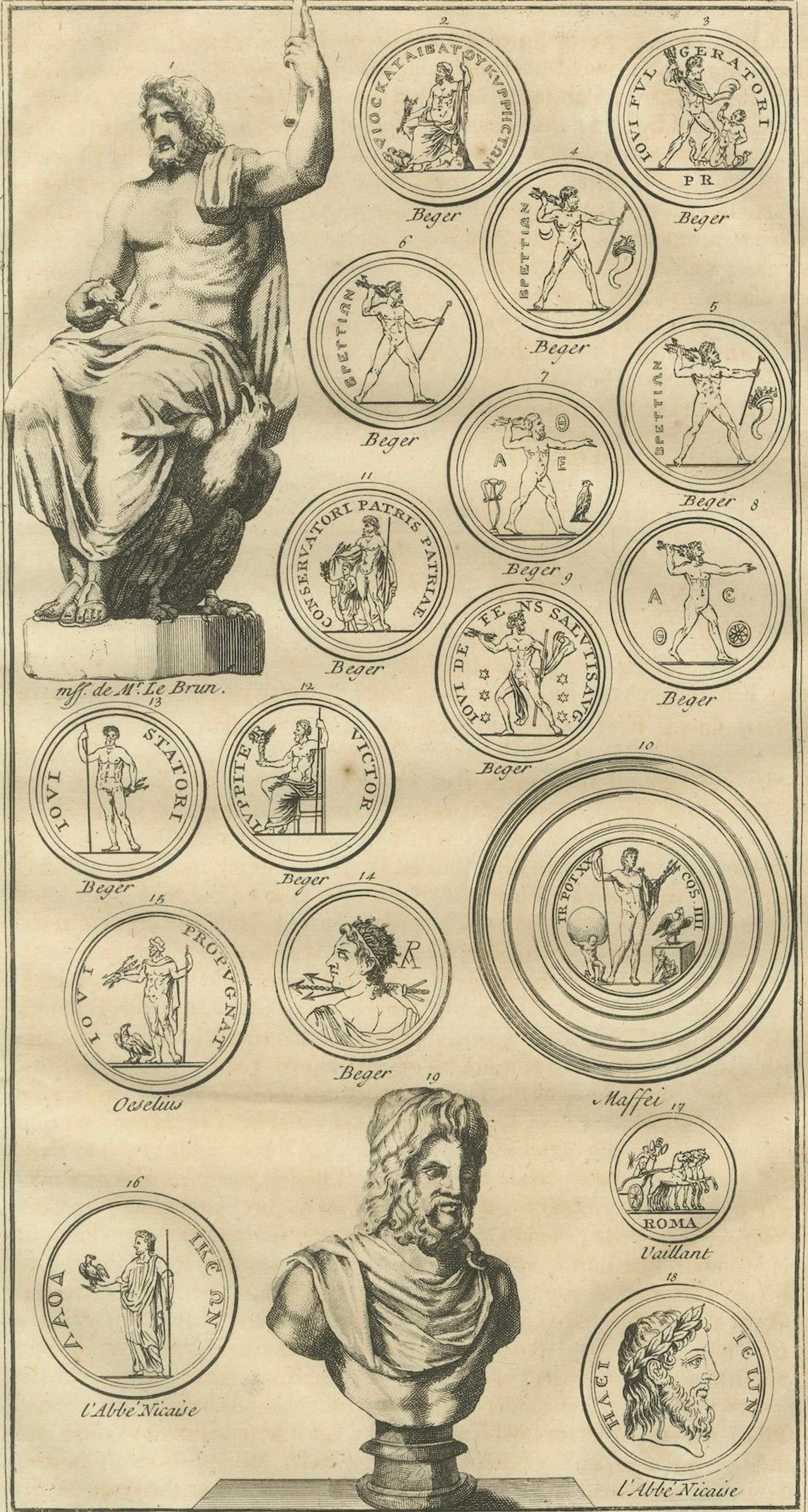
This finely engraved plate originates from the first English edition of Bernard de Montfaucon’s monumental work Antiquity Explained and Represented in Sculptures, published in London in 1721. The sheet presents a learned visual compilation centered on Jupiter, the supreme deity of Roman religion, combining sculptural representations with a broad comparative selection of ancient Roman coins and medallions.
Dominating the composition is a seated statue of Jupiter, shown with raised arm and attributes of authority, derived from celebrated Roman sculptural prototypes known through early modern antiquarian study. Surrounding this central figure is an extensive series of numismatic images, illustrating Jupiter under various epithets and iconographic forms as they appeared on imperial and Republican coinage. Additional elements include portrait heads and busts after classical models, further reinforcing the plate’s role as a comprehensive reference for Roman religious imagery.
Plates of this type were conceived as scholarly tools, intended to demonstrate how sculptural and numismatic evidence could be read together to reconstruct the visual language of antiquity. Montfaucon’s project drew heavily on Italian sources and earlier Roman scholarship, particularly the writings and collections documented by Giovanni Pietro Bellori, while presenting them to an English-speaking audience through this London edition. Today, such composite plates are highly regarded for their intellectual density, refined engraving, and strong decorative presence, appealing equally to collectors, academics, and interior designers seeking classical gravitas.
Condition report:
Good overall condition. Light age-related toning and minor edge wear consistent with an early 18th-century engraving. Plate impression remains strong and clear. No significant tears or losses observed.
Framing tips:
This plate benefits from a neutral ivory or warm white mat that allows the detailed circular coin studies to stand out. A dark walnut, mahogany, or black frame enhances the classical and scholarly character, while a slimmer, understated frame suits modern interiors with neoclassical references.
Technique: Engraving
Maker: Bernard de Montfaucon, France (published London, 1721)