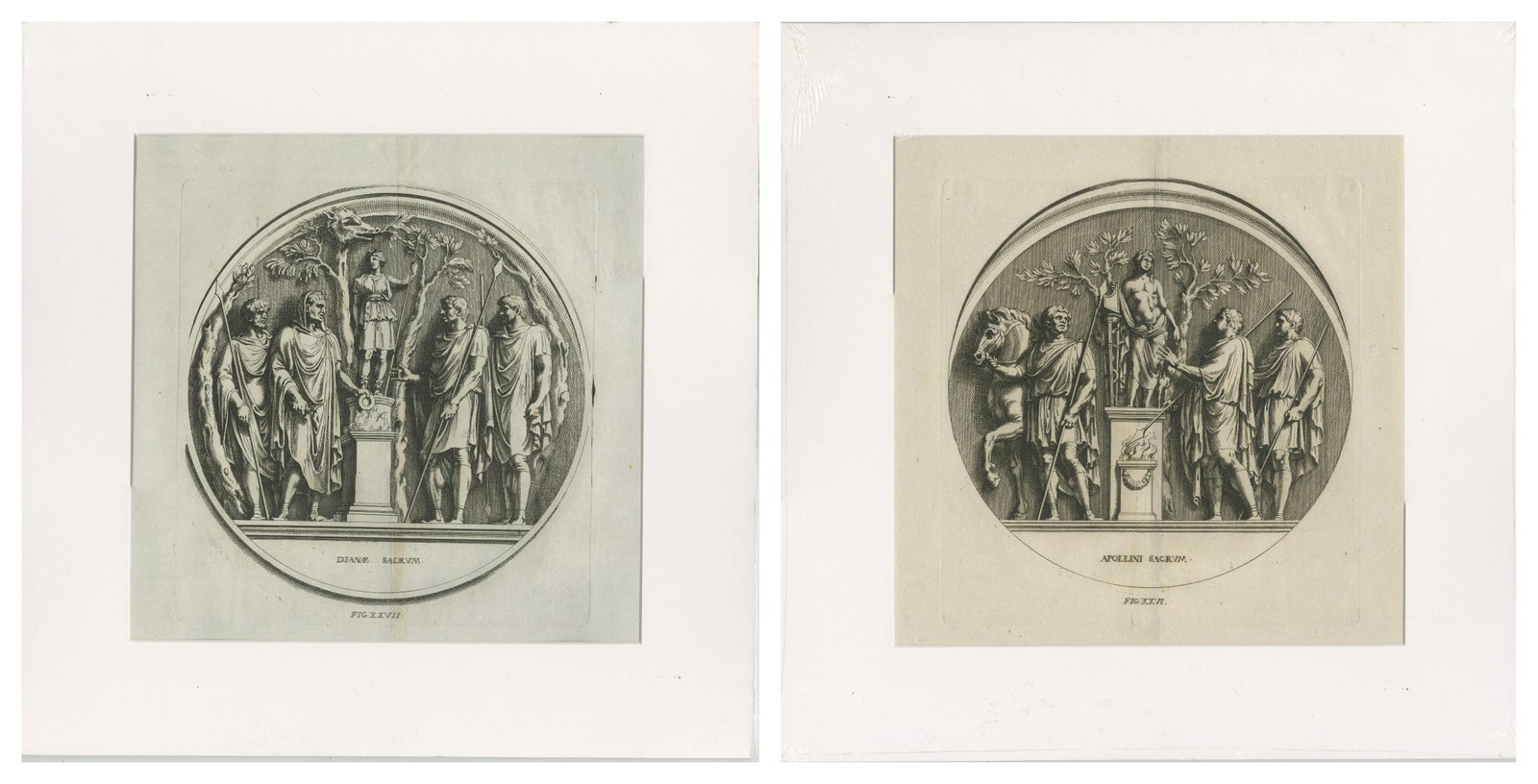
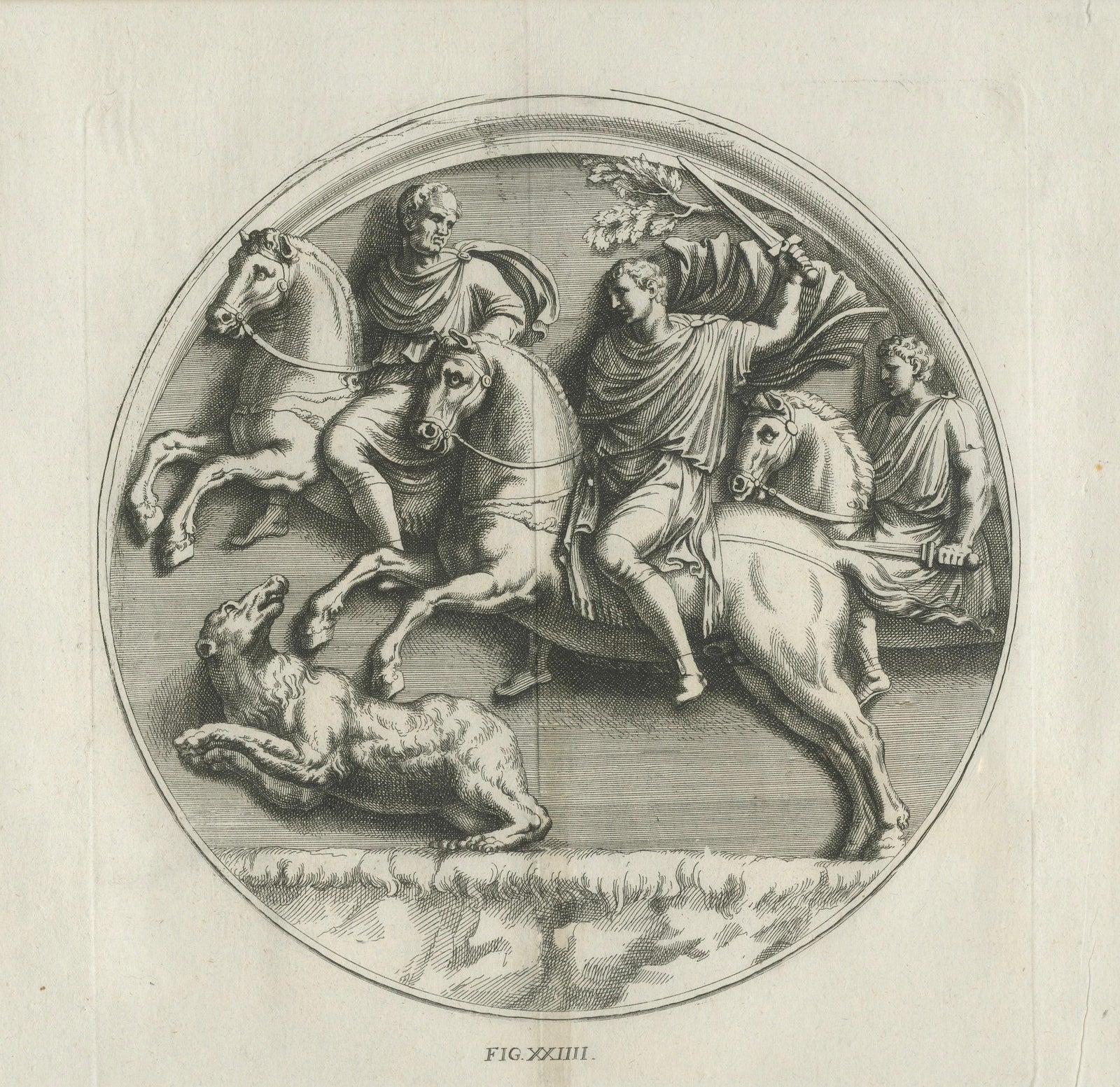
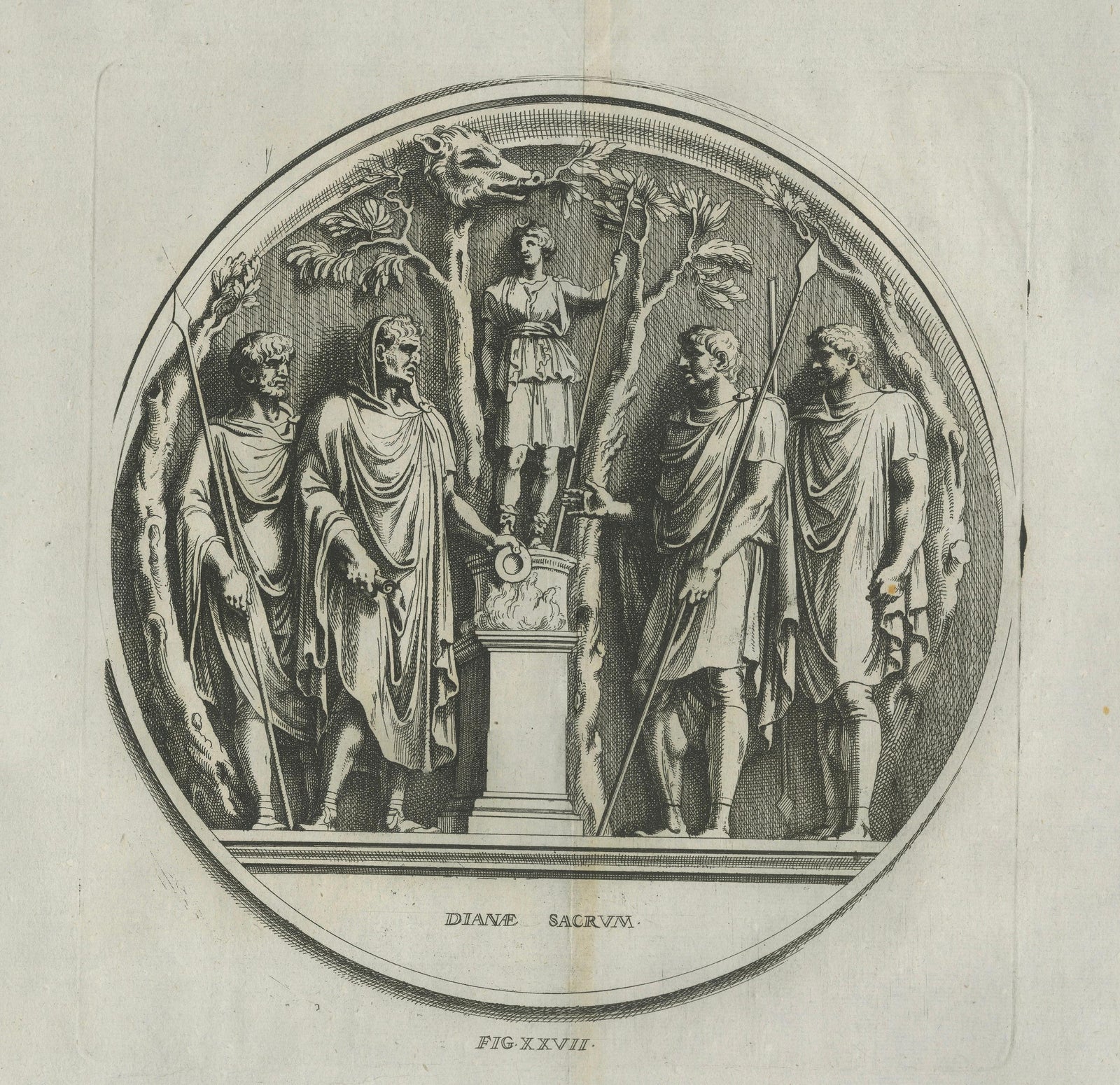
Close-ups
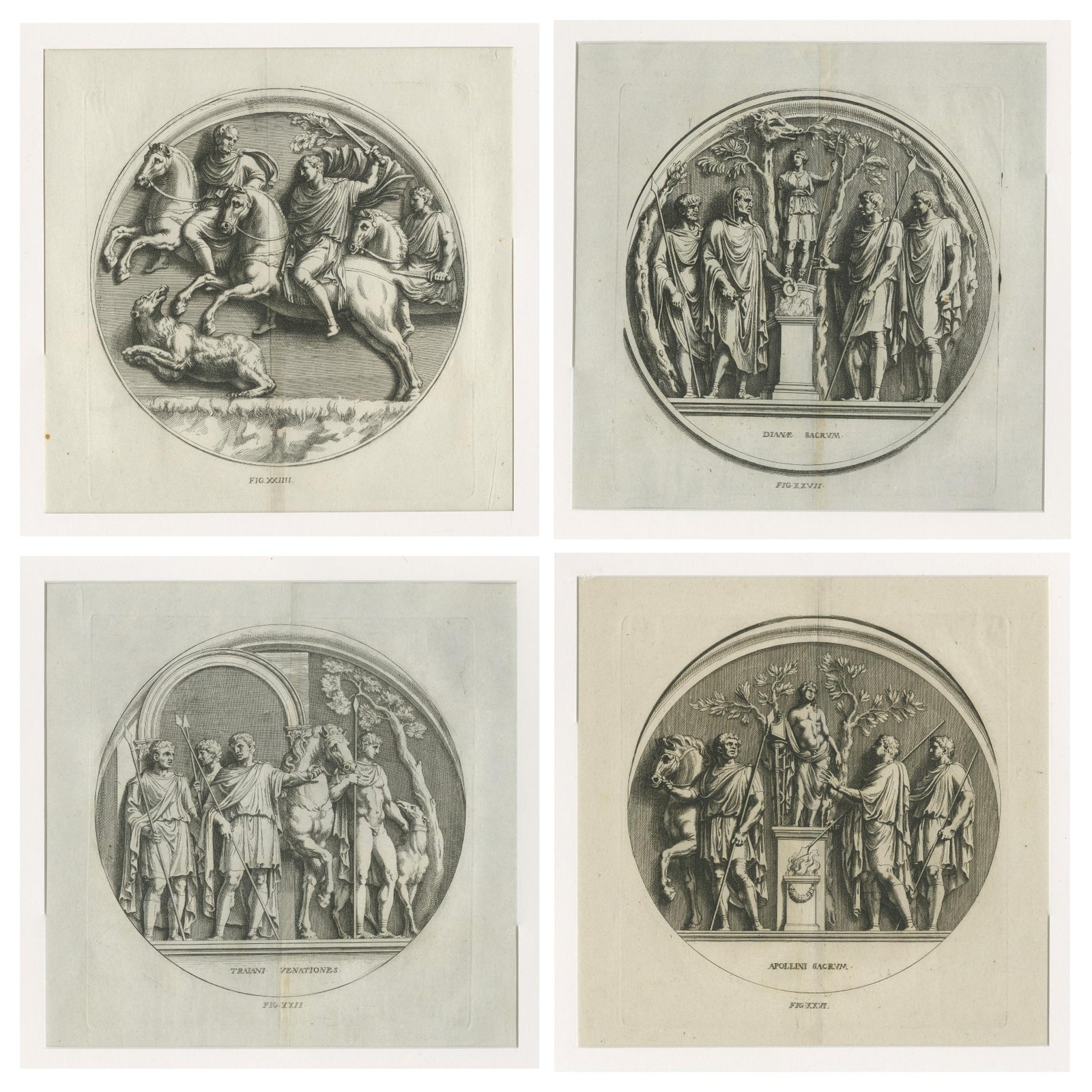
Framed and on the wall
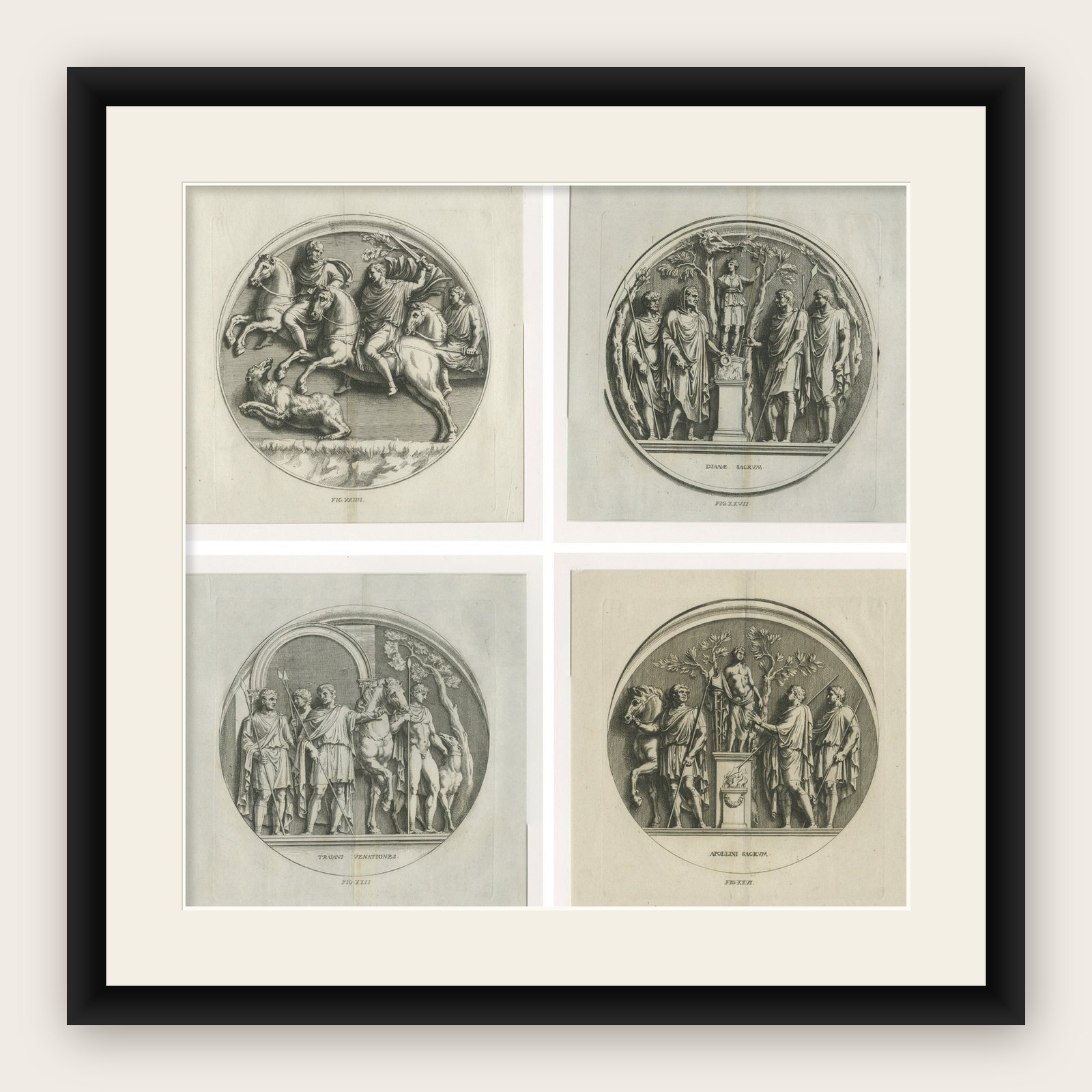
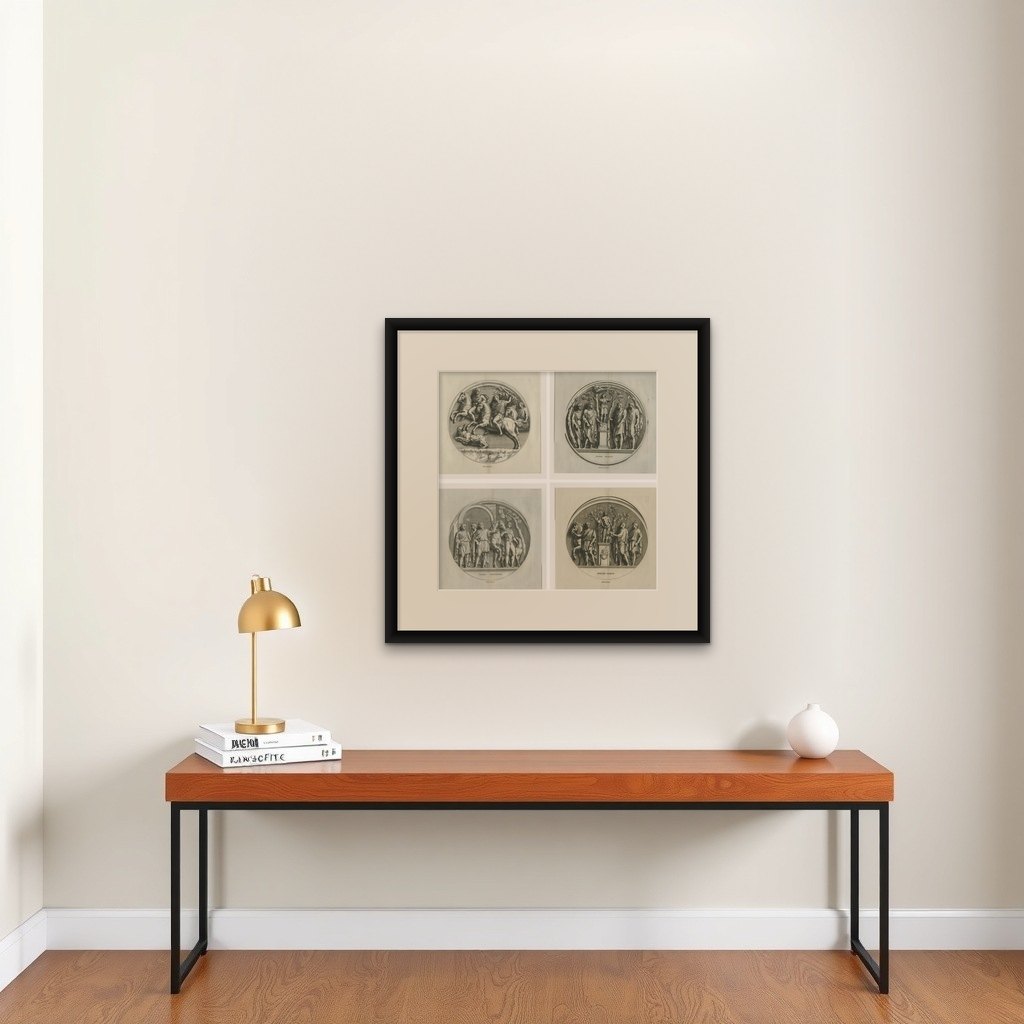
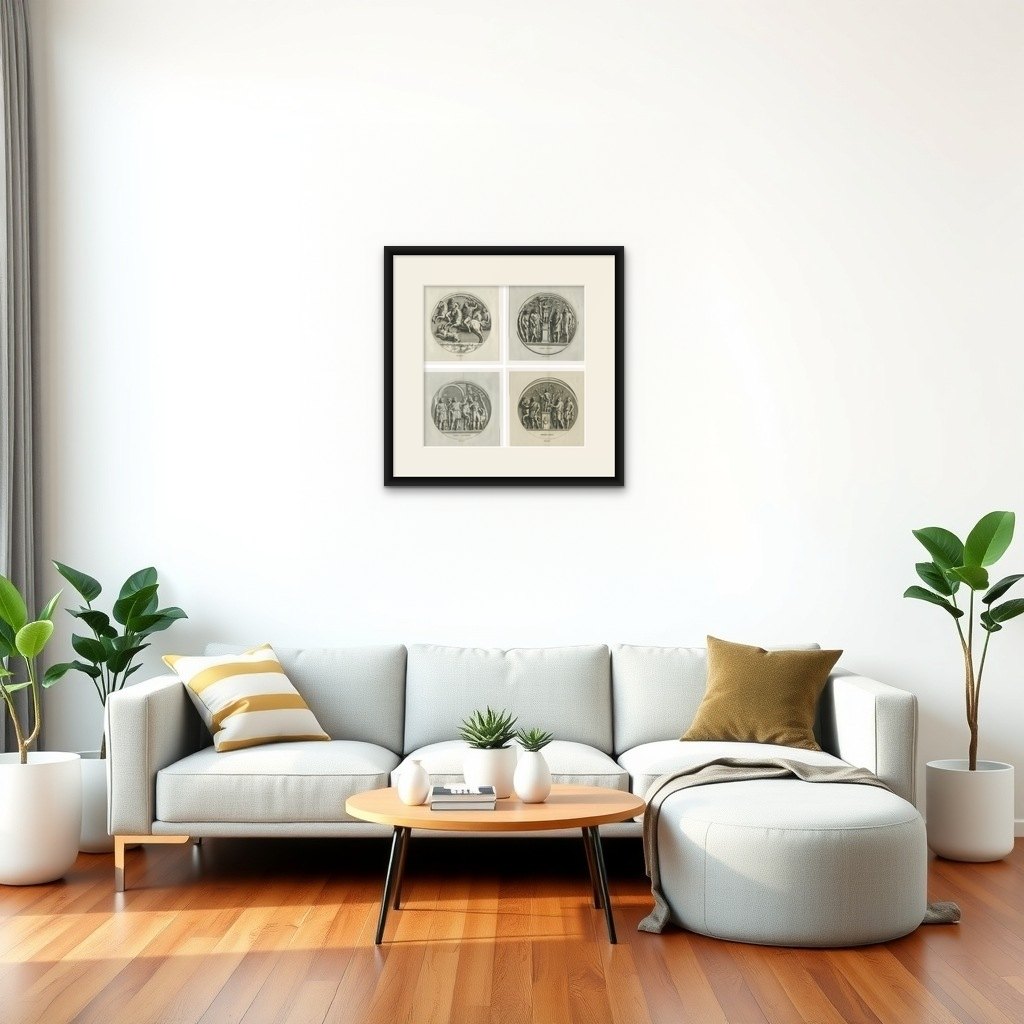
Frame and rooms are illustrations of how the print could look, drawn to its real size; it is sold unframed unless the description says otherwise.
Antiquity & ruins
Grand Roman Relief Engravings after Antique Sculpture, Montfaucon 1721
€1,900
$2,140 · £1,615
Original print, not a reproduction
Ships worldwide from the Netherlands, flat, insured and tracked. 14-day returns. To buy, use Ask a question (info@antiquearchitectureprints.com) and we will reserve it for you.
- Date
- 1721
- Sheet size
- 17.7 × 17.7 in (45 × 45 cm)
- Condition
- Good. Original 18th-century engraving with light age toning, a central vertical fold as issued, and minor edge wear. No losses to the engraved image. Plate mark visible.
- Collection
- Antiquity & ruins
- Era
- 1700 to 1789, Baroque to Neoclassical
- Stock no.
- f_48177272
Grand Roman Relief Engravings after Antique Sculpture, Montfaucon 1721
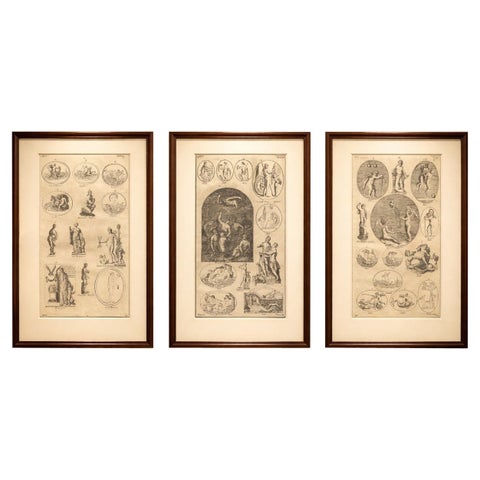
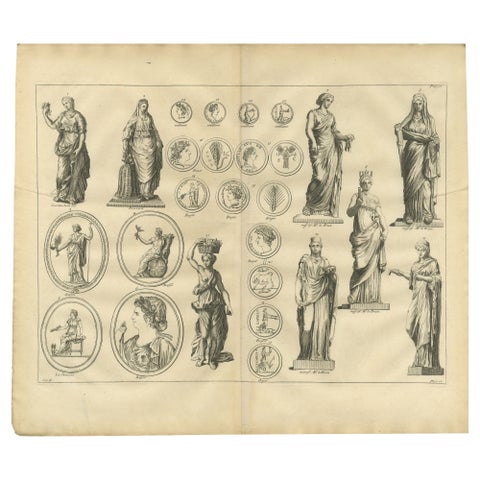
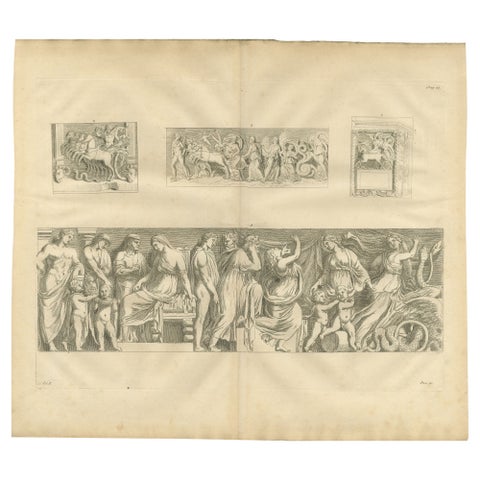
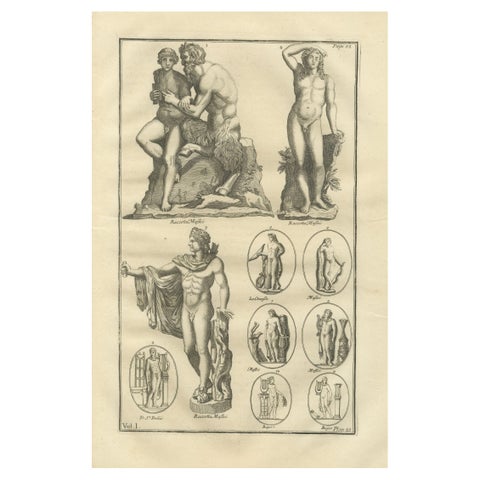
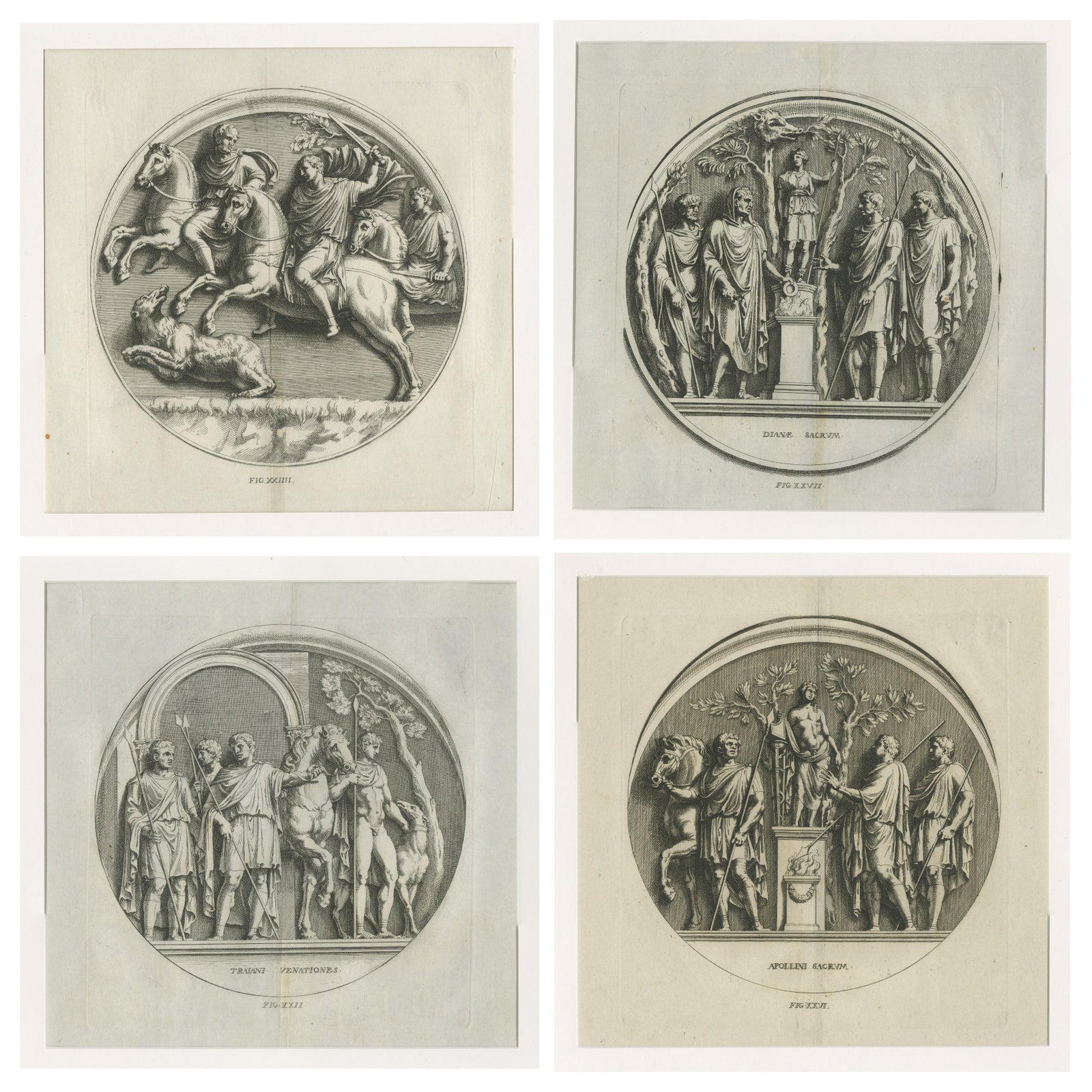
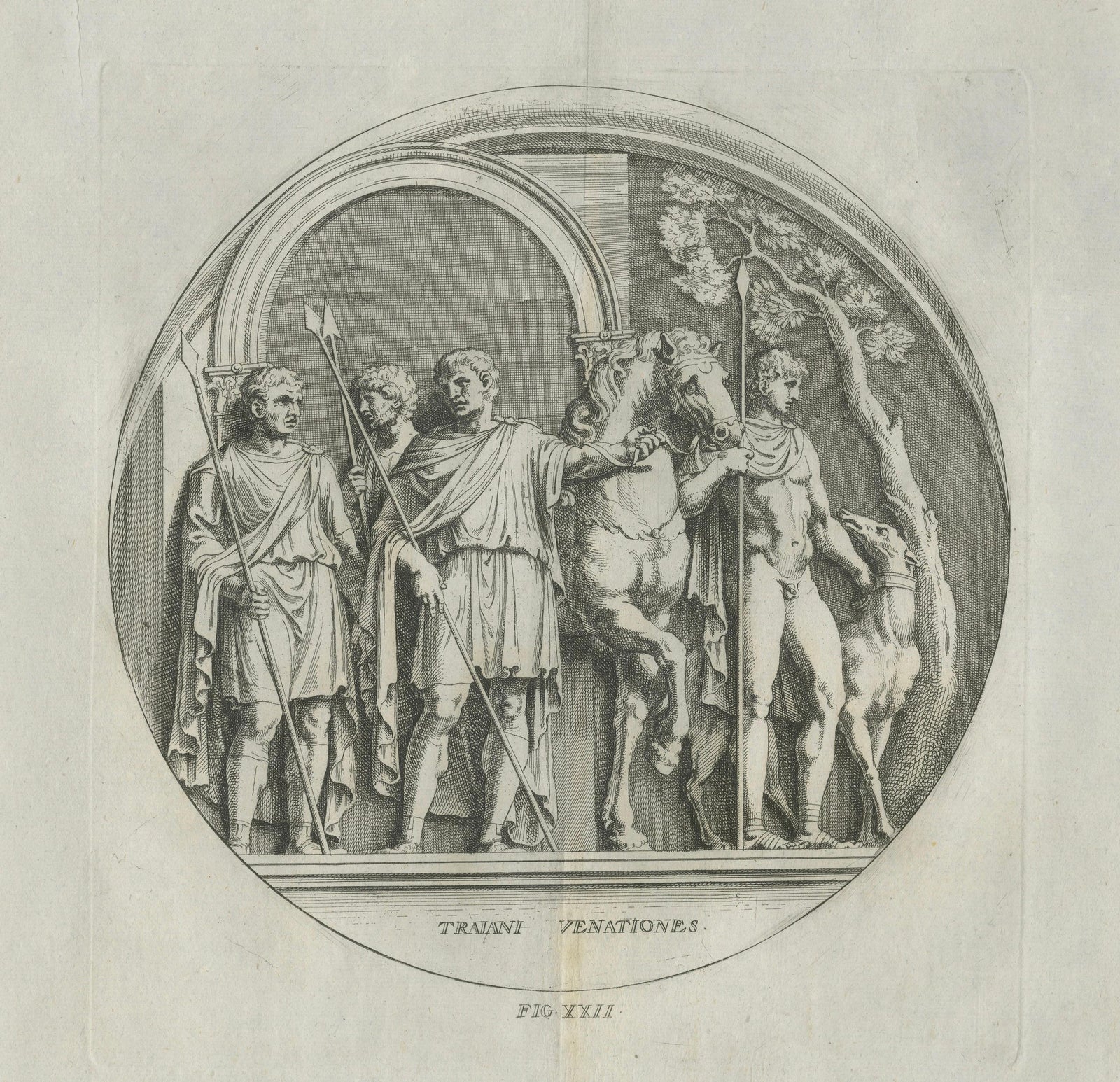
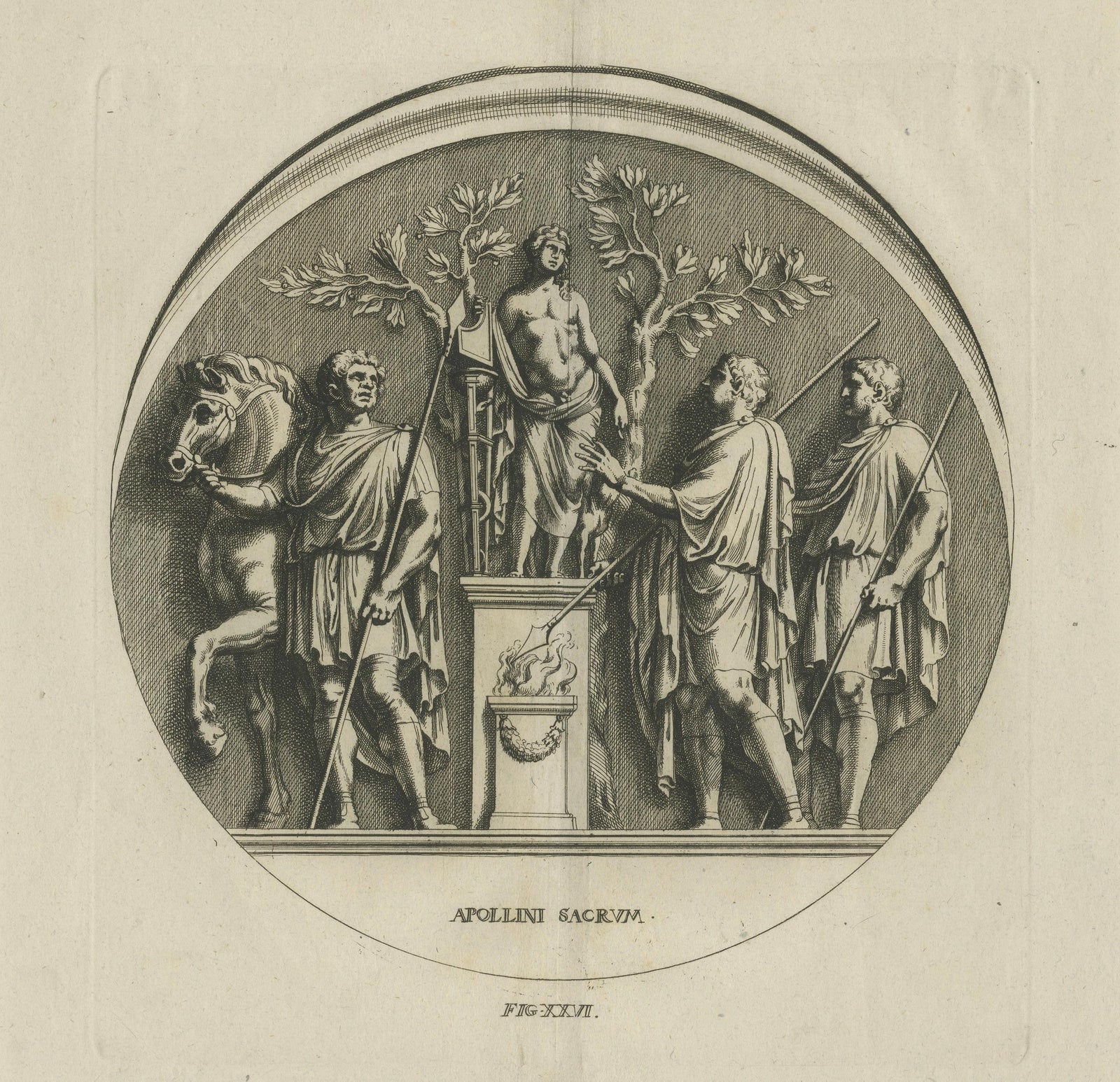
This refined pair of early 18th-century Roman relief engravings offers a balanced combination of classical subject matter, architectural scale, and decorative versatility. The engravings were published in 1721 as part of Bernard de Montfaucon’s influential work *Antiquity Explained and Represented in Sculptures*, printed in London for the English edition of this landmark antiquarian publication.
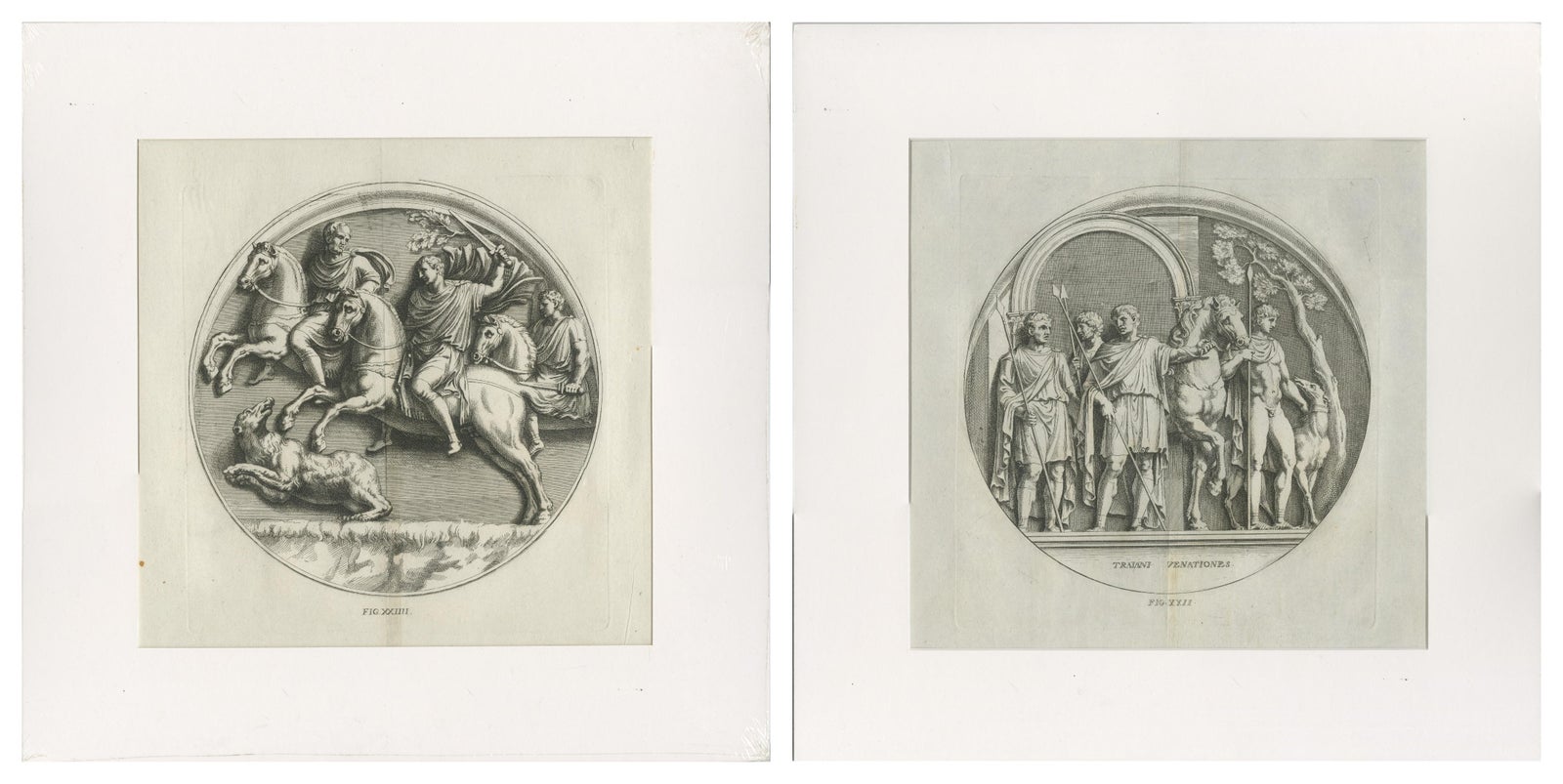
The set consists of two substantial matting boards, each presenting an engraving on both sides, resulting in four Roman relief scenes in total. The circular compositions are derived from ancient Roman sculptural reliefs and read like carved marble medallions, with harmoniously arranged figures rendered in a restrained, sculptural line. The softly printed tonal quality is characteristic of early 18th-century copper engraving and lends the images depth and warmth rather than graphic sharpness.
The double-sided presentation makes this pair especially appealing for interior designers and collectors. Each mat can be framed front-to-back or rotated over time, allowing the set to adapt easily to different spaces and display concepts. Used as a symmetrical pair, the works bring rhythm and architectural balance to a wall; displayed individually, they function as calm classical focal points.
Timeless, versatile, and quietly authoritative, this set bridges scholarly Roman antiquity and contemporary interior design. It is equally suited to refined residential interiors, libraries, gallery walls, or hospitality settings where classical imagery is desired without visual heaviness.
Technique: Copper engraving
Maker: Bernard de Montfaucon
Source: Antiquity Explained and Represented in Sculptures, English edition, London, 1721