Close-ups
Framed and on the wall

Frame and rooms are illustrations of how the print could look, drawn to its real size; it is sold unframed unless the description says otherwise.
Antiquity & ruins
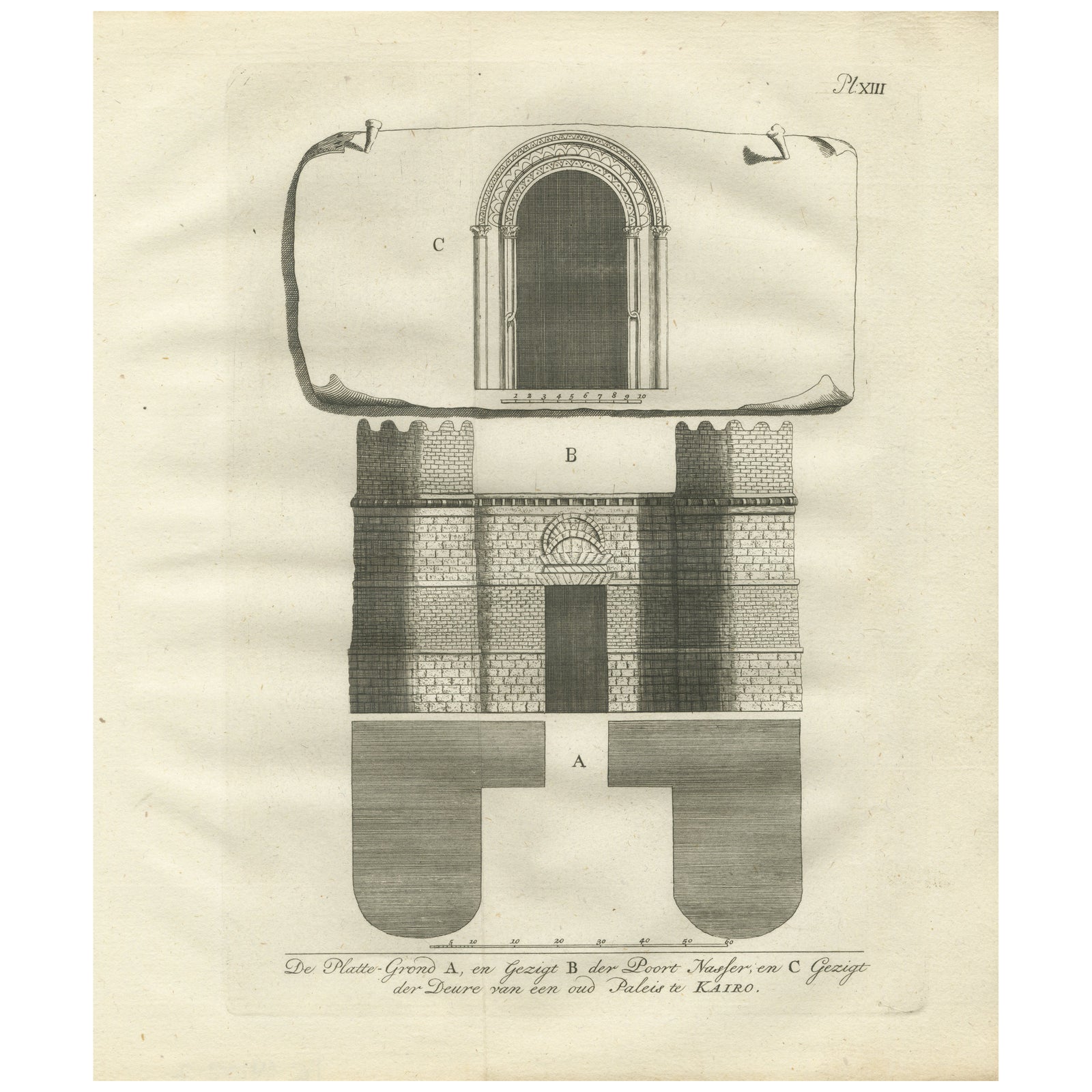
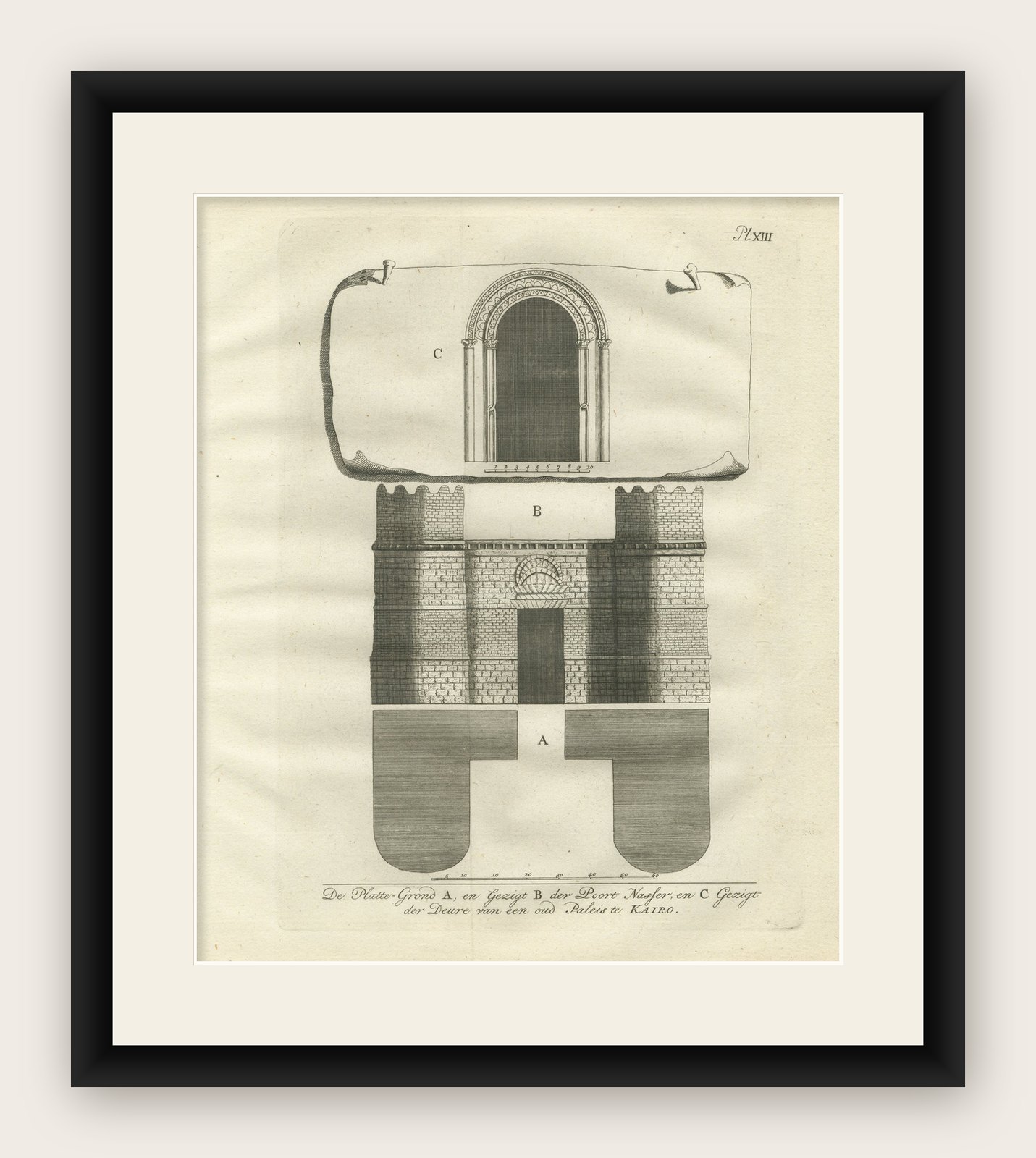
Gate and Door of an Ancient Palace in Cairo, Architectural Study, Egypt, 1776
£205
$270 · €240
Original print, not a reproduction
Ships worldwide from the Netherlands, flat, insured and tracked. 14-day returns. To buy, use Ask a question (info@antiquearchitectureprints.com) and we will reserve it for you.
- Date
- 1776
- Sheet size
- 10.7 × 9.8 in (27.3 × 25 cm)
- Condition
- Good. Nearly excellent condition. Minor age toning, mostly in the margins. Clean impression with strong lines and wide borders. No tears or repairs. Verso blank. Folding lines as issued.
- Collection
- Antiquity & ruins
- Era
- 1700 to 1789, Baroque to Neoclassical
- Stock no.
- f_46042242
Title: Gate and Door of an Ancient Palace in Cairo, Architectural Study, Egypt 1776
Description:
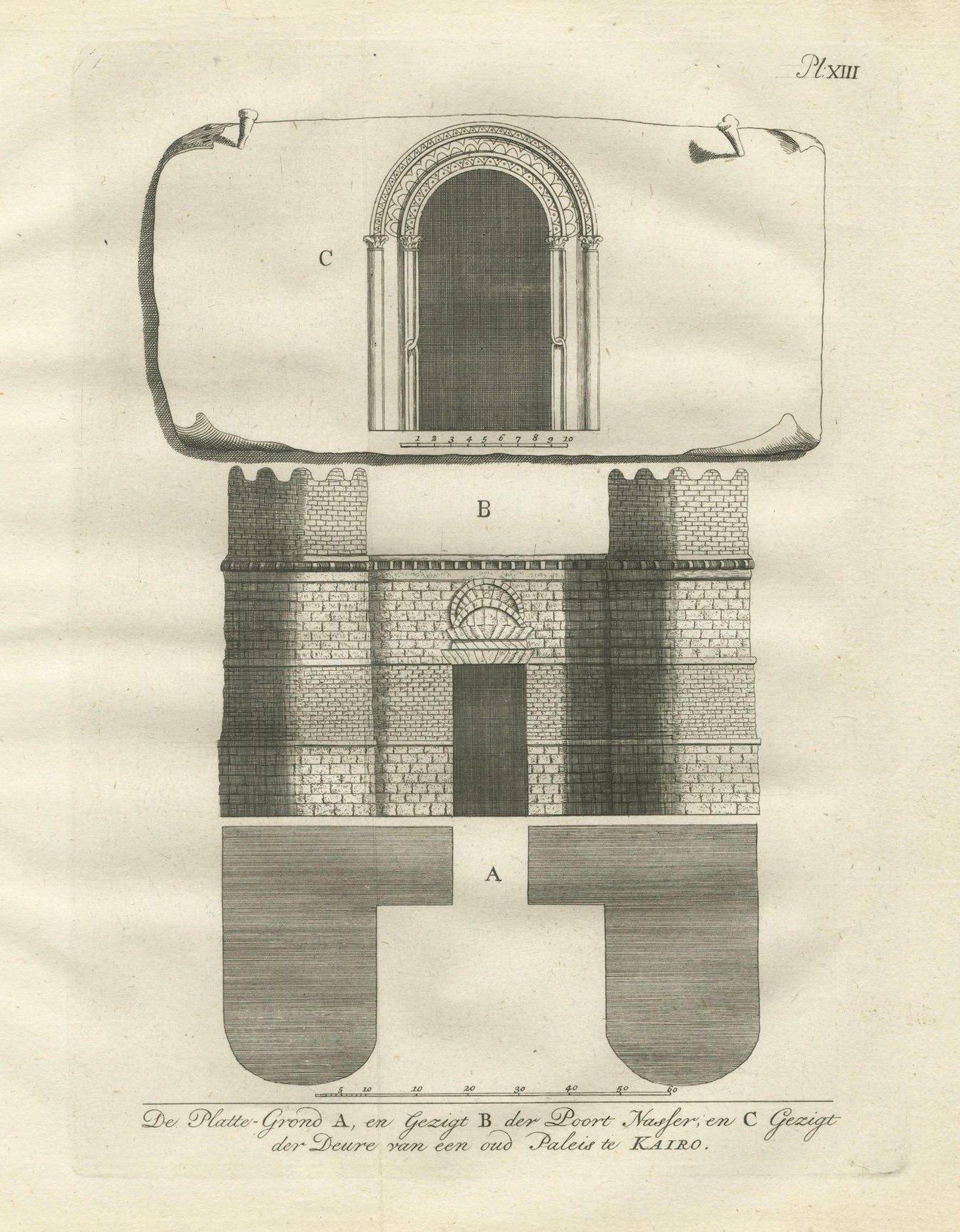
This finely detailed engraving from 1776 presents the architectural plan and elevation of a historic fortified gate and decorated doorway from an old palace in Cairo. Marked as Plate XIII, it is part of the Dutch edition of Richard Pococke’s celebrated travel work documenting his explorations through Egypt and the Middle East.
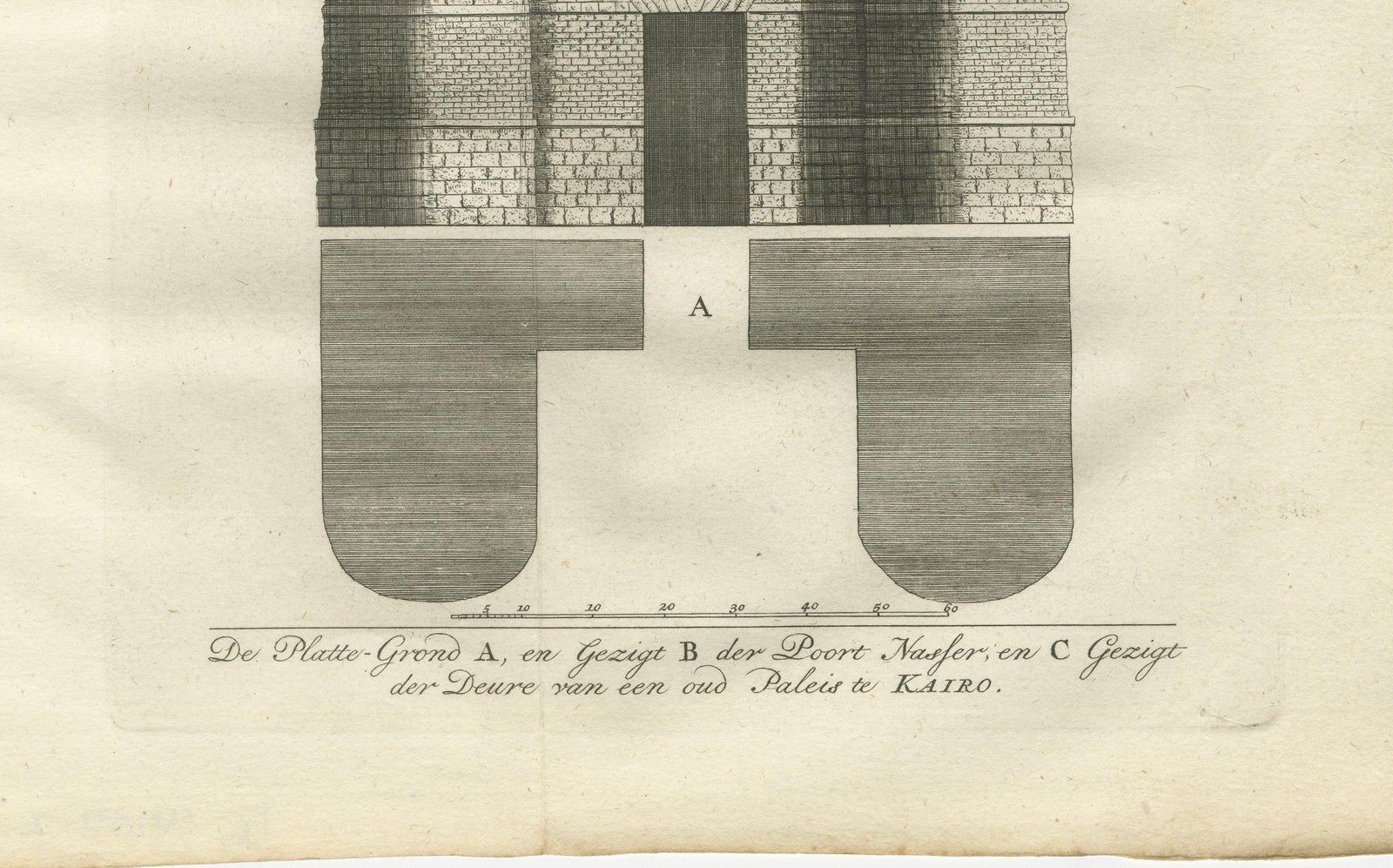
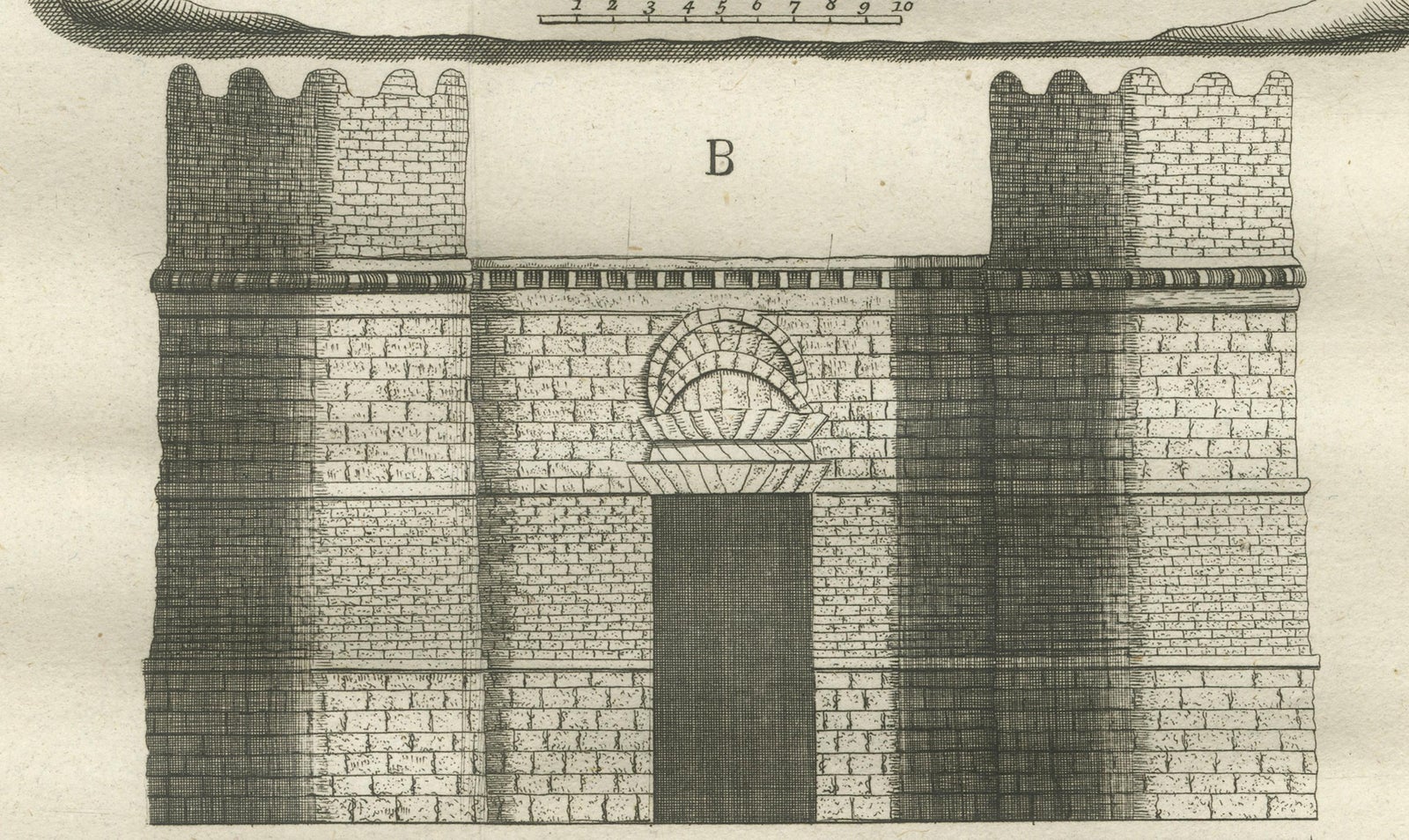
The lower section of the plate, labeled A, displays the ground plan of the entrance area, showing symmetrical towers flanking a central passageway. Above this, labeled B, is a full frontal elevation of the fortified gate, complete with crenellated towers and a large central archway. The carefully rendered stonework and fortress-like features reflect medieval Islamic architecture as it developed in Cairo during the Fatimid, Ayyubid, or early Mamluk periods.
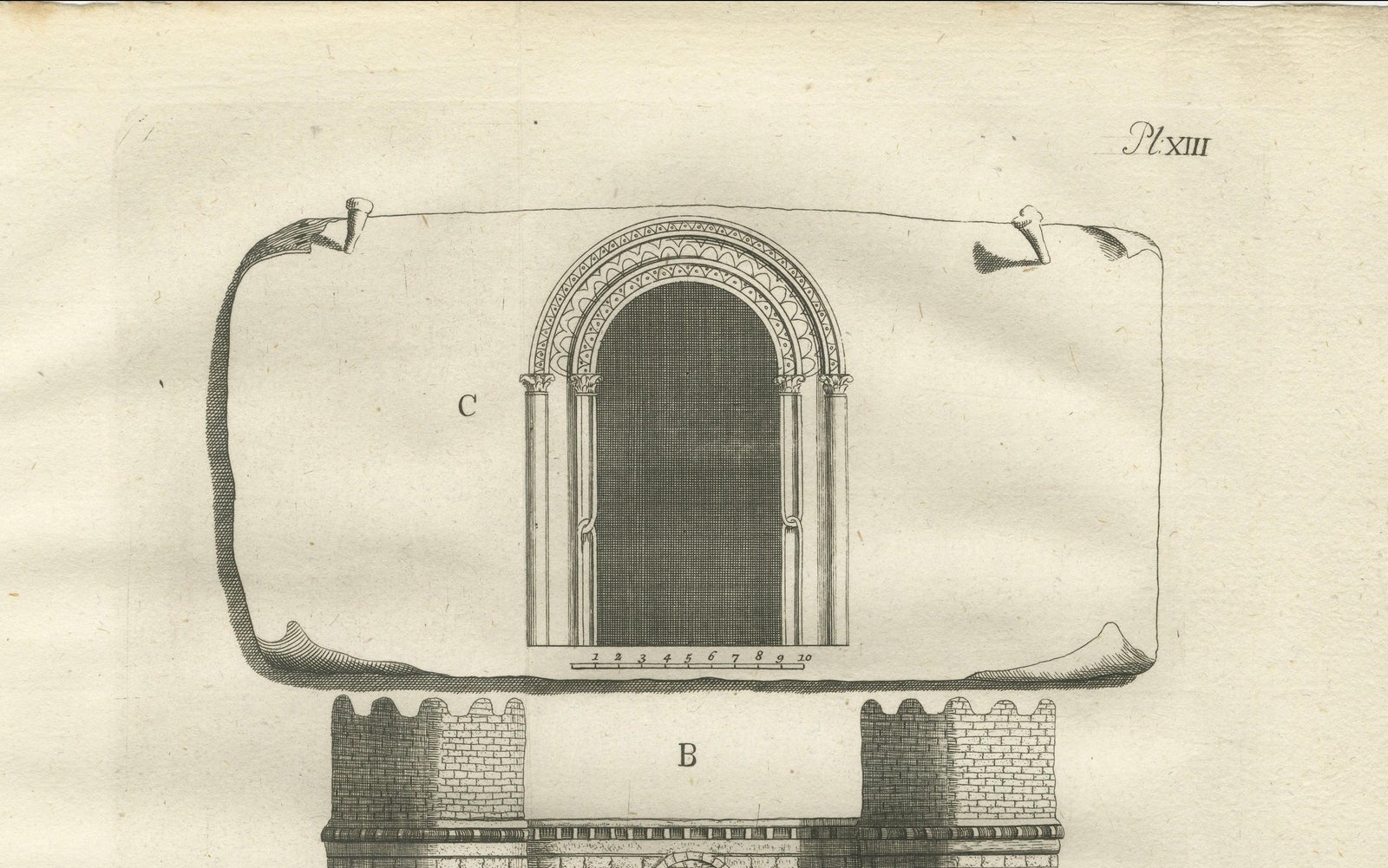
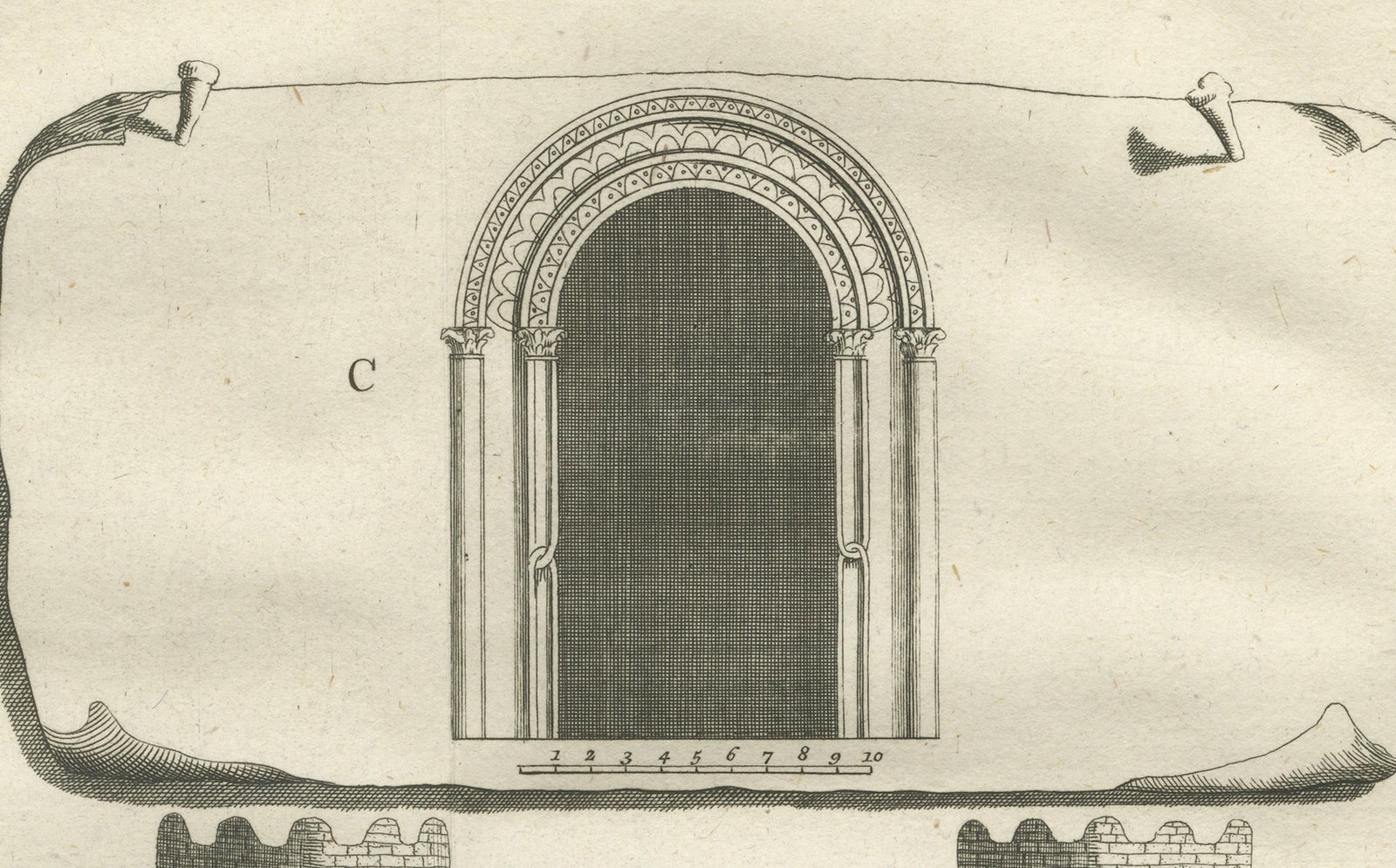
The upper section, labeled C, focuses on a close-up elevation of an ornate arched doorway. The door is framed by intricately carved semi-circular arches and supporting columns, illustrating the refined decorative style used in elite architecture during Cairo’s Islamic golden age. This entrance likely belonged to a significant palace or religious building, conveying status, power, and craftsmanship.
The Dutch caption reads, "De Platte-Grond A, en Gezicht B der Poort Nasfer, en C Gezicht der Deure van een oud Paleis te Kairo," which translates to "Ground plan A, and elevation B of the Gate Nasfer, and C the doorway of an old palace in Cairo."
This plate is from 'Beschryving van het Oosten en van eenige andere landen' (Description of the East and Some Other Lands), translated and annotated by Ernst Willem Cramerus and published in 1776 in Utrecht, Rotterdam, and Amsterdam. Pococke’s work is considered one of the most important 18th-century European travel books focused on the Middle East.
Condition report:
Excellent condition. Minor age toning, mostly in the margins. Clean impression with strong lines and wide borders. No tears or repairs. Verso blank. Folding lines as issued.
Framing tips:
This engraving pairs well with a dark wood or antiqued gold frame and an ivory mat to enhance the architectural linework. Ideal for display in a hallway, study, or collection focused on Islamic architecture, travel history, or historic fortifications.
Technique: Engraving
Maker: Unknown engraver after Richard Pococke, Netherlands, 1776
Explore