Close-ups
Framed and on the wall

Frame and rooms are illustrations of how the print could look, drawn to its real size; it is sold unframed unless the description says otherwise.
Antiquity & ruins
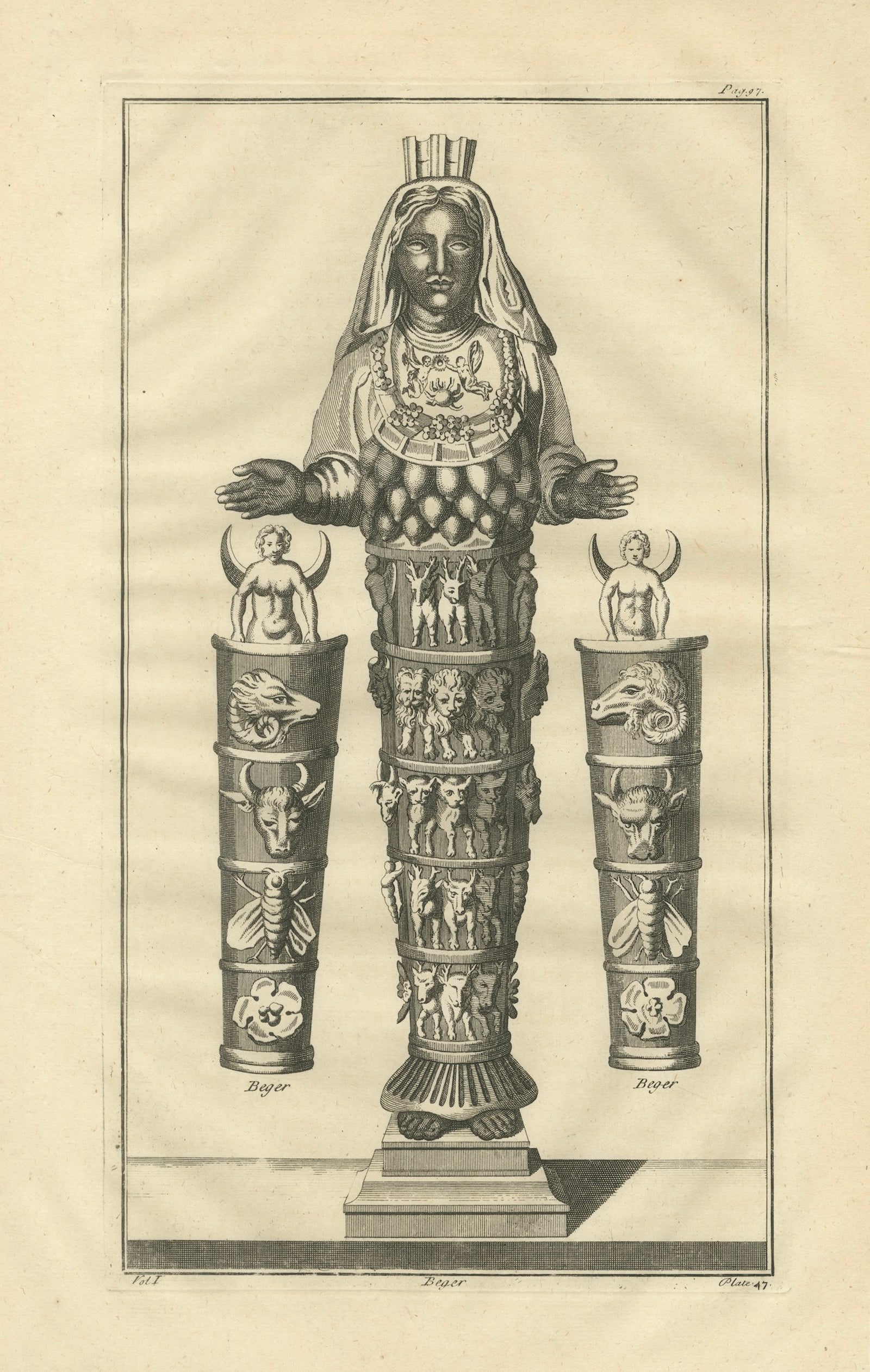
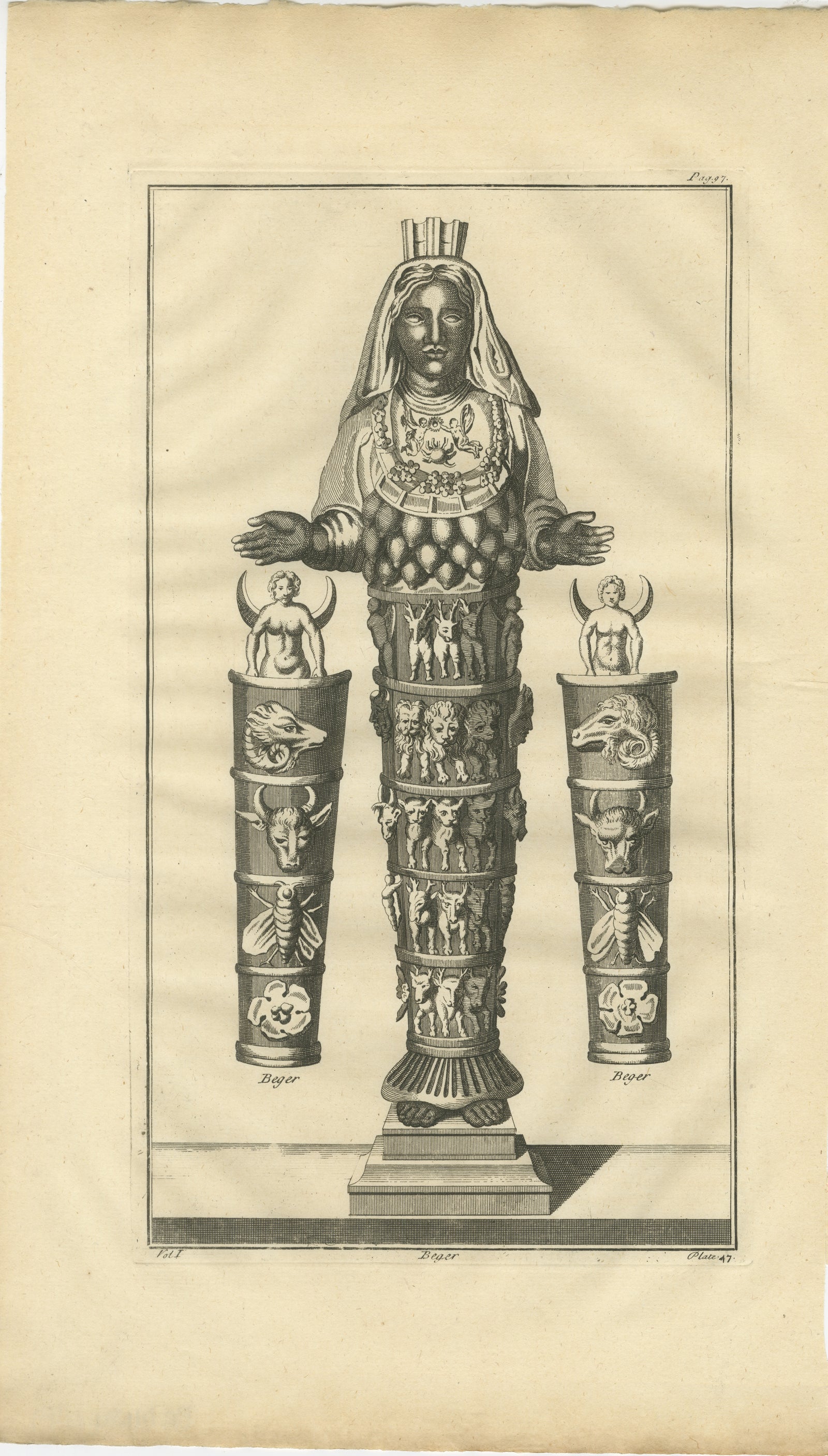
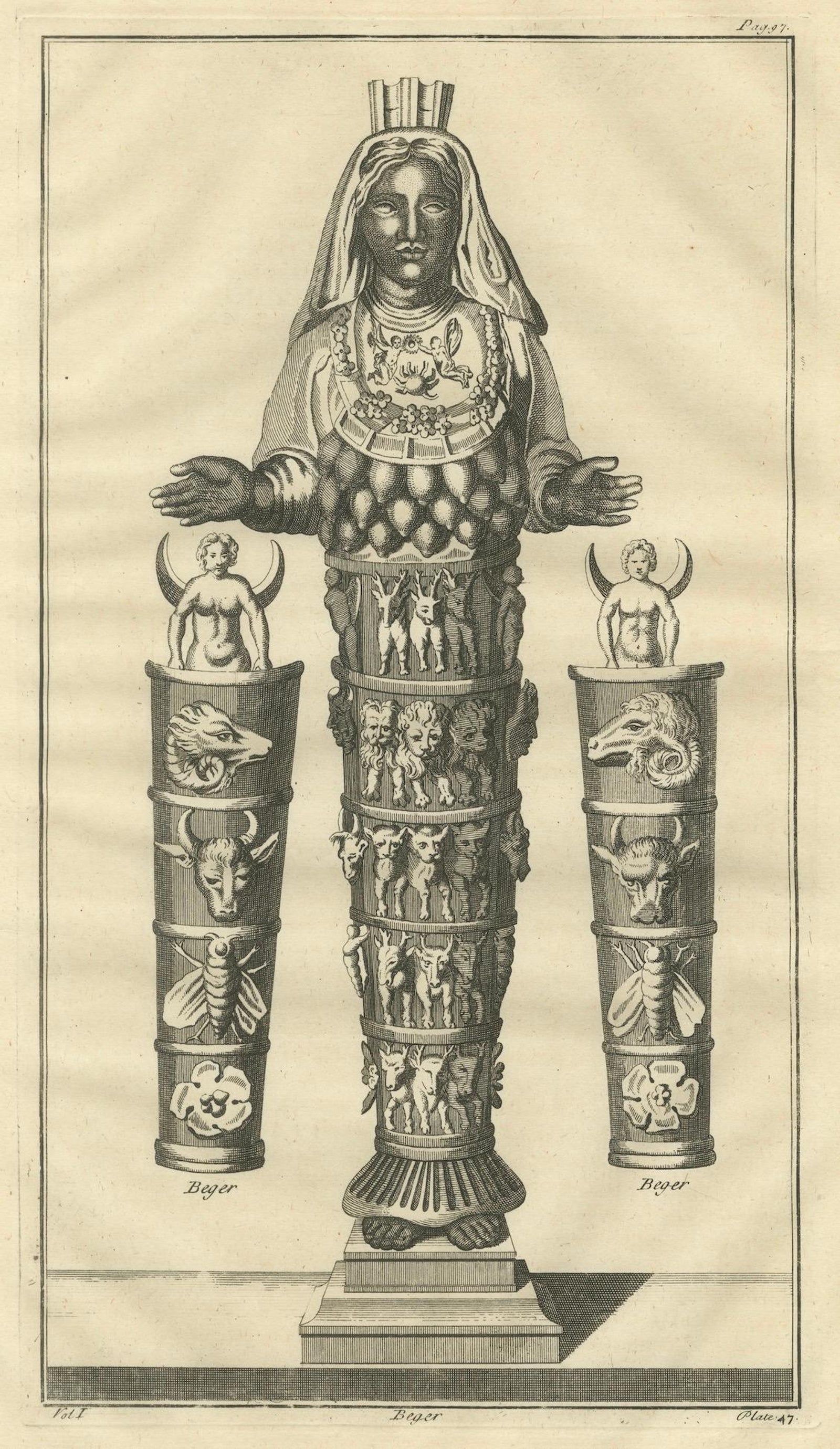
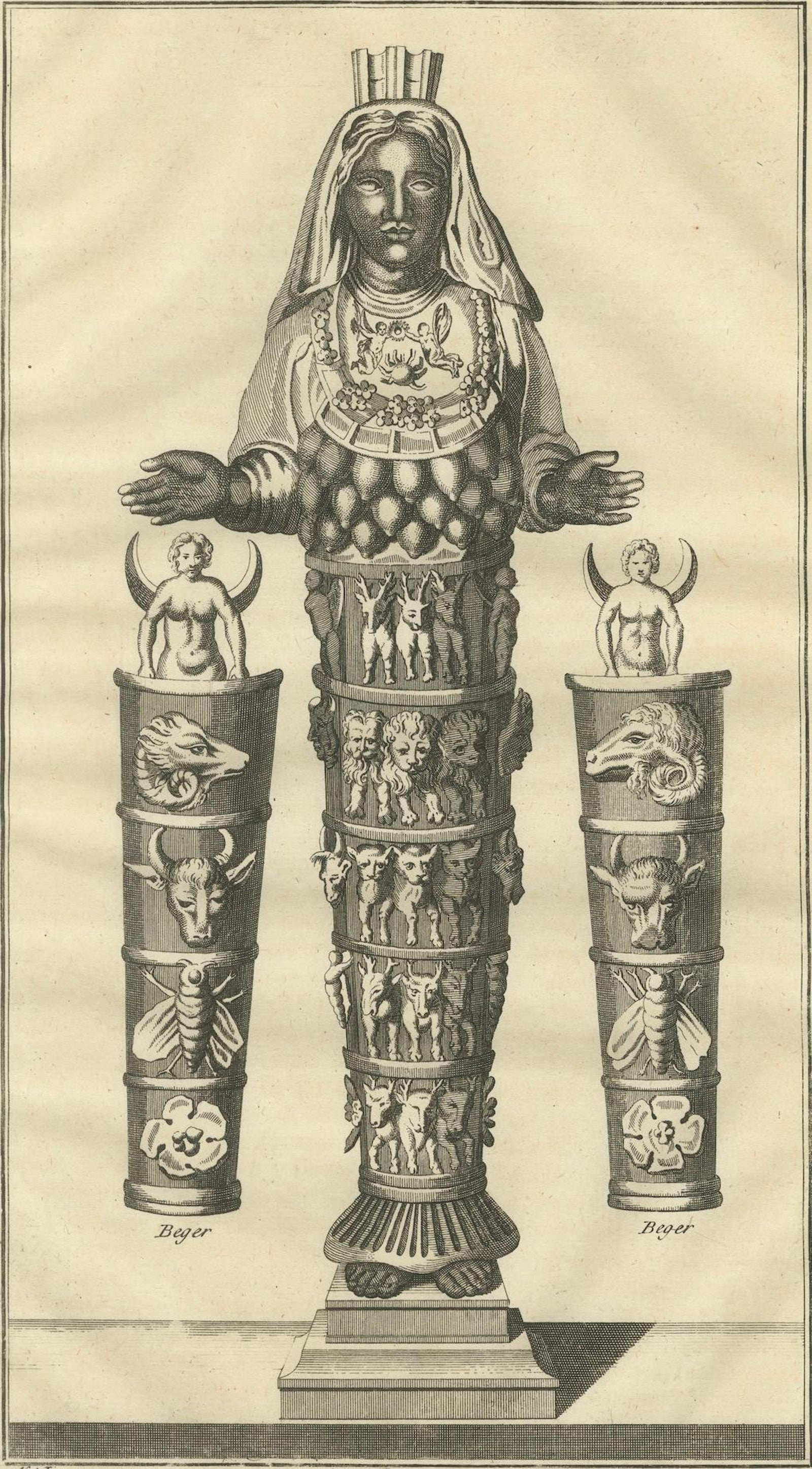
Diana of the Ephesians Antique Engraving, Montfaucon Antiquité Expliquée 1721
$1,030$77025% off
€702 · £590
Original print, not a reproduction
Ships worldwide from the Netherlands, flat or rolled, insured and tracked. 14-day returns.
- Date
- 1721
- Sheet size
- 16.6 × 9.6 in (42.2 × 24.3 cm)
- Condition
- Good. Good antique condition with age-related toning and light discoloration to the paper, consistent with early eighteenth-century prints. Minor edge wear and handling marks confined mainly to the margins. Plate impression visible. Blank verso.
- Collection
- Antiquity & ruins
- Era
- 1700 to 1789, Baroque to Neoclassical
- Stock no.
- BG-14184-1-49
What the condition grades mean
- Excellent
- Bright and clean, with no faults worth mentioning.
- Very good
- Only light signs of age, such as faint toning.
- Good
- Normal signs of age for a sheet of this period: toning, some foxing, small marks or neat old repairs.
- Fair
- Clear faults such as staining, tears or repairs, priced to match.
Every fault we see is written in the condition note, and the whole sheet is shown uncropped in the photos.
Diana of the Ephesians Antique Engraving, Montfaucon Antiquité Expliquée 1721
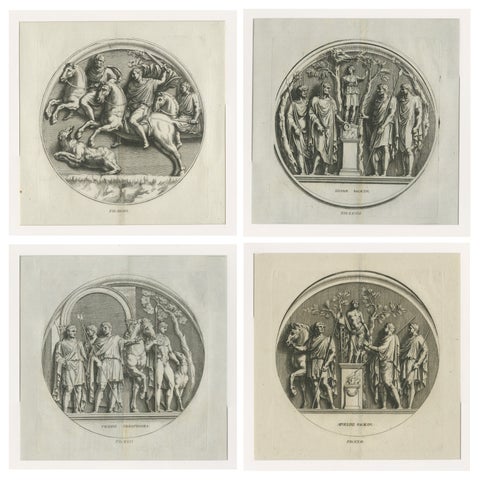
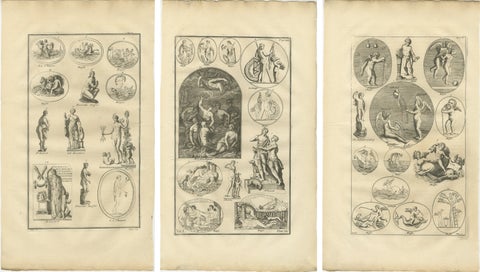
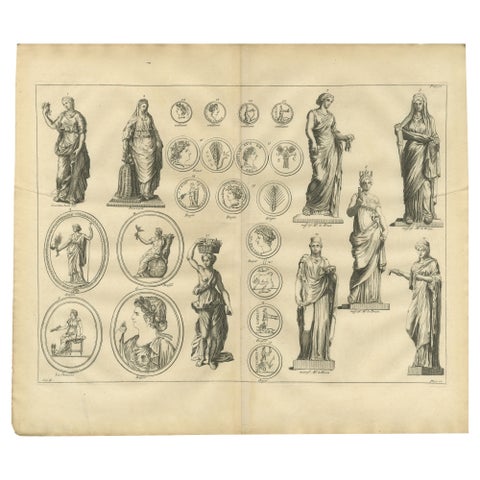
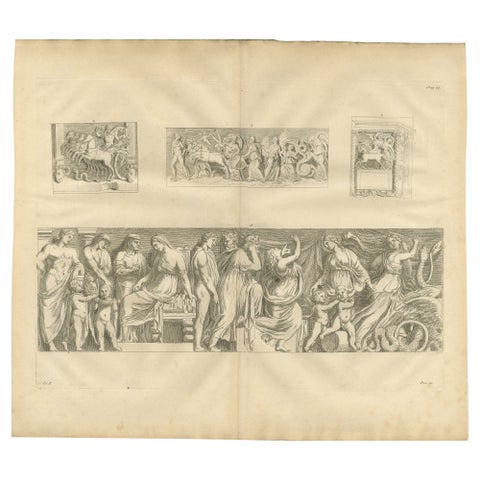
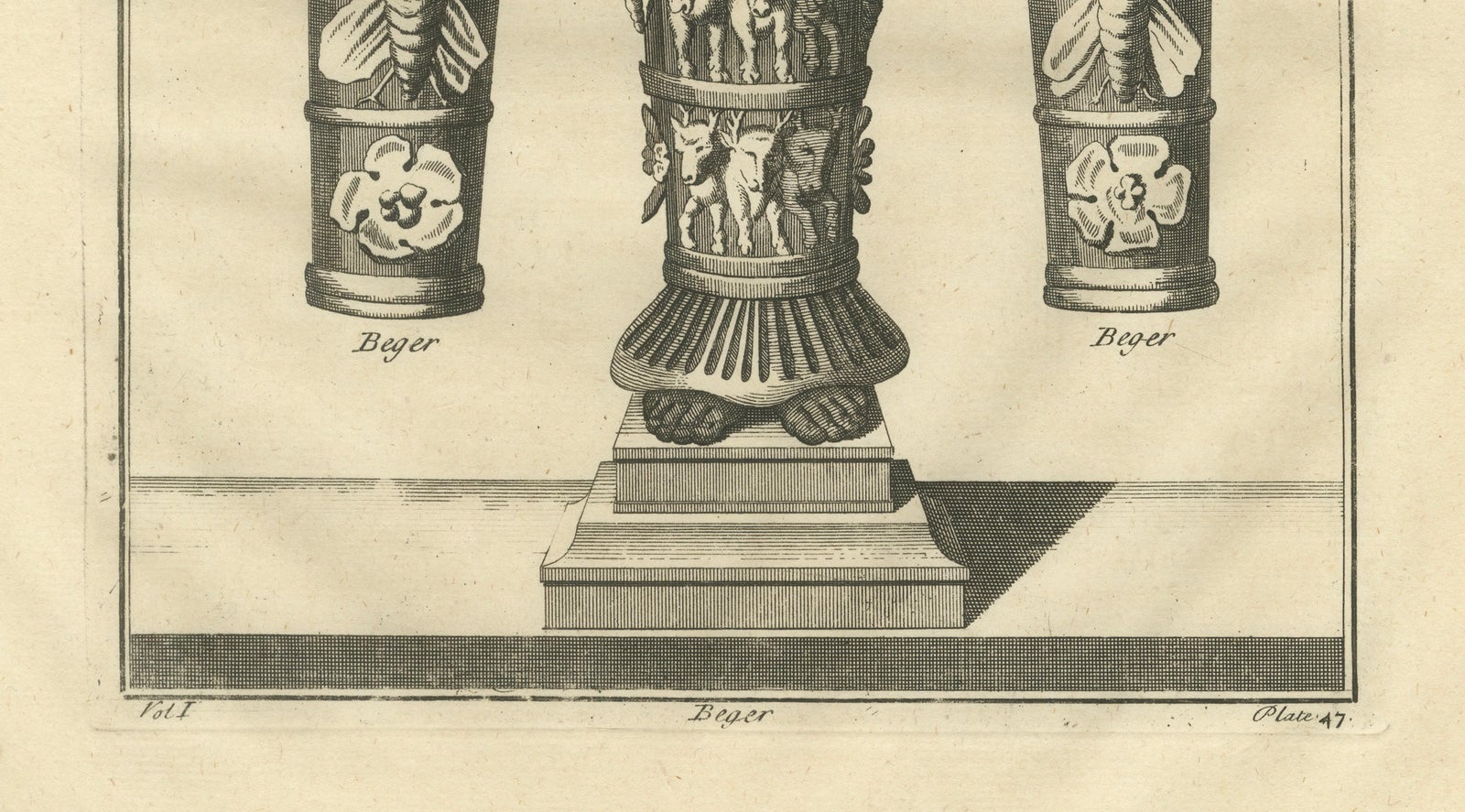
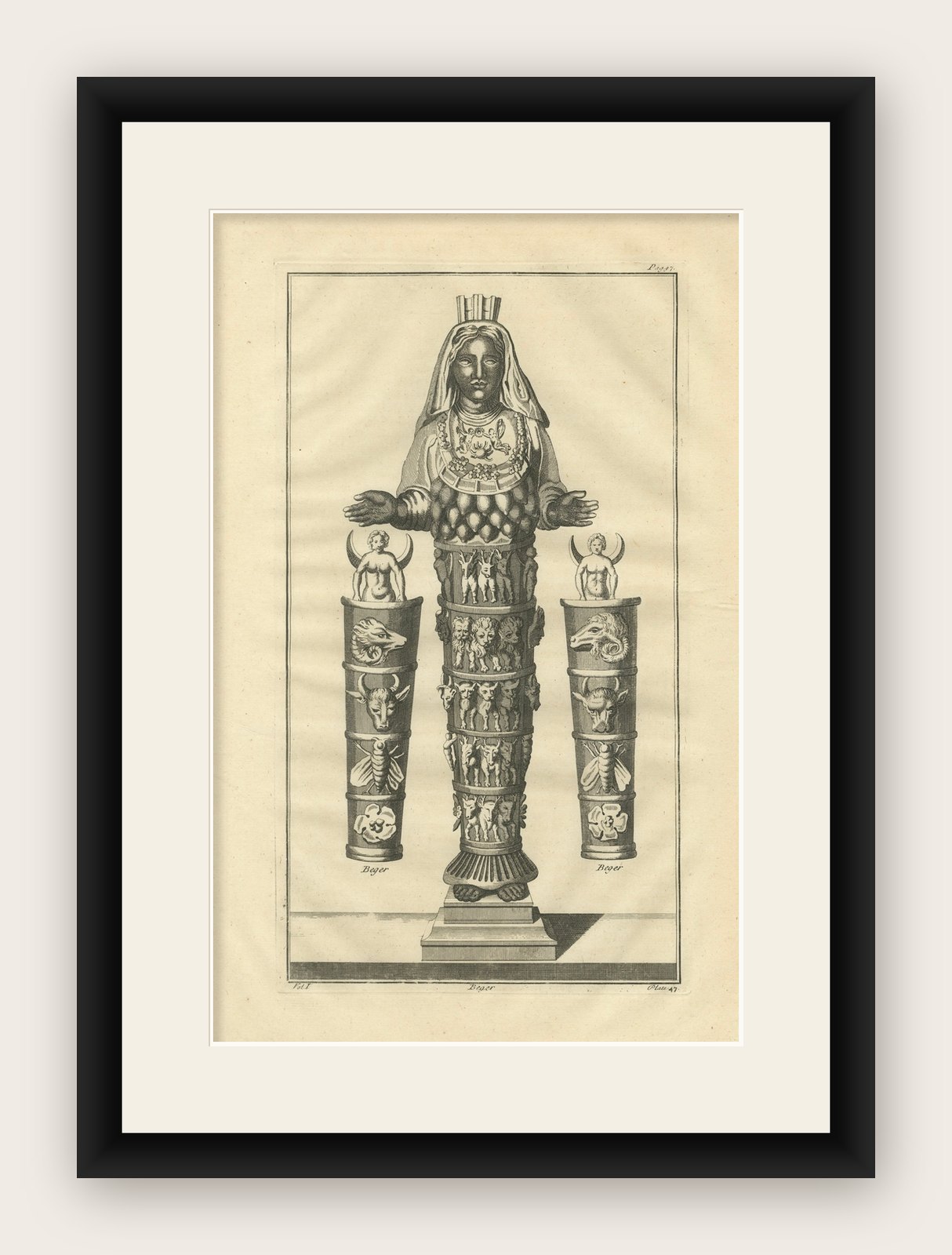
This original early eighteenth-century copper engraving depicts the famed Diana of the Ephesians (Artemis of Ephesus), one of the most recognizable and symbolically rich cult images of the ancient world. The plate originates from Bernard de Montfaucon’s monumental antiquarian publication L’Antiquité expliquée et représentée en figures, published in Paris in 1721, a foundational scholarly work that systematically documented classical antiquities and helped establish archaeology as an academic discipline.
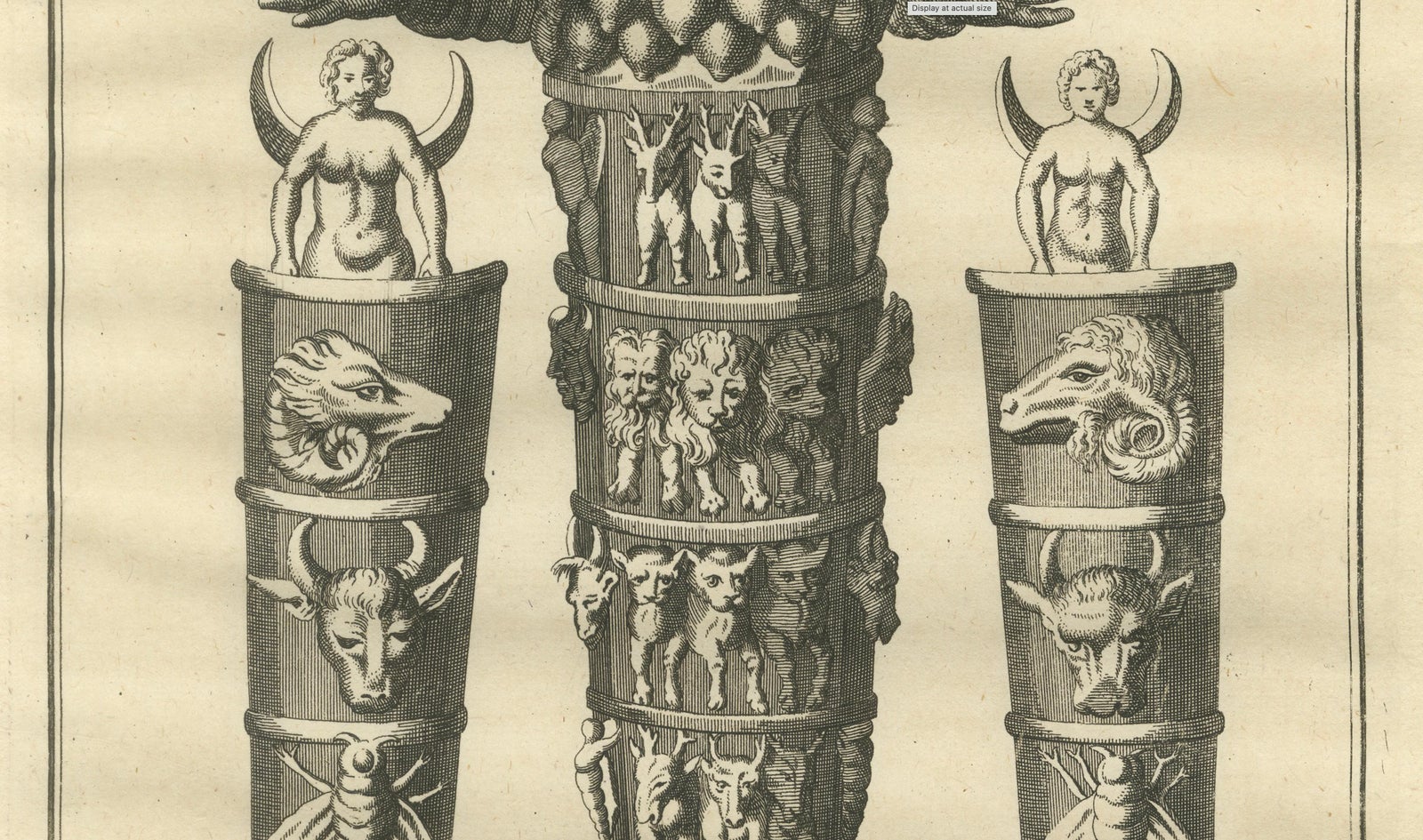
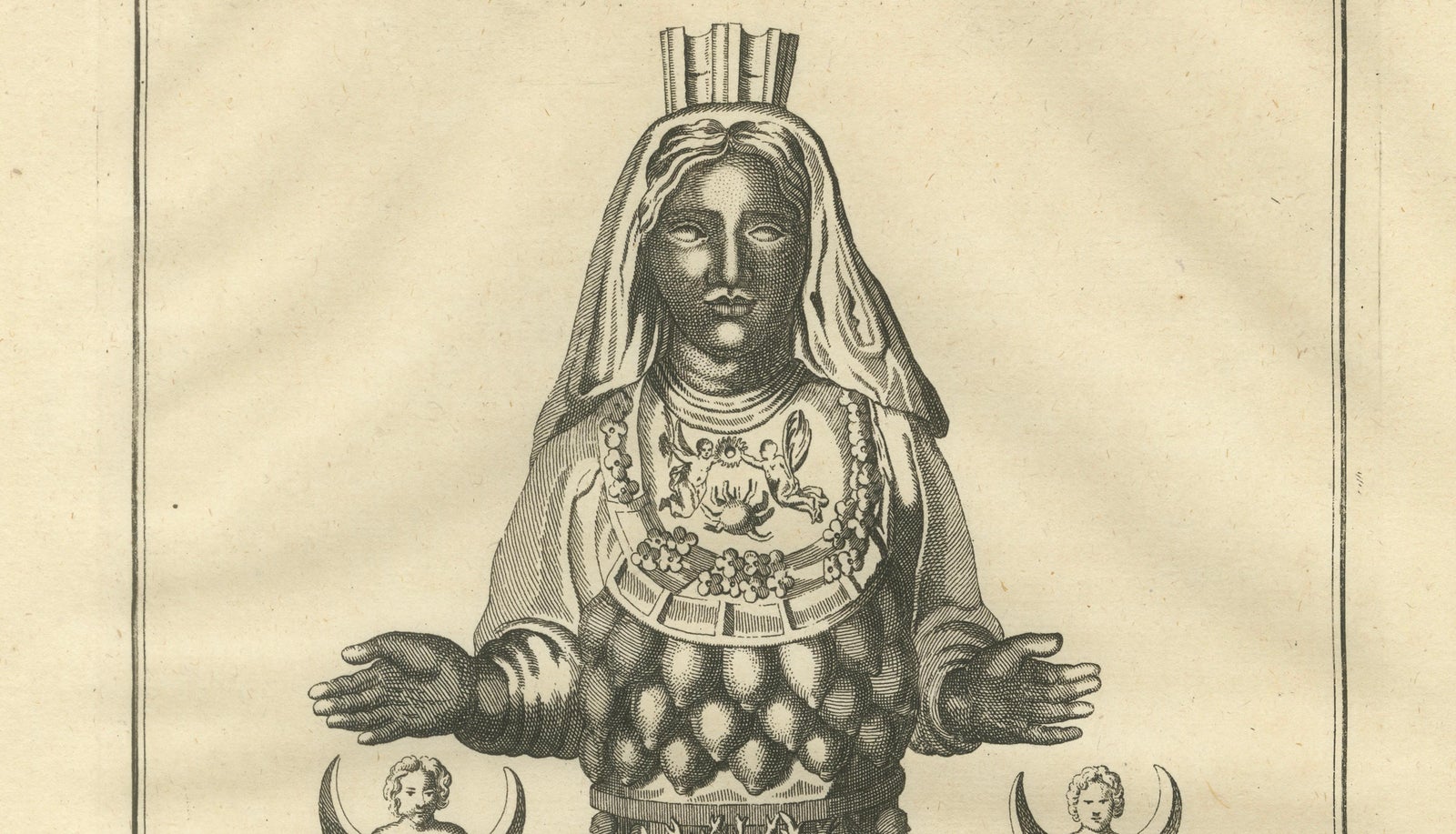
Montfaucon’s encyclopedic project sought to gather visual knowledge of ancient civilizations through carefully engraved illustrations based on surviving sculptures, coins, manuscripts, and earlier collections. This engraving presents the Ephesian Artemis in her distinctive archaic form: a rigid frontal figure crowned with a mural headdress, arms extended, and a body covered with symbolic registers. The multiple rounded forms across the torso, traditionally interpreted as fertility attributes, reflect the goddess’s role as a universal mother and protector of nature. Bands of animals, mythological creatures, and sacred motifs reinforce her association with cosmic order, fertility, and the natural world.
Unlike the athletic huntress Artemis familiar from Greek sculpture, the Ephesian Diana represents an older Anatolian cult tradition absorbed into Greco-Roman religion. The engraving therefore documents not only a sculpture but also Enlightenment-era attempts to understand ancient religious symbolism through comparative study. Montfaucon’s precise linework and balanced composition exemplify the refined craftsmanship of Parisian copperplate engraving during the early 18th century, combining scholarly accuracy with strong decorative appeal.
Today, engravings from L’Antiquité expliquée are highly regarded by collectors of classical antiquity, archaeology, and early academic illustration. The graphic symmetry and sculptural clarity make this image particularly suitable for interiors ranging from traditional libraries to contemporary gallery walls.
This original antique engraving is offered unframed, allowing flexibility to select a frame that best suits the intended interior.
Framing tips: A dark walnut or ebonized frame with a wide ivory mat enhances the classical presence of the figure. For a modern interior, a slim black frame with generous mat spacing creates a museum-quality presentation emphasizing the engraving’s symmetry.
Technique: Copper engraving
Maker: Bernard de Montfaucon, France, Paris, 1721