Close-ups
Framed and on the wall

Frame and rooms are illustrations of how the print could look, drawn to its real size; it is sold unframed unless the description says otherwise.
Antiquity & ruins
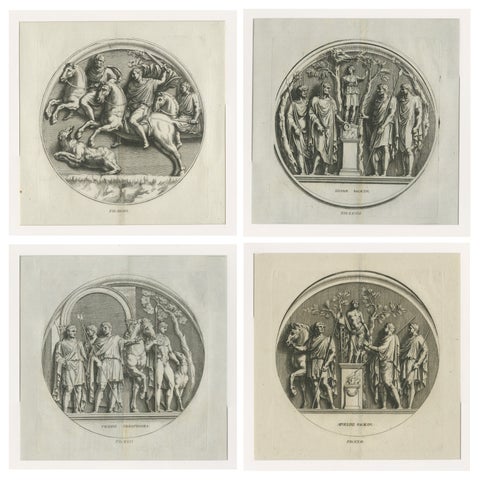
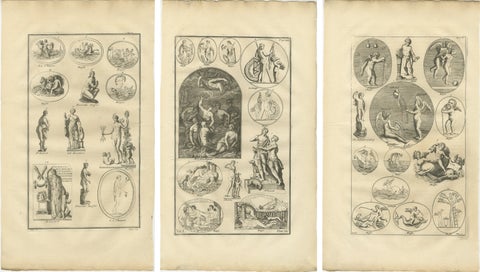
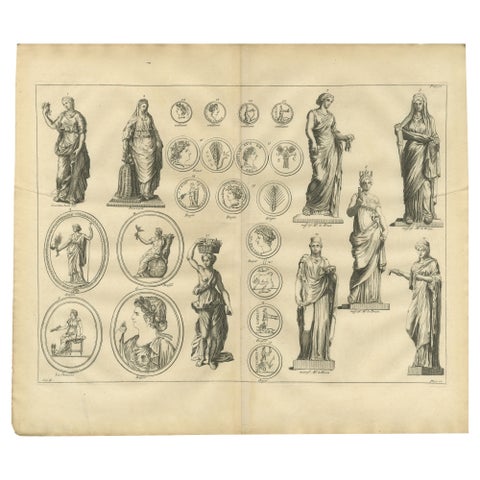
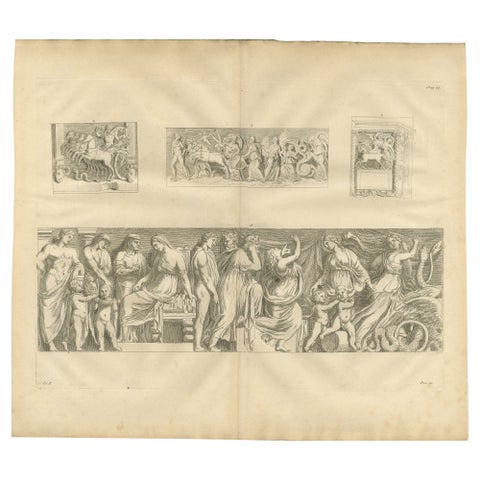
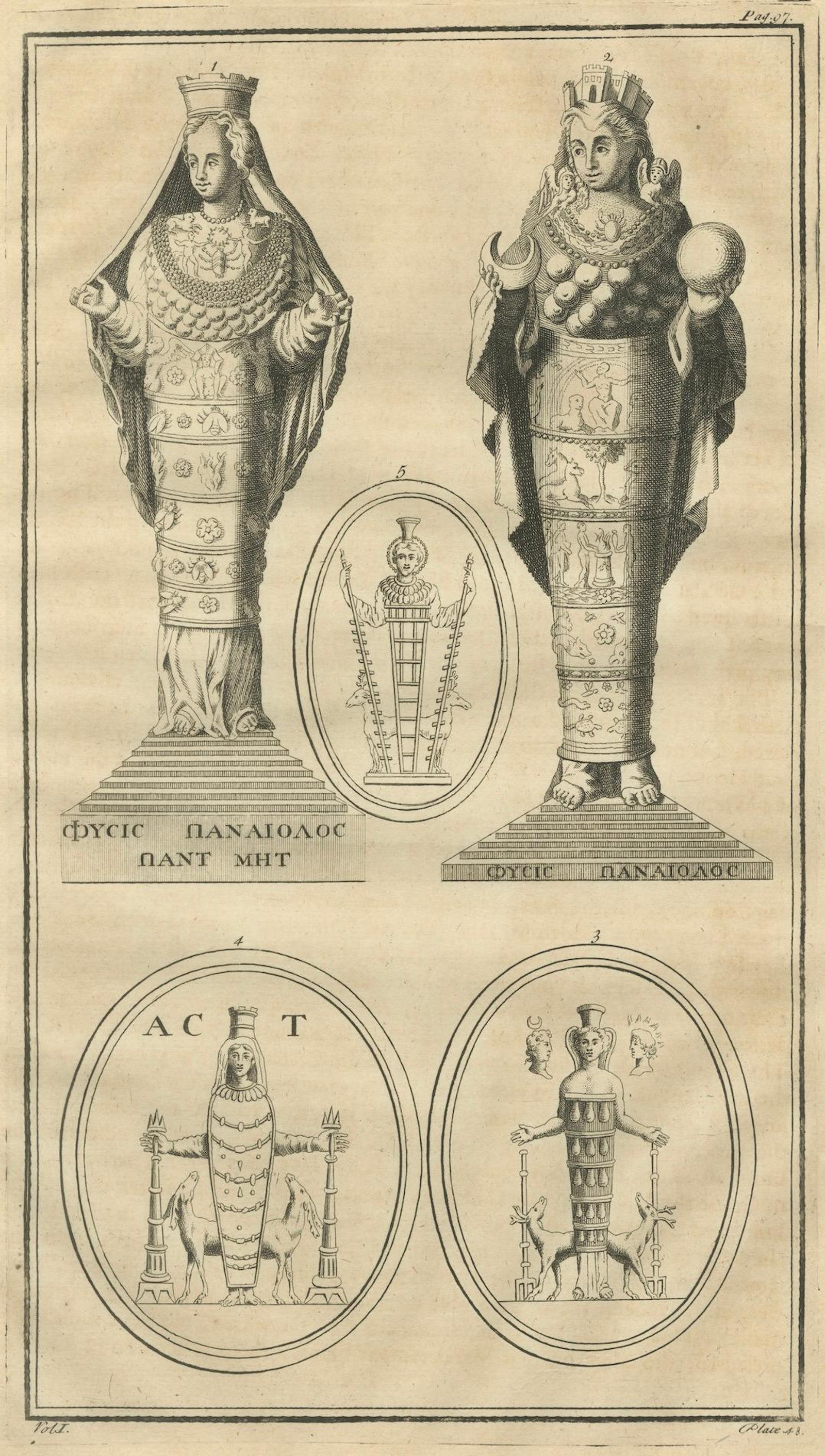
Diana of Ephesus Antique Engraving, Montfaucon Antiquité Expliquée, 1721
€845€63425% off
$695 · £530
Original print, not a reproduction
Ships worldwide from the Netherlands, flat or rolled, insured and tracked. 14-day returns.
- Date
- 1721
- Sheet size
- 16.6 × 9.6 in (42.2 × 24.3 cm)
- Condition
- Good. Good antique condition with age-related toning and light paper discoloration consistent with early eighteenth-century prints. Minor edge wear and handling marks mainly confined to the margins. Plate impression visible. Blank verso.
- Collection
- Antiquity & ruins
- Era
- 1700 to 1789, Baroque to Neoclassical
- Stock no.
- BG-14184-1-48
What the condition grades mean
- Excellent
- Bright and clean, with no faults worth mentioning.
- Very good
- Only light signs of age, such as faint toning.
- Good
- Normal signs of age for a sheet of this period: toning, some foxing, small marks or neat old repairs.
- Fair
- Clear faults such as staining, tears or repairs, priced to match.
Every fault we see is written in the condition note, and the whole sheet is shown uncropped in the photos.
Diana of Ephesus Antique Engraving, Montfaucon Antiquité Expliquée, 1721
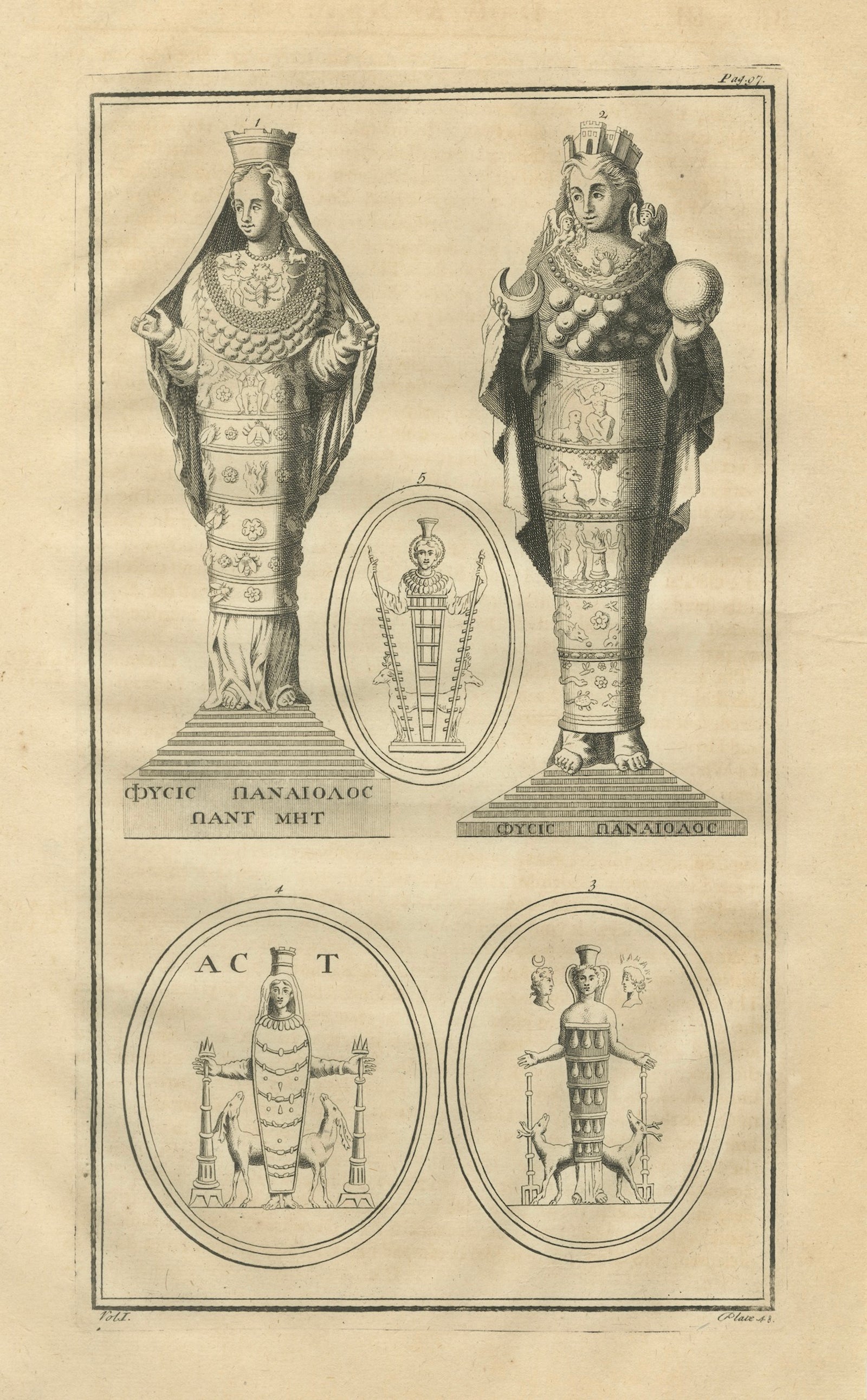
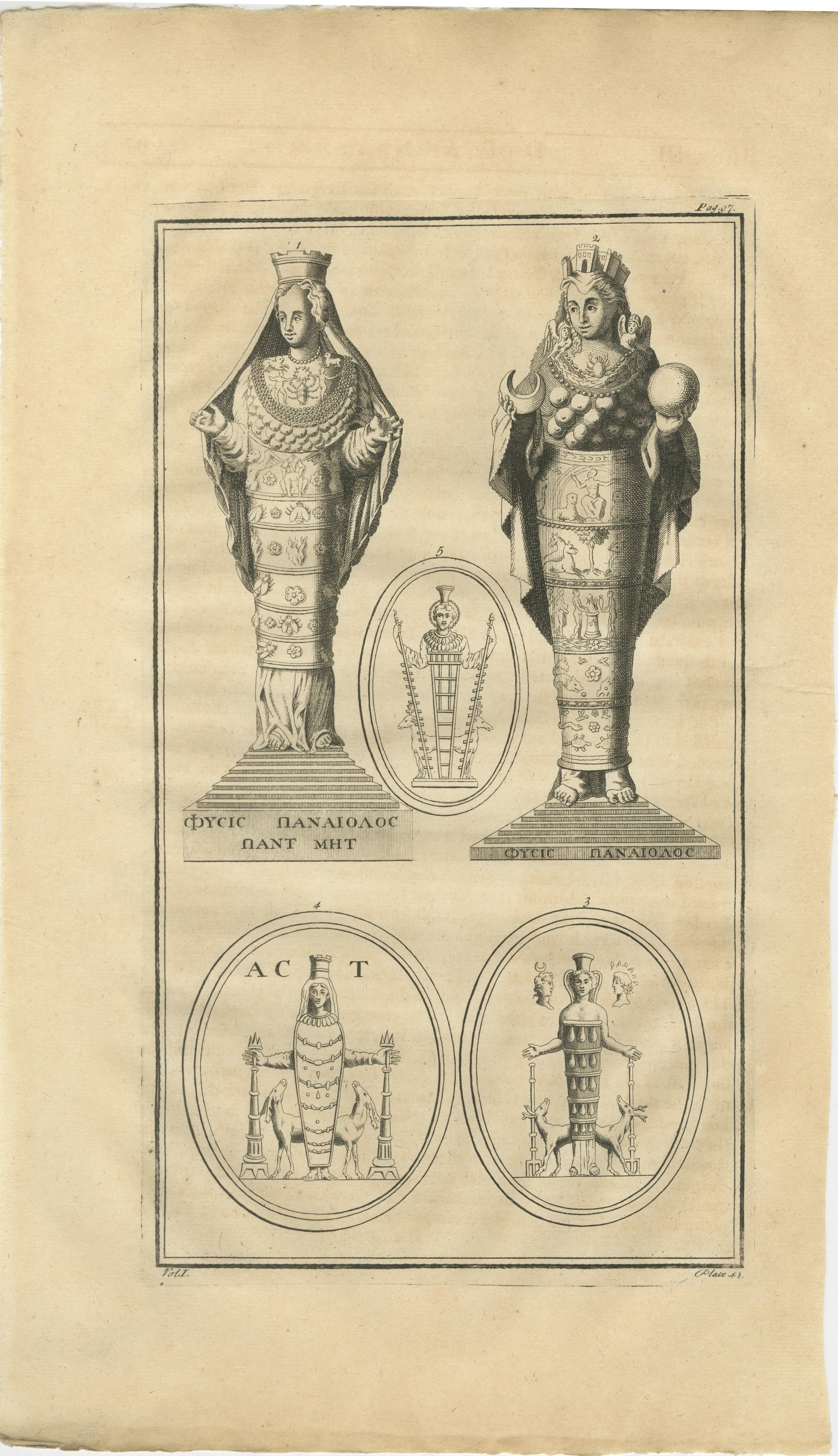
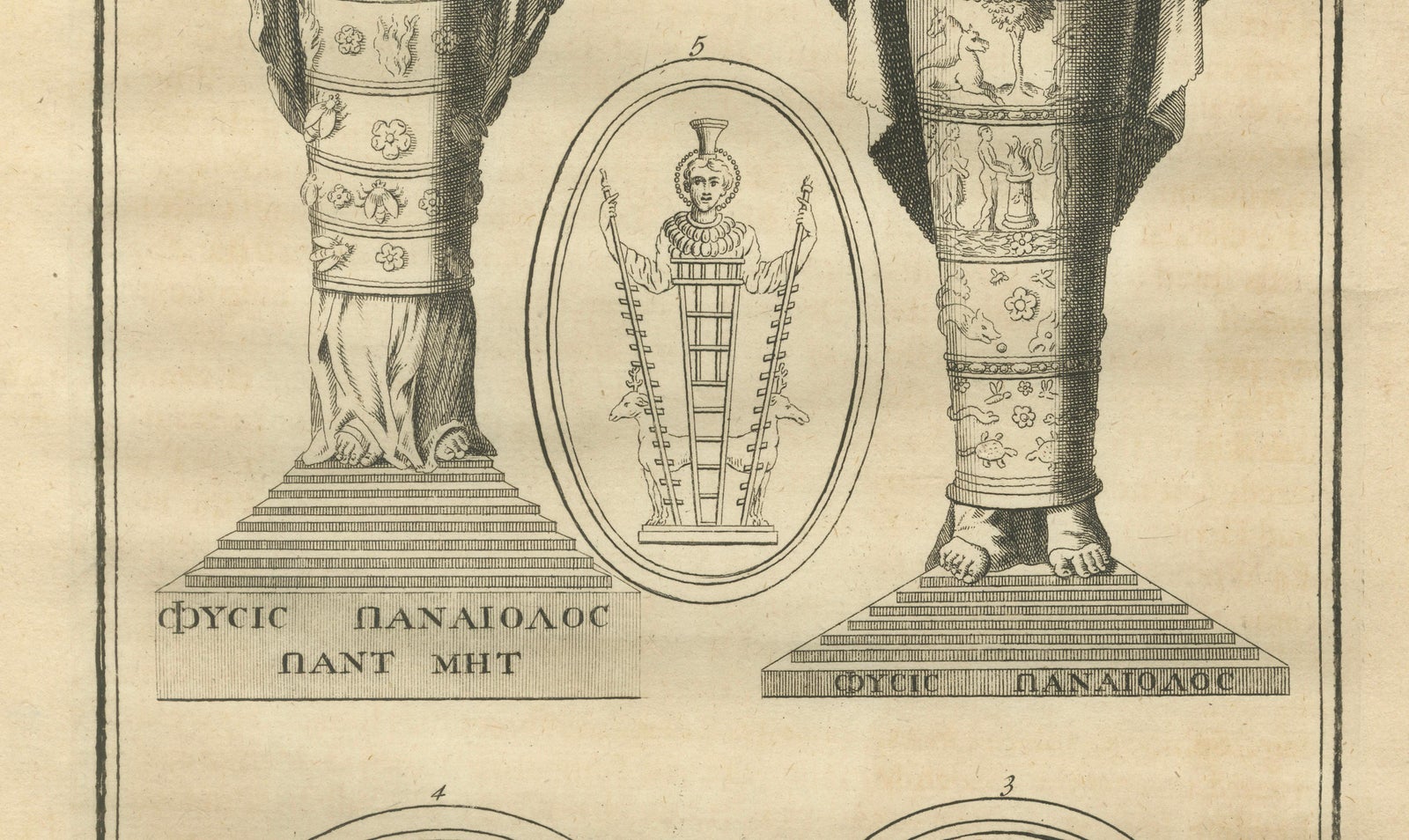
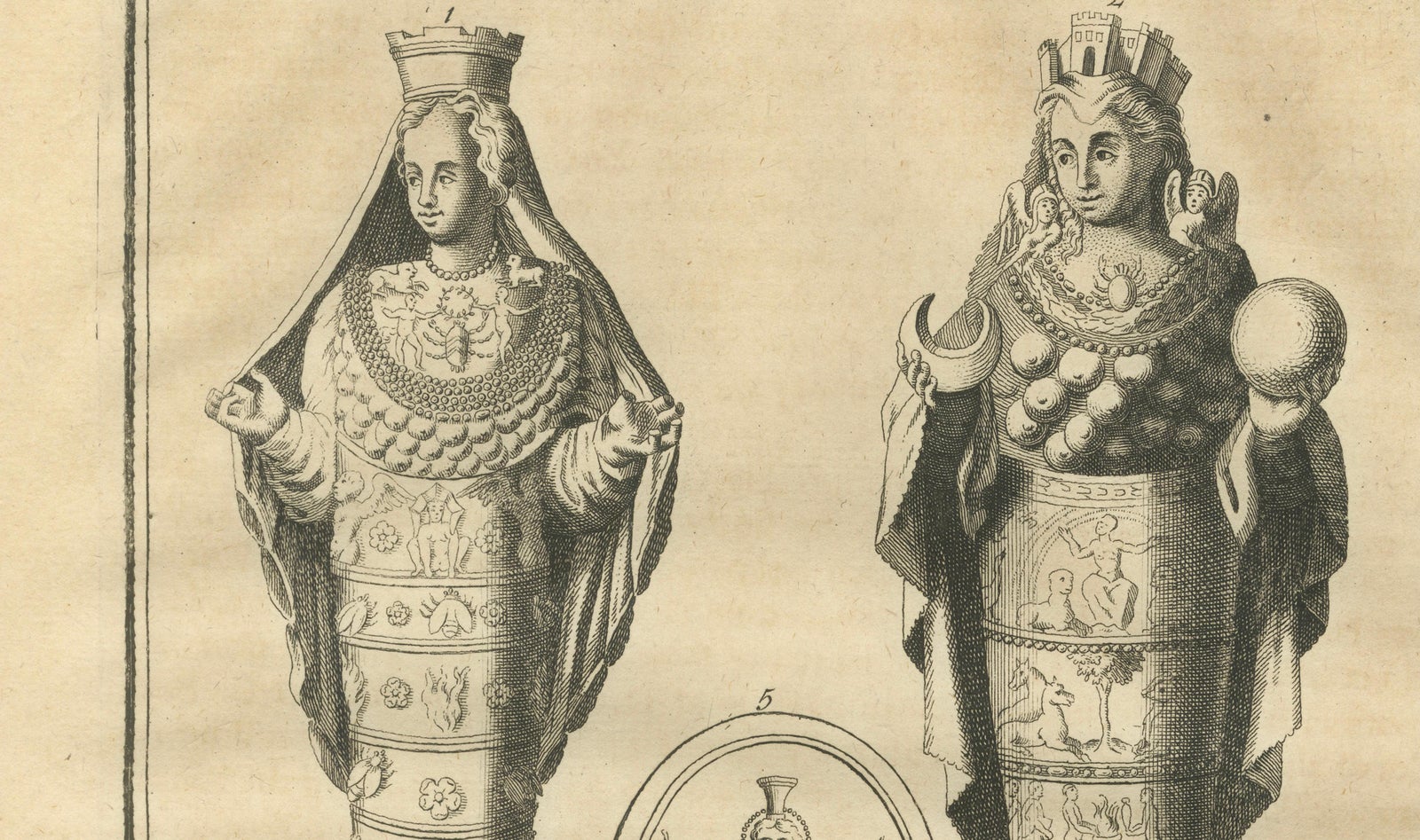
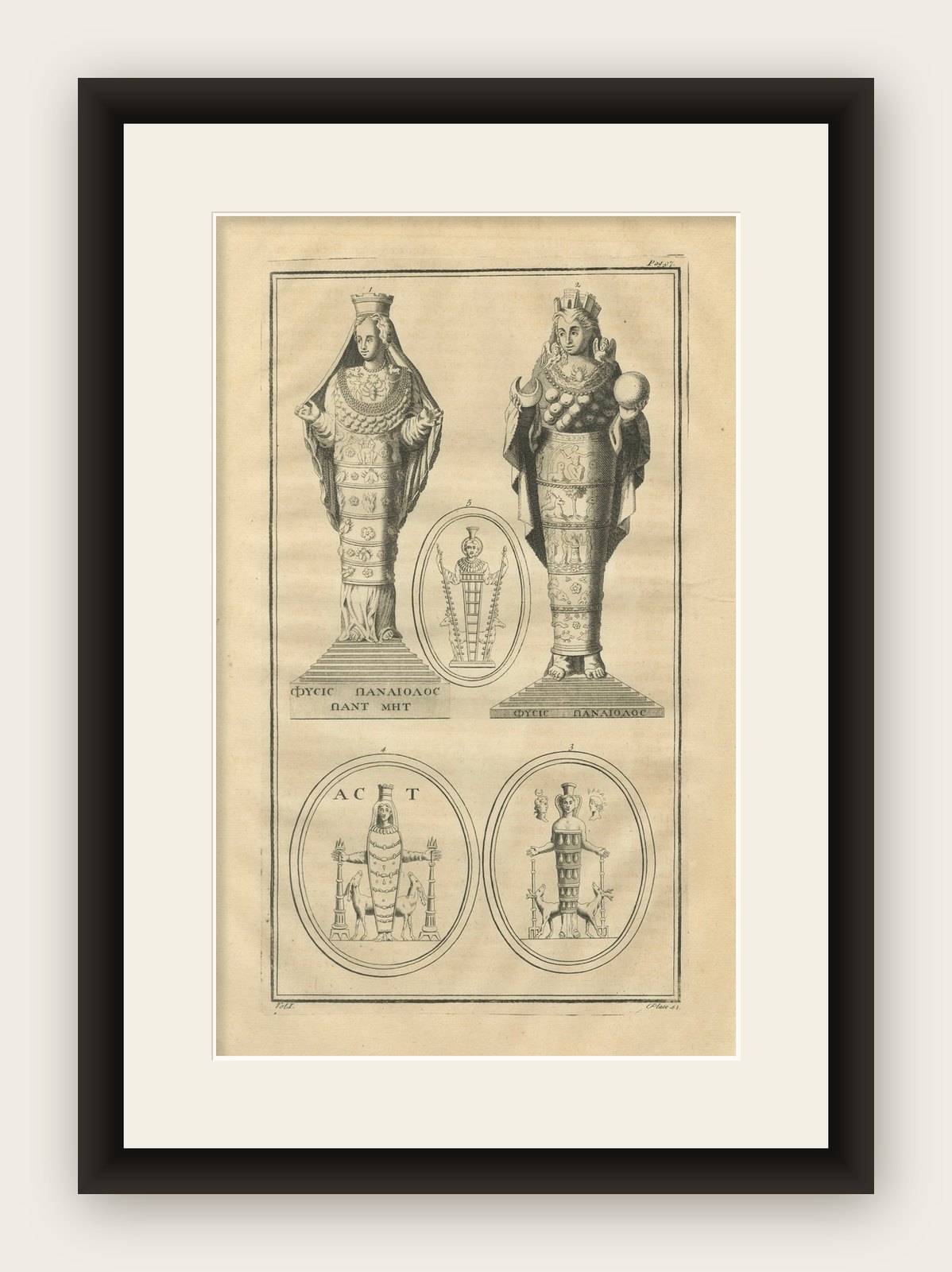
This original eighteenth-century copper engraving titled “Diane d’Ephese” illustrates several sculptural representations of the celebrated cult statue of Artemis of Ephesus, one of antiquity’s most enigmatic and symbolically charged religious images. The plate originates from Bernard de Montfaucon’s landmark antiquarian publication L’antiquité expliquée et représentée en figures, published in Paris in 1721, a pioneering encyclopedic study that helped establish the scholarly foundations of archaeology and art history during the Enlightenment.
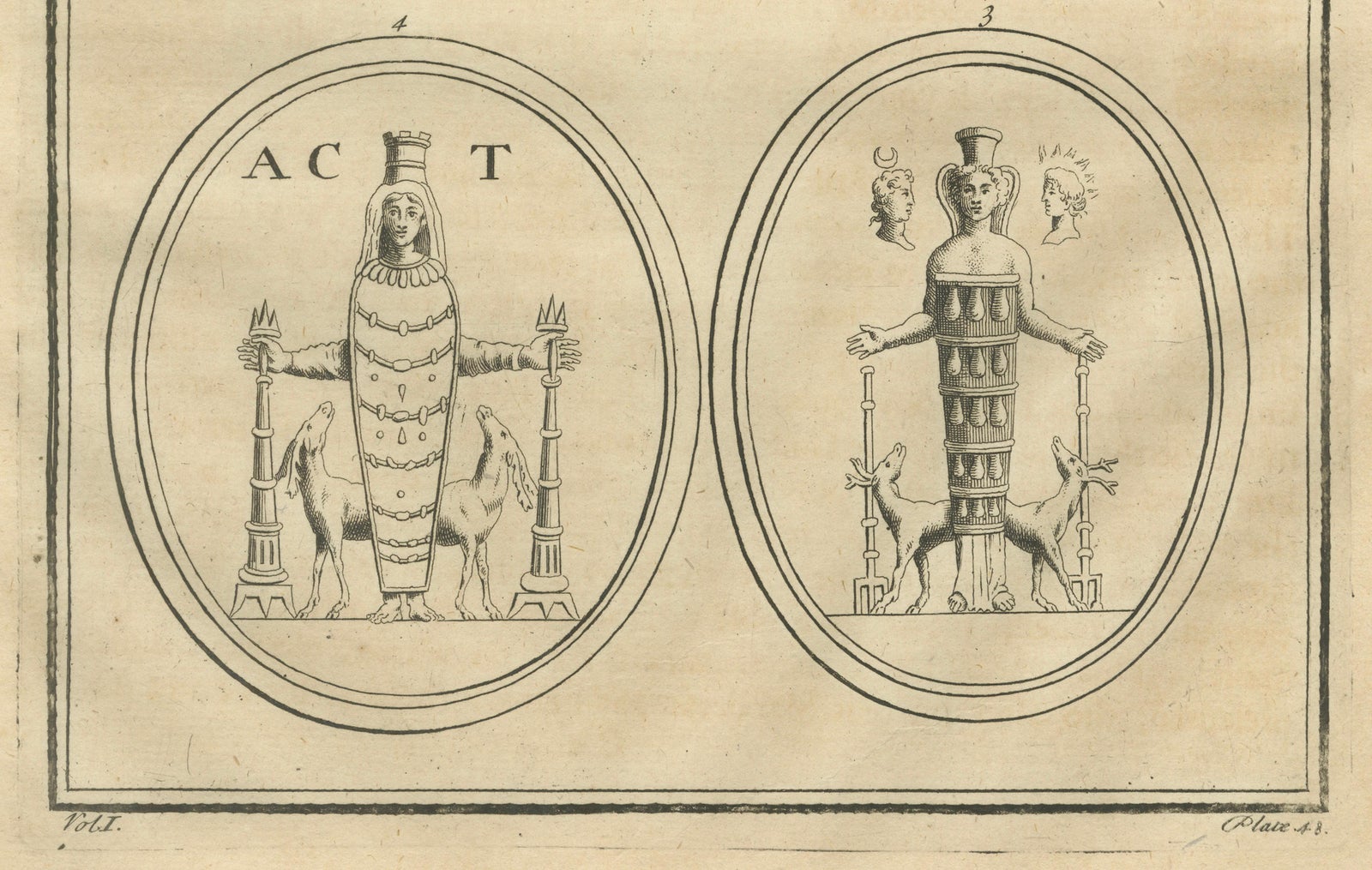
Montfaucon’s ambitious project sought to systematically document the material culture of the ancient world through carefully researched engravings based on surviving sculptures, coins, reliefs, and historical sources. This plate presents multiple interpretations of the Ephesian goddess, comparing sculptural variants and medallion representations. The central figures stand rigidly frontal, crowned and richly adorned, their bodies covered with registers of animals, symbolic figures, and ritual ornamentation. Smaller circular images below further demonstrate how the goddess appeared on ancient coins and reliefs, reflecting Montfaucon’s analytical approach to classical imagery.
Unlike the familiar Greek Artemis, goddess of the hunt, the Ephesian Diana represents an older Anatolian mother deity assimilated into Greco-Roman religion. Her distinctive iconography, tiered body coverings, animal motifs, and fertility symbolism, expresses abundance, cosmic order, and divine protection. During the eighteenth century, such images fascinated European scholars attempting to interpret ancient religions through comparative symbolism, making Montfaucon’s publication a cornerstone reference for collectors, antiquarians, and early museums.
The engraving is executed with refined precision typical of Parisian copperplate work of the early 1700s, combining scientific clarity with strong decorative appeal. The balanced composition and graphic symmetry allow the print to function equally as a scholarly artifact and an elegant wall piece suited to both classical and contemporary interiors.
This original antique engraving is offered unframed, providing flexibility to select a frame appropriate to the intended interior setting.
Framing tips: A dark walnut or ebonized frame with a generous ivory mat enhances the engraving’s academic and neoclassical character. For a contemporary presentation, a slim black gallery frame with wide mat spacing creates a refined museum-style display.
Technique: Copper engraving
Maker: Bernard de Montfaucon, France, Paris, 1721