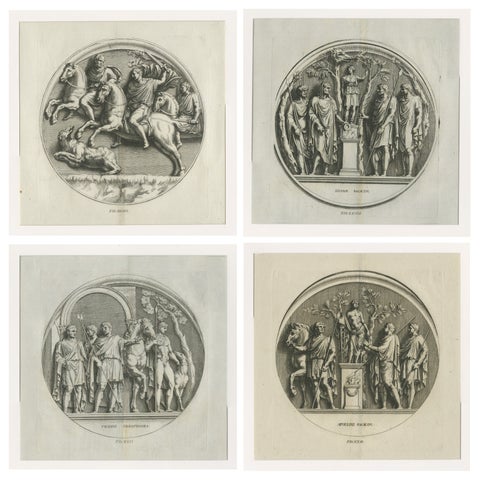
Close-ups
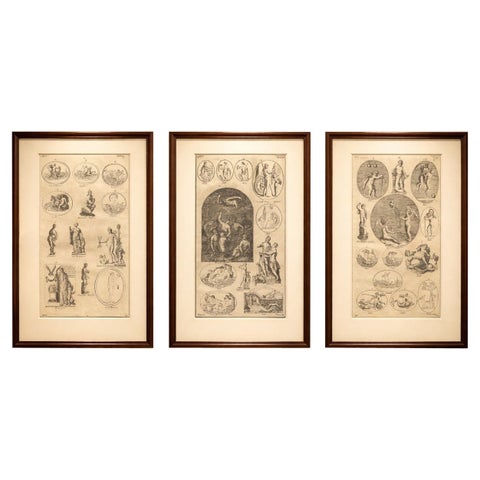
Framed and on the wall
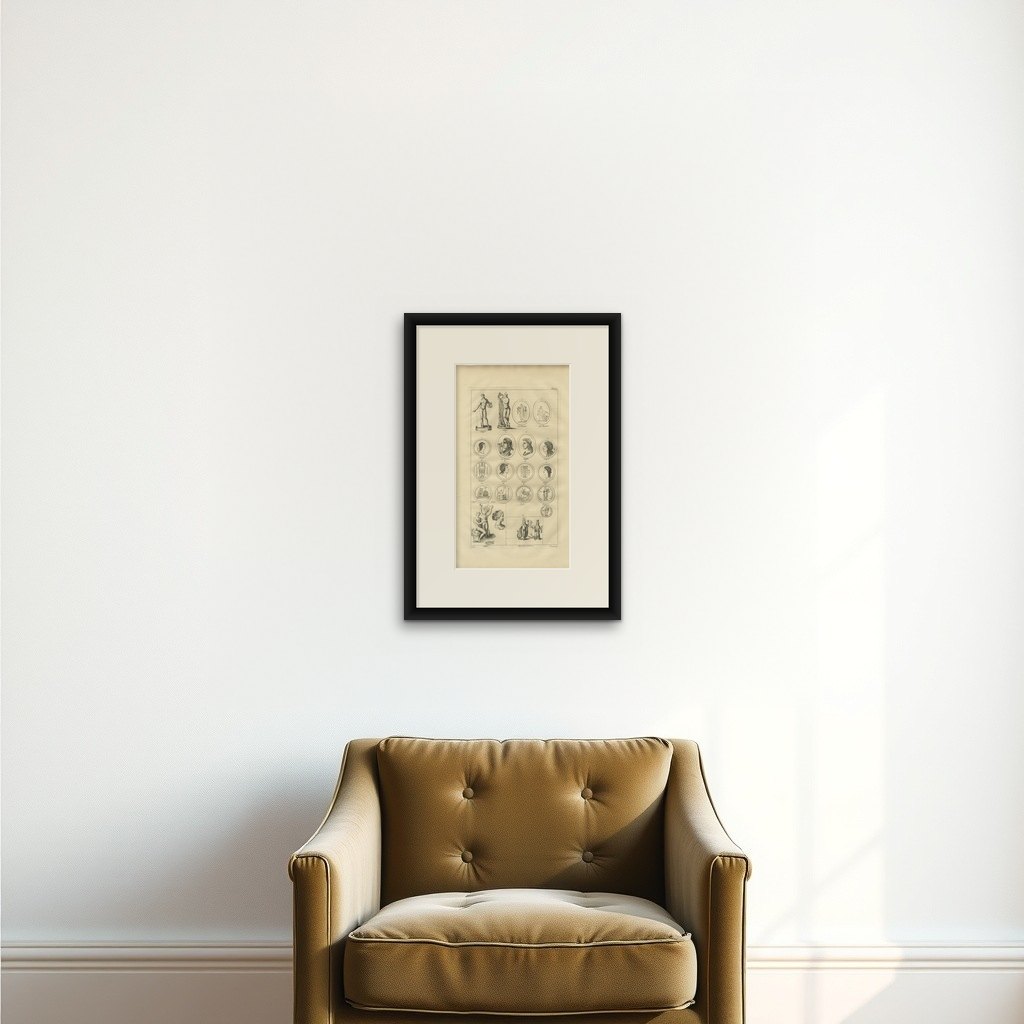

Frame and rooms are illustrations of how the print could look, drawn to its real size; it is sold unframed unless the description says otherwise.
Antiquity & ruins
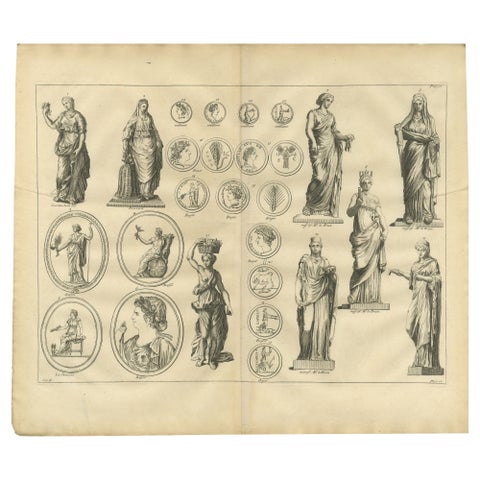
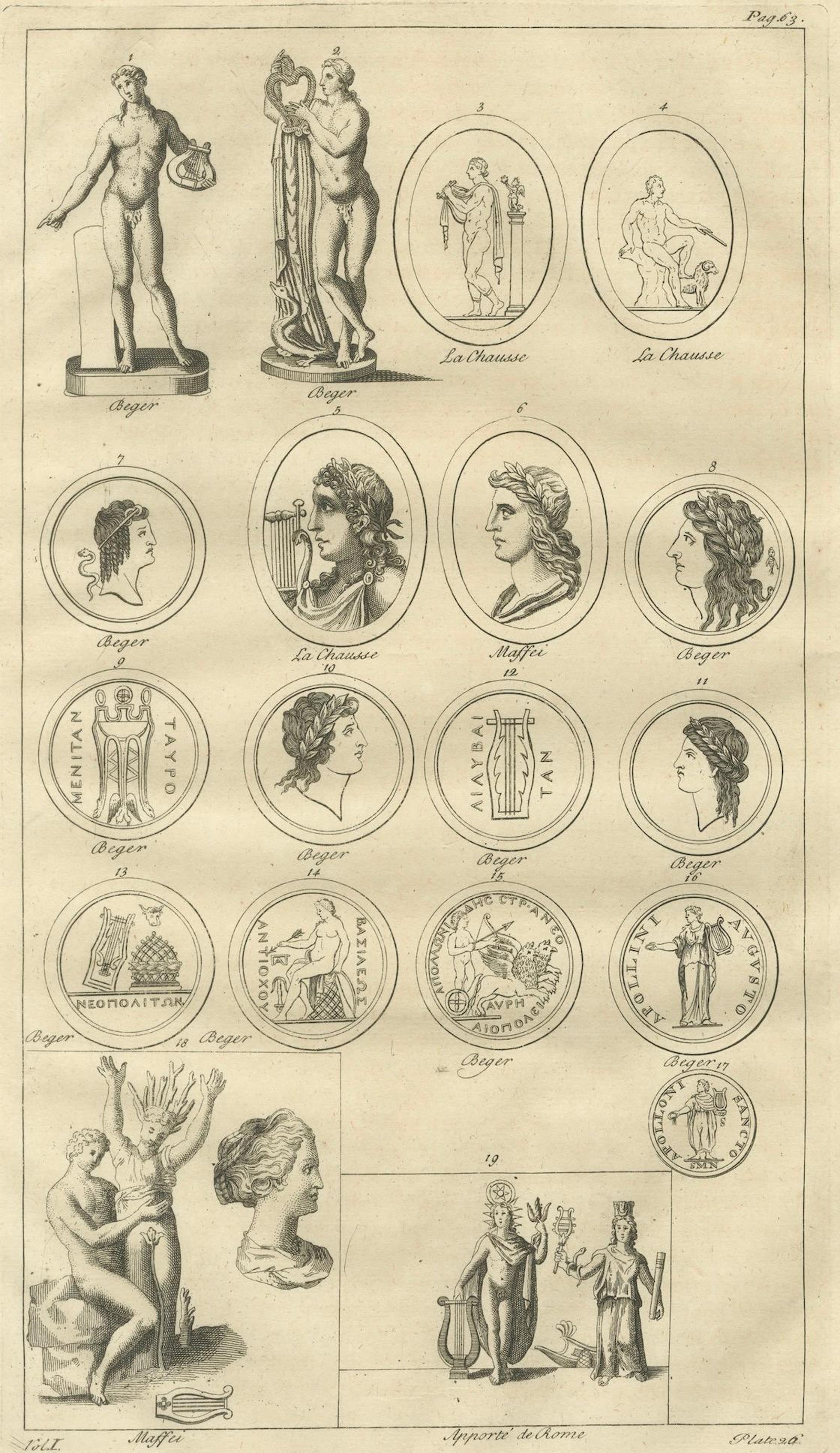
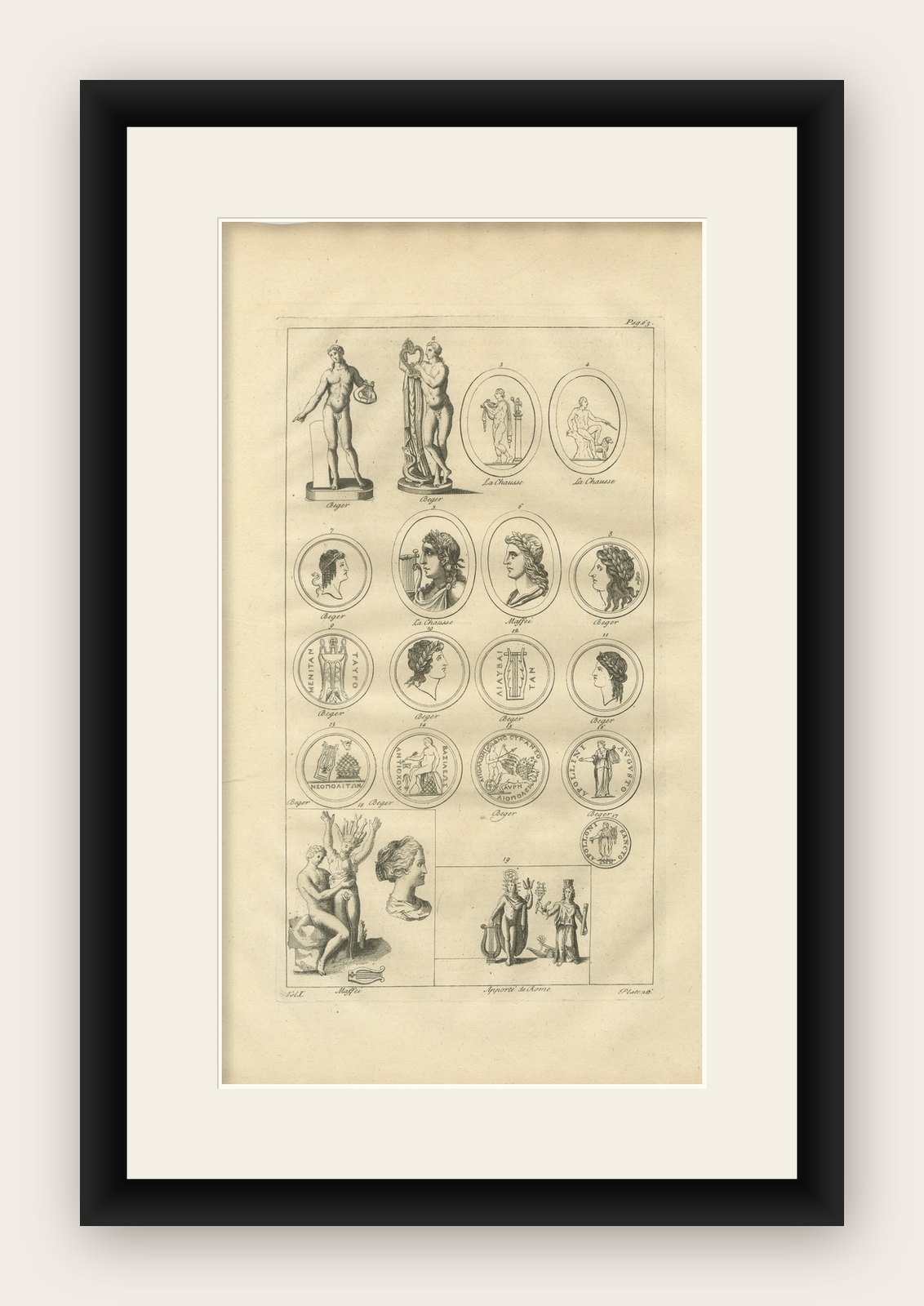
Antique Roman Sculpture & Medals Plate, Montfaucon, Antiquity Explained, 1721
£975
$1,295 · €1,150
Original print, not a reproduction
Ships worldwide from the Netherlands, flat, insured and tracked. 14-day returns. To buy, use Ask a question (info@antiquearchitectureprints.com) and we will reserve it for you.
- Date
- 1721
- Sheet size
- 16.7 × 10 in (42.3 × 25.5 cm)
- Condition
- Good. Original 18th-century engraving on laid paper. General age-related toning and light spotting, consistent with early folio plates. Impression slightly soft in places, typical for the work. Overall condition sound and attractive for display.
- Collection
- Antiquity & ruins
- Era
- 1700 to 1789, Baroque to Neoclassical
- Stock no.
- f_48028142
Antique Roman Sculpture & Medals Plate, Montfaucon, Antiquity Explained, 1721
Description
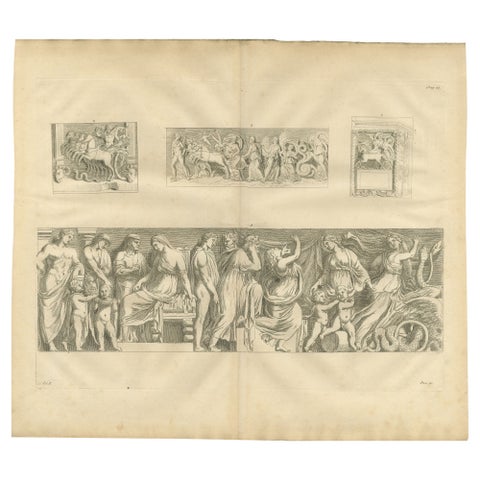
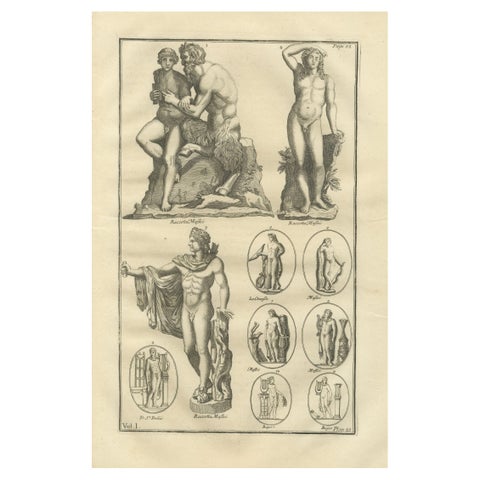
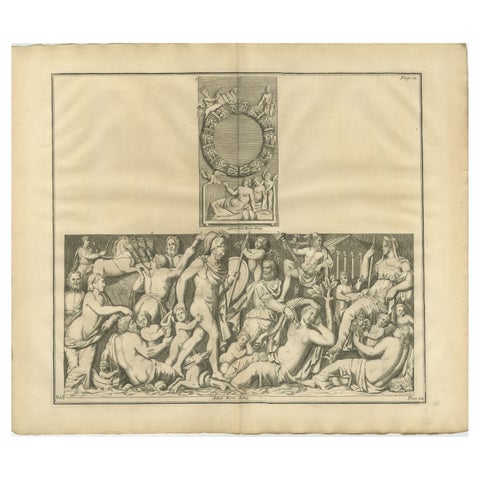
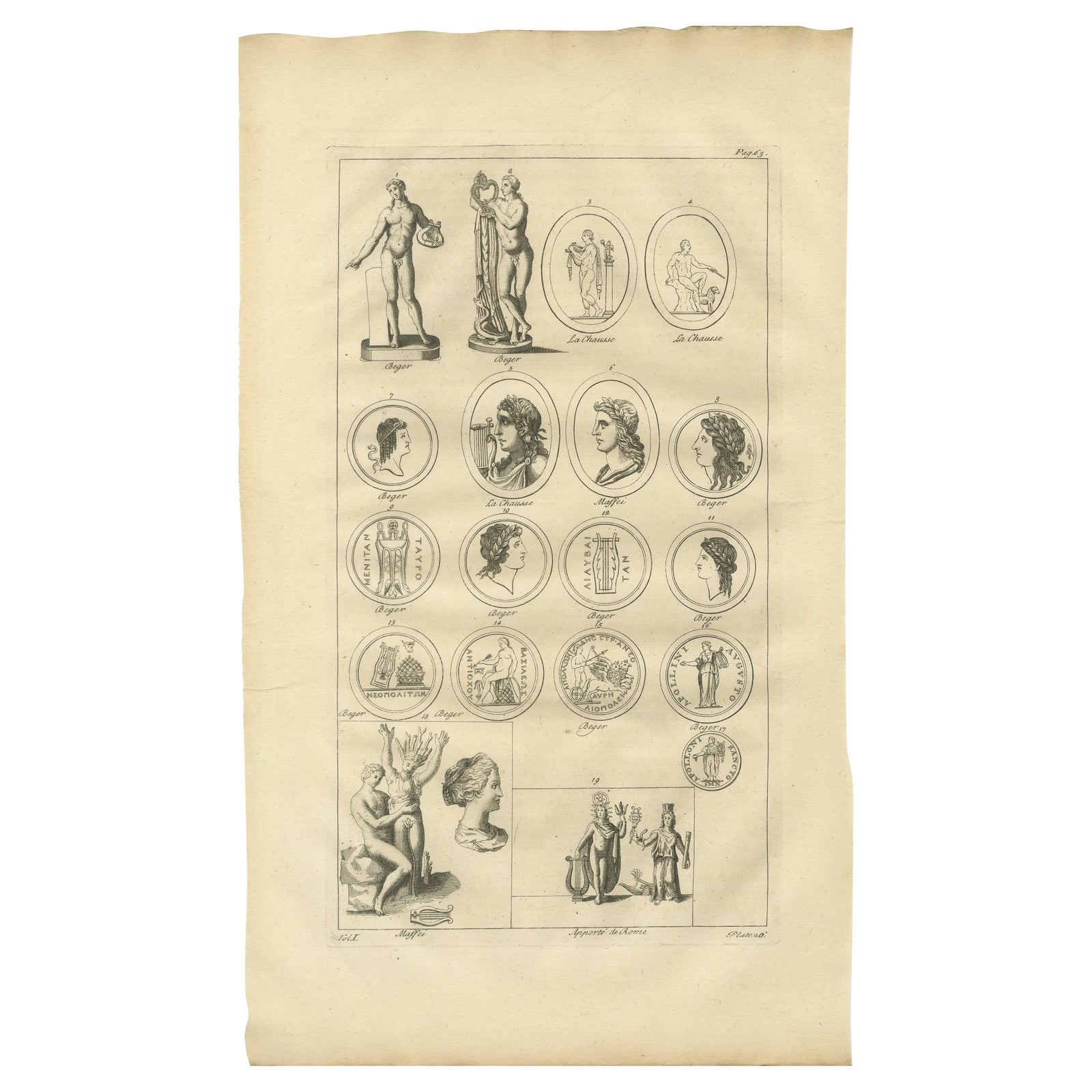
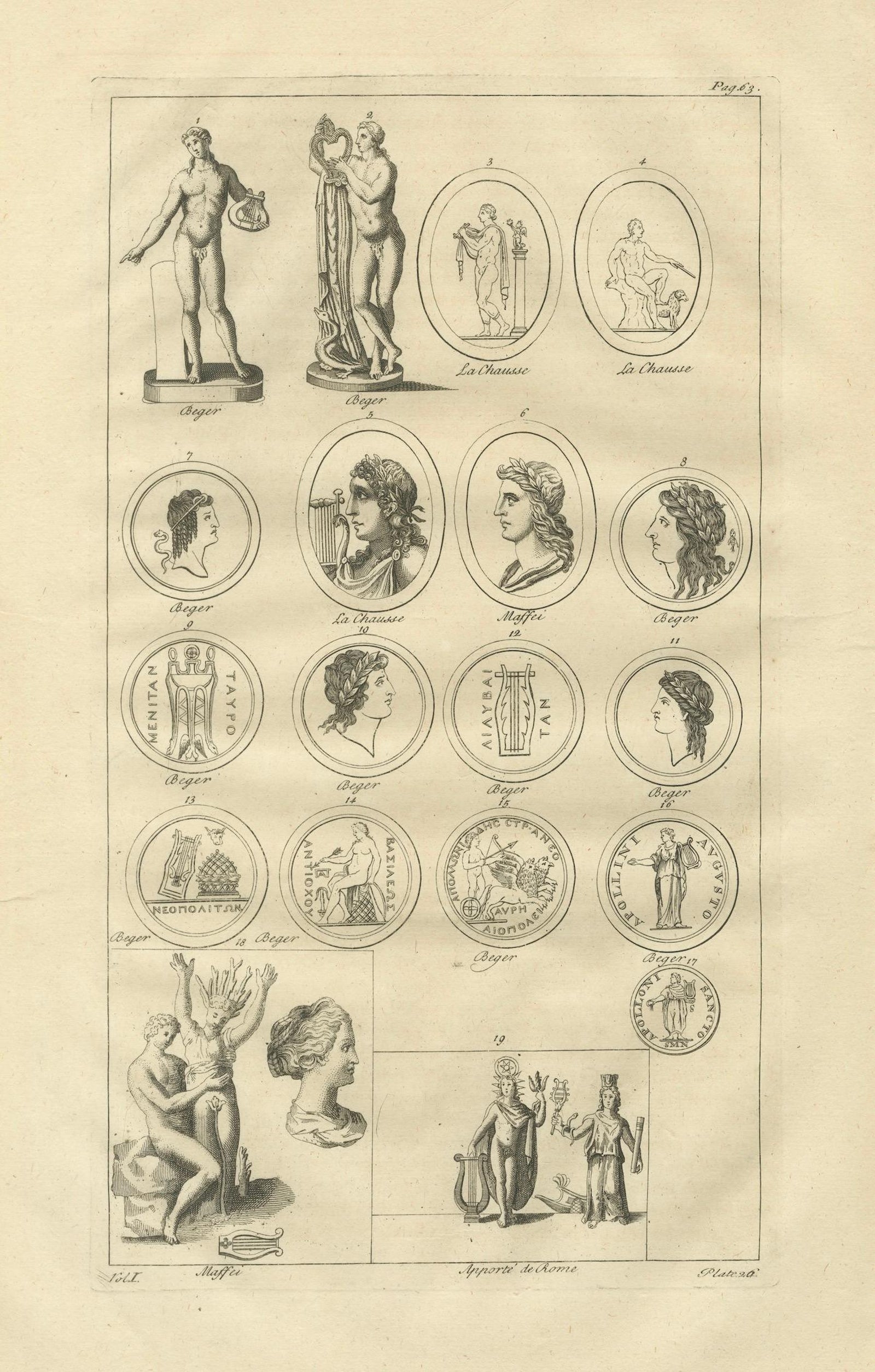
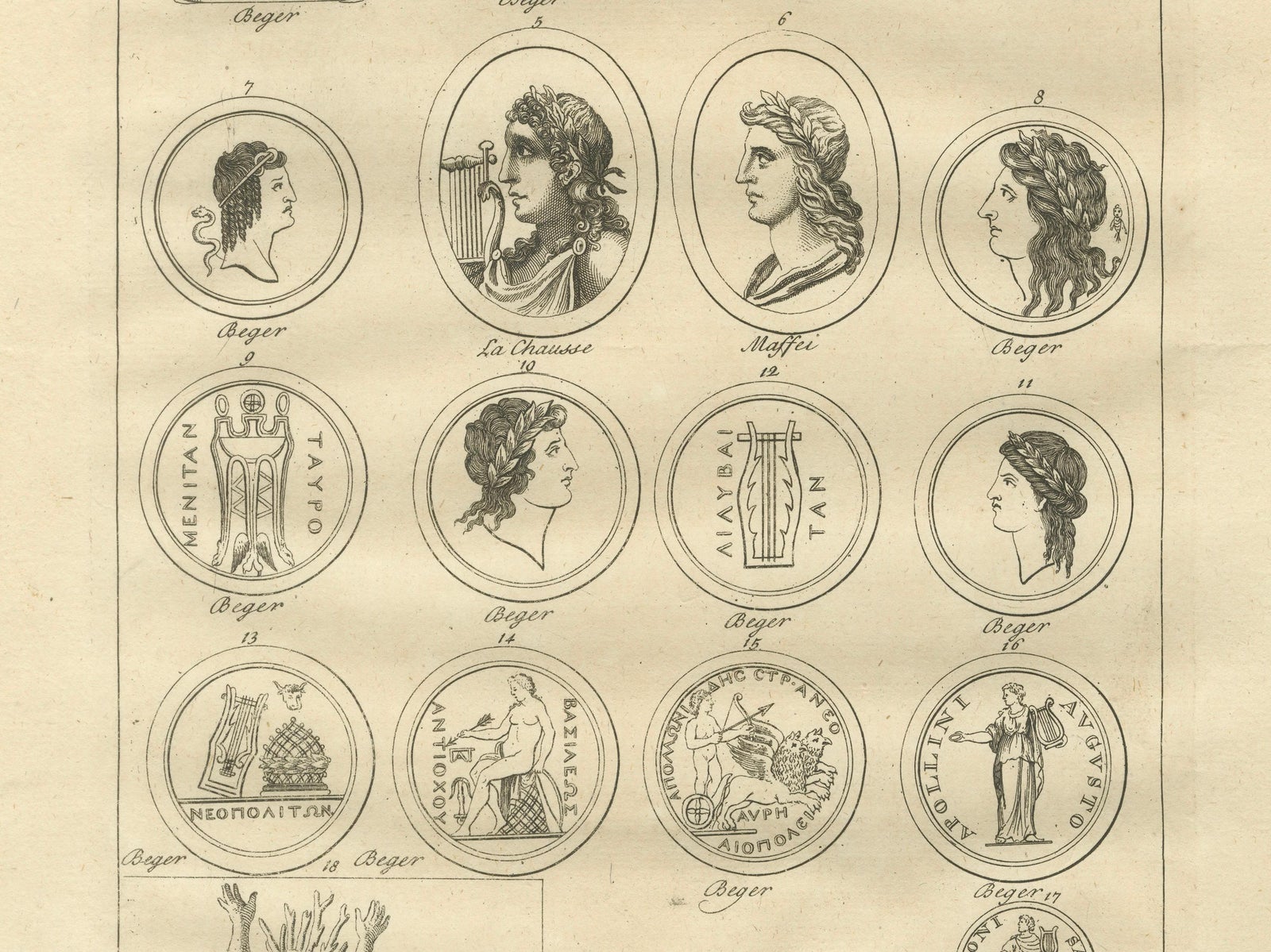
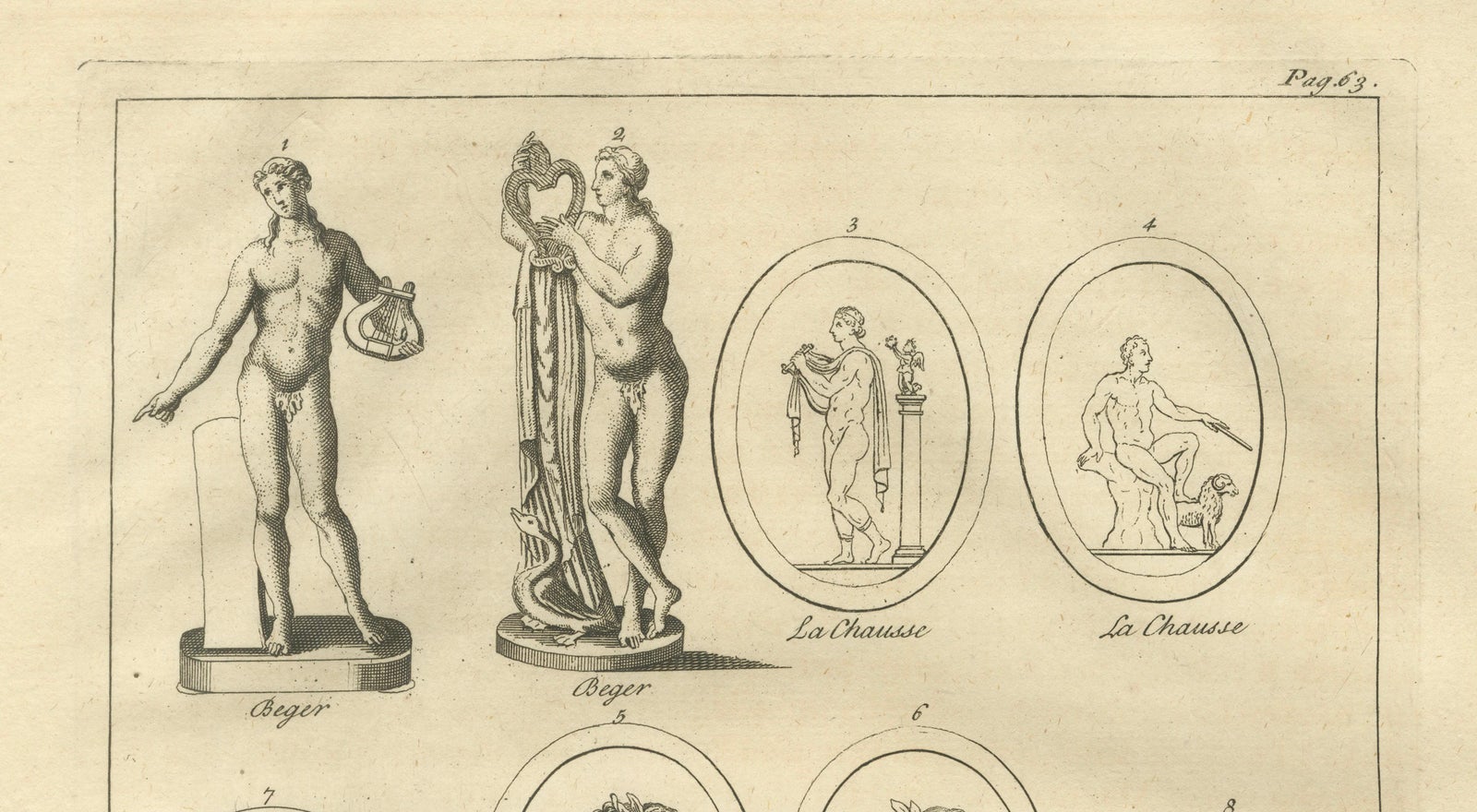
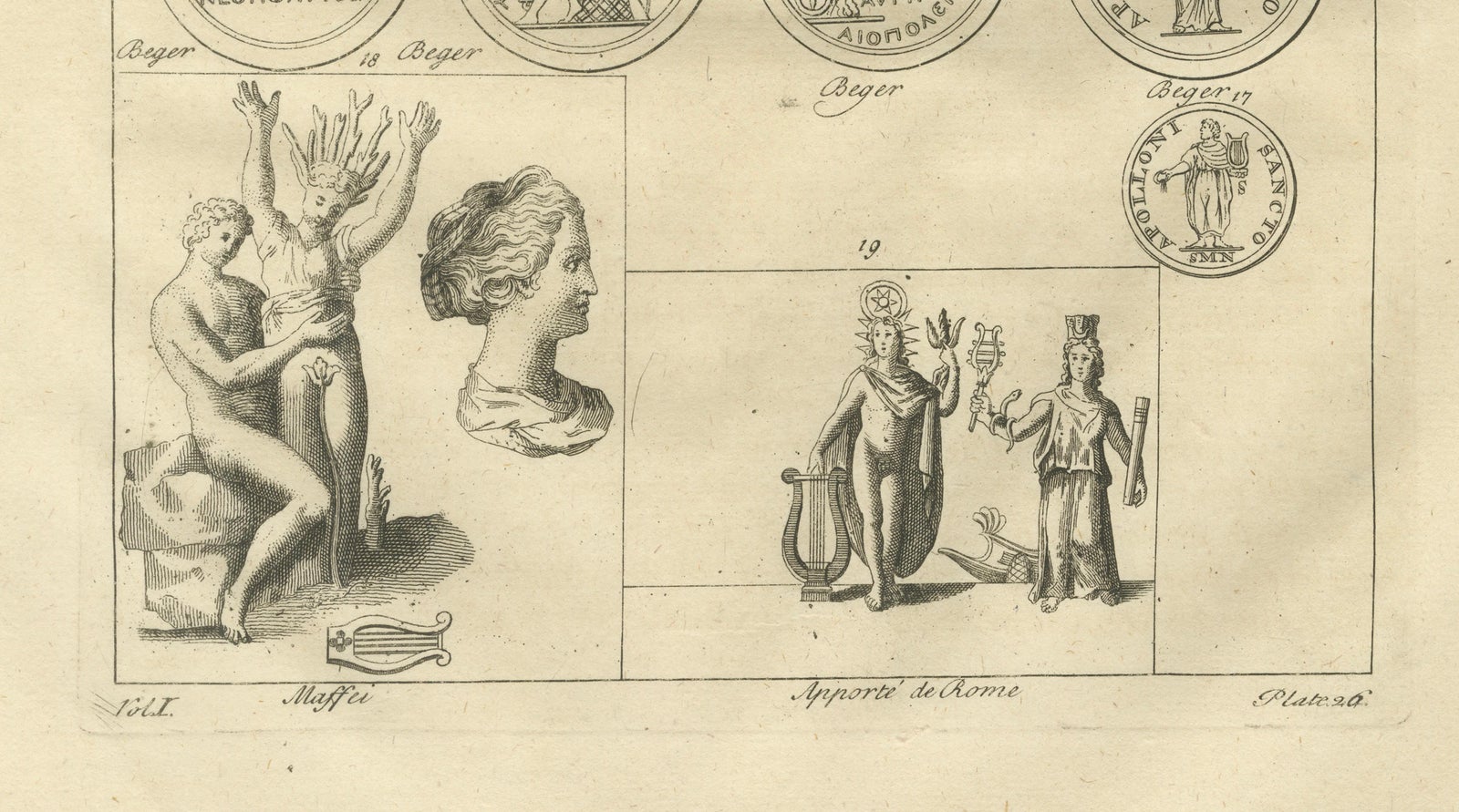
This large-format engraved plate originates from Bernard de Montfaucon’s landmark antiquarian work Antiquity Explained and Represented in Sculptures, Volume I, published in London in 1721. The composition brings together a carefully curated selection of classical Roman sculptures, relief figures, and engraved medals, presented in Montfaucon’s characteristic scholarly yet highly decorative layout.
Across the sheet, full-length sculptural figures are juxtaposed with finely engraved profile heads and medal studies, creating a visually rich overview of Roman artistic language. Standing figures reference celebrated antique statues, while the circular medallions reproduce ancient coins and portrait busts, offering insight into imperial iconography, hairstyle conventions, and symbolic attributes. This combination of sculpture and numismatic imagery was central to Montfaucon’s project: to reconstruct the visual world of antiquity through surviving objects.
Although conceived as an academic reference plate, the sheet reads exceptionally well as a decorative object. The generous scale, rhythmic arrangement of forms, and calm classical balance give it strong presence on the wall. Framed, it functions as an architectural accent rather than a small illustration, making it especially suitable for interior designers, libraries, studies, hotel corridors, or gallery-style interiors seeking an understated but authoritative classical statement.
Montfaucon’s *Antiquity Explained* is regarded as one of the foundational works of modern archaeology and art history. Plates from the first English edition are increasingly sought after for their historical importance, refined engraving, and timeless decorative appeal.
Condition report
Original 18th-century engraving on laid paper. General age-related toning and light spotting, consistent with early folio plates. Impression slightly soft in places, typical for the work. Overall condition sound and attractive for display.
Framing tips
This plate benefits from scale-conscious framing. A wide off-white or warm ivory mat enhances the classical character, paired with a simple dark walnut, black, or antiqued gilt frame. Museum glass is recommended to protect the paper while maintaining clarity.
Technique: Engraving
Maker: Bernard de Montfaucon, France / London, 1721