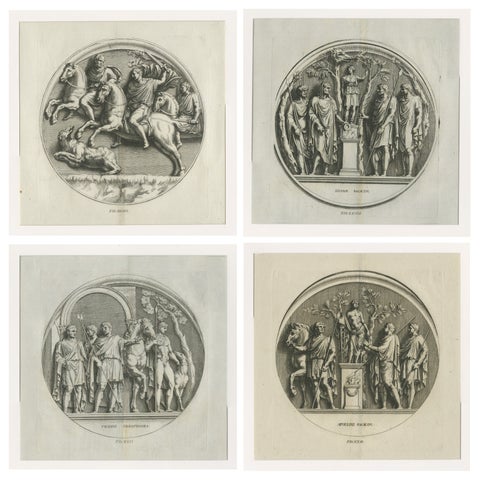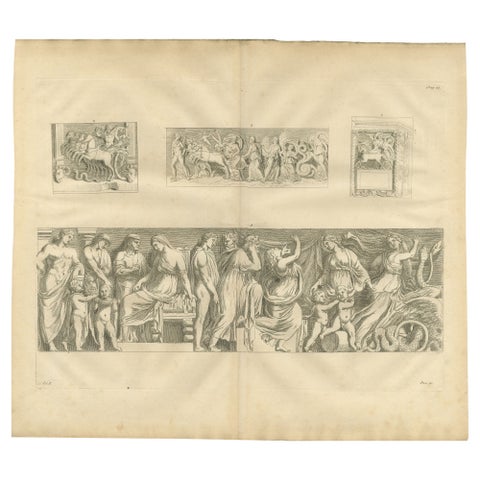
Close-ups
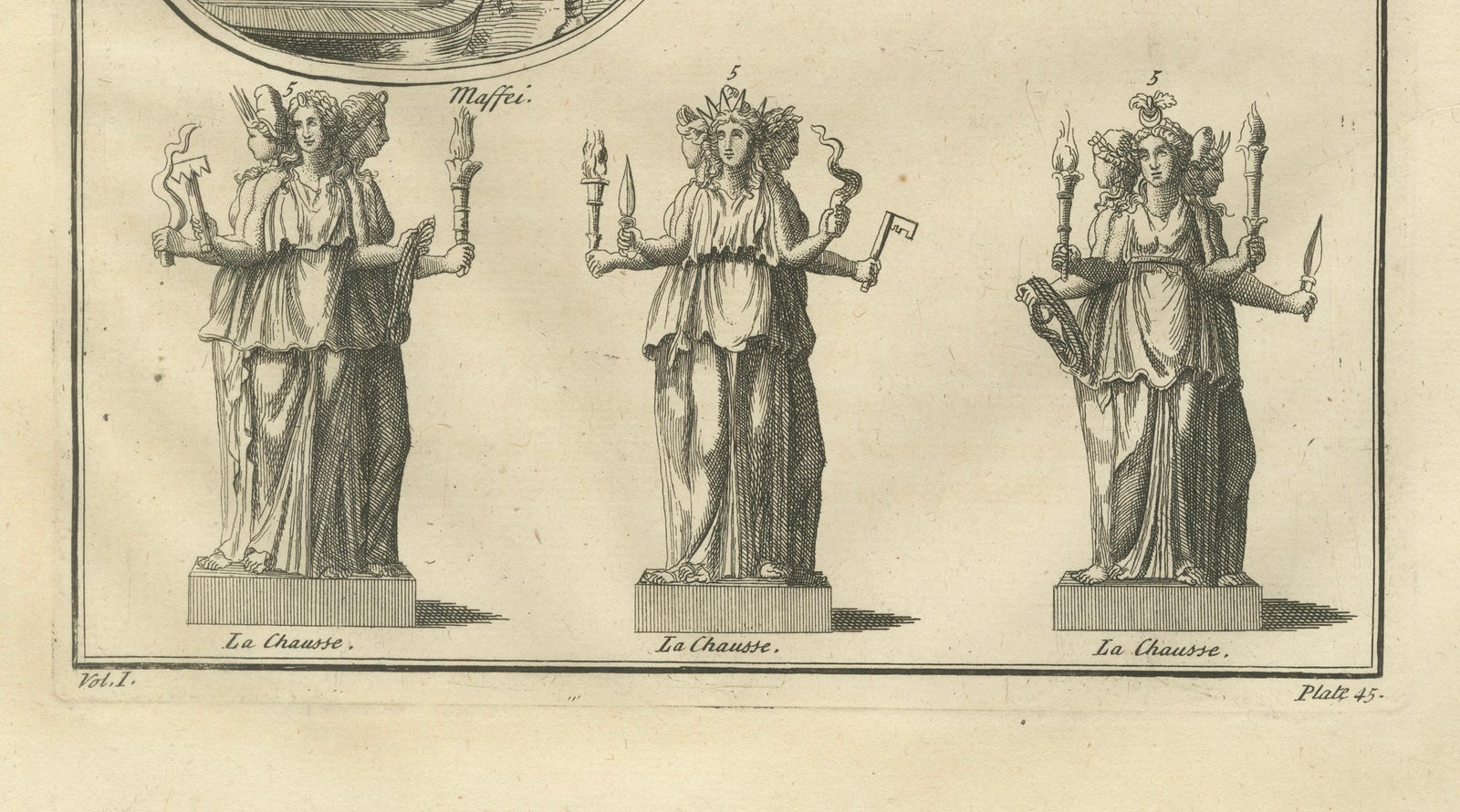
Framed and on the wall
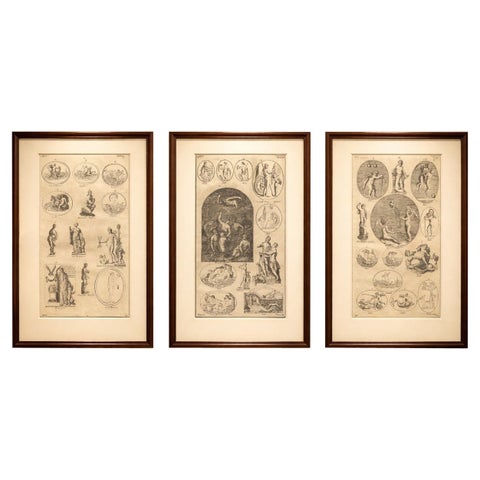
Frame and rooms are illustrations of how the print could look, drawn to its real size; it is sold unframed unless the description says otherwise.
Antiquity & ruins
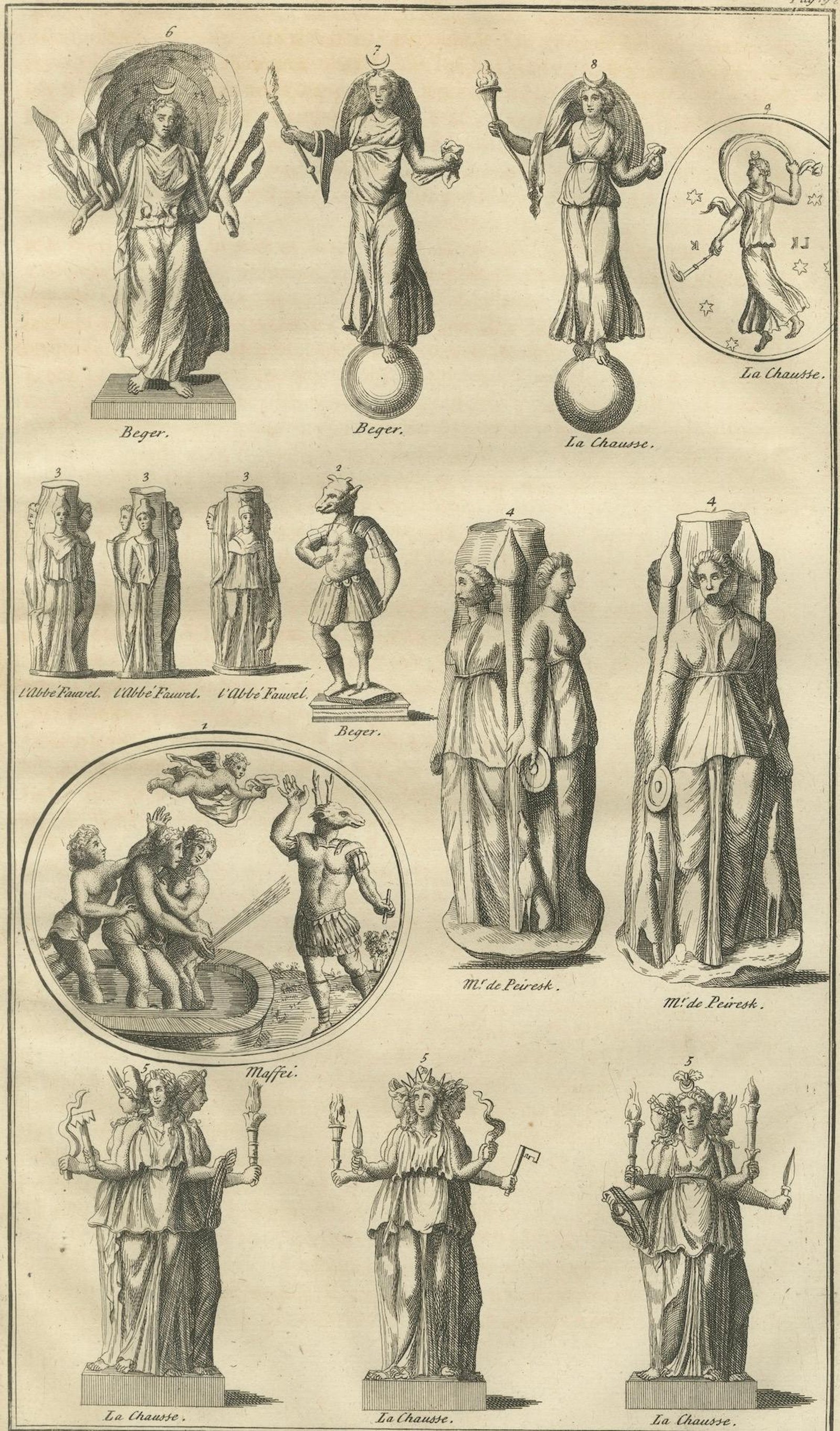
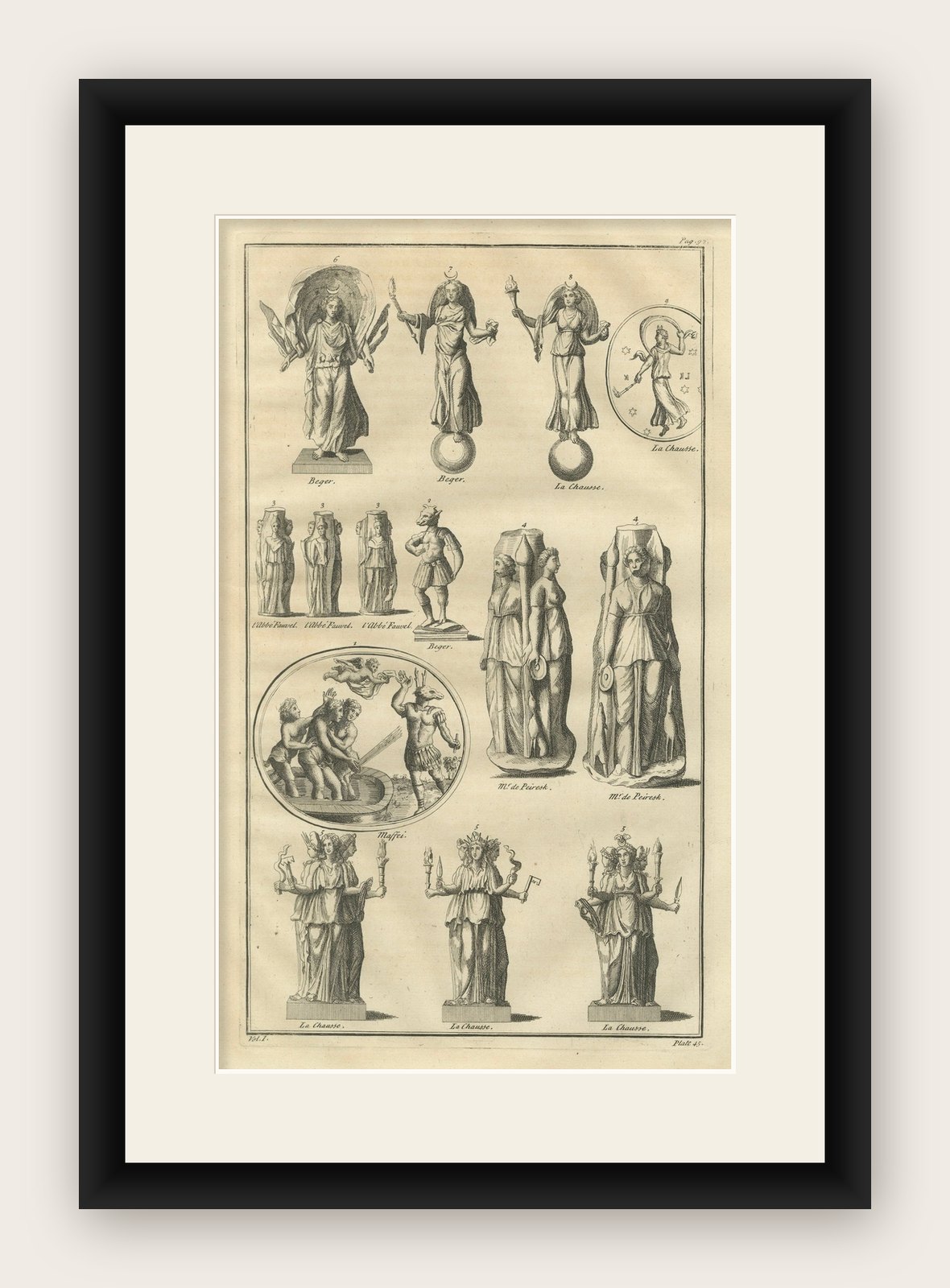
Antique Roman Goddess Statues and Reliefs, Montfaucon Classical Engraving 1721
€850
$960 · £720
Original print, not a reproduction
Ships worldwide from the Netherlands, flat, insured and tracked. 14-day returns. To buy, use Ask a question (info@antiquearchitectureprints.com) and we will reserve it for you.
- Date
- 1721
- Sheet size
- 16.6 × 9.6 in (42.2 × 24.3 cm)
- Condition
- Good. Good antique condition. Even age-related toning, clear plate impression, minor handling wear and soft creases consistent with age. No major losses or restorations observed.
- Collection
- Antiquity & ruins
- Era
- 1700 to 1789, Baroque to Neoclassical
- Stock no.
- f_48311132
Antique Roman Goddess Statues and Reliefs, Montfaucon Classical Engraving 1721
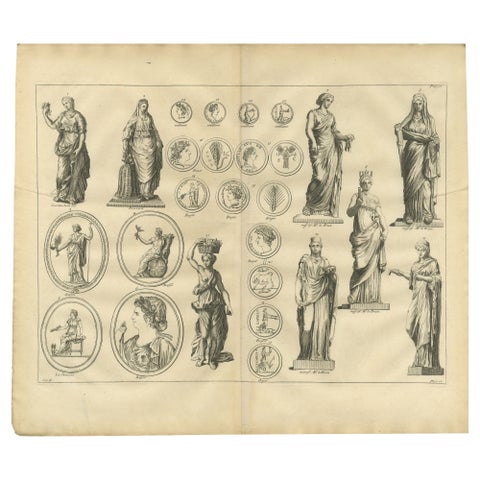
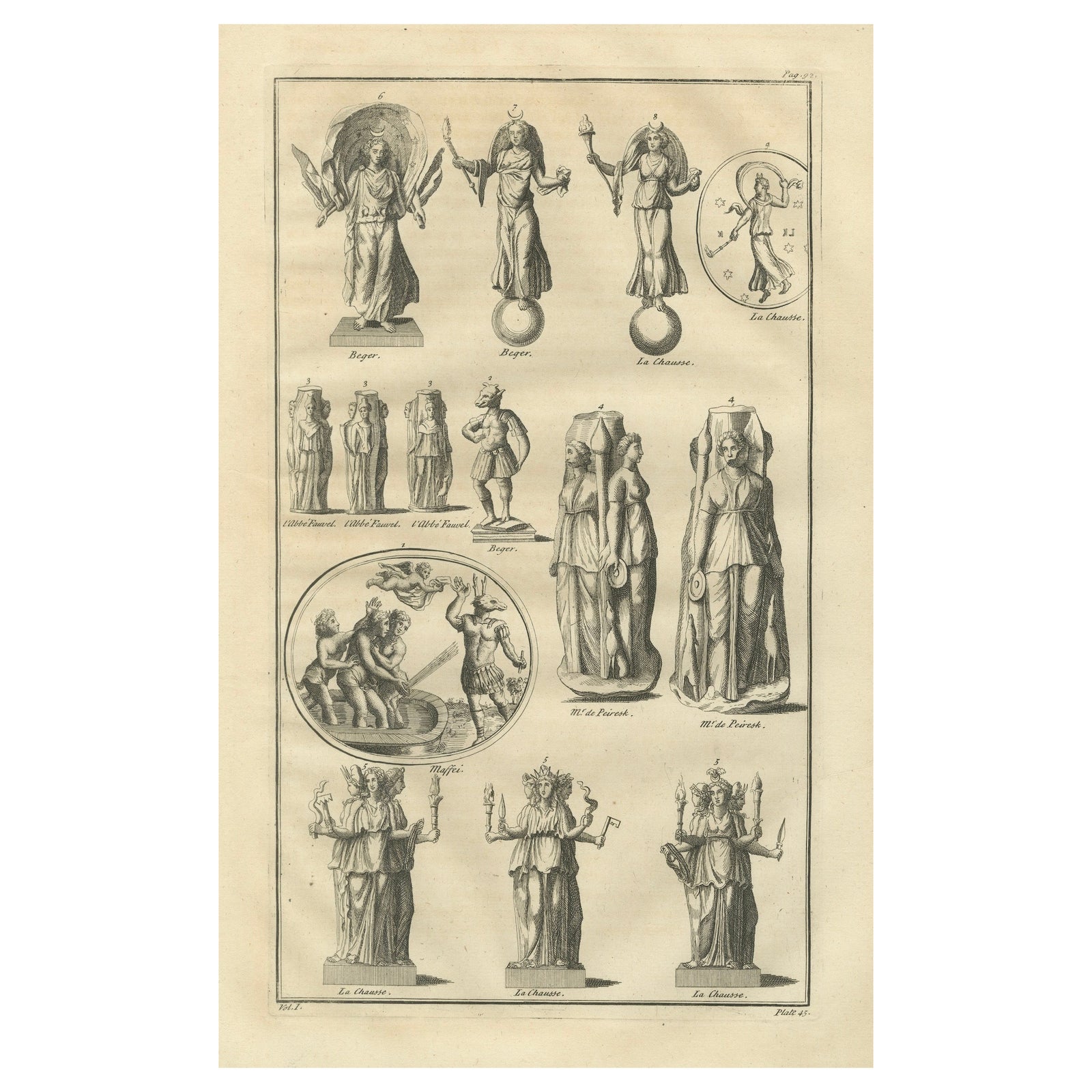
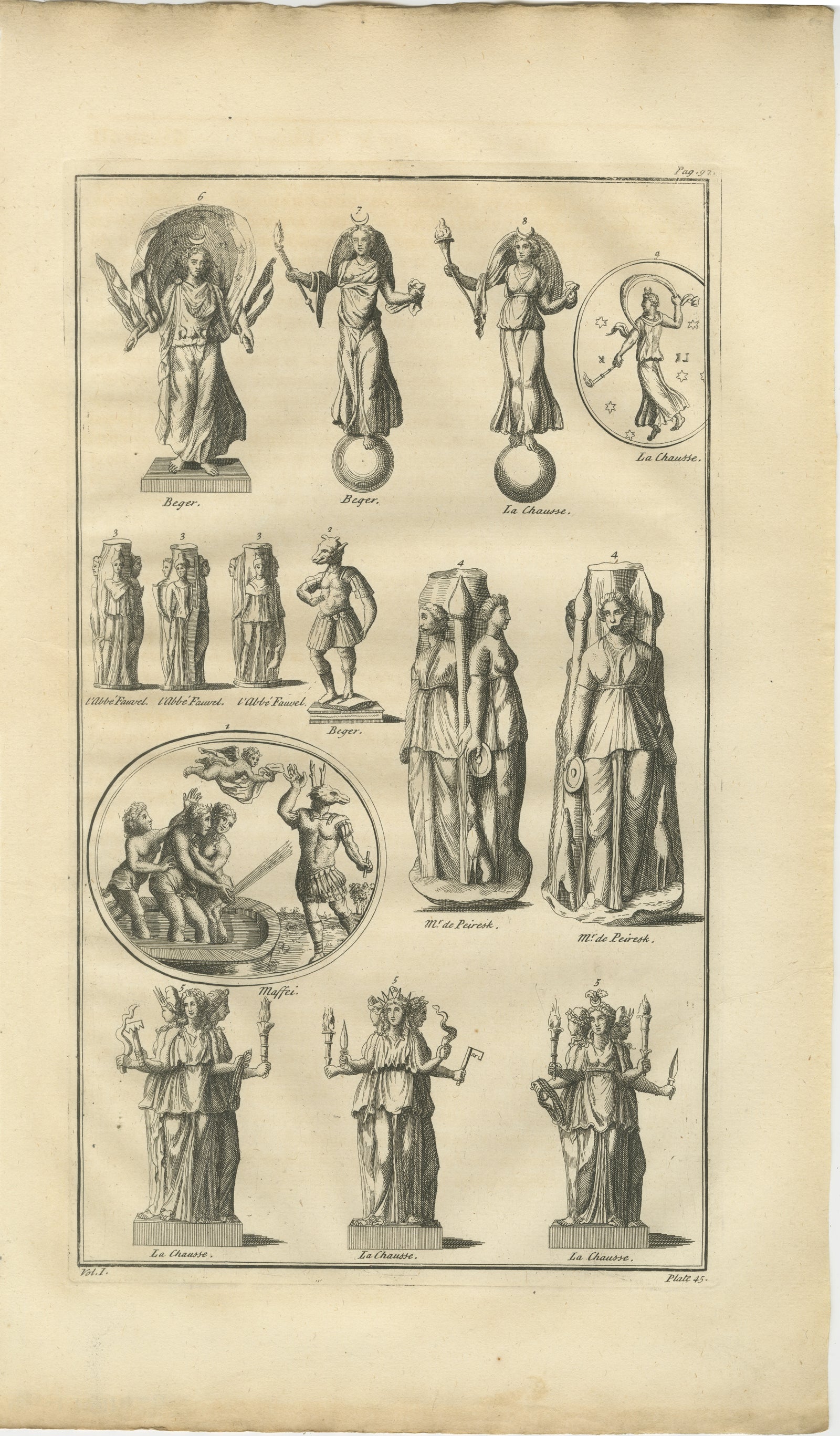
This striking early 18th-century copper engraving presents a rich survey of Roman sculptural antiquity, drawn from classical statues, relief fragments, and engraved gems. The plate originates from Bernard de Montfaucon’s monumental publication L’Antiquité expliquée et représentée en figures, published in Paris in 1721, one of the most influential antiquarian works of the Enlightenment.
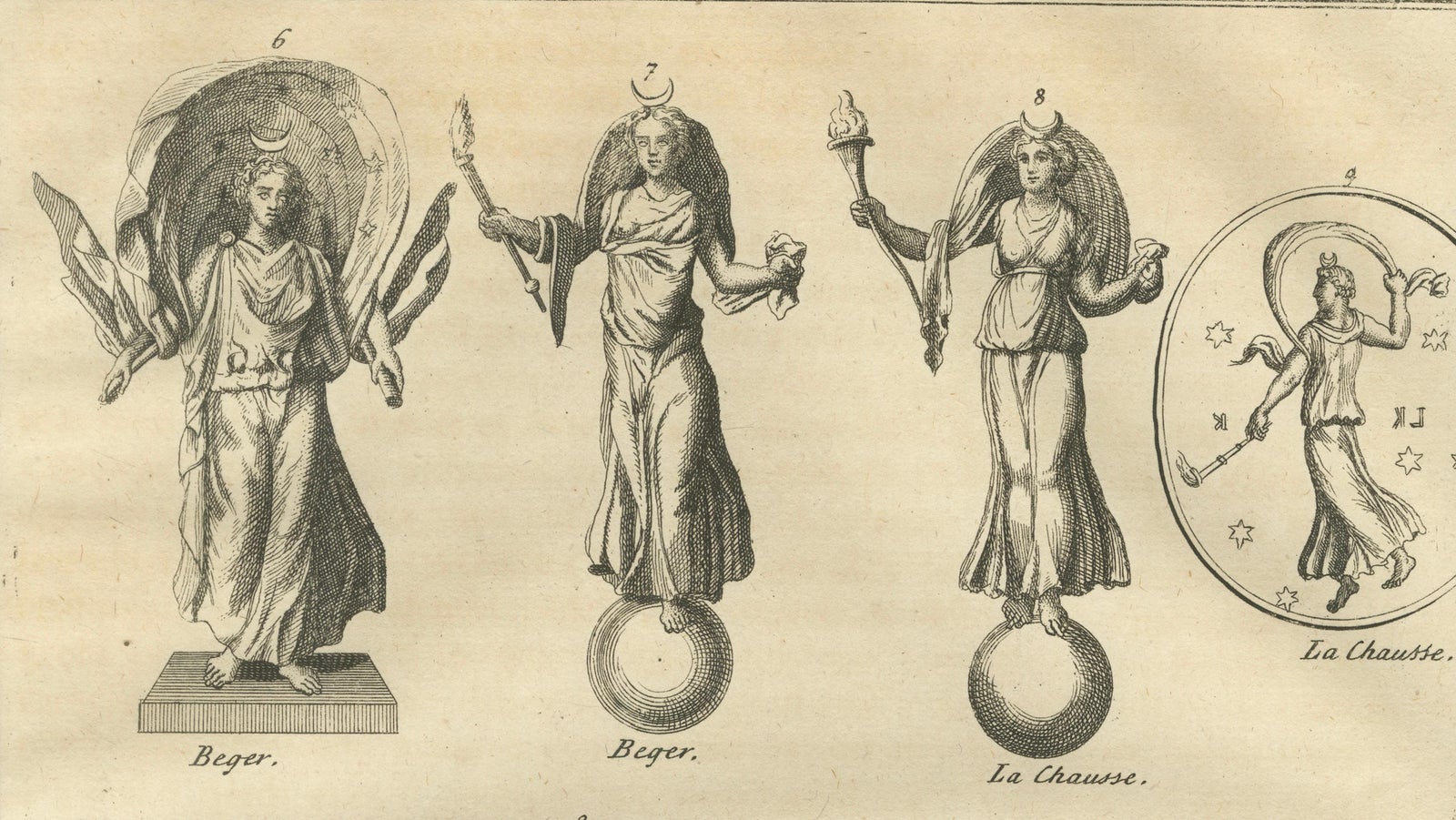
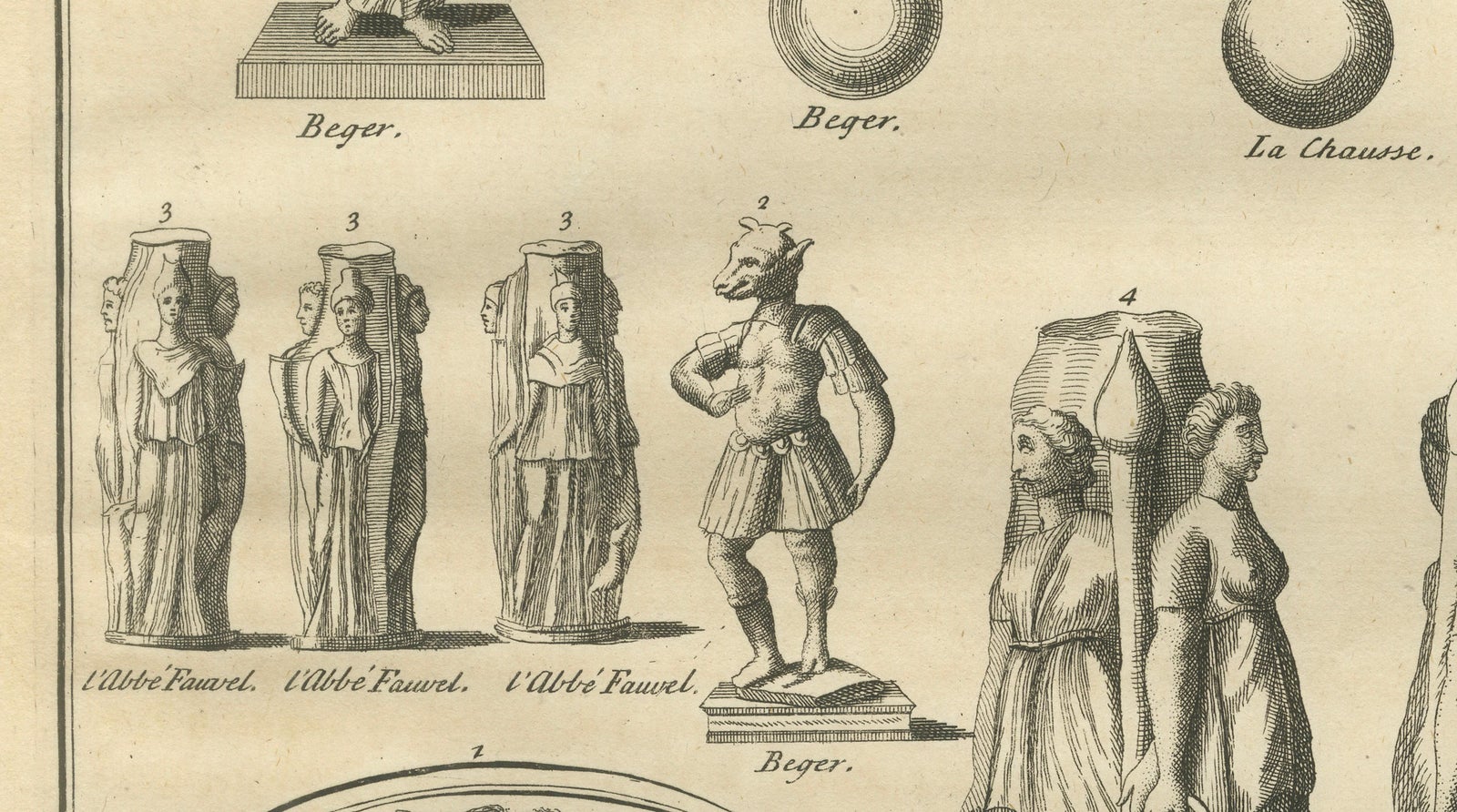
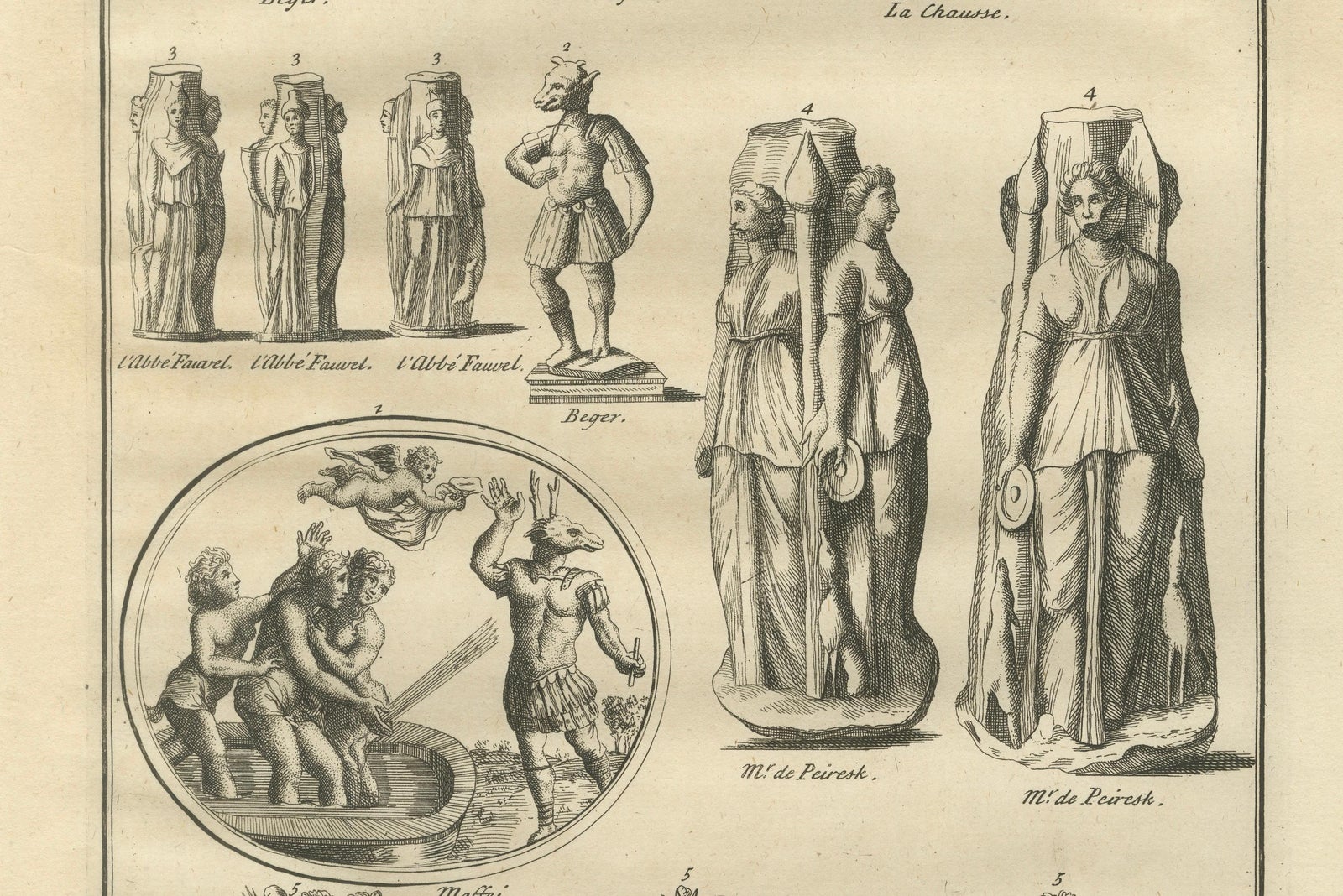
The composition is carefully structured to guide the eye across multiple representations of female deities and allegorical figures, shown standing, in motion, and in sculptural groupings. Repeated goddess types appear in varied poses and attributes, allowing the viewer to compare iconography, drapery, and stance in a single unified sheet. Circular medallions and relief scenes are interspersed with full-length statues, creating a visually rhythmic layout that balances scholarly intent with strong decorative impact.
Montfaucon’s engravings were not merely illustrative but served as authoritative visual records of ancient Roman art, many based on sculptures housed in important European collections. This plate exemplifies his method: encyclopedic in scope, precise in line, and elegant in overall presentation. The clarity of the engraving and the harmonious arrangement make it particularly well suited for interior display, whether in a classic study, library, or contemporary space that values historical depth and graphic refinement.
Today, individual Montfaucon plates are increasingly sought after by collectors, interior designers, and architects for their combination of classical subject matter and refined black-and-white aesthetics. This sheet stands out as a complete and visually dense composition that holds the wall on its own without requiring a companion piece.
Condition:
Good antique condition. Even age-related toning, clear plate impression, minor handling wear and soft creases consistent with age. No major losses or restorations observed.
Framing suggestions:
This engraving presents beautifully in a dark walnut or ebonized frame with a wide ivory or soft white mat. Museum-style framing will emphasize the sculptural forms and preserve the refined classical character of the print.
Technique: Copper engraving
Maker: Bernard de Montfaucon, France, Paris, 1721