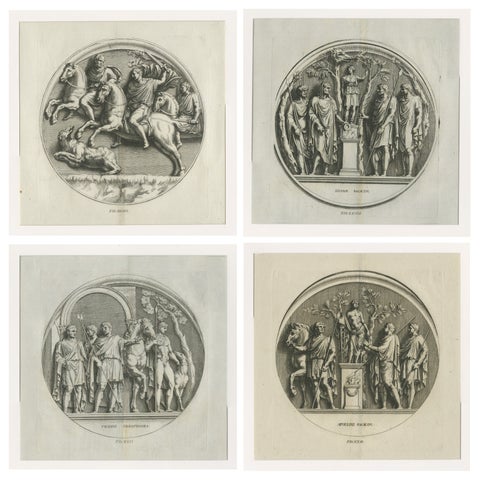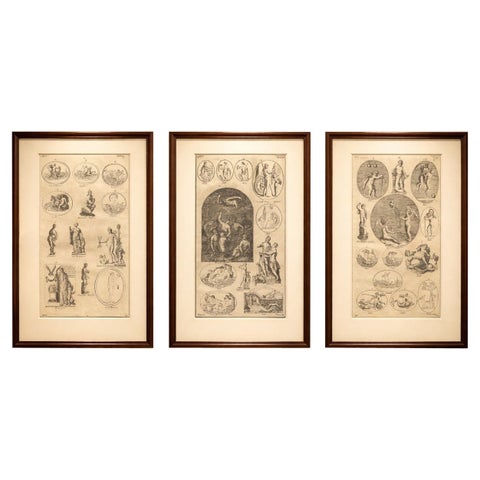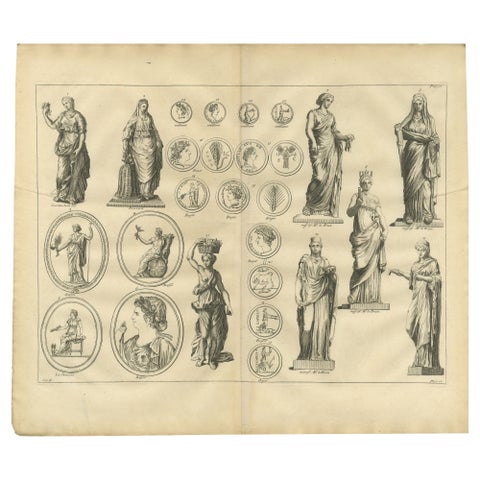
Close-ups
Framed and on the wall

Frame and rooms are illustrations of how the print could look, drawn to its real size; it is sold unframed unless the description says otherwise.
Antiquity & ruins
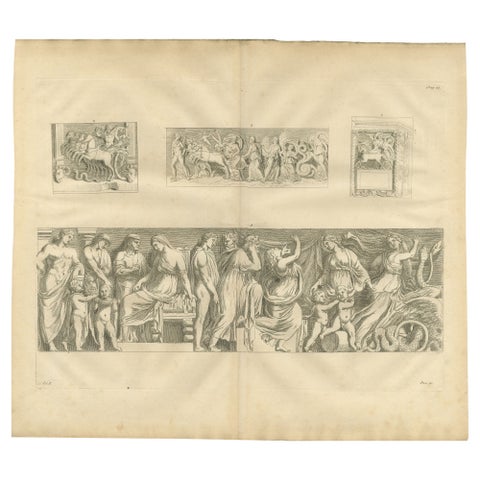
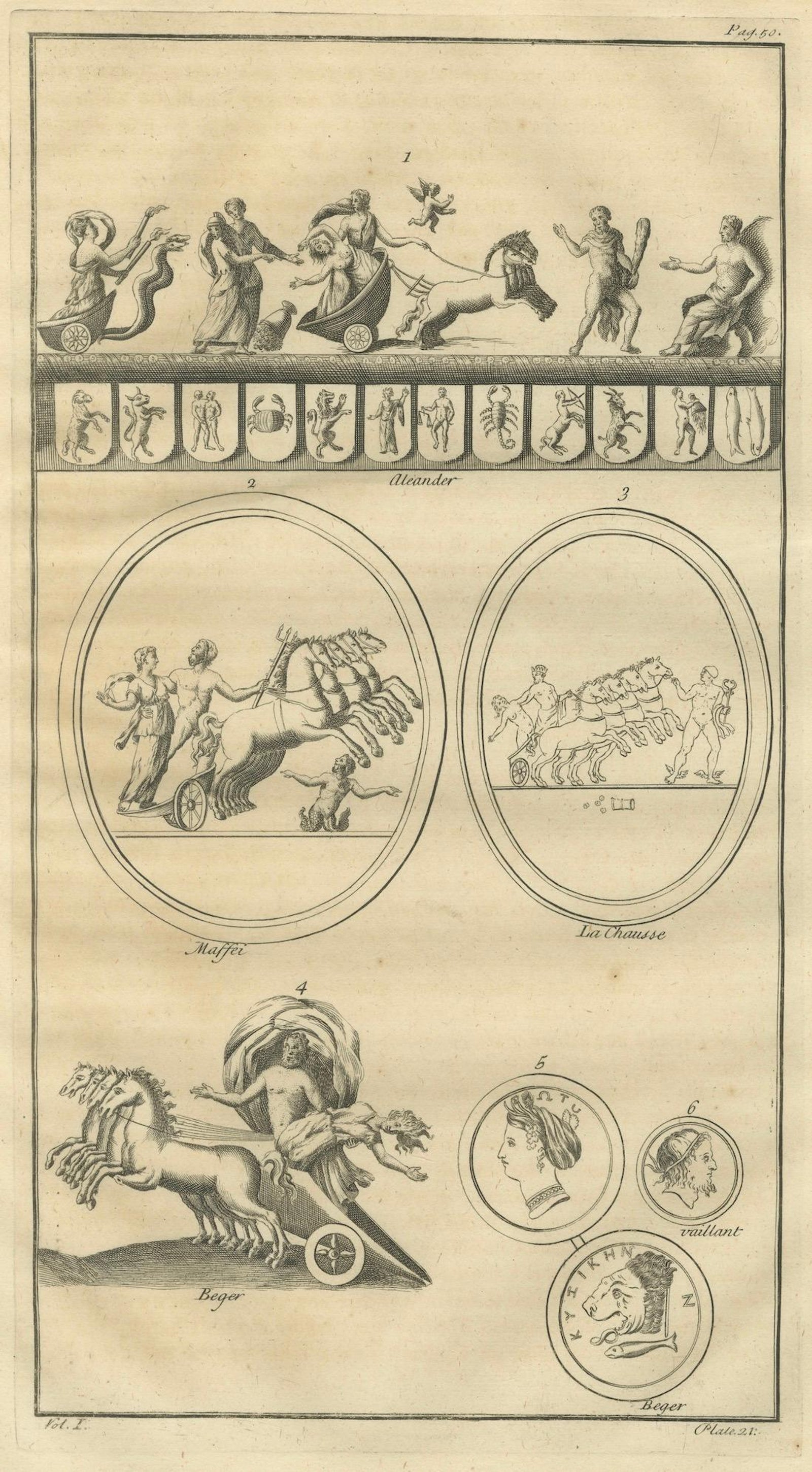
Antique Roman Chariot Reliefs and Medallions, Montfaucon Engraving, 1721
€950
$1,070 · £805
Original print, not a reproduction
Ships worldwide from the Netherlands, flat, insured and tracked. 14-day returns. To buy, use Ask a question (info@antiquearchitectureprints.com) and we will reserve it for you.
- Date
- 1721
- Sheet size
- 16.7 × 10 in (42.3 × 25.5 cm)
- Condition
- Good. Overall good antique condition. Light age-related toning throughout. The impression is slightly soft, consistent with the publication. No losses or major defects observed.
- Collection
- Antiquity & ruins
- Era
- 1700 to 1789, Baroque to Neoclassical
- Stock no.
- f_48027642
Antique Roman Chariot Reliefs and Medallions, Montfaucon Engraving, 1721
Description
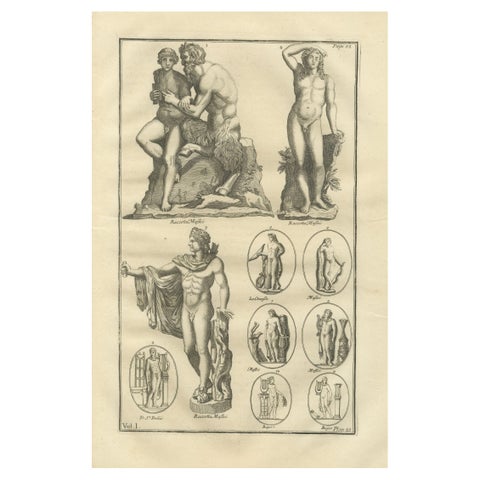
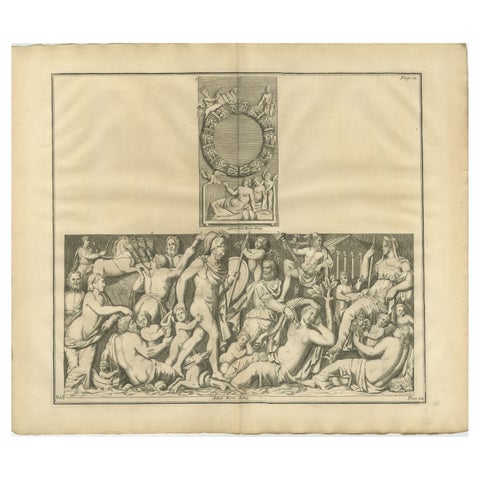
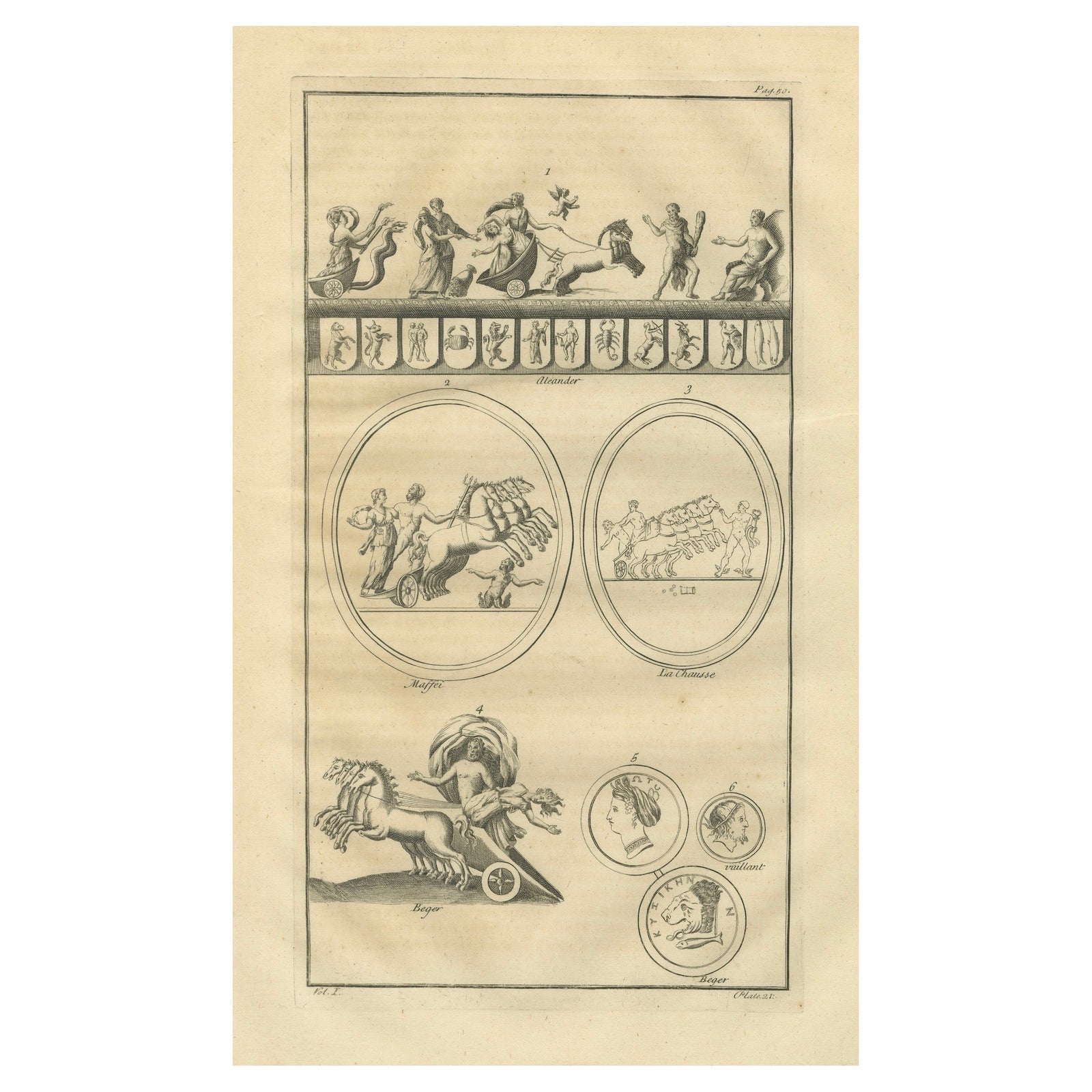
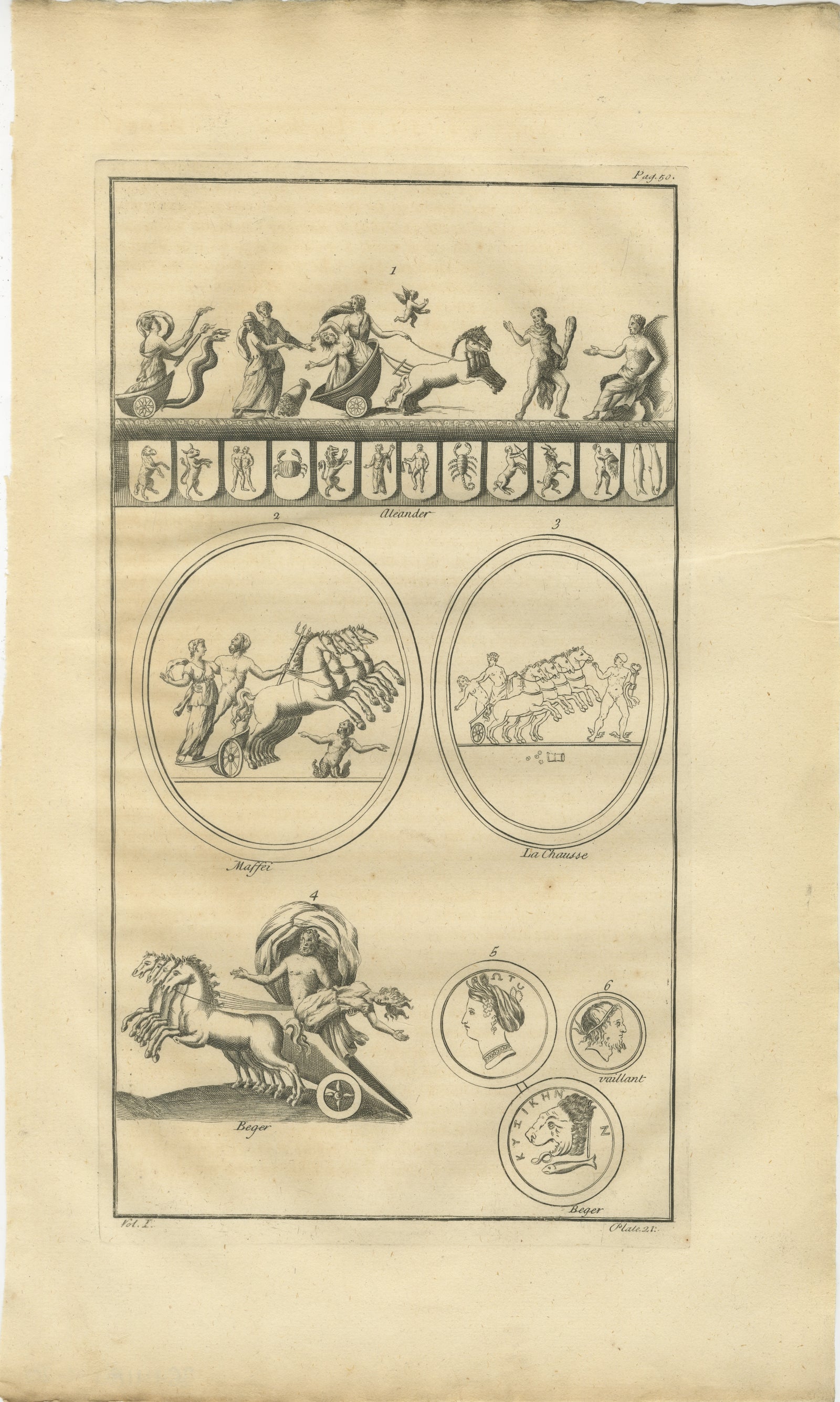
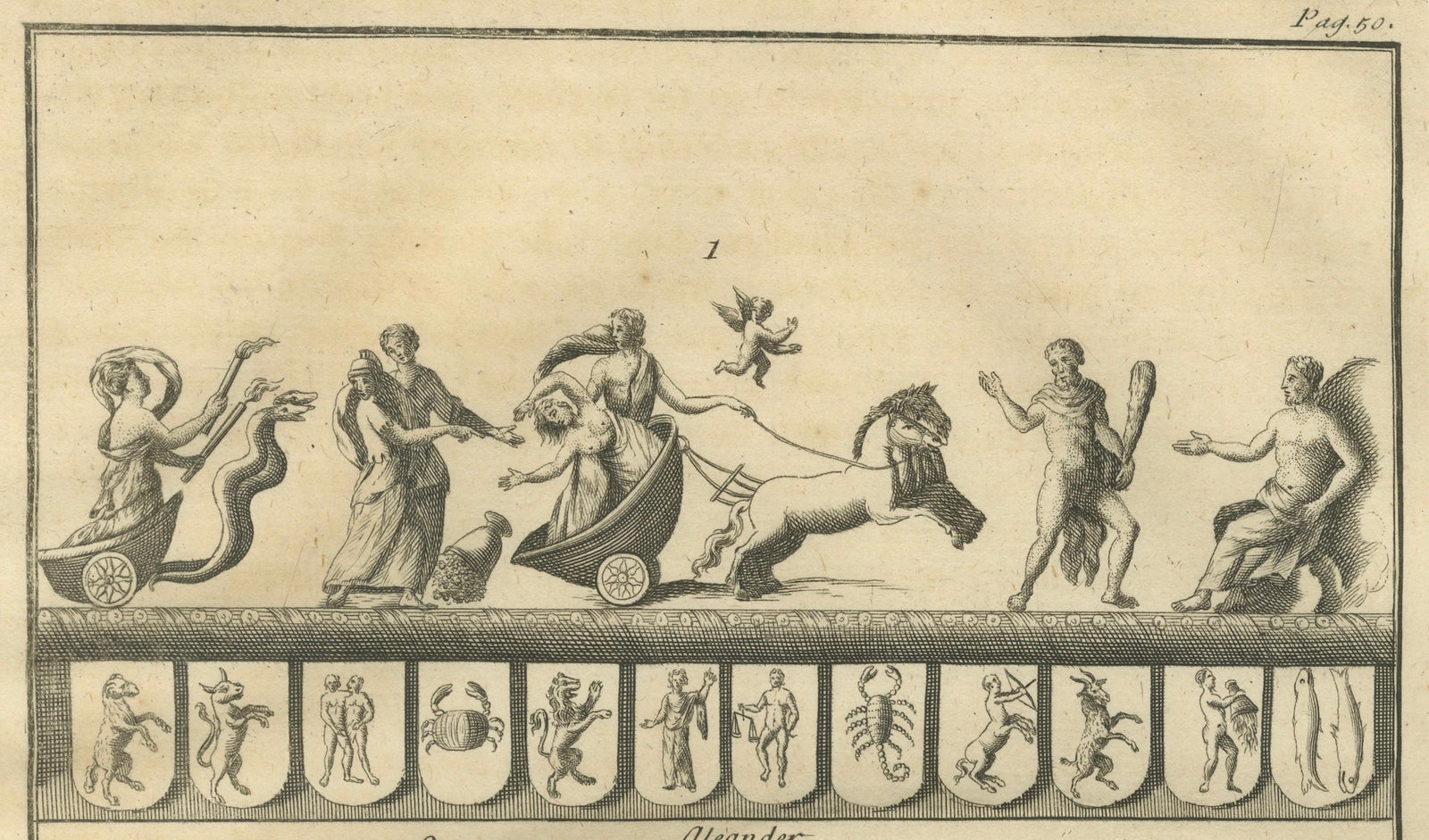
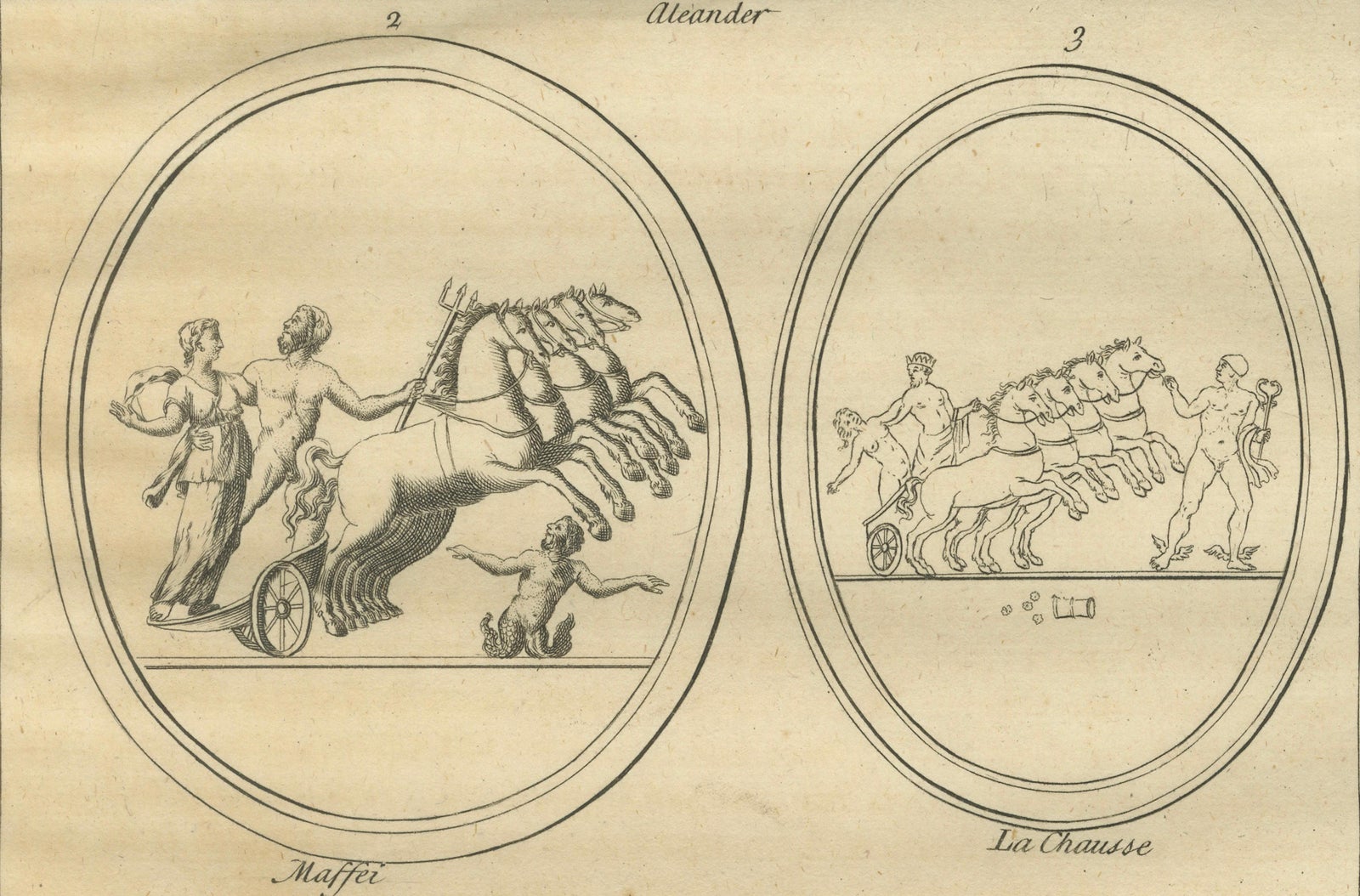
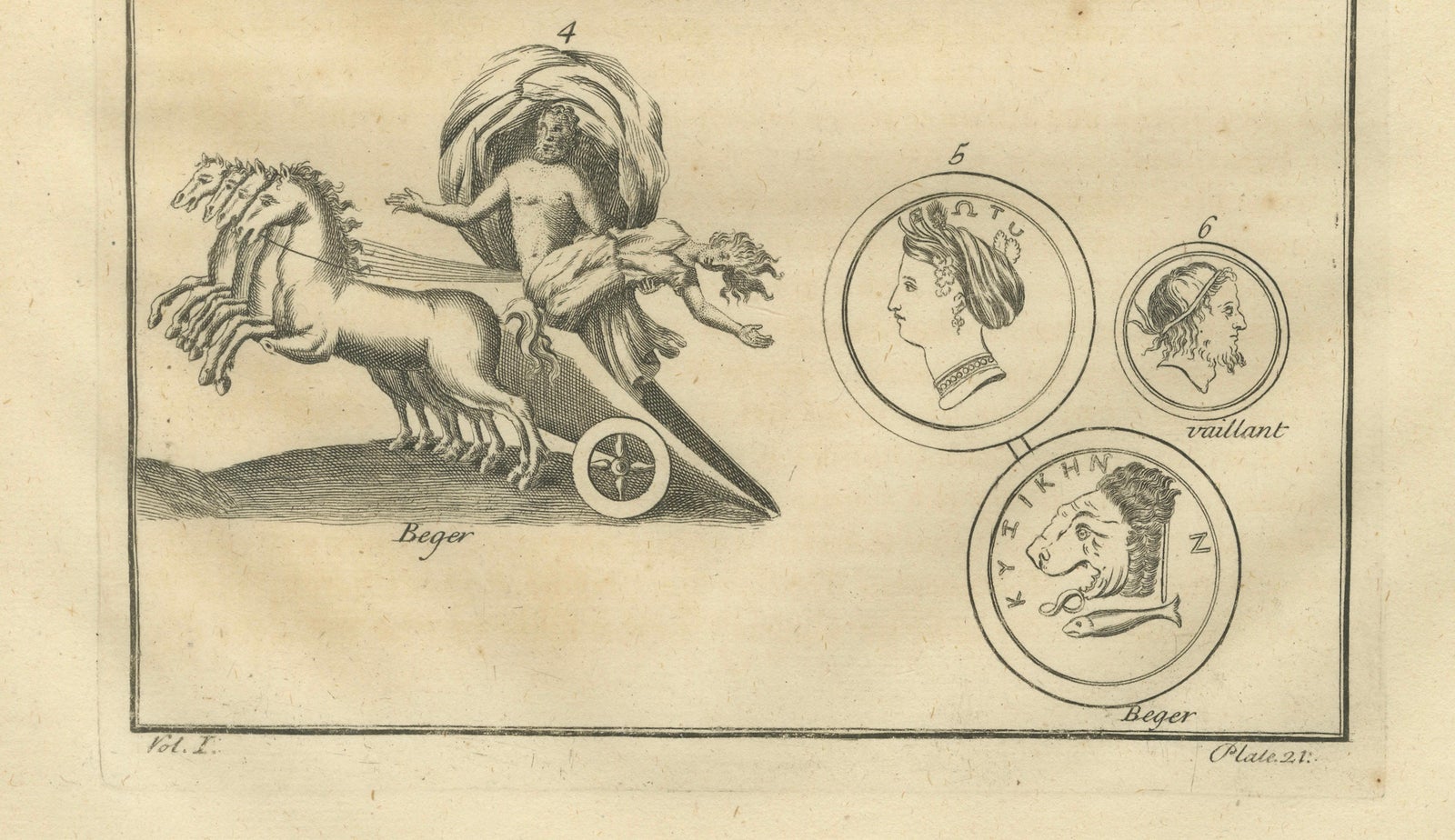
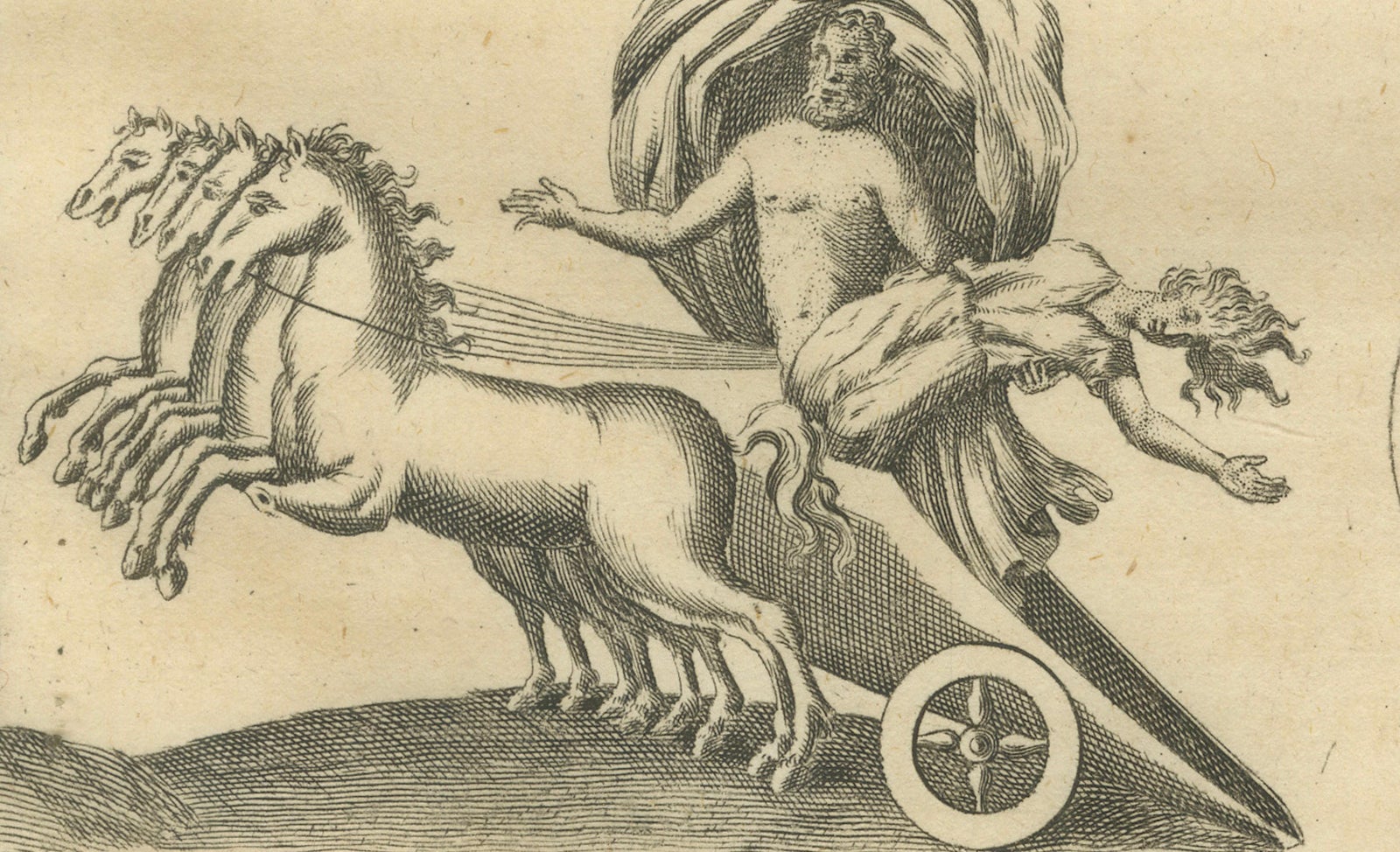
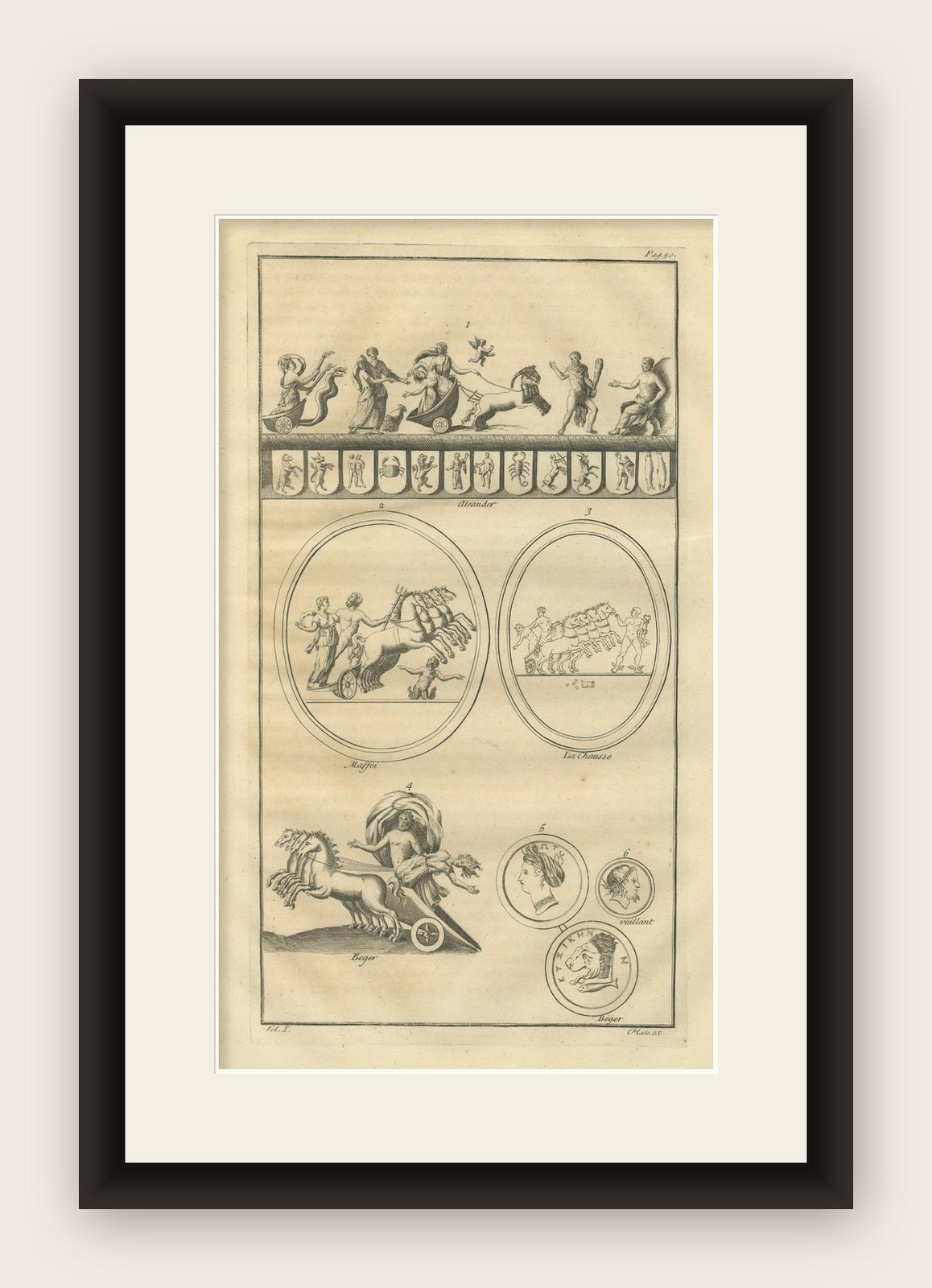
This large and visually engaging engraving is taken from Bernard de Montfaucon’s monumental antiquarian work Antiquity Explained and Represented in Sculptures, published in London in 1721. The plate presents a rich ensemble of Roman sculptural subjects, combining a long horizontal relief of a ceremonial chariot procession with a series of oval medallions and portrait heads derived from classical marbles, reliefs, and engraved gems.
At the top, a continuous frieze depicts a dynamic procession with figures in motion, chariots drawn by spirited horses, and allegorical attendants, evoking Roman triumphal imagery and public spectacle. Below, large oval compositions show chariots in full flight, rendered with an emphasis on rhythm and movement, while smaller roundels reproduce ancient gems and coins featuring deities, mythological figures, and symbolic animals. The careful juxtaposition of large narrative scenes and smaller antiquarian details reflects Montfaucon’s scholarly method: to document classical antiquity across scales, from monumental reliefs to intimate glyptic art.
The engraving is executed in a refined early-18th-century line style, prioritizing clarity of form and compositional balance over pictorial drama. While the impression is characteristically soft, as often encountered with Montfaucon’s plates, the sheet gains considerable presence from its generous size and the breadth of imagery it contains. When framed, this plate functions as a strong decorative statement, well suited to classical, neoclassical, or contemporary interiors seeking historical depth rather than sharp graphic contrast.
Montfaucon’s *Antiquity Explained* was one of the most influential archaeological publications of the Enlightenment, shaping European understanding of the classical world for decades. Individual plates such as this were intended both as scholarly reference and as autonomous works on paper, making them highly desirable today for collectors, designers, and institutions alike.
Condition report
Overall good antique condition. Light age-related toning throughout. The impression is slightly soft, consistent with the publication. No losses or major defects observed.
Framing tips
This plate benefits from a wide mat to emphasize its scale and complexity. An off-white or light parchment mat paired with a dark wood, ebonized, or softly gilt frame enhances its architectural presence. Particularly effective in large frames for hallways, studies, or above consoles.
Technique: Engraving
Maker: Bernard de Montfaucon, France / London, 1721