Close-ups
Framed and on the wall

Frame and rooms are illustrations of how the print could look, drawn to its real size; it is sold unframed unless the description says otherwise.
Ornament & pattern
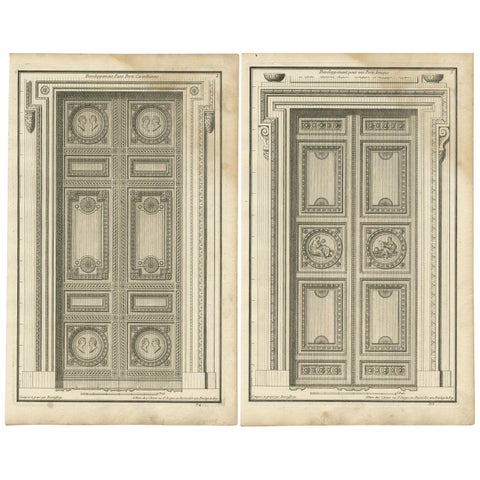
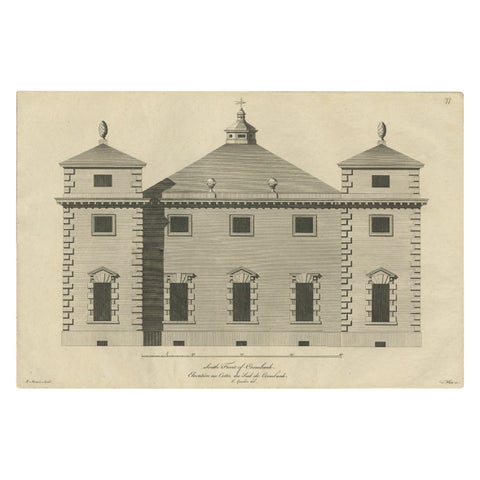
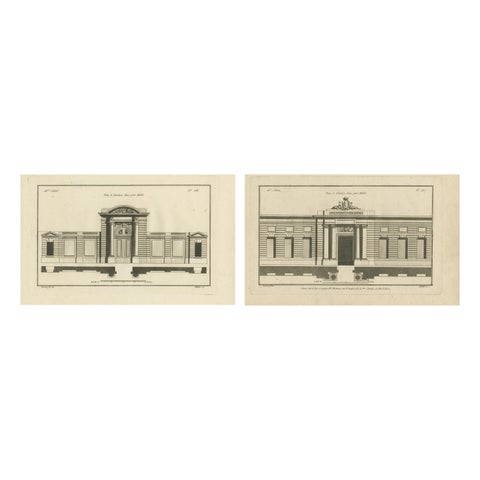
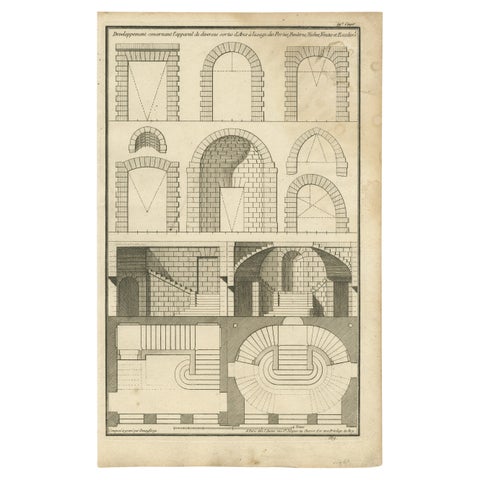
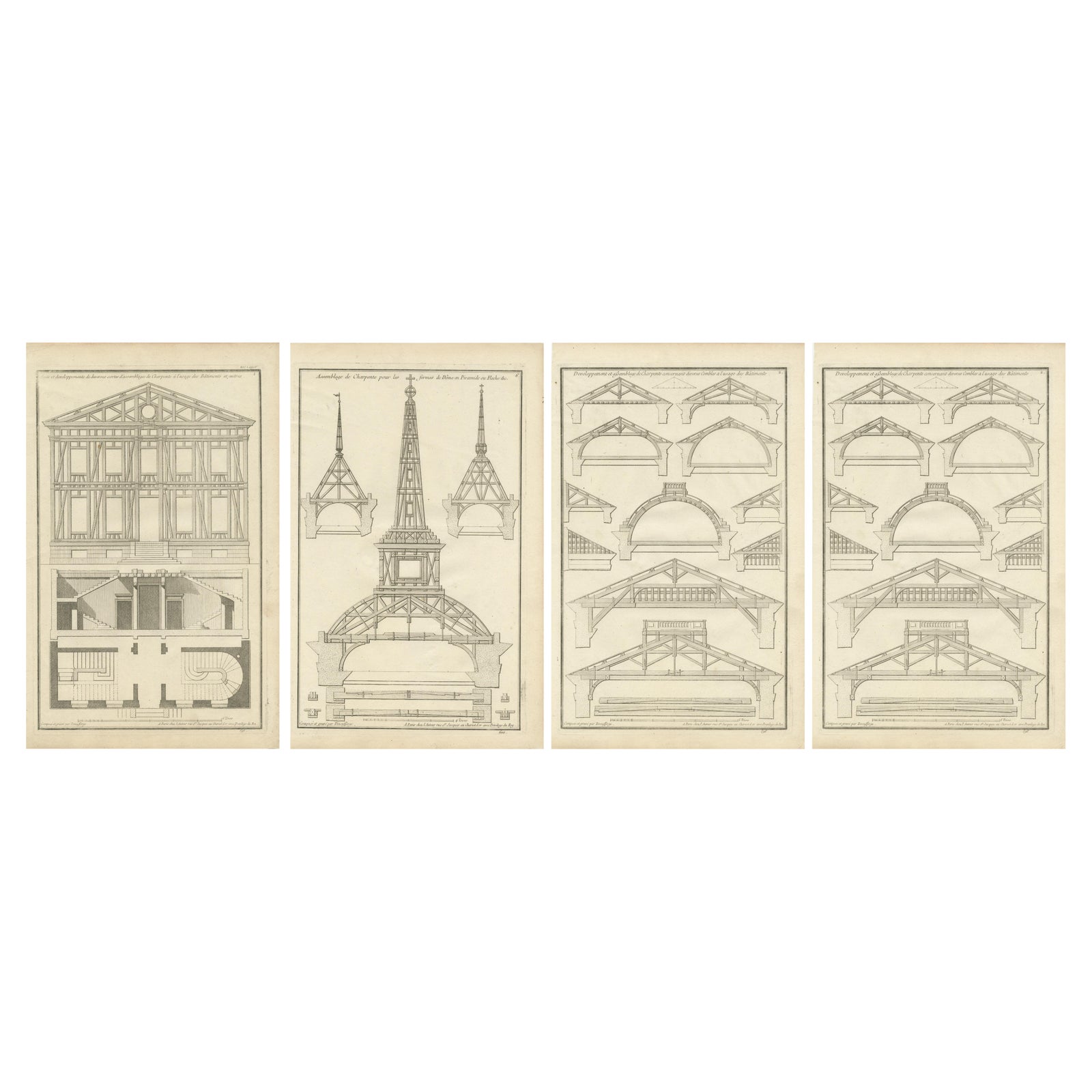
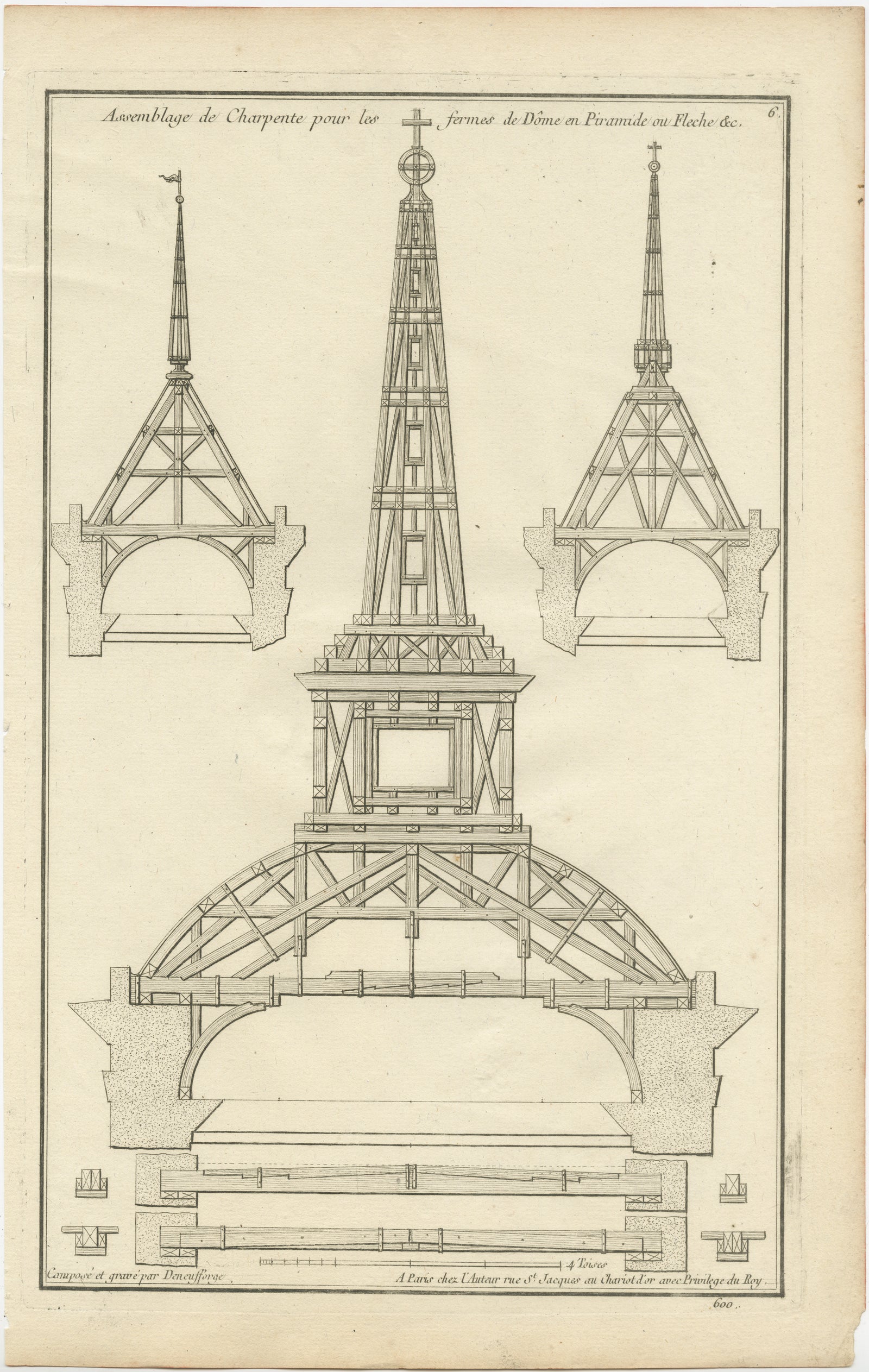
18th Century Architectural Mastery by Neufforge in Engravings, Circa 1770
£735£51530% off
$675 · €616
Original print, not a reproduction
Ships worldwide from the Netherlands, flat or rolled, insured and tracked. 14-day returns.
- Date
- 1770
- Sheet size
- 15.9 × 10.2 in (40.5 × 26 cm)
- Condition
- Good. These engravings are in good shape considering their age, with clear lines and readable text. However, the paper shows signs of aging, such as discoloration and slight damage at the edges, which is common in documents of this period.
- Collection
- Ornament & pattern
- Era
- 1700 to 1789, Baroque to Neoclassical
- Stock no.
- BG-13610-6 BG-13610-7, BG-13610-17, BG-13610-19
What the condition grades mean
- Excellent
- Bright and clean, with no faults worth mentioning.
- Very good
- Only light signs of age, such as faint toning.
- Good
- Normal signs of age for a sheet of this period: toning, some foxing, small marks or neat old repairs.
- Fair
- Clear faults such as staining, tears or repairs, priced to match.
Every fault we see is written in the condition note, and the whole sheet is shown uncropped in the photos.
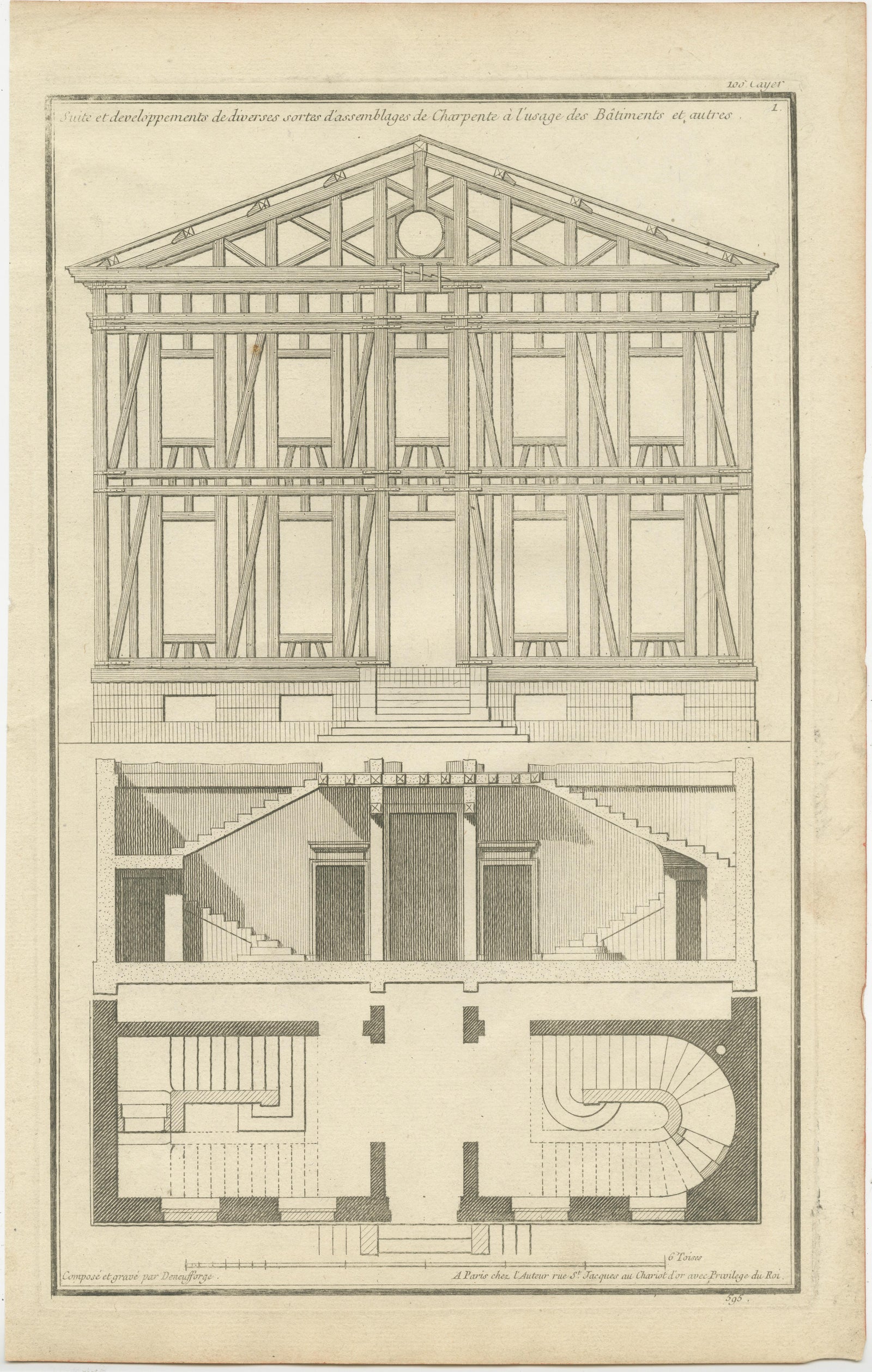
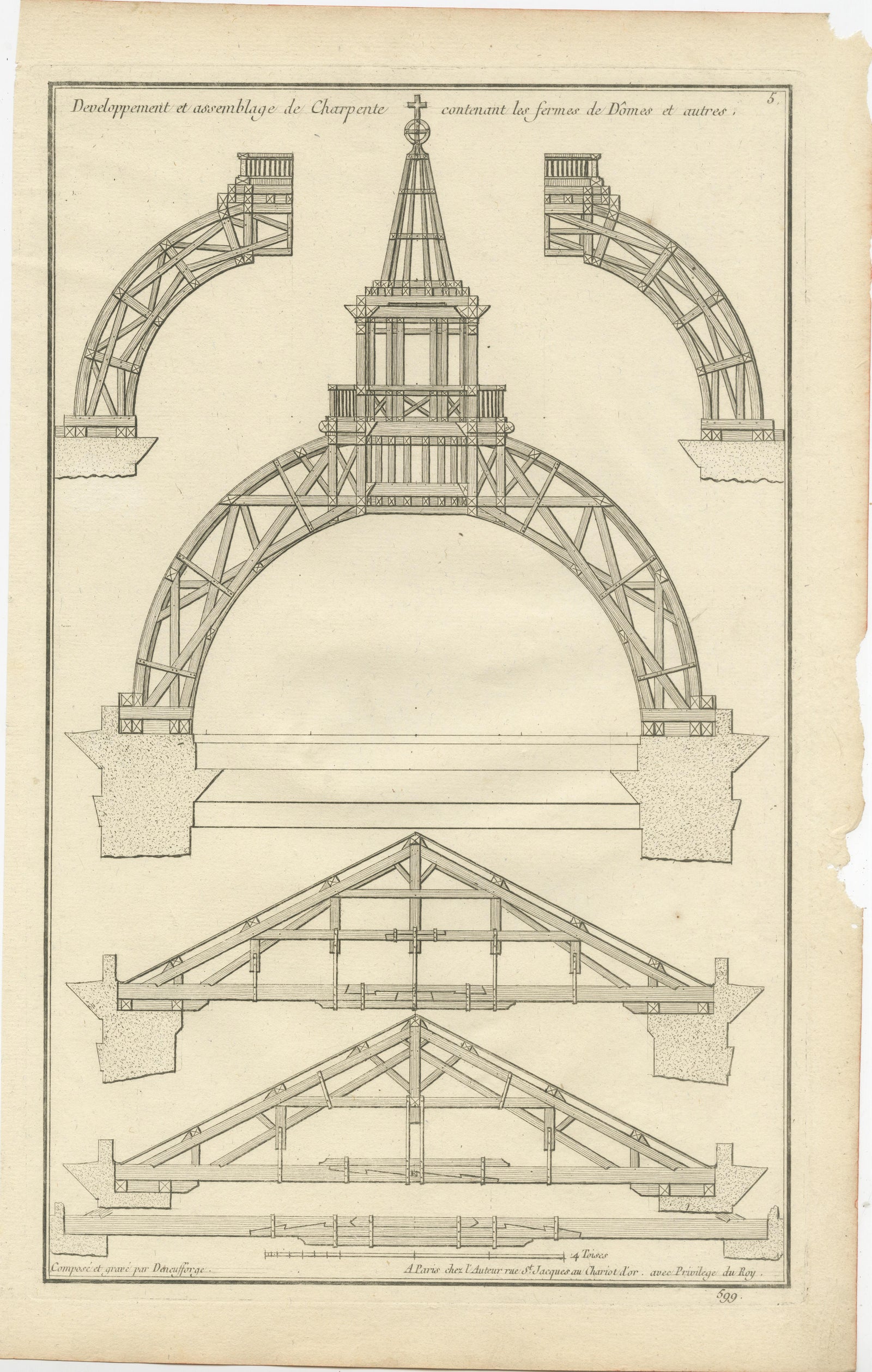
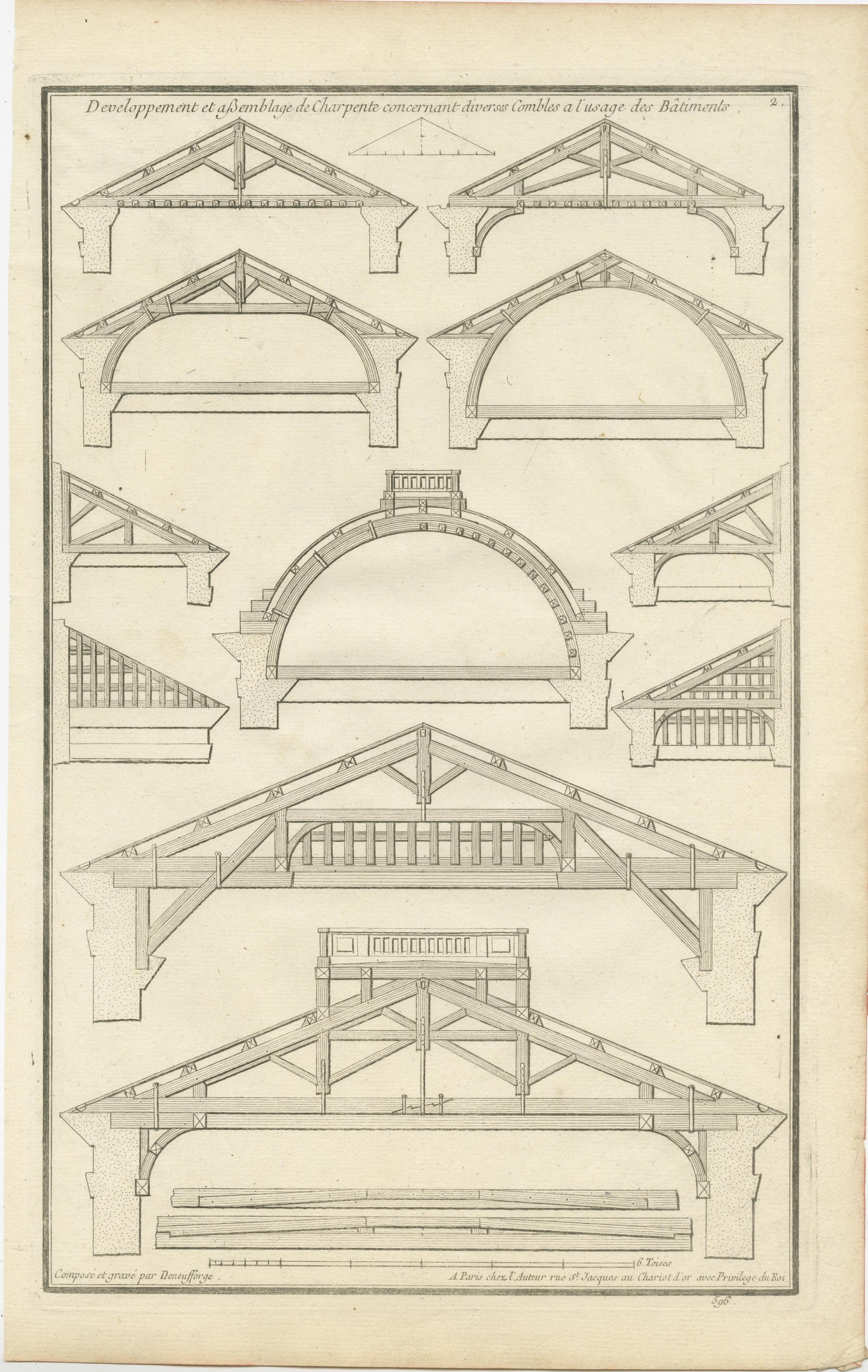
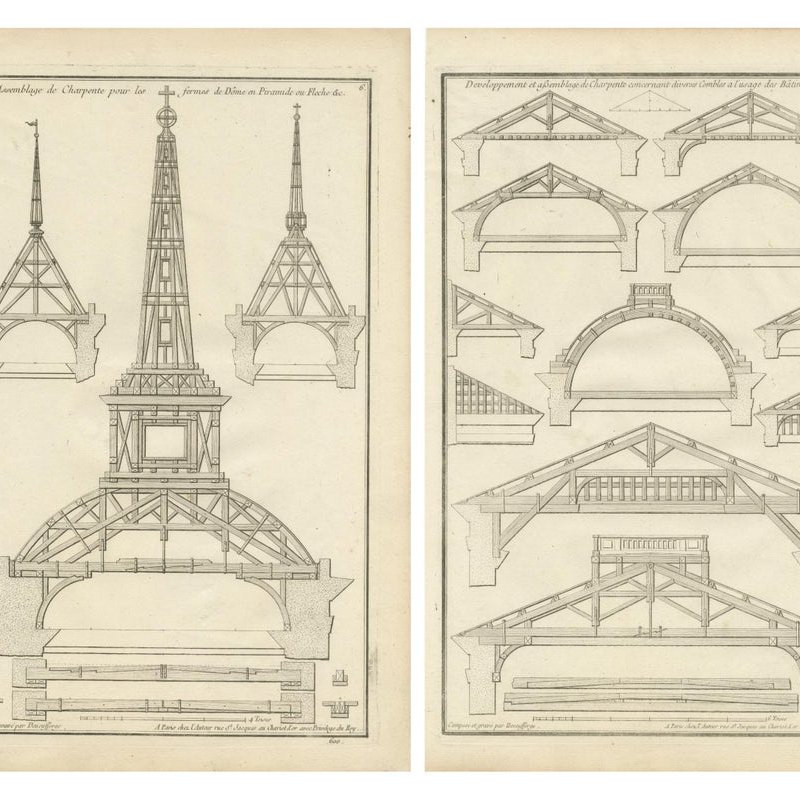
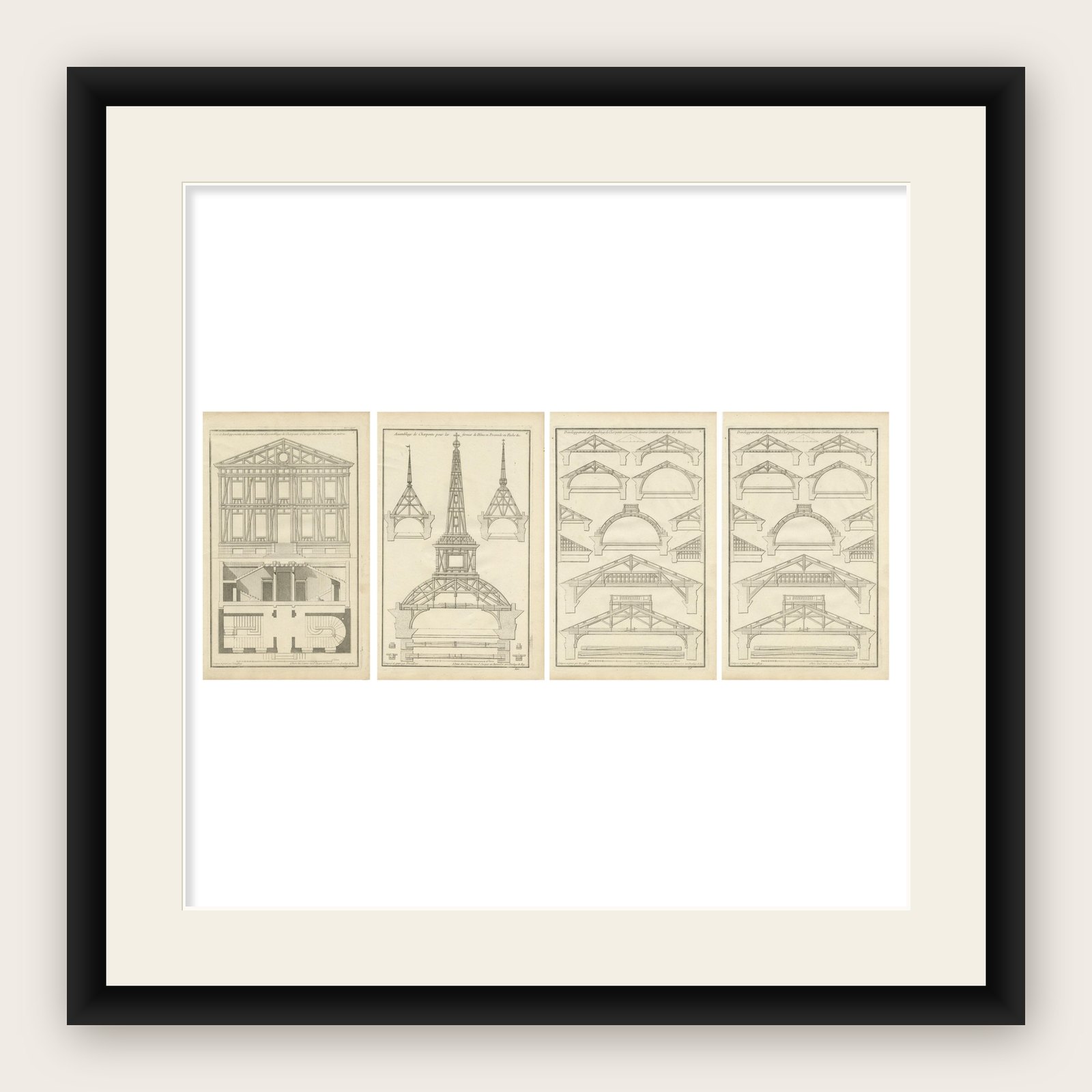
Architectural engravings by Jean-François de Neufforge (1714 to 1791).
Neufforge was a Flemish engraver, architect, and publisher known for his work "Recueil élémentaire d'architecture," an influential collection of architectural designs and ideas published throughout the 18th century.
These engravings are part of a series of illustrations that depict various architectural elements and assemblies, including frameworks, trusses, and structural details. They are characterized by their meticulous attention to detail and are representative of the architectural understanding and styles of the period.
Given the lifetime of Neufforge and the stylistic features of the engravings, they would likely date back to the mid-to-late 18th century.
These works are important historical records of 18th-century architectural practice and would be of significant interest to historians of architecture and construction. They demonstrate the complexity of design and engineering thought that went into building structures prior to the modern era.