Close-ups
Framed and on the wall
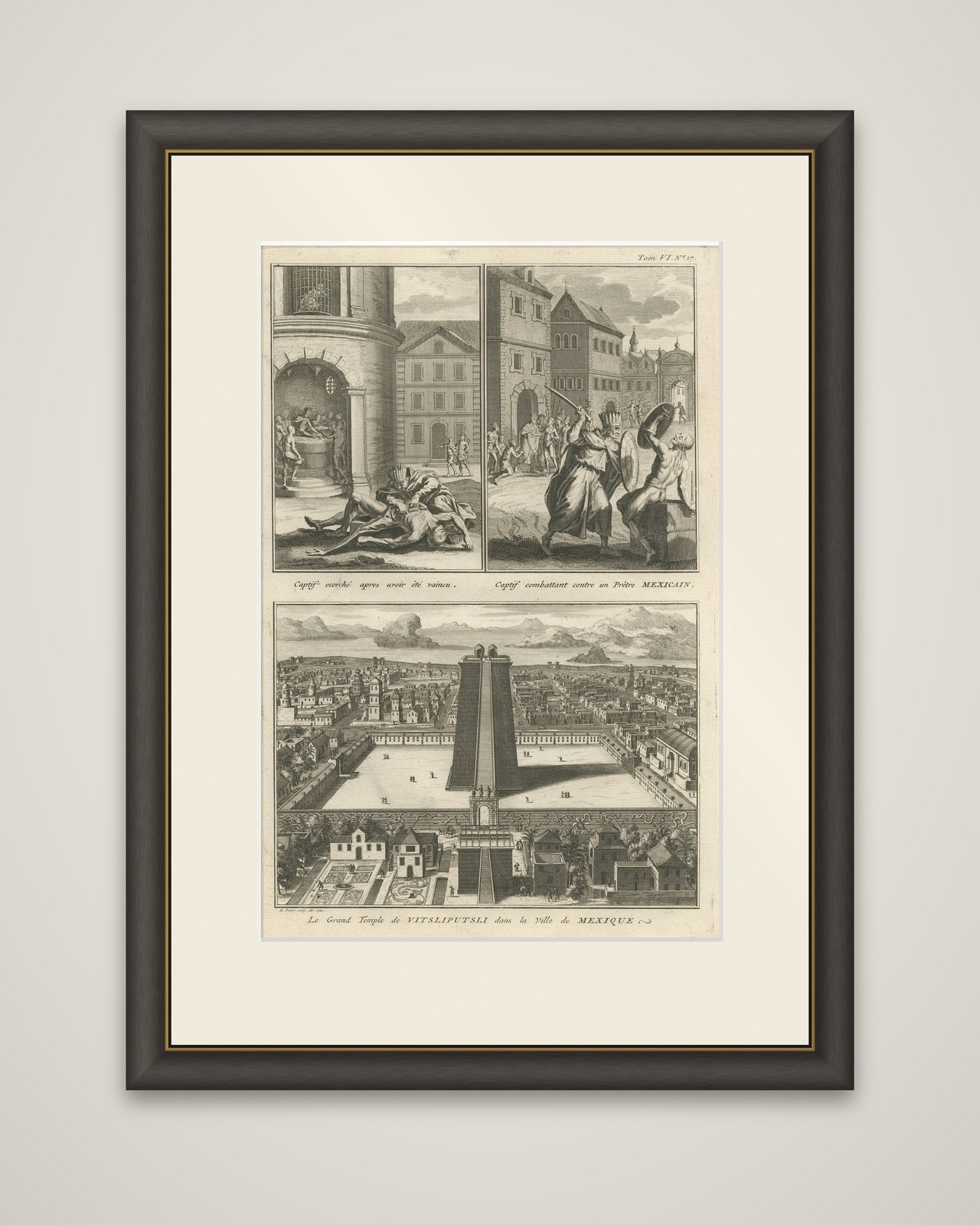


Frame and rooms are illustrations of how the print could look, drawn to its real size; it is sold unframed unless the description says otherwise.
Churches & temples
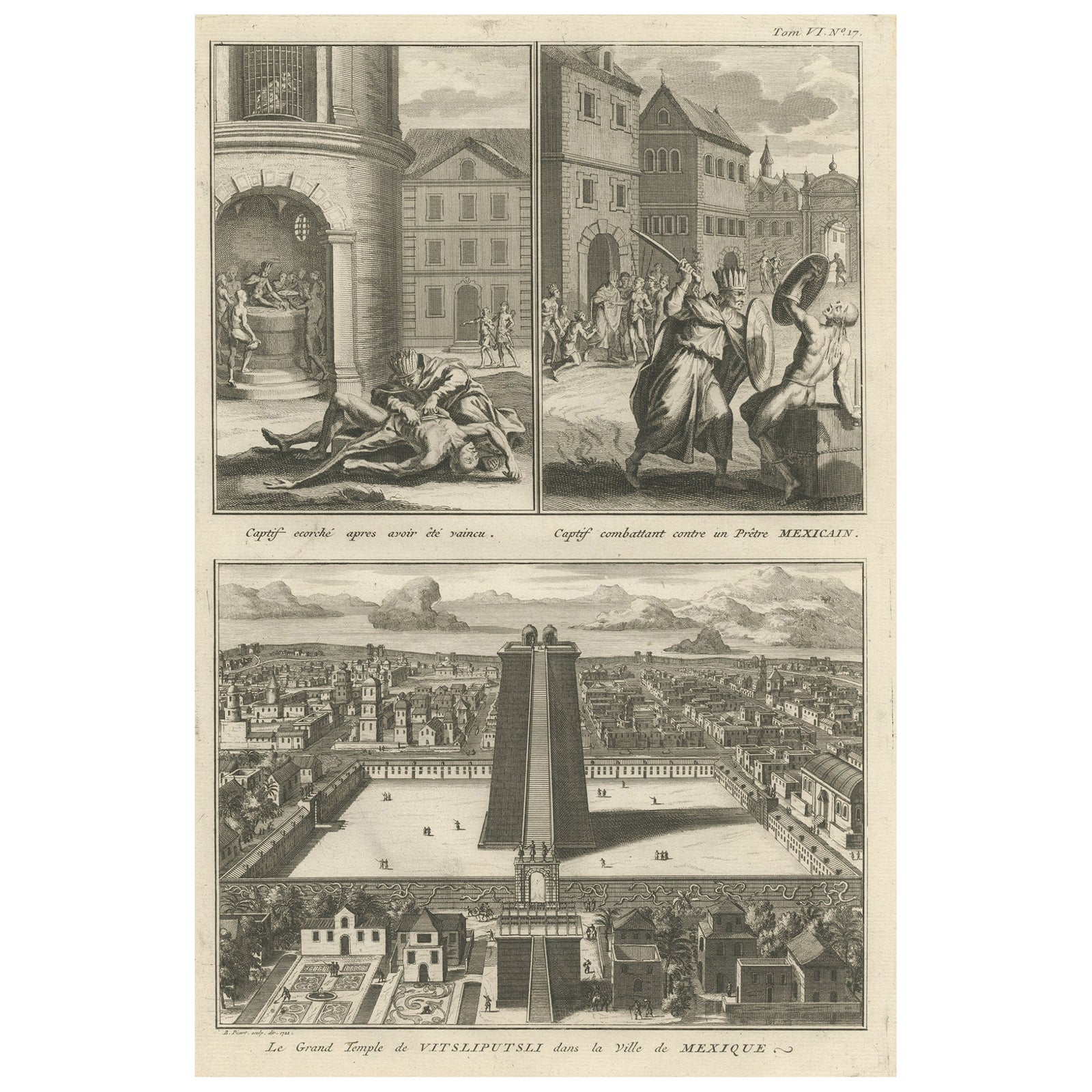
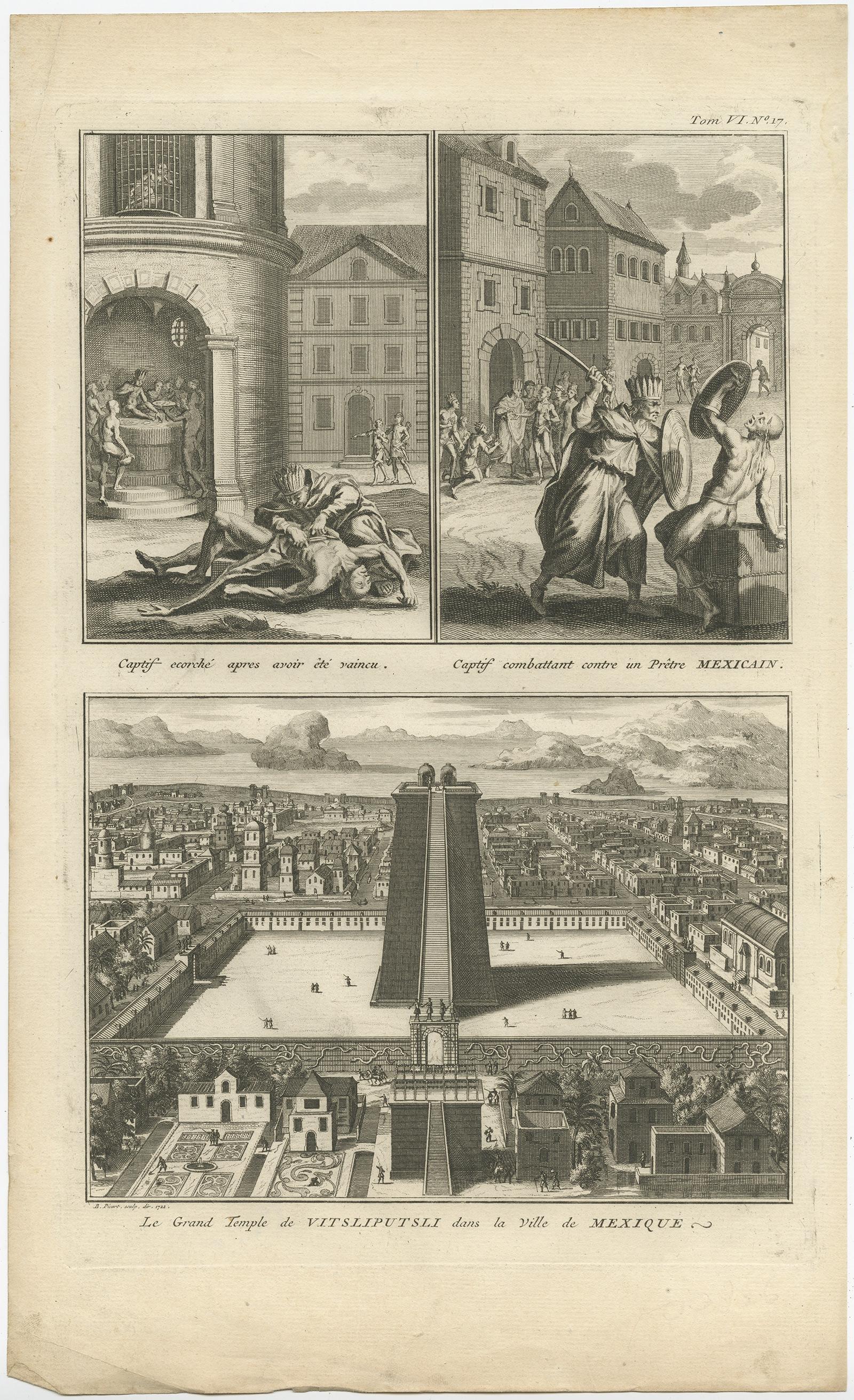
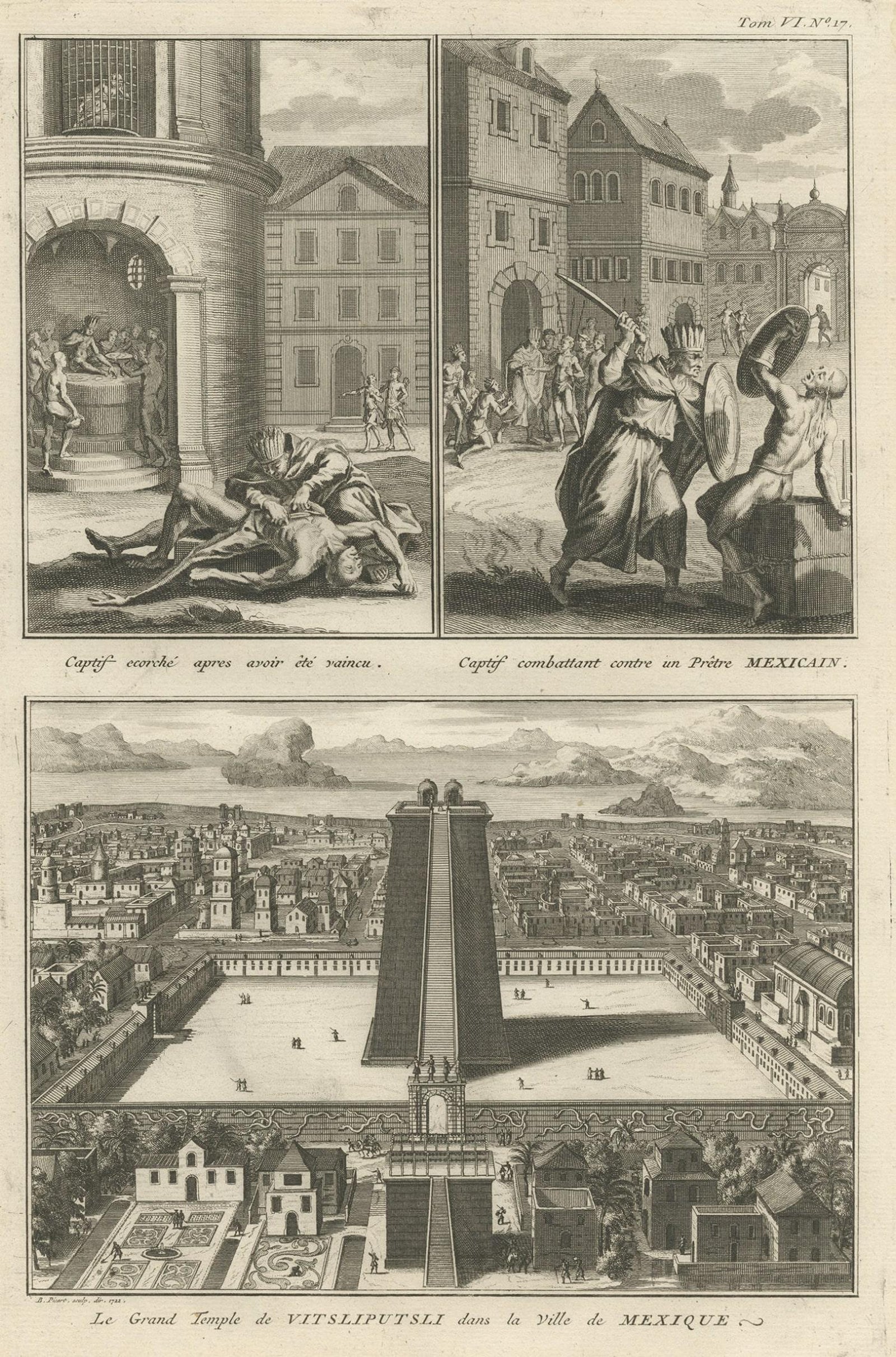
The Great Temple of Vitsliputsli in Mexico City and a Few Murder Scenes, 1722
£305
$405 · €360
Original print, not a reproduction
Ships worldwide from the Netherlands, flat, insured and tracked. 14-day returns. To buy, use Ask a question (info@antiquearchitectureprints.com) and we will reserve it for you.
- Date
- 1722
- Sheet size
- 15.7 × 9.6 in (40 × 24.5 cm)
- Condition
- Good. Minor defects. Please study image carefully.
- Collection
- Churches & temples
- Era
- 1700 to 1789, Baroque to Neoclassical
- Stock no.
- f_26922152
The Great Temple of Vitsliputsli in Mexico City and two scenes of captives, an original copper engraving of 1722 by Bernard Picart, from Ceremonies et coutumes religieuses. Three images share the sheet, and each has its own caption: "Captif écorché après avoir été vaincu", "Captif combattant contre un Prêtre Mexicain", and "Le Grand Temple de Vitsliputsli dans la Ville de Mexique". The old listing names the author as A. Moubach.
The upper left image shows a captive, flayed after he was defeated, lying in the foreground as priests in an arched building work at an altar behind him. The upper right image shows a captive on a stone defending himself with a shield against a priest in a feathered headdress who raises a sword. The lower image is a broad bird's-eye view of the walled temple precinct of Mexico, with a tall stepped tower rising in the center and a symmetrical complex of houses and gardens, and the city of low flat-roofed buildings spreading around it, all drawn from the European imagination of Aztec Mexico.
Picart (1673 to 1733) was a French painter and engraver, who worked in Amsterdam, and his engravings of the religious ceremonies of the world were widely read in the eighteenth century.
Explore