Close-ups
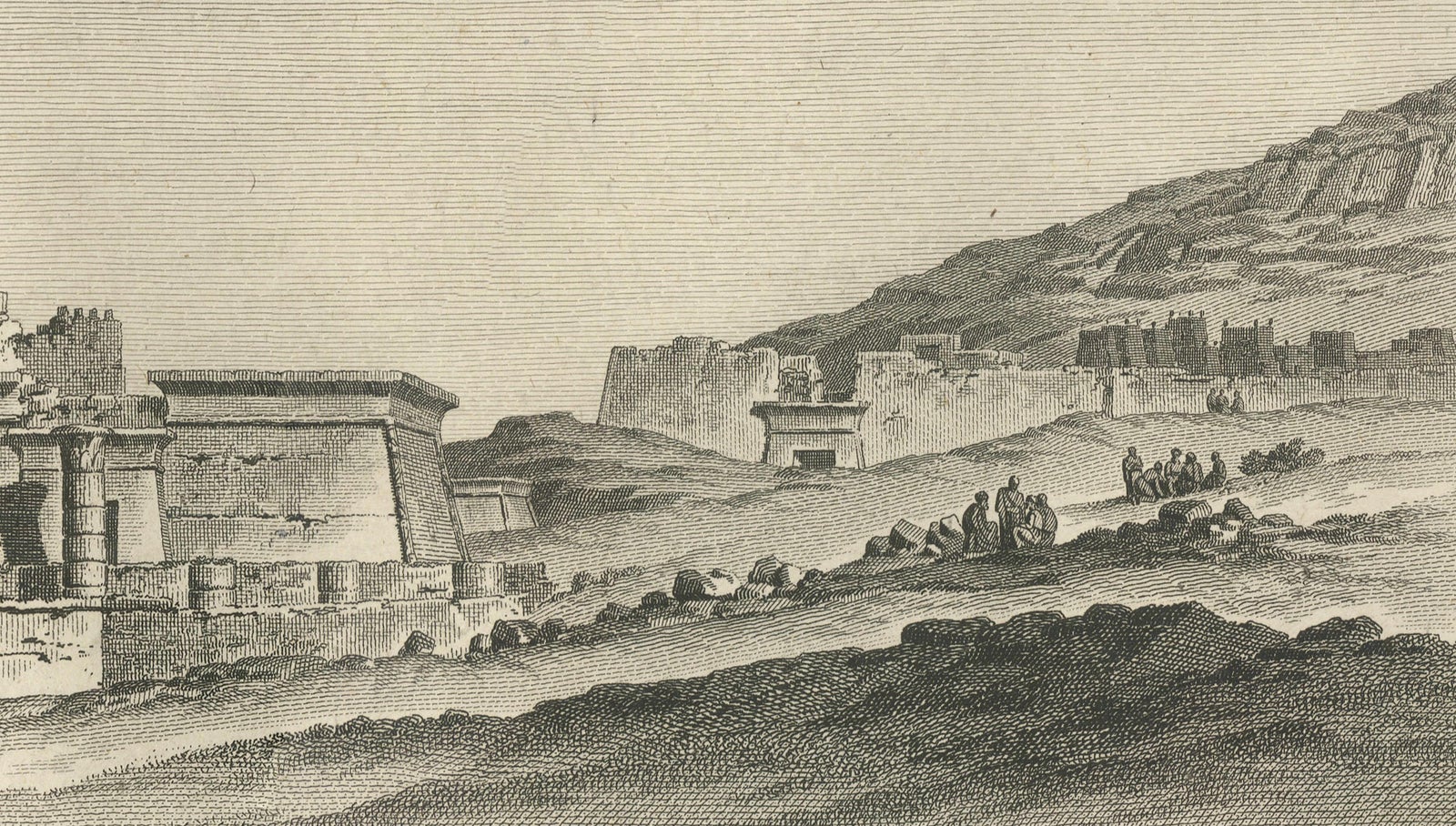
Framed and on the wall
Frame and rooms are illustrations of how the print could look, drawn to its real size; it is sold unframed unless the description says otherwise.
Antiquity & ruins
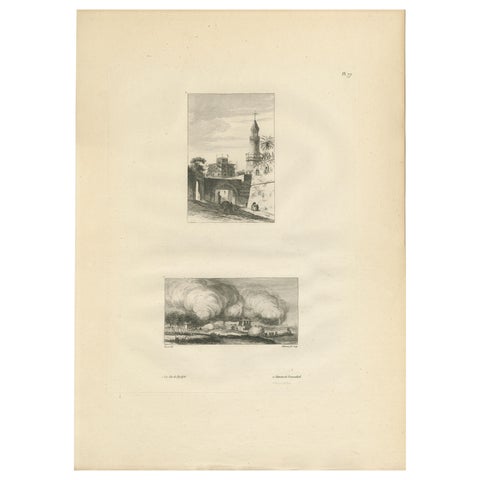
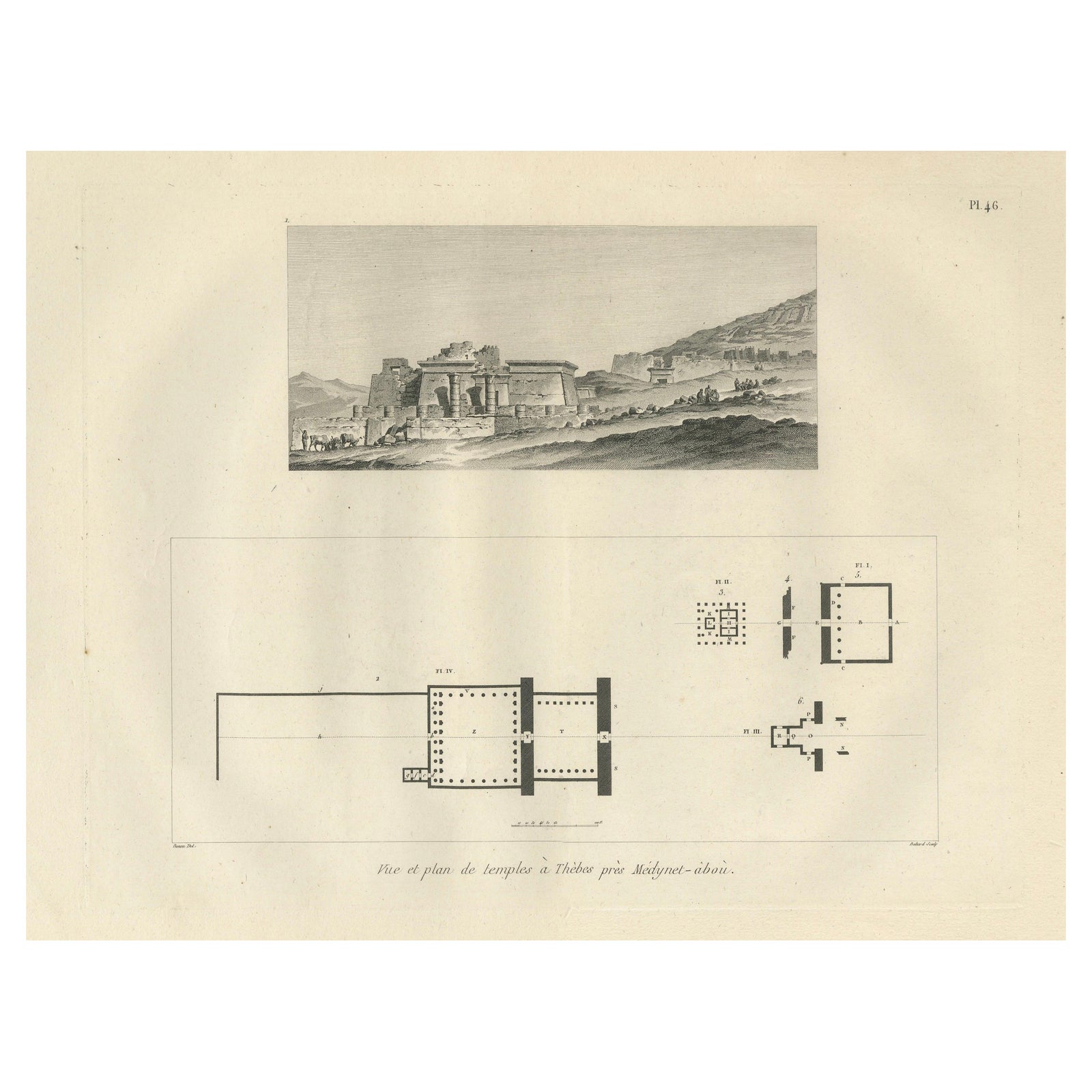
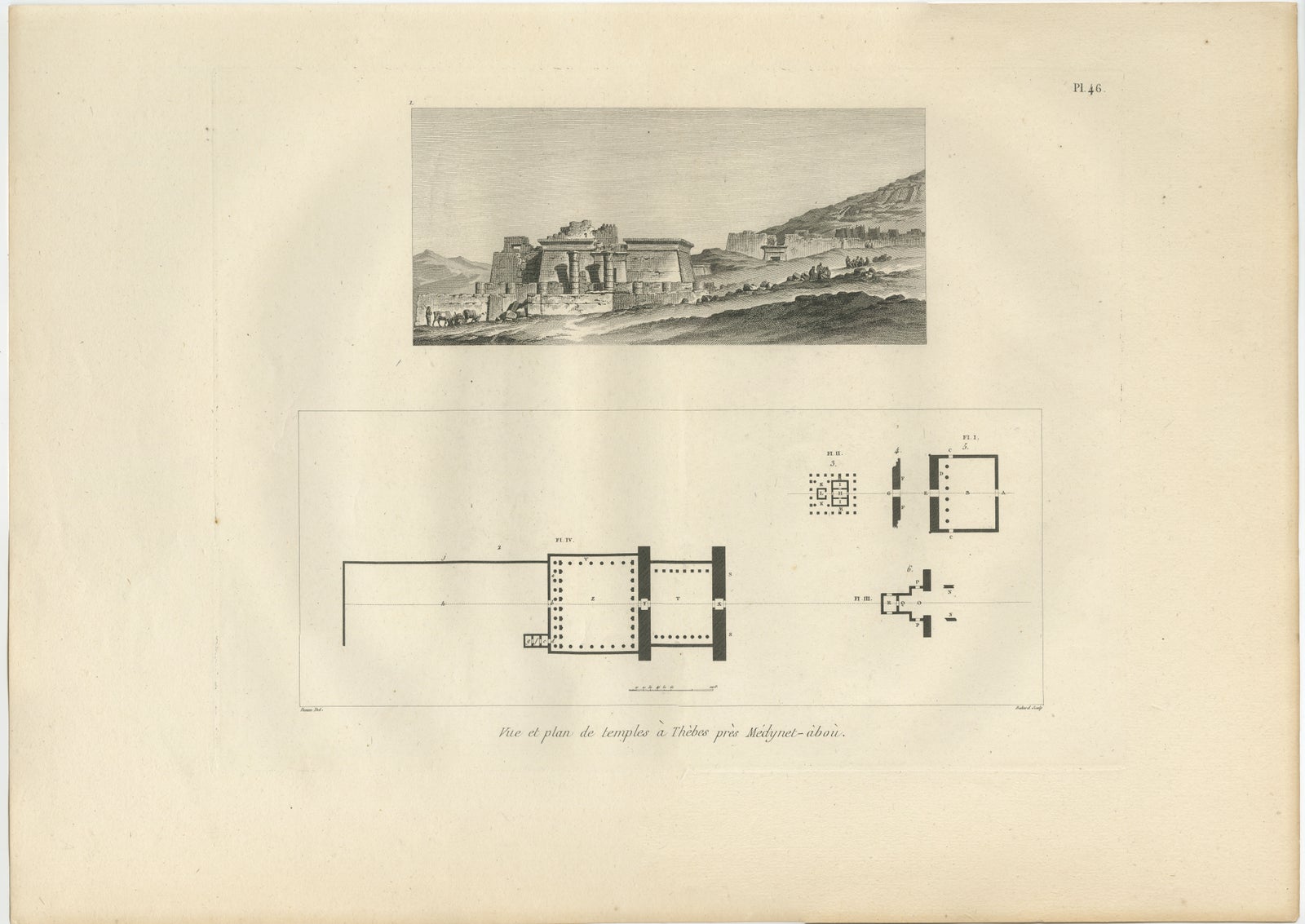
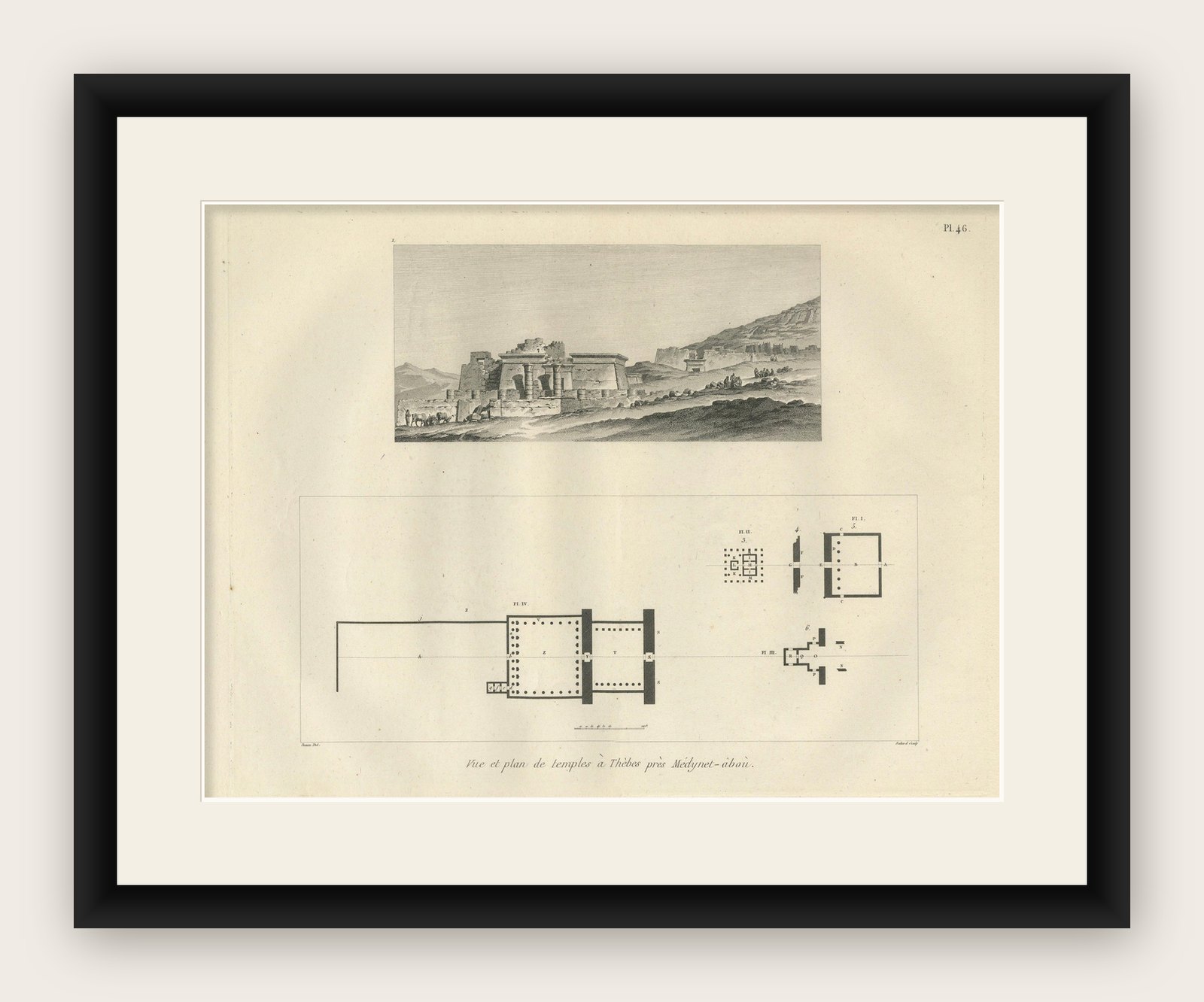
Temple Ruins at Thebes with Architectural Plan, Egypt, Antique Engraving, c.1802
£630
$835 · €740
Original print, not a reproduction
Ships worldwide from the Netherlands, flat, insured and tracked. 14-day returns. To buy, use Ask a question (info@antiquearchitectureprints.com) and we will reserve it for you.
- Date
- 1802
- Sheet size
- 16.3 × 23 in (41.5 × 58.5 cm)
- Condition
- Original antique engraving on laid paper. Light overall age toning and occasional scattered spotting consistent with age. Wide margins preserved. Plate mark faintly visible.
- Collection
- Antiquity & ruins
- Era
- 1790 to 1849, Neoclassical and Romantic
- Stock no.
- f_48440472
Temple Ruins at Thebes with Architectural Plan, Egypt, Antique Engraving, c.1802
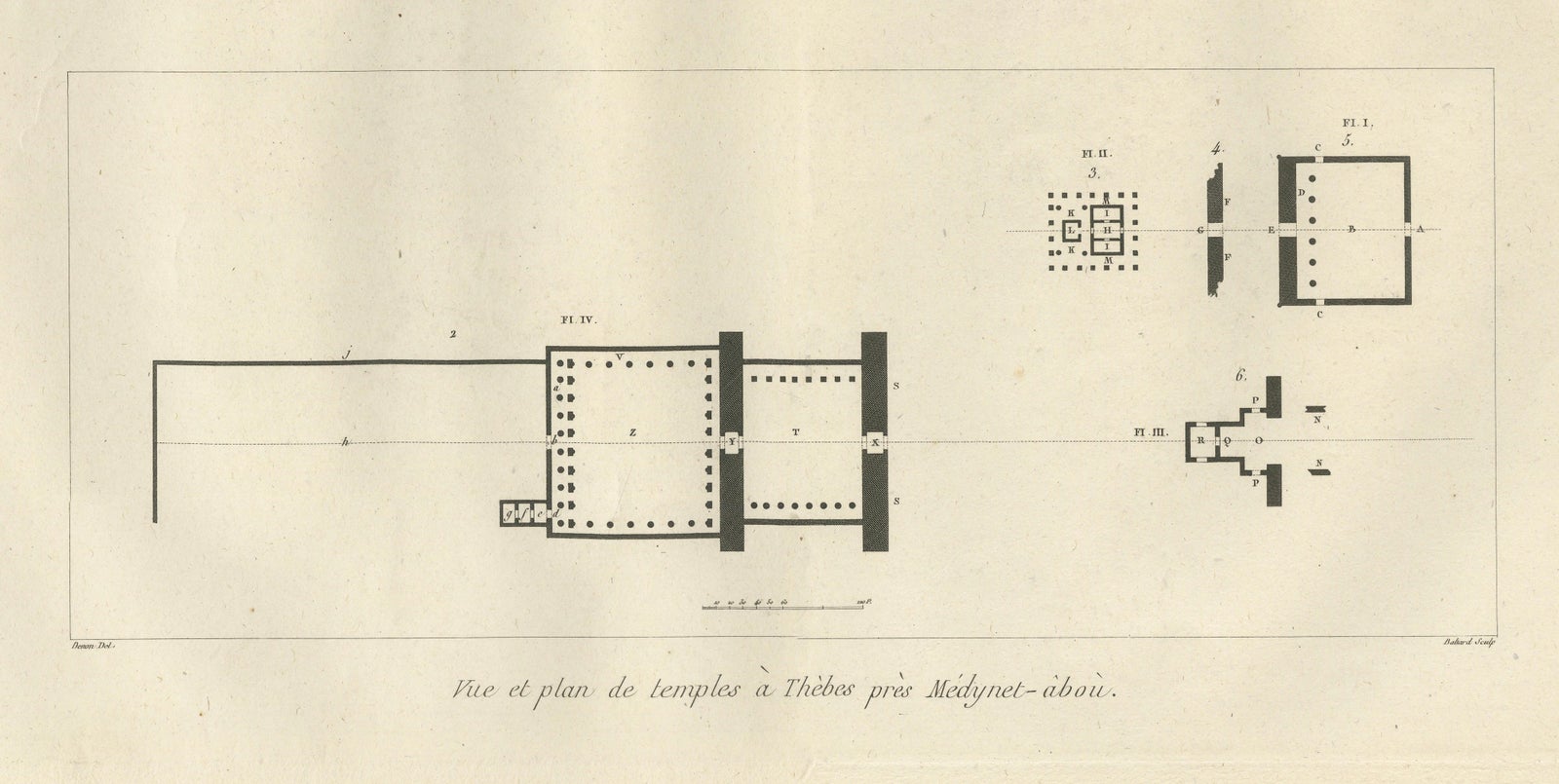
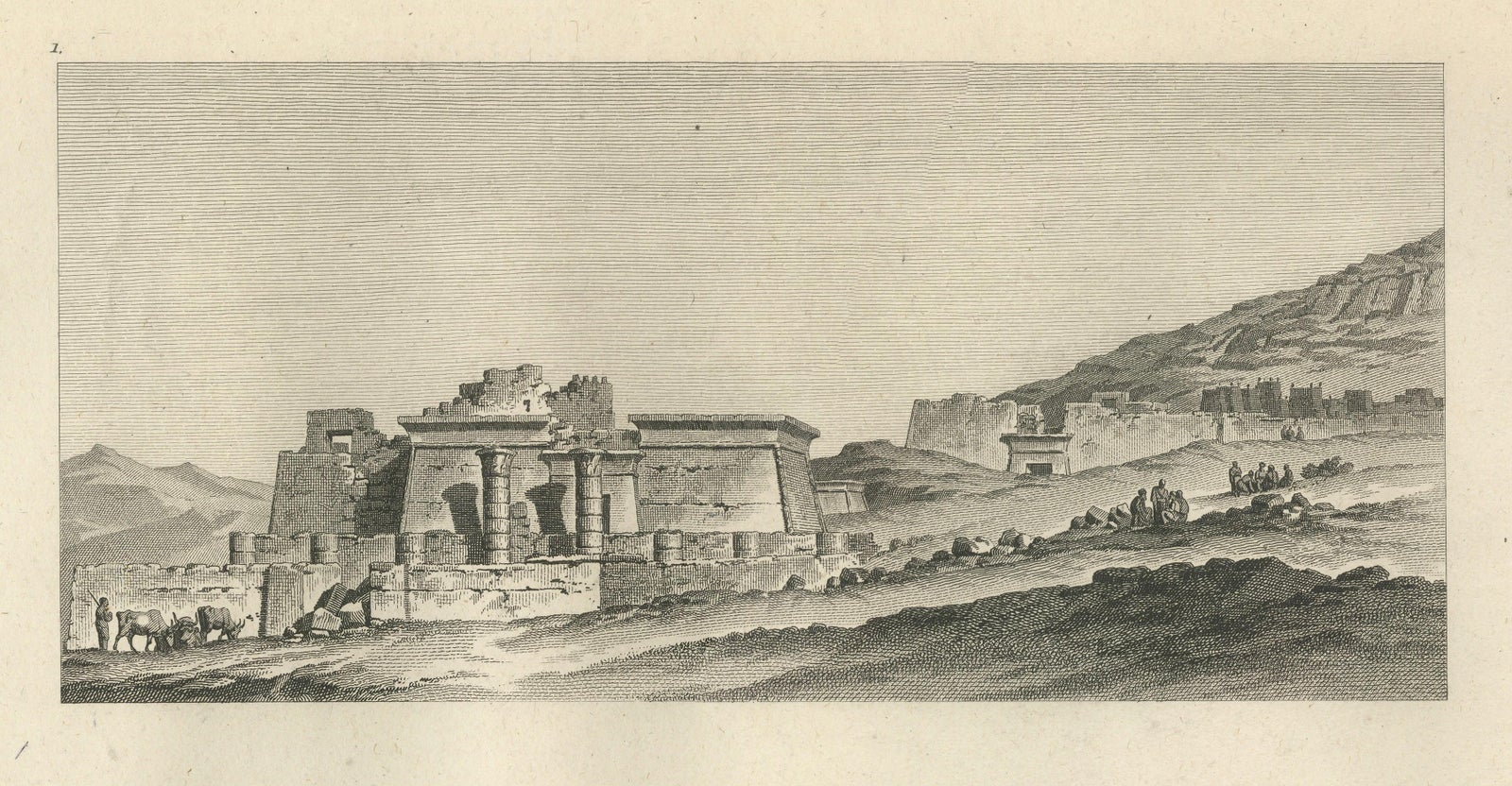
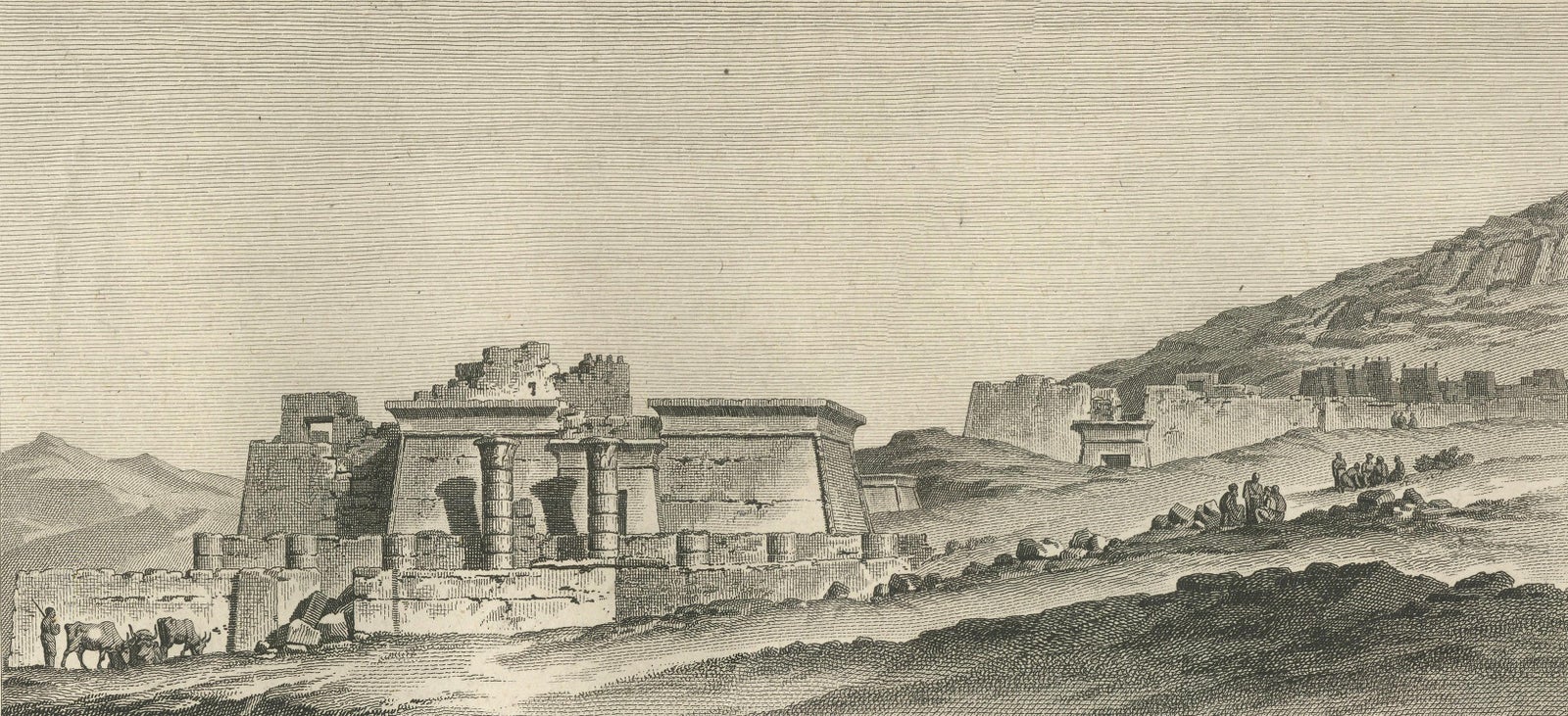
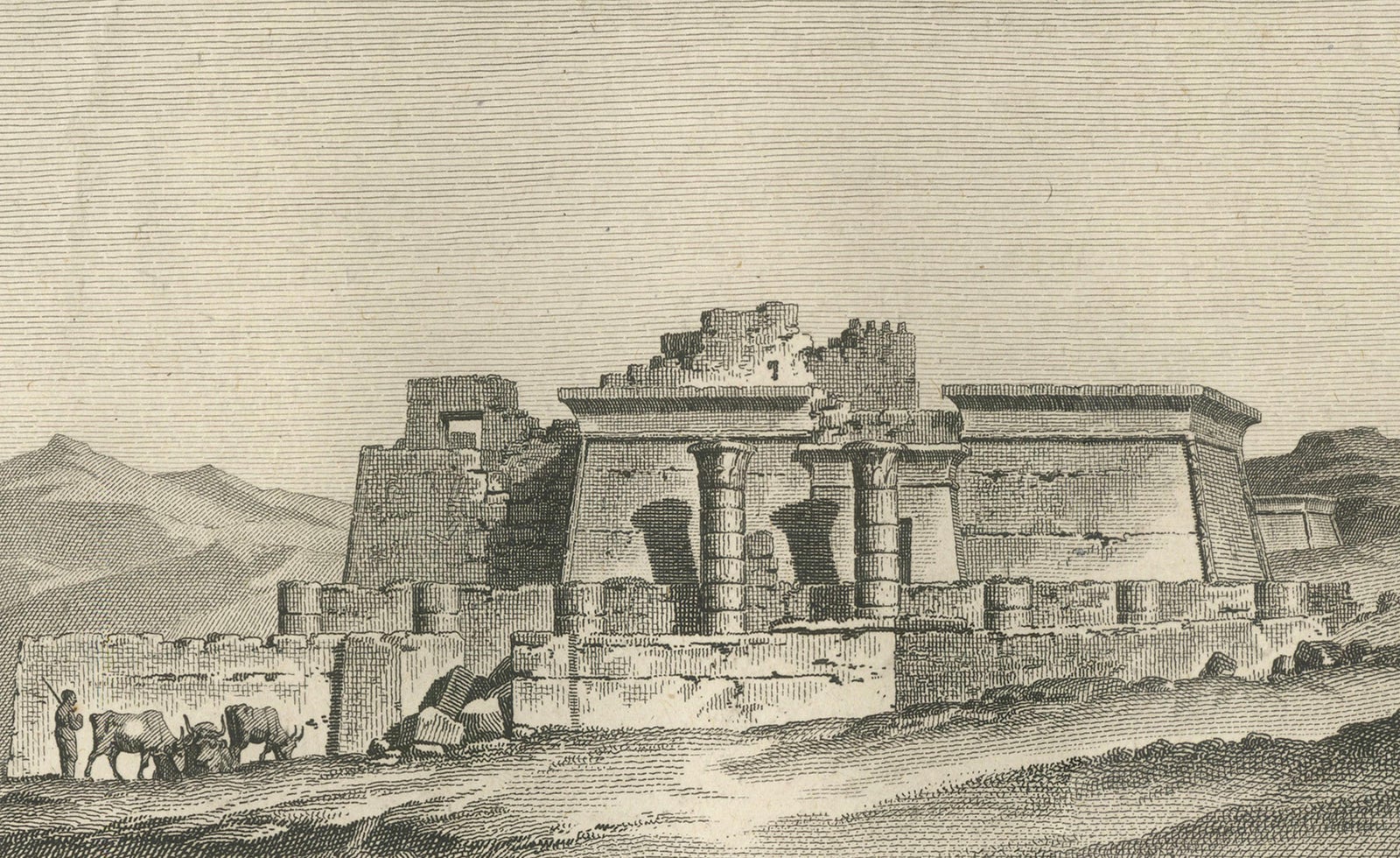
This finely engraved plate presents a detailed view of ancient temple ruins at Thebes, shown in their desert landscape, accompanied below by a measured architectural ground plan of the site near Medinet Habu. The upper register depicts monumental stone structures partially preserved amid the surrounding hills, animated by small figures that provide scale and convey the experience of early travellers encountering the ruins. The lower register translates this visual impression into a rational, analytical plan, reflecting the emerging scientific approach to archaeology in the early nineteenth century.
The plate originates from a major Egyptological publication produced in the aftermath of the French expedition to Egypt, a period that marked a turning point in the European study of ancient Egyptian architecture. Artists and scholars associated with this movement sought not only to record the appearance of monuments but also to understand their structure, layout, and original function. The pairing of landscape view and architectural plan on a single sheet exemplifies this dual ambition, combining aesthetic sensitivity with scholarly precision.
Visually, the composition is balanced and restrained. The panoramic view above offers depth and atmosphere, while the crisp linear clarity of the plan below introduces order and intellectual focus. The generous surrounding margins and understated engraving style give the sheet a refined, almost modern presence when framed, making it equally suitable for academic interiors, libraries, and contemporary spaces that favour quiet, thoughtful imagery.
Such plates are especially appealing to collectors of early travel literature, Egyptology, and architectural history, as well as to architects and designers drawn to historically grounded representations of space and structure. This example stands out for its completeness, clarity, and the successful integration of pictorial and technical modes of representation.
Condition: Original antique engraving on laid paper. Light overall age toning and occasional scattered spotting consistent with age. Wide margins preserved. Plate mark faintly visible.
Framing tips: Best presented with a wide off-white or light sand-coloured mat to separate the imagery from the frame. A dark walnut, ebonised, or black frame will enhance contrast and create a museum-style presentation.
Technique: Engraving
Maker: After Dominique Vivant Denon, France, early 19th century
Explore