Close-ups
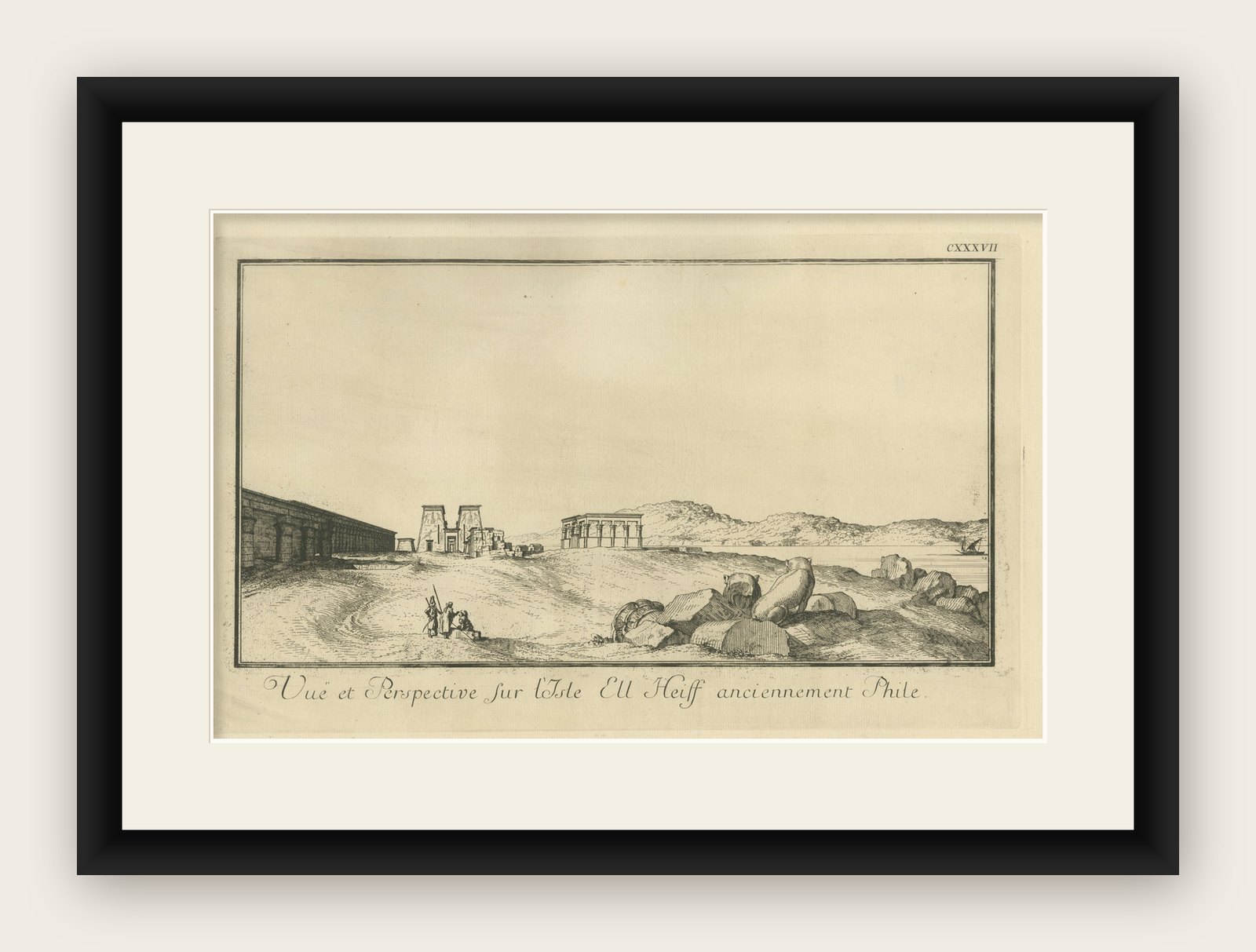
Framed and on the wall

Frame and rooms are illustrations of how the print could look, drawn to its real size; it is sold unframed unless the description says otherwise.
Antiquity & ruins
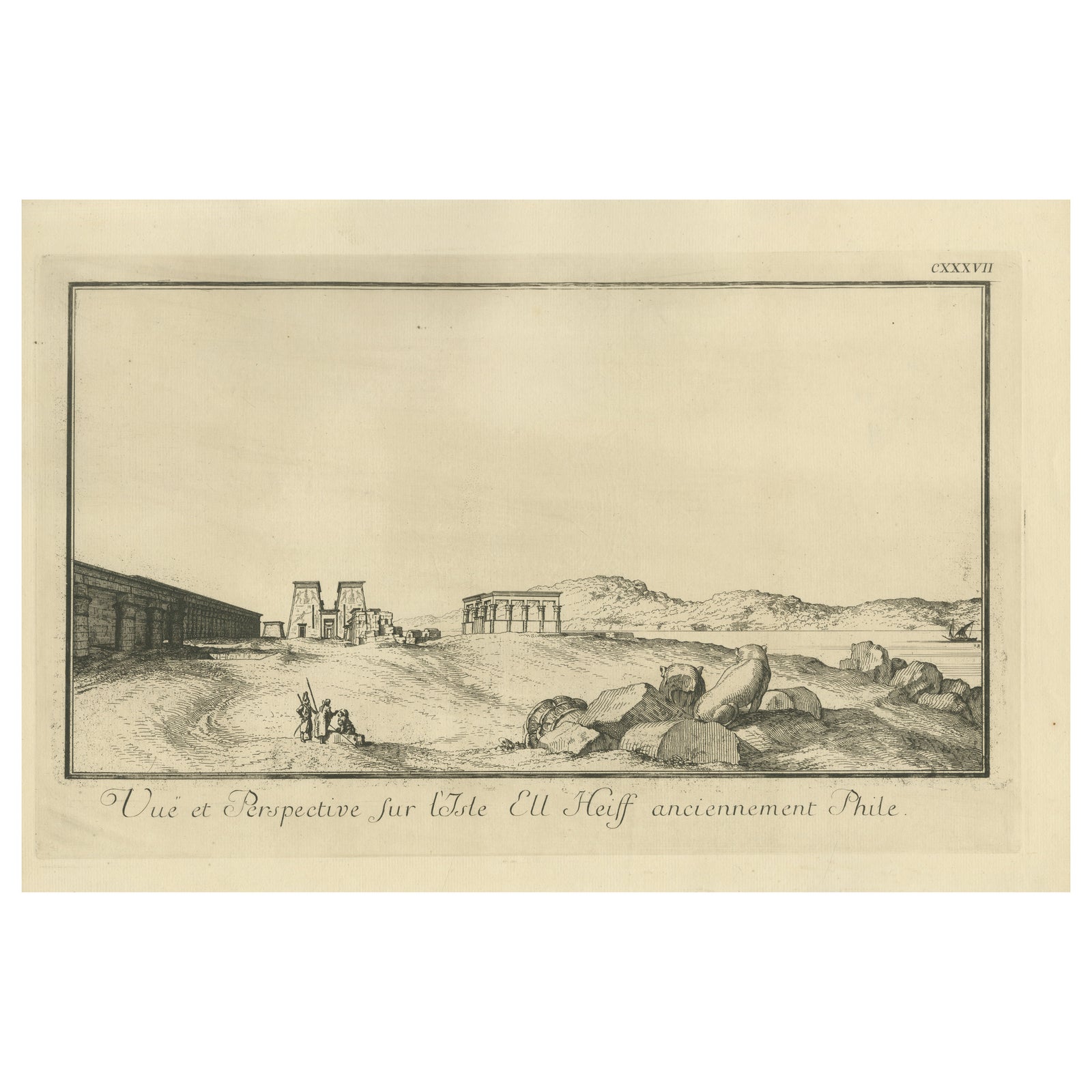
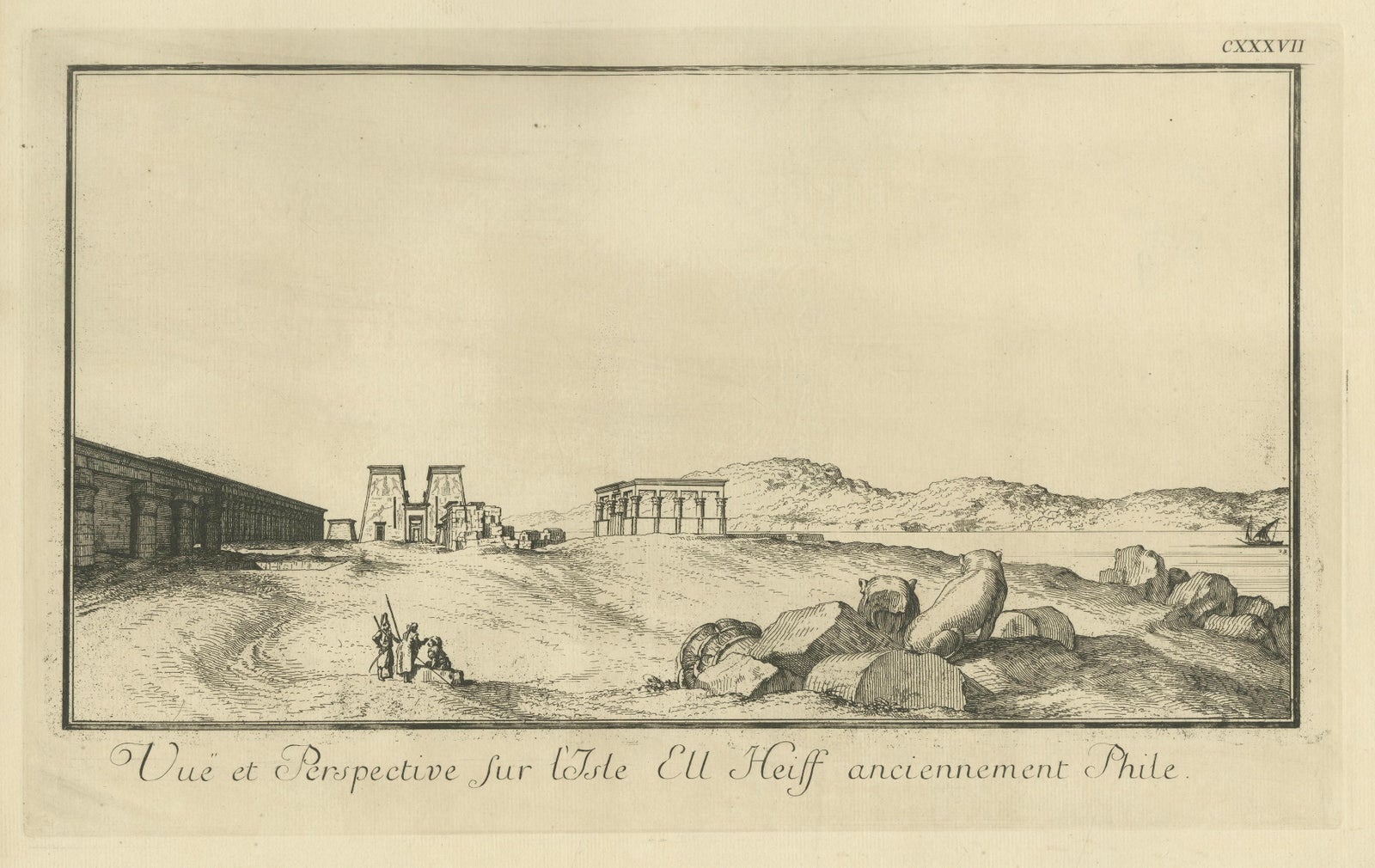
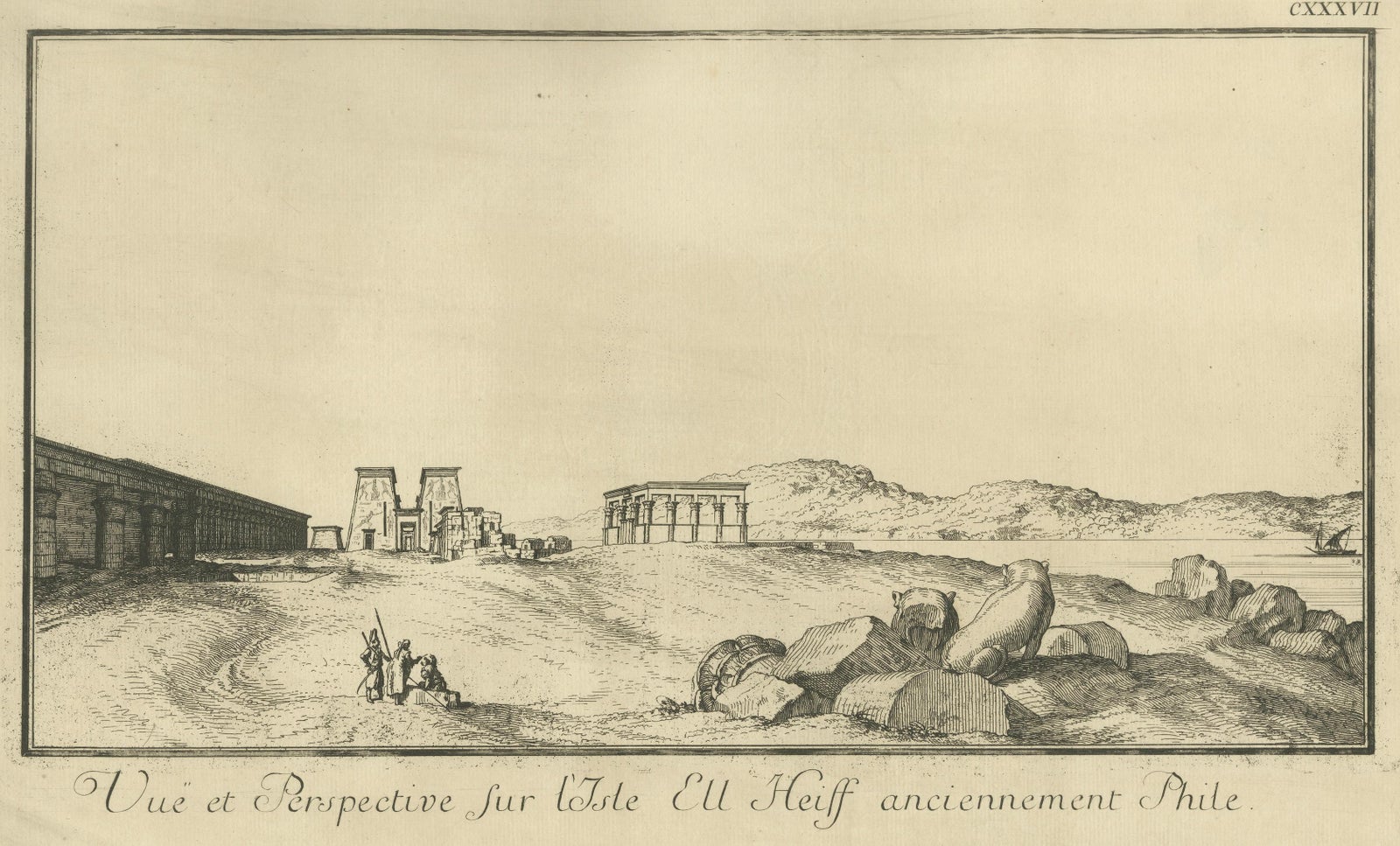
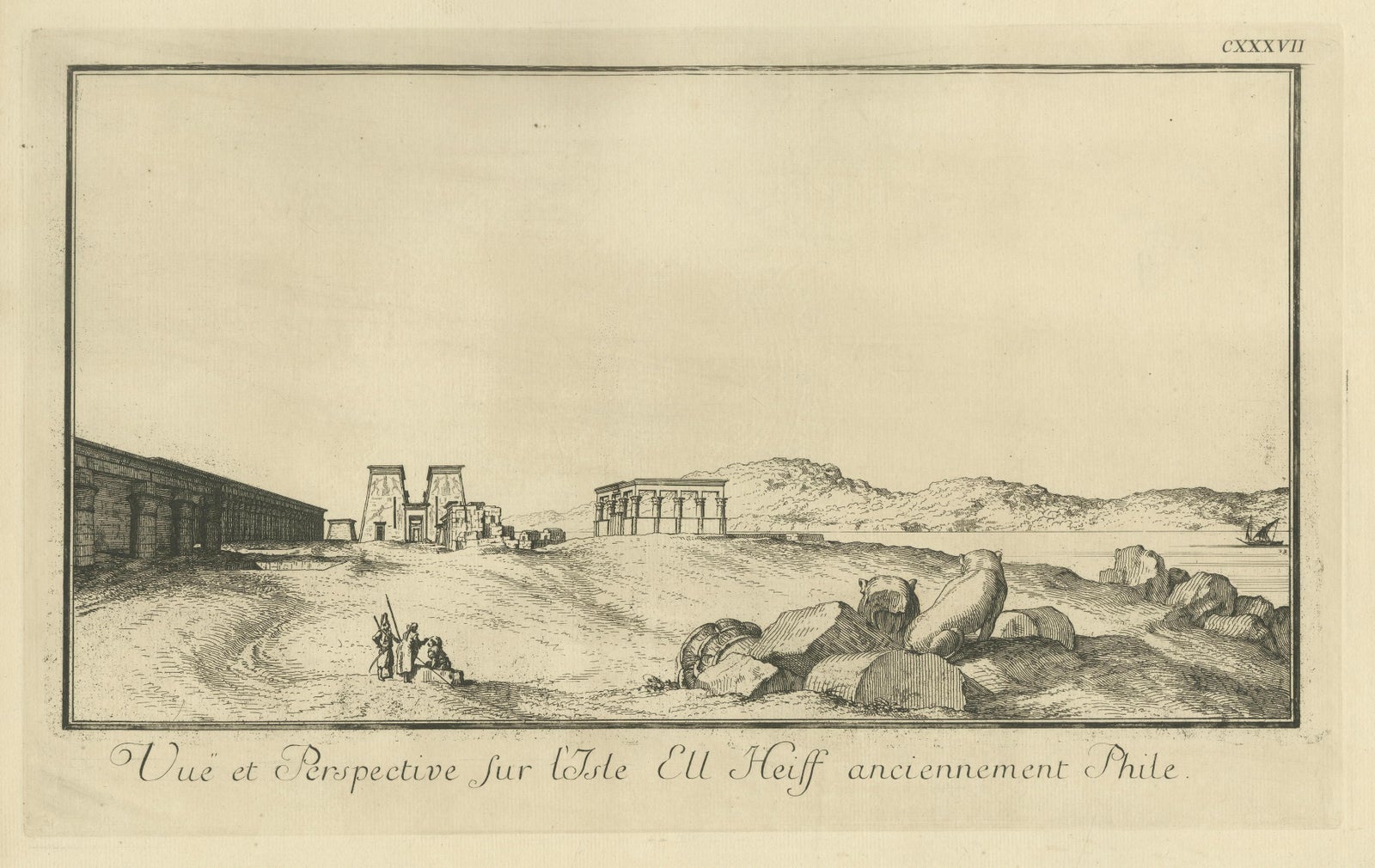
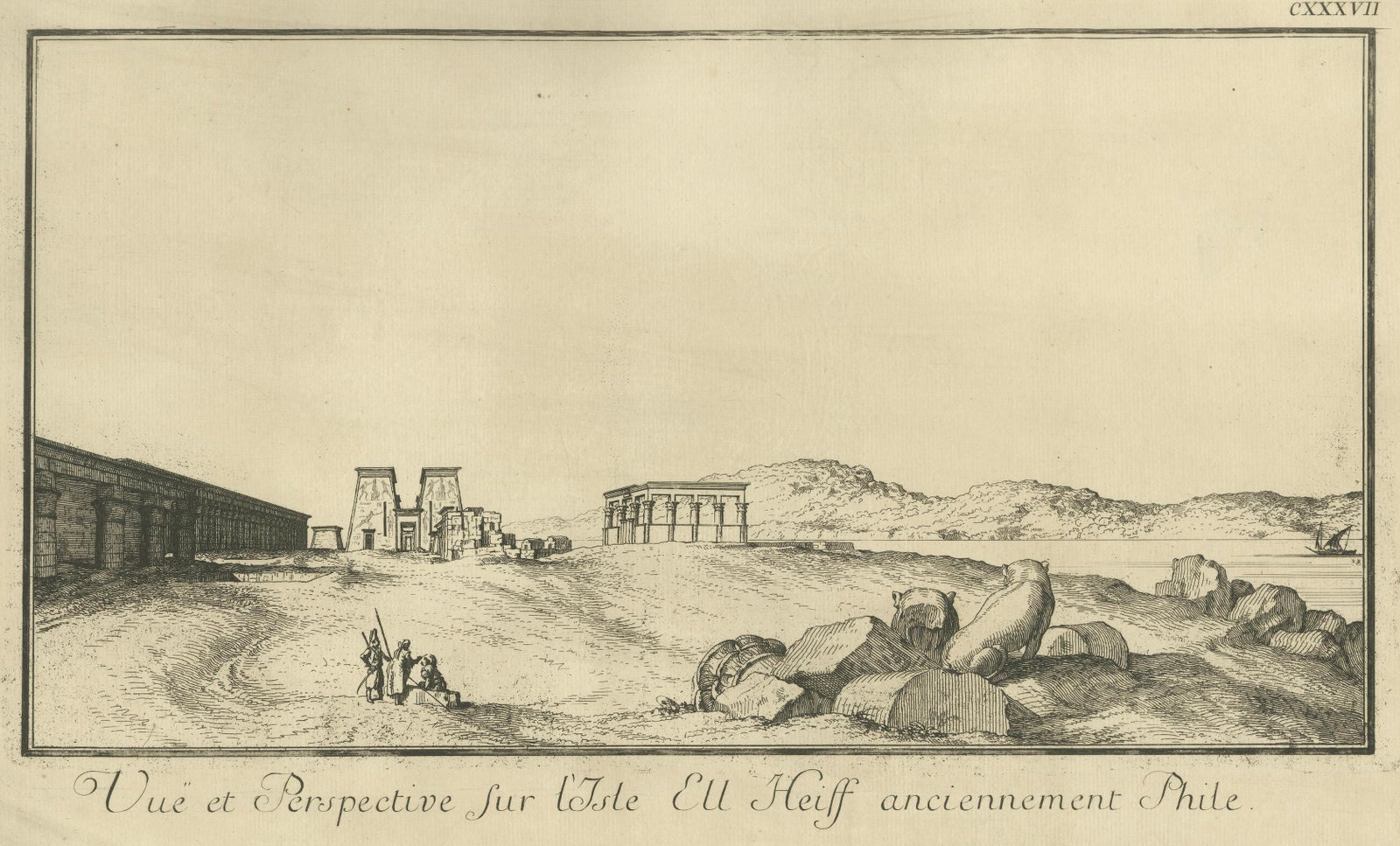
Temple of Philae on the Nile, Antique Egypt Ruins Engraving by Norden, c.1755
€630€44130% off
$485 · £370
Original print, not a reproduction
Ships worldwide from the Netherlands, flat or rolled, insured and tracked. 14-day returns.
- Date
- 1755
- Sheet size
- 11.4 × 17.6 in (29 × 44.6 cm)
- Condition
- Good. Good antique condition. Light age toning and minor scattered spotting consistent with 18th-century paper. Full plate mark visible. Margins intact. No tears, losses, or restorations observed.
- Collection
- Antiquity & ruins
- Era
- 1700 to 1789, Baroque to Neoclassical
- Stock no.
- BG-14183-21
What the condition grades mean
- Excellent
- Bright and clean, with no faults worth mentioning.
- Very good
- Only light signs of age, such as faint toning.
- Good
- Normal signs of age for a sheet of this period: toning, some foxing, small marks or neat old repairs.
- Fair
- Clear faults such as staining, tears or repairs, priced to match.
Every fault we see is written in the condition note, and the whole sheet is shown uncropped in the photos.
Temple of Philae on the Nile, Antique Egypt Ruins Engraving by Norden, c.1755
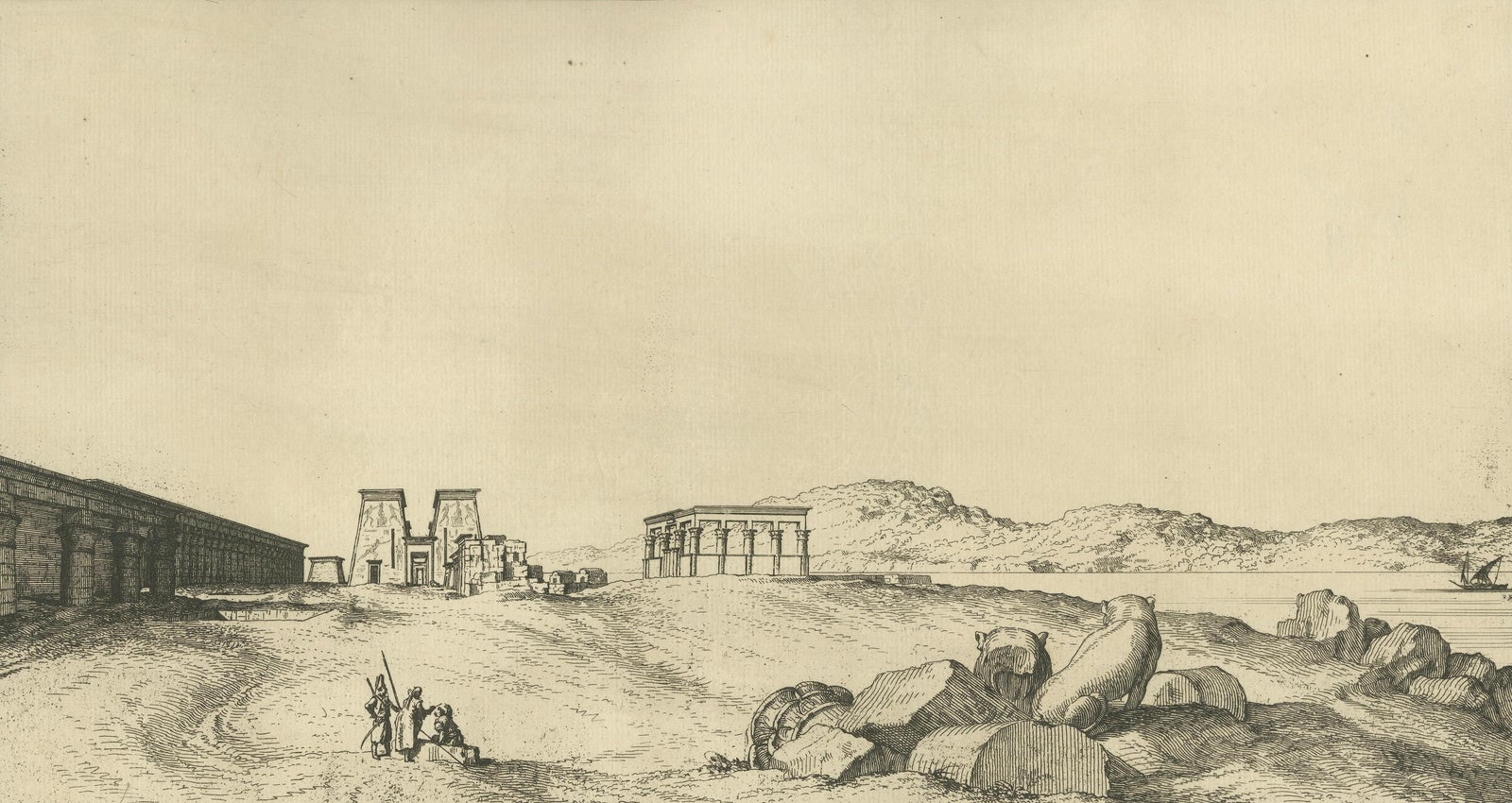
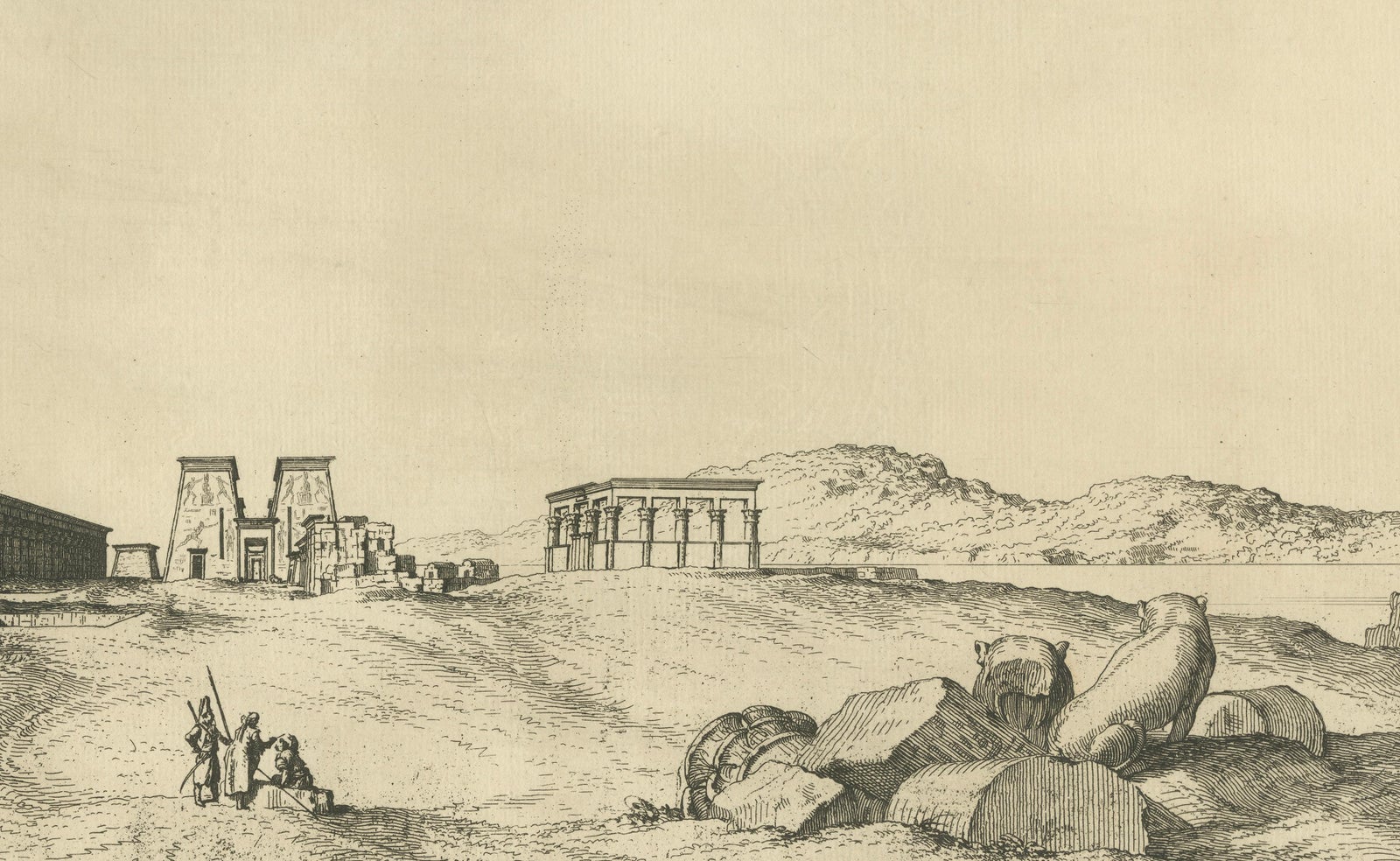
This impressive 18th-century engraving presents a detailed view and perspective of the island of Philae, known in antiquity as Philae or Phila, one of the most important sacred sites of ancient Egypt. The composition shows the temples and ruins of the island rising from the Nile, with monumental architectural fragments in the foreground and the river extending calmly into the distance.
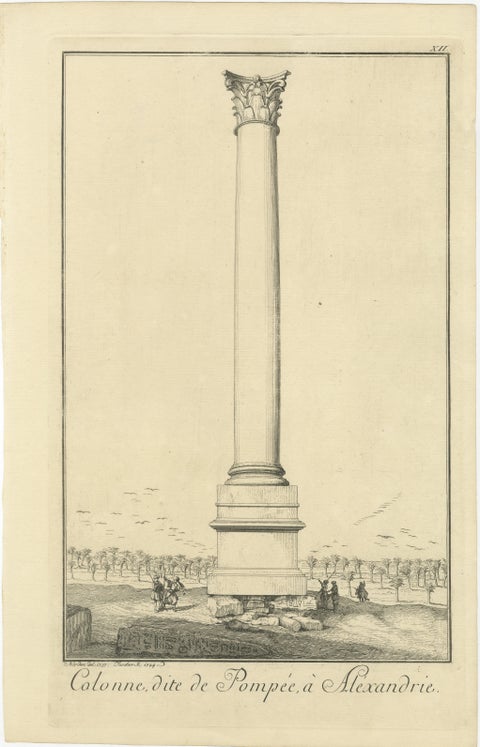
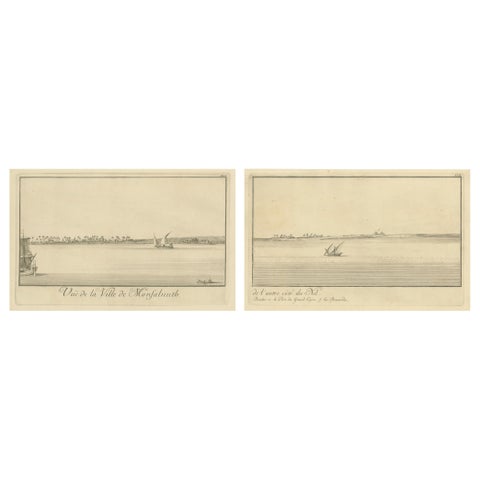
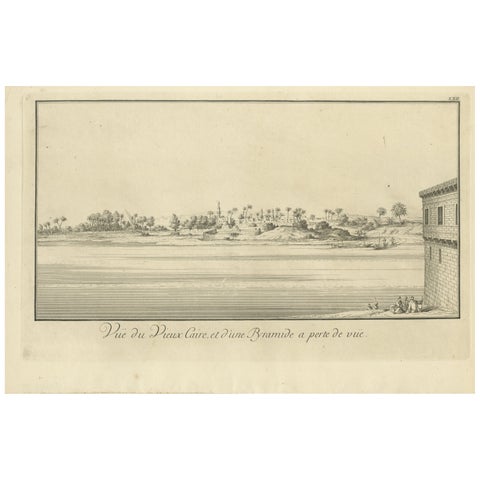
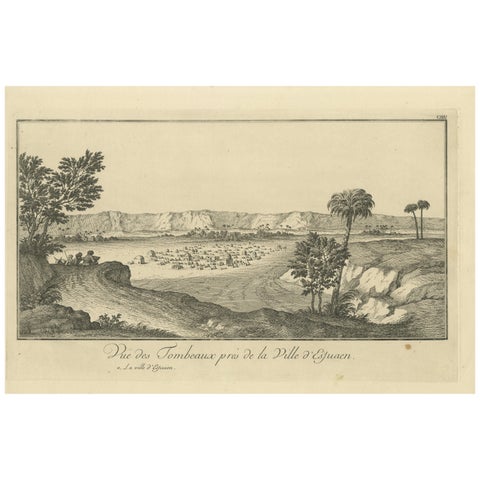
The plate originates from Voyage d’Égypte et de Nubie by Frederik Ludvig Norden, first published in Copenhagen in 1755. Norden was a Danish naval officer and accomplished draughtsman whose work represents one of the earliest systematic visual documentations of Egypt based on direct observation. His depictions of Philae predate the Napoleonic expedition and later 19th-century archaeological surveys, making them especially valuable as early records of the site’s condition.
The engraving combines archaeological interest with a restrained, balanced composition. The fallen columns and carved stone blocks in the foreground emphasize the antiquity of the site, while the standing temple structures convey its former grandeur. Figures provide scale, reinforcing the monumental nature of the ruins without overwhelming the scene. The wide horizontal format and fine line work give the image a calm, timeless presence.
This print appeals strongly to collectors of Egyptology, ancient architecture, and early travel imagery, while also functioning as a refined standalone wall piece for interiors seeking historical depth and classical subject matter.
Condition report:
Good antique condition. Light age toning and minor scattered spotting consistent with 18th-century paper. Full plate mark visible. Margins intact. No tears, losses, or restorations observed.
Framing tips:
Frame with a wide off-white or light parchment mat to highlight the plate mark and architectural detail. Dark walnut, blackened wood, or simple black frames work particularly well with the classical subject.
Technique: Copper engraving
Maker: Frederik Ludvig Norden, Copenhagen, circa 1755
Explore