Close-ups
Framed and on the wall
Frame and rooms are illustrations of how the print could look, drawn to its real size; it is sold unframed unless the description says otherwise.
Ornament & pattern
Set of 4 Antique German Renaissance Design Prints by H. Dolmetsch, c.1887
$360
€320 · £270
Original print, not a reproduction
Ships worldwide from the Netherlands, flat, insured and tracked. 14-day returns. To buy, use Ask a question (info@antiquearchitectureprints.com) and we will reserve it for you.
- Date
- 1887
- Sheet size
- 13 × 9.3 in (33 × 23.5 cm)
- Condition
- Good. The prints are in good antique condition, with strong impressions and well-preserved detail. Some light age toning or minor edge wear are present, consistent with their age, but the overall appearance remains clean and vibrant.
- Collection
- Ornament & pattern
- Era
- 1850 and after, The age of revivals
- Stock no.
- f_44909882
Set of 4 Antique German Renaissance Design Prints by H. Dolmetsch, c.1880
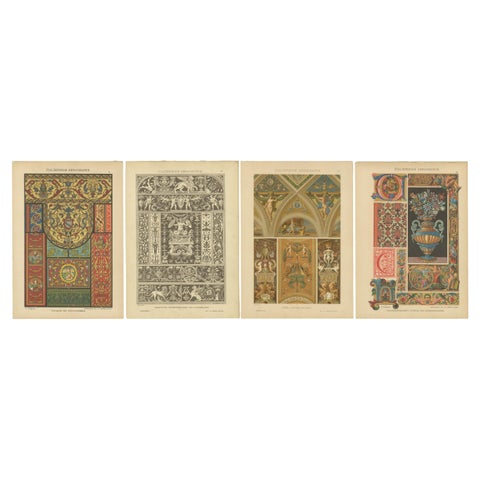
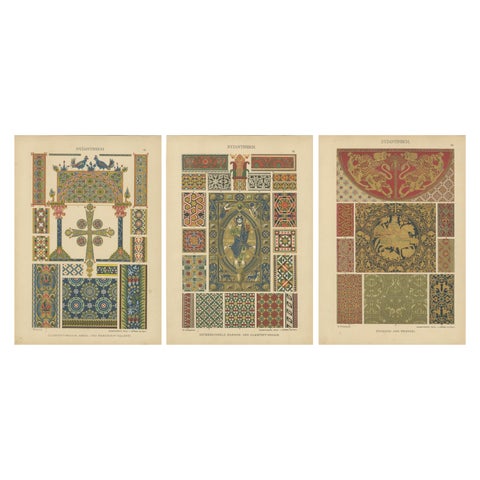
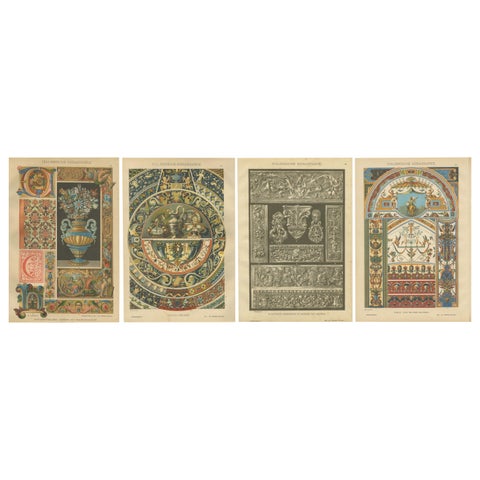
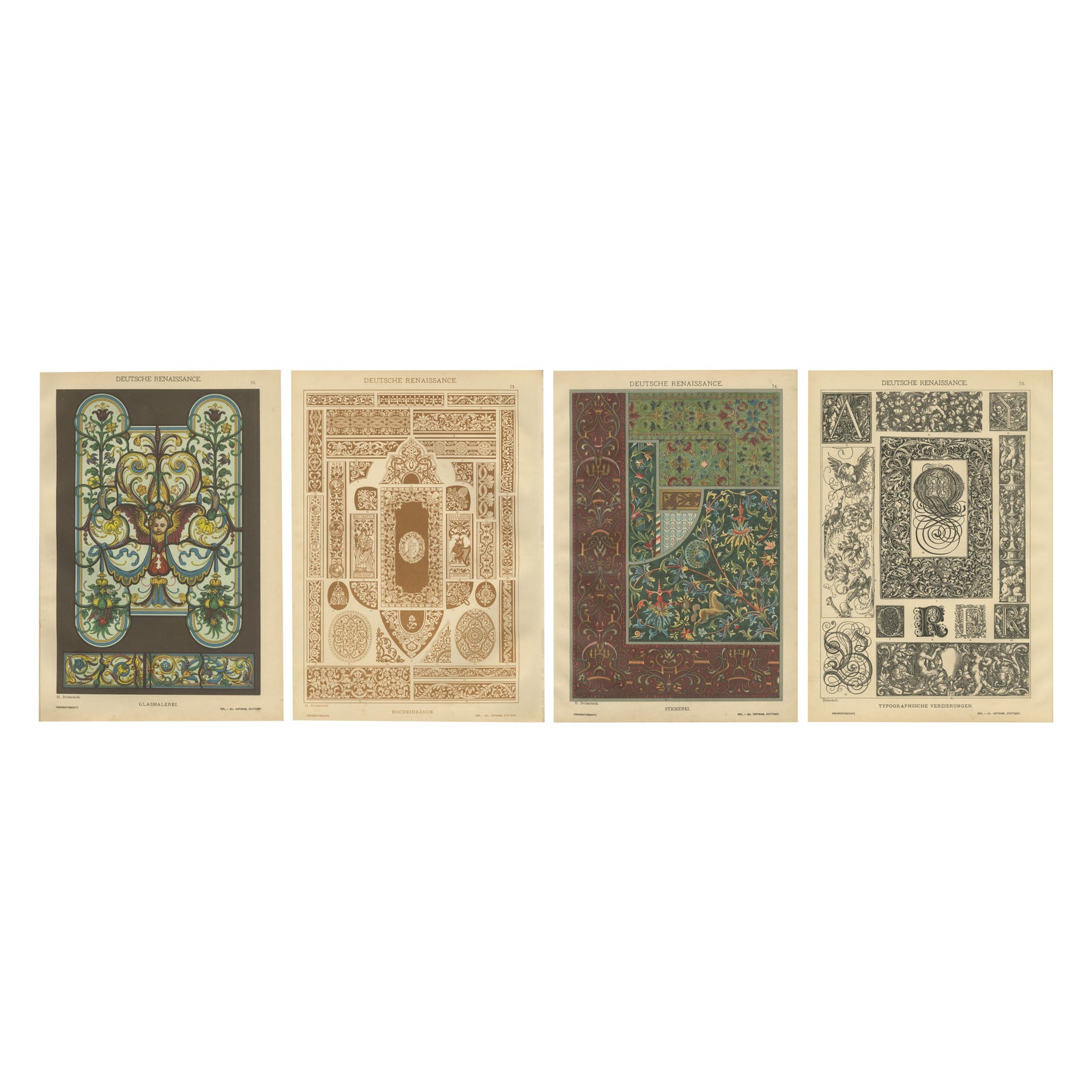
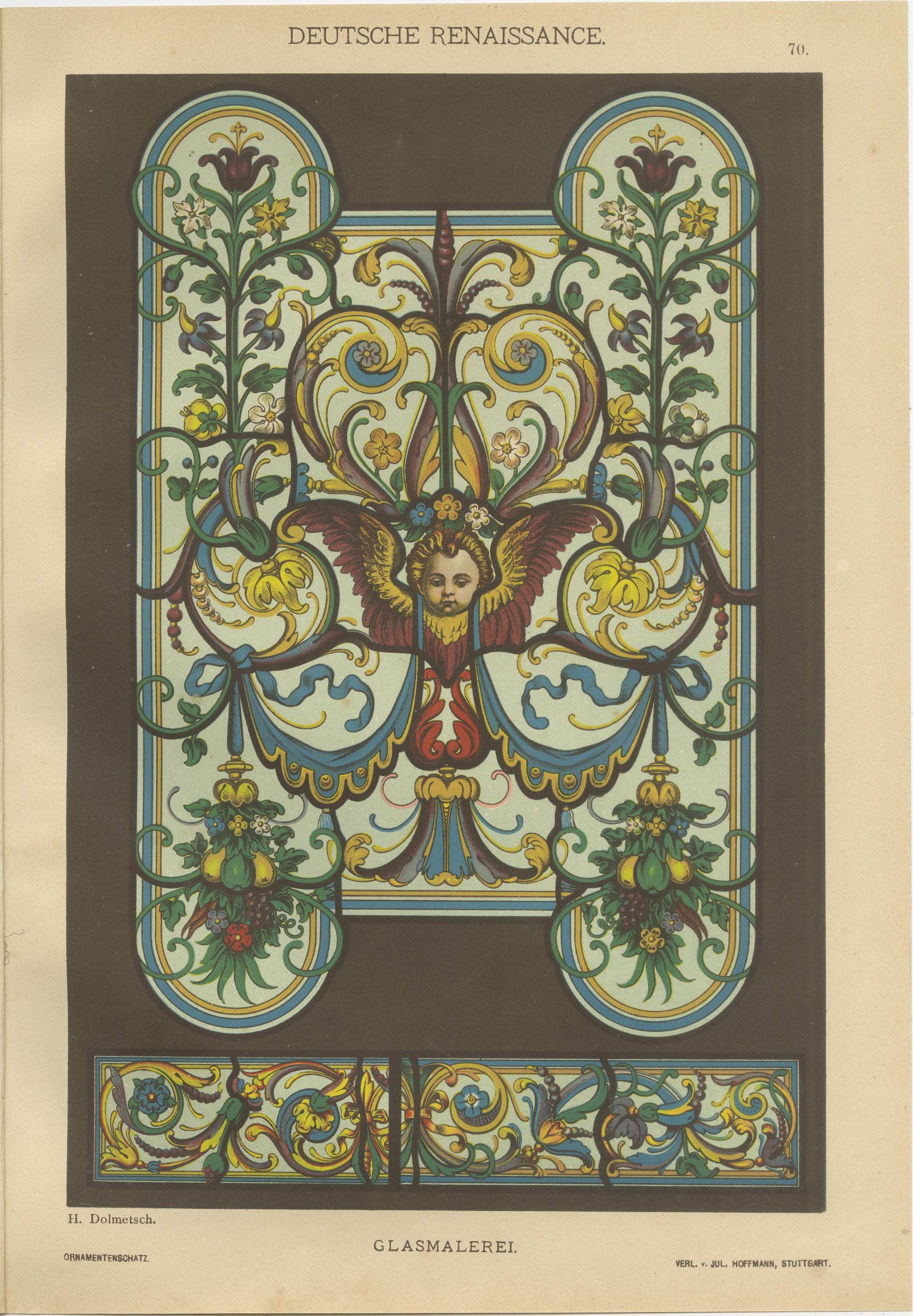
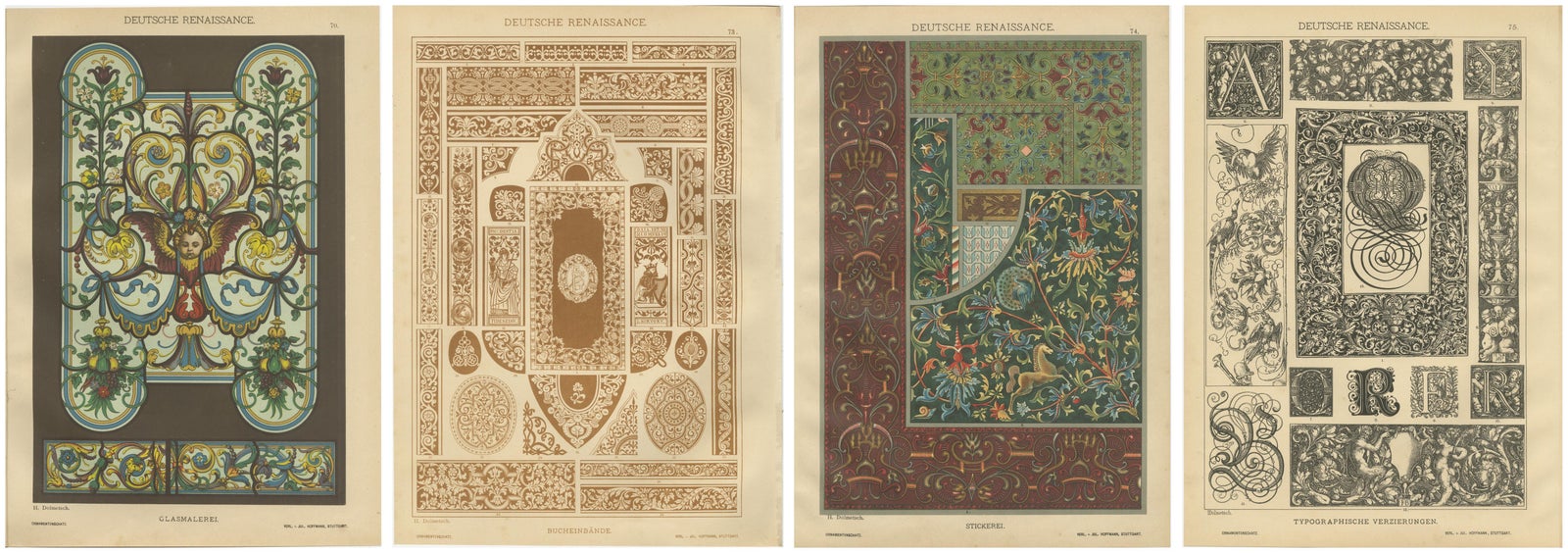
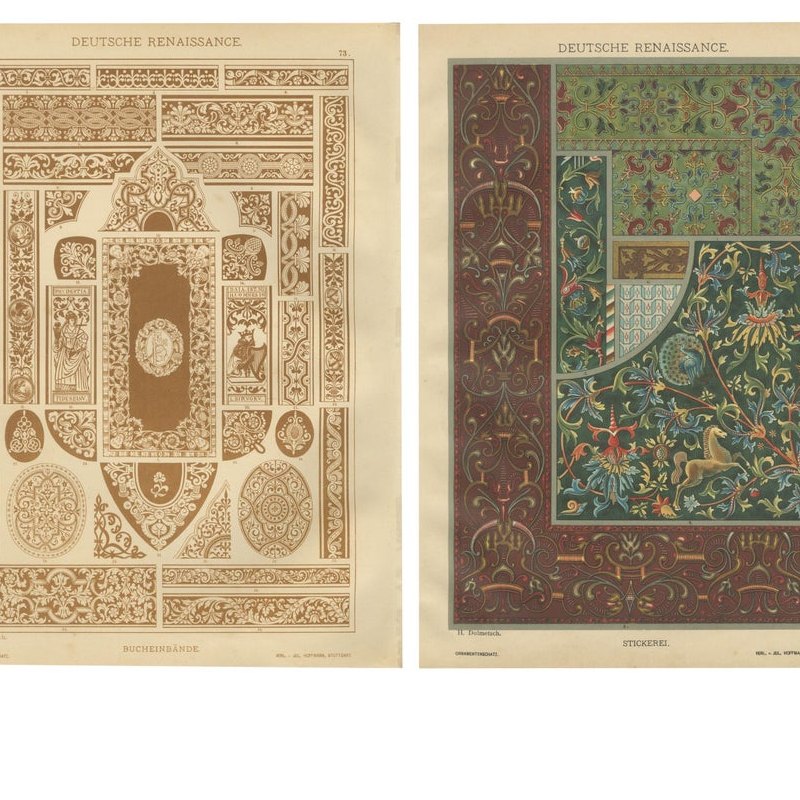
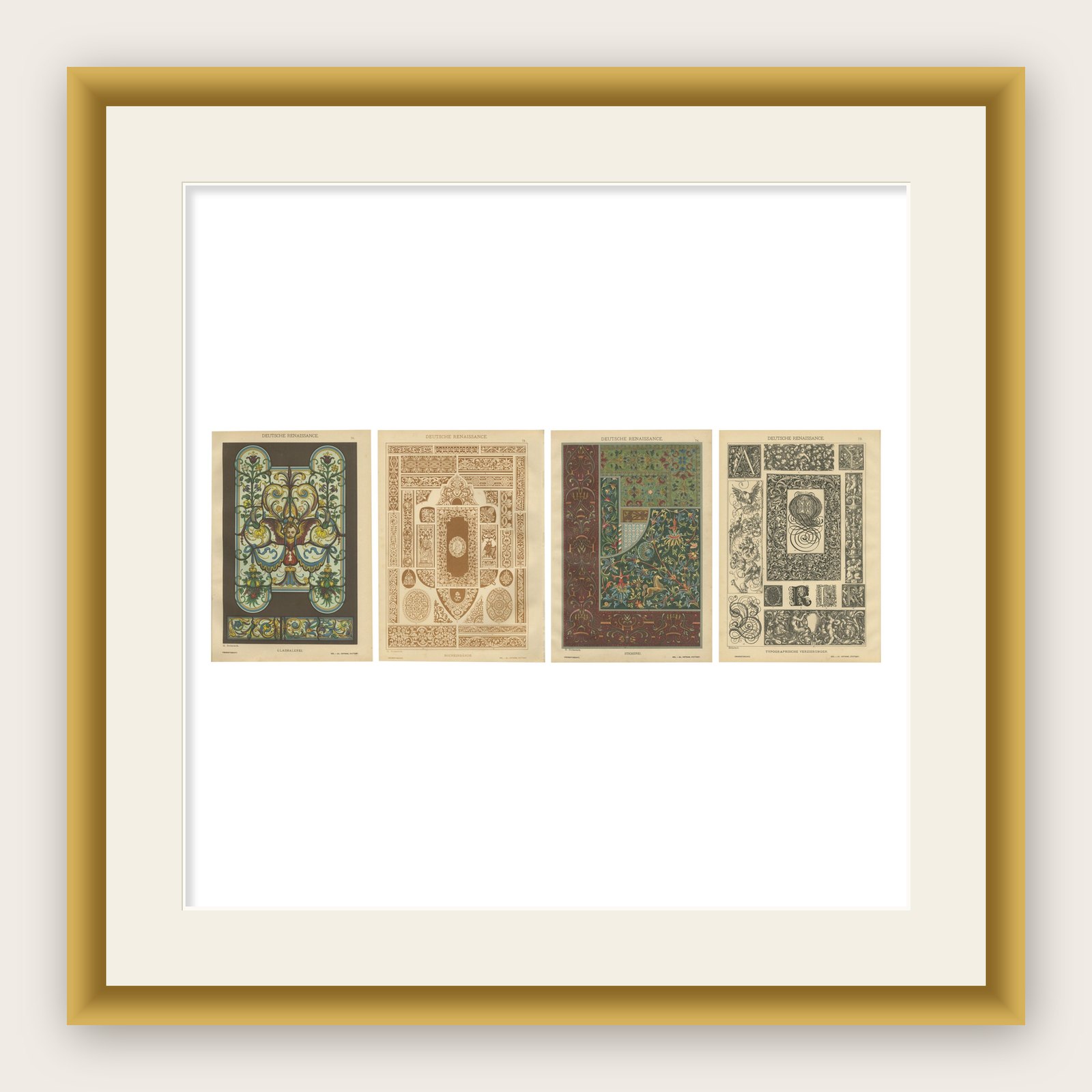
This beautiful compilation of four antique prints celebrates the diverse and richly ornamental traditions of the German Renaissance, as documented by H. Dolmetsch in his renowned design portfolio *Ornamentenschatz*, published by Jul. Hoffmann in Stuttgart in the late 19th century. Each plate represents a distinct art form from the Renaissance period in German-speaking regions, faithfully reproduced using high-quality chromolithography and intaglio techniques.
The first plate features stained glass design, or *Glasmalerei*. This vibrant composition displays symmetrical scrollwork, blossoming vines, bunches of fruit, and a central cherubic figure with golden wings. The bold outlines and radiant color palette reflect the luminous effect of Renaissance stained-glass panels seen in German cathedrals and civic buildings. The design is deeply rooted in the gothic and early renaissance visual vocabulary, balancing sacred symbolism with decorative flourish.
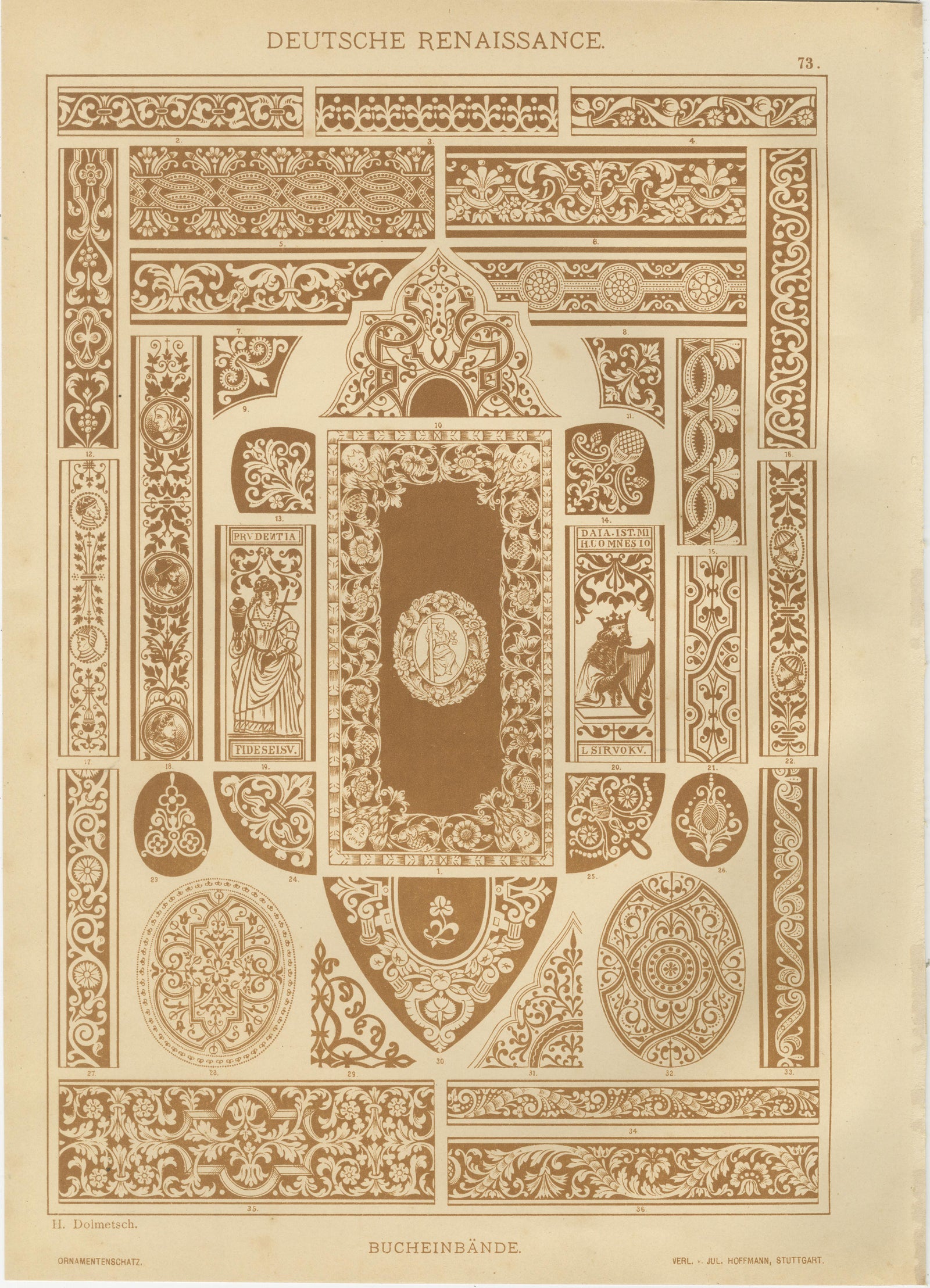
The second plate focuses on *Bucheinbände* or historical bookbindings. This sepia-toned composition presents a harmonious array of ornamental elements used on 16th-century leather-bound books. Floral borders, cartouches, symbolic medallions, and classical female figures are arranged around a central binding plate. Each design is detailed with exquisite precision, reflecting the reverence for books as both literary and aesthetic treasures during the German Renaissance.
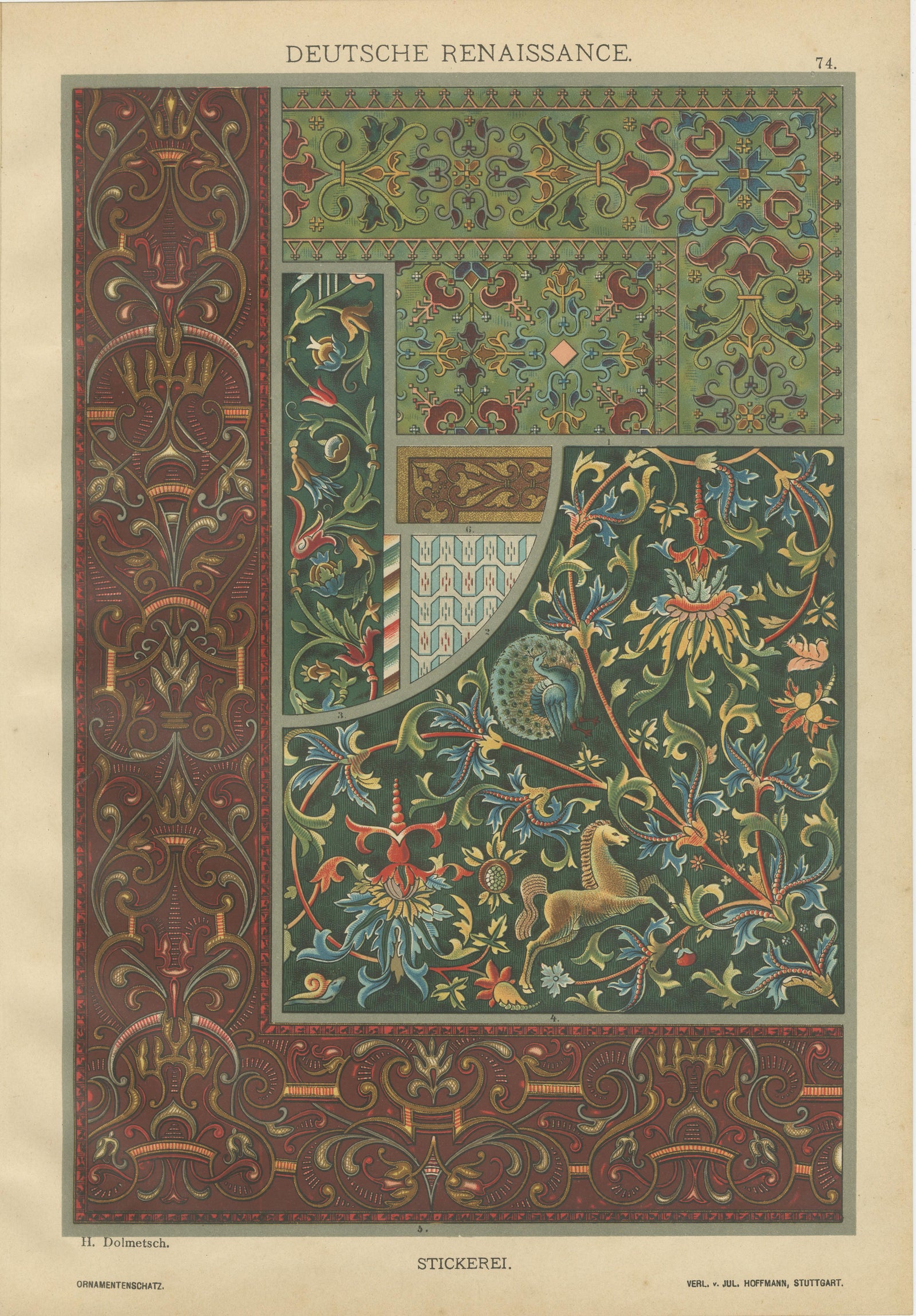
The third plate is dedicated to *Stickerei*, or embroidery. Rendered in rich reds, greens, blues, and gold, it illustrates textile patterns filled with stylized florals, mythical animals, and heraldic symbols. These motifs were typically used for wall hangings, ceremonial robes, or ecclesiastical vestments. The layout blends fantastical narrative with geometric elegance, highlighting the German tradition of needlework as a sophisticated art form.
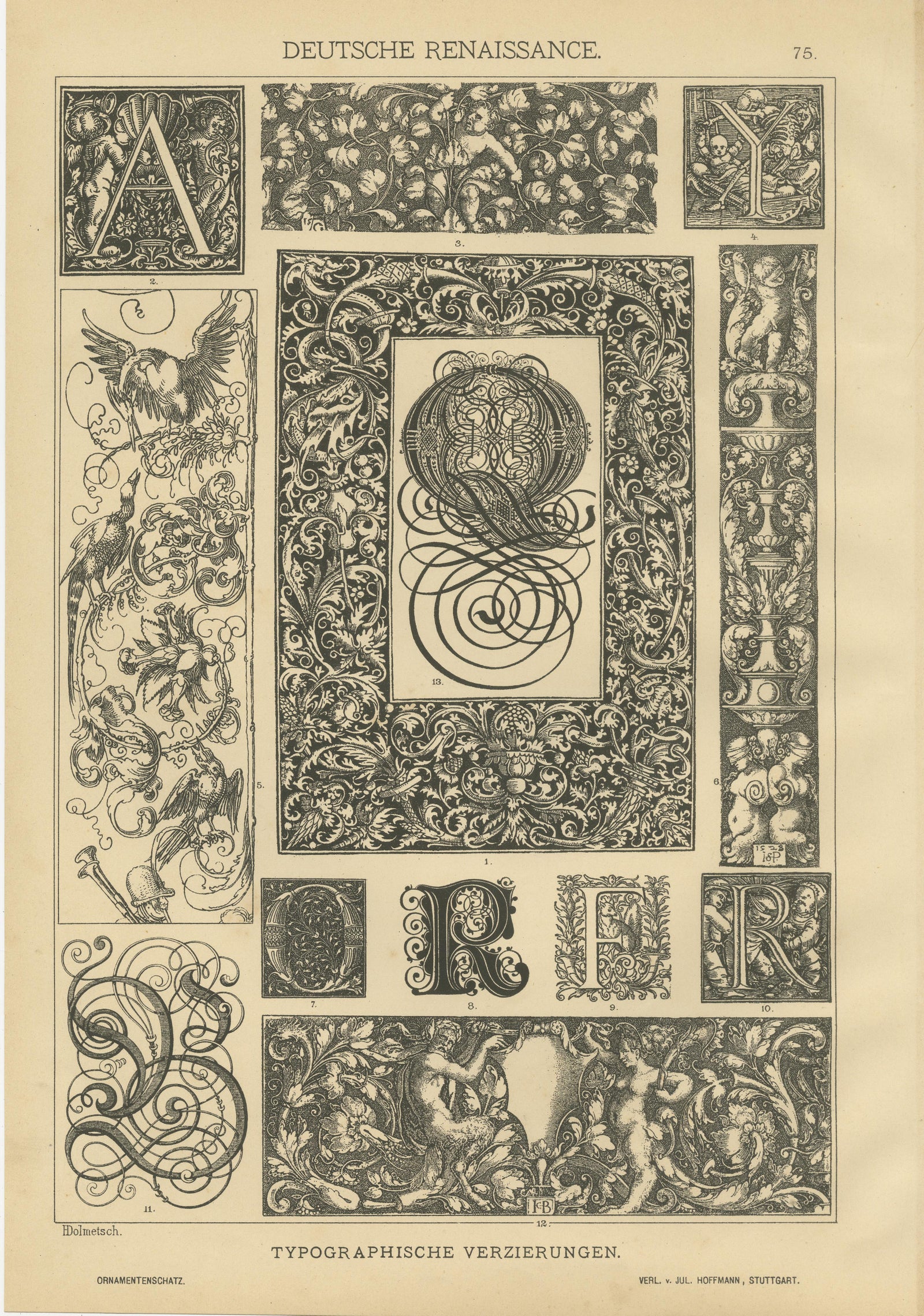
The final plate showcases *Typographische Verzierungen* or typographical ornament. It features calligraphic initials, decorative borders, grotesques, birds, floral scrolls, and fantastical creatures surrounding flourished type designs. These elements were used in early printed books and official documents. The dense, black-and-white compositions reflect the intricate, woodcut-based visual style of German printmaking from the 16th century, marrying legibility with lavish ornament.
H. Dolmetsch’s *Ornamentenschatz* is a monument to design history, offering not just inspiration for architects and artisans of his time, but also a rare window into past craftsmanship. These prints were intended both as archival documents and as practical templates for revival styles of the 19th century.
Condition:
The prints are in good antique condition, with strong impressions and well-preserved detail. Some light age toning or minor edge wear are present, consistent with their age, but the overall appearance remains clean and vibrant.
Framing Tips:
These prints work beautifully as a cohesive group or as standalone pieces. For best preservation, frame using acid-free backing and UV-resistant glazing. A neutral mat will highlight the design without competing with the artwork. Consider classic frames in walnut, black, or gold to echo the period's aesthetic. Whether hung in a study, hallway, or library, these pieces offer a refined historical character to any interior.