Close-ups
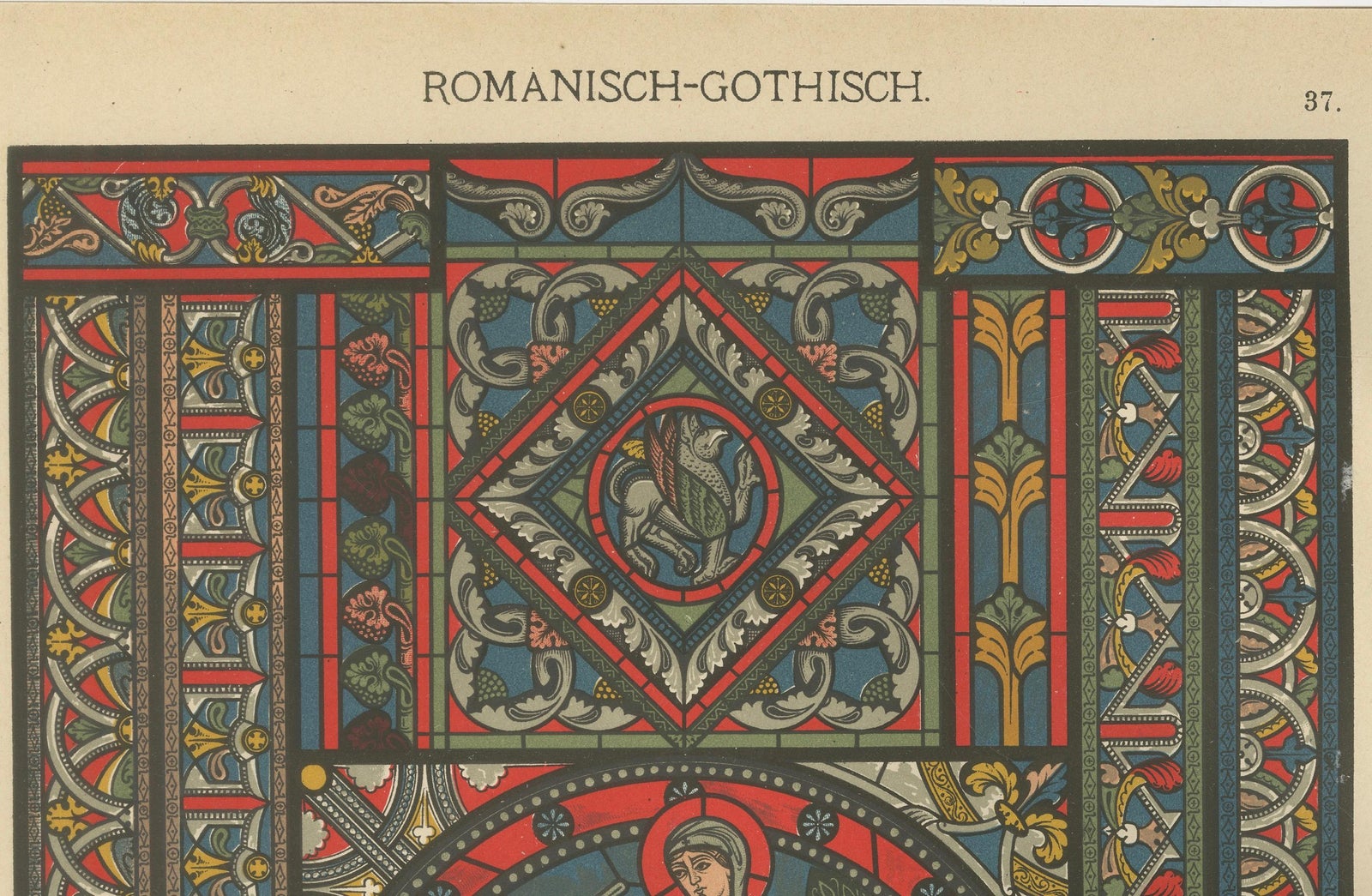
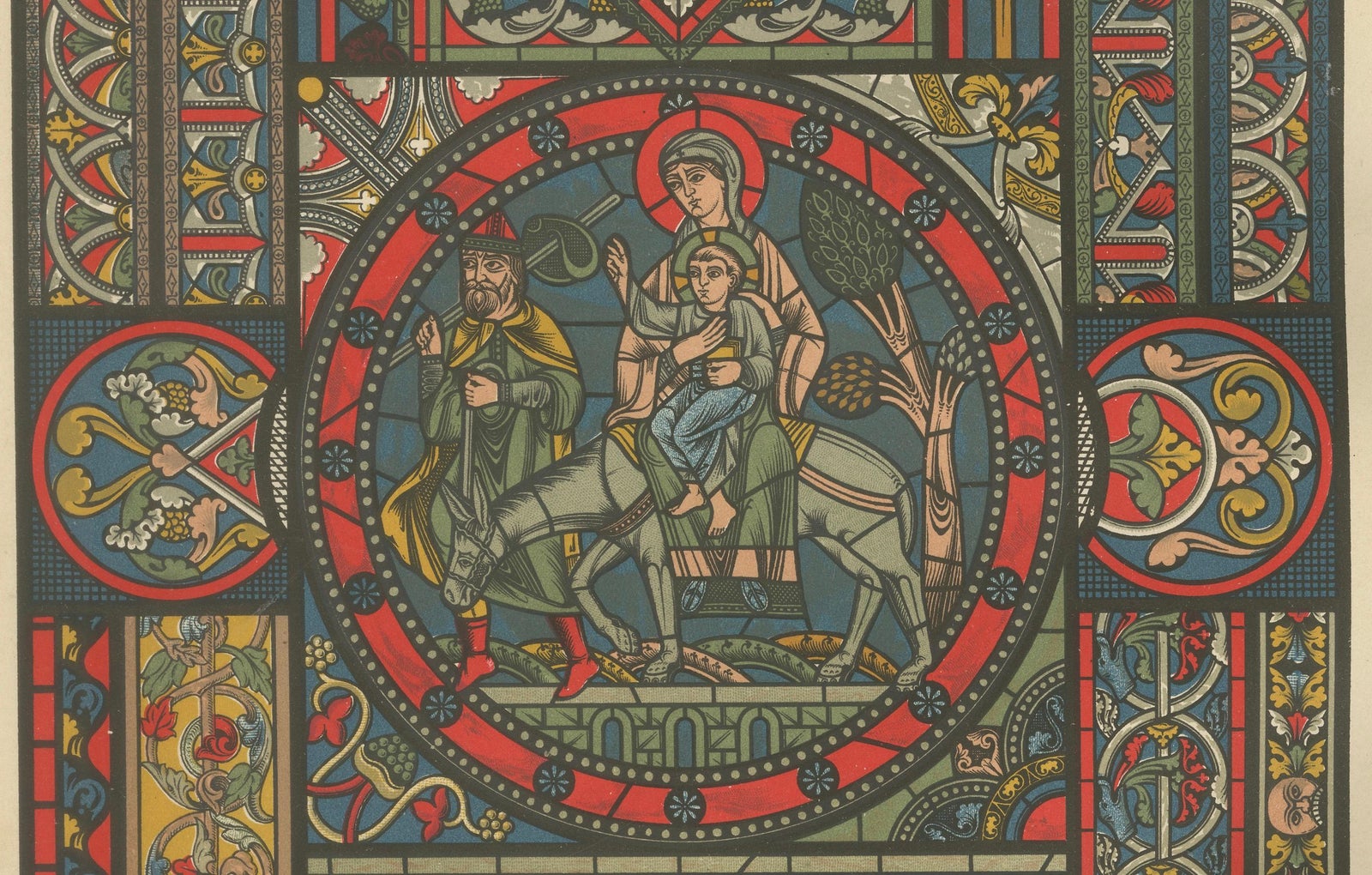
Framed and on the wall
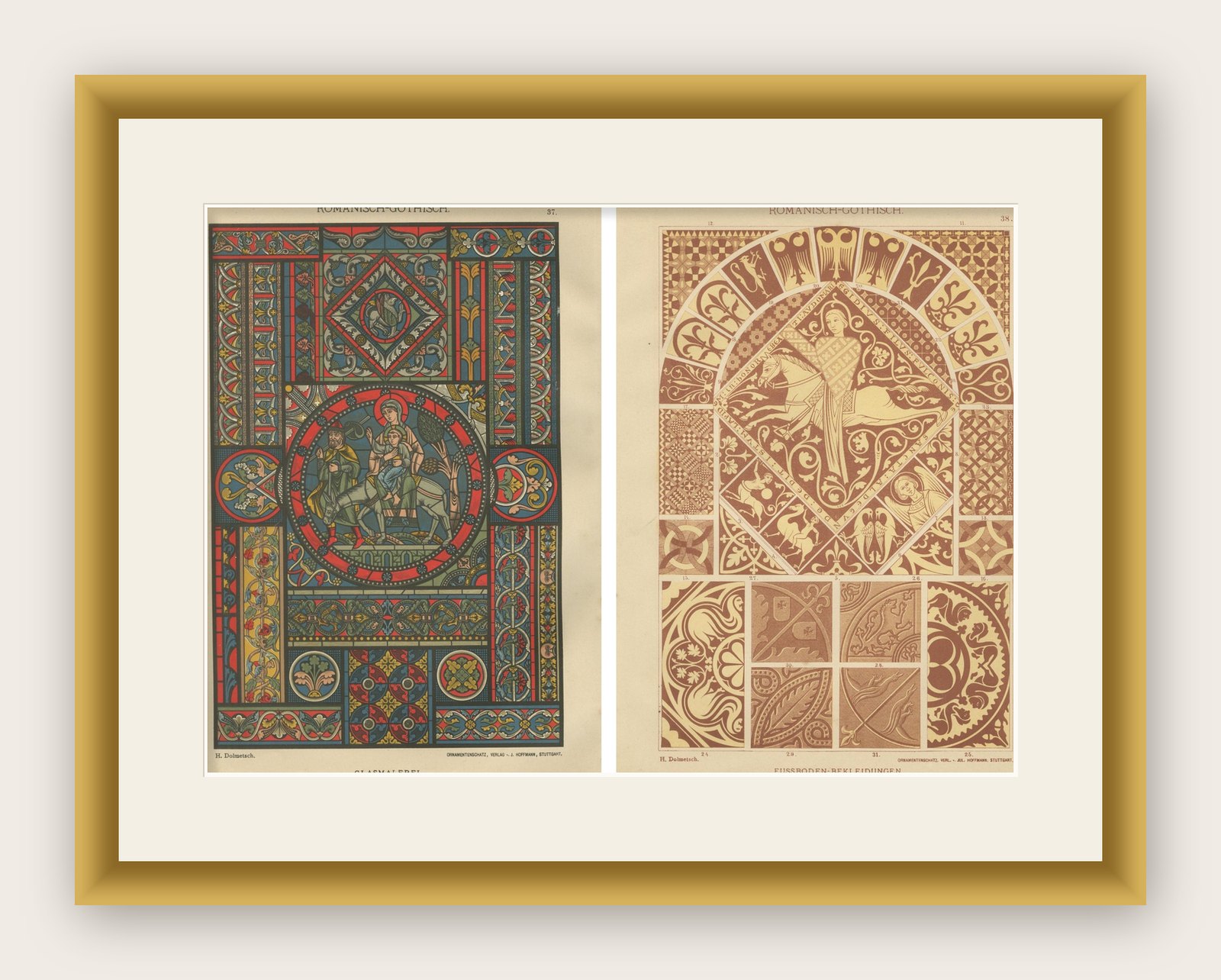
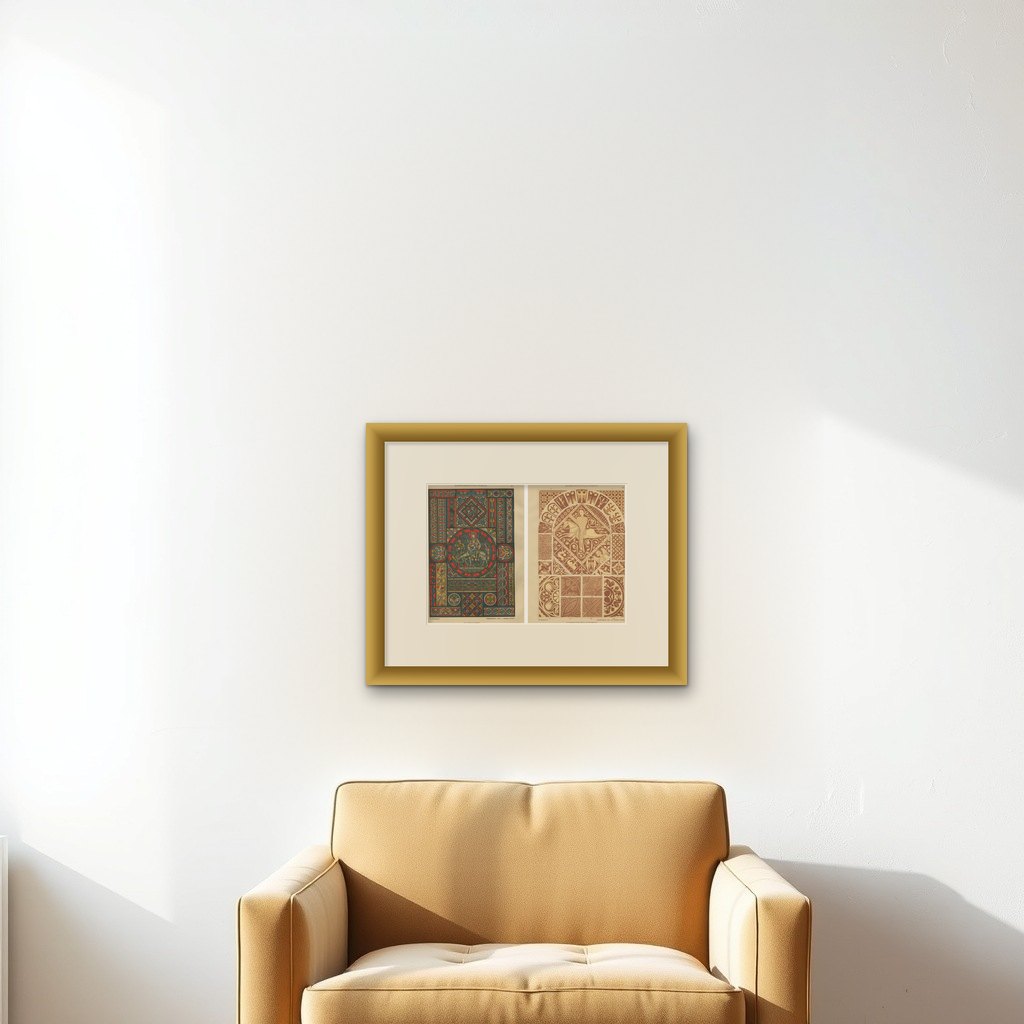

Frame and rooms are illustrations of how the print could look, drawn to its real size; it is sold unframed unless the description says otherwise.
Ornament & pattern
Romanesque-Gothic Architectural and Floor Designs by H. Dolmetsch, c.1887
€290
$325 · £245
Original print, not a reproduction
Ships worldwide from the Netherlands, flat, insured and tracked. 14-day returns. To buy, use Ask a question (info@antiquearchitectureprints.com) and we will reserve it for you.
- Date
- 1887
- Sheet size
- 13 × 9.3 in (33 × 23.5 cm)
- Condition
- Good. Both prints are in good condition considering their age. The paper is stable and retains strong color saturation. Minor signs of age such as faint margin toning and occasional foxing may be present but do not affect the visual impact.
- Collection
- Ornament & pattern
- Era
- 1850 and after, The age of revivals
- Stock no.
- f_44907782
Romanesque-Gothic Architectural and Floor Designs by H. Dolmetsch, c.1880
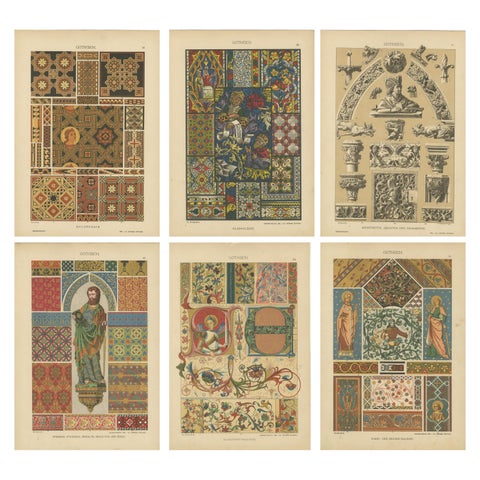
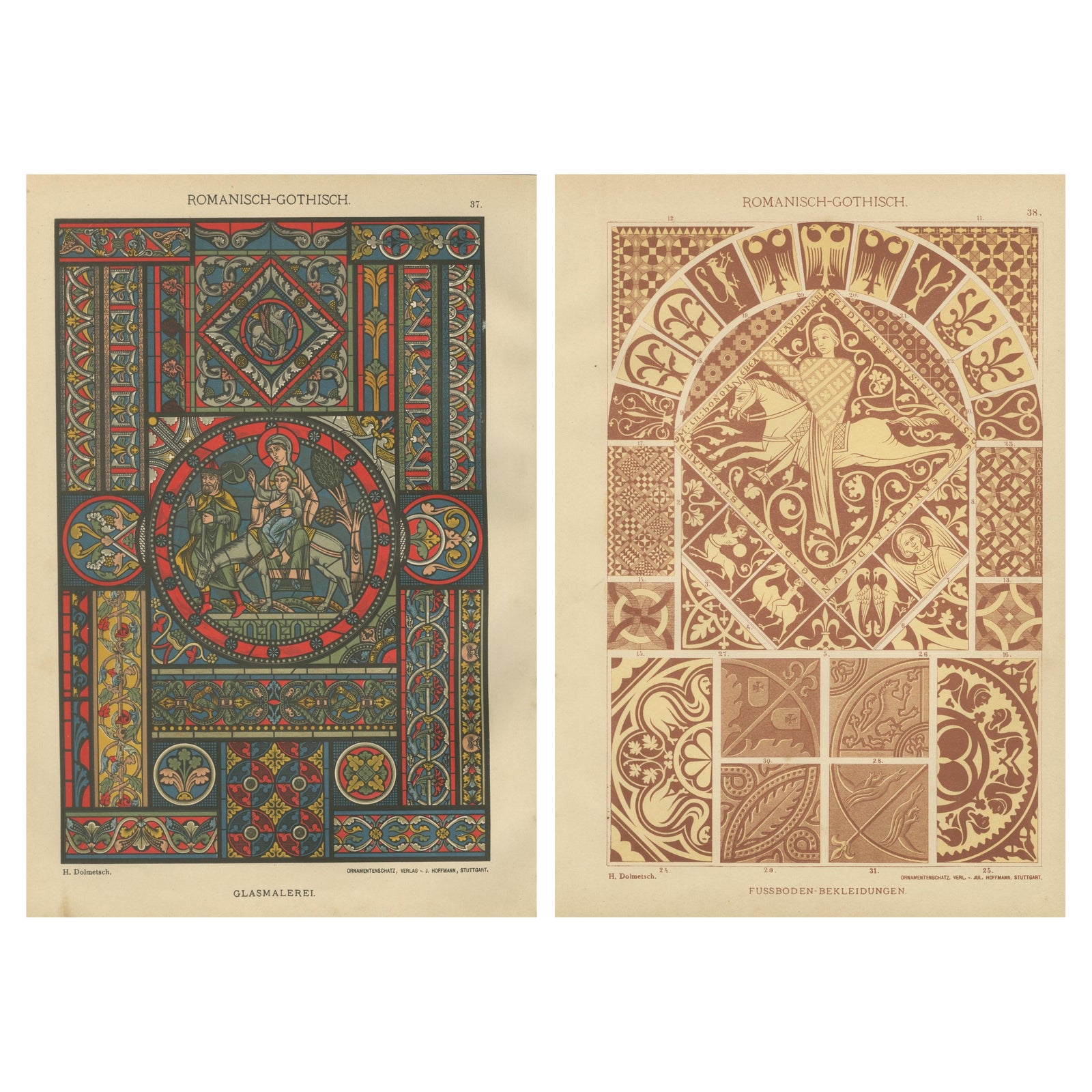
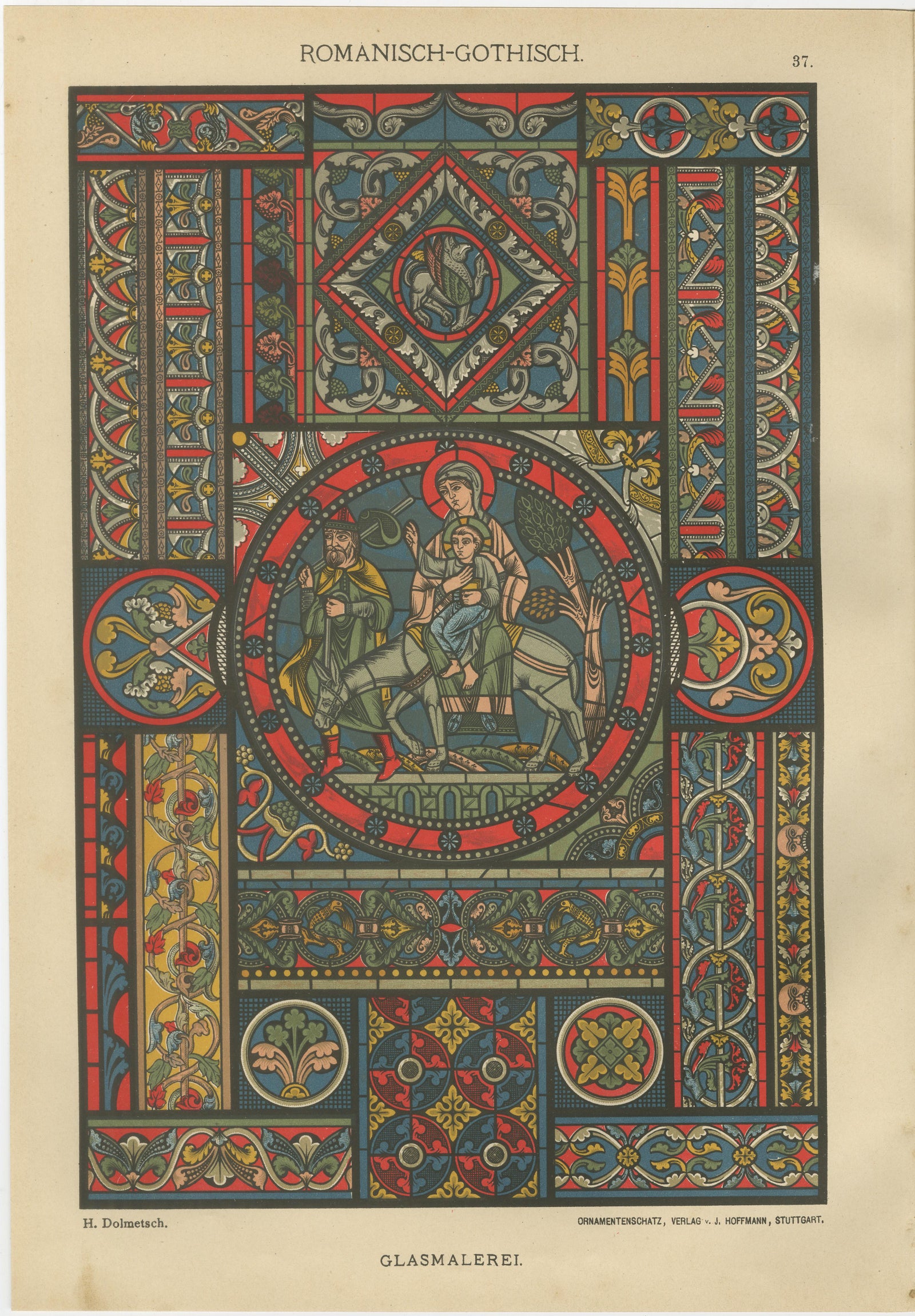
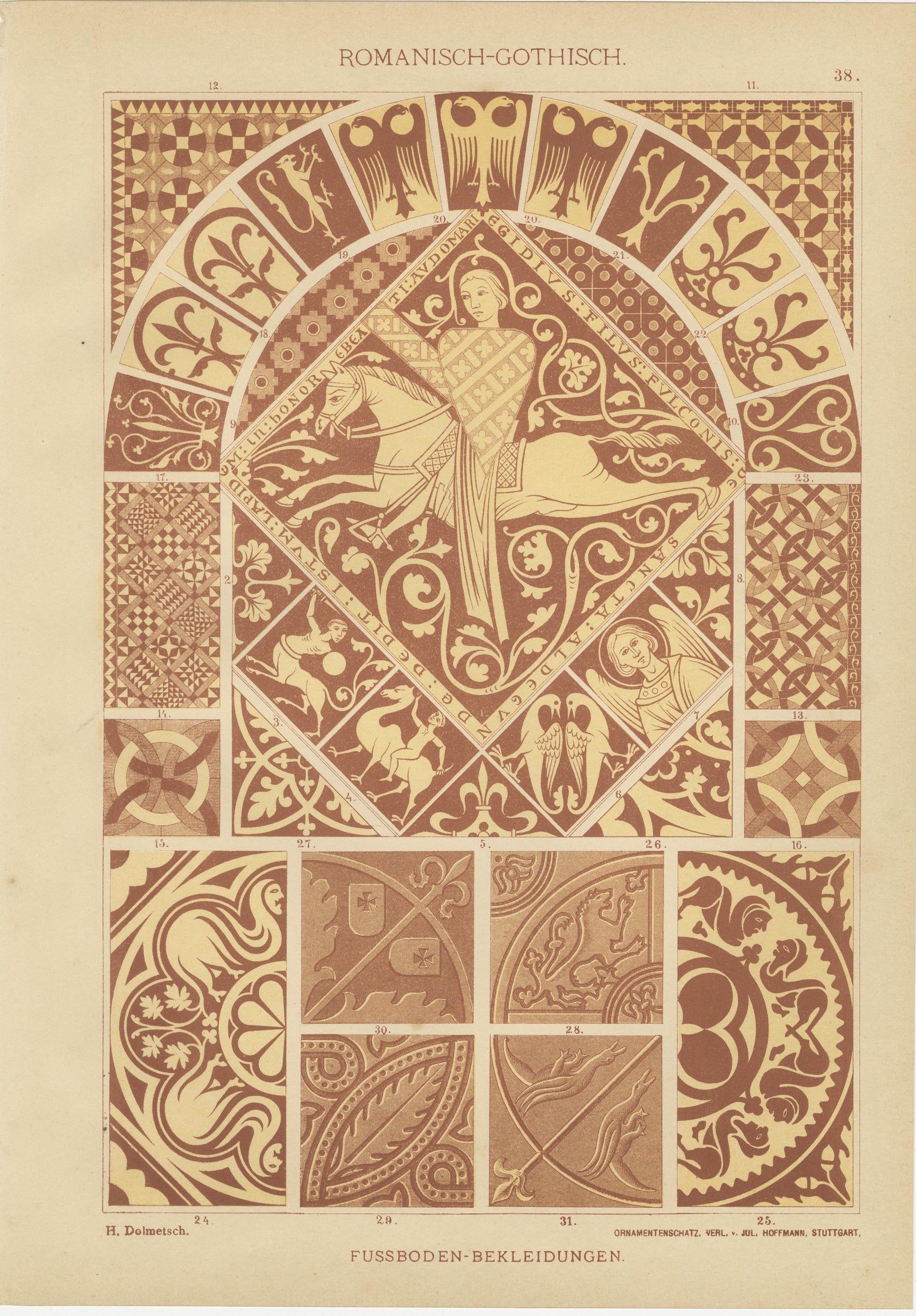
This rare matched pair of original chromolithographs features intricate Romanesque and Gothic designs by German artist and ornament historian H. Dolmetsch, published circa 1880 by Julius Hoffmann in Stuttgart. These works are part of the influential decorative arts series *Ornamentenschatz*, which compiled an extraordinary survey of global historic ornament, admired for both its scholarly depth and vivid artistic execution.
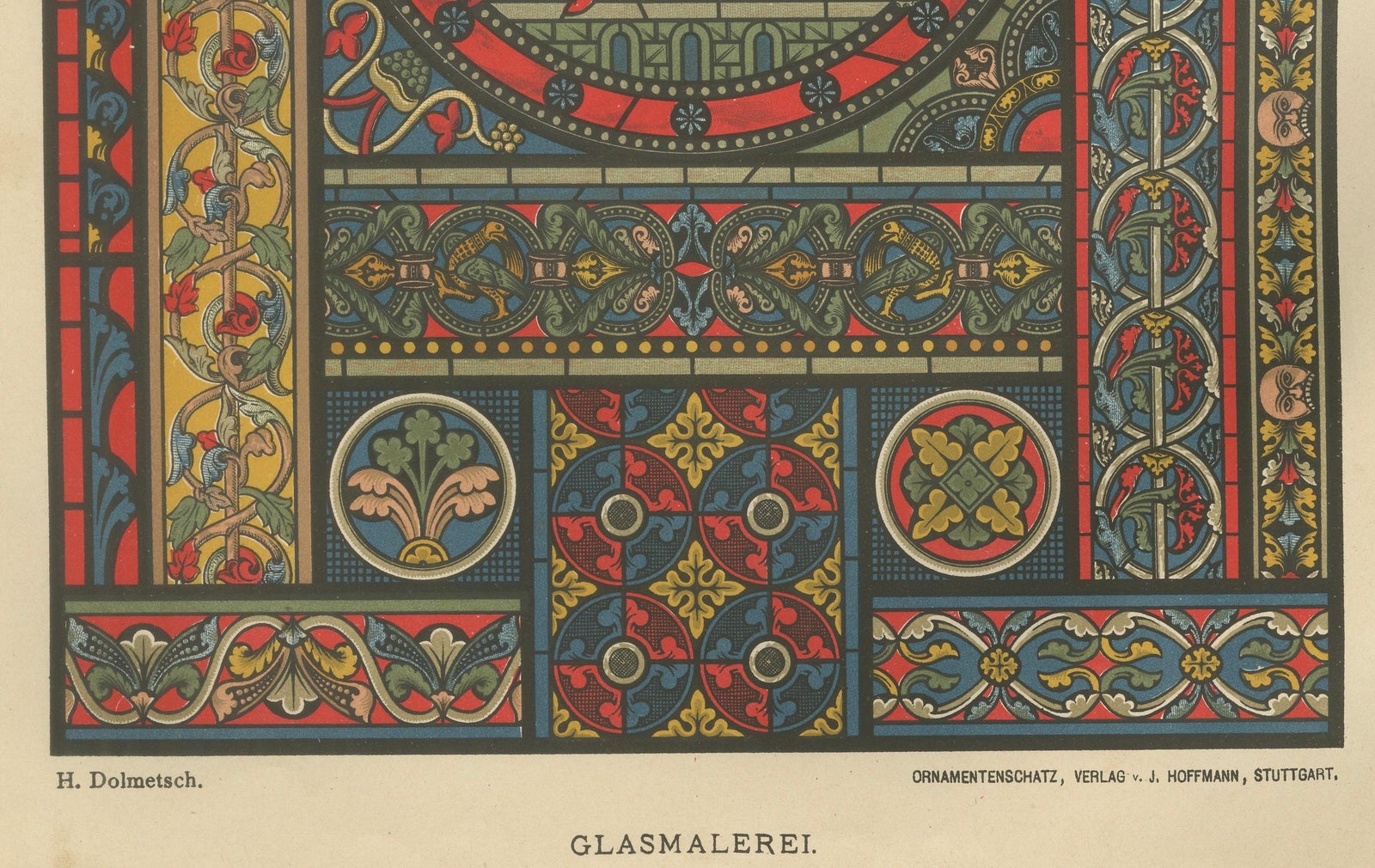
The first plate, titled Glasmalerei (Stained Glass Painting), is a spectacular tribute to medieval stained-glass design. It features a richly detailed circular scene of the Holy Family's flight into Egypt, surrounded by geometric and foliate motifs executed in vibrant reds, blues, greens, and golds. These patterns are drawn directly from historic glassworks and architectural tracery, reflecting the style and spirituality of the Romanesque and Gothic periods in Europe.
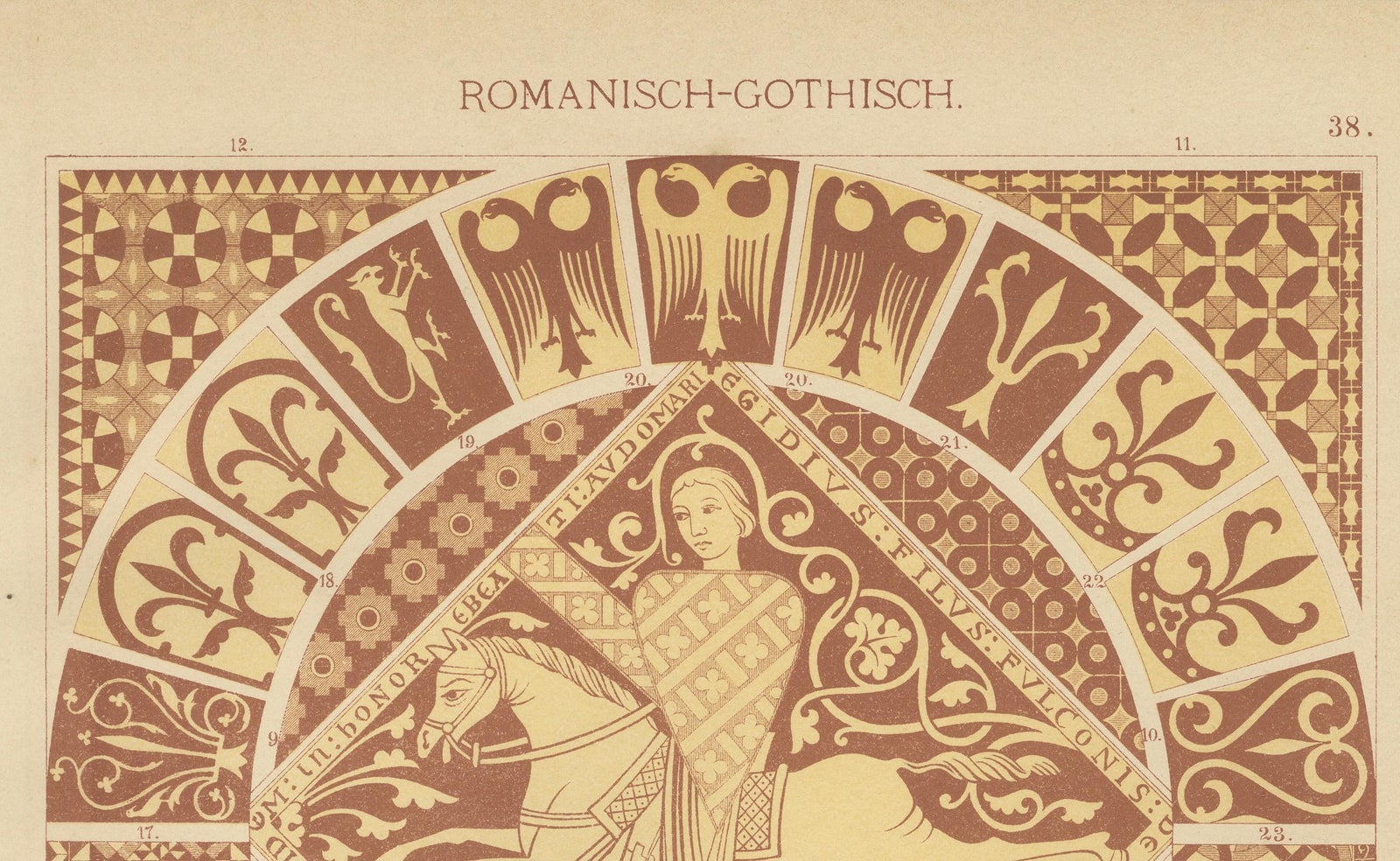
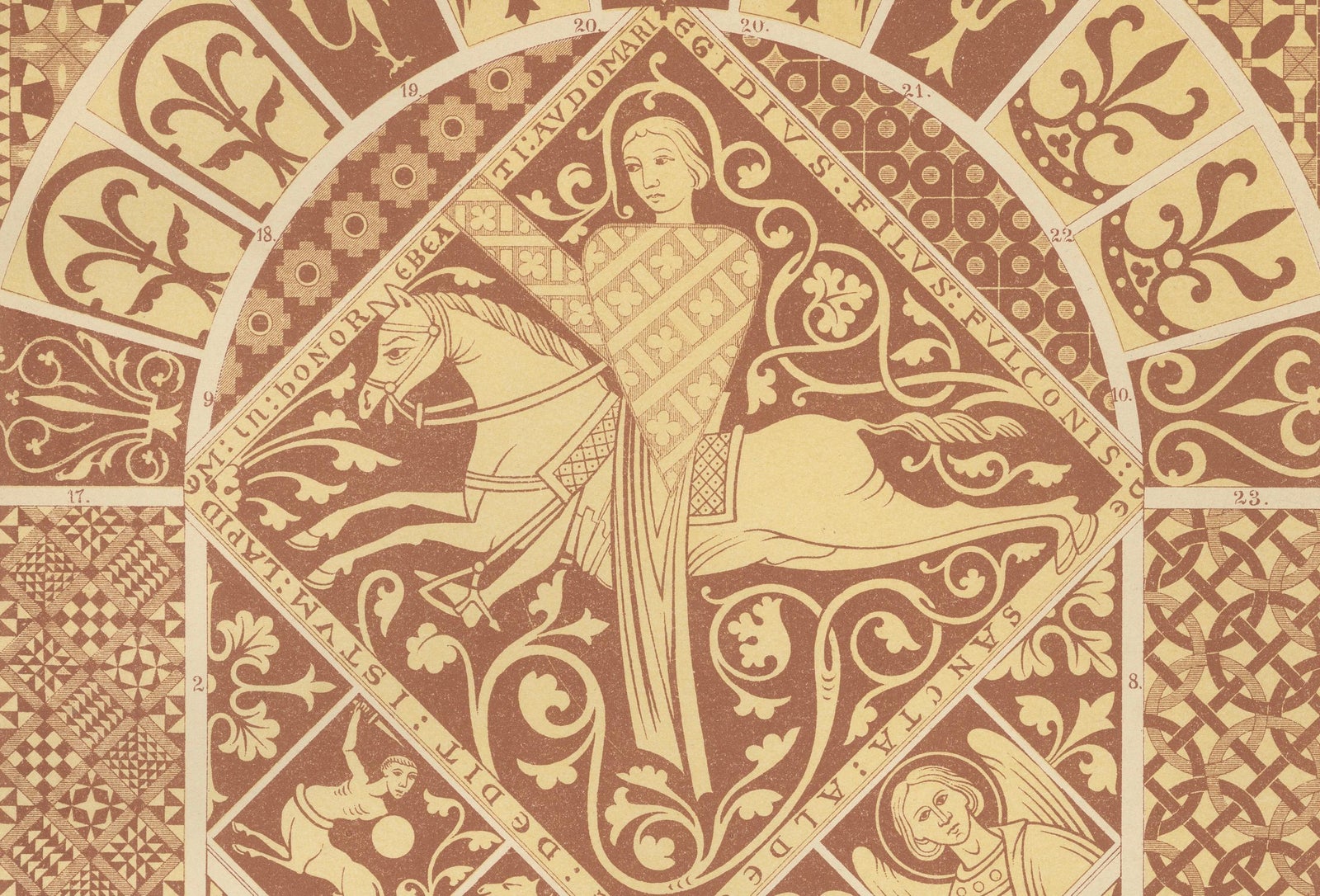
The second plate, Fussboden-Bekleidungen (Floor Coverings), presents a sophisticated composition of stylized tile and mosaic flooring designs. The central medallion shows a mounted knight surrounded by Romanesque and Gothic borders, vegetal forms, and coats of arms, all rendered in a warm terracotta and sepia palette. The plate offers a fascinating glimpse into the geometric symmetry and storytelling embedded in medieval floor art.
H. Dolmetsch was known for his meticulous studies of historical decorative styles, and these two plates exemplify his commitment to visual accuracy and design harmony. Each print captures the spiritual and ornamental richness of ecclesiastical and aristocratic European interiors from the 11th to 13th centuries.
Condition:
Both prints are in good condition considering their age. The paper is stable and retains strong color saturation. Minor signs of age such as faint margin toning and occasional foxing may be present but do not affect the visual impact. These plates have not been trimmed or mounted and retain their original plate numbering.
Framing Tips:
For presentation, we recommend float-mounting the prints within a deep-set frame using archival corners and a neutral mat to highlight their ornamental complexity. A gilded or dark wood frame works particularly well to complement the medieval palette and sacred subject matter. UV-filtering glass is advisable to preserve the vibrancy of the original chromolithographic inks.