Close-ups
Framed and on the wall
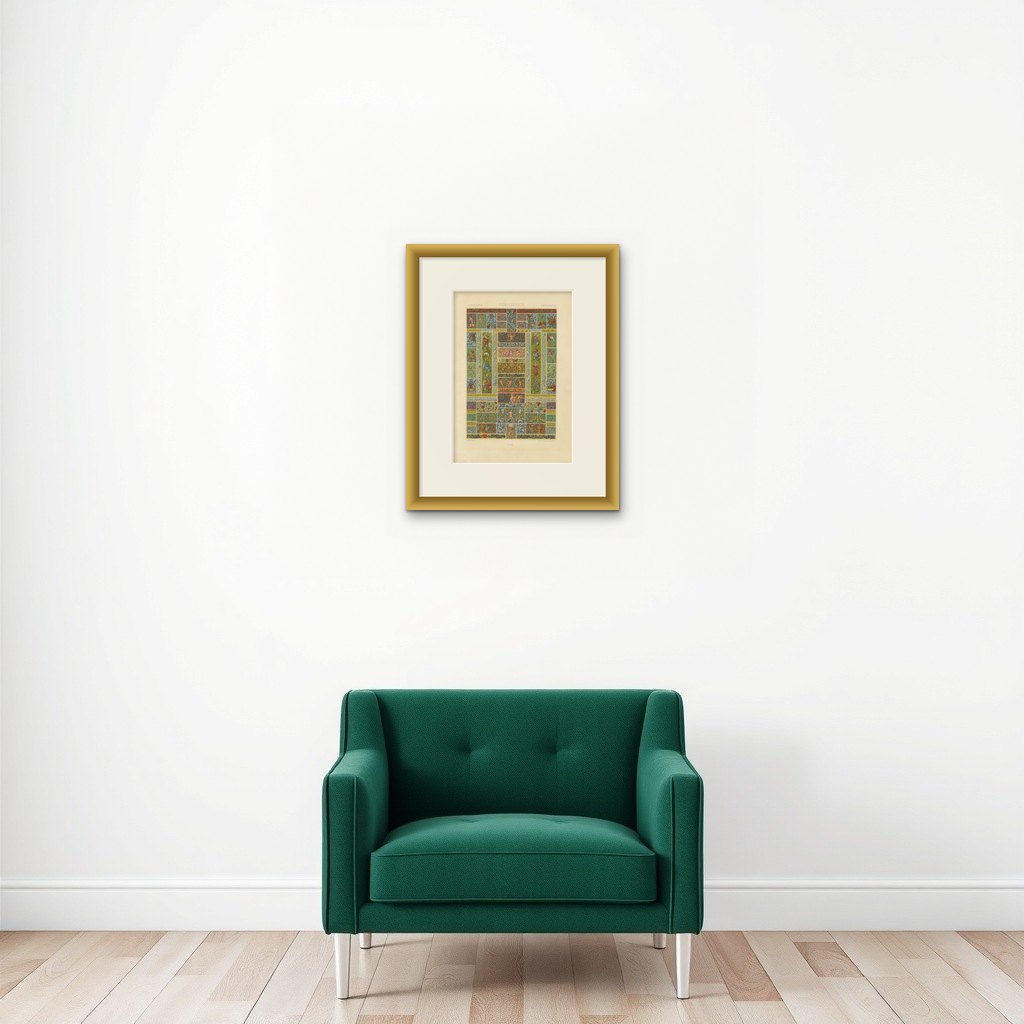

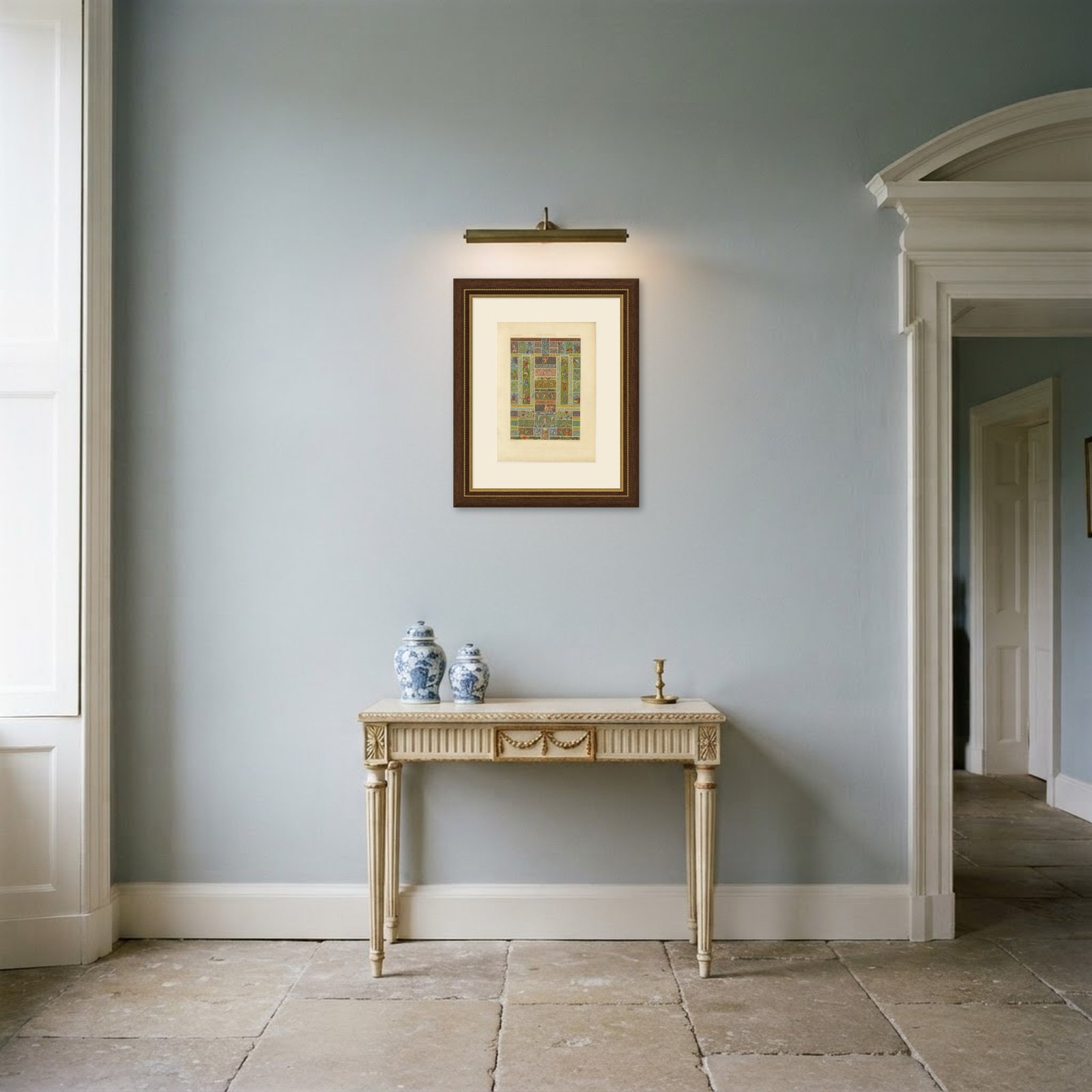
Frame and rooms are illustrations of how the print could look, drawn to its real size; it is sold unframed unless the description says otherwise.
Ornament & pattern
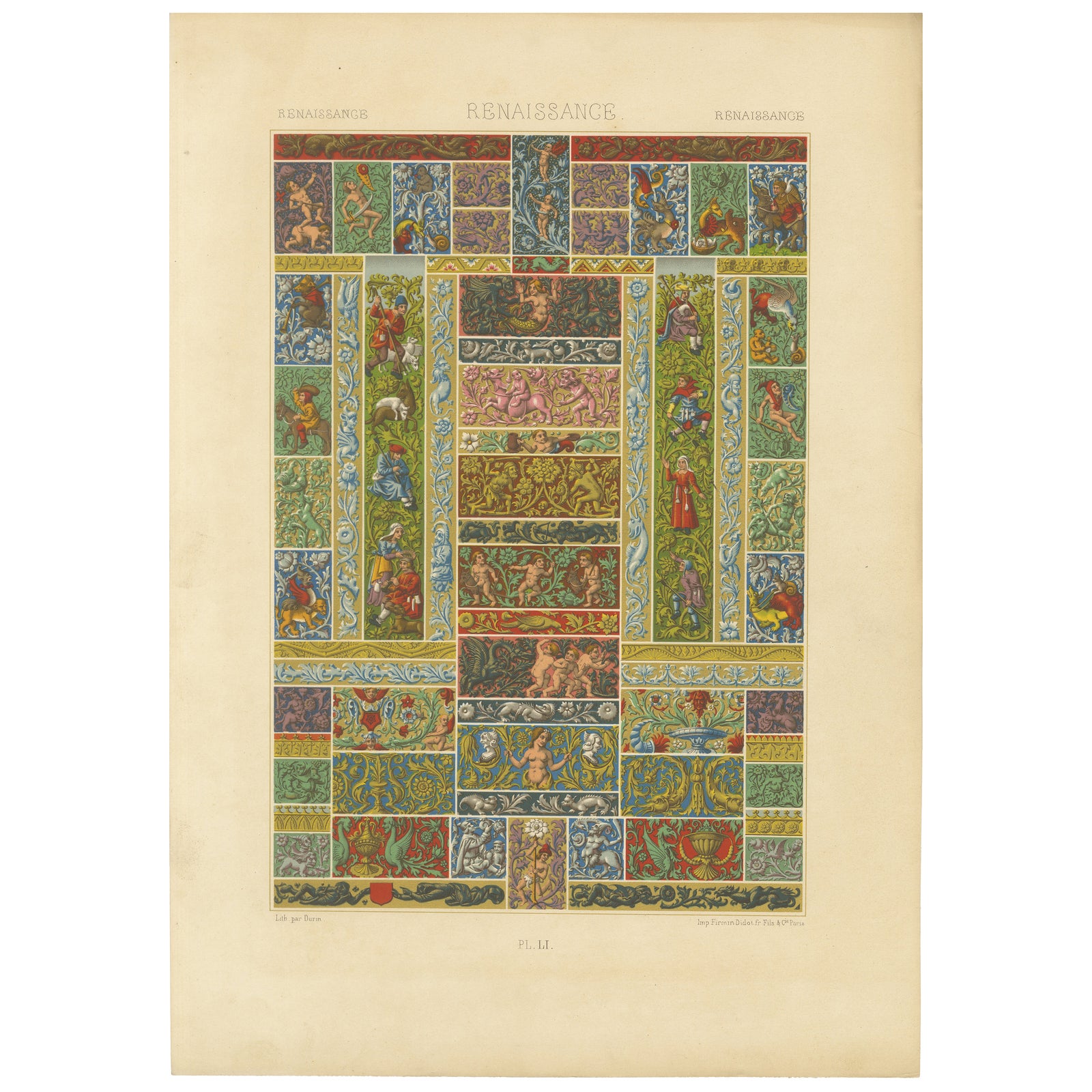
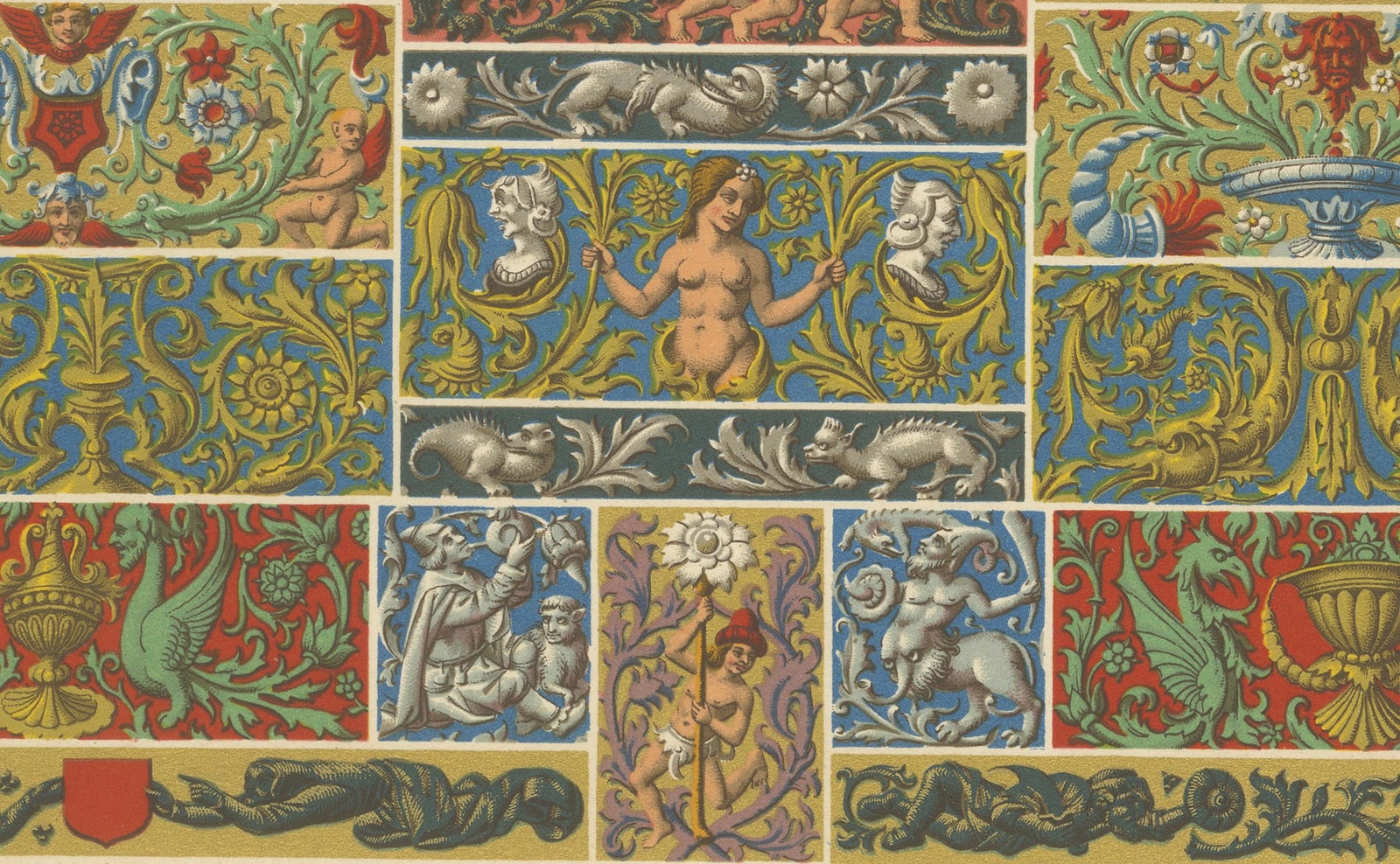
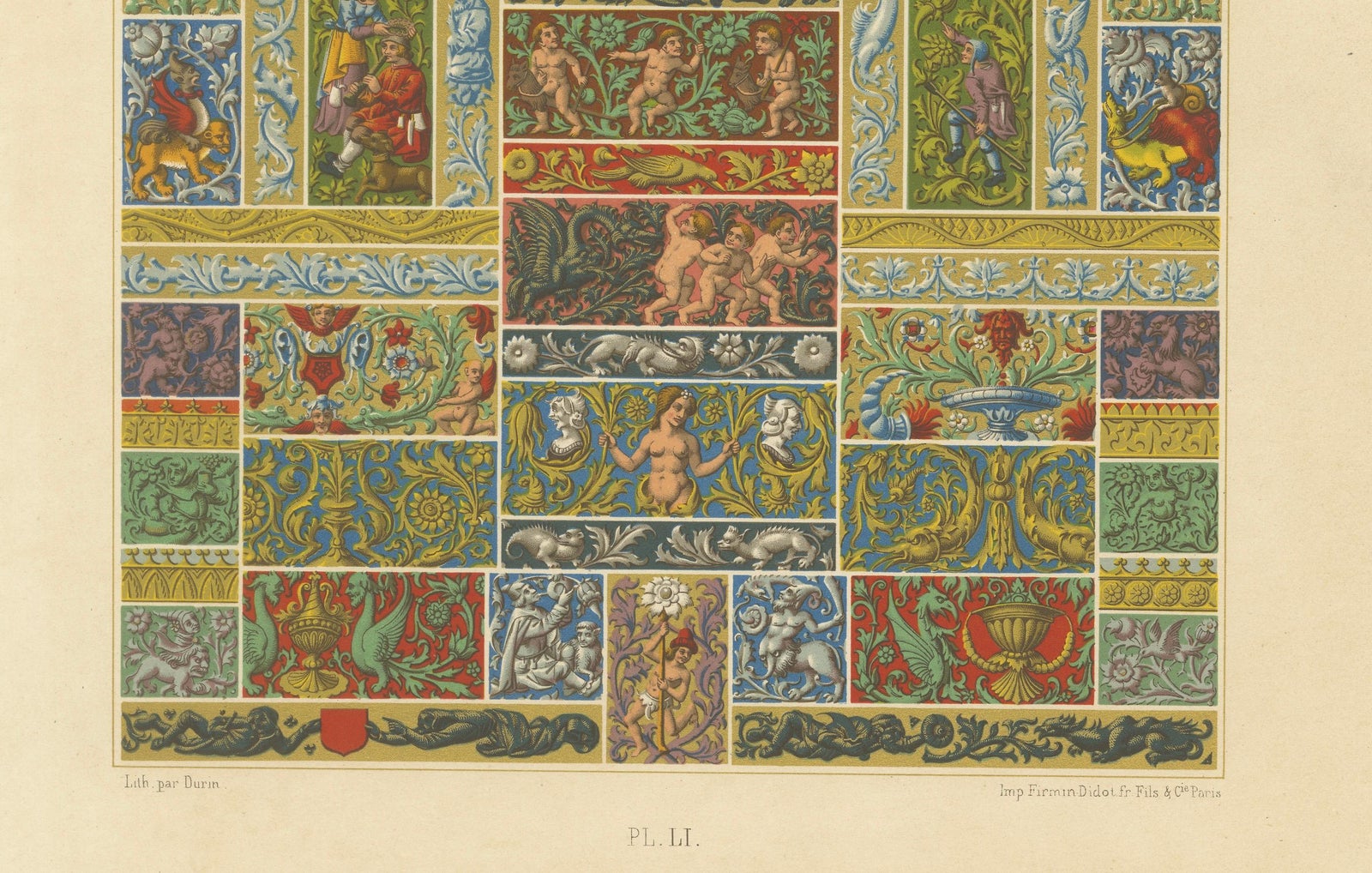
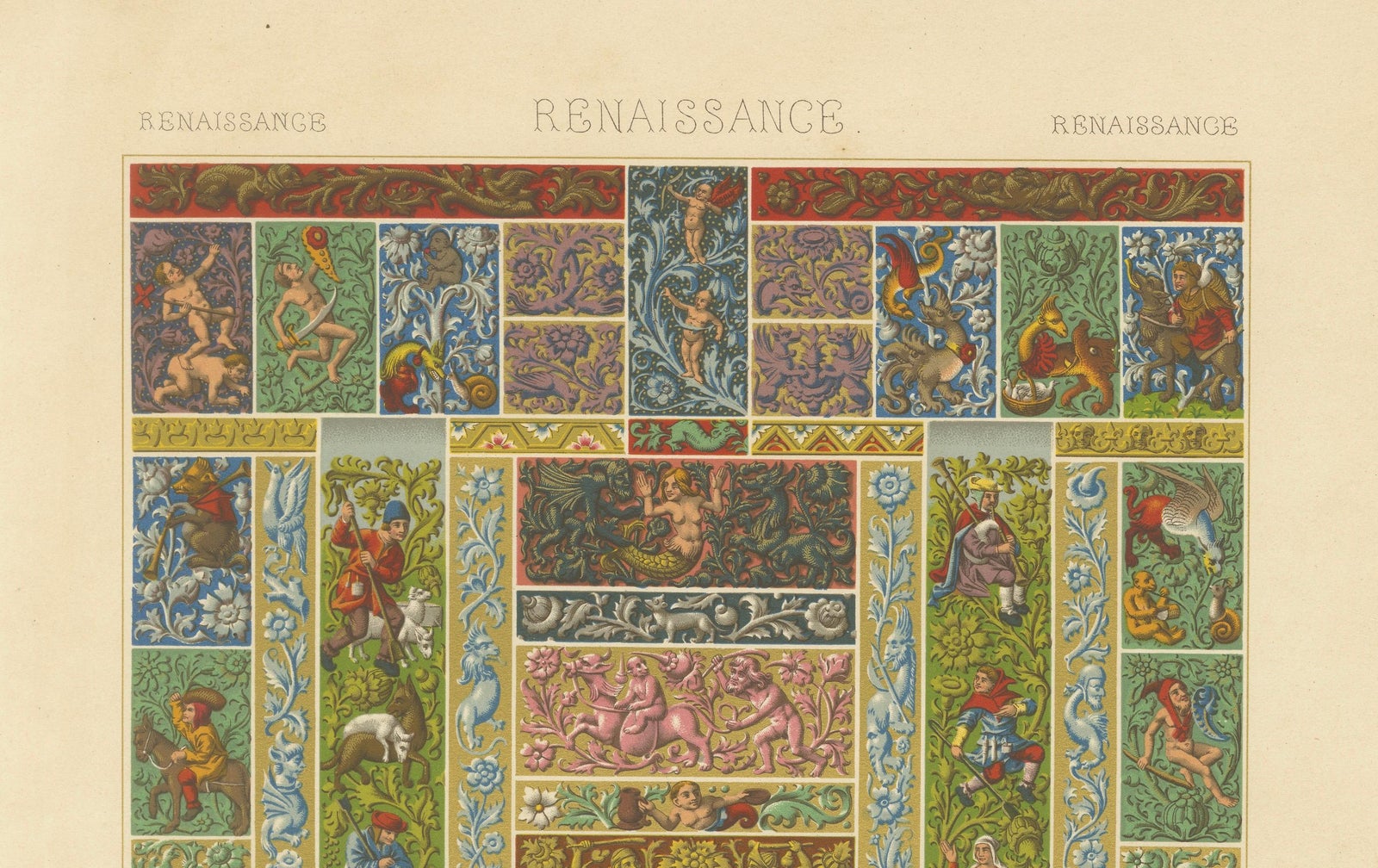
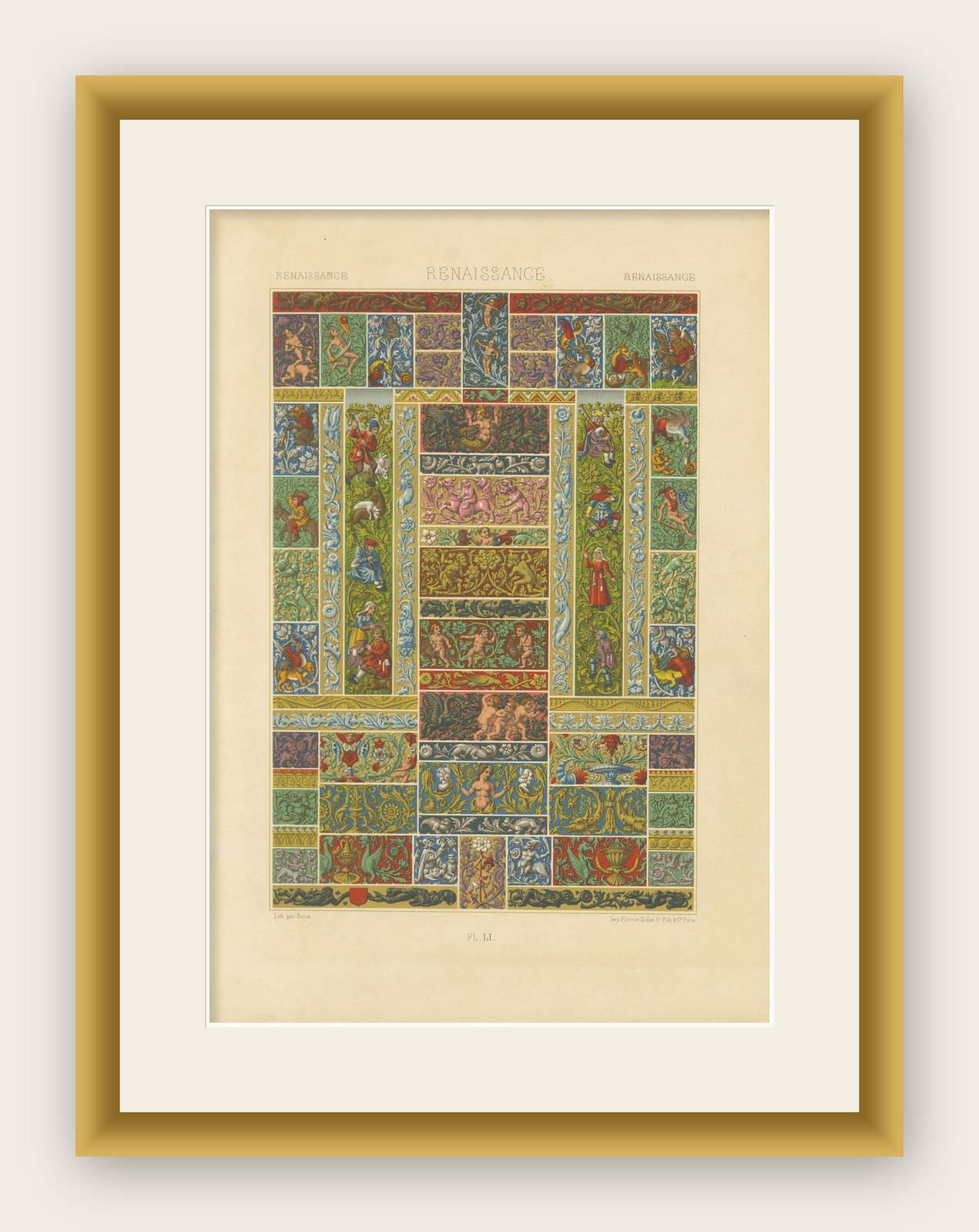
Renaissance Decorative Friezes, Grotesques, Cherubs & Heraldry, Plate LI, 1869
$240$17030% off
€154 · £130
Original print, not a reproduction
Ships worldwide from the Netherlands, flat or rolled, insured and tracked. 14-day returns.
- Date
- 1869
- Sheet size
- 15.9 × 11.3 in (40.4 × 28.8 cm)
- Condition
- Excellent. Strong impression and vibrant coloring. Minor age toning to margins, but image area clean and crisp.
- Collection
- Ornament & pattern
- Era
- 1850 and after, The age of revivals
- Stock no.
- BG-13766-51
What the condition grades mean
- Excellent
- Bright and clean, with no faults worth mentioning.
- Very good
- Only light signs of age, such as faint toning.
- Good
- Normal signs of age for a sheet of this period: toning, some foxing, small marks or neat old repairs.
- Fair
- Clear faults such as staining, tears or repairs, priced to match.
Every fault we see is written in the condition note, and the whole sheet is shown uncropped in the photos.
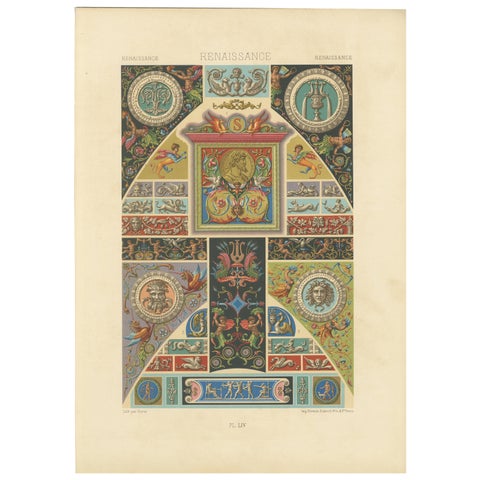
Renaissance Decorative Friezes, Grotesques, Cherubs & Heraldry, Plate LI, c.1869
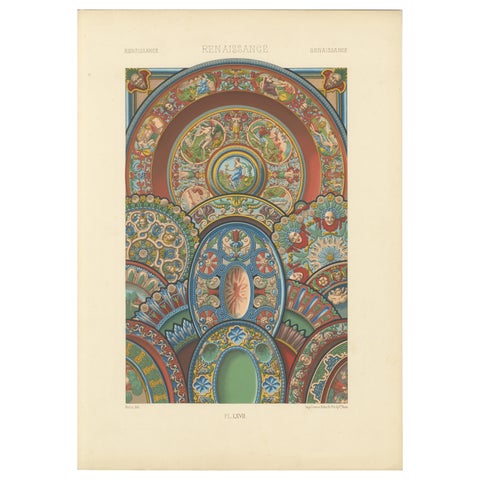
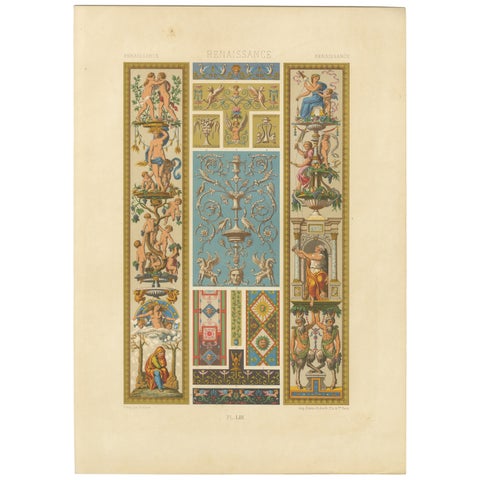
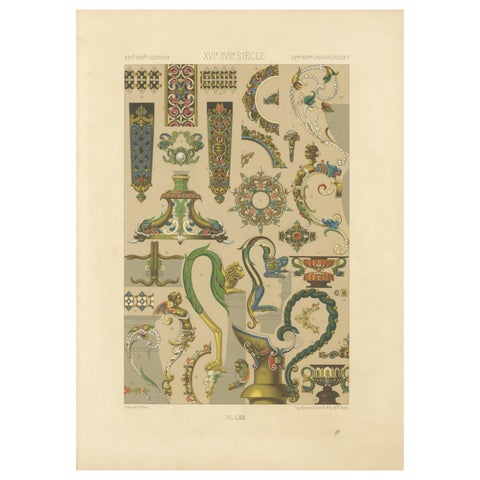
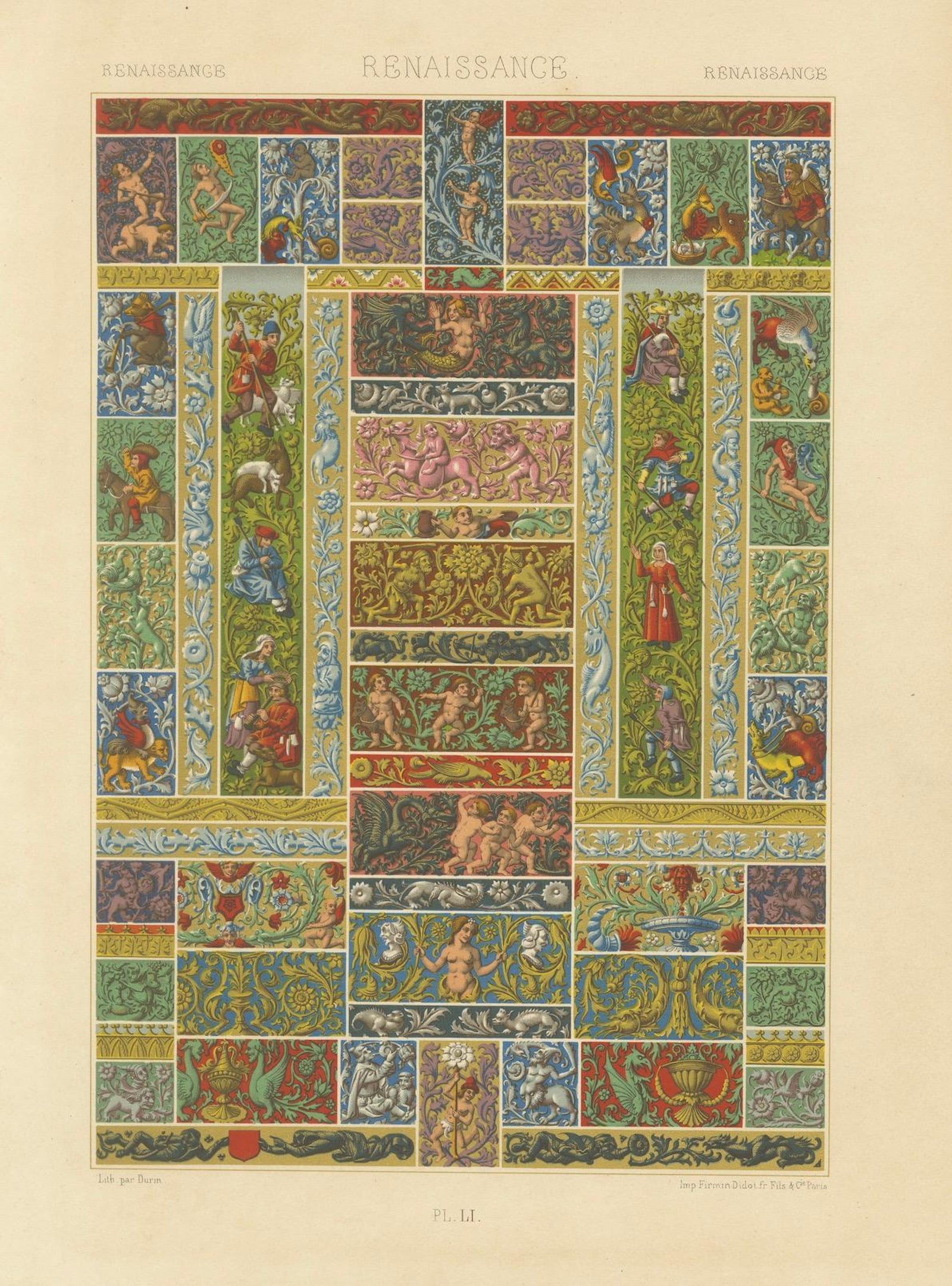
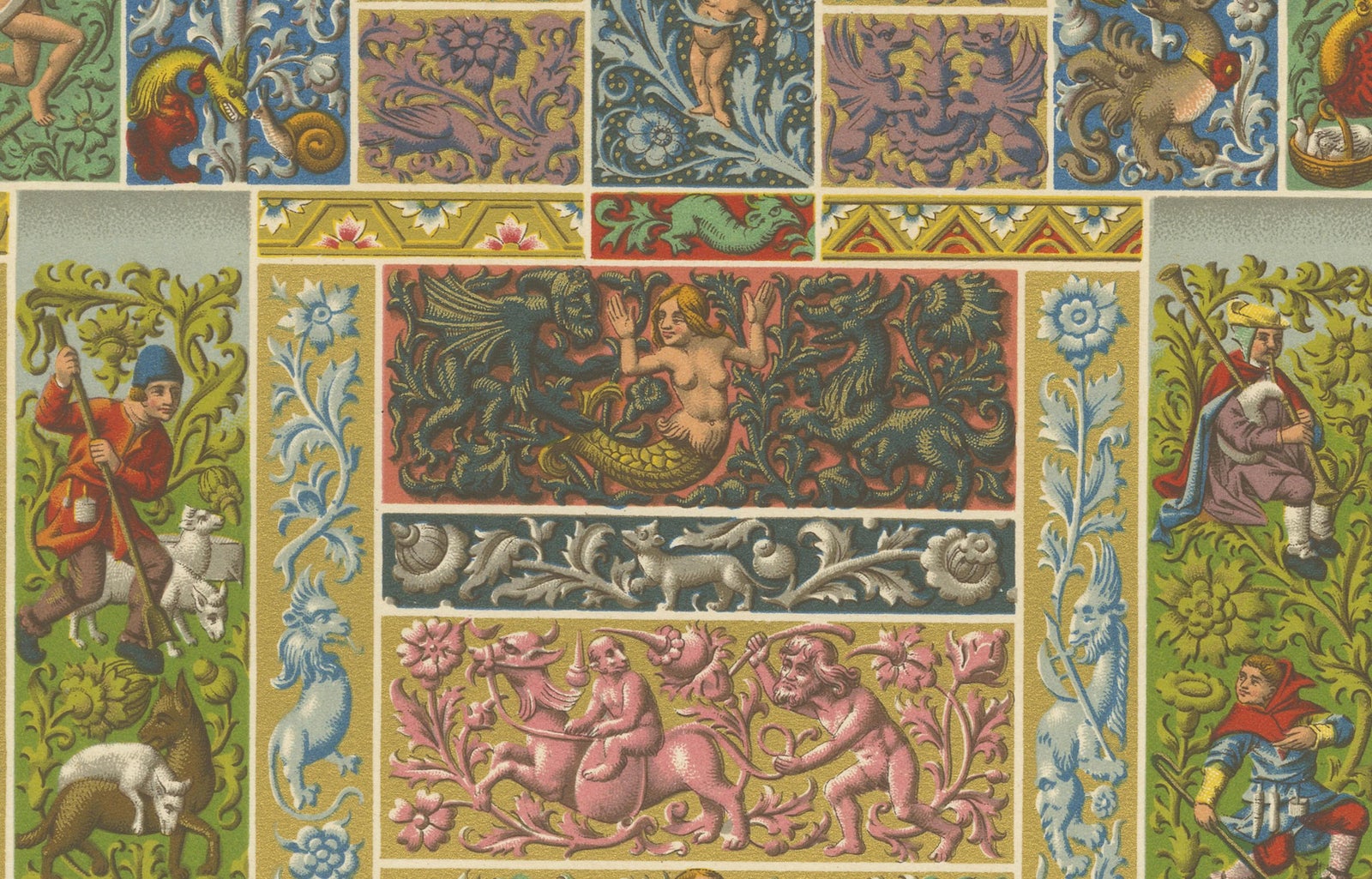
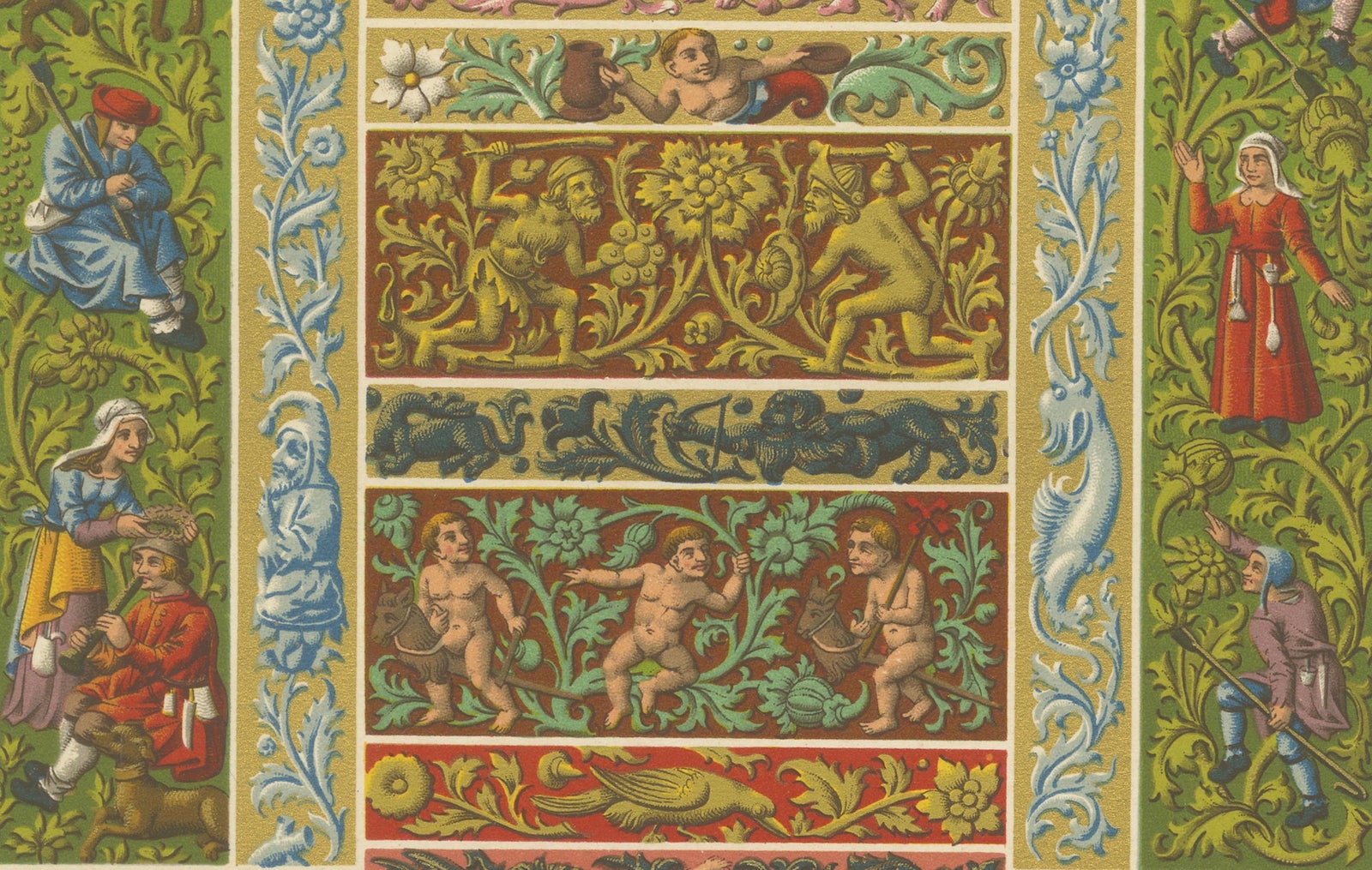
This dazzling chromolithograph from Plate LI of L'Ornement Polychrome by Albert Racinet showcases a vibrant collection of Renaissance ornamental friezes and panels, rich with grotesques, mythological creatures, putti, and heraldic figures.
Arranged in a complex mosaic, each panel presents a distinctive motif from Renaissance decorative arts, primarily inspired by frescoes, illuminated manuscripts, stuccoes, and carved woodwork. Playful putti dance among scrolling acanthus and vine leaves, while satyrs, fauns, and hybrid beasts intermingle with heraldic lions, eagles, and winged creatures. Warriors and nobles in period attire stand against floral arabesques, embodying the humanistic and classical revival of the era.
The use of bold, saturated colors, deep reds, lapis blues, moss greens, and gilded yellows, reflects the opulence of Renaissance interiors and ceremonial objects. The intricate grotesques, inspired by ancient Roman wall painting (rediscovered in Nero’s Domus Aurea), were a hallmark of 16th-century European ornamentation, and this plate captures their playful complexity with exceptional clarity.
Lithographed by Durin and printed by Firmin-Didot, this composition offers not just a decorative feast but a scholarly reference to the Renaissance's ornamental vocabulary, from ecclesiastical to civic art. Racinet’s careful reconstruction remains a vital visual archive for artists, designers, and historians of classical revival aesthetics.
Highly suitable for collectors of Renaissance art or those interested in historical ornamentation, this piece can also serve as a central decorative element in a library, drawing room, or studio setting.
Framing tips: Best presented in a gold or walnut frame with a broad ivory or parchment-colored mat. Due to the density of the design, a wider mat allows the details to breathe visually.
Technique: Chromolithograph
Maker: Firmin-Didot, Paris, after Albert Racinet, c.1869