Close-ups
Framed and on the wall
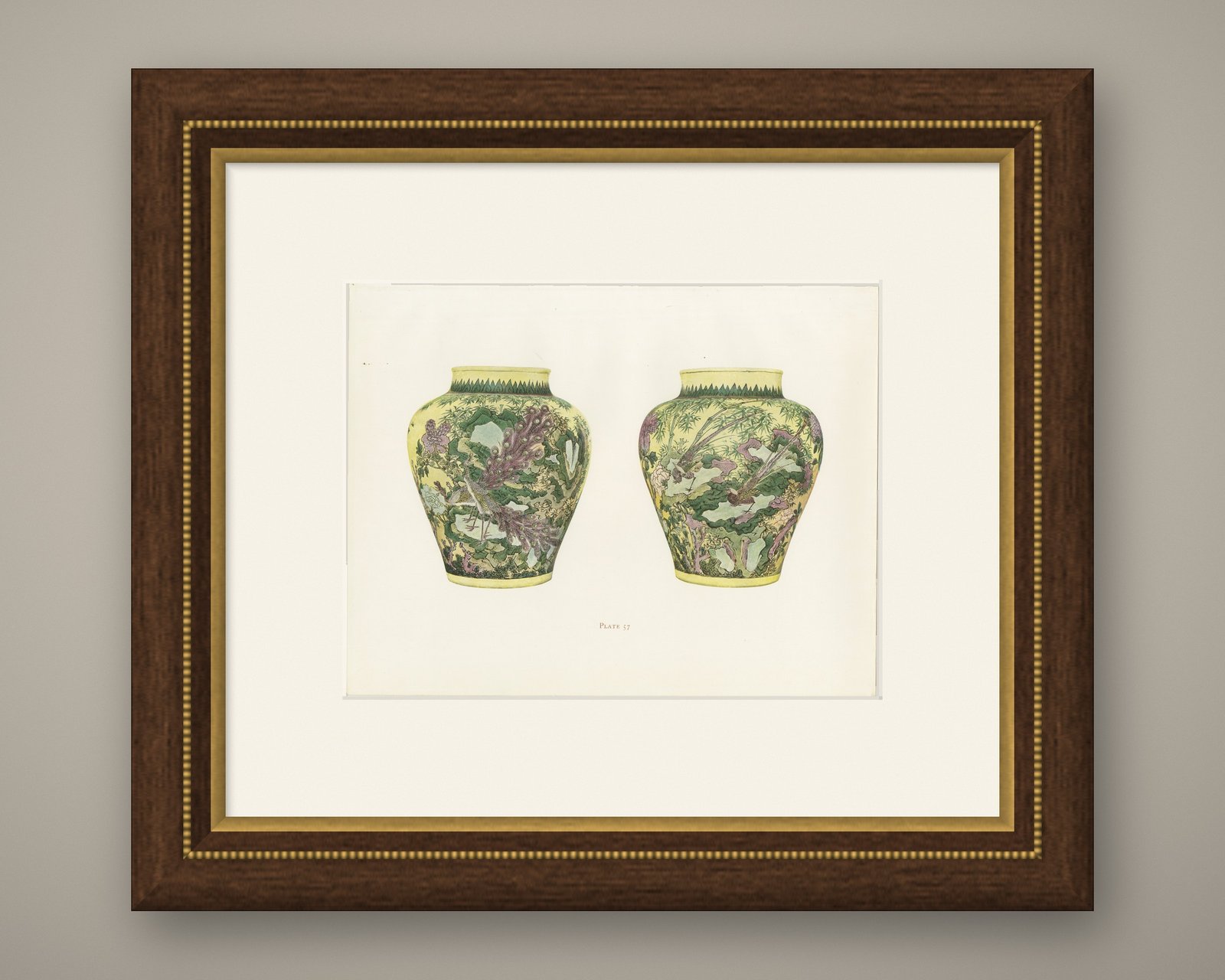
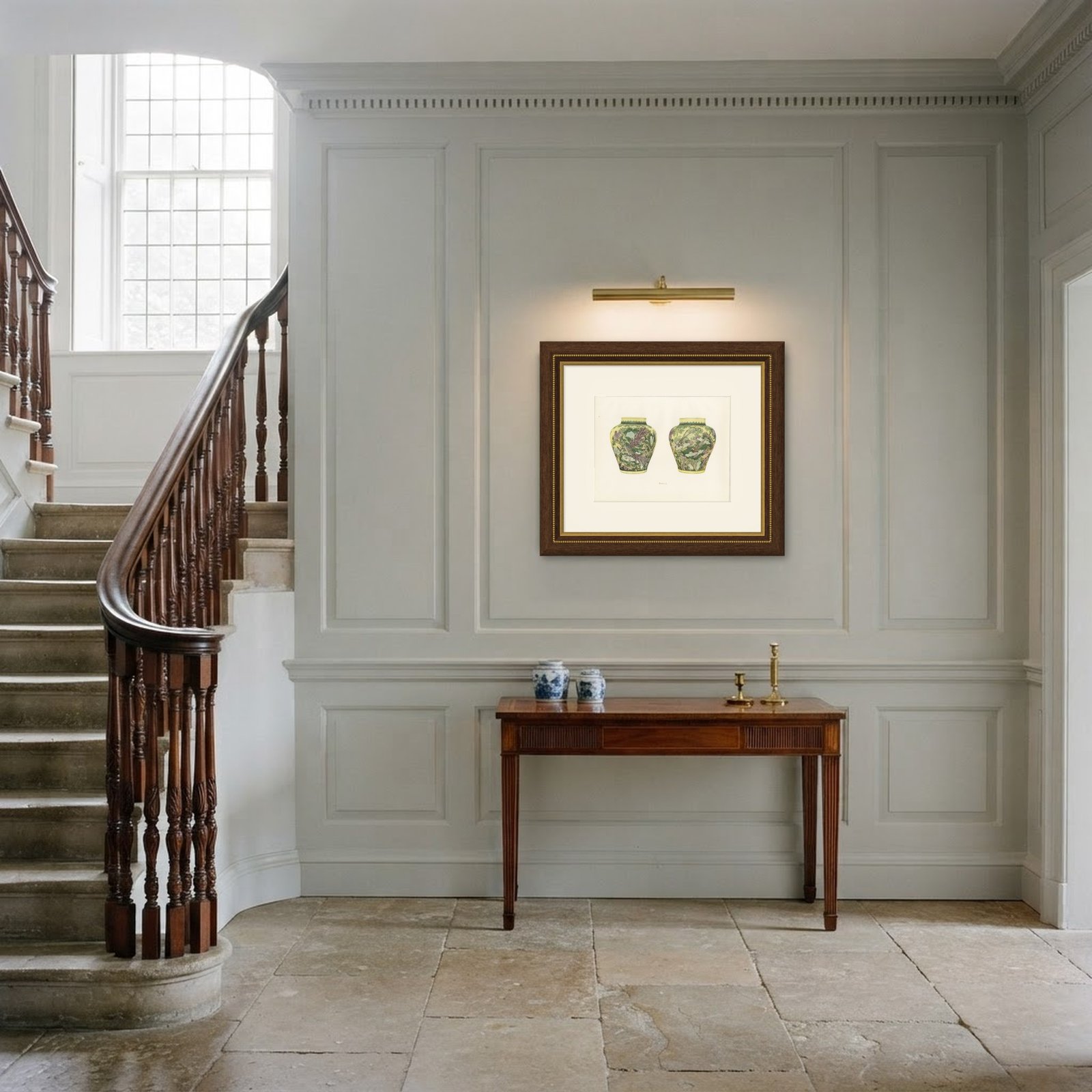
Frame and rooms are illustrations of how the print could look, drawn to its real size; it is sold unframed unless the description says otherwise.
Porcelain & ceramics
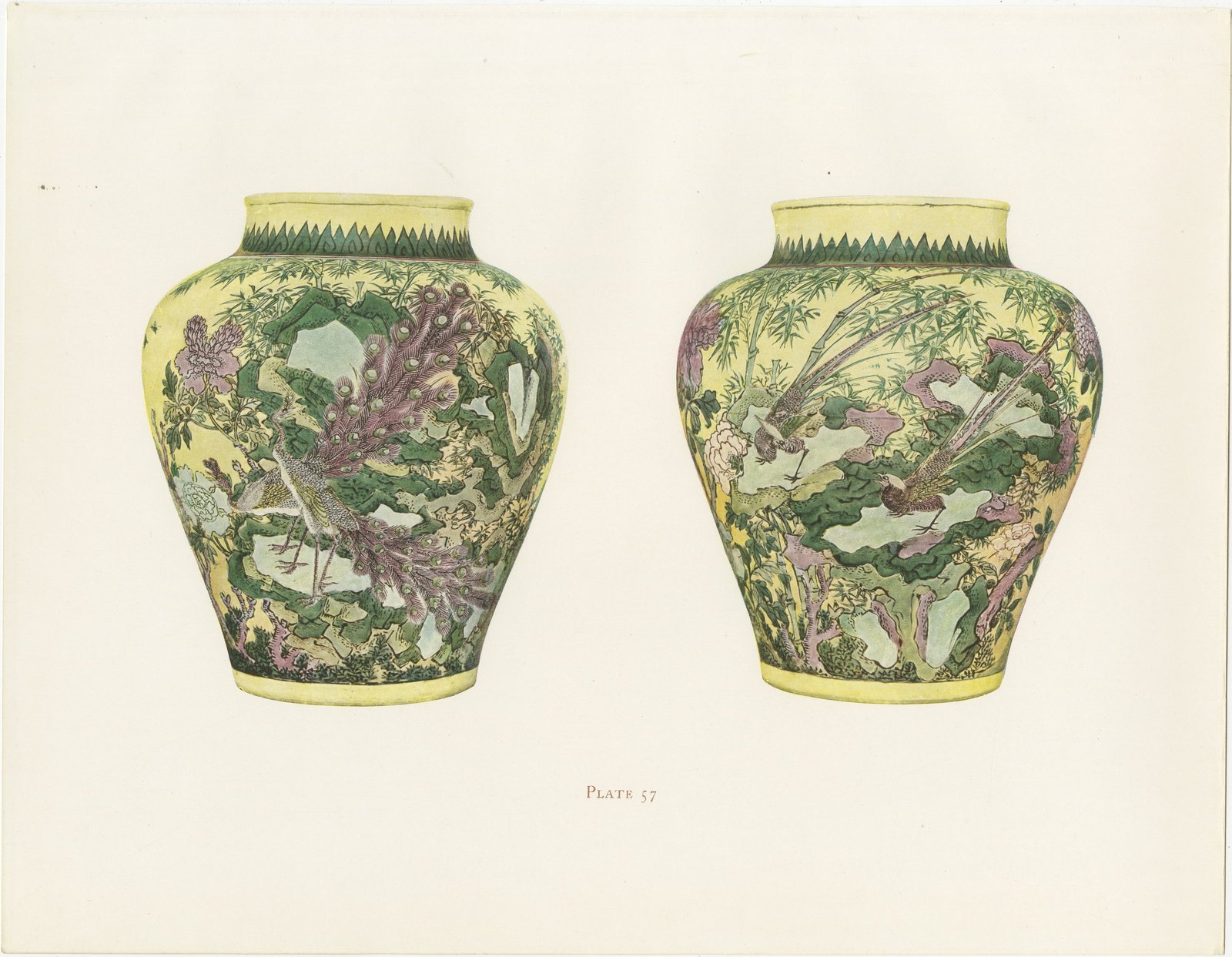
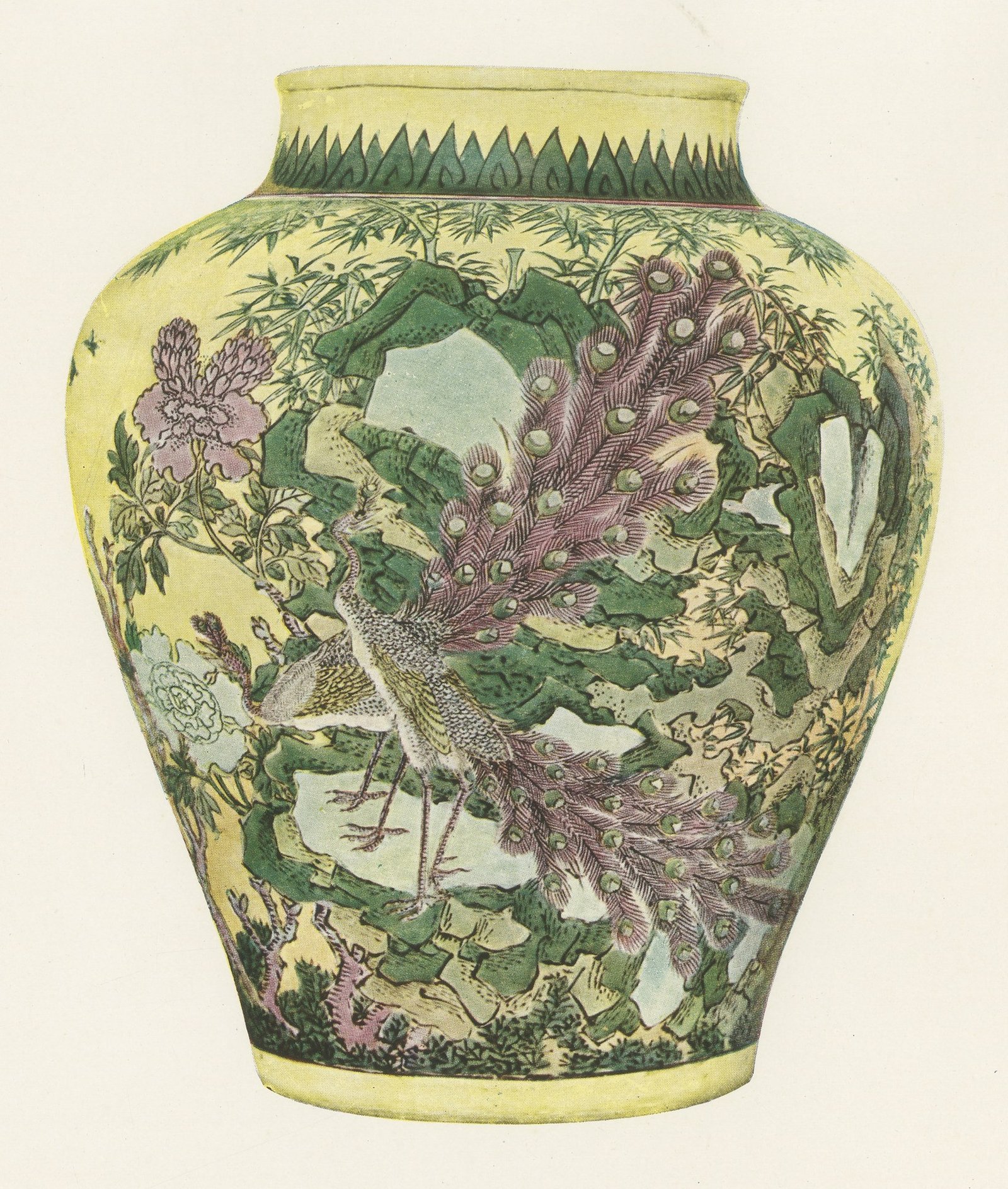
Pair of Famille Jaune Ovoid Jars with Peacocks and Pheasants, Plate, 1911
$205$15525% off
€139 · £115
Original print, not a reproduction
Ships worldwide from the Netherlands, flat or rolled, insured and tracked. 14-day returns.
- Date
- 1911
- Sheet size
- 9.4 × 12.2 in (24 × 31 cm)
- Coloring
- Printed color
- Condition
- Good. Even age toning. A few small foxing spots in the margin. Slight wear at the top left corner.
- Collection
- Porcelain & ceramics
- Era
- 1850 and after, The age of revivals
- Stock no.
- BG-14405-1-57
What the condition grades mean
- Excellent
- Bright and clean, with no faults worth mentioning.
- Very good
- Only light signs of age, such as faint toning.
- Good
- Normal signs of age for a sheet of this period: toning, some foxing, small marks or neat old repairs.
- Fair
- Clear faults such as staining, tears or repairs, priced to match.
Every fault we see is written in the condition note, and the whole sheet is shown uncropped in the photos.
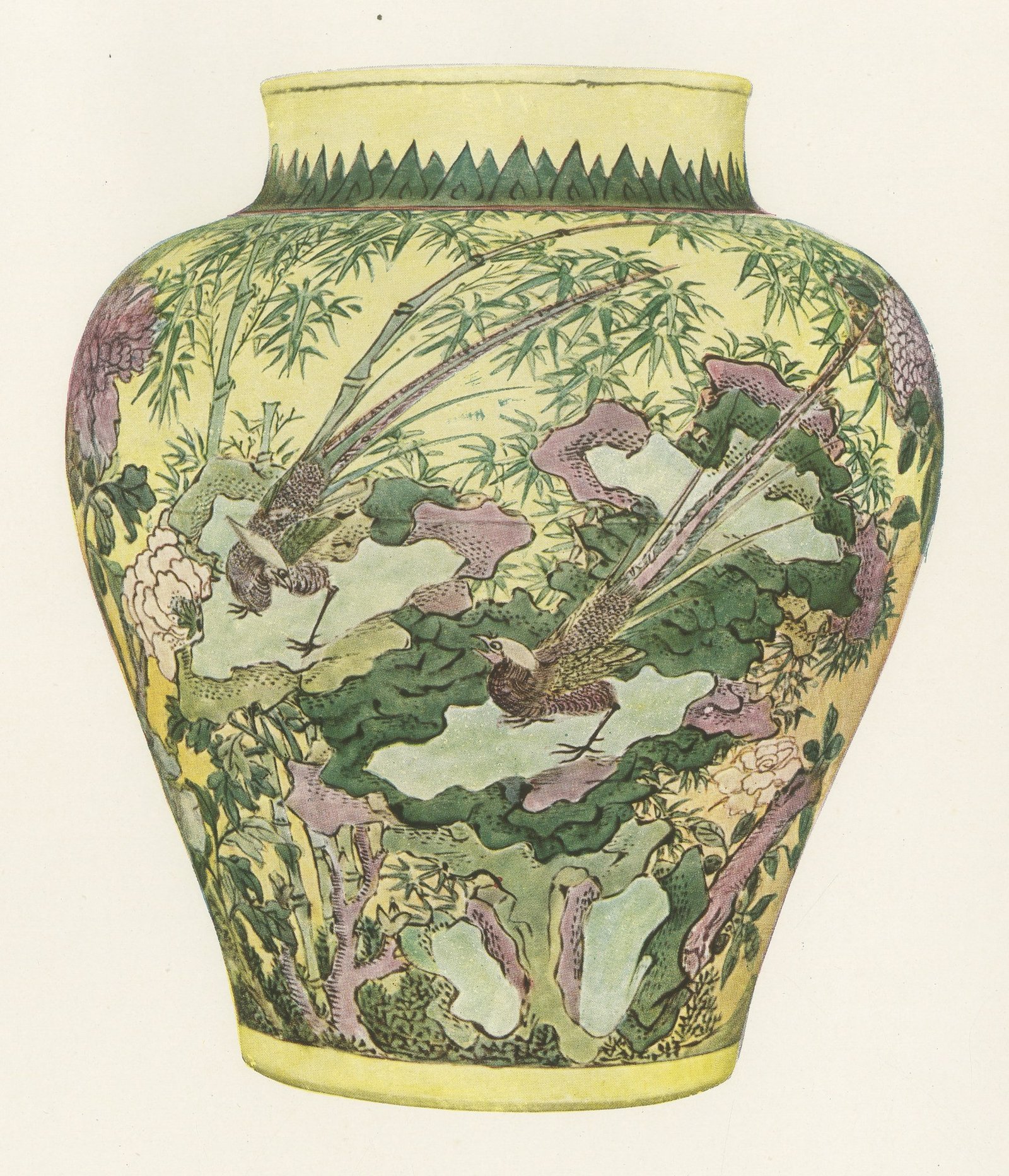
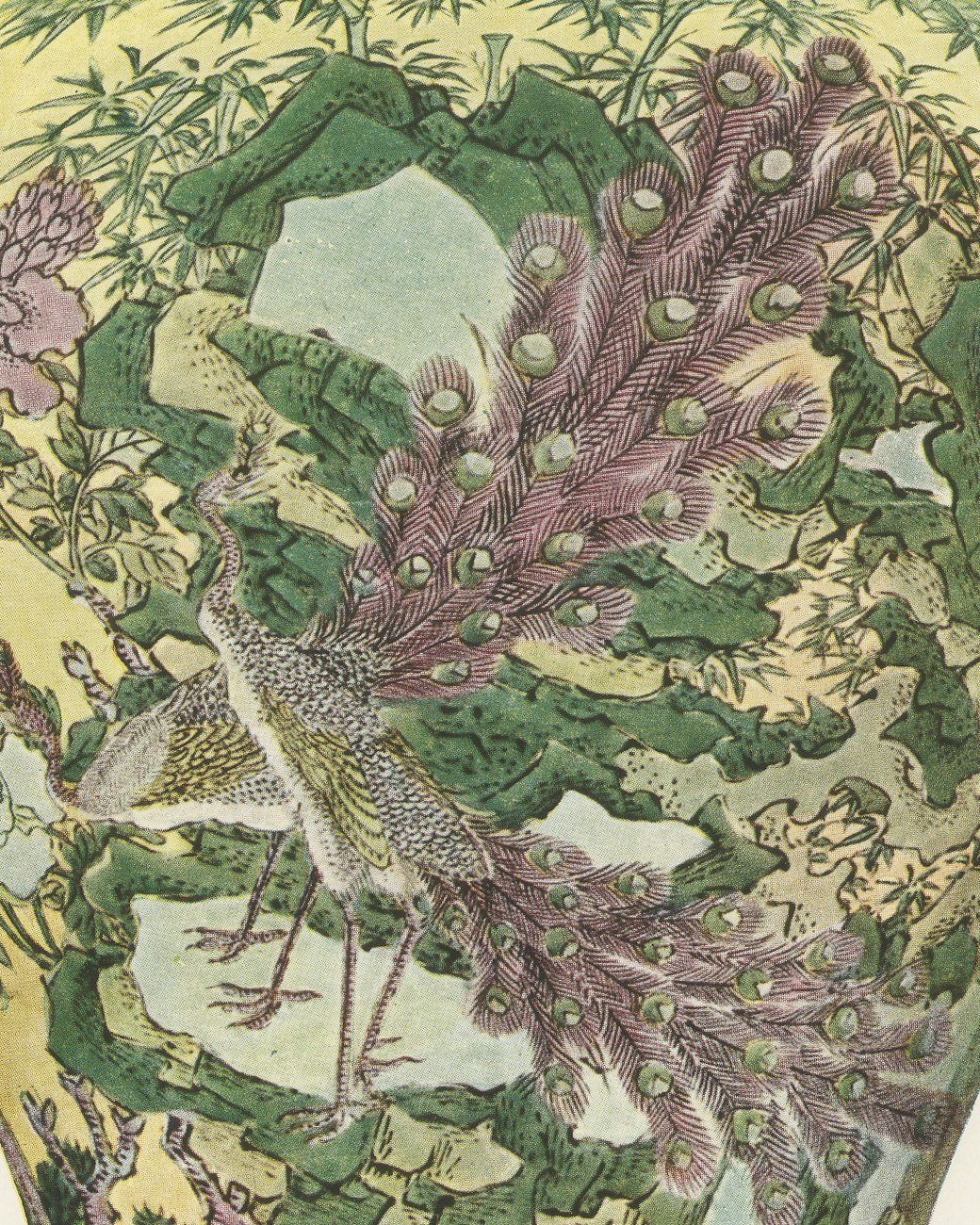
Printed in color in London in 1911 for Bernard Quaritch, this original antique plate shows a pair of ovoid jars on a rare yellow ground. One jar shows two peacocks on green rocks under bamboo with prunus and peonies with golden pheasants; the other has two golden pheasants, peonies under flying finches and guelder rose. A green band of foliated godroons borders each neck. Gorer and Blacker describe them as early Kang-he period and record them in the collection formed by Richard Bennett, Esq., D.L.; height 11 1/2 inches (29 cm), diameter 10 inches (25 cm).
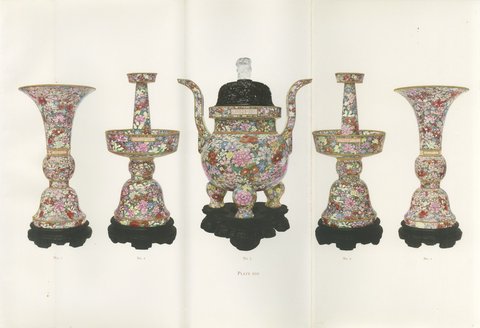
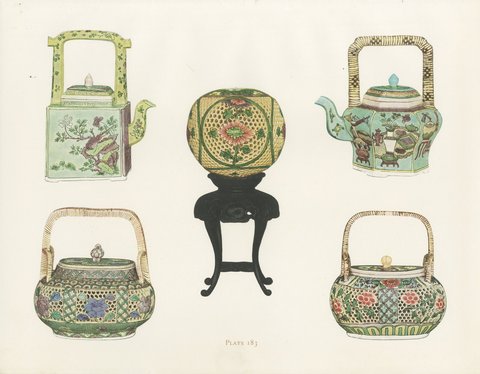
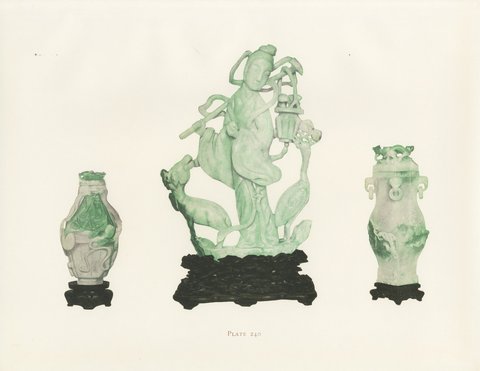
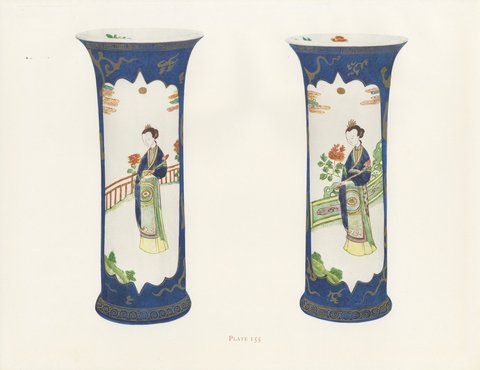
The sheet is a plate from Chinese Porcelain and Hard Stones, published by Bernard Quaritch in 1911, written by the London dealer Edgar Gorer with J. F. Blacker and printed in color by a photo mechanical process. The work ran to two volumes and two hundred and fifty four plates in an edition of one thousand numbered copies. The plates are color collotypes, and the book records that it was produced and printed by the Menpes Printing and Engraving Company of London and Watford.
In Chinese Porcelain and Hard Stones every piece or group is given a whole page to itself, so each plate is a complete image on its own, set in a wide margin, with the printed plate number as the only lettering on the sheet.
Even age toning. A few small foxing spots in the margin. Slight wear at the top left corner.
This is an original antique print, not a modern reproduction. This item is sold unframed.
Explore