Close-ups
Framed and on the wall
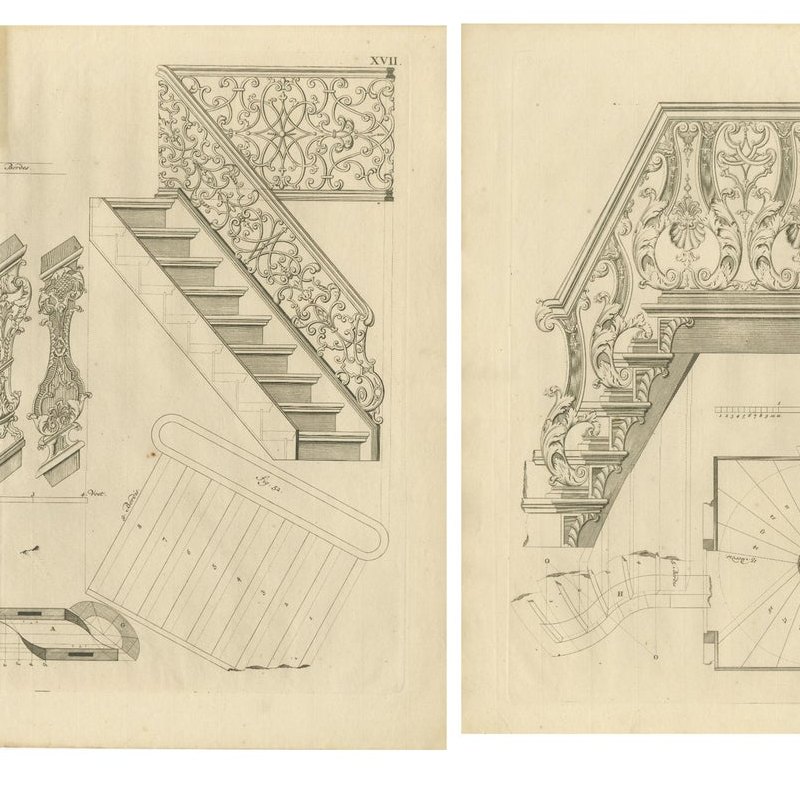
Frame and rooms are illustrations of how the print could look, drawn to its real size; it is sold unframed unless the description says otherwise.
Rooms & furniture
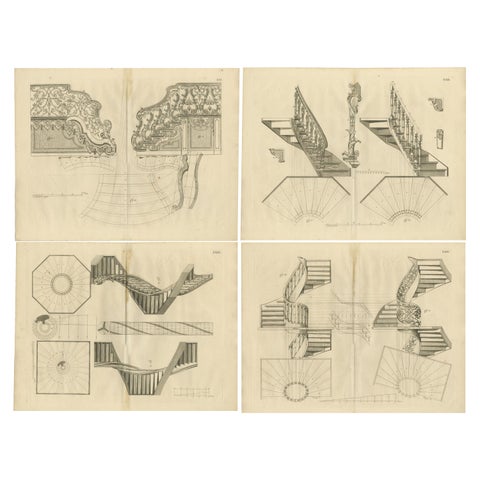
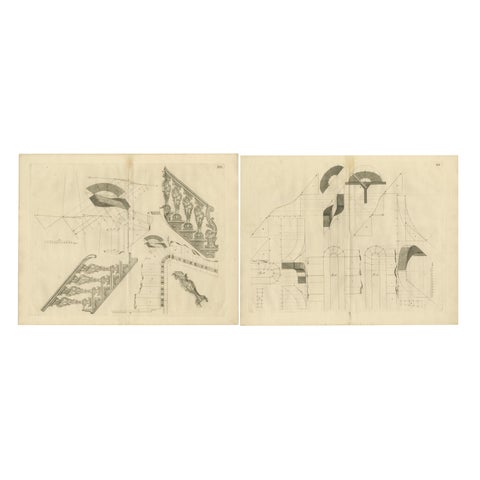
Ornate Baroque Stairs: Van der Horst's Design Mastery in Engravings, 1739
€380
$430 · £325
Original print, not a reproduction
Ships worldwide from the Netherlands, flat, insured and tracked. 14-day returns. To buy, use Ask a question (info@antiquearchitectureprints.com) and we will reserve it for you.
- Date
- 1739
- Sheet size
- 17.5 × 22.6 in (44.5 × 57.5 cm)
- Condition
- Good. Good. Folds in the middle as issued. Paper slightly browned. Some foxing. General age-related toning and/or occasional minor defects from handling. Please study scan carefully.
- Collection
- Rooms & furniture
- Era
- 1700 to 1789, Baroque to Neoclassical
- Stock no.
- f_38371322
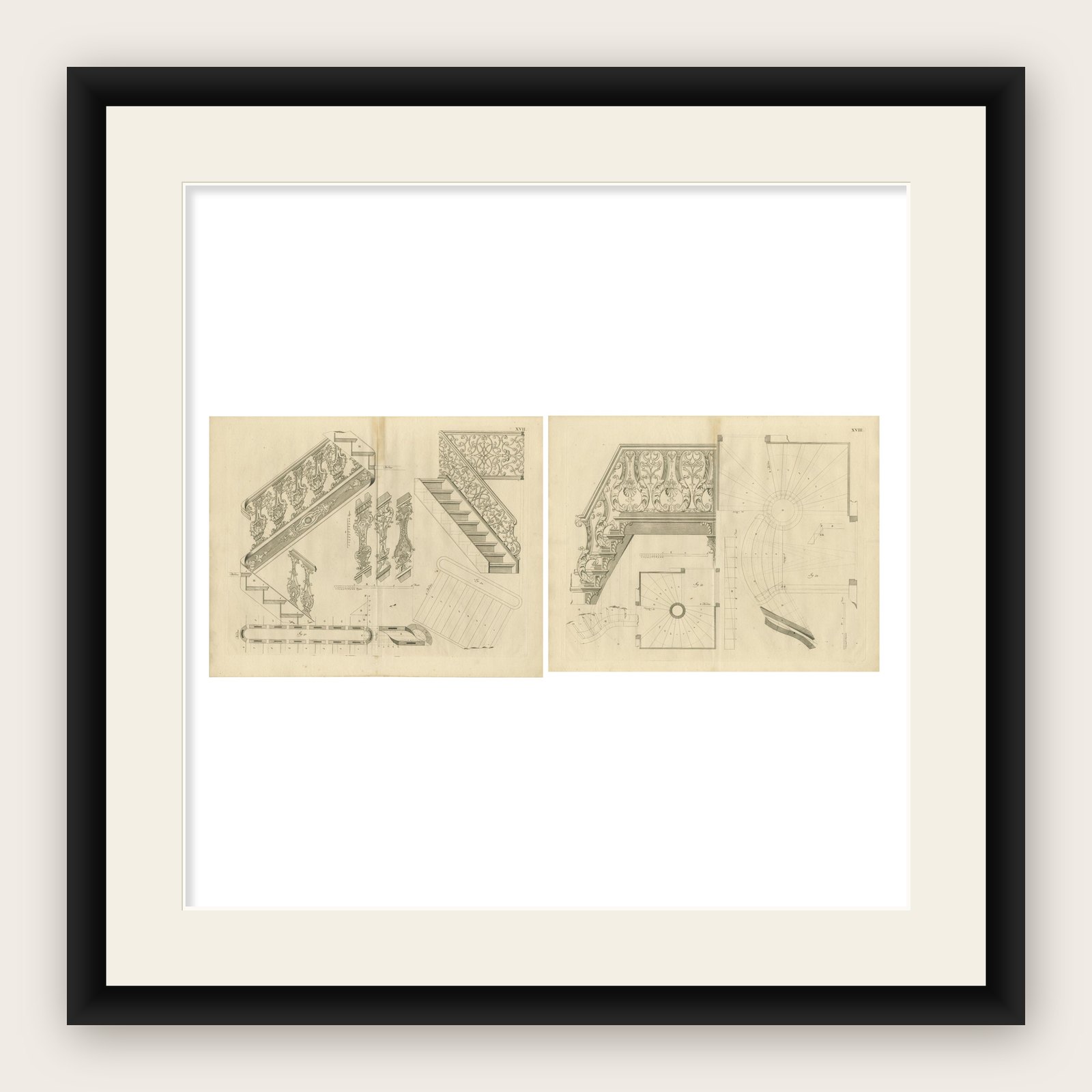
Title: "Ornate Baroque Stairs: Van der Horst's Design Mastery"
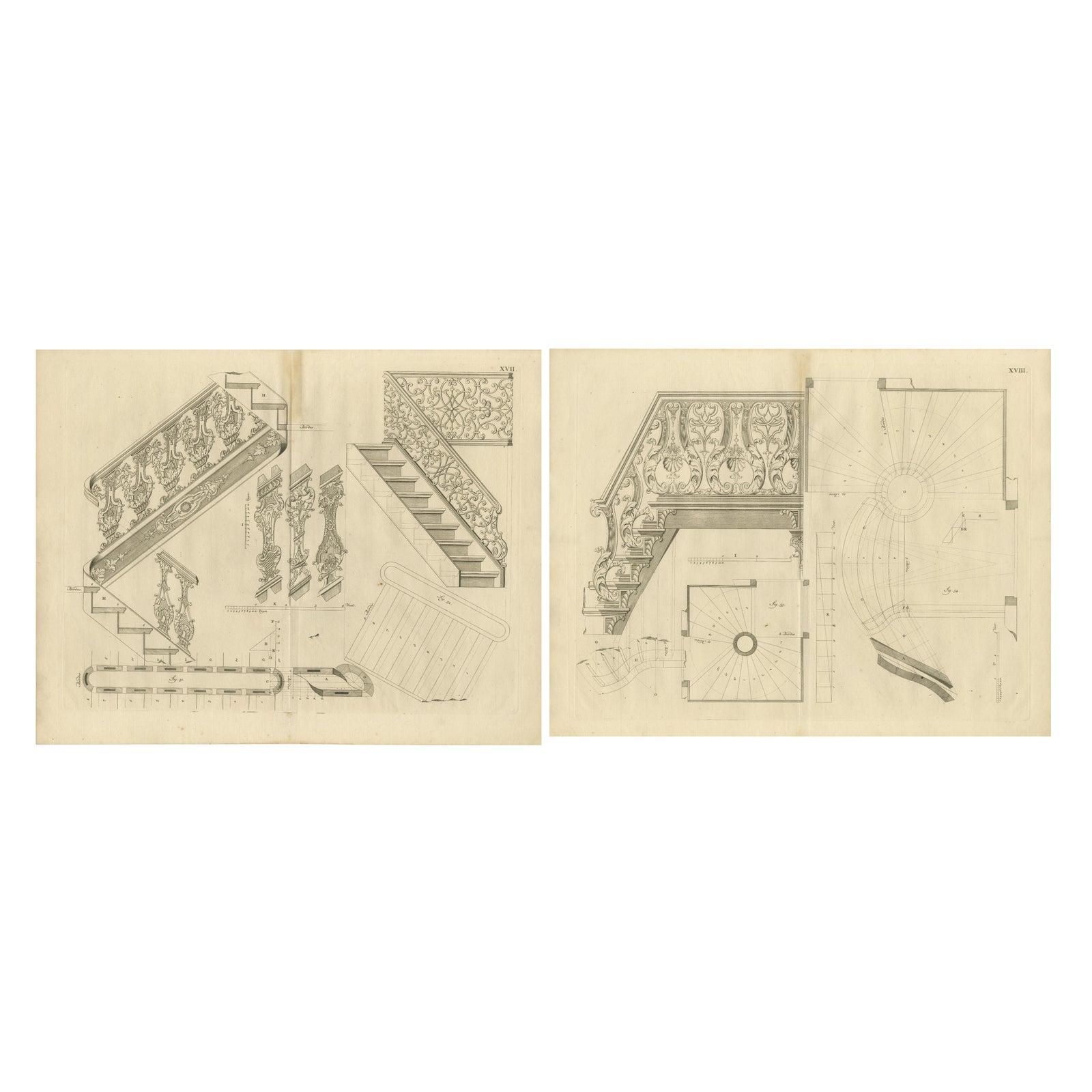
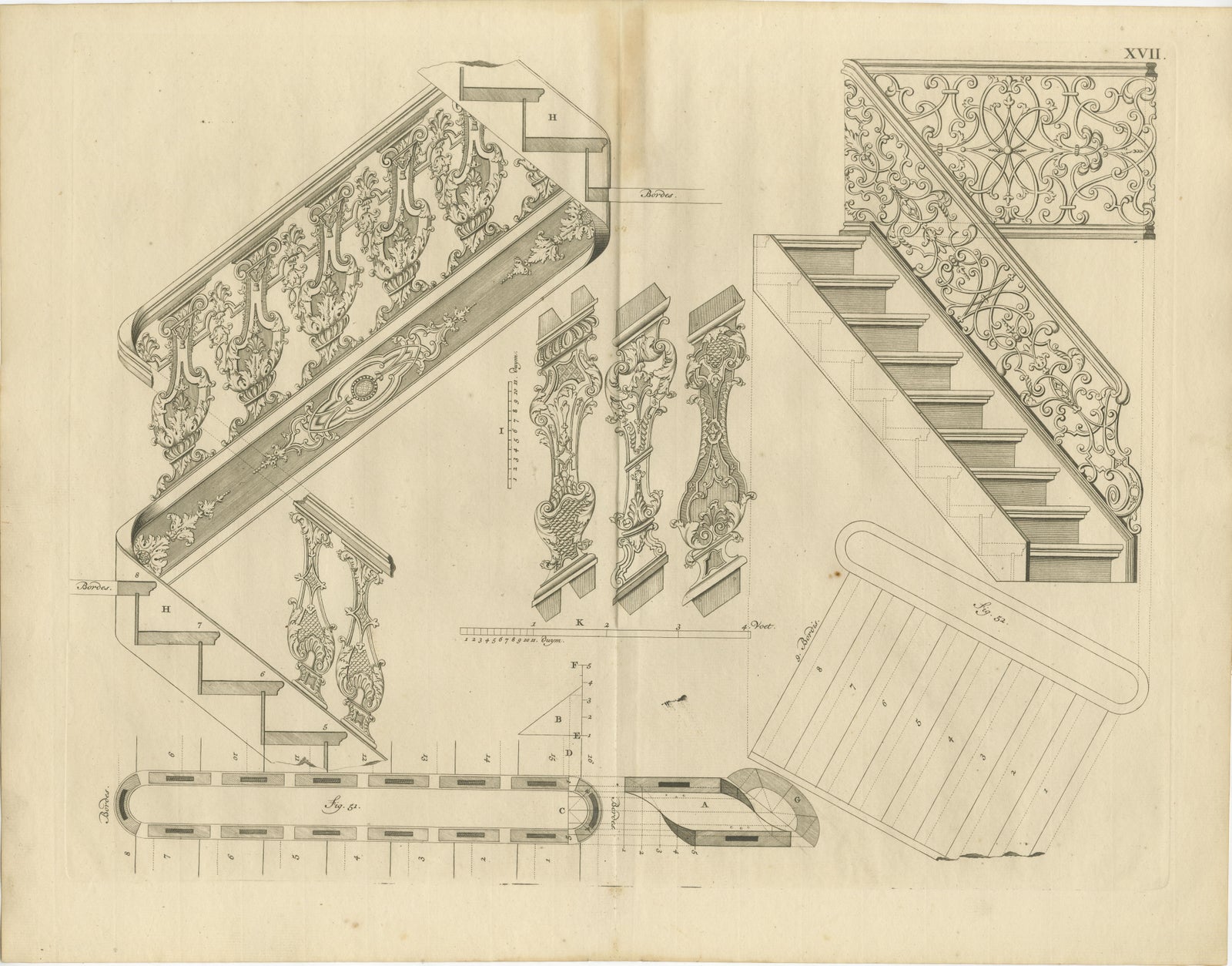
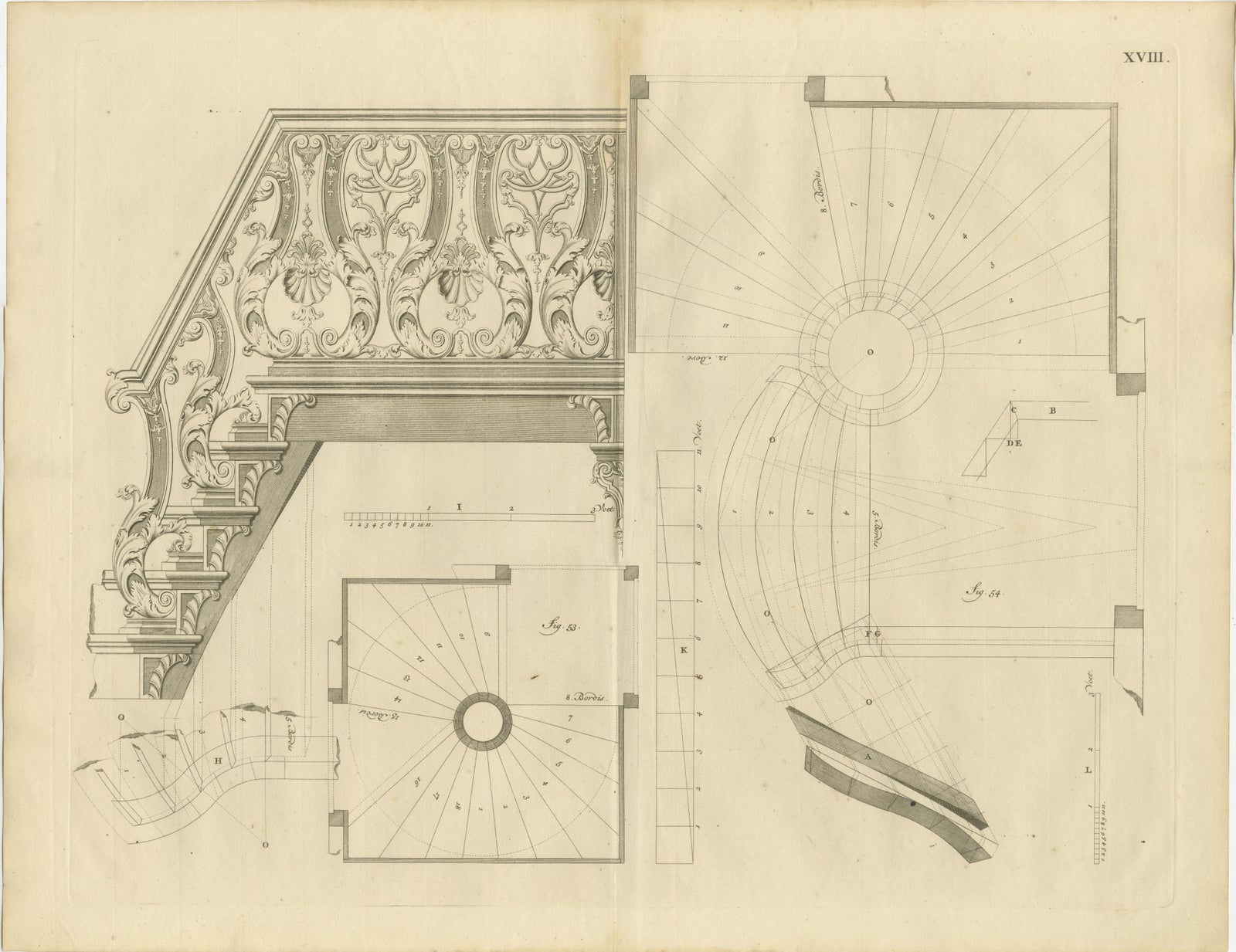
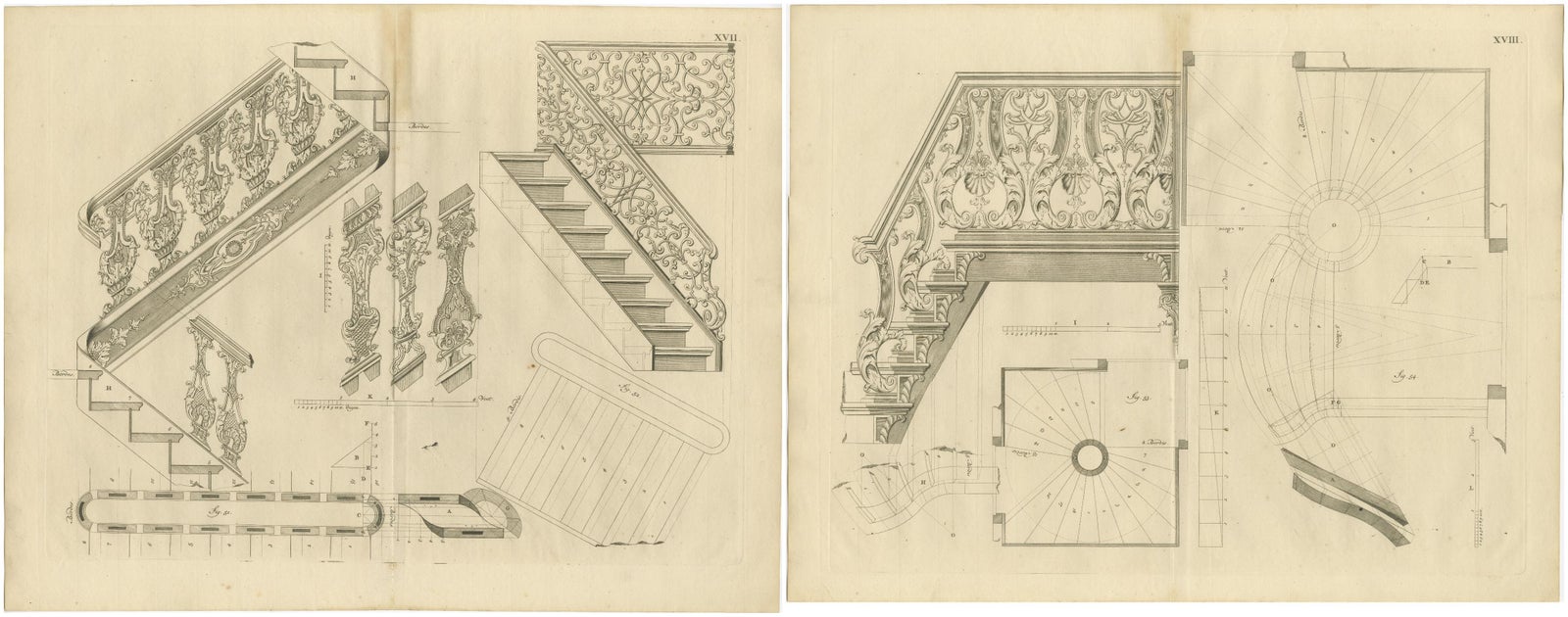
Description: These original antique engravings are from Tieleman van der Horst's comprehensive architectural work, illustrating the intricacy and grandeur of Baroque staircase designs.
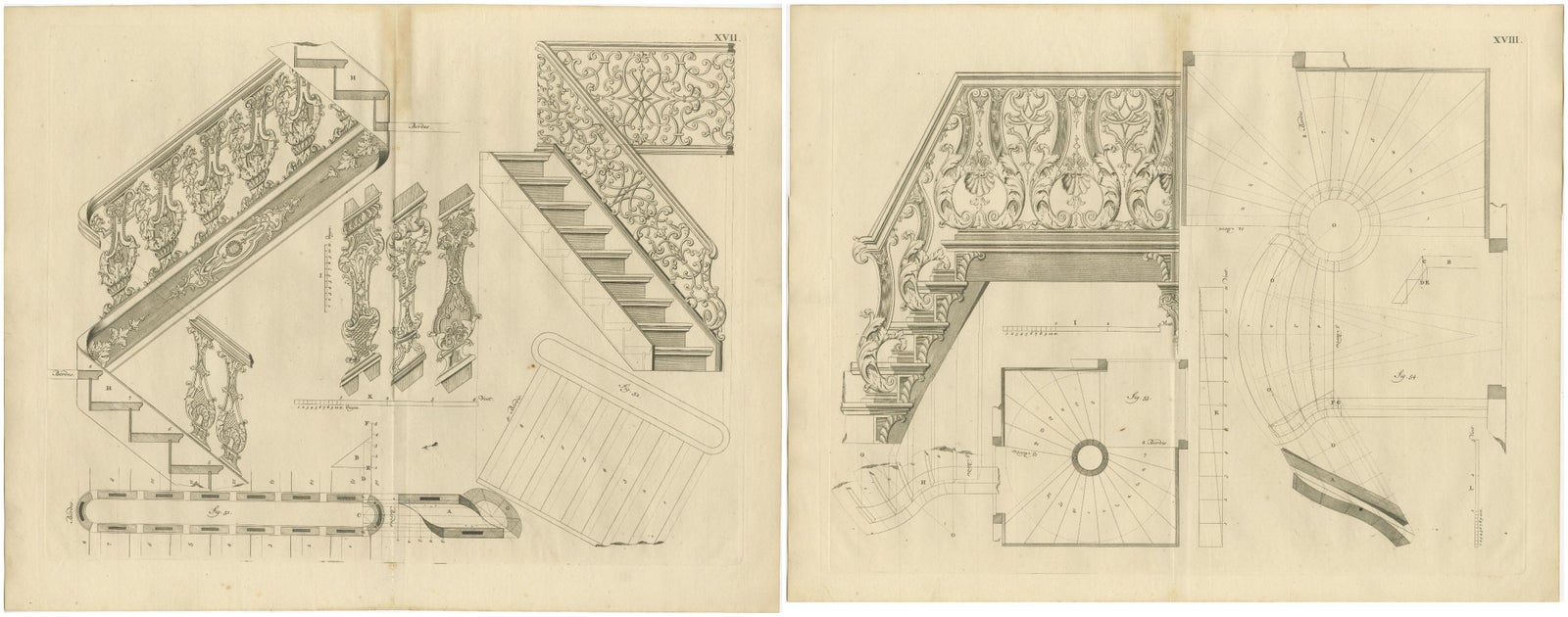
Engraving XVII reveals a dual staircase merging into a common landing, adorned with elaborate balusters that epitomize the ornamental style of the period. The craftsmanship is evident in the carved details, reflecting a high-status construction, likely intended for a stately home or public building.
Engraving XVIII offers a detailed plan and elevation of a spiral staircase, providing a clear example of the complexity involved in such designs. It shows the elegance with which form followed function, achieving both an aesthetic appeal and structural soundness. The spiral is a testament to the era's fascination with geometry and symmetry, as well as a demonstration of the technical knowledge required to execute such a design.
Together, these engravings serve as an educational tool for the art of staircase construction and as historical documents that highlight the architectural trends of the 18th century. They provide insight into the sophisticated design techniques of the time, where architecture was as much an art as it was an engineering feat.
More about the architect, artist and publisher:
Tieleman van der Horst, Jan Schenk, and Petrus Schenk were individuals active in the 18th-century Dutch world of printmaking, engraving, and publication, particularly in the realm of scientific and technical knowledge.
**Tieleman van der Horst**:
While not much is widely known about Tieleman van der Horst, it is evident from the work that he had a strong grasp of architectural principles and mechanical design. As the author of "THEATRUM MACHINARUM UNIVERSALE of Nieuwe Algemeene Bouwkunde," he would have been a significant figure in the field of architecture and engineering during his time. His work on this compendium of machinery and architectural design would have contributed to the spread of technical knowledge during a period when such information was becoming increasingly valuable.
**Jan Schenk**:
Jan Schenk was the engraver for these works, and as such, would have been highly skilled in the art of engraving. Engraving was a meticulous process that required a steady hand and an acute eye for detail. The quality of the engravings suggests that Schenk was a master of his craft, able to translate complex, three-dimensional structures onto a two-dimensional medium with precision and clarity.
**Petrus Schenk**:
Petrus Schenk was a publisher based in Amsterdam, a city that was a center of printing and publishing in the 18th century. As a publisher, Schenk would have been involved in the business and administrative side of producing and distributing the book. His role would have been to oversee the printing process, manage the financial aspects, and ensure the distribution of the finished product to booksellers and clients. The fact that he published a work of such technical and artistic complexity indicates that he was a significant figure in the world of publishing and had the resources and connections necessary to produce and sell such a specialized text.
Overall, the collaboration between these individuals on "THEATRUM MACHINARUM UNIVERSALE of Nieuwe Algemeene Bouwkunde" would have been a considerable undertaking. It brought together expertise from different realms, architectural knowledge, artistic skill in engraving, and the business acumen necessary for successful publication, to create a work that was both educational and visually impressive. This work would have served as an important resource for professionals in architecture and engineering, as well as for patrons and students interested in the latest developments in building technology and design.