Close-ups
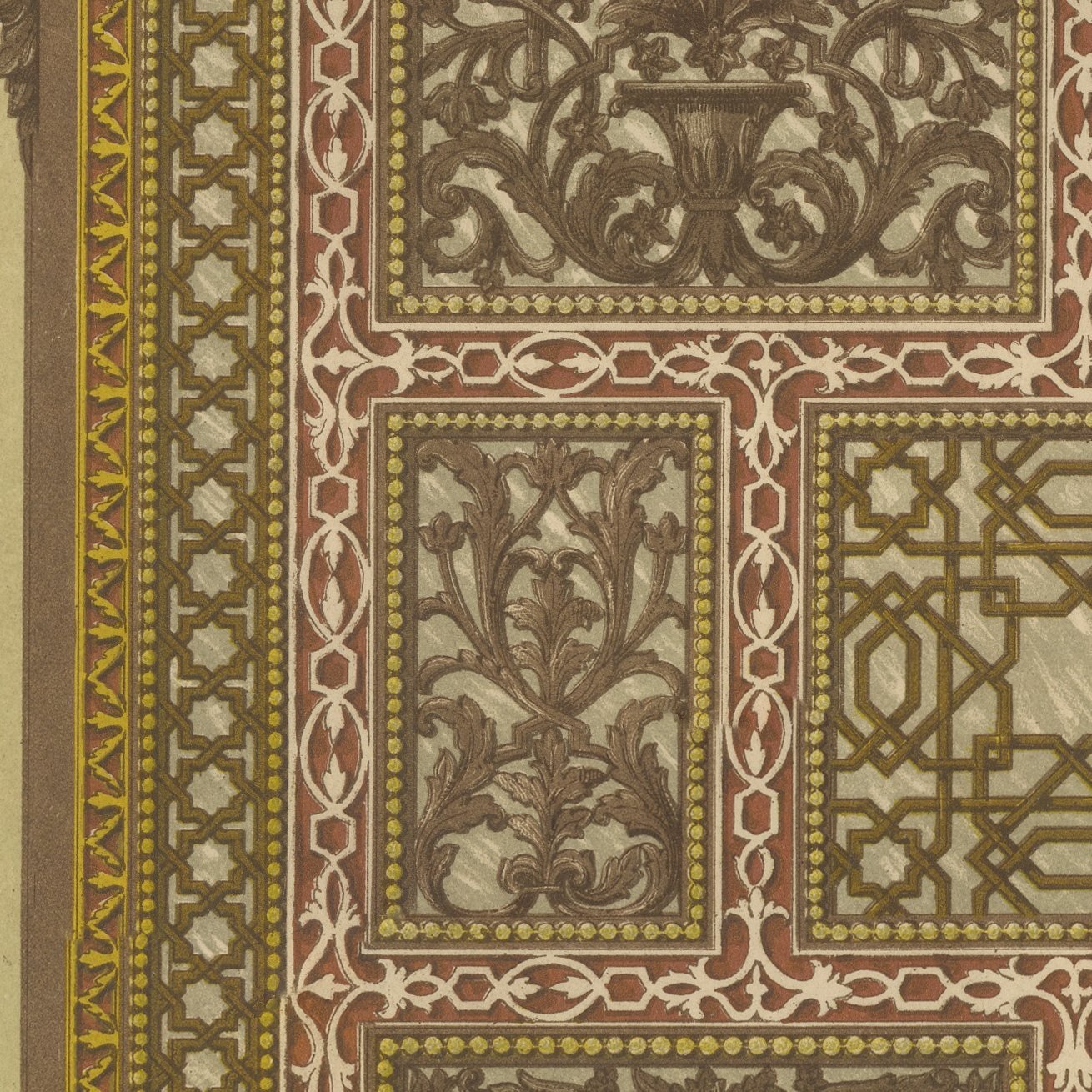
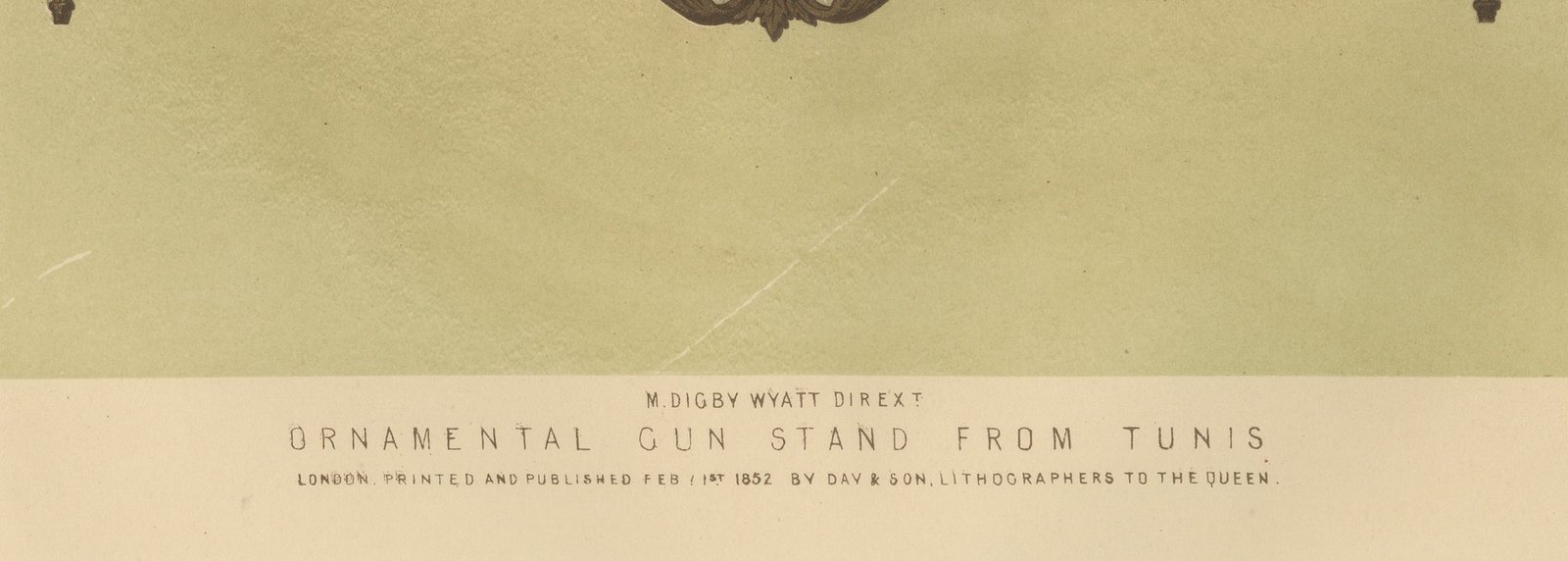
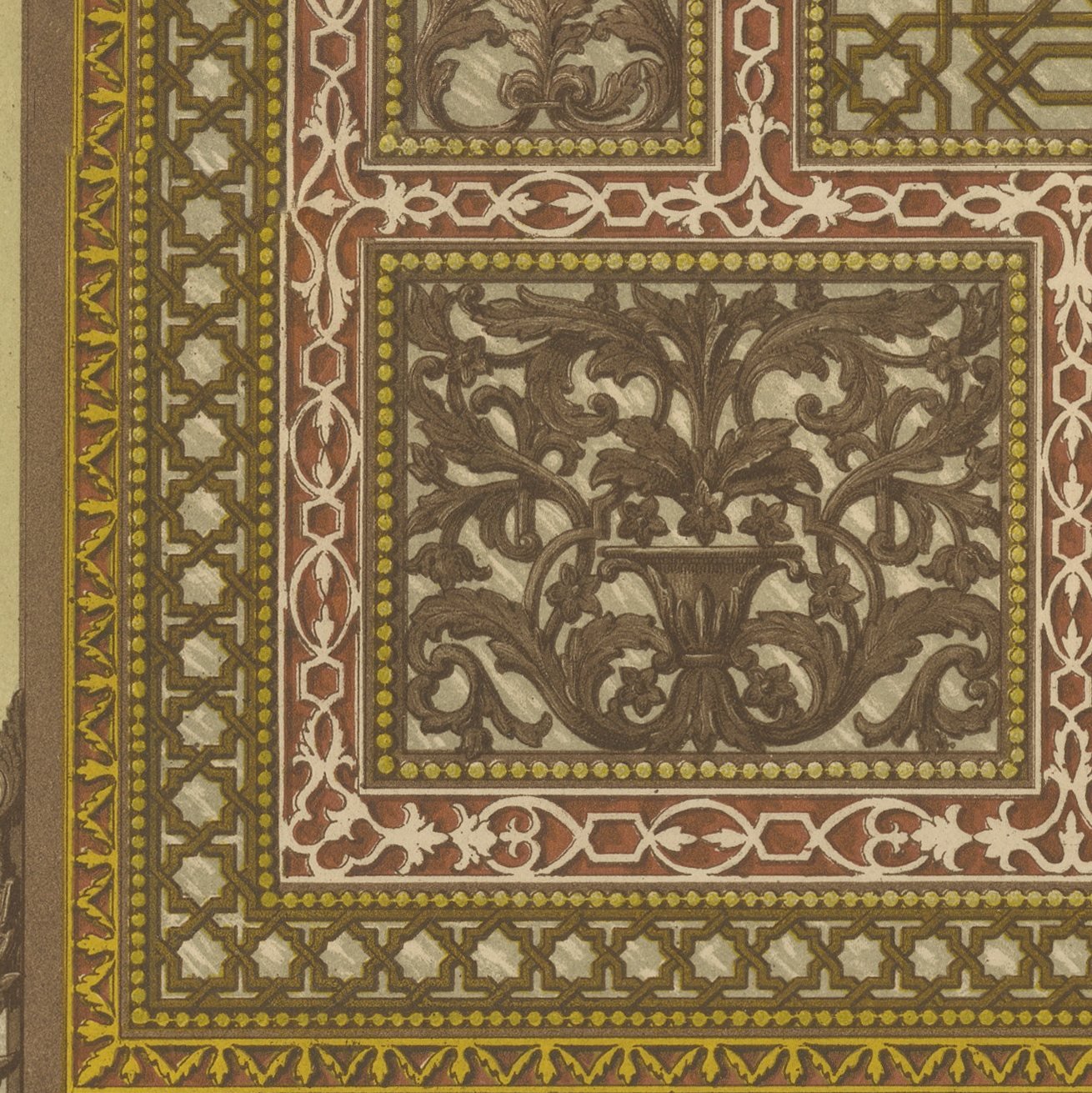
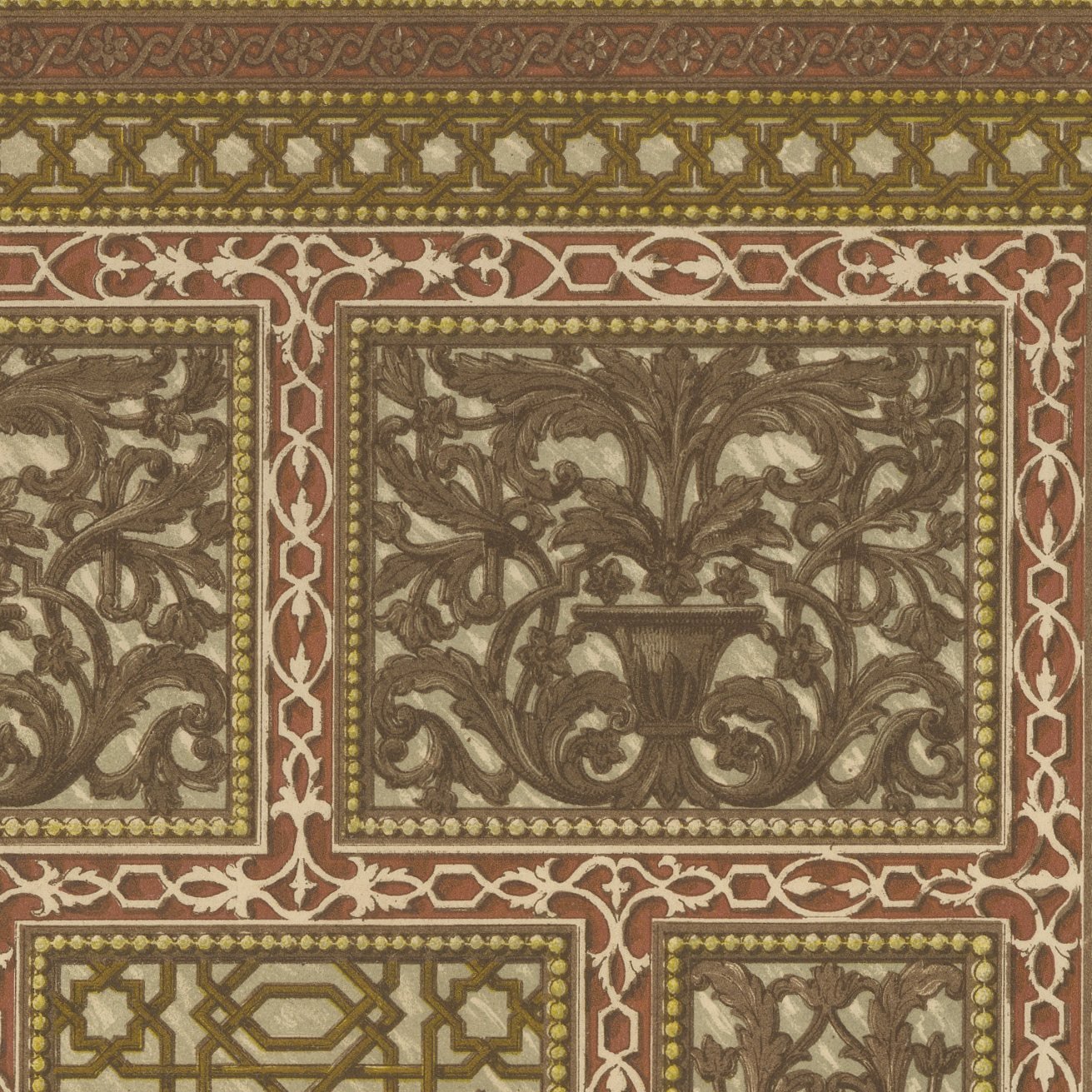
Framed and on the wall
Frame and rooms are illustrations of how the print could look, drawn to its real size; it is sold unframed unless the description says otherwise.
Ornament & pattern
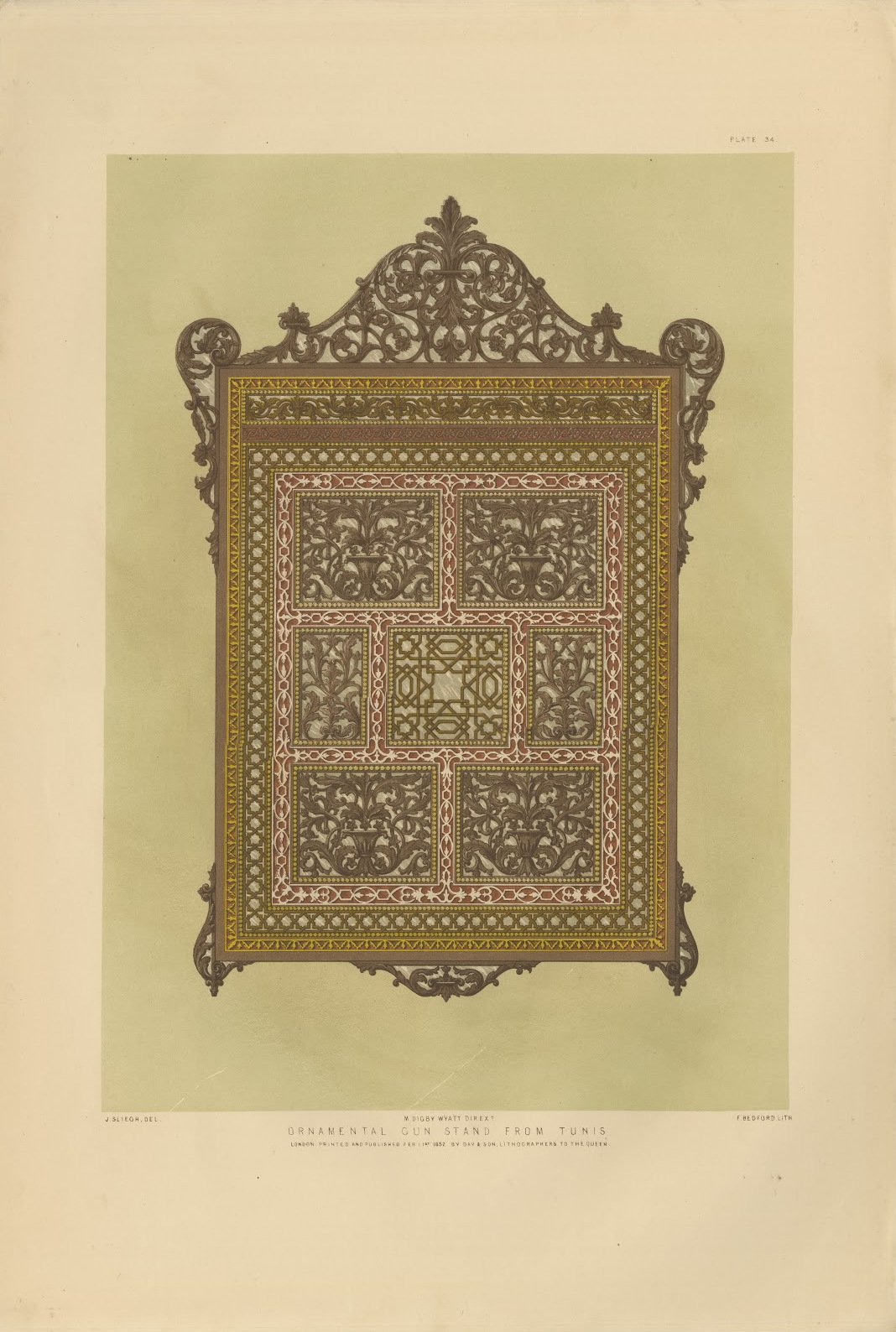
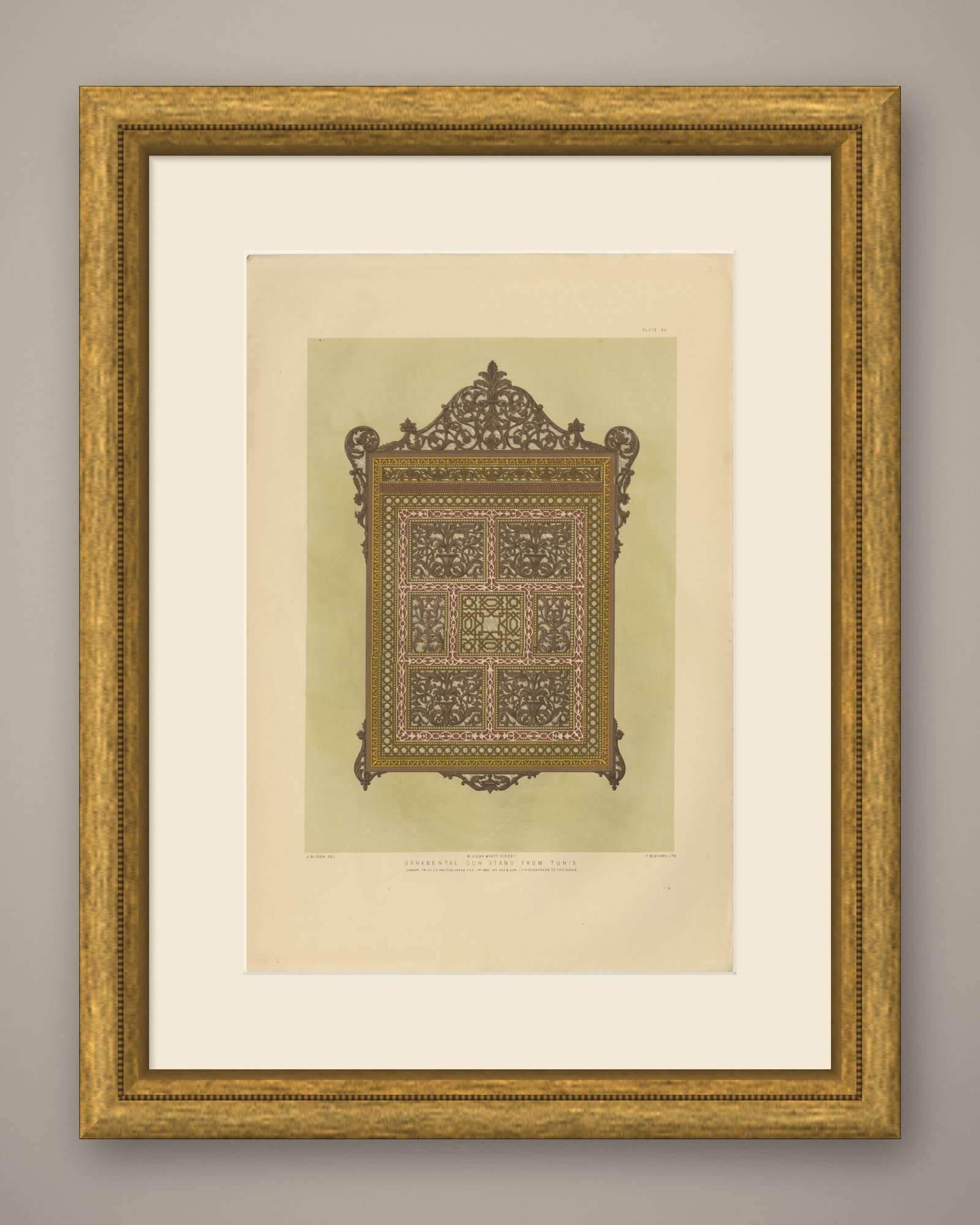
Ornamental Gun Stand from Tunis, Antique North African Plate, 1852
€345€24230% off
$265 · £205
Original print, not a reproduction
Ships worldwide from the Netherlands, flat or rolled, insured and tracked. 14-day returns.
- Date
- 1852
- Sheet size
- 20.3 × 13.4 in (51.5 × 34 cm)
- Technique
- Chromolithograph
- Coloring
- Printed color
- Condition
- Good. Strong age toning, the paper a warm buff, with a few foxing spots in the margins. The printed image itself is clean.
- Collection
- Ornament & pattern
- Era
- 1850 and after, The age of revivals
- Stock no.
- BG-14491-34
What the condition grades mean
- Excellent
- Bright and clean, with no faults worth mentioning.
- Very good
- Only light signs of age, such as faint toning.
- Good
- Normal signs of age for a sheet of this period: toning, some foxing, small marks or neat old repairs.
- Fair
- Clear faults such as staining, tears or repairs, priced to match.
Every fault we see is written in the condition note, and the whole sheet is shown uncropped in the photos.
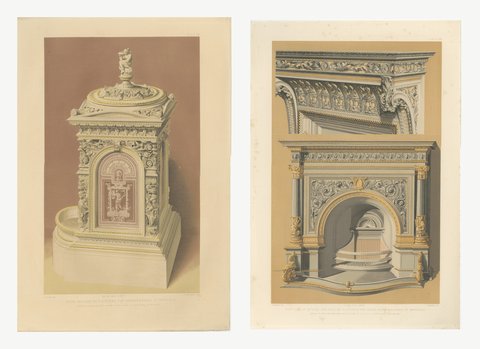
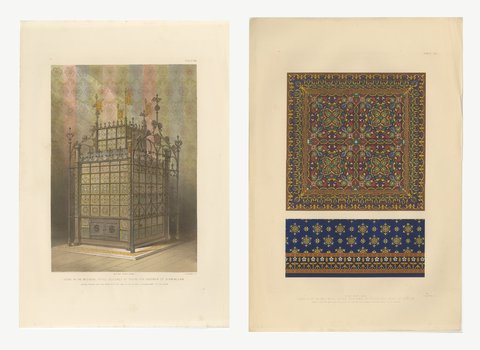
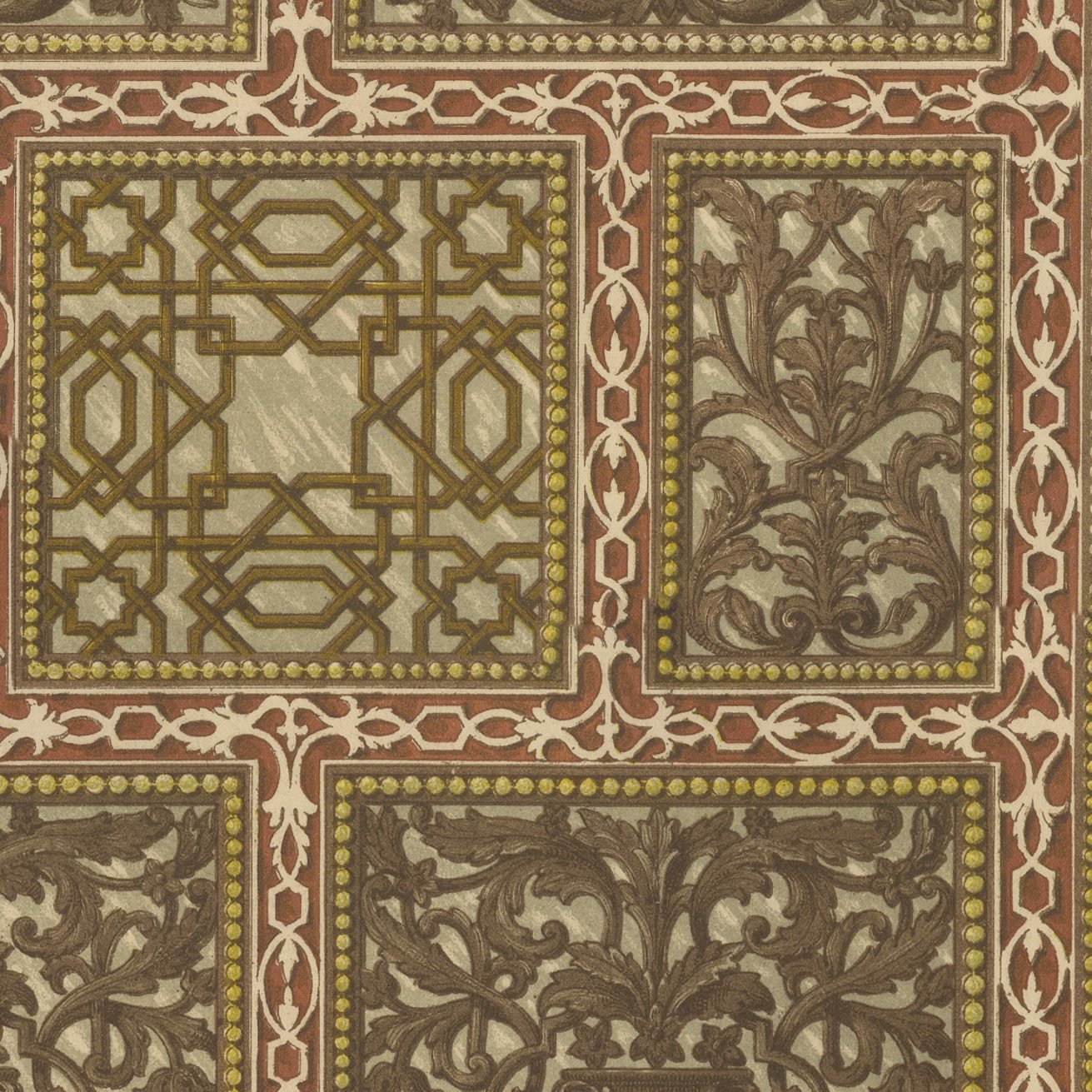
This is an original antique chromolithograph of an ornamental gun stand from Tunis, published in London by Day and Son on the first of February 1852. The stand is drawn against a ground of pale olive and rose, the decorated surfaces picked out in color against the quiet field, and the plate is one of the group that Wyatt devoted to the Tunisian exhibit.
The plate comes from The Industrial Arts of the Nineteenth Century, Matthew Digby Wyatt's record of the Great Exhibition of 1851, issued in parts by Day and Son, lithographers to the Queen, between 1851 and 1853 and dedicated by permission to Prince Albert. Wyatt had been secretary to the executive committee of the Exhibition, and the work presents, in the words of its title, the choicest specimens produced by every nation, drawn by a team of artists and reproduced in chromolithography, then a new and costly process. Every plate carries its own publication date in the imprint at the foot, with the names of M. Digby Wyatt as director and of the artists who drew or lithographed it.
The object was shown at the Great Exhibition of 1851 in London.
Strong age toning, the paper a warm buff, with a few foxing spots in the margins. The printed image itself is clean.
This is an original antique print, not a modern reproduction. This item is sold unframed.
Explore