Close-ups
Framed and on the wall
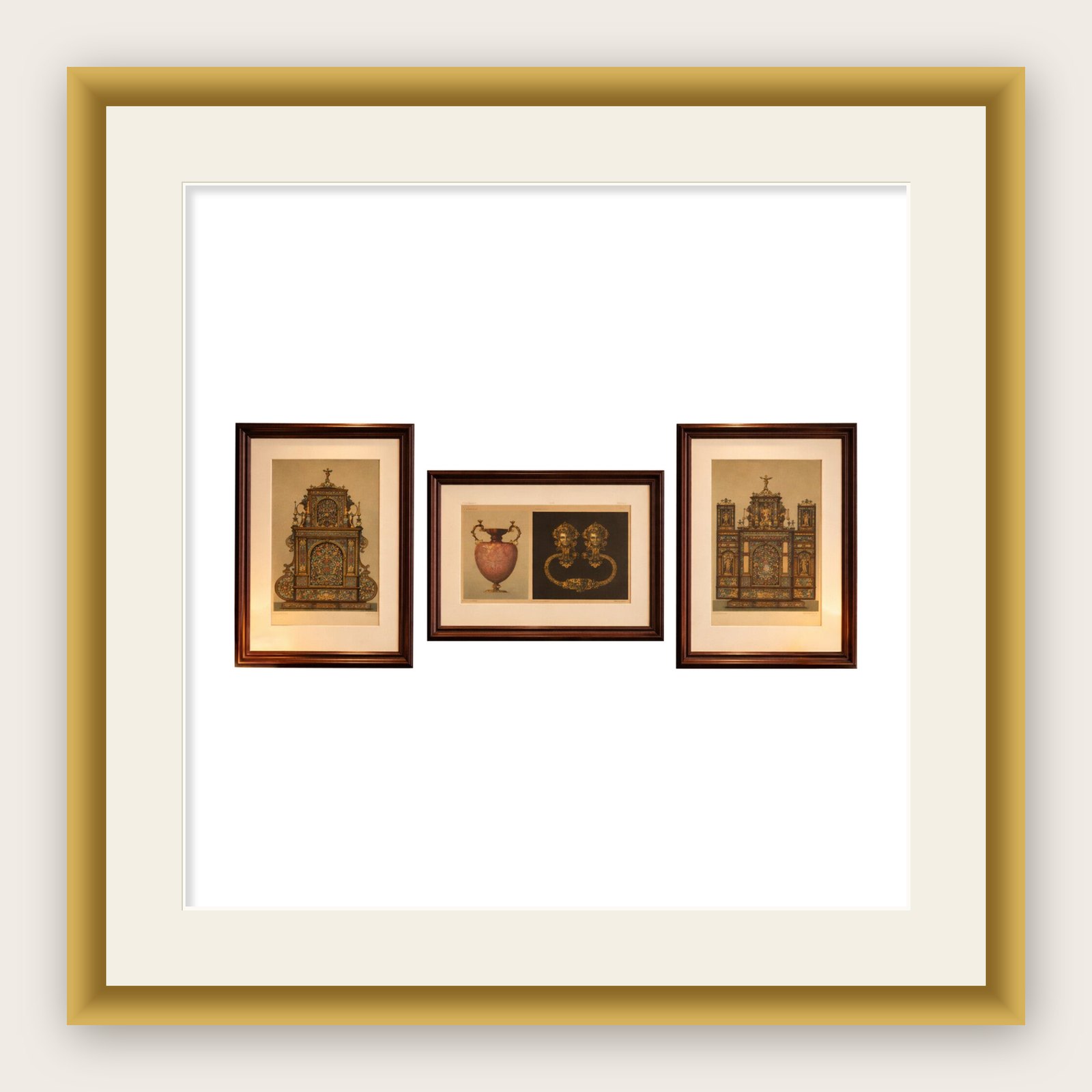
Frame and rooms are illustrations of how the print could look, drawn to its real size; it is sold unframed unless the description says otherwise.
Churches & temples
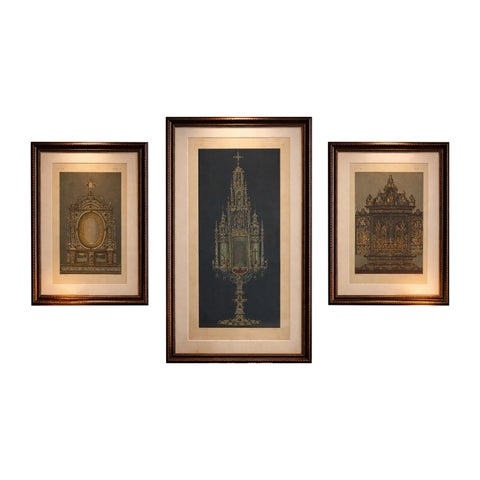
Monumental Bavarian Altar Design Triptych, Historicist Ornament, c. 1874
$4,960
€4,400 · £3,735
Original print, not a reproduction
Ships worldwide from the Netherlands, flat, insured and tracked. 14-day returns. To buy, use Ask a question (info@antiquearchitectureprints.com) and we will reserve it for you.
- Date
- 1874
- Sheet size
- 26 × 18.9 in (66 × 48 cm)
- Condition
- Good. All three plates are in good antique condition. Light age-related toning and scattered foxing to the margins, consistent with chromolithographs of this period. Central images remain strong and well-preserved. Original plate margins retained.
- Collection
- Churches & temples
- Era
- 1850 and after, The age of revivals
- Stock no.
- f_48653152
Monumental Bavarian Altar Design Triptych, Historicist Ornament, c. 1874
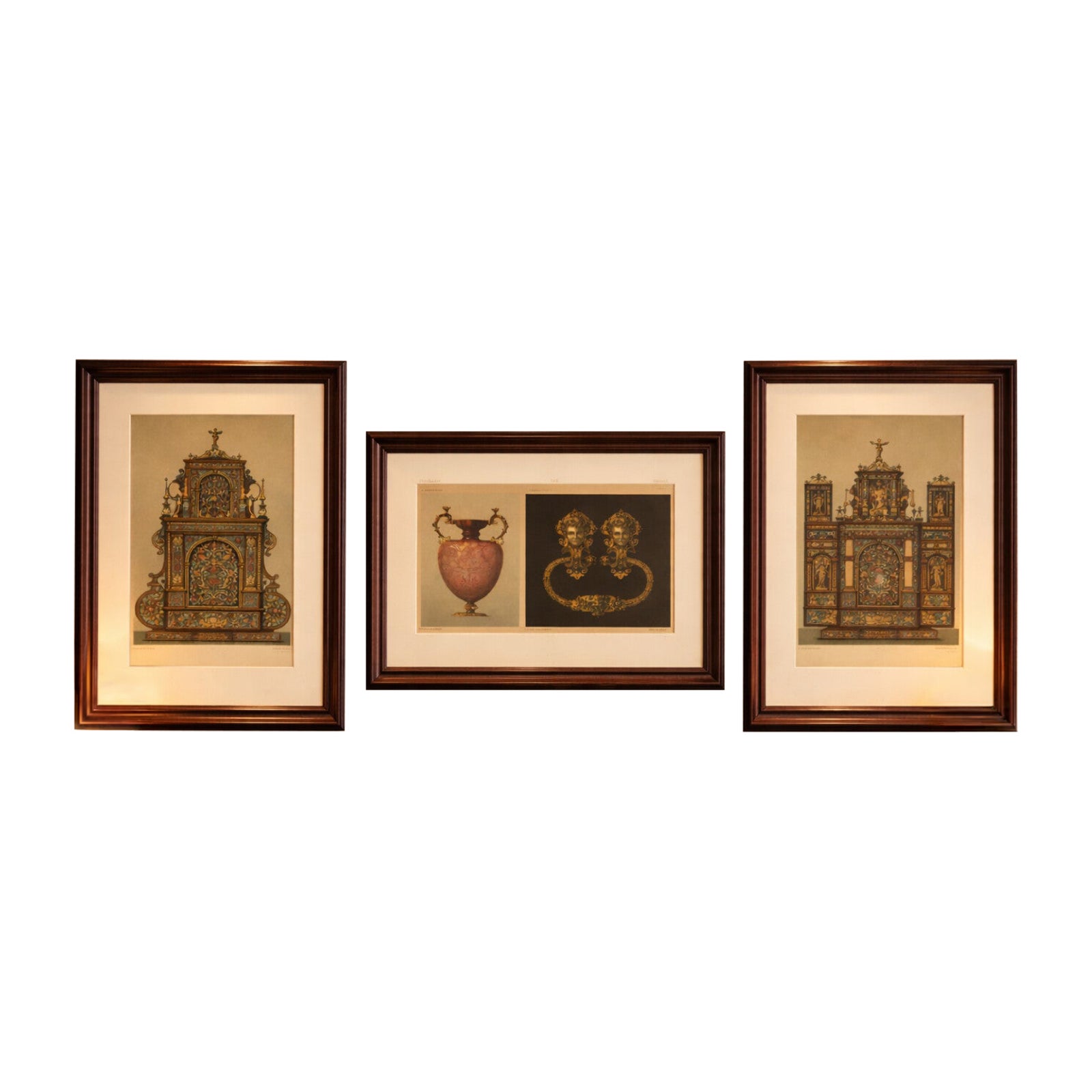
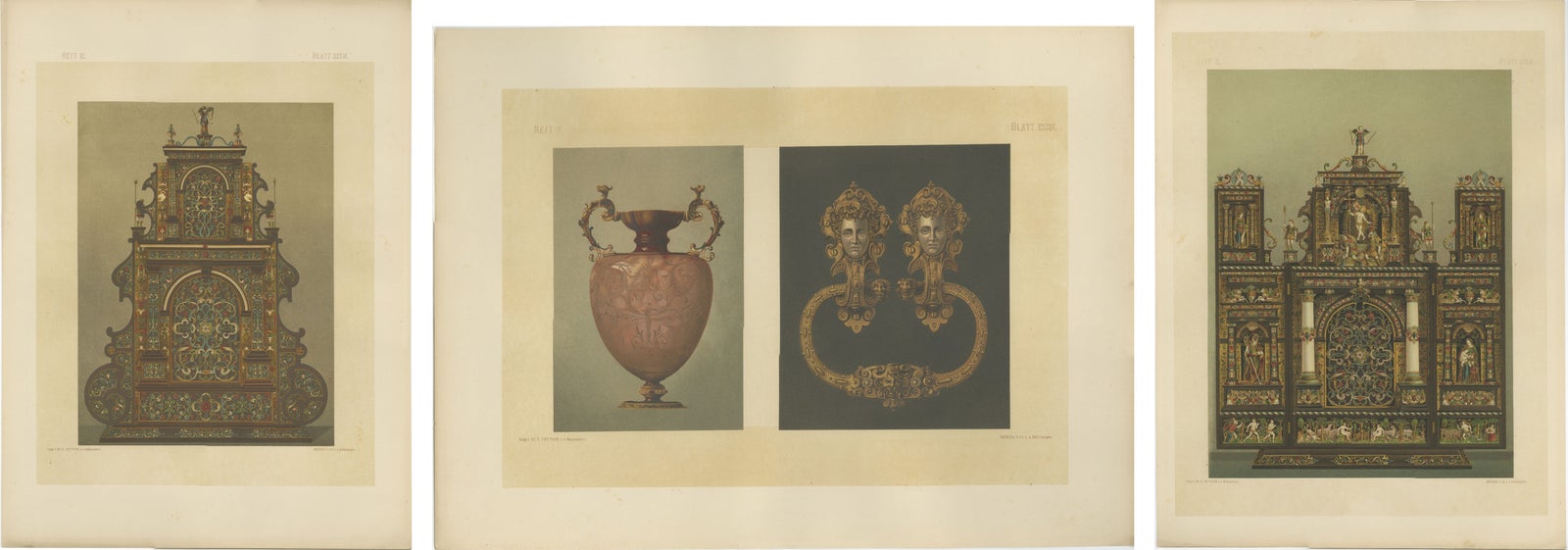
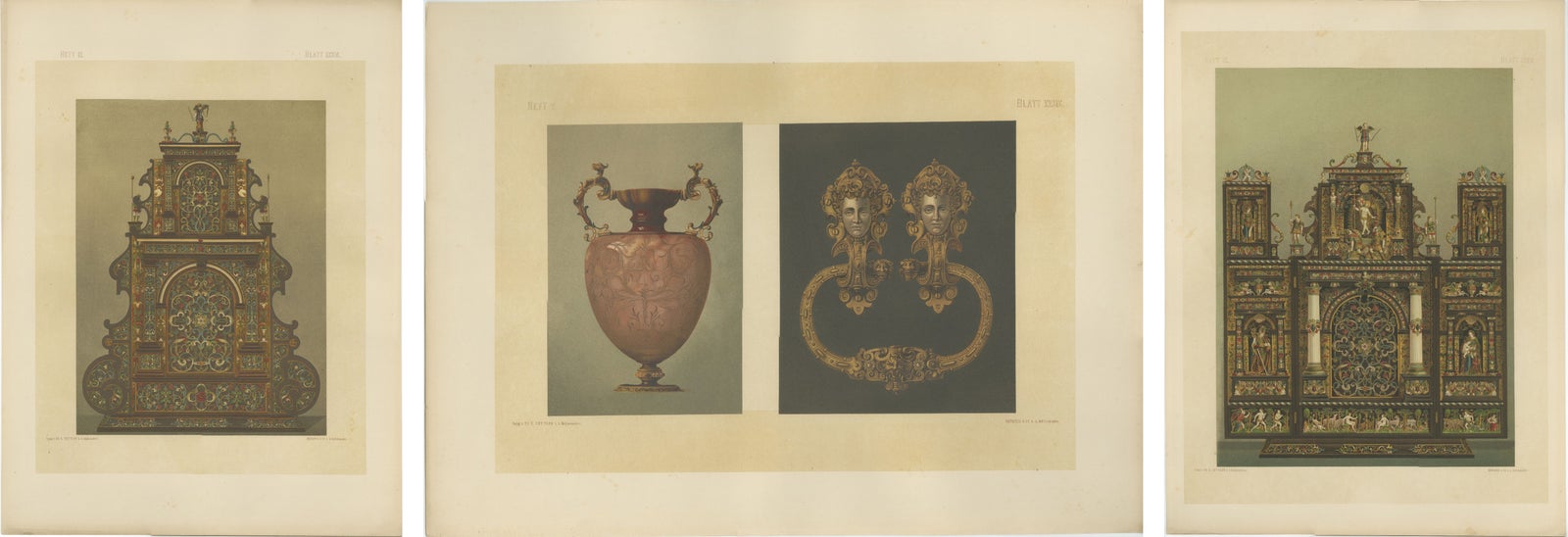
This striking triptych brings together three large-scale Bavarian chromolithographs illustrating the ornamental and architectural design language of monumental ecclesiastical interiors in late 19th-century southern Germany. Produced in Munich in the circle of Franz Xaver Zettler, these plates document the historicist revival of medieval and Renaissance forms that defined church furnishing and decorative programs in Bavaria around 1890.
The plates are offered unframed, giving flexibility to select a frame that best suits the intended interior.
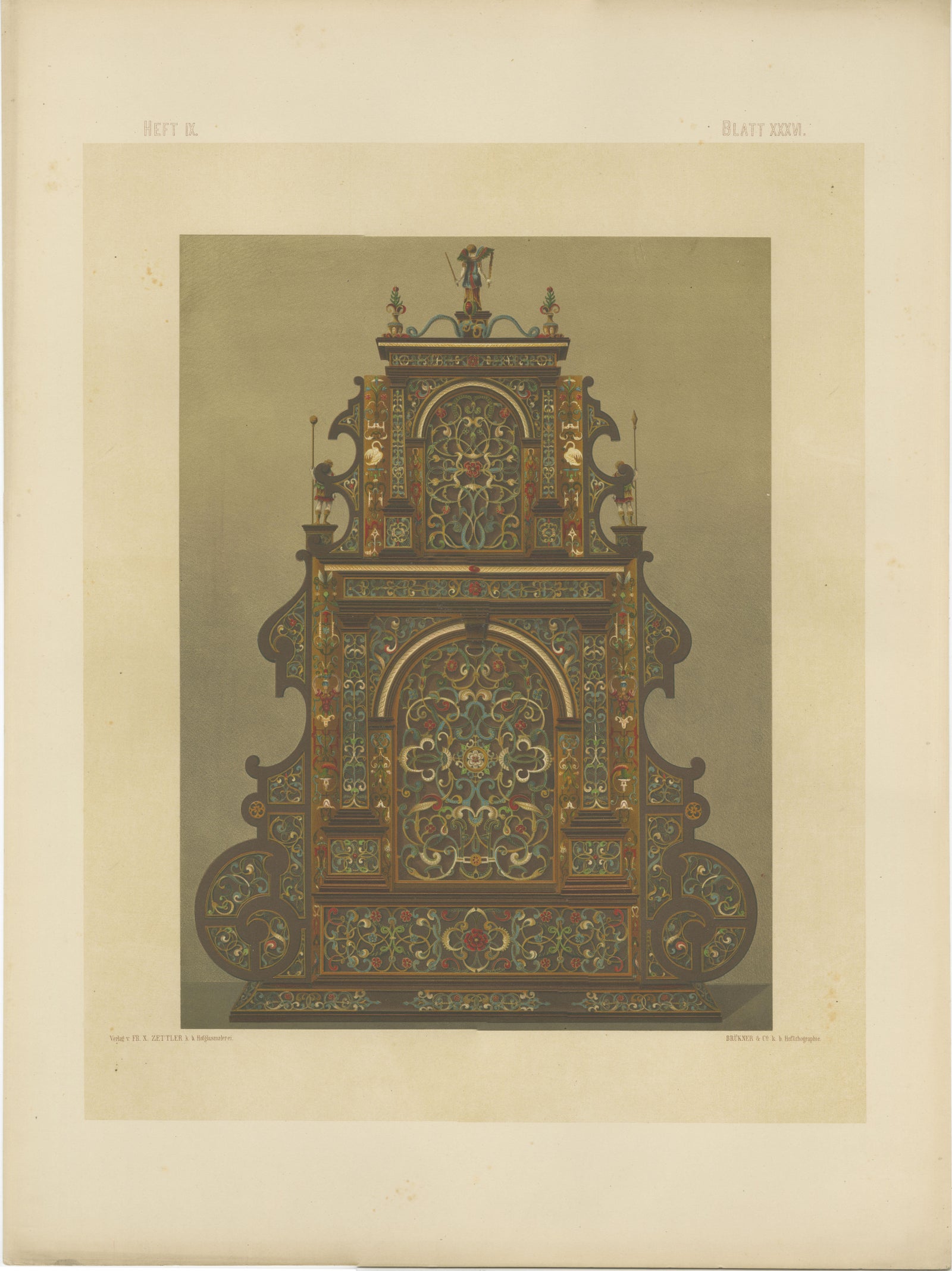
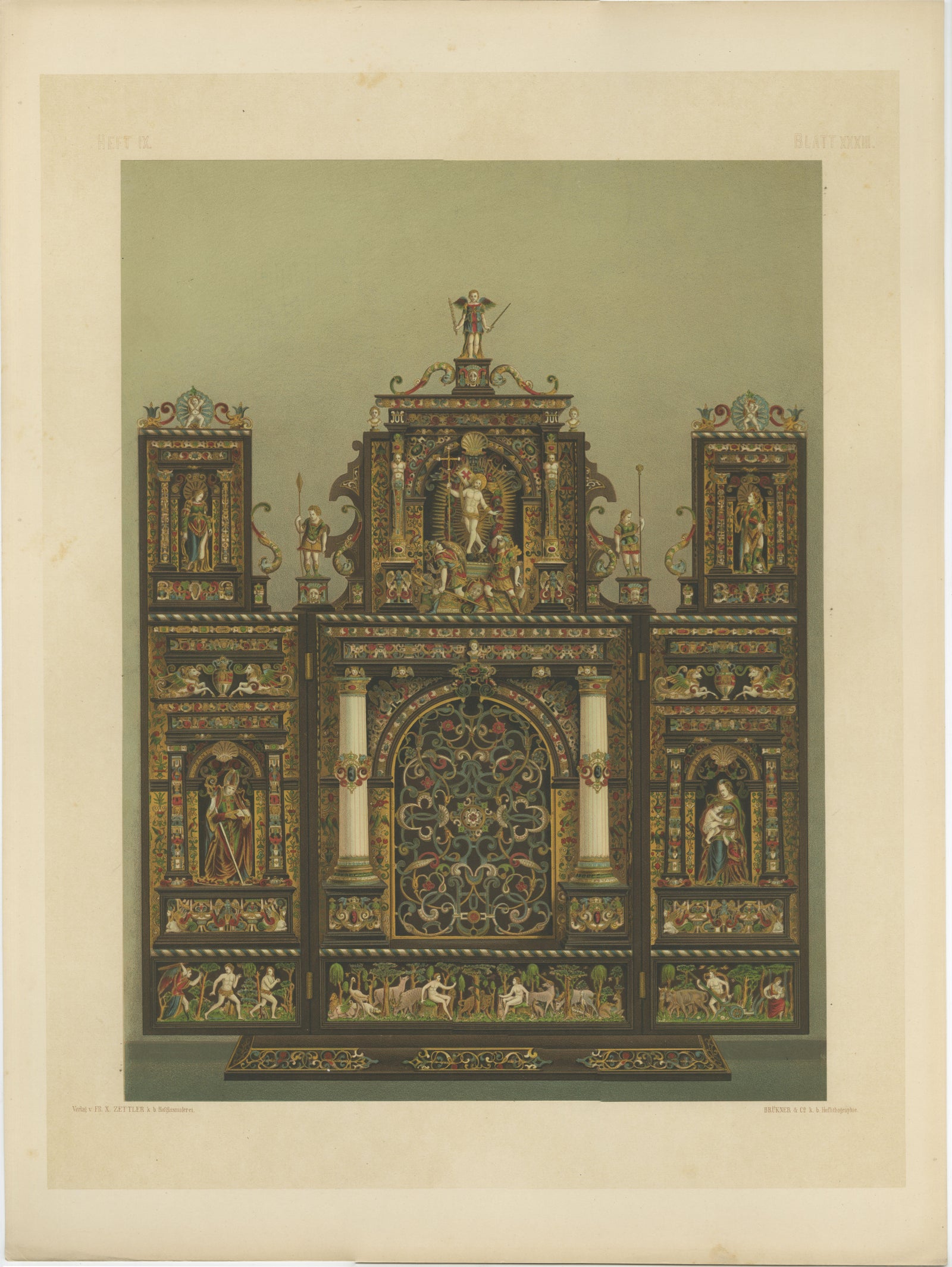
The central plate presents a richly articulated altar structure, conceived as a unified architectural object with layered niches, scrolling metalwork, polychrome surface decoration, and symbolic figural elements. Its dense composition and balanced symmetry give the work a commanding presence, evoking the visual authority of a fully realized high altar within a church interior.
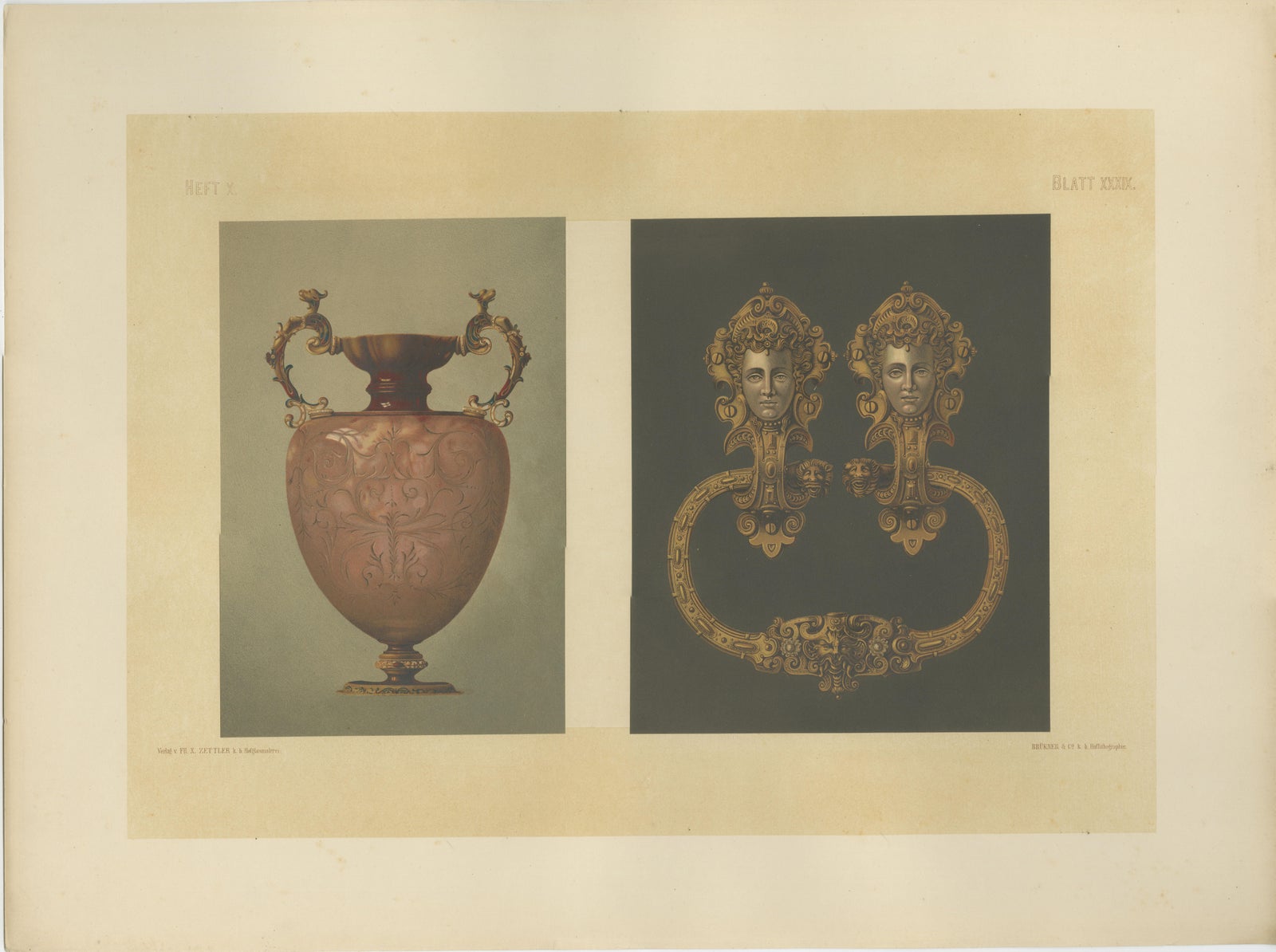
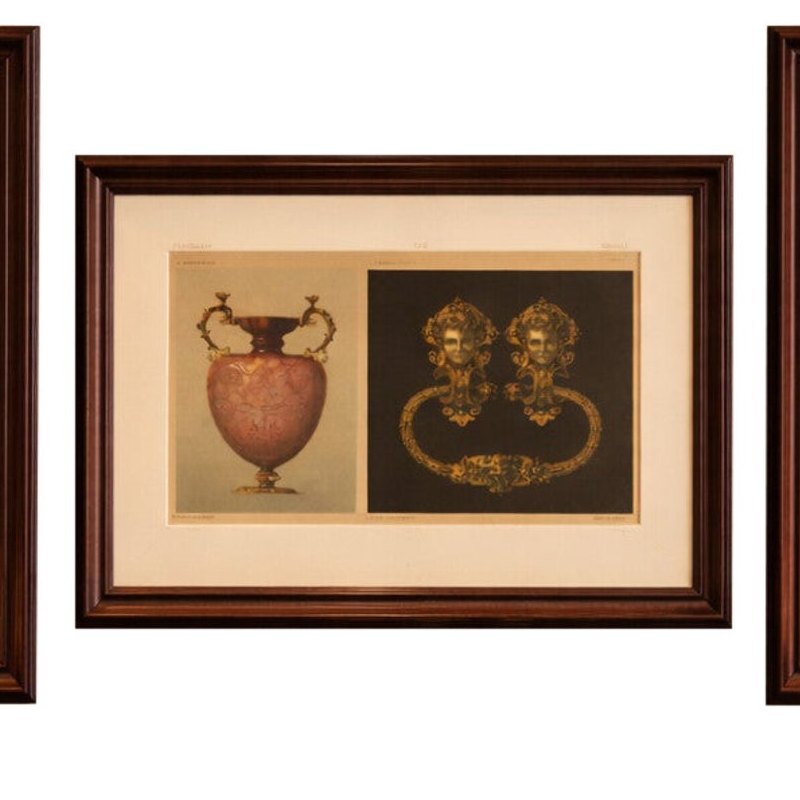
Flanking this centerpiece are two complementary design plates that expand the visual vocabulary of the ensemble. One depicts an elaborately ornamented chalice with scrolling handles and engraved surface decoration, presented not as a devotional object but as a study in form, proportion, and decorative technique. The other plate focuses on architectural ornament and metalwork elements, emphasizing surface pattern, symmetry, and the interplay between structure and embellishment.
Together, the three works read as a coherent design program rather than isolated images. The shared palette of muted greens, warm golds, and restrained reds, combined with the same chromolithographic finish and frontal presentation, creates a visually unified wall composition. The triptych functions equally well as a scholarly reference to historicist ecclesiastical design and as a powerful interior statement, particularly suited to libraries, stairwells, corridors, or refined hospitality interiors where architectural rhythm and historical depth are valued.
This is a curated triptych conceived for display as a single ensemble, offering far greater visual impact and conceptual clarity than the individual plates shown separately.
Condition Report:
All three plates are in good antique condition. Light age-related toning and scattered foxing to the margins, consistent with chromolithographs of this period. Central images remain strong and well-preserved. Original plate margins retained.
Framing Suggestions:
Recommended as a unified triptych with identical frames and mats. Dark walnut or ebonized frames with generous ivory or soft stone-colored mats will emphasize the architectural qualities and enhance wall presence. Hanging with even spacing between the three works will reinforce the intended triptych rhythm.
Technique: Chromolithograph
Maker: Franz Xaver Zettler, Munich, late 19th century
Keywords:
Bavarian historicist design, architectural triptych, altar design study, ecclesiastical ornament, 19th century German design, Munich chromolithograph, Franz Xaver Zettler, historicist interior, architectural wall art, design triptych, ornamental studies, European decorative arts, museum wall piece, interior designer artwork, German sacred architecture, antique chromolithograph set, architectural ornament prints, curated wall ensemble, late 19th century Bavaria, historic interior reference