Close-ups
Framed and on the wall
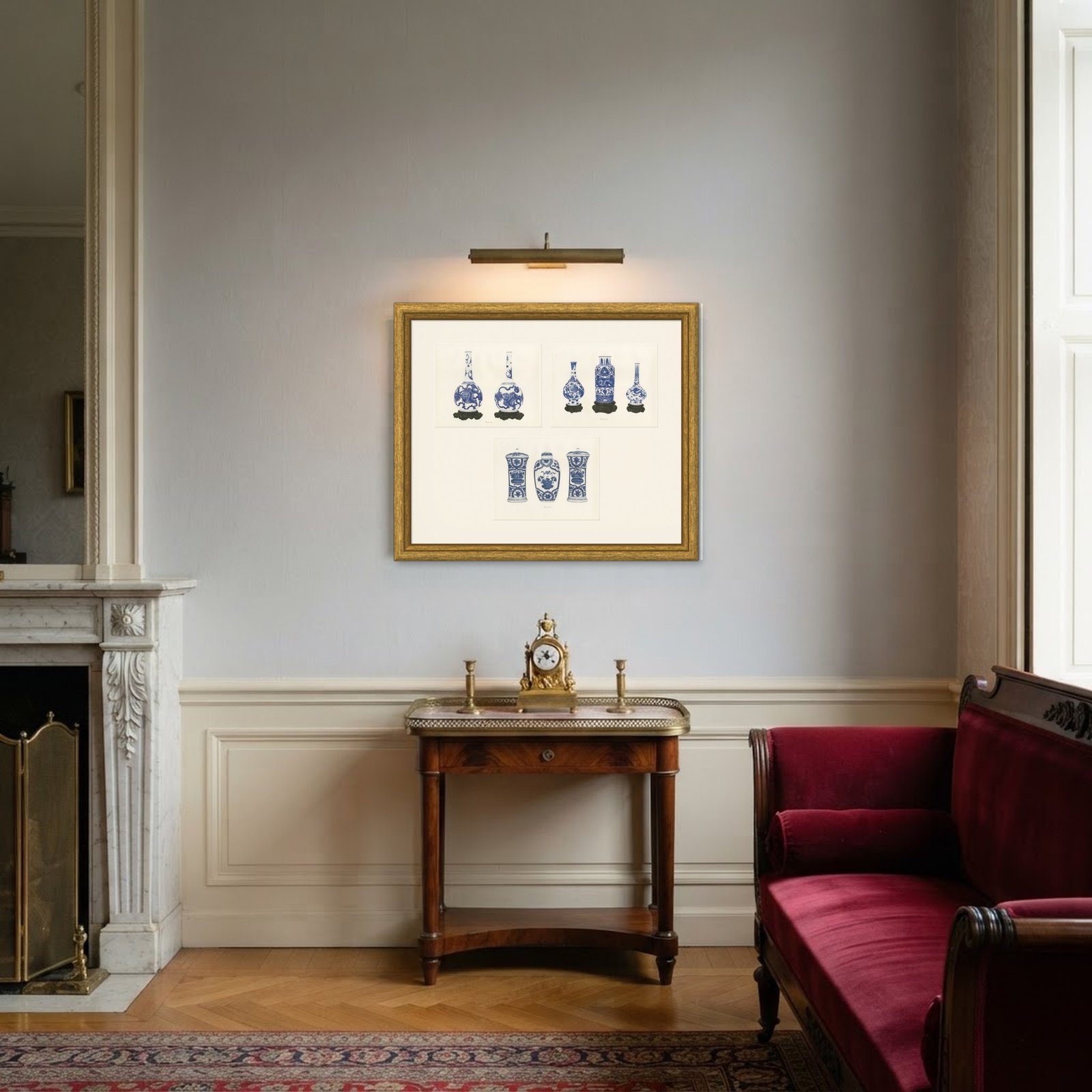
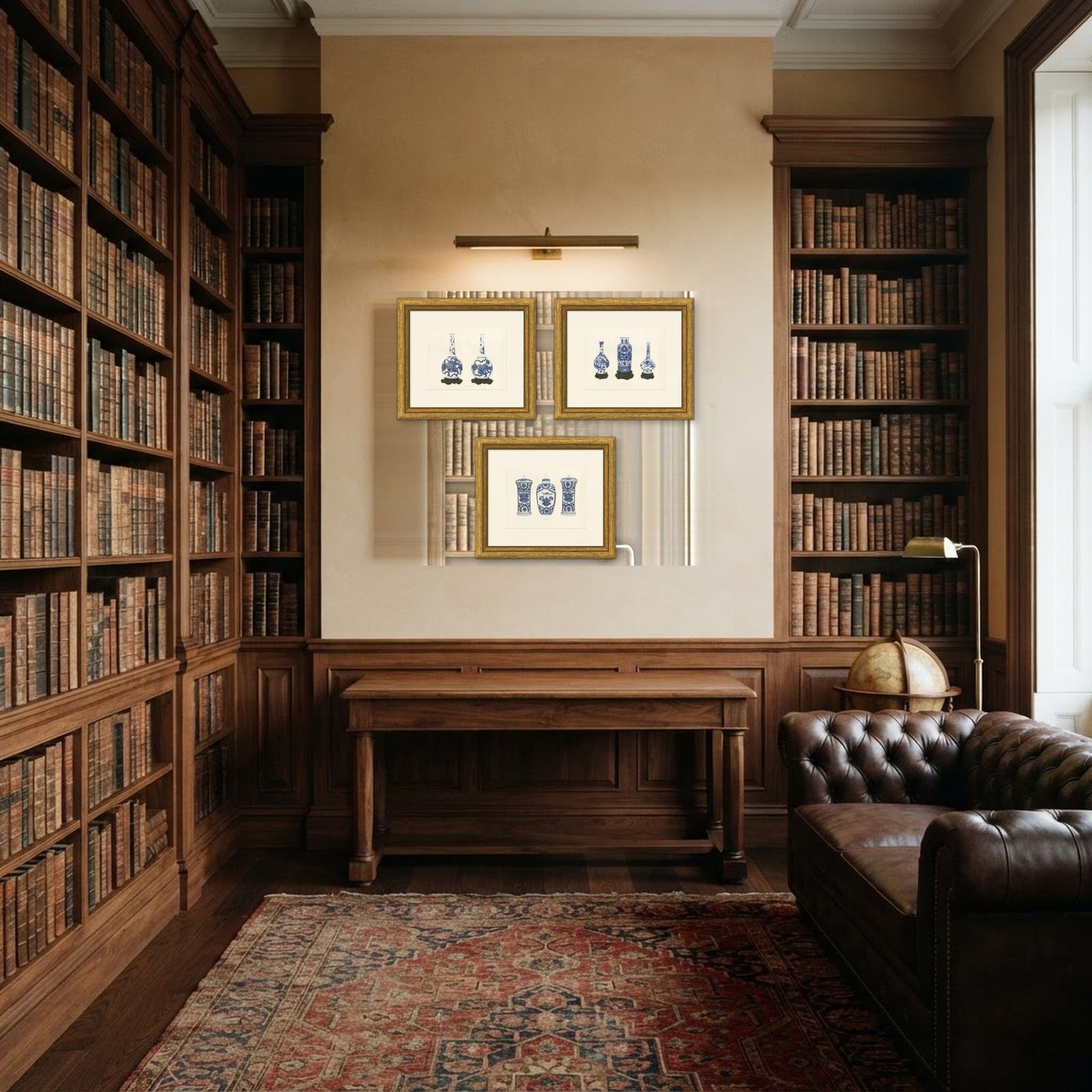
Frame and rooms are illustrations of how the print could look, drawn to its real size; it is sold unframed unless the description says otherwise.
Porcelain & ceramics
Lions, Lambrequins and Lotus, Three Kang-he Blue and White Plates, 1911
£400£28030% off
$370 · €336
Original print, not a reproduction
Ships worldwide from the Netherlands, flat or rolled, insured and tracked. 14-day returns.
- Date
- 1911
- Sheet size
- 9.4 × 12.2 in (24 × 31 cm)
- Coloring
- Printed color
- Condition
- Good. Even age toning throughout. Light foxing in the margins of two of the three sheets. Slight wear at the corners of two of the three sheets. Shallow nicks along an edge of one of the three sheets.
- Collection
- Porcelain & ceramics
- Era
- 1850 and after, The age of revivals
- Stock no.
- BG-14405-145
What the condition grades mean
- Excellent
- Bright and clean, with no faults worth mentioning.
- Very good
- Only light signs of age, such as faint toning.
- Good
- Normal signs of age for a sheet of this period: toning, some foxing, small marks or neat old repairs.
- Fair
- Clear faults such as staining, tears or repairs, priced to match.
Every fault we see is written in the condition note, and the whole sheet is shown uncropped in the photos.
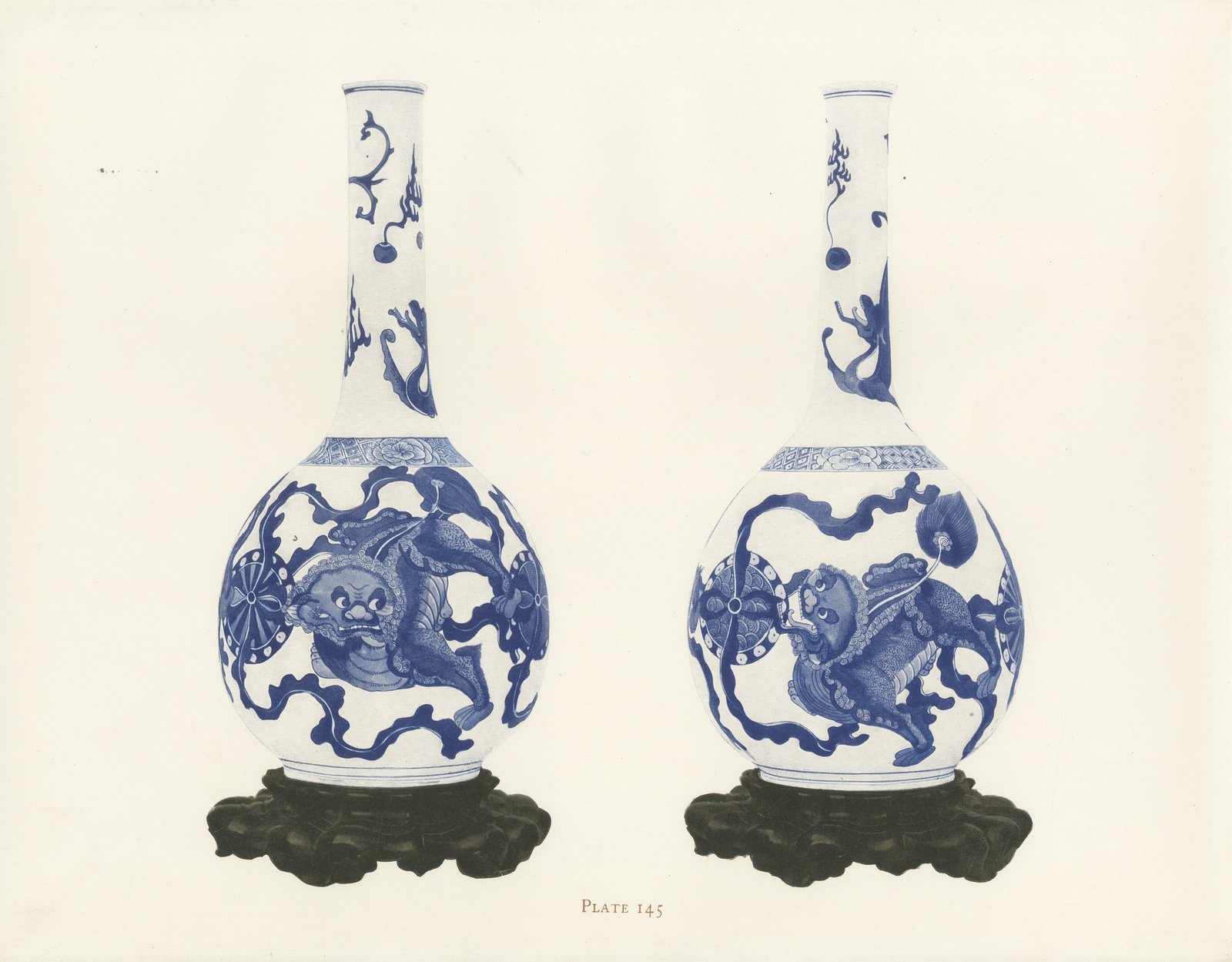
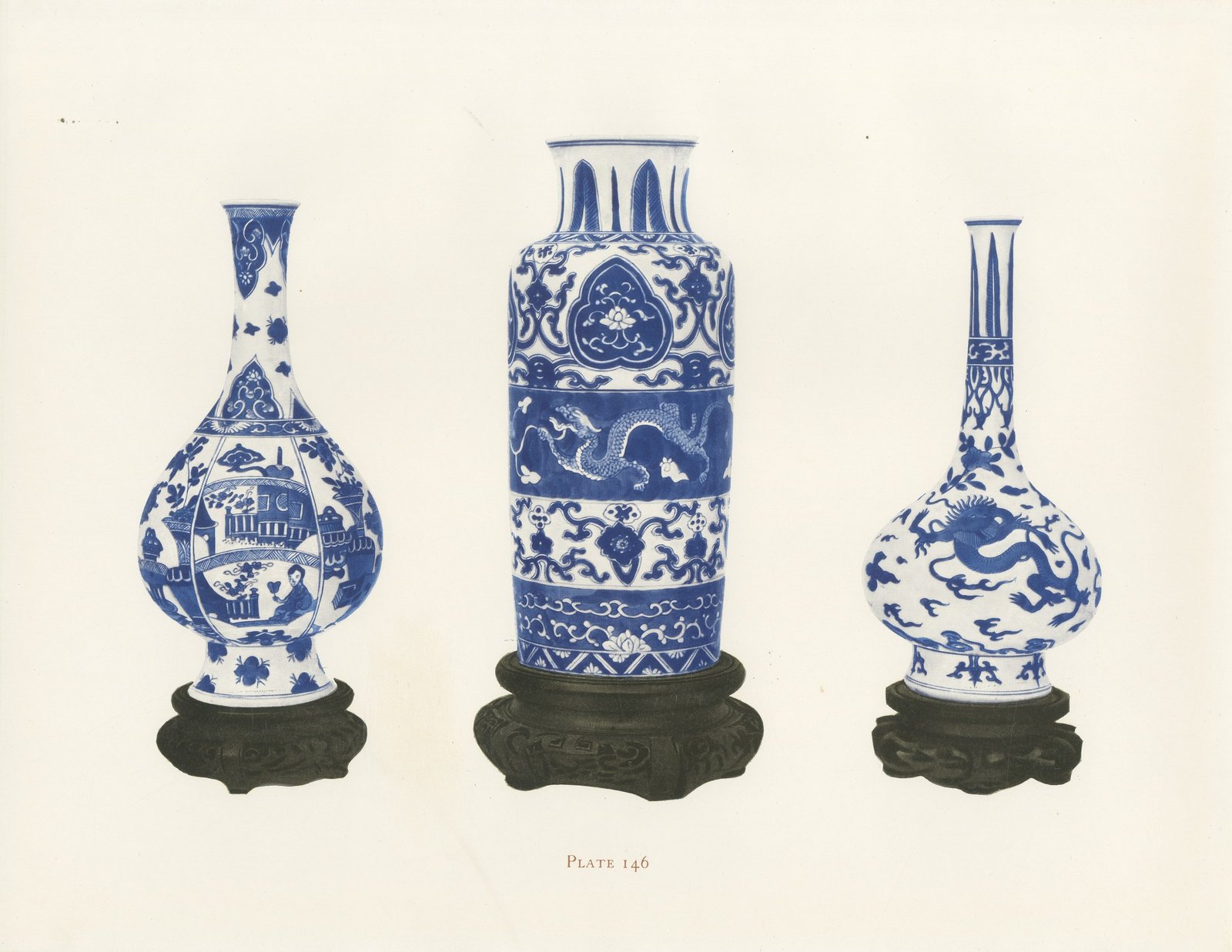
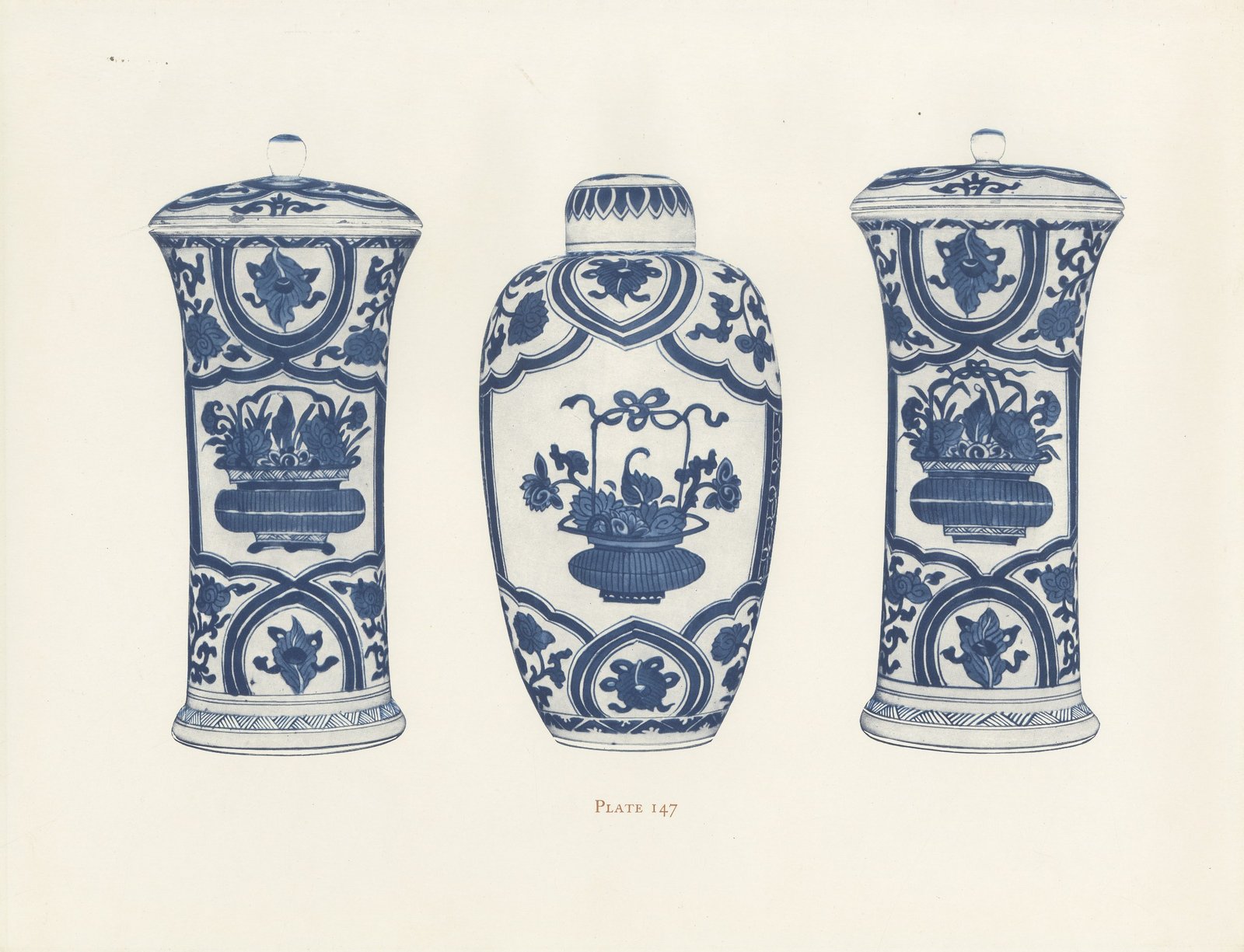
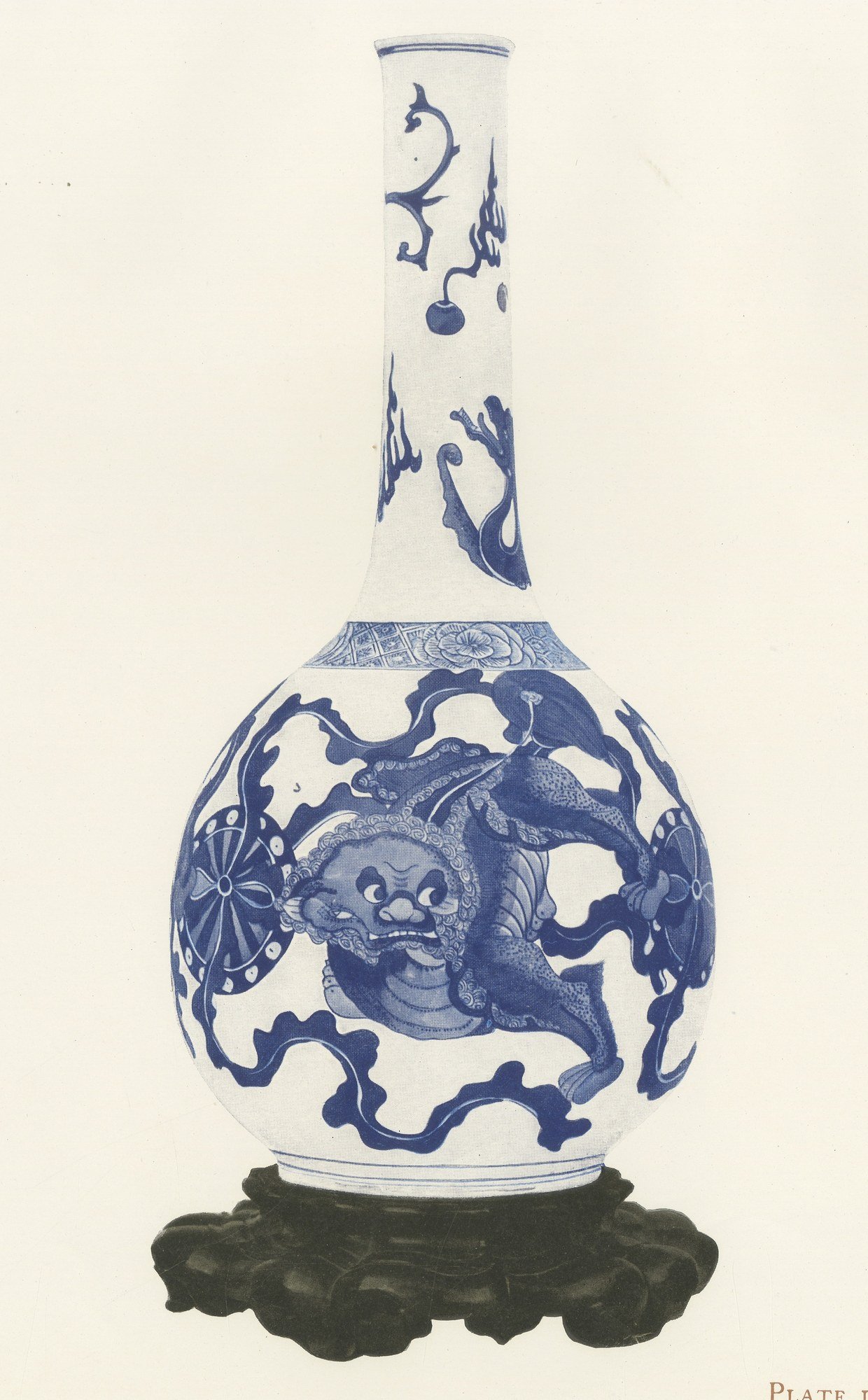
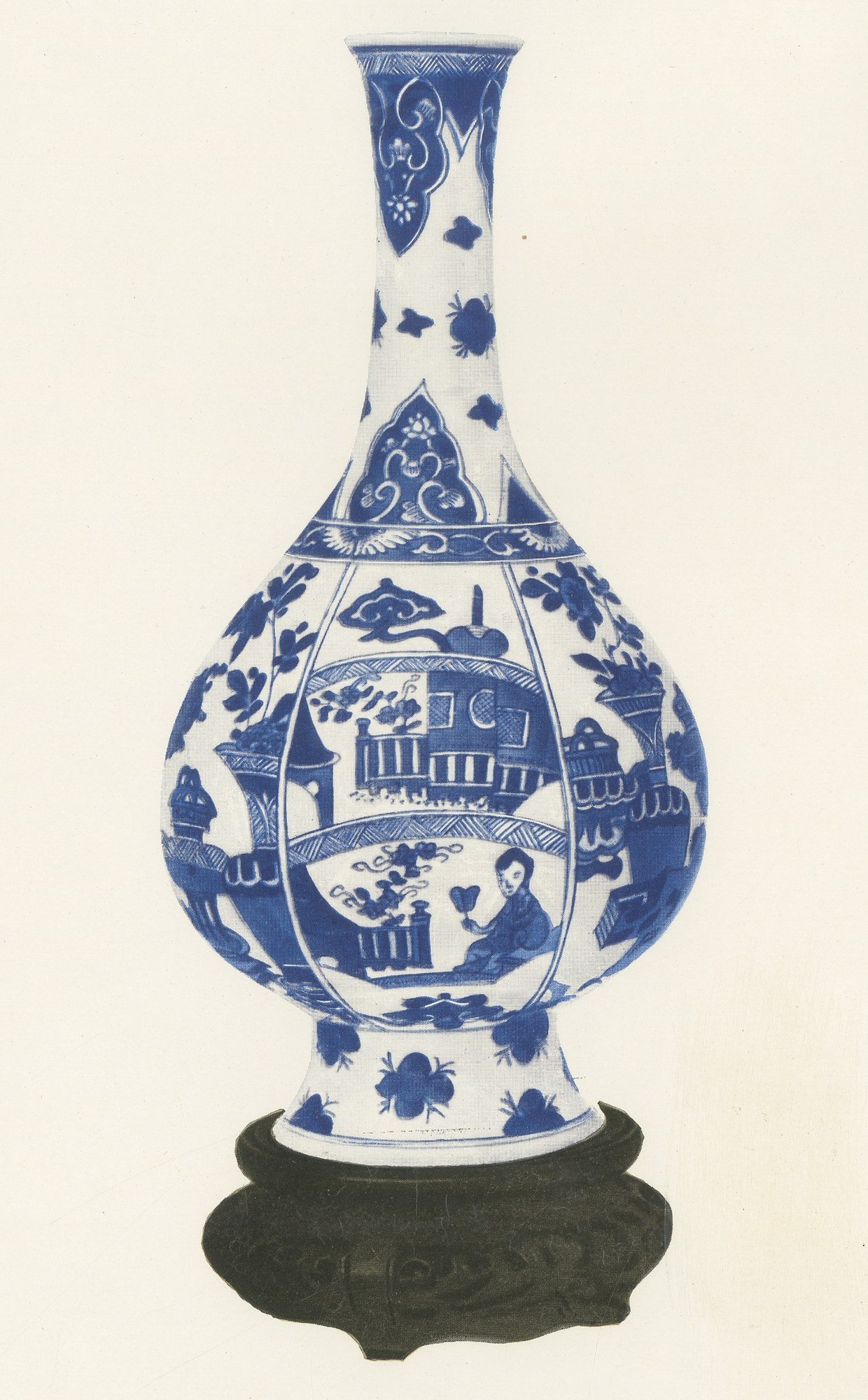
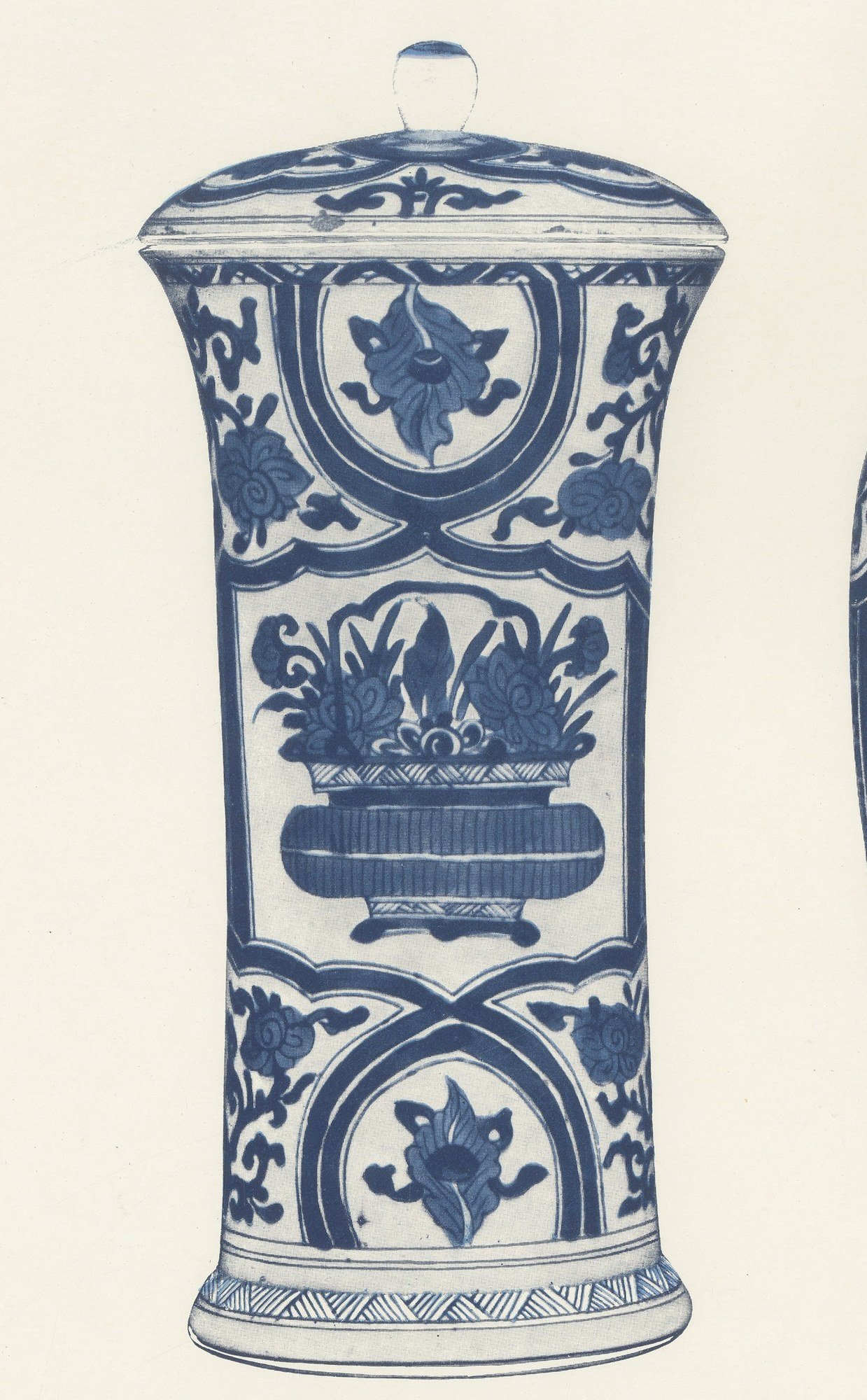
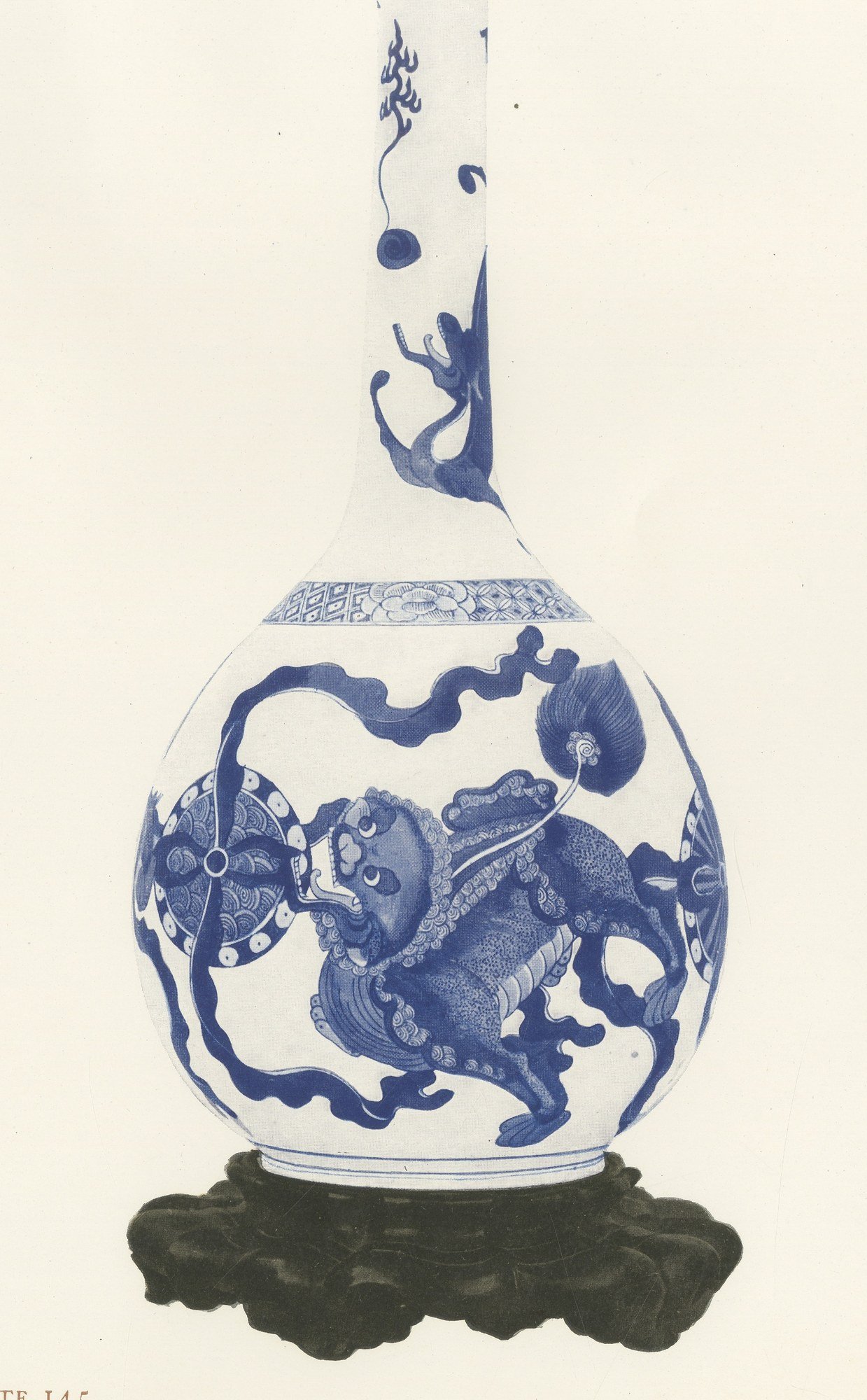
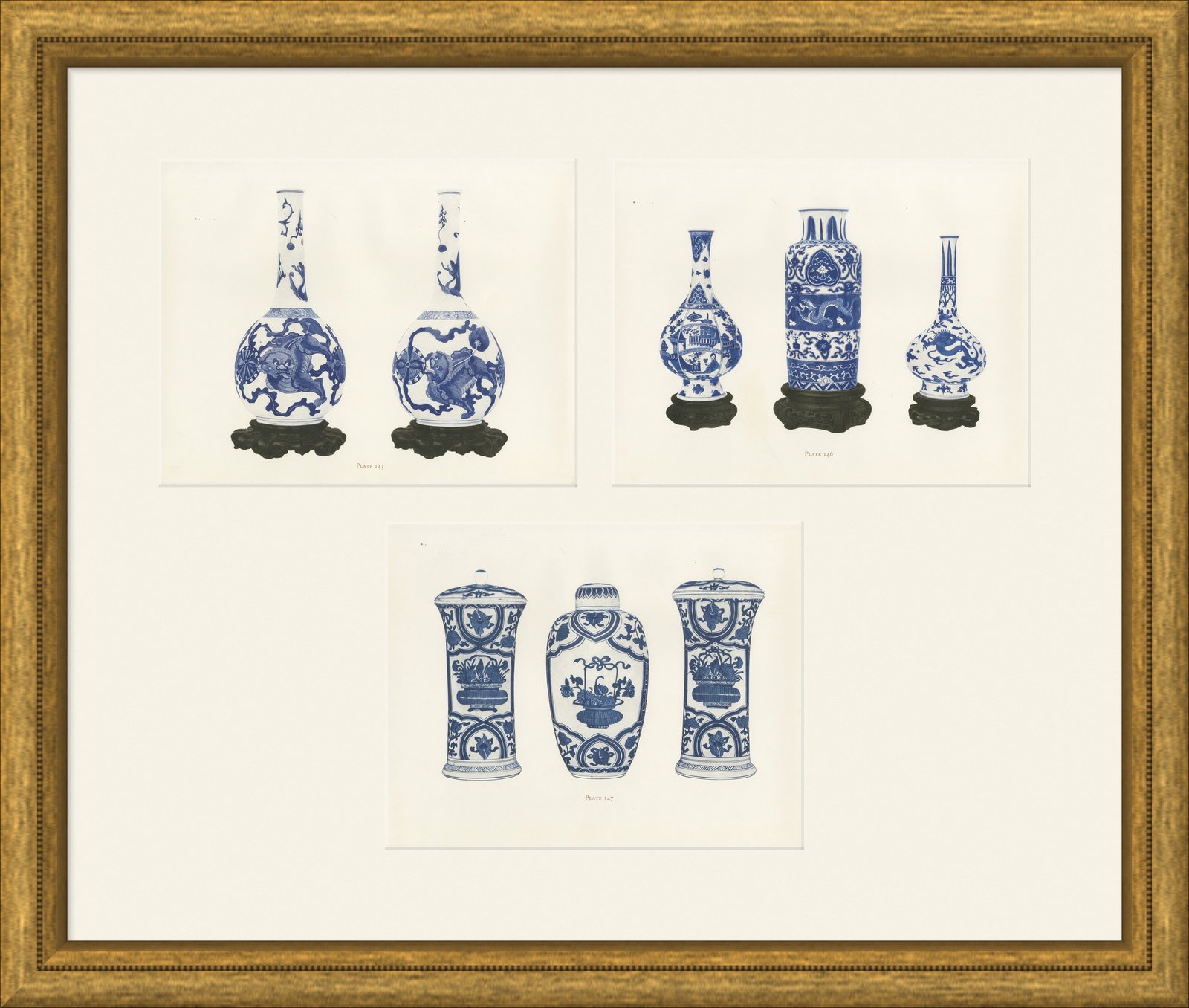
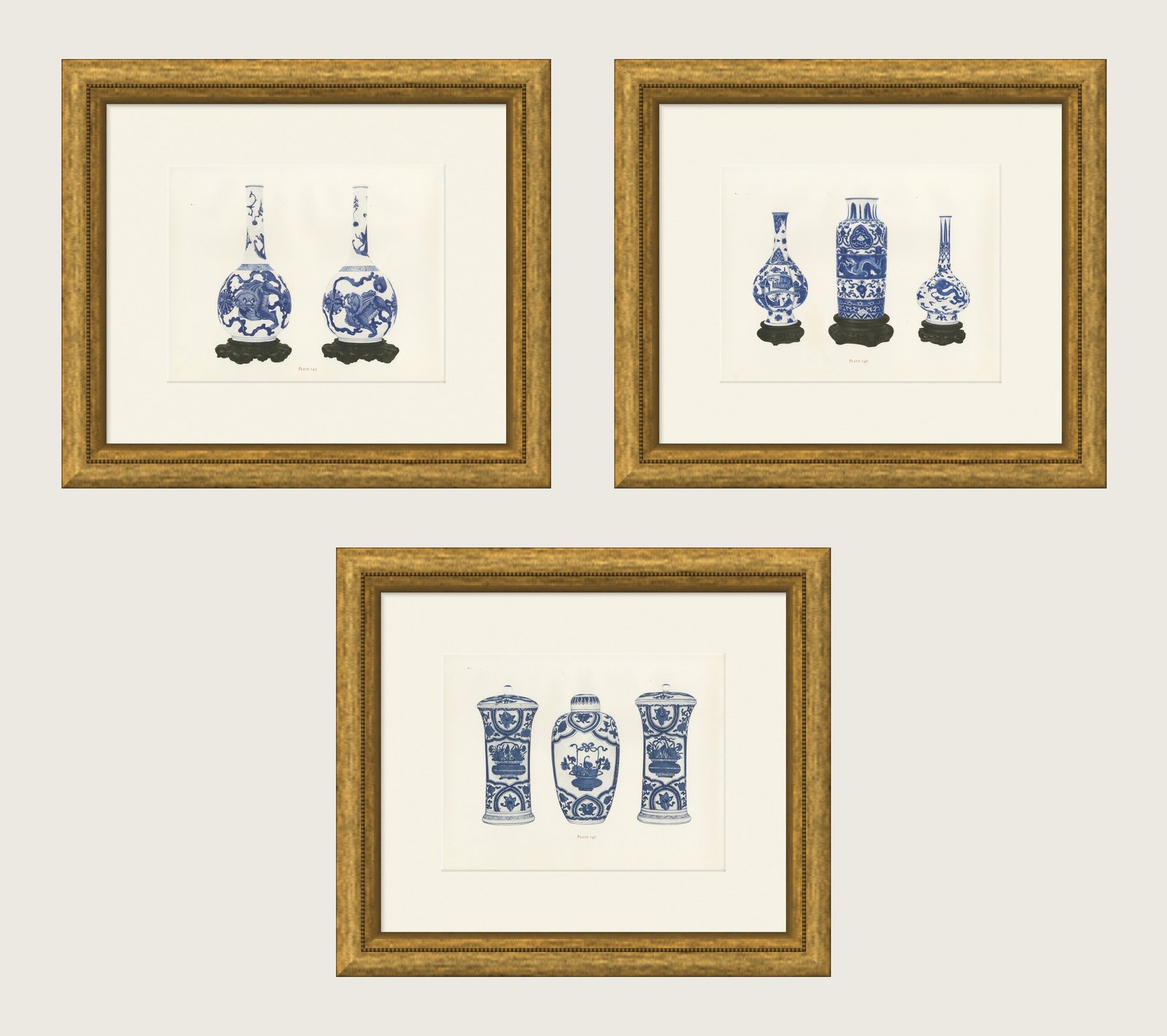
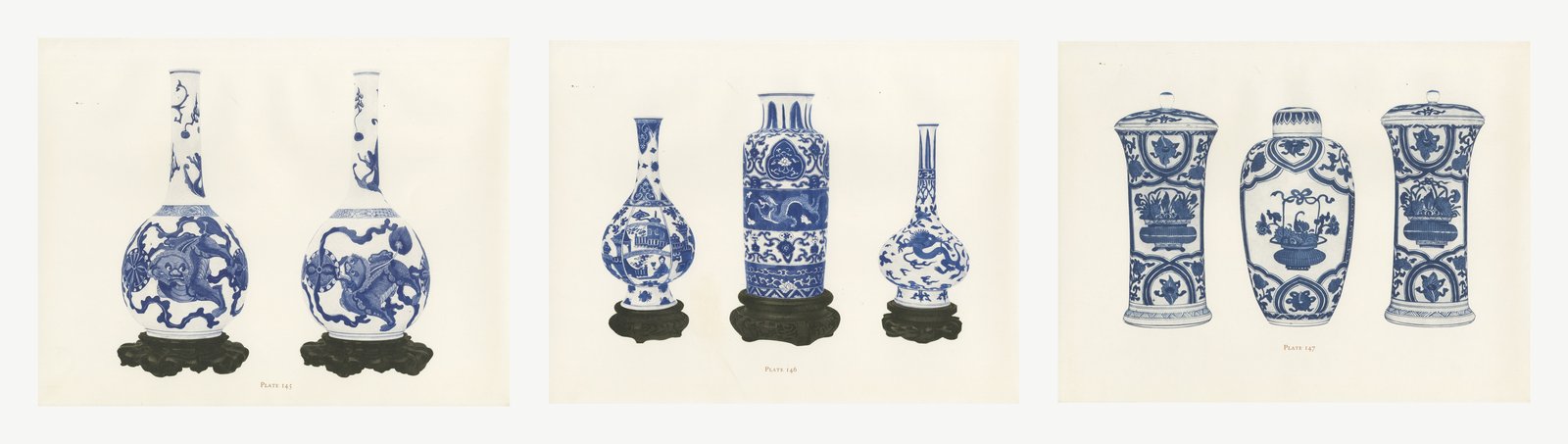
This is a set of three original 1911 color plates, Plates 145, 146 and 147 from Volume II of Gorer and Blacker's Chinese Porcelain and Hard Stones, sold together as one lot. What links them: blue and white bottles, vases and jars. Plate 145: Bottles, a pair, large. Decoration in brilliant cobalt painted on a white ground; the continuous design on the body consists of a series of three lions playing with brocaded balls, from which proceed long wavy fillets or ribbons enclosing each lion above and below. Increased depth of tone is caused by stippling and hatching; upon the shoulder is a border composed of three bands. The book gives it to the Kang-he period and records height 18 inches (45.8 cm); diameter 7 3/4 inches (19.7 cm). In the collection of J. B. Lee, Esq. Plate 146: Group of three vases, blue and white. The cylindrical vase is ornamented in zones: a border of palmettes separated by sweet-flags, followed by a band of zigzags, white reserved with semi-flowers upon a blue ground, repeated on the base, and a band of semi-flowers and foliage. The short-necked bottle has zigzags at the top from which depend lambrequins with white decoration on blue, with blue flowers scattered at the base of the neck, and floral ornament on the outcurved base. The book gives it to the Kang-he period and records height 10 7/8 inches (27.8 cm); diameter 4 1/4 inches (10.8 cm), the book giving a size for each piece shown. In the collection of J. B. Lee, Esq. Plate 147: Group of three blue and white jars and covers. The beaker-shaped vases form a pair; a top border of zigzags and semi-flowers is followed by a wide one of lambrequins, both reversed at the base, where the border of zigzags is surmounted by erect lambrequins. The oviform vase with dome cover is one of a set with very similar decoration except for vertical bands of rice-star diaper, with petals enclosing a symbol. The book gives it to the Kang-he period and records height 9 3/8 inches (23.7 cm); diameter 4 1/8 inches (10.5 cm), the book giving a size for each piece shown. From the collection formed by Richard Bennett, Esq., D.L.
They were published in 1911 by Bernard Quaritch of New Bond Street, London, in Edgar Gorer and J. F. Blacker's Chinese Porcelain and Hard Stones, a work of two volumes and two hundred and fifty four color plates limited to one thousand numbered copies. The plates are color collotypes, a photographic process that reproduces continuous tone without a visible dot screen, which is why the glazes keep their depth on paper.
The volumes were produced as a record of pieces Gorer handled or admired, and the plates were made with unusual care for the period. A century later they survive as some of the best color images of early twentieth century taste in Chinese ceramics and hard stones.
Collectors of Chinese ceramics, of early color printing and of Edwardian book illustration all look for these plates, and they work equally well in an interior scheme as in a collection. The three sheets are the same size and were printed by the same hand, so they hang as one group.
These are original antique prints, not modern reproductions. They are three original sheets sold together as one lot, and the set is never split.
Even age toning throughout. Light foxing in the margins of two of the three sheets. Slight wear at the corners of two of the three sheets. Shallow nicks along an edge of one of the three sheets.
This item is sold unframed.
Explore