Close-ups
Framed and on the wall

Frame and rooms are illustrations of how the print could look, drawn to its real size; it is sold unframed unless the description says otherwise.
Ornament & pattern
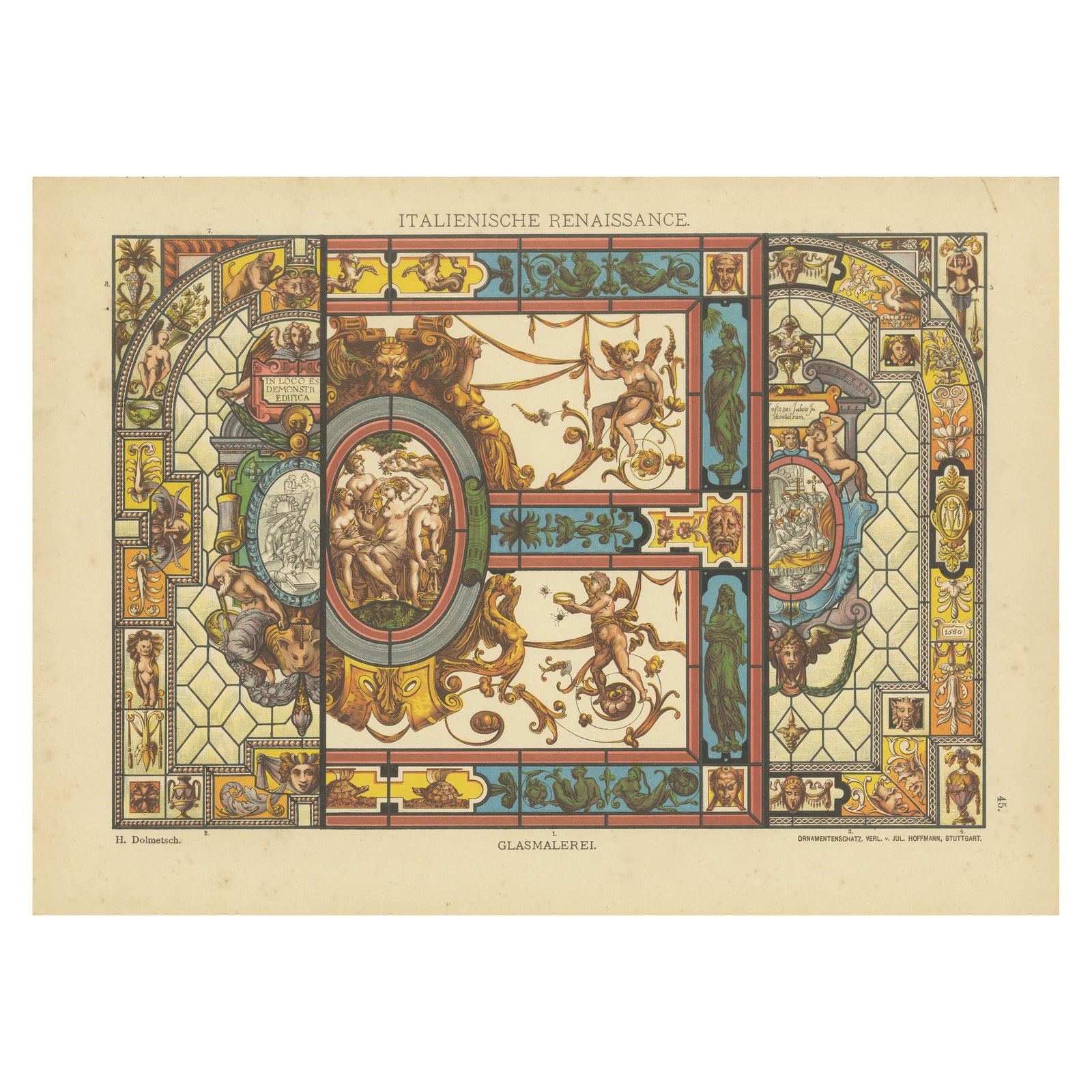
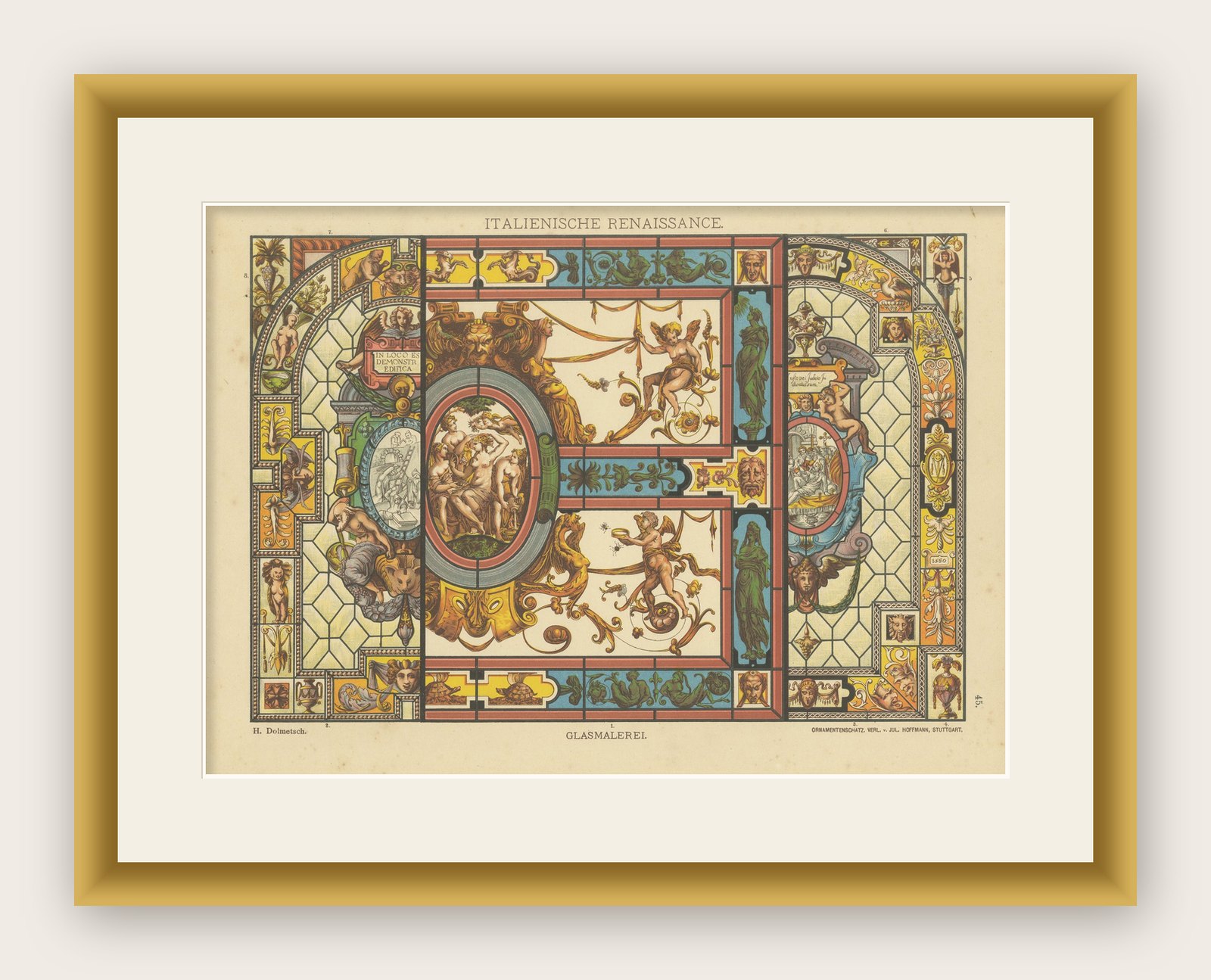
Italian Renaissance Stained Glass Artwork from Ornamentenschatz, 1887
€130
$145 · £110
Original print, not a reproduction
Ships worldwide from the Netherlands, flat, insured and tracked. 14-day returns. To buy, use Ask a question (info@antiquearchitectureprints.com) and we will reserve it for you.
- Date
- 1887
- Sheet size
- 9.8 × 13.8 in (25 × 35 cm)
- Condition
- Good. Given age. Very good considering age. General age-related toning and/or occasional minor defects from handling. Please study scans carefully.
- Collection
- Ornament & pattern
- Era
- 1850 and after, The age of revivals
- Stock no.
- f_41366192
"Italian Renaissance Stained Glass Artwork from Ornamentenschatz, 1887"
Description:
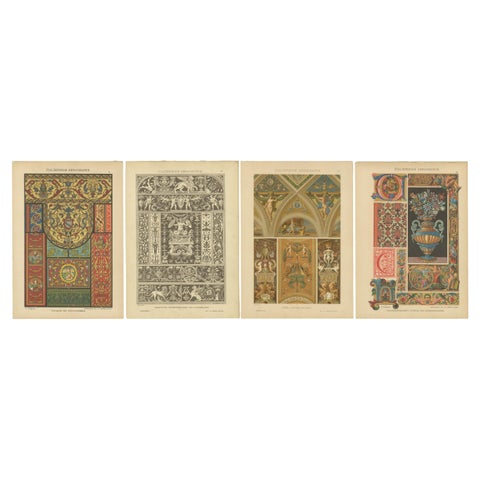
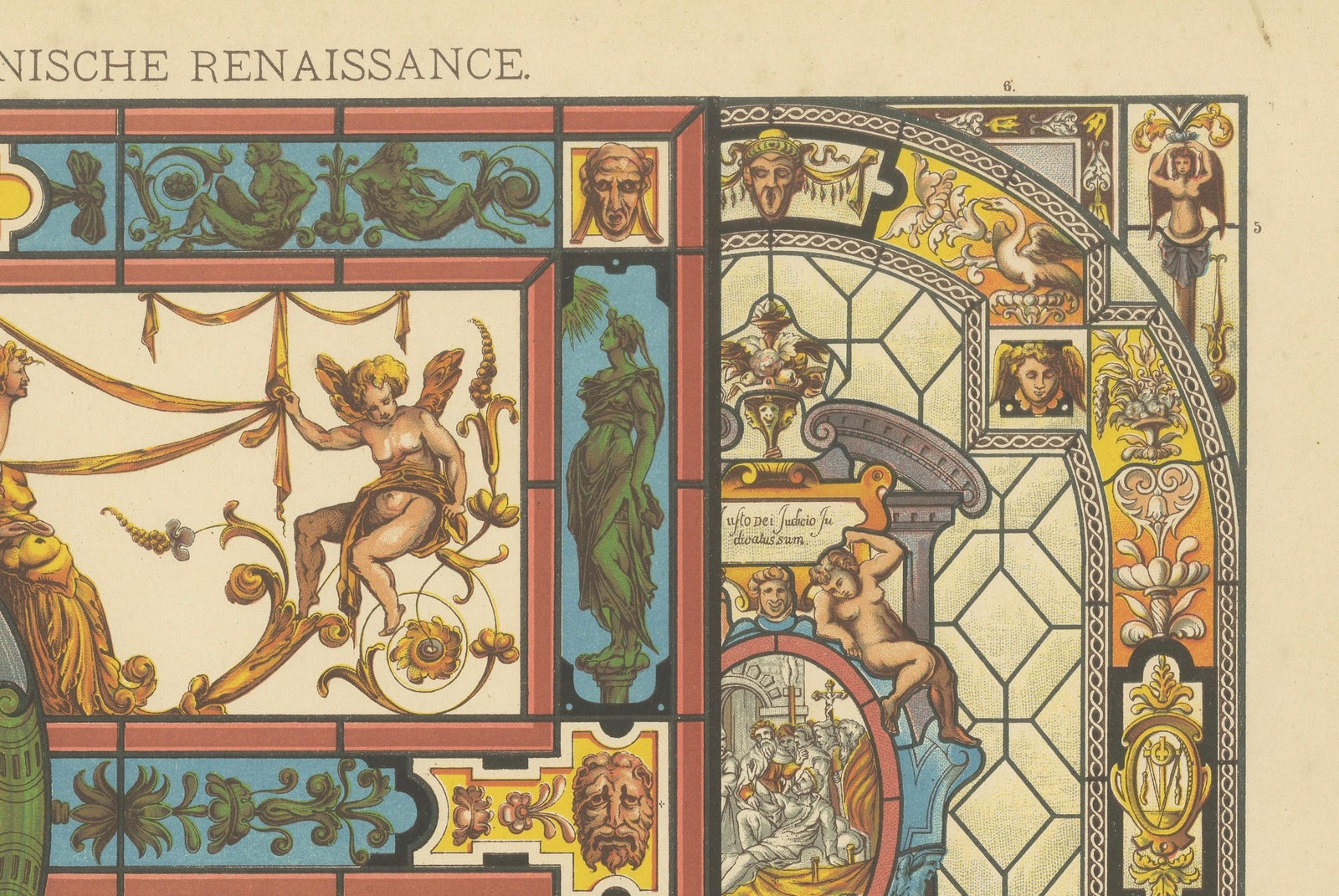
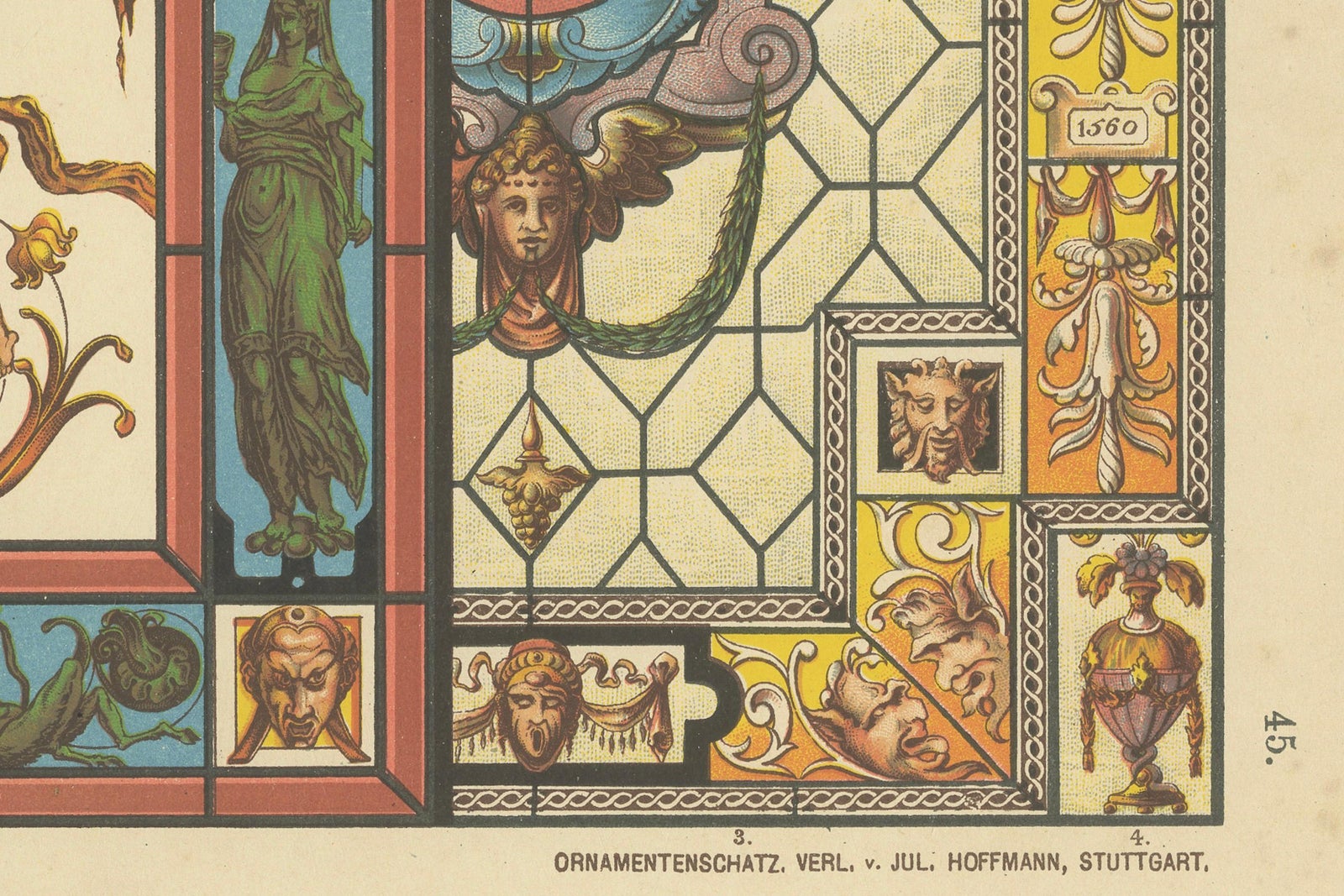
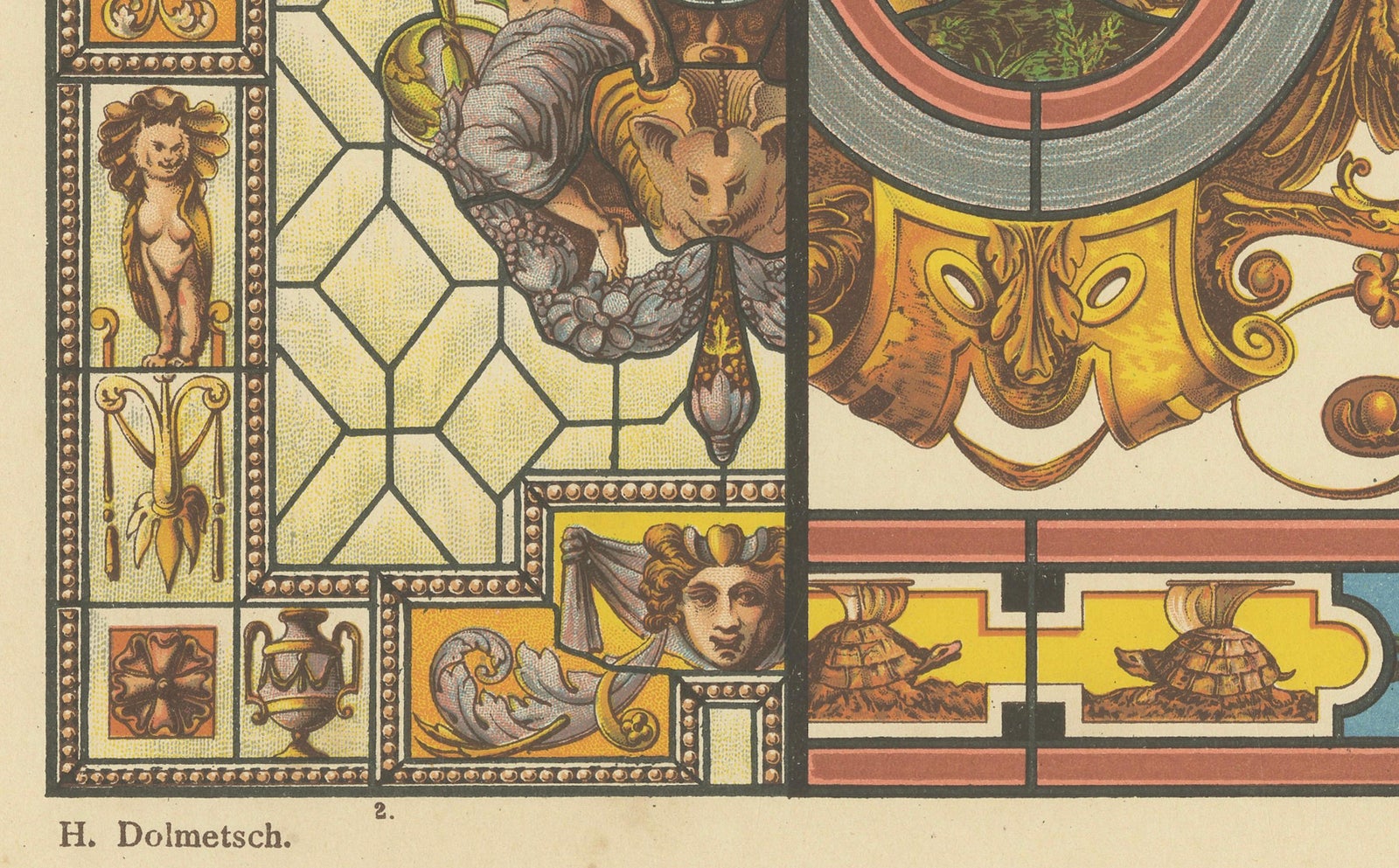
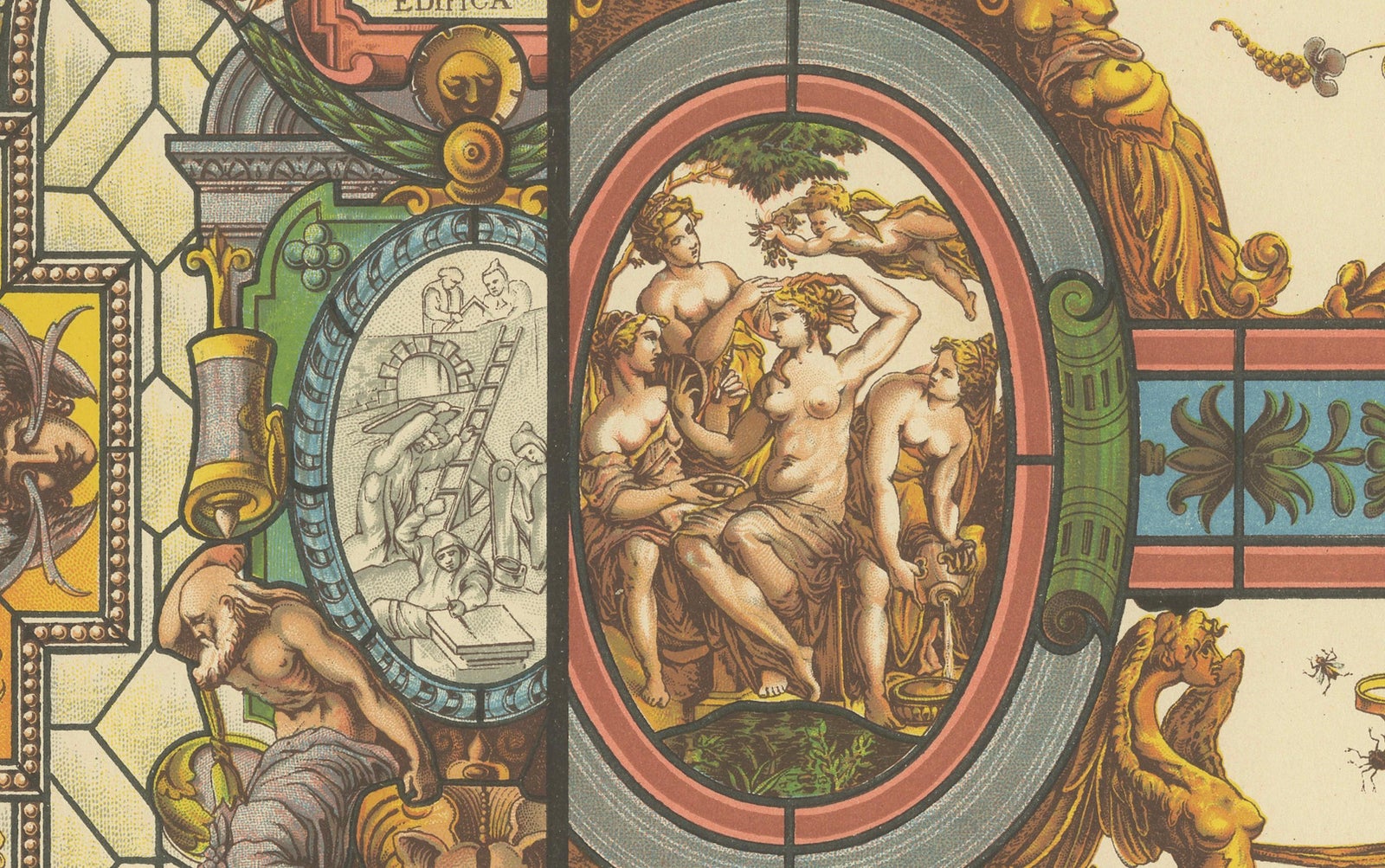
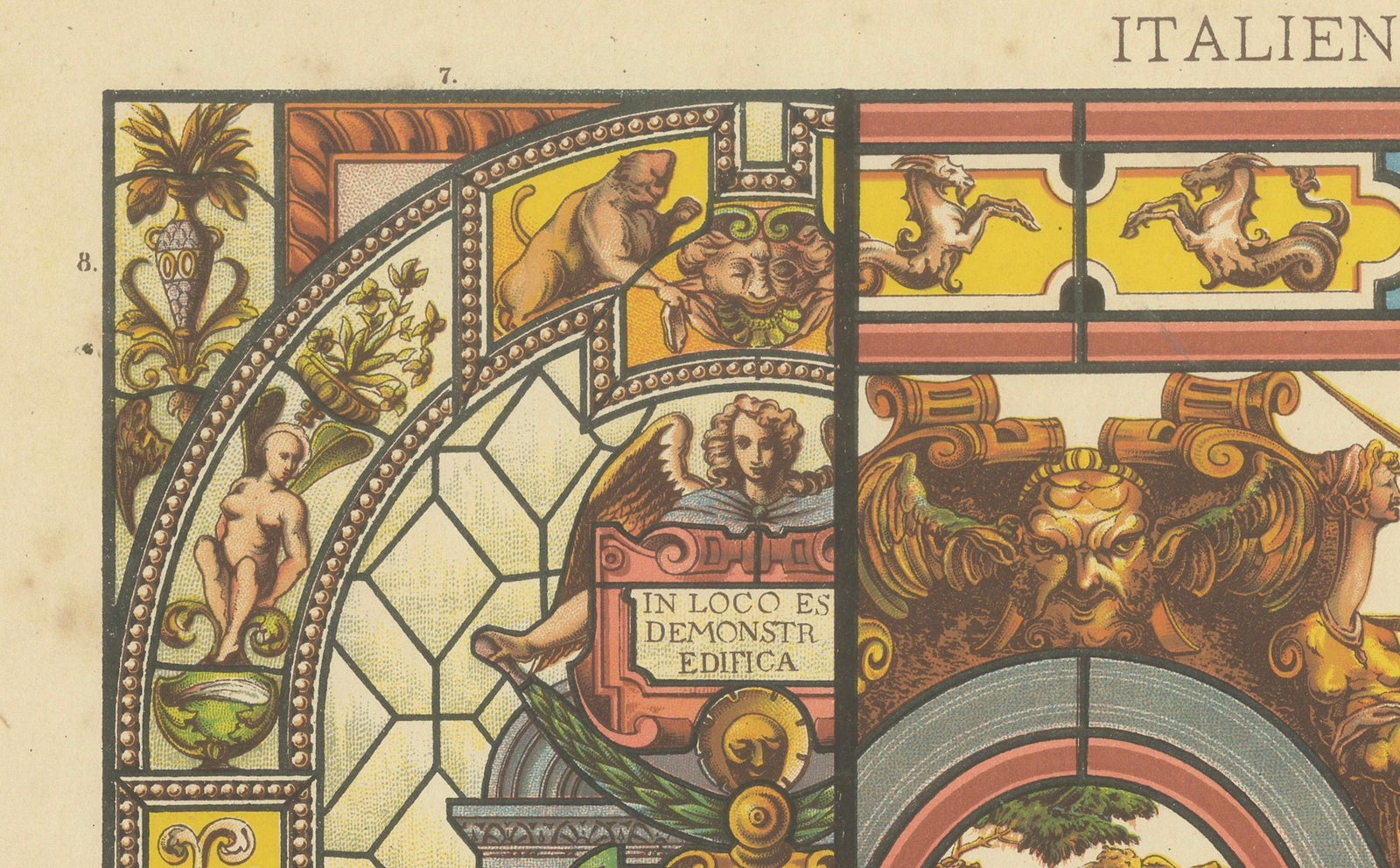
This vibrant print by H. Dolmetsch is featured in "Ornamentenschatz," a collection published by Verlag J. Hoffmann in Stuttgart in 1887. It displays a stunning array of Italian Renaissance stained glass designs, enriched with mythological themes, intricate floral patterns, and classical figures. The artwork is framed within an elaborate border that itself showcases Renaissance motifs, adding layers of visual complexity.
Attractiveness and Decorative Appeal:
This print captures the essence of the Renaissance with its emphasis on the revival of classical learning and artistic principles. The use of vibrant colors and detailed imagery draws the viewer into a world of myth and beauty. Each panel is meticulously designed, reflecting the Renaissance artists' mastery over form and color, which were intended to educate and inspire through visual storytelling.
Technique Used for the Print:
The technique likely used here is chromolithography, which was popular in the 19th century for producing vivid, multi-colored images. This method allows for the precise replication of the vibrant hues and intricate details typical of Renaissance stained glass. Chromolithography was particularly well-suited to capture the luminosity and depth of stained glass windows in a printed format, making such artworks accessible to a wider audience while preserving the ornate quality of the original designs.