Close-ups
Framed and on the wall

Frame and rooms are illustrations of how the print could look, drawn to its real size; it is sold unframed unless the description says otherwise.
Ornament & pattern
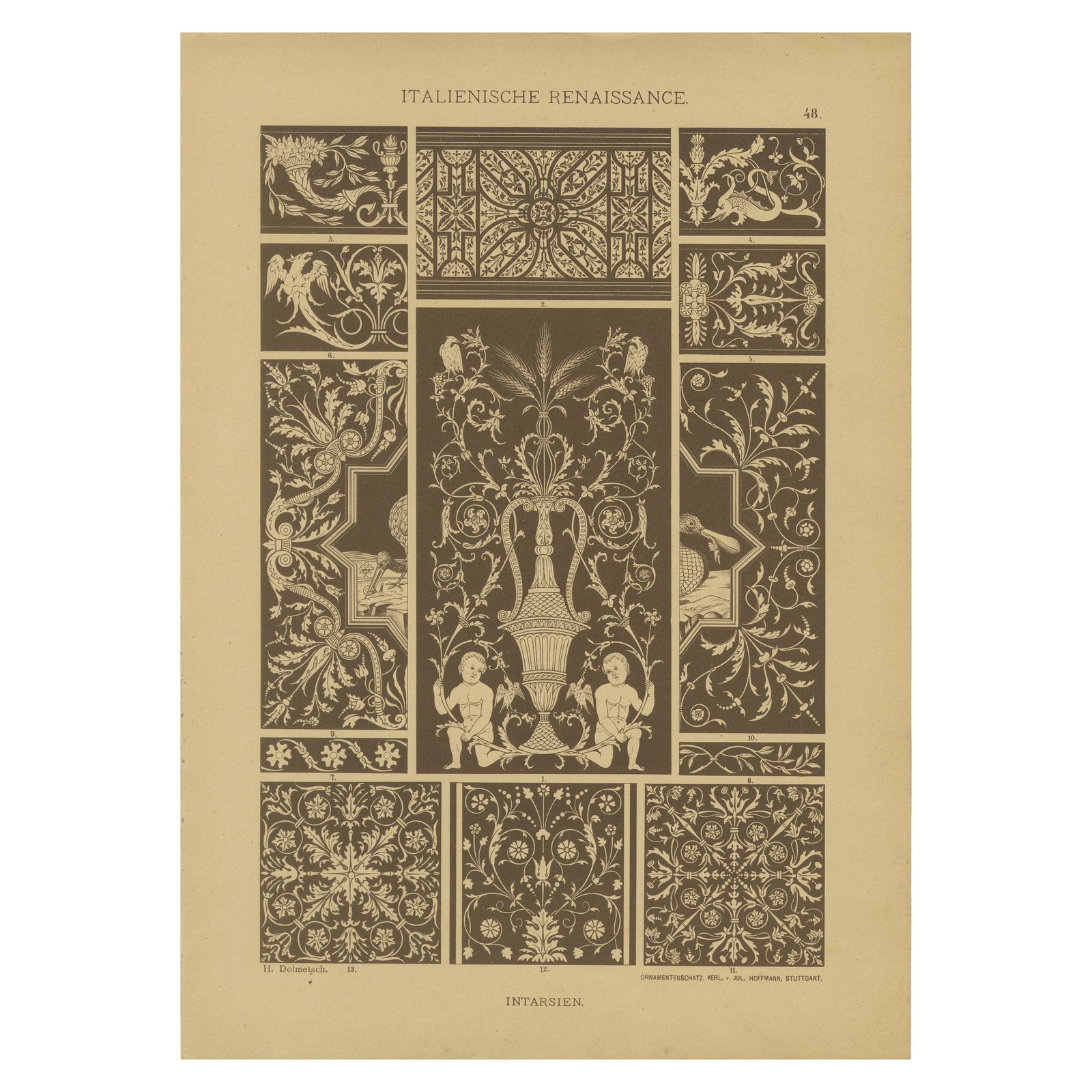
Italian Renaissance Inlay Work Designs from Ornamentenschatz, 1887
£75
$100 · €90
Original print, not a reproduction
Ships worldwide from the Netherlands, flat, insured and tracked. 14-day returns. To buy, use Ask a question (info@antiquearchitectureprints.com) and we will reserve it for you.
- Date
- 1887
- Sheet size
- 13.8 × 9.8 in (35 × 25 cm)
- Condition
- Good. Given age. Very good considering age. General age-related toning and/or occasional minor defects from handling. Please study scans carefully.
- Collection
- Ornament & pattern
- Era
- 1850 and after, The age of revivals
- Stock no.
- f_41366642
Italian Renaissance Inlay Work Designs from Ornamentenschatz, 1887
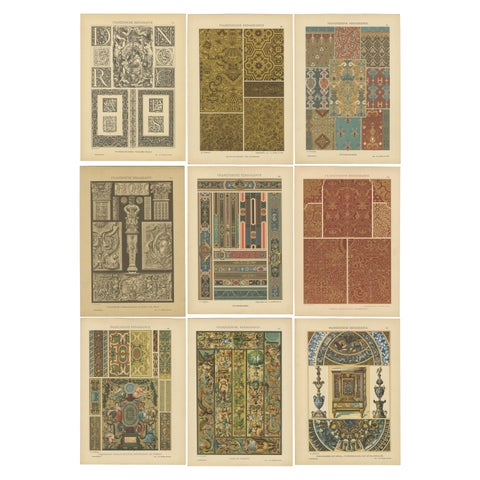
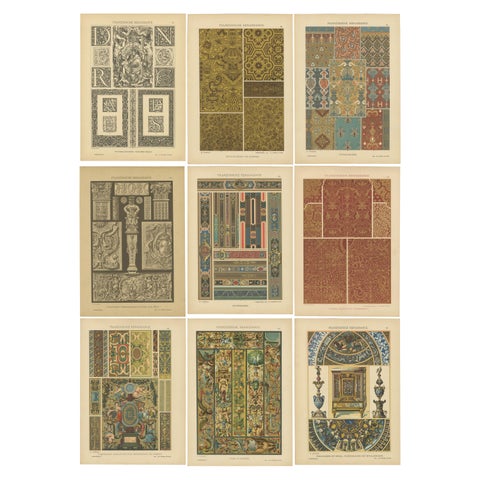
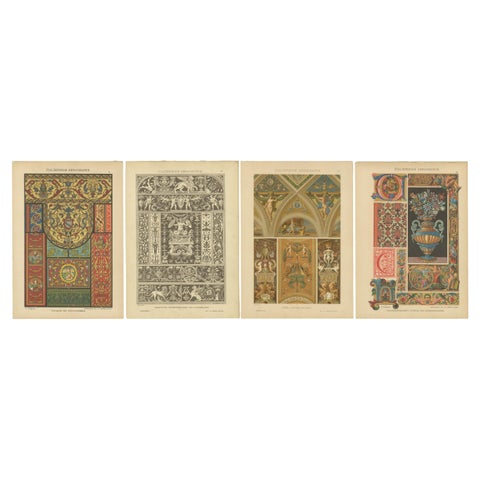
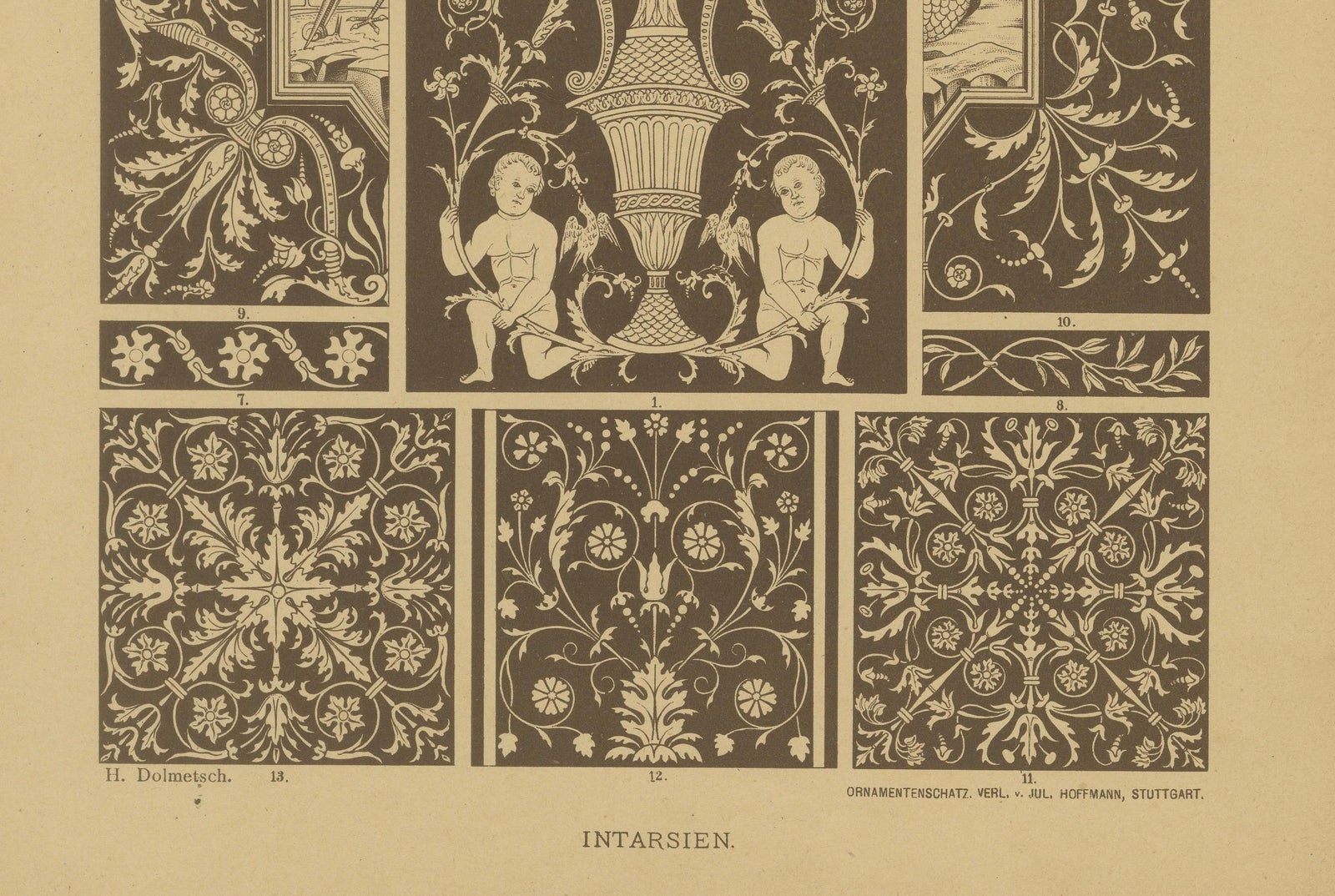
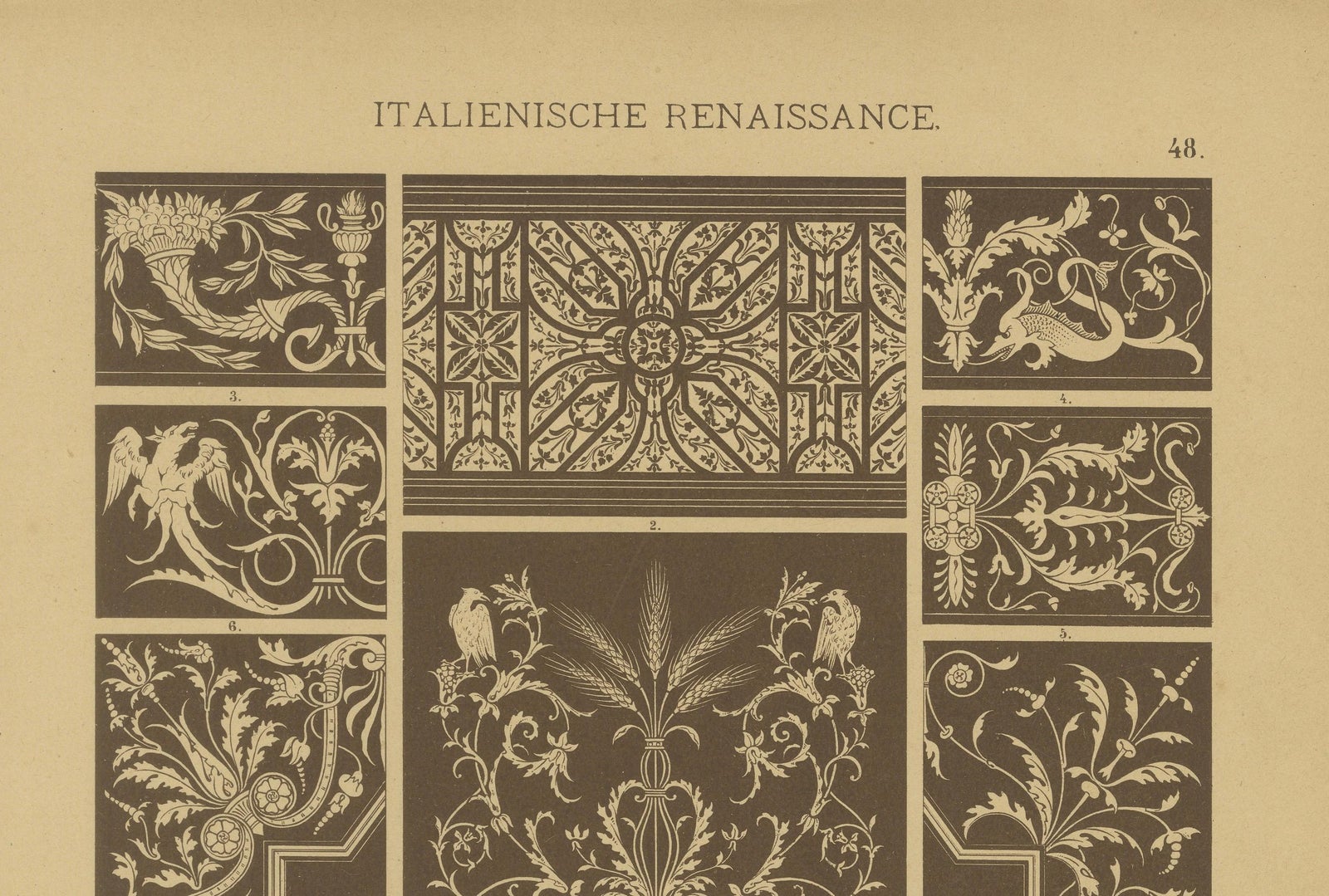
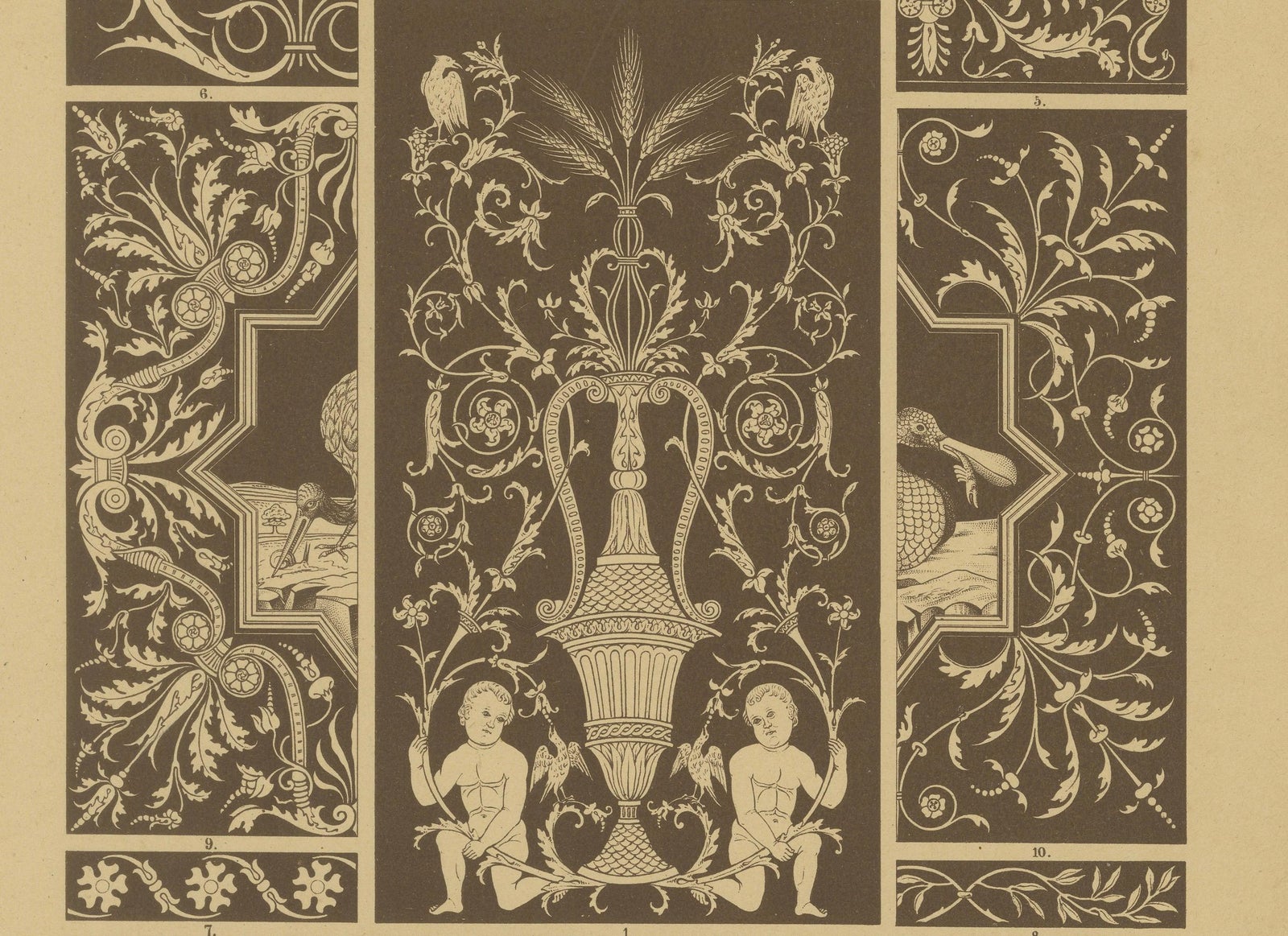
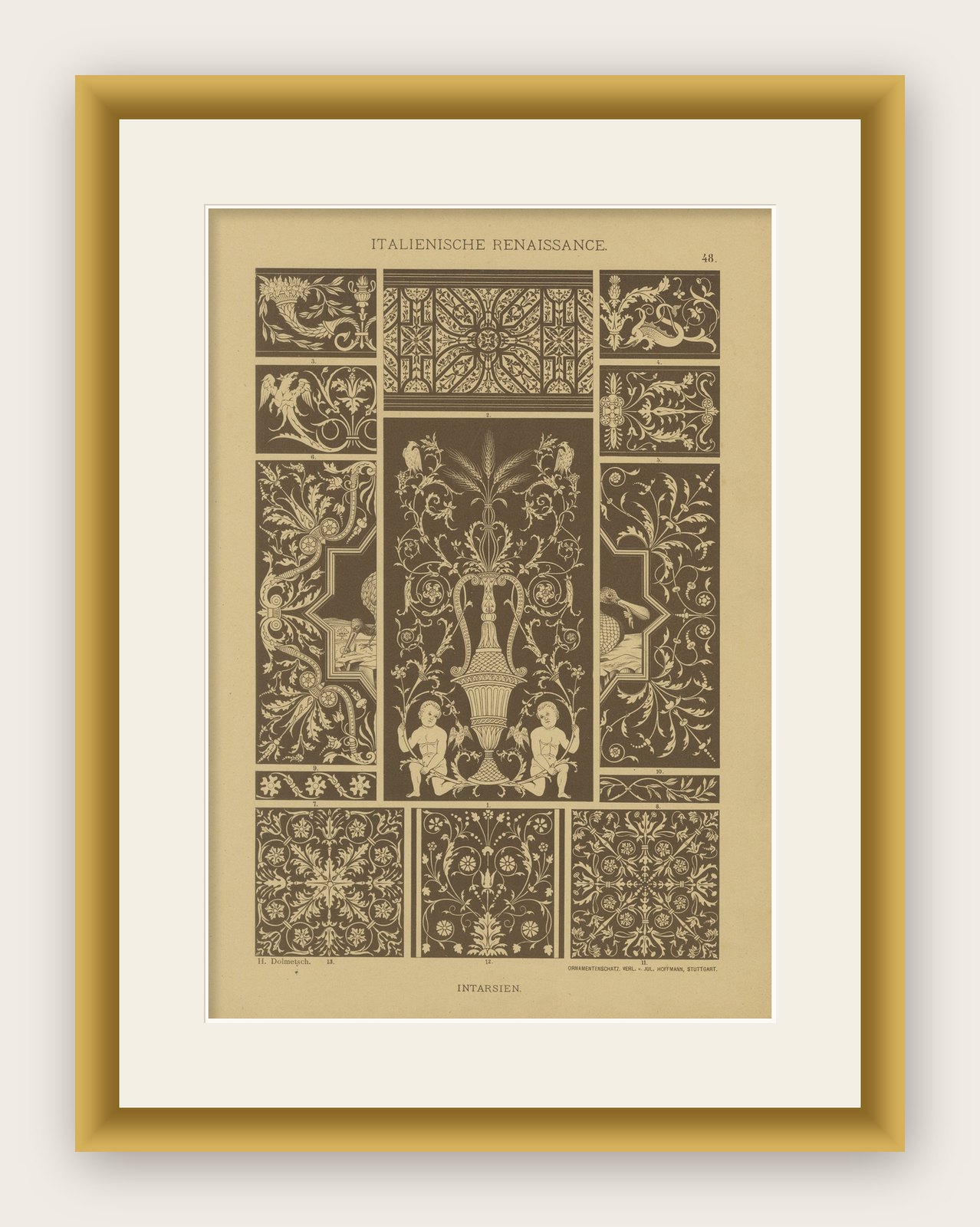
This print from "Ornamentenschatz," designed by H. Dolmetsch and published by Verlag J. Hoffmann in Stuttgart in 1887, illustrates a collection of intricate inlay work (Intarsien) typical of the Italian Renaissance.
The artwork features a variety of patterns including florals, foliage, and geometric shapes, all rendered in a monochromatic palette that highlights the elegance and precision of Renaissance design.
Attractiveness and Decorative Appeal:
The appeal of this print lies in its sophisticated arrangement and the timeless beauty of its designs. The intricate detail in each panel reflects the Renaissance mastery of combining art and craftsmanship to create visually stunning decorative elements. These designs were often used in furniture, flooring, and wall paneling, enhancing interior spaces with their elaborate and refined aesthetics.
Technique Used for the Print:
The technique used to create this print is likely lithography, specifically designed to capture the fine details and contrasts inherent in Renaissance inlay work. This printing method allows for the delicate gradations of tone and intricate lines seen in the original inlay pieces, making the print an accurate and beautiful representation of the art form. The use of a monochromatic color scheme helps in focusing on the patterns’ symmetry and precision, key characteristics of the period's decorative arts.