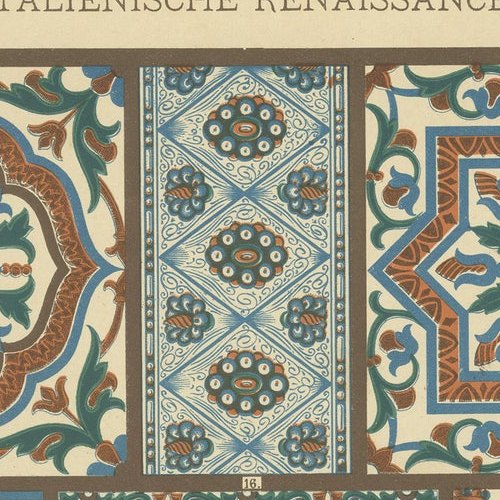
Close-ups
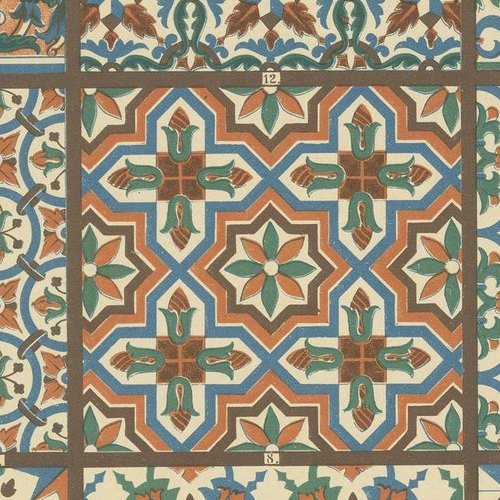
Framed and on the wall
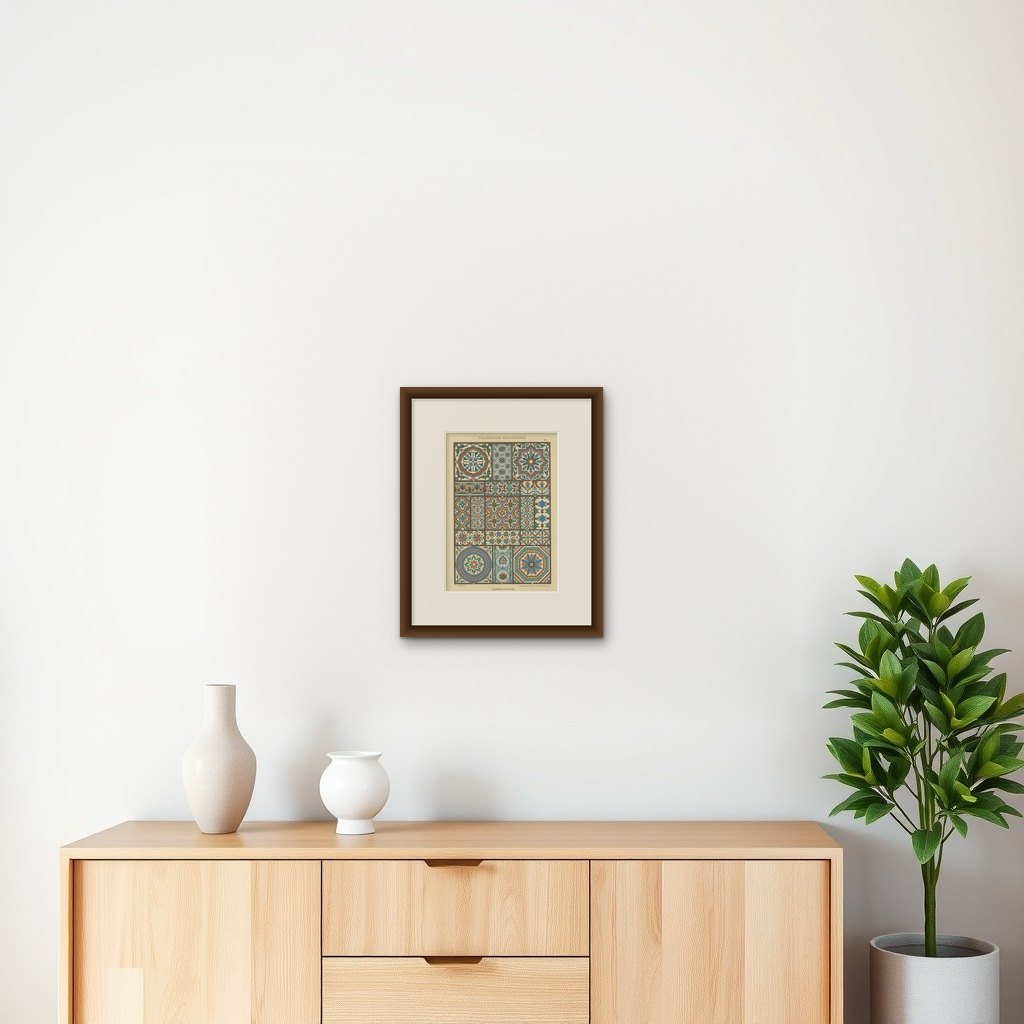

Frame and rooms are illustrations of how the print could look, drawn to its real size; it is sold unframed unless the description says otherwise.
Porcelain & ceramics
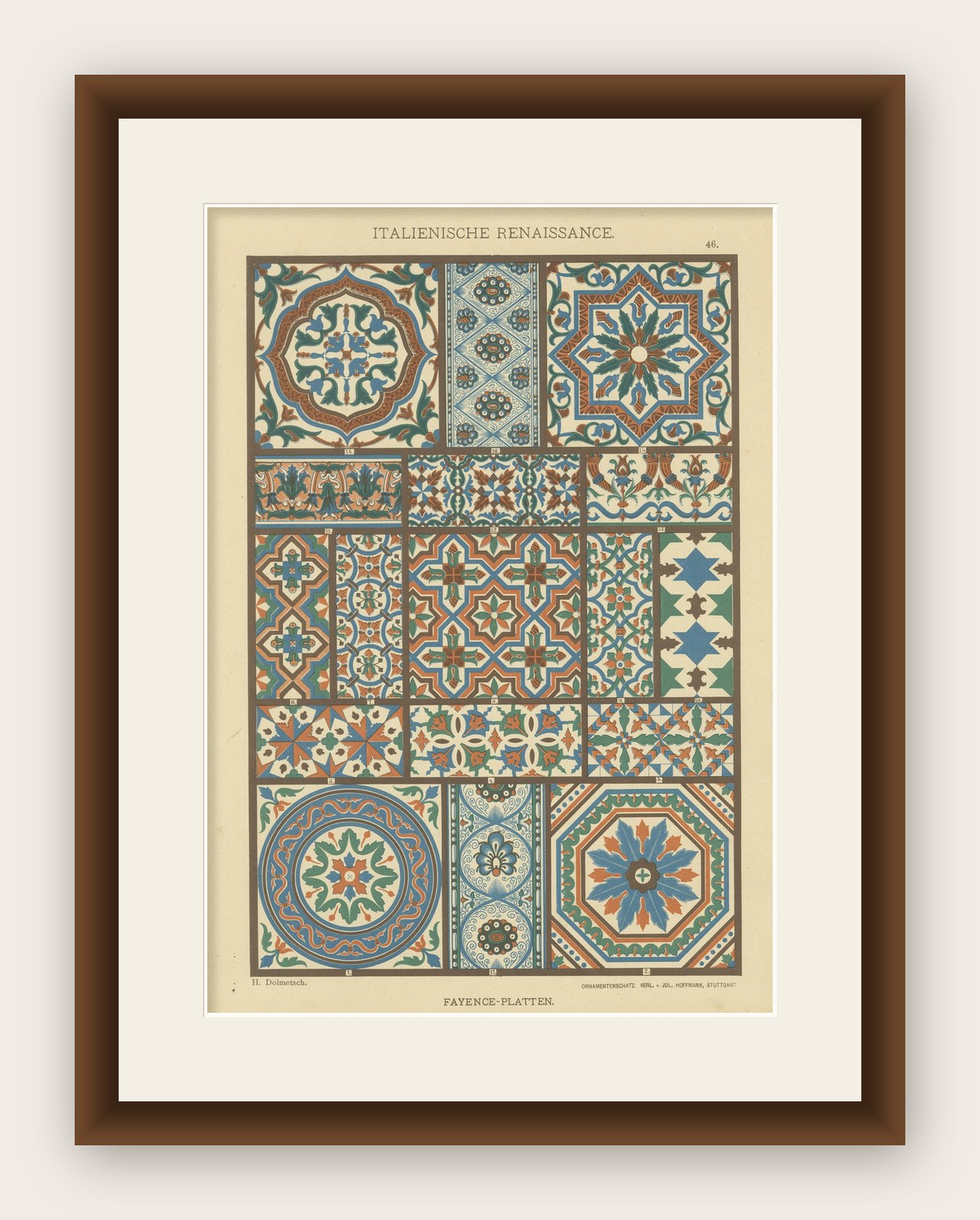
Italian Renaissance Faience Plates from Ornamentenschatz, 1887
£115£9025% off
$115 · €105
Original print, not a reproduction
Ships worldwide from the Netherlands, flat or rolled, insured and tracked. 14-day returns.
- Date
- 1887
- Sheet size
- 13.8 × 9.8 in (35 × 25 cm)
- Condition
- Good. Given age. Very good considering age. General age-related toning and/or occasional minor defects from handling. Please study scans carefully.
- Collection
- Porcelain & ceramics
- Era
- 1850 and after, The age of revivals
- Stock no.
- BG-13766-2-46
What the condition grades mean
- Excellent
- Bright and clean, with no faults worth mentioning.
- Very good
- Only light signs of age, such as faint toning.
- Good
- Normal signs of age for a sheet of this period: toning, some foxing, small marks or neat old repairs.
- Fair
- Clear faults such as staining, tears or repairs, priced to match.
Every fault we see is written in the condition note, and the whole sheet is shown uncropped in the photos.
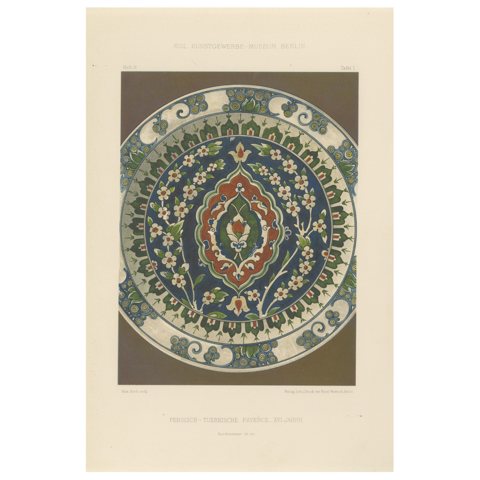
Title: "Italian Renaissance Faience Plates from Ornamentenschatz, 1887"
Description:
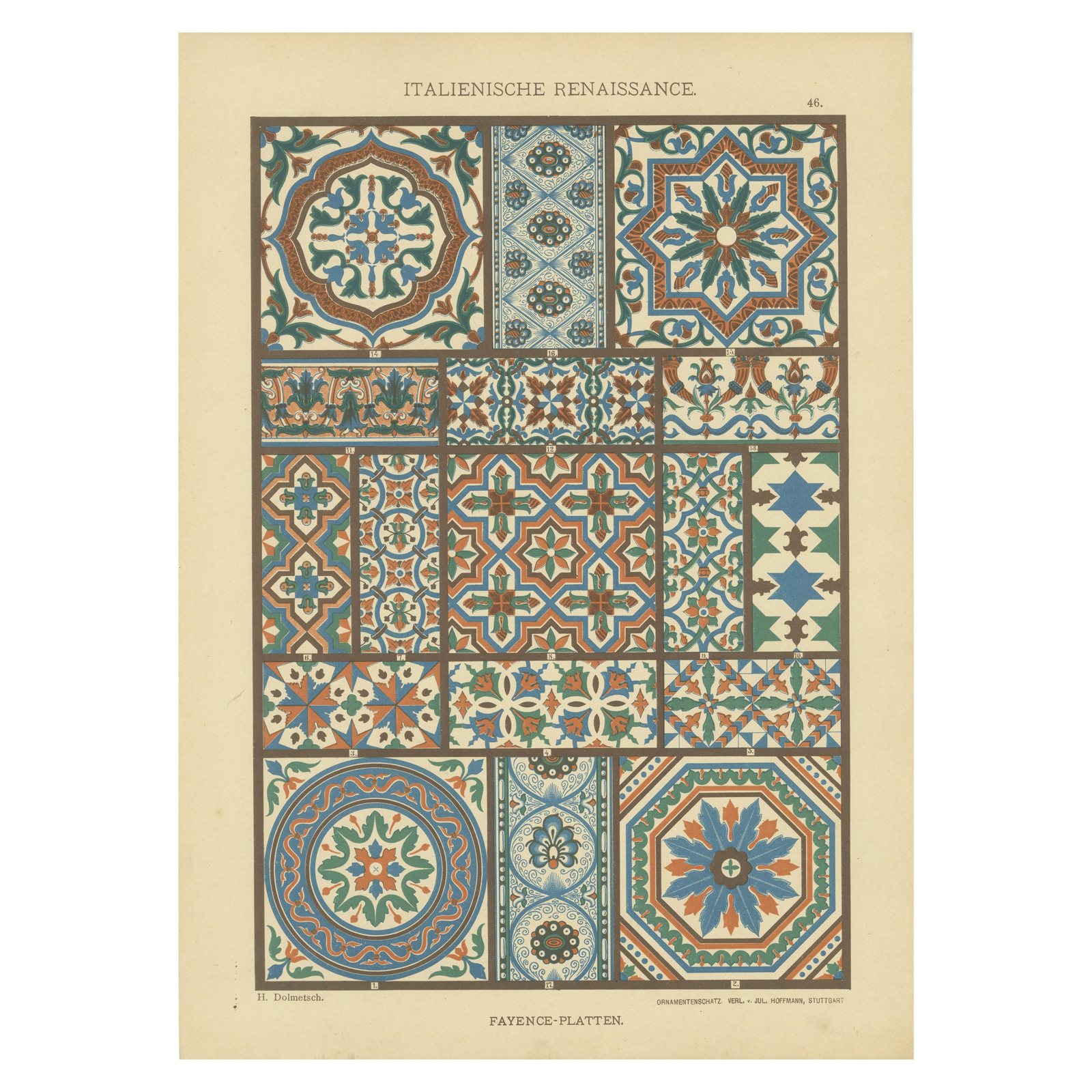
This print by H. Dolmetsch is from the "Ornamentenschatz," published by Verlag J. Hoffmann in Stuttgart in 1887. It features a vibrant collection of Italian Renaissance faience tile designs. Each tile is intricately decorated with geometric patterns, floral motifs, and vibrant colors that are characteristic of the period's ceramic art. The variety of designs showcases the high level of craftsmanship and artistic creativity during the Renaissance, with influences from both Eastern and Western art traditions.
Attractiveness and Decorative Appeal:
The print's attractiveness stems from its rich color palette and the complexity of each design. The use of symmetrical and repeating patterns not only reflects the aesthetic preferences of the Renaissance but also highlights the era's fascination with harmony and balance in art. These tiles were often used in architecture to enhance the beauty of buildings, serving both decorative and functional purposes.
Technique Used for the Print:
The technique likely used for this print is chromolithography, which enabled the precise and vibrant replication of the original ceramic colors and details. This printing method was ideal for capturing the glossy finish and intricate details typical of faience tiles, making the artwork appealing and visually striking. The use of multiple color layers helps to achieve depth and luminosity, closely mimicking the look of actual glazed ceramics.