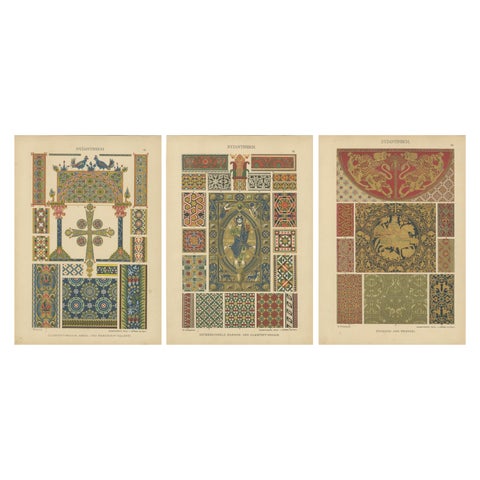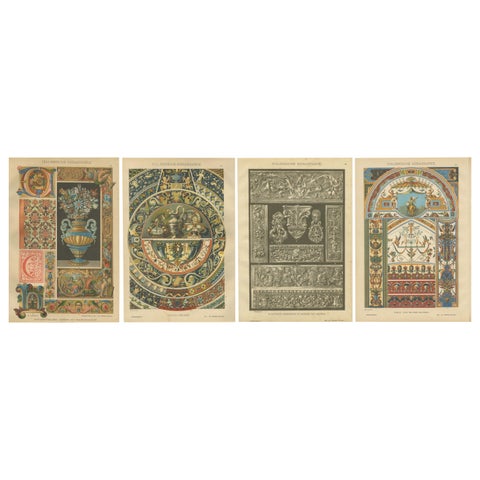
Close-ups
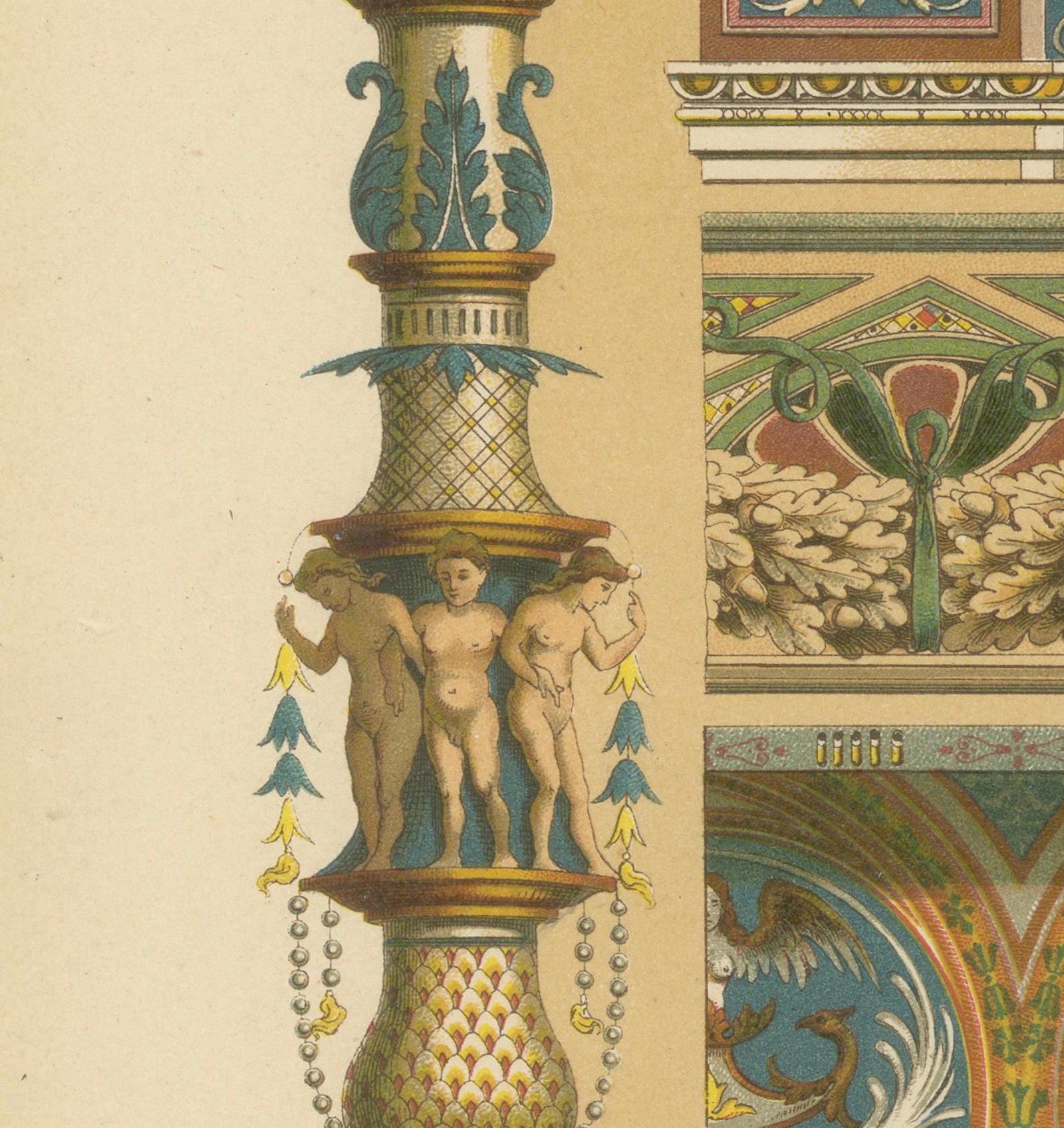
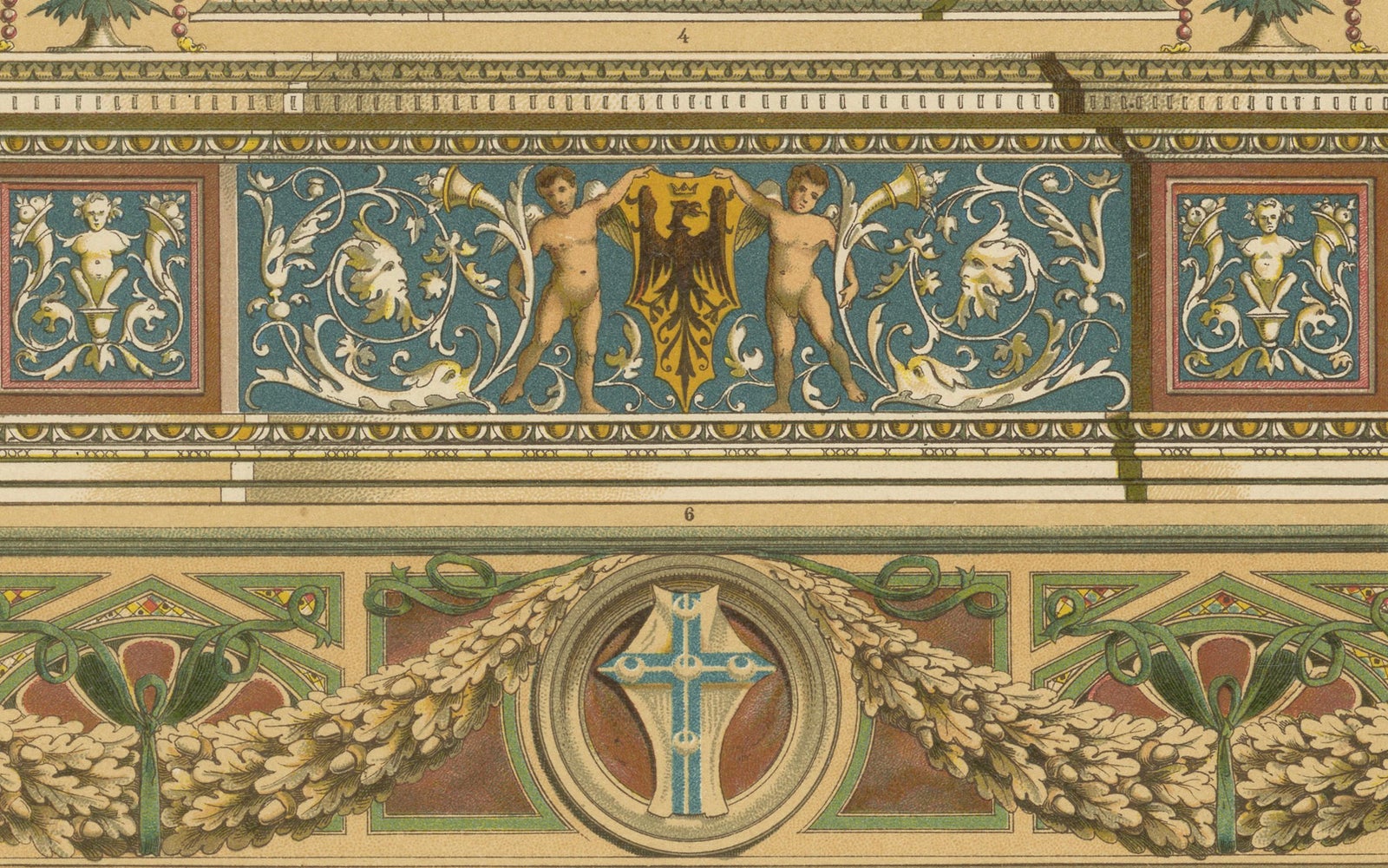
Framed and on the wall
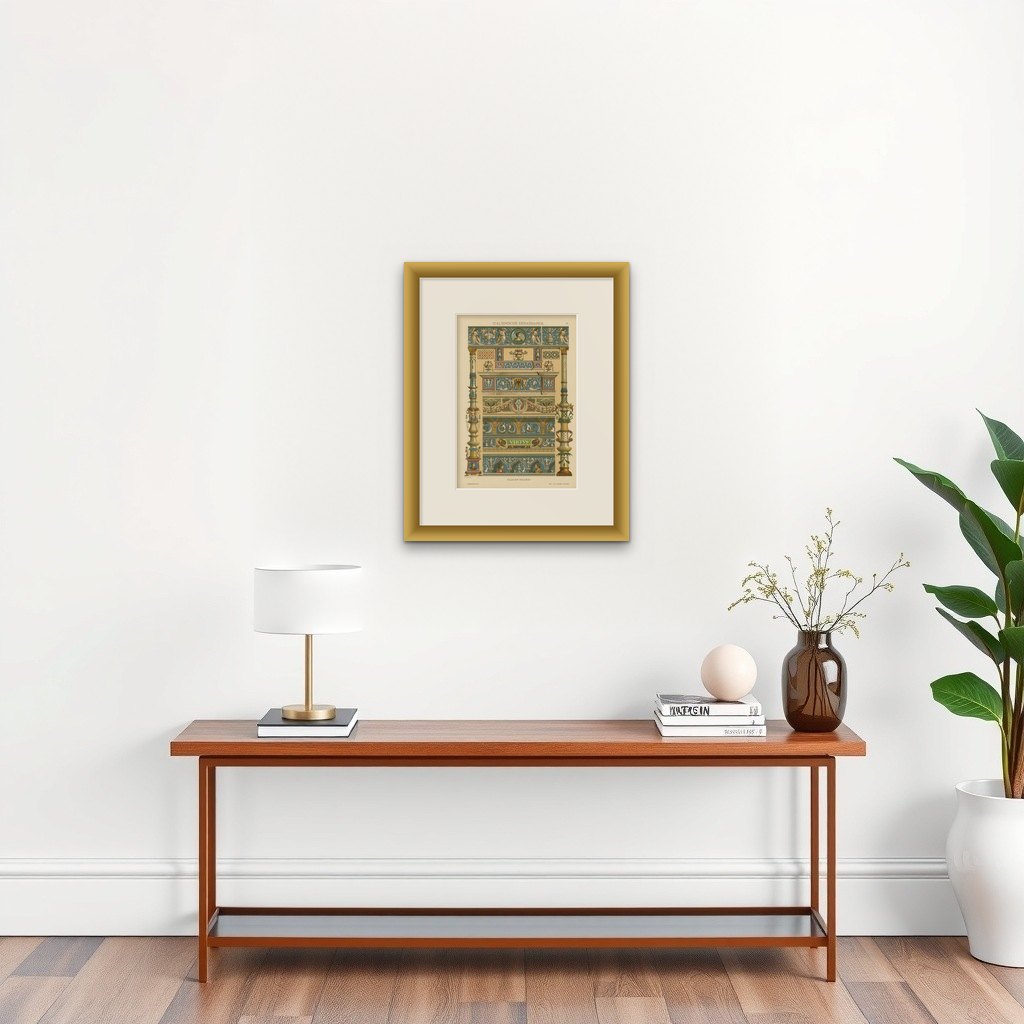

Frame and rooms are illustrations of how the print could look, drawn to its real size; it is sold unframed unless the description says otherwise.
Ornament & pattern
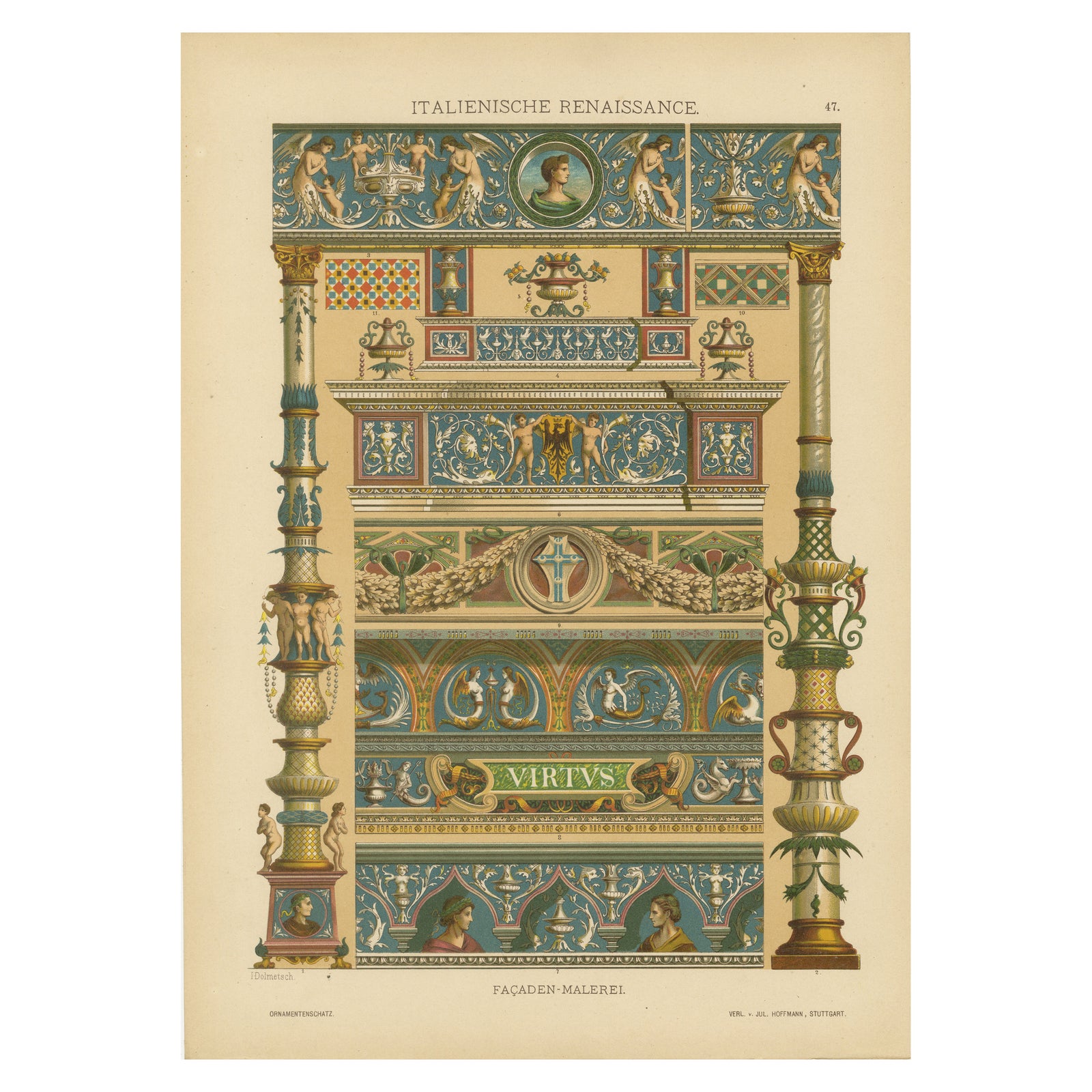
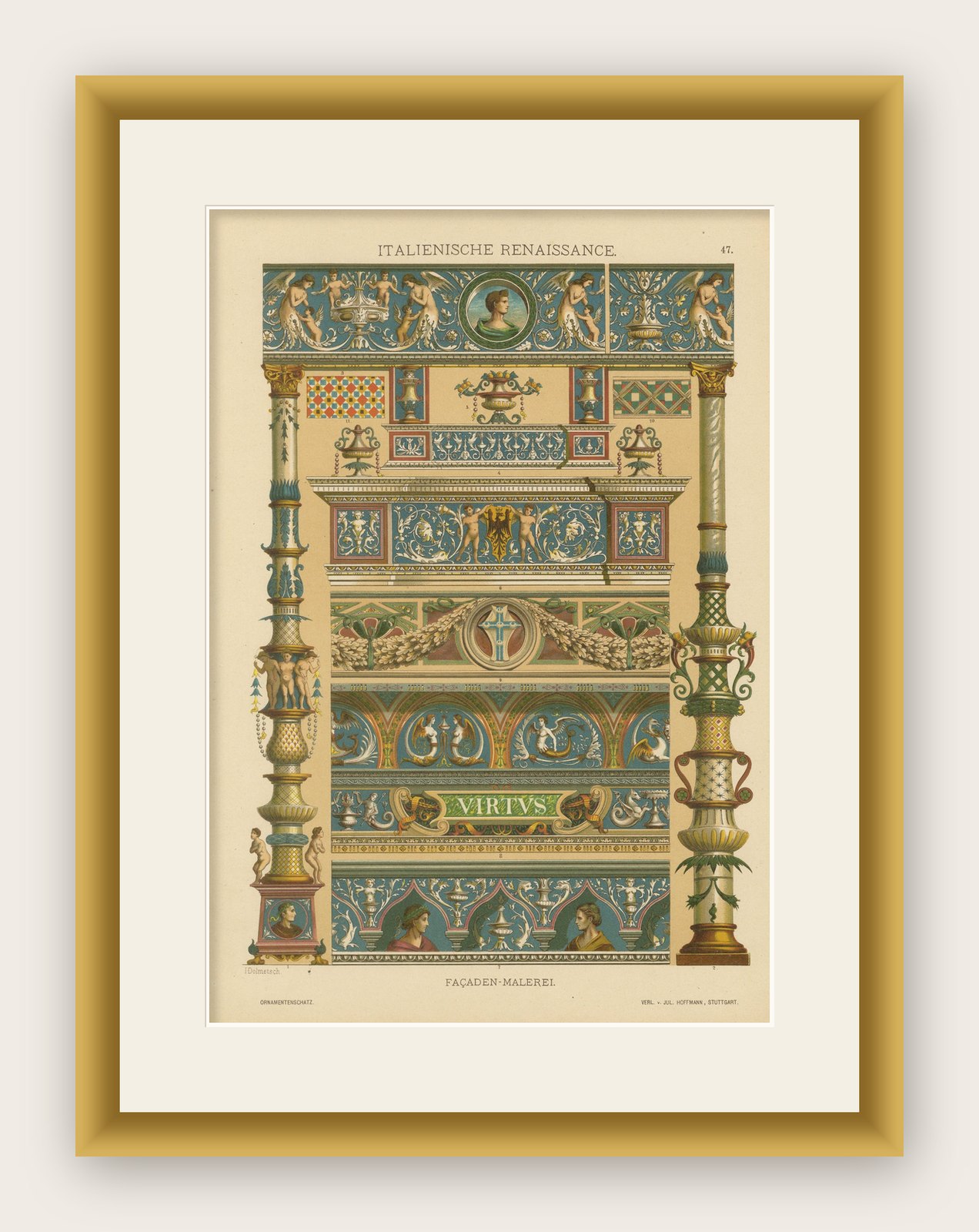
Italian Renaissance Façade Paintings from Ornamentenschatz, 1887
€190
$215 · £160
Original print, not a reproduction
Ships worldwide from the Netherlands, flat, insured and tracked. 14-day returns. To buy, use Ask a question (info@antiquearchitectureprints.com) and we will reserve it for you.
- Date
- 1887
- Sheet size
- 13.8 × 9.8 in (35 × 25 cm)
- Condition
- Good. Given age. Very good considering age. General age-related toning and/or occasional minor defects from handling. Please study scans carefully.
- Collection
- Ornament & pattern
- Era
- 1850 and after, The age of revivals
- Stock no.
- f_41366512
Title: "Italian Renaissance Façade Paintings from Ornamentenschatz, 1887"
Description:
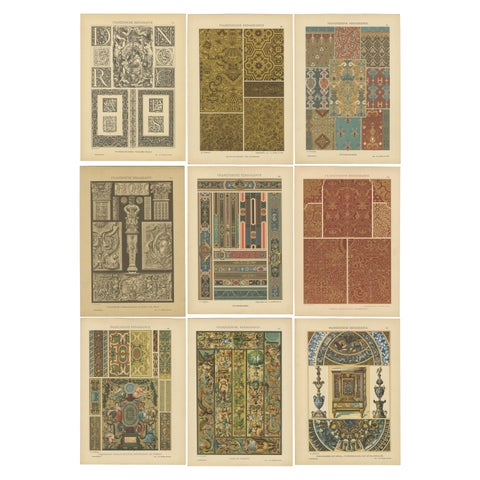
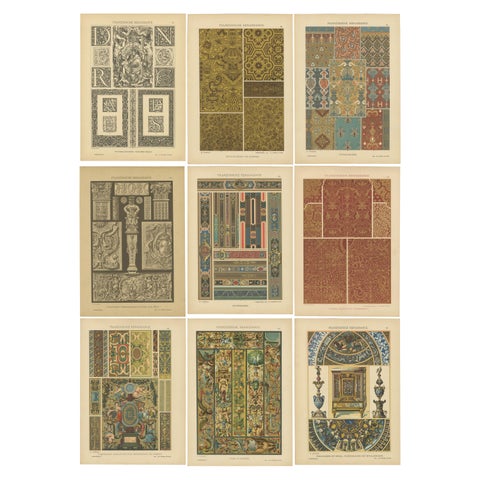
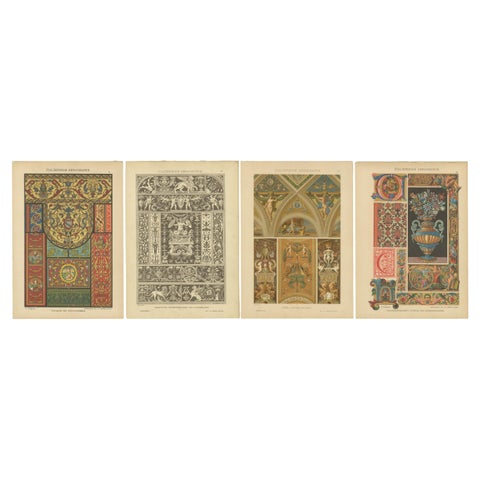
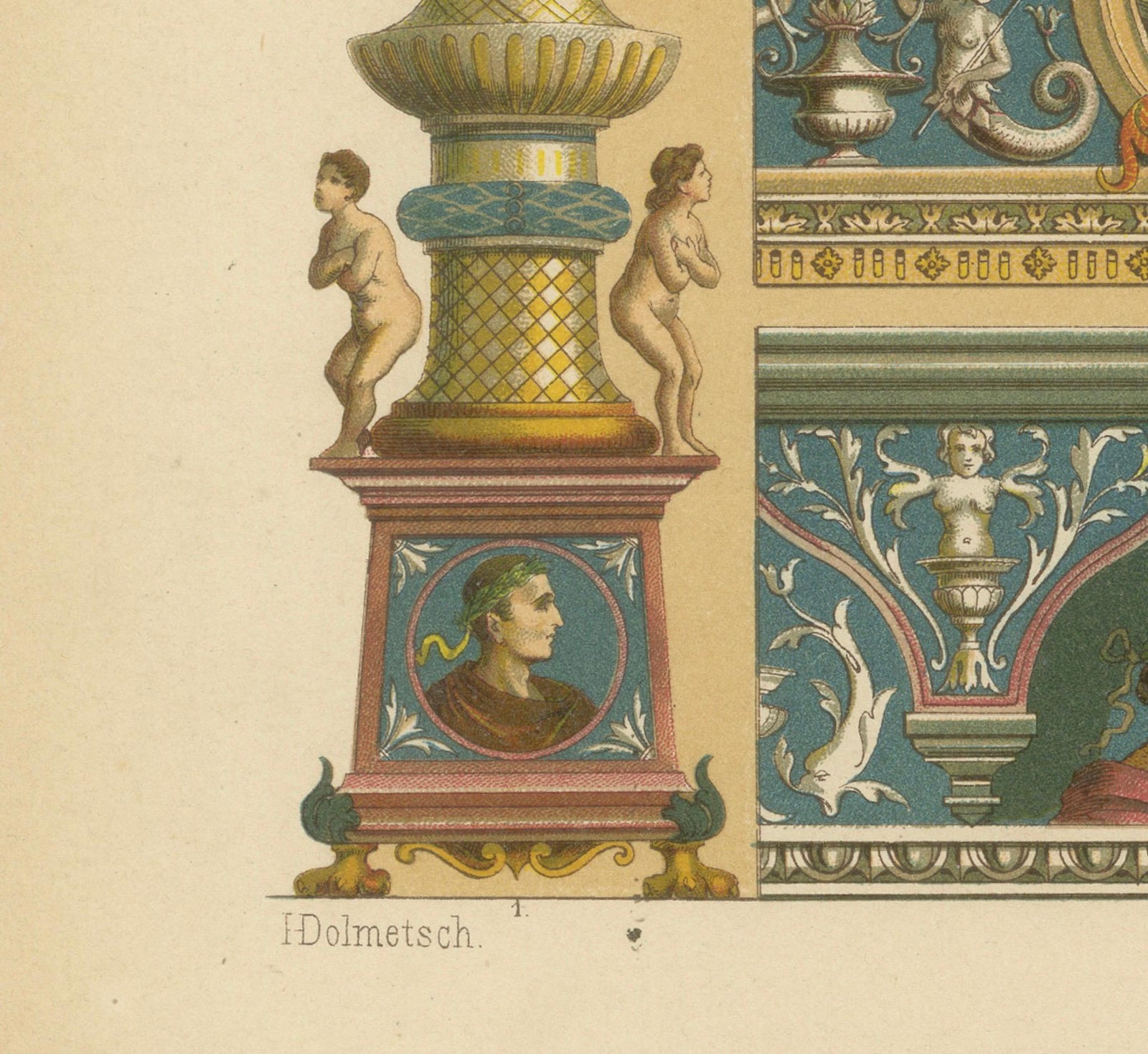
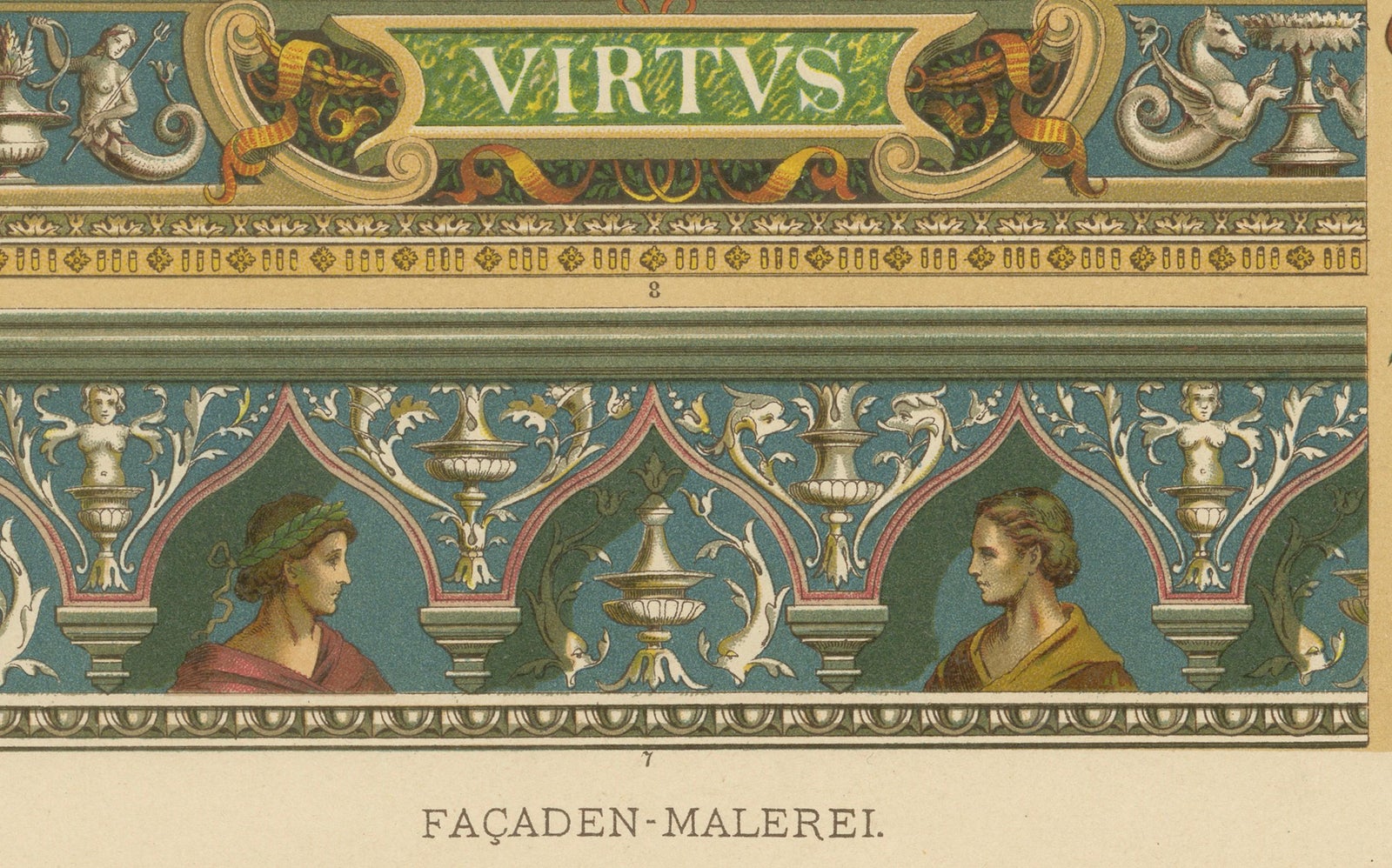
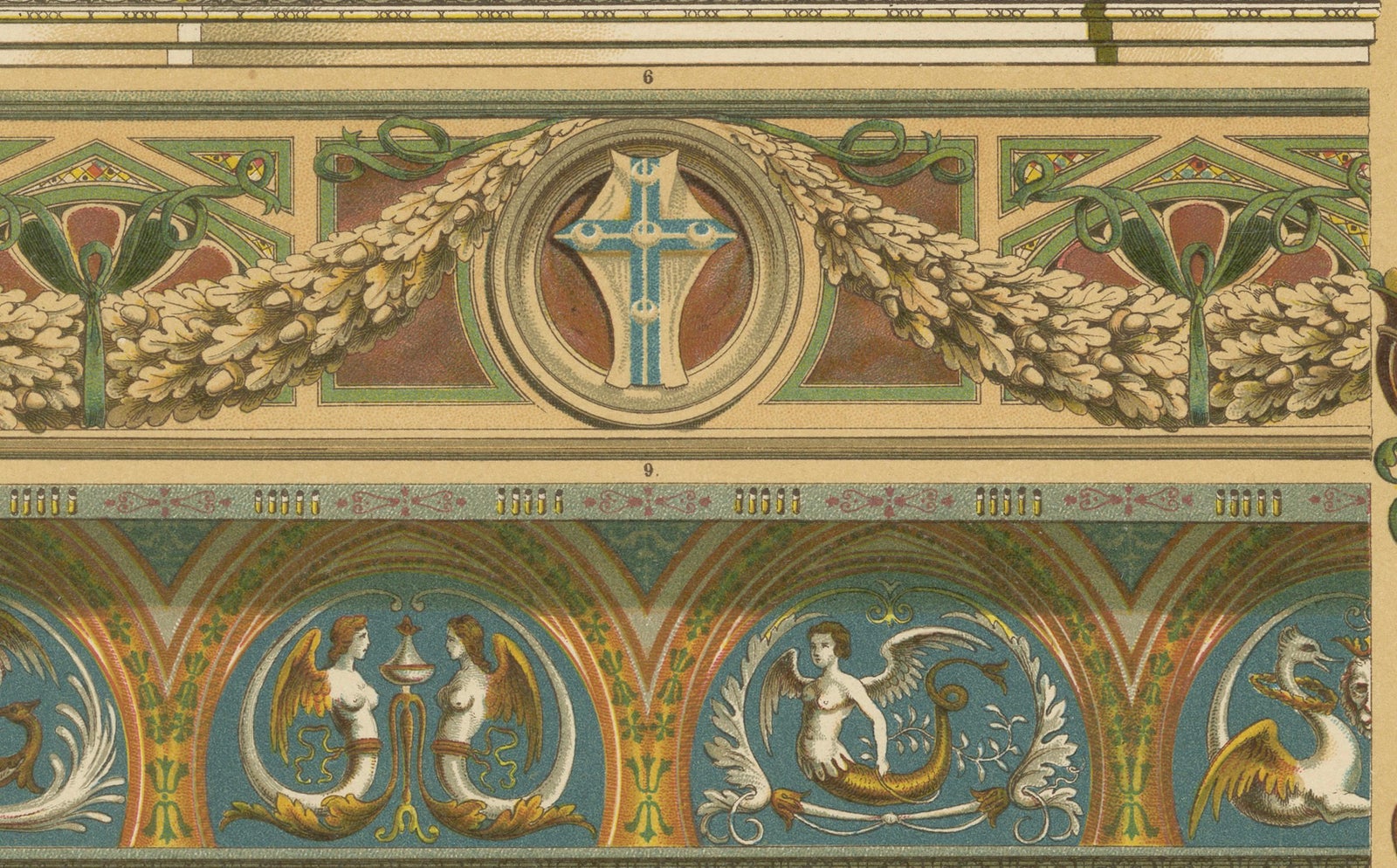
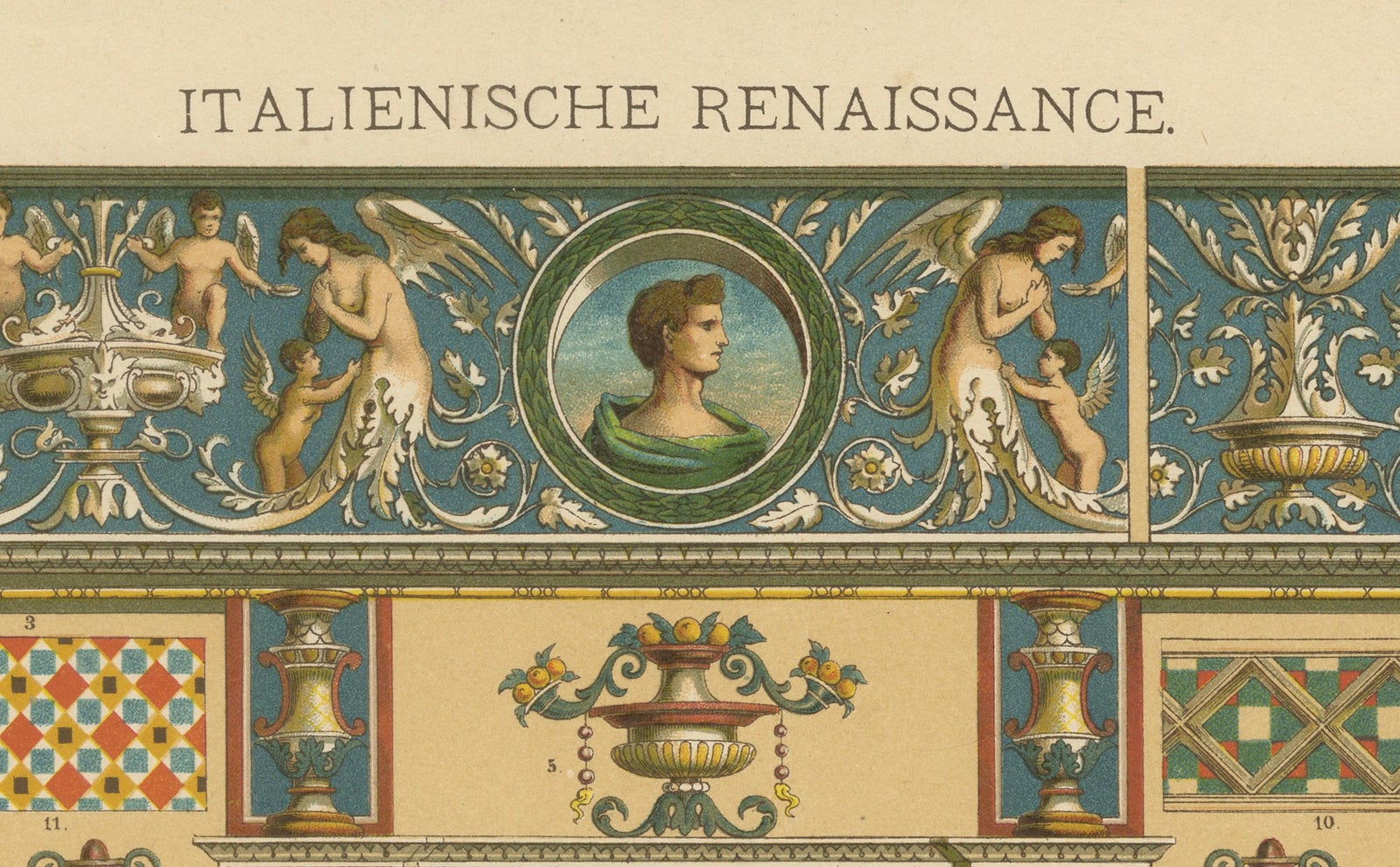
This print, crafted by H. Dolmetsch, is part of the esteemed "Ornamentenschatz," published by Verlag J. Hoffmann in Stuttgart in 1887. It showcases exquisite Italian Renaissance façade paintings, highlighting the era's penchant for ornate and symbolic decorative elements. The artwork features classical figures, mythological scenes, and richly adorned architectural motifs, all depicted in a vibrant color palette. These designs were typical of the period, often used to adorn the exteriors of buildings, imparting a sense of grandeur and cultural opulence.
Attractiveness and Decorative Appeal:
The print’s allure lies in its detailed rendering of Renaissance aesthetics, characterized by harmony, proportion, and the revival of classical antiquity. The intricate designs and the use of gold hues evoke a sense of luxury and artistic sophistication that was central to the Renaissance style. Such decorations not only beautified the structures but also reflected the intellectual and cultural ambitions of the time.
Technique Used for the Print:
Chromolithography was employed to produce this print, allowing for the precise application of rich, vibrant colors and complex details. This technique was particularly effective in replicating the textures and depth of façade paintings, translating the elaborate artistry of Renaissance decorations onto paper. The layering of colors in chromolithography helped in achieving the luminous quality of the original artworks, making the print both visually striking and historically representative of the period’s artistic achievements.