Close-ups

Framed and on the wall
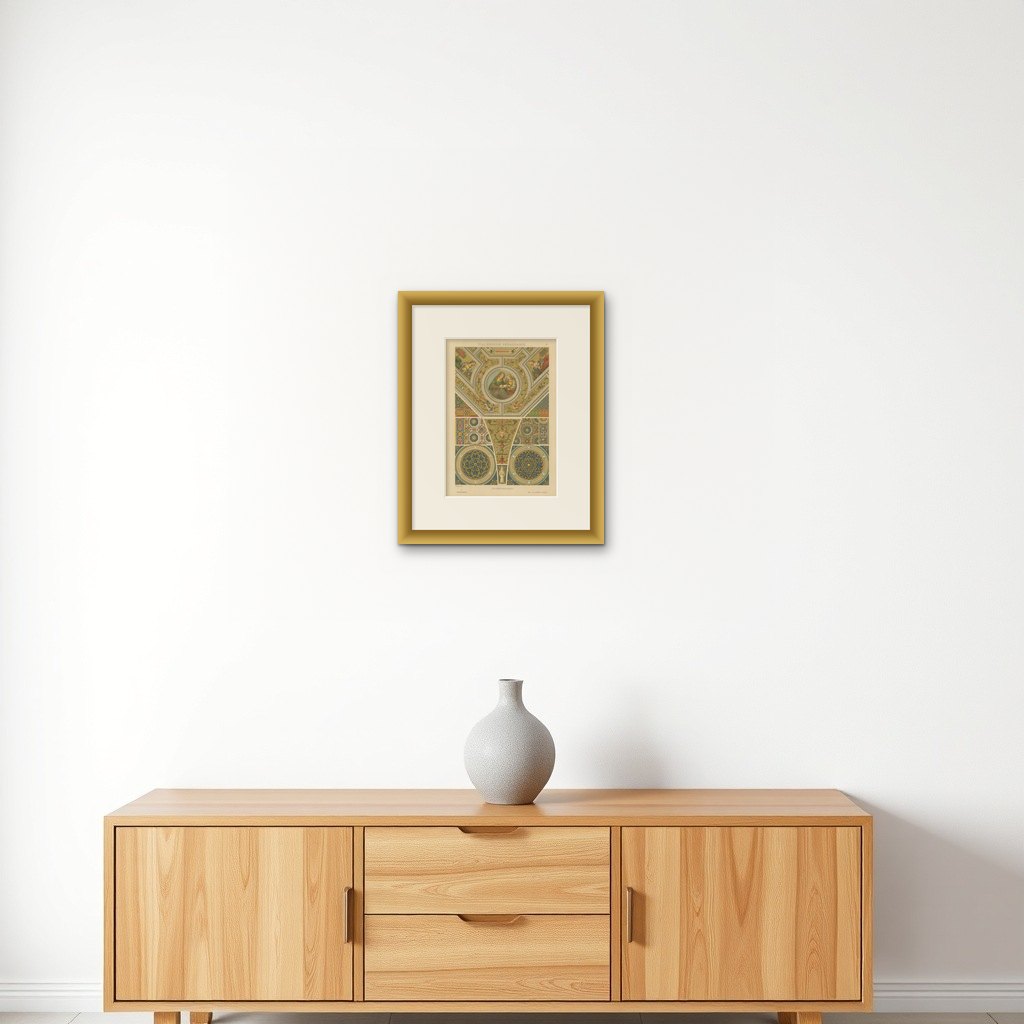

Frame and rooms are illustrations of how the print could look, drawn to its real size; it is sold unframed unless the description says otherwise.
Ornament & pattern
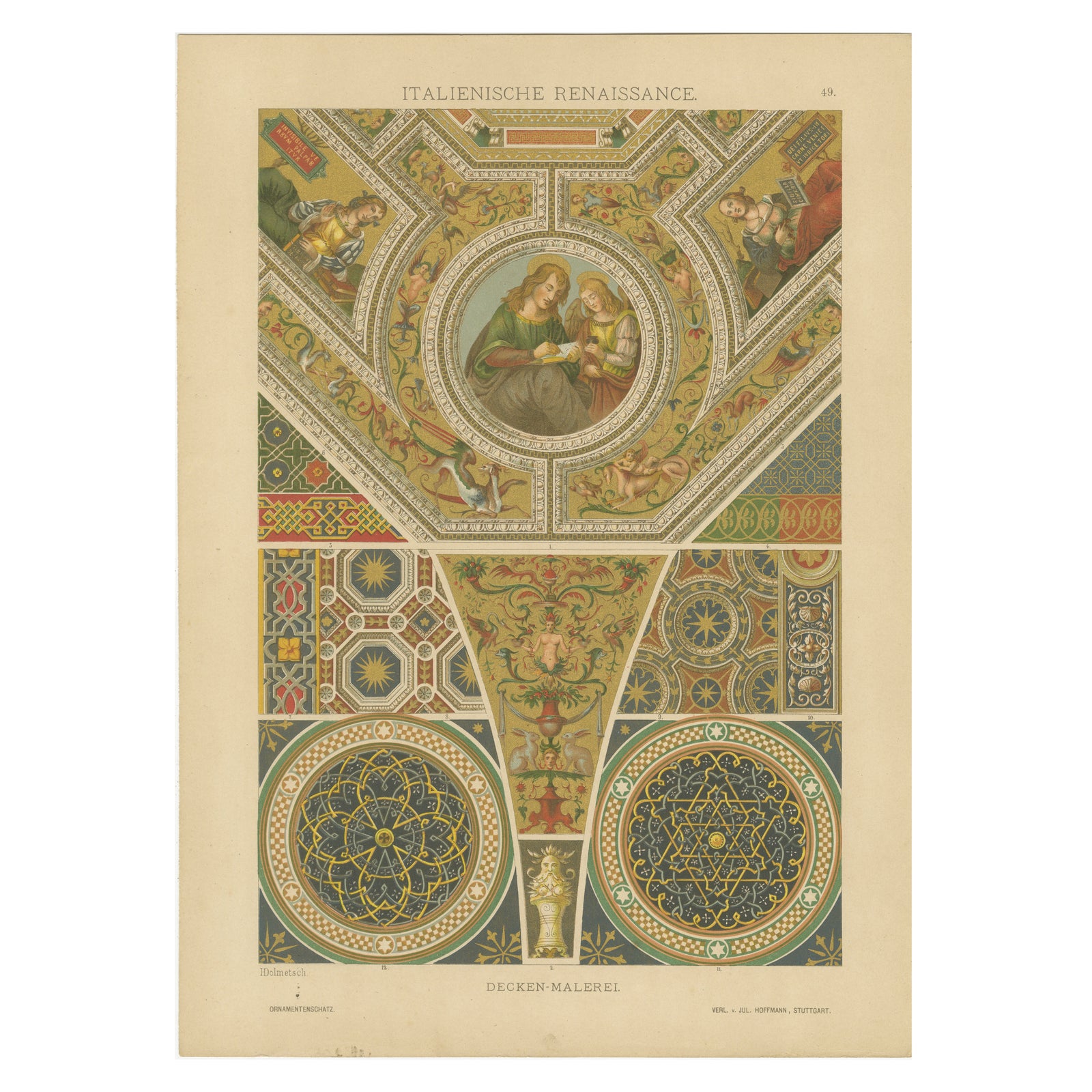
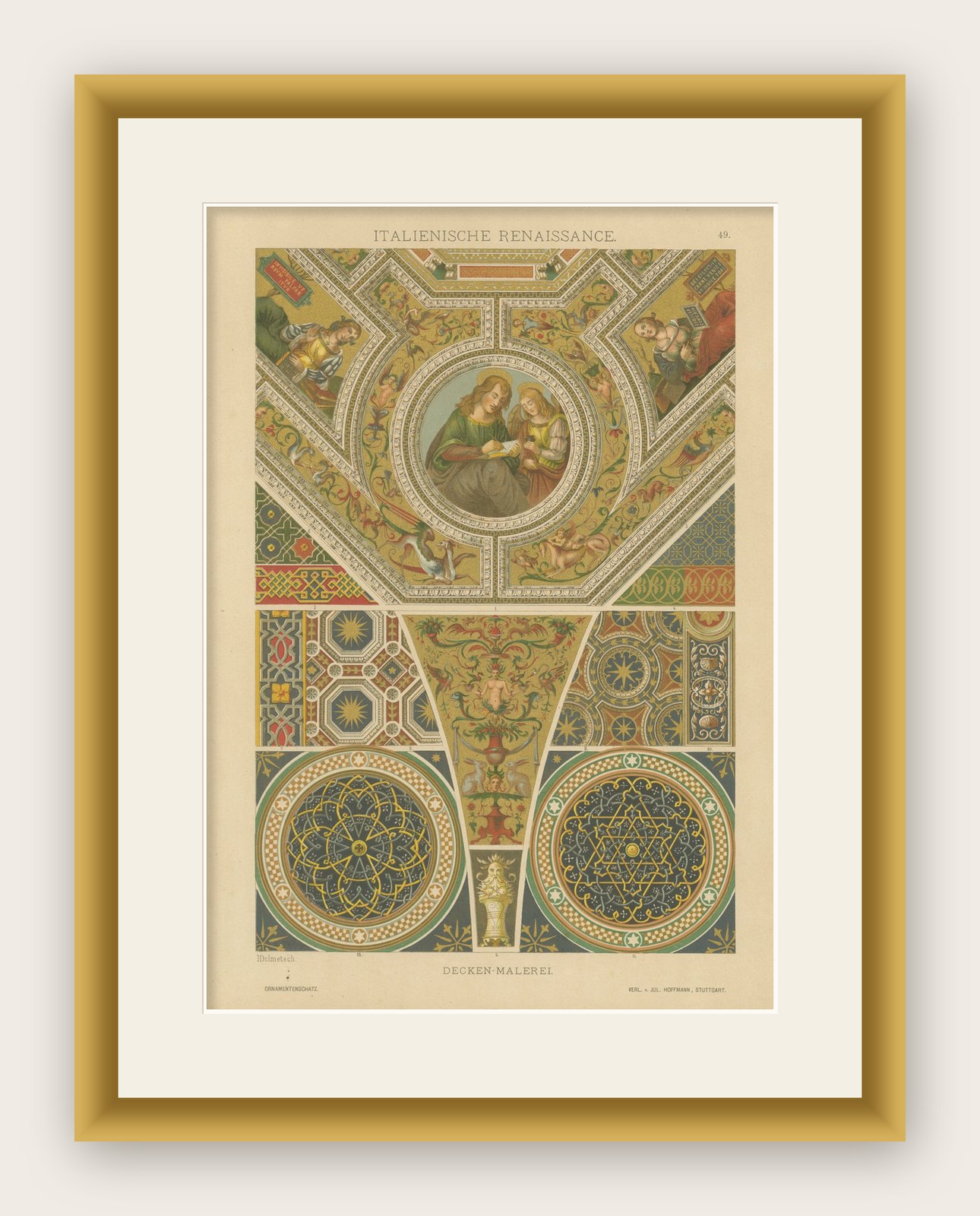
Italian Renaissance Ceiling Paintings from Ornamentenschatz, 1887
€190
$215 · £160
Original print, not a reproduction
Ships worldwide from the Netherlands, flat, insured and tracked. 14-day returns. To buy, use Ask a question (info@antiquearchitectureprints.com) and we will reserve it for you.
- Date
- 1887
- Sheet size
- 13.8 × 9.8 in (35 × 25 cm)
- Condition
- Good. Given age. Very good considering age. General age-related toning and/or occasional minor defects from handling. Please study scans carefully.
- Collection
- Ornament & pattern
- Era
- 1850 and after, The age of revivals
- Stock no.
- f_41366742
Title: "Italian Renaissance Ceiling Paintings from Ornamentenschatz, 1887"
Description:
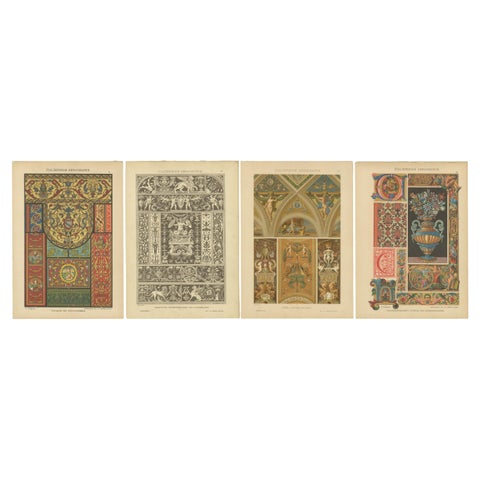
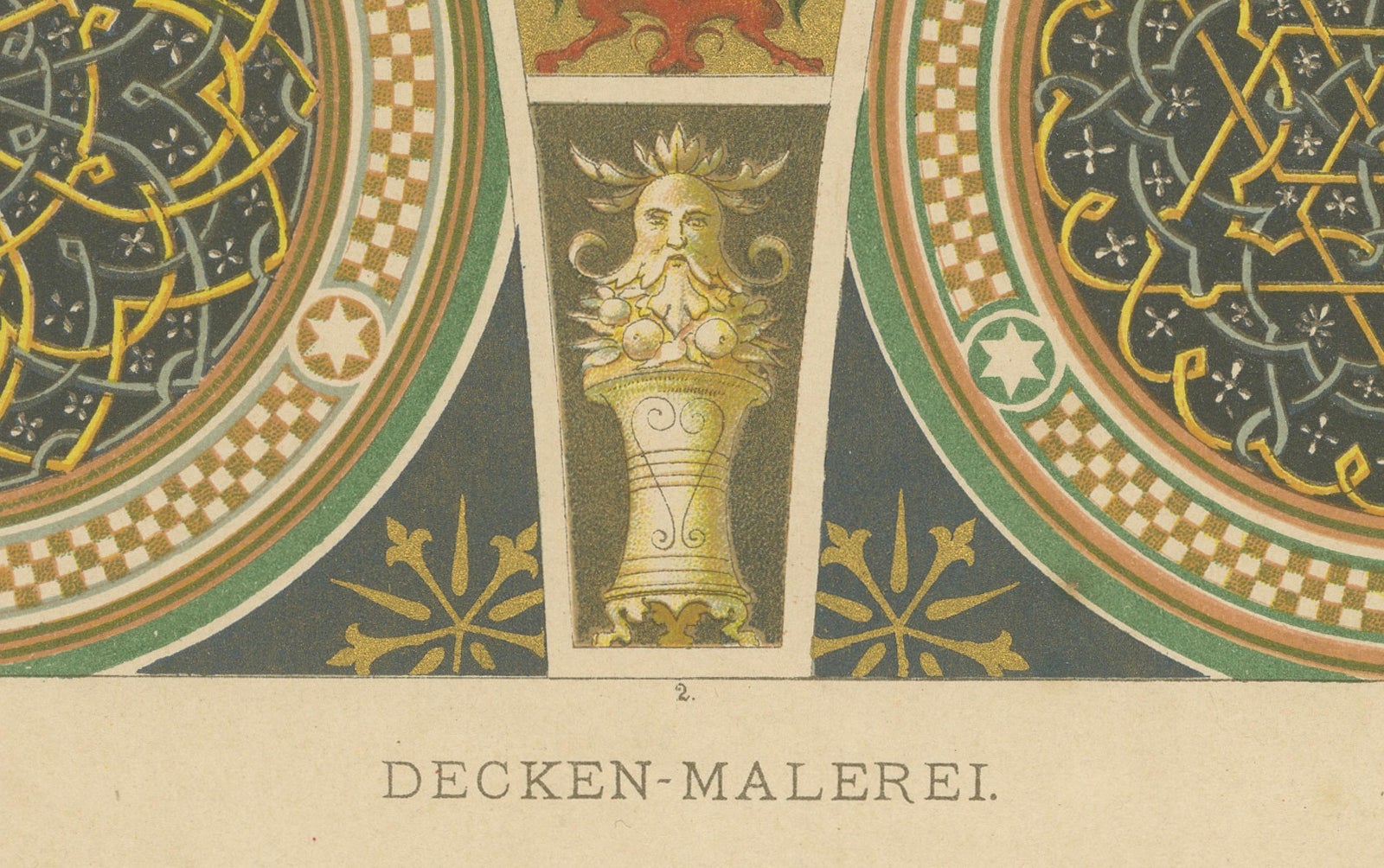
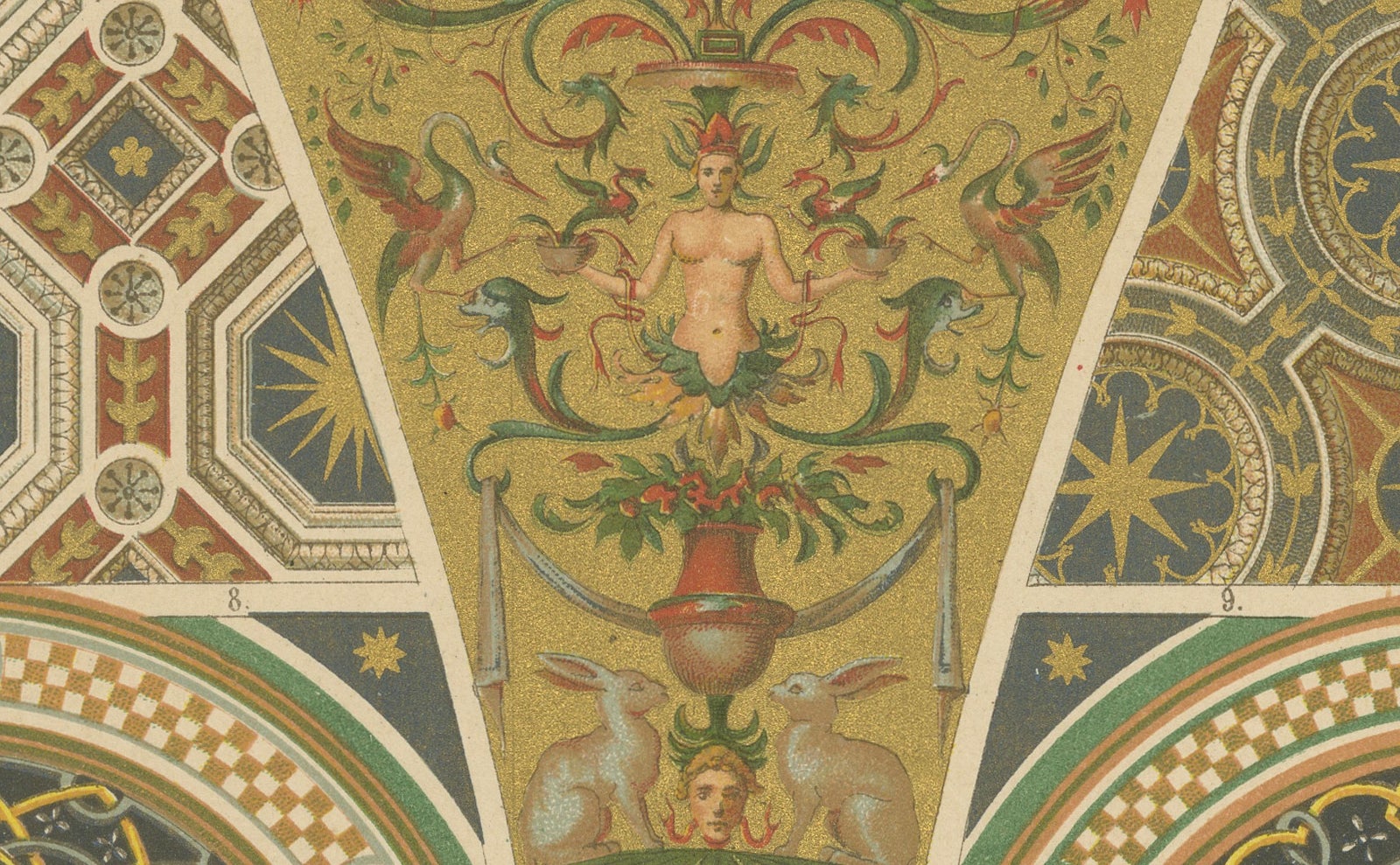
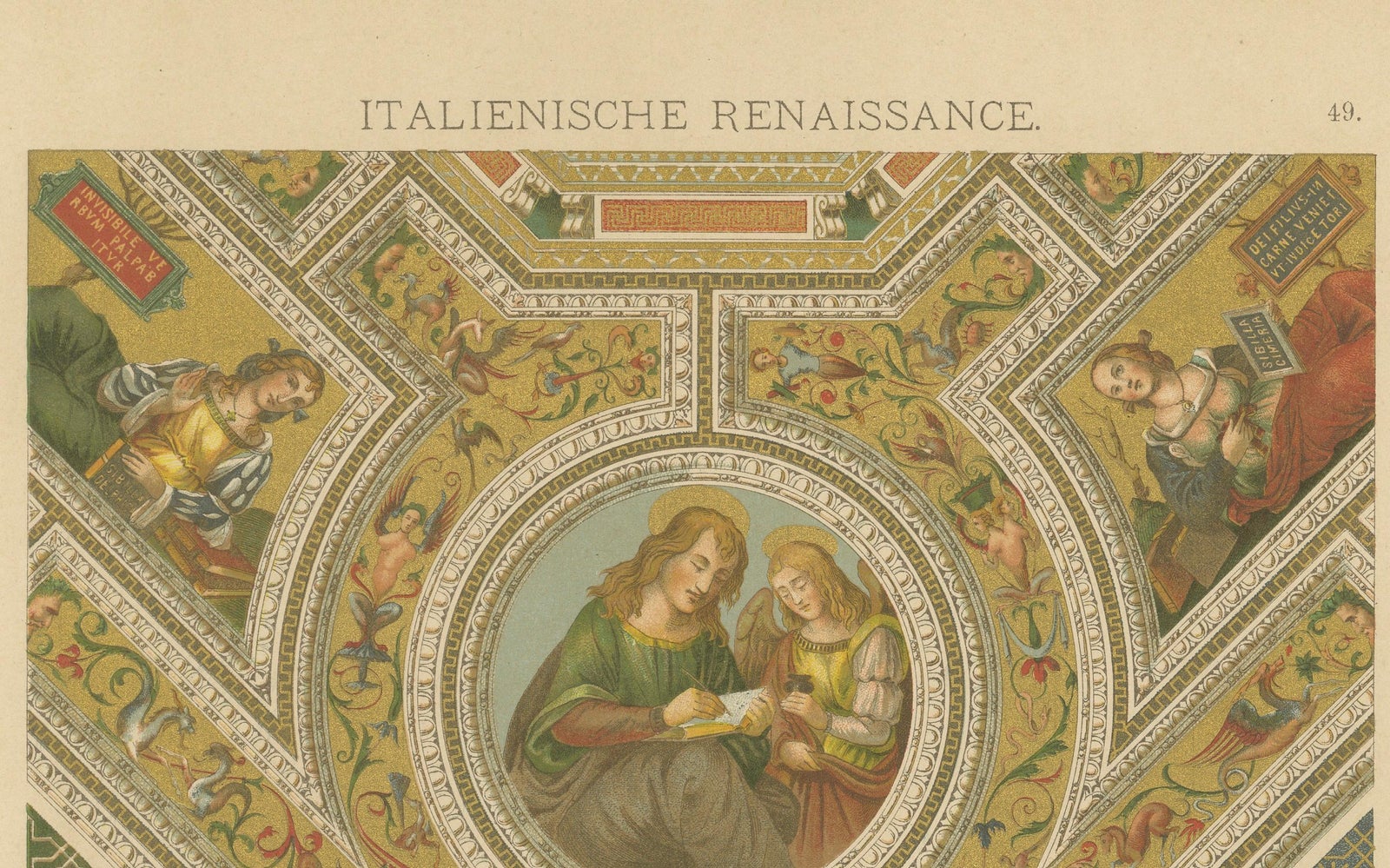
This exquisite print, crafted by H. Dolmetsch and featured in "Ornamentenschatz," published by Verlag J. Hoffmann in Stuttgart in 1887, showcases ceiling paintings from the Italian Renaissance. The design integrates vibrant frescoes depicting religious scenes and figures within ornamental geometrical and floral patterns. The composition is rich with symbolic elements, including celestial motifs and elaborate borders, typical of the opulent decorative style of the Renaissance.
Attractiveness and Decorative Appeal:
The attractiveness of this print lies in its detailed and colorful portrayal of Renaissance artistry. The precision in the frescoes and the harmonious integration of figures with decorative motifs reflect the period’s emphasis on humanism and beauty. The use of gold accents and vivid colors enhances the ornamental richness, capturing the viewer's eye and illustrating the luxurious interiors of Renaissance architecture.
Technique Used for the Print:
Chromolithography was used to produce this print, a method ideal for replicating the depth and luminosity of ceiling frescoes. This technique allowed for the detailed layering of colors and the creation of a textural depth that mimics the original plasterwork and painting of Renaissance ceilings. The result is a print that not only documents but also celebrates the artistic achievements of the era, making it a valuable piece for both historical and aesthetic appreciation.