Close-ups
Framed and on the wall
Frame and rooms are illustrations of how the print could look, drawn to its real size; it is sold unframed unless the description says otherwise.
Porcelain & ceramics
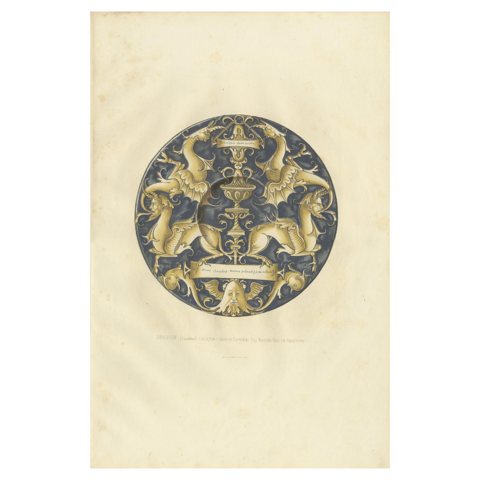
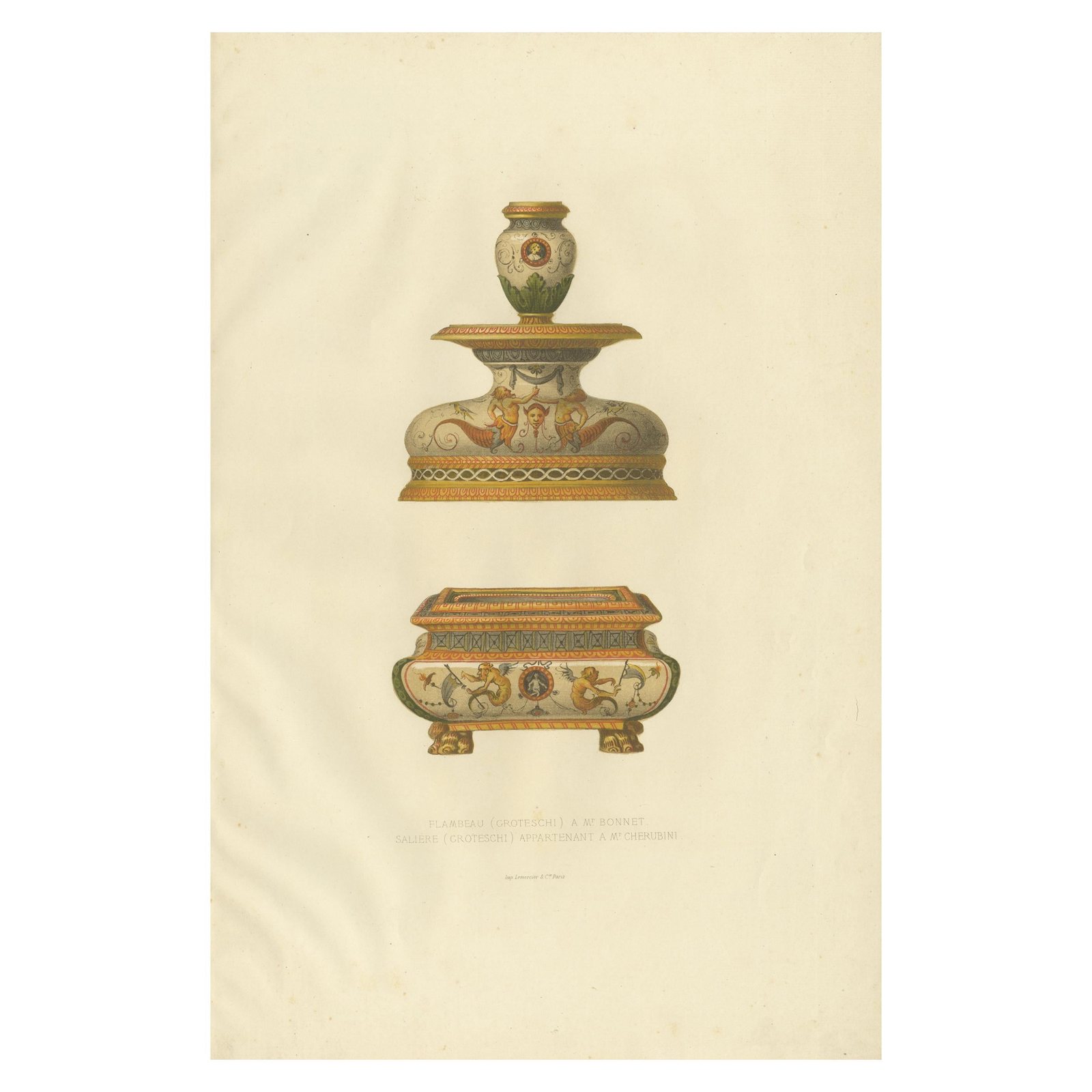
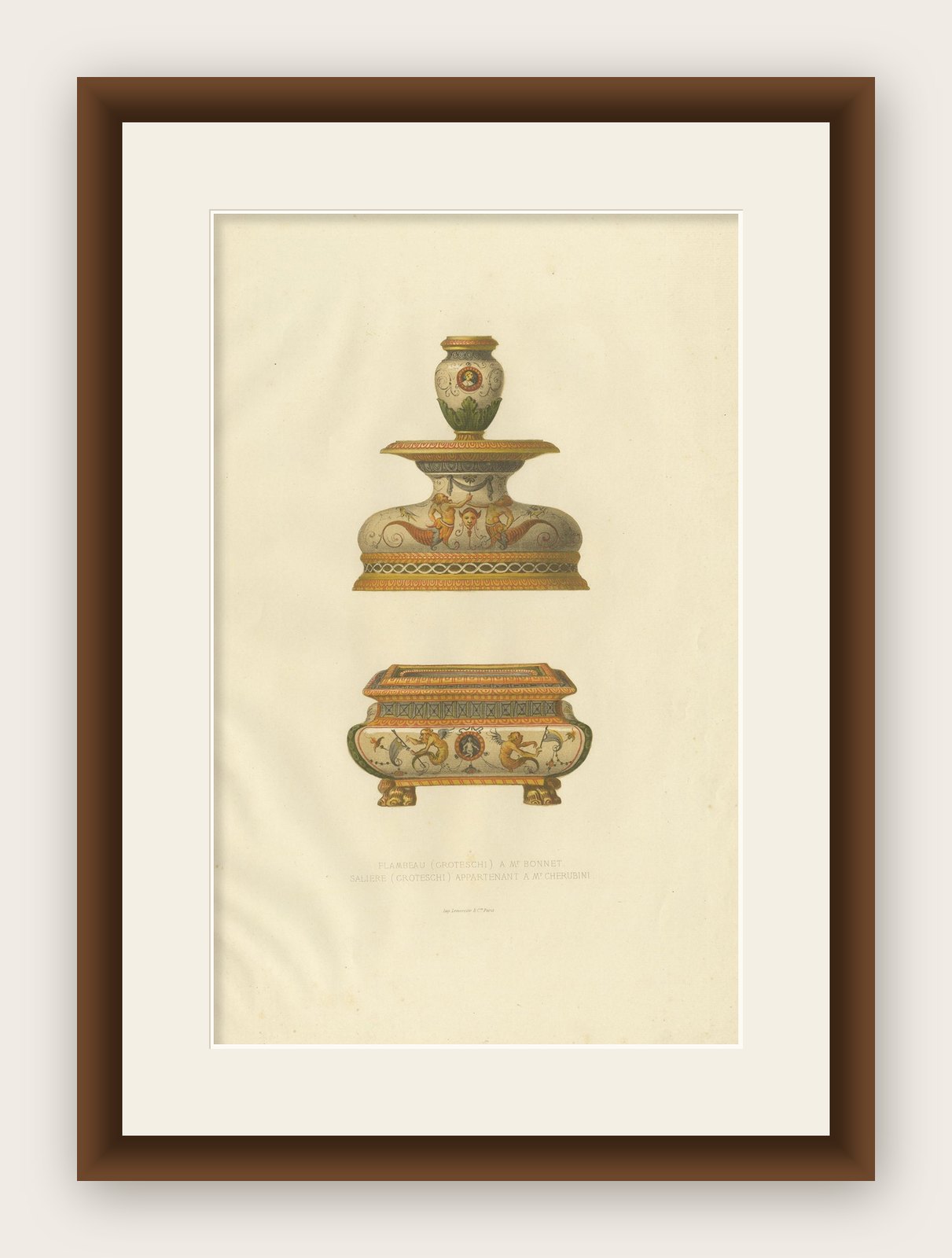
Italian Faience Flambeau & Salière, Antique Lithograph by Delange, 1869
$495$34530% off
€315 · £265
Original print, not a reproduction
Ships worldwide from the Netherlands, flat or rolled, insured and tracked. 14-day returns.
- Date
- 1869
- Sheet size
- 20.9 × 13.8 in (53 × 35 cm)
- Condition
- Very good, with general age toning and some scattered light foxing in the margins. Plate mark visible. Please study the image carefully.
- Collection
- Porcelain & ceramics
- Era
- 1850 and after, The age of revivals
- Stock no.
- BG-12770-98
What the condition grades mean
- Excellent
- Bright and clean, with no faults worth mentioning.
- Very good
- Only light signs of age, such as faint toning.
- Good
- Normal signs of age for a sheet of this period: toning, some foxing, small marks or neat old repairs.
- Fair
- Clear faults such as staining, tears or repairs, priced to match.
Every fault we see is written in the condition note, and the whole sheet is shown uncropped in the photos.
Antique Lithograph of Italian Faience Flambeau and Salière, Delange, 1869
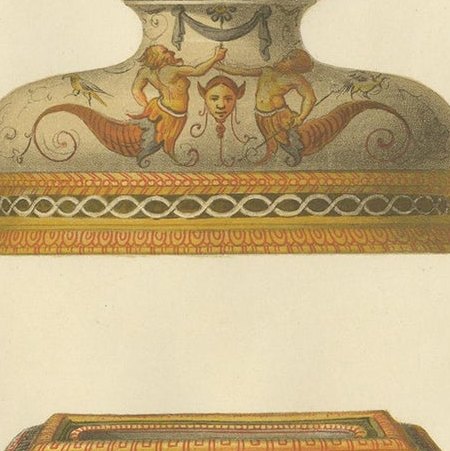
Large format antique lithograph depicting an ornate flambeau (candlestick) and salière (salt cellar) decorated in the grotesque style, rich with mythological figures, foliage, and ornamental motifs. These pieces are shown in brilliant hand-colored detail, representing Renaissance and early Baroque Italian maiolica (tin-glazed pottery). The caption notes provenance: the flambeau belonging to Mr. Bonnet and the salière to Mr. Cherubini.
This plate originates from Henri Delange’s Recueil de Faïences Italiennes des XVe, XVIe et XVIIe Siècles (Paris, 1869), one of the finest published catalogs dedicated to Italian faience. The work documents exceptional examples from prominent collections of the 19th century, recording the refined artistry of Italian ceramics across three centuries. The style, known as “groteschi,” was particularly influential during the Renaissance, drawing inspiration from ancient Roman decorative schemes rediscovered in the late 15th century.
Framing tips: This striking lithograph deserves a presentation that enhances its vivid coloration. A wide ivory or cream mat will emphasize the delicate ornamental work, while a gilt or black-and-gold frame will highlight its Renaissance character. For a refined effect, consider a double mat with a fine red or green inner line echoing the decorative palette of the design.
Technique: Color lithograph
Maker: Henri Delange, Paris, 1869
Explore