Close-ups
Framed and on the wall
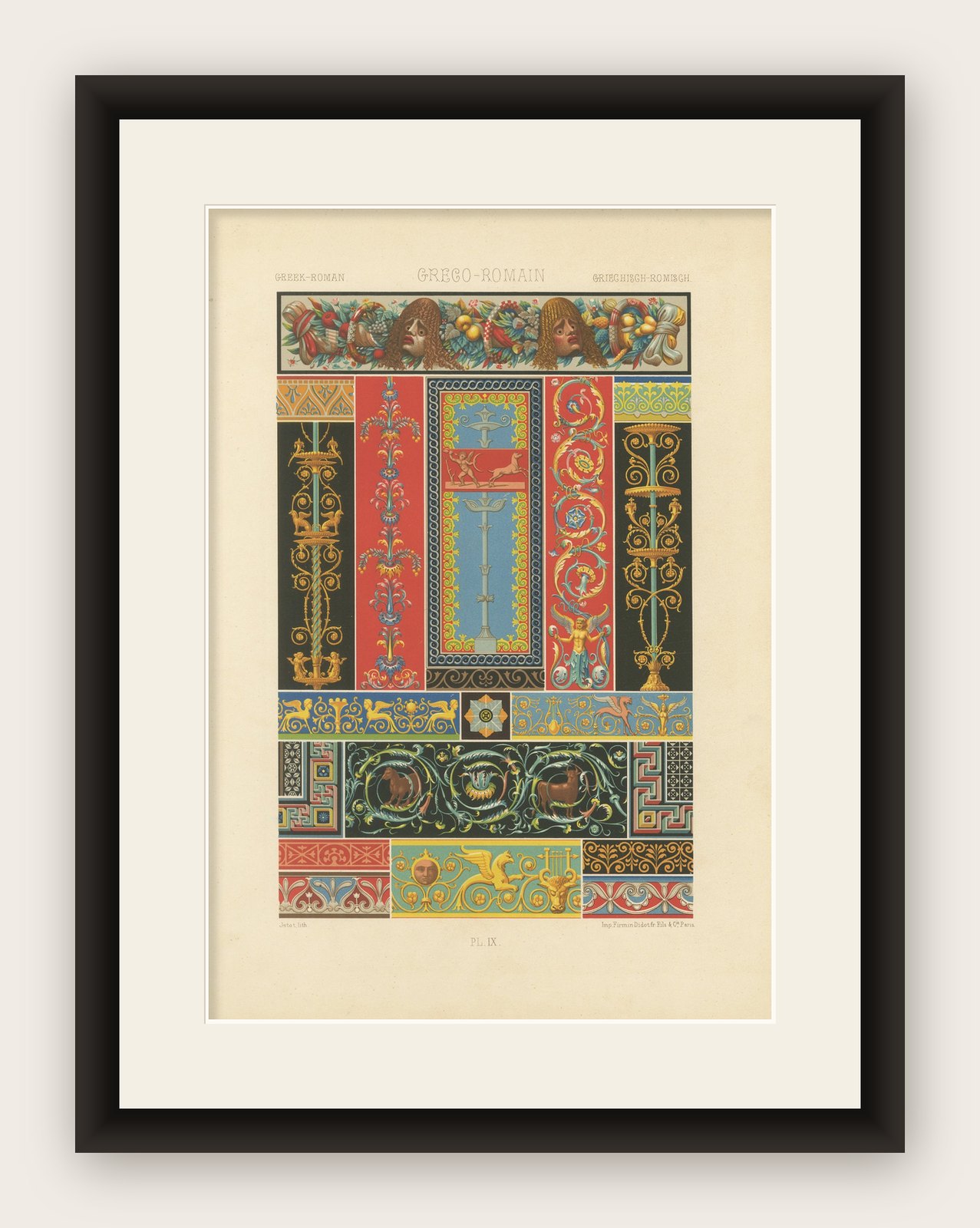

Frame and rooms are illustrations of how the print could look, drawn to its real size; it is sold unframed unless the description says otherwise.
Antiquity & ruins
Greek-Roman Ornament Print, Classical Decorative Motifs & Borders, c.1869
$250
€220 · £185
Original print, not a reproduction
Ships worldwide from the Netherlands, flat, insured and tracked. 14-day returns. To buy, use Ask a question (info@antiquearchitectureprints.com) and we will reserve it for you.
- Date
- 1869
- Sheet size
- 15.9 × 11.3 in (40.4 × 28.8 cm)
- Condition
- Excellent. Condition overall. Strong paper, vivid colors, clean plate. Light age-toning to margins and a few scattered foxing spots outside the image area. No tears or repairs.
- Collection
- Antiquity & ruins
- Era
- 1850 and after, The age of revivals
- Stock no.
- f_46121182
Greek-Roman Ornament Print, Classical Decorative Motifs & Borders, c.1869
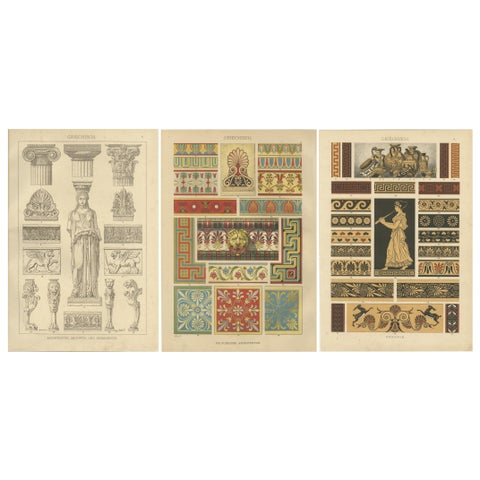
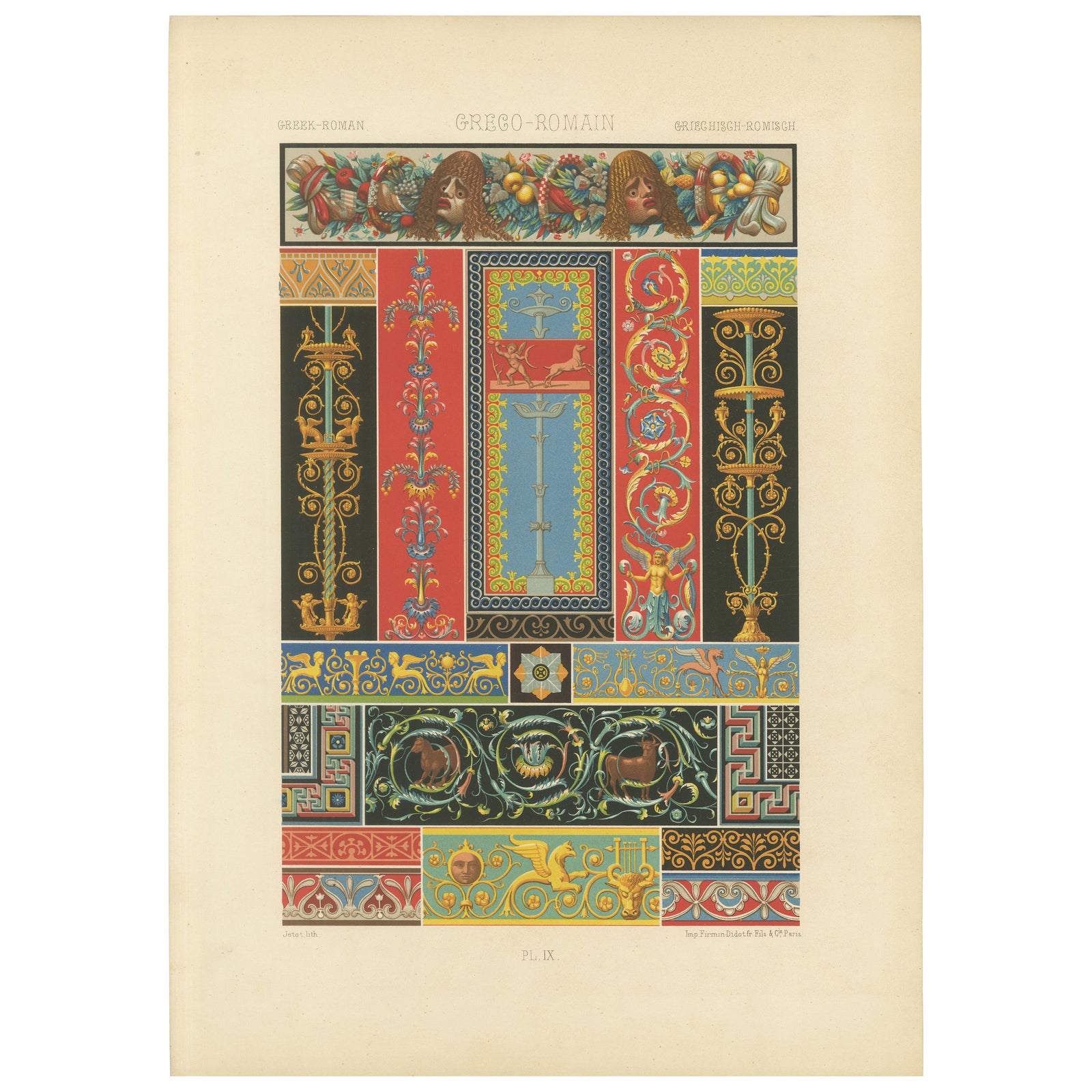
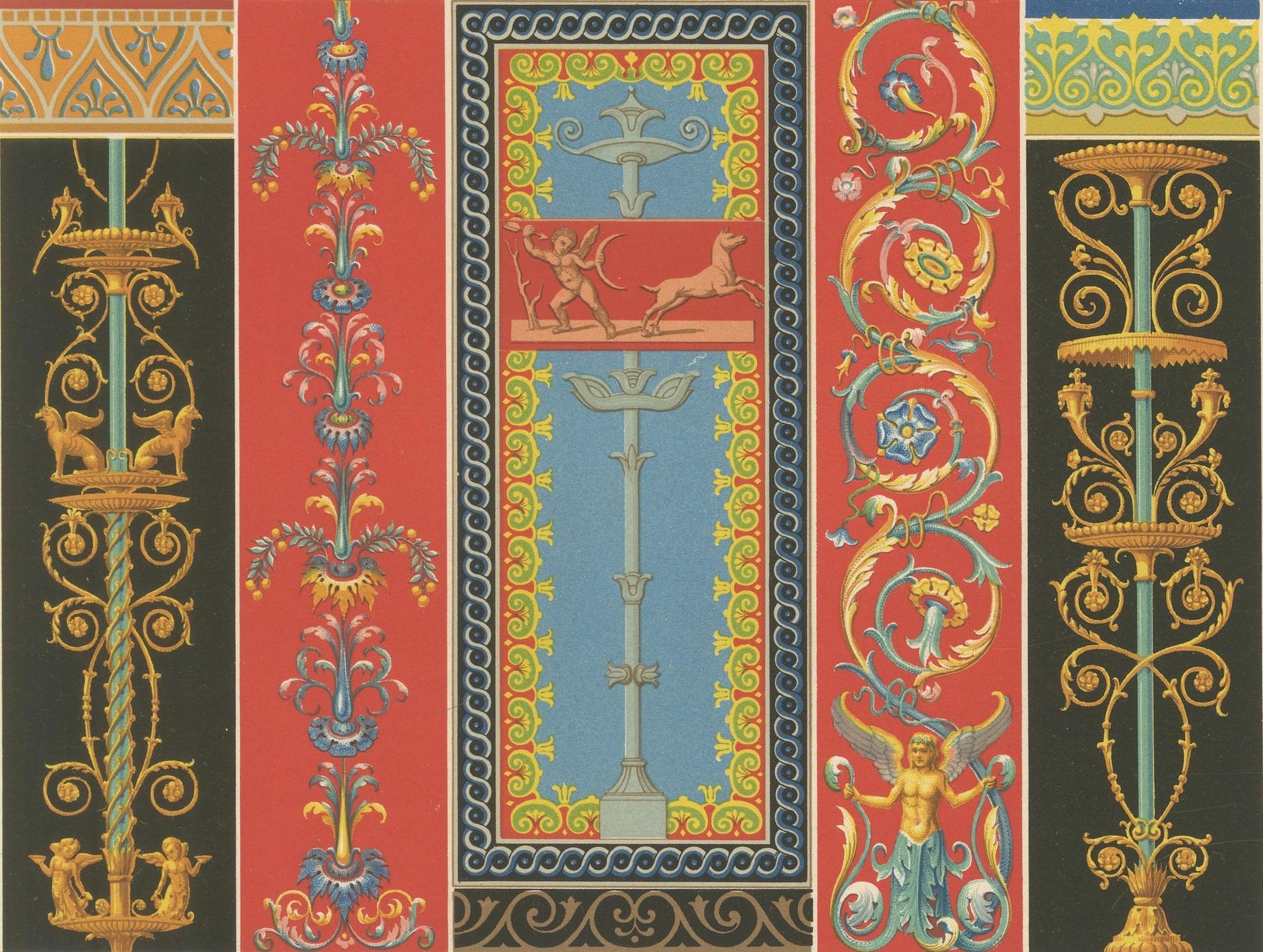
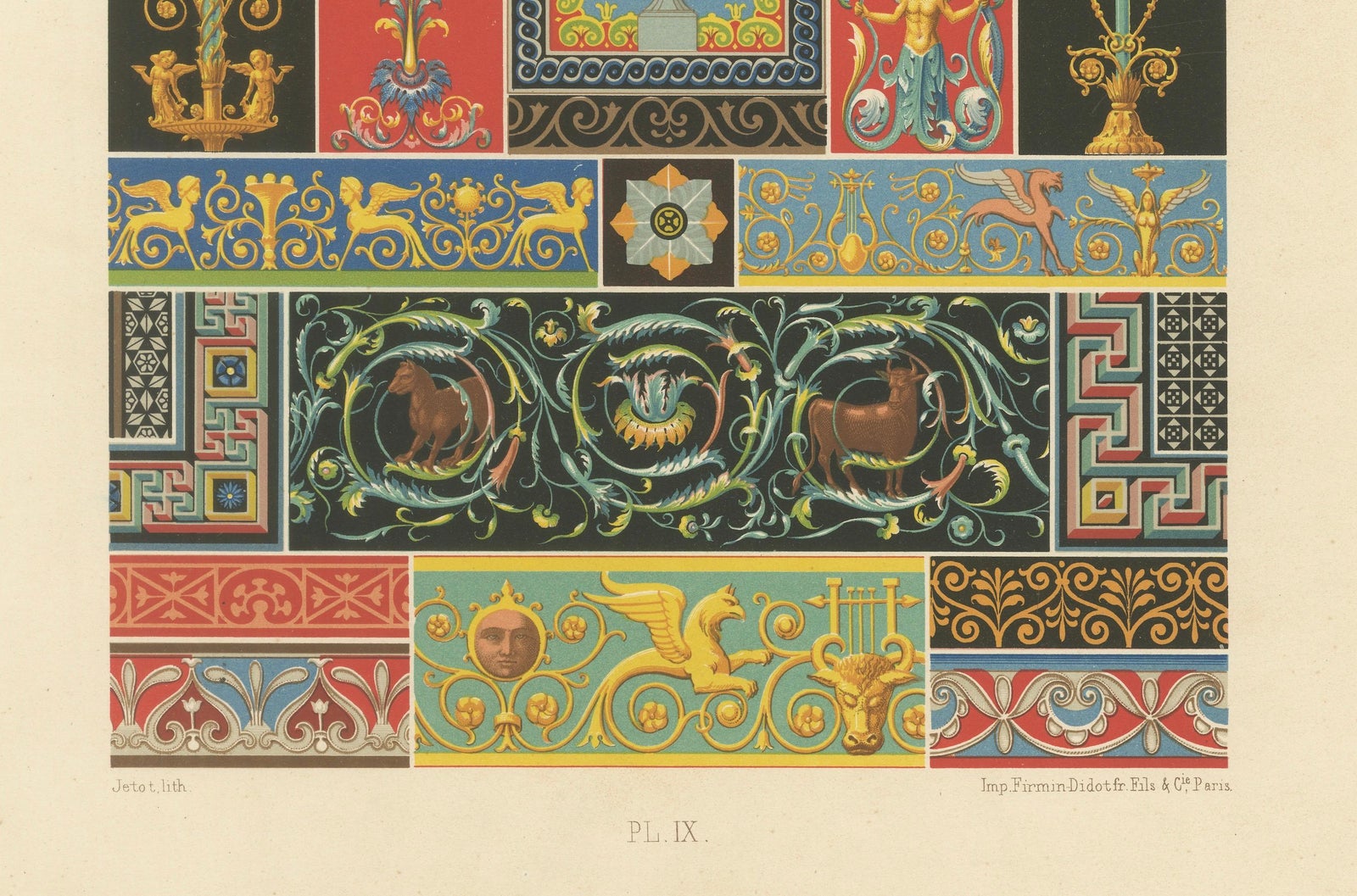
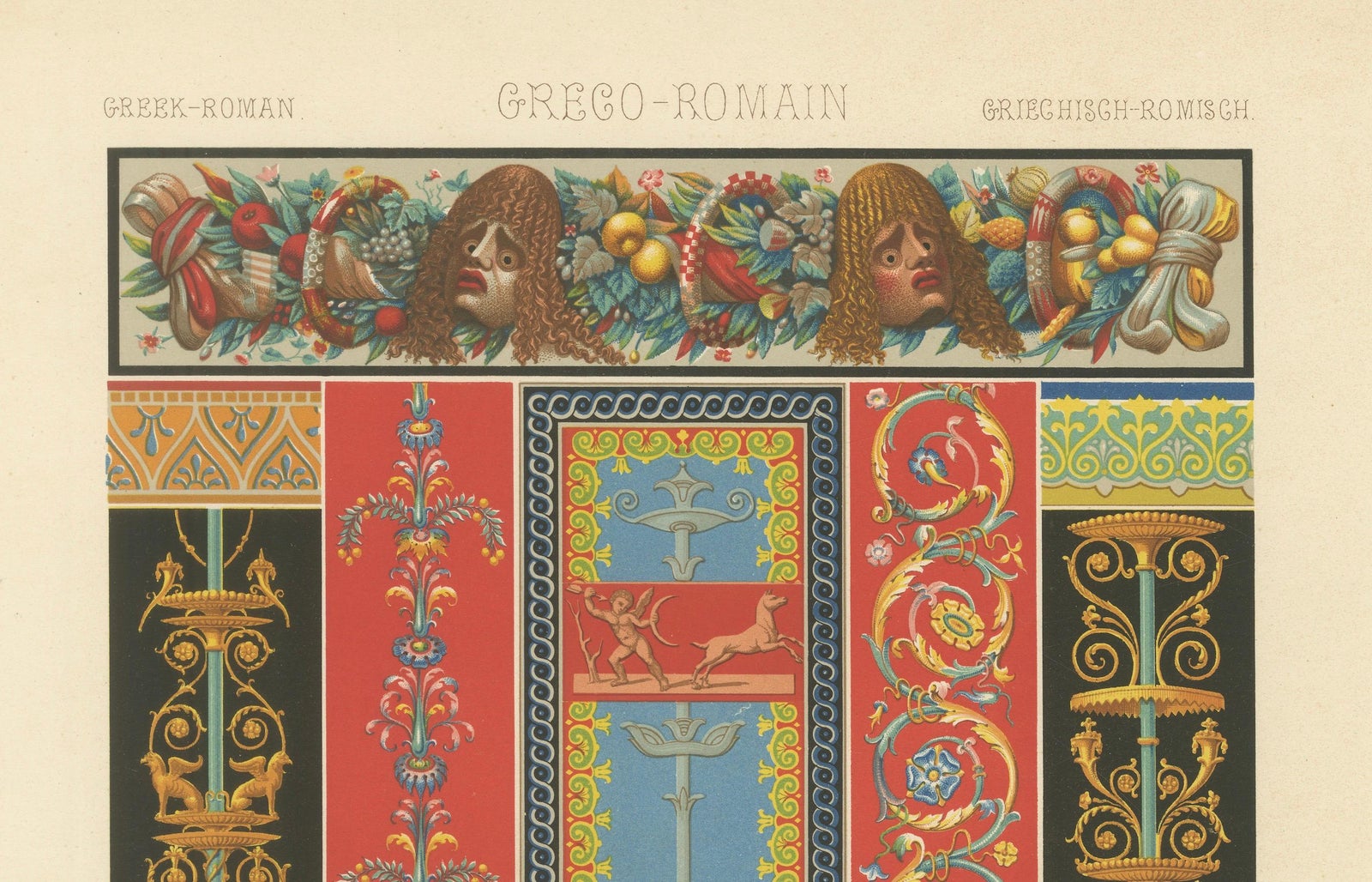
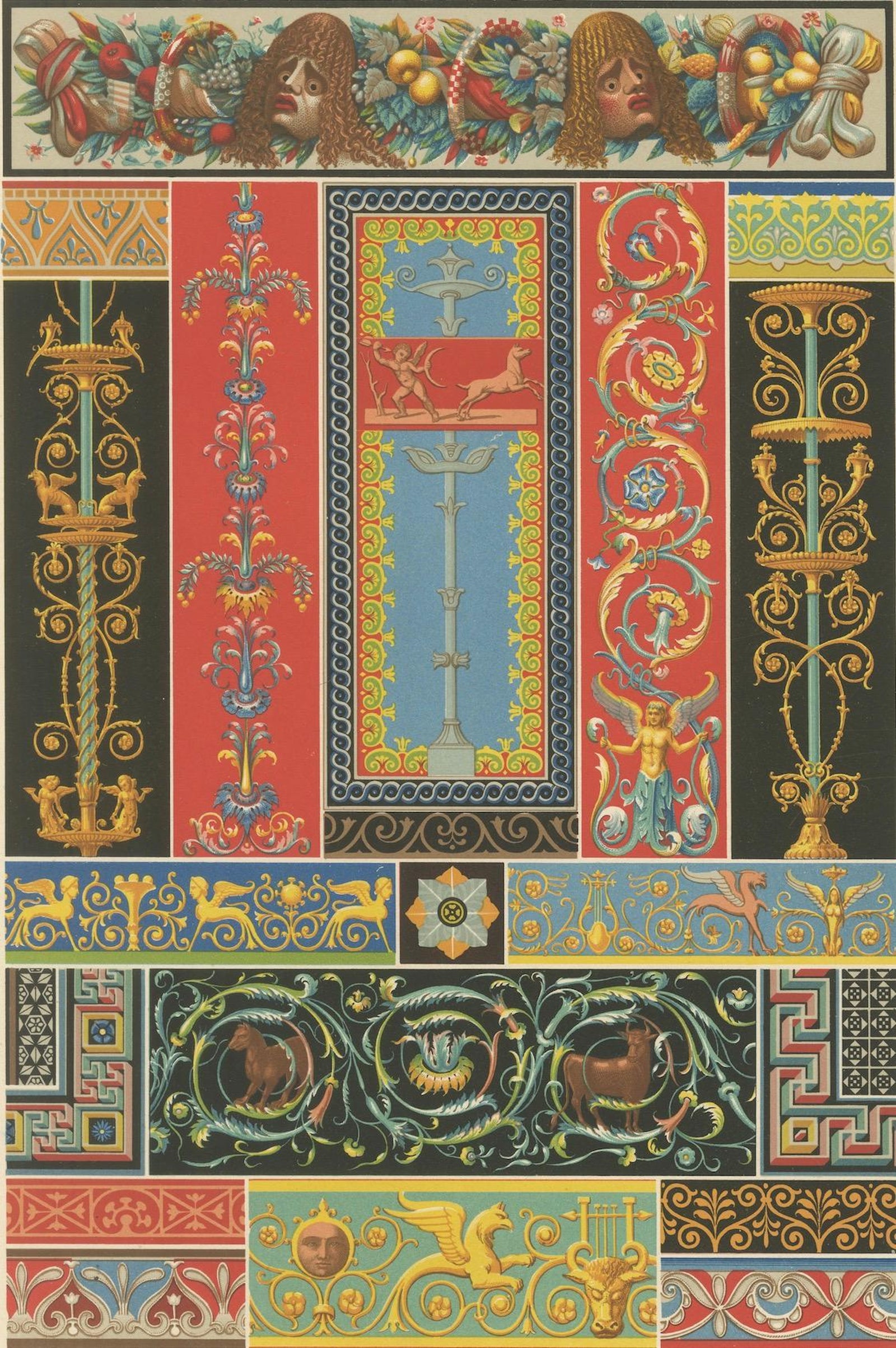
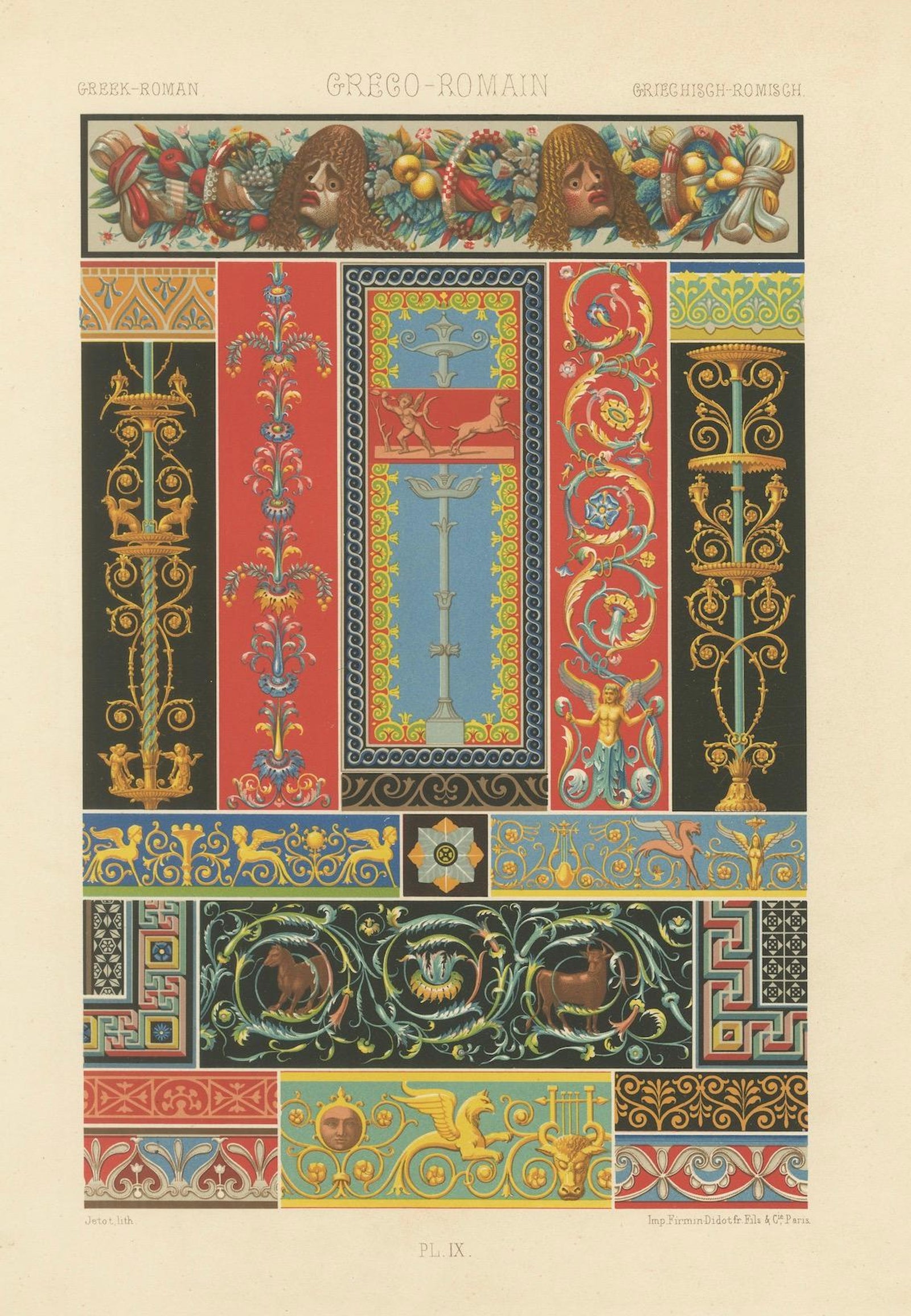
This vibrant chromolithograph presents a magnificent collection of Greco-Roman decorative motifs, drawing from the classical tradition of wall painting, friezes, and architectural detailing. Plate IX from L'Ornement Polychrome, this 19th-century print offers a rich survey of classical ornamentation used in ancient Roman interiors and public buildings, especially as seen in Pompeii and Herculaneum.
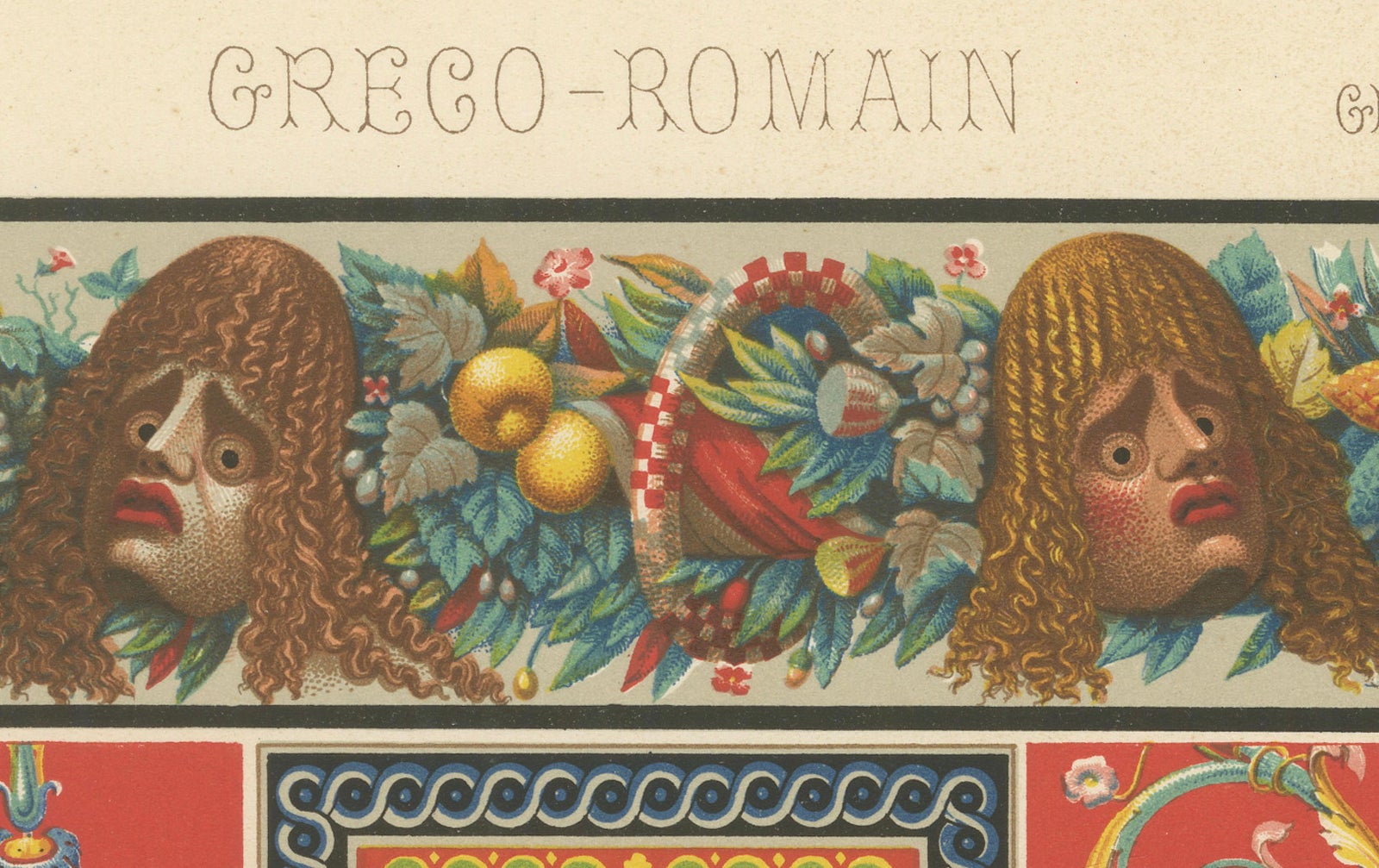
The composition features a vertical arrangement of decorative bands and panels, each densely filled with classical symbols and designs. At the top is a garlanded frieze with theatrical masks and fruit, symbols of festivity and abundance. Below, vertical and horizontal panels are adorned with intricate scrollwork, acanthus leaves, mythological beasts, griffins, satyrs, and palmettes, all executed in a palette of crimson, cobalt, ochre, and emerald. Human figures, animals, and florals intertwine in symmetrical, balanced compositions that reflect the ancient ideals of harmony and order.
The central blue panel, framed by red and black flanking columns, features two prancing deer atop a delicately ornamented candelabrum. Other motifs include lions, winged mythological figures, grotesques, and rosettes. The variety of borders and friezes shown here would have adorned both sacred and domestic spaces, acting as visual cues of wealth, power, and cultural refinement.
This plate was published around 1869 in Paris by the renowned firm Firmin-Didot, and lithographed by Jesta after Racinet's reconstructions. Using chromolithography, a labor-intensive color printing process, it captures the richness and precision of classical ornament with astonishing fidelity. These designs were widely used in the 19th century by architects, designers, and decorative artists seeking to revive classical elegance in modern interiors.
Condition: Excellent condition overall. Strong paper, vivid colors, clean plate. Light age-toning to margins and a few scattered foxing spots outside the image area. No tears or repairs.
Framing tips: A black or deep gold frame works best to echo the classical elegance of the design. Pair with a rich cream, parchment, or rust-colored mat to complement the color palette and enhance the artwork’s architectural quality.
Technique: Chromolithograph
Maker: Firmin-Didot, Paris, after A. Racinet, c.1869
Explore