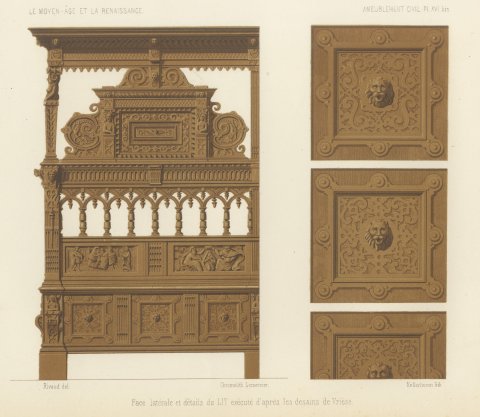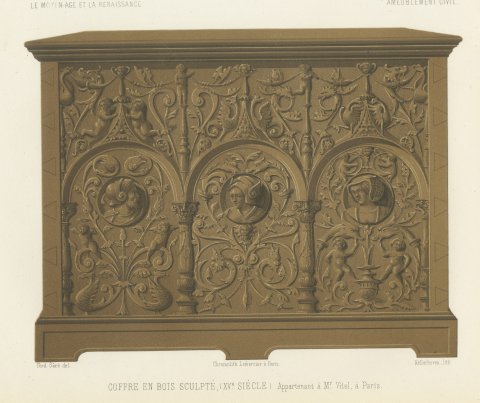
Close-ups
Framed and on the wall
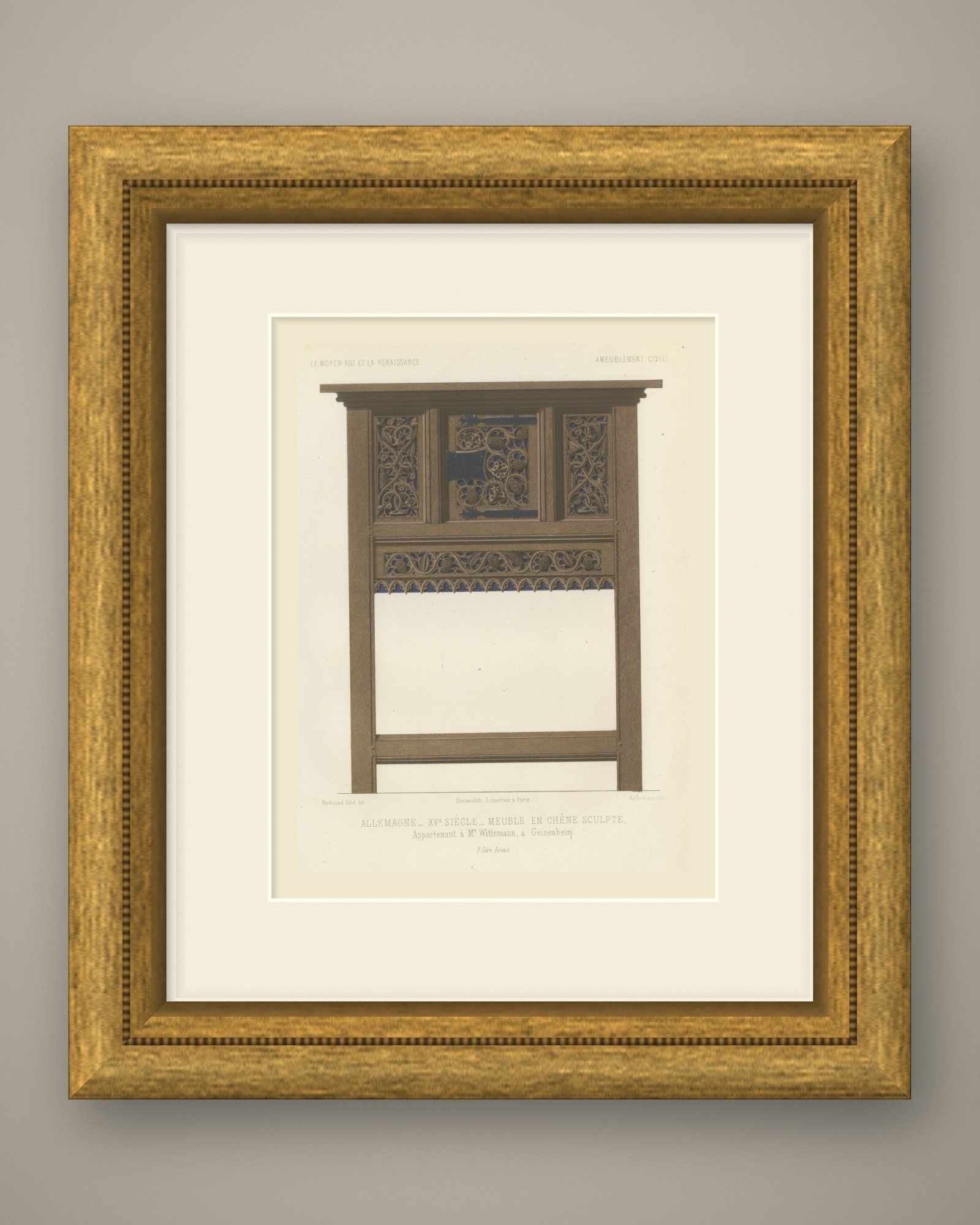
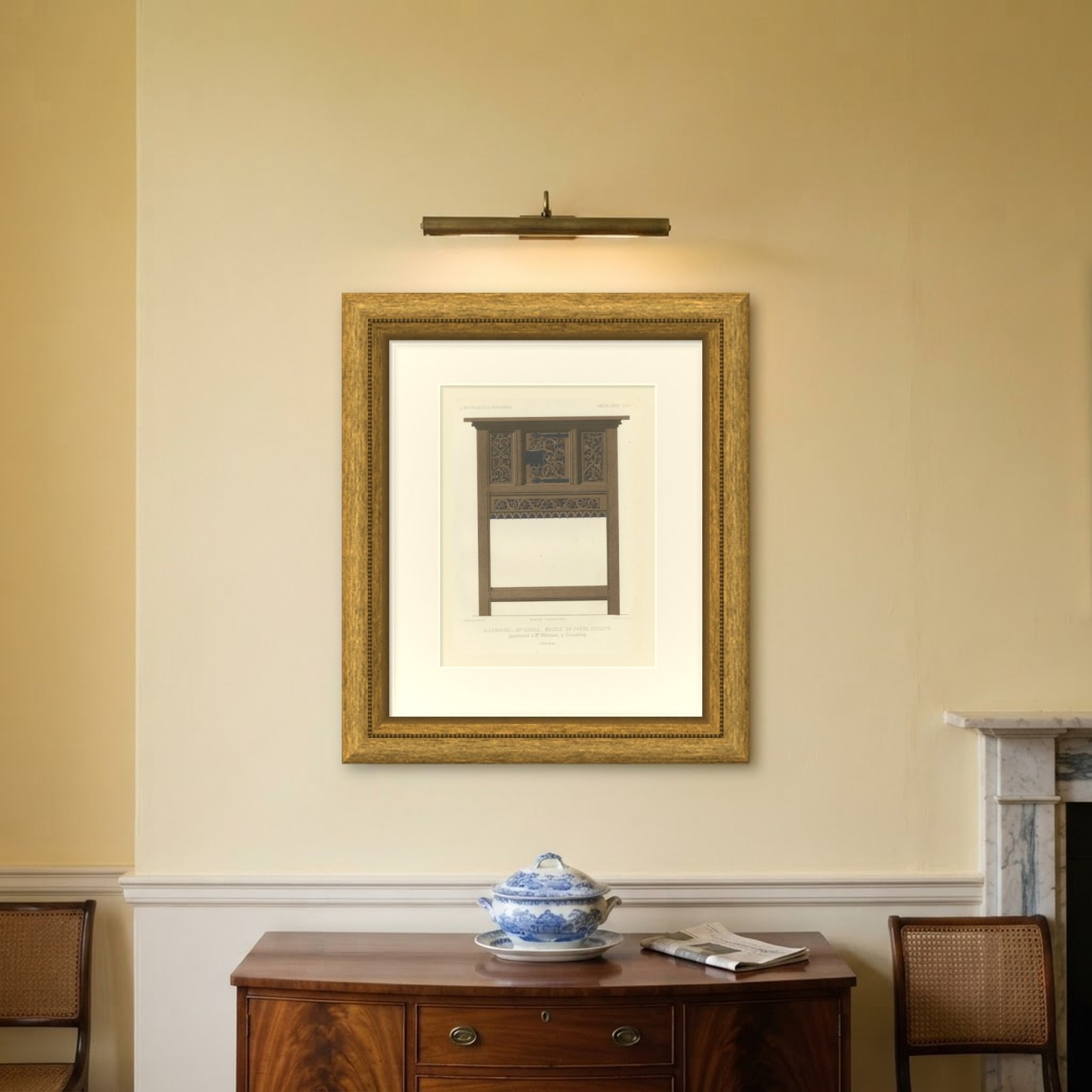
Frame and rooms are illustrations of how the print could look, drawn to its real size; it is sold unframed unless the description says otherwise.
Rooms & furniture
German Carved Oak Cabinet, Fifteenth Century, Geisenheim, Antique Print, 1851
$200$14030% off
€126 · £105
Original print, not a reproduction
Ships worldwide from the Netherlands, flat or rolled, insured and tracked. 14-day returns.
- Date
- 1851
- Sheet size
- 11 × 8.3 in (28 × 21 cm)
- Technique
- Chromolithograph
- Coloring
- Printed in color
- Condition
- Good. Light age toning, a little darker toward the edges; occasional small spots in the margins. Please see the images.
- Collection
- Rooms & furniture
- Era
- 1850 and after, The age of revivals
- Stock no.
- BG-12228-4-34
What the condition grades mean
- Excellent
- Bright and clean, with no faults worth mentioning.
- Very good
- Only light signs of age, such as faint toning.
- Good
- Normal signs of age for a sheet of this period: toning, some foxing, small marks or neat old repairs.
- Fair
- Clear faults such as staining, tears or repairs, priced to match.
Every fault we see is written in the condition note, and the whole sheet is shown uncropped in the photos.
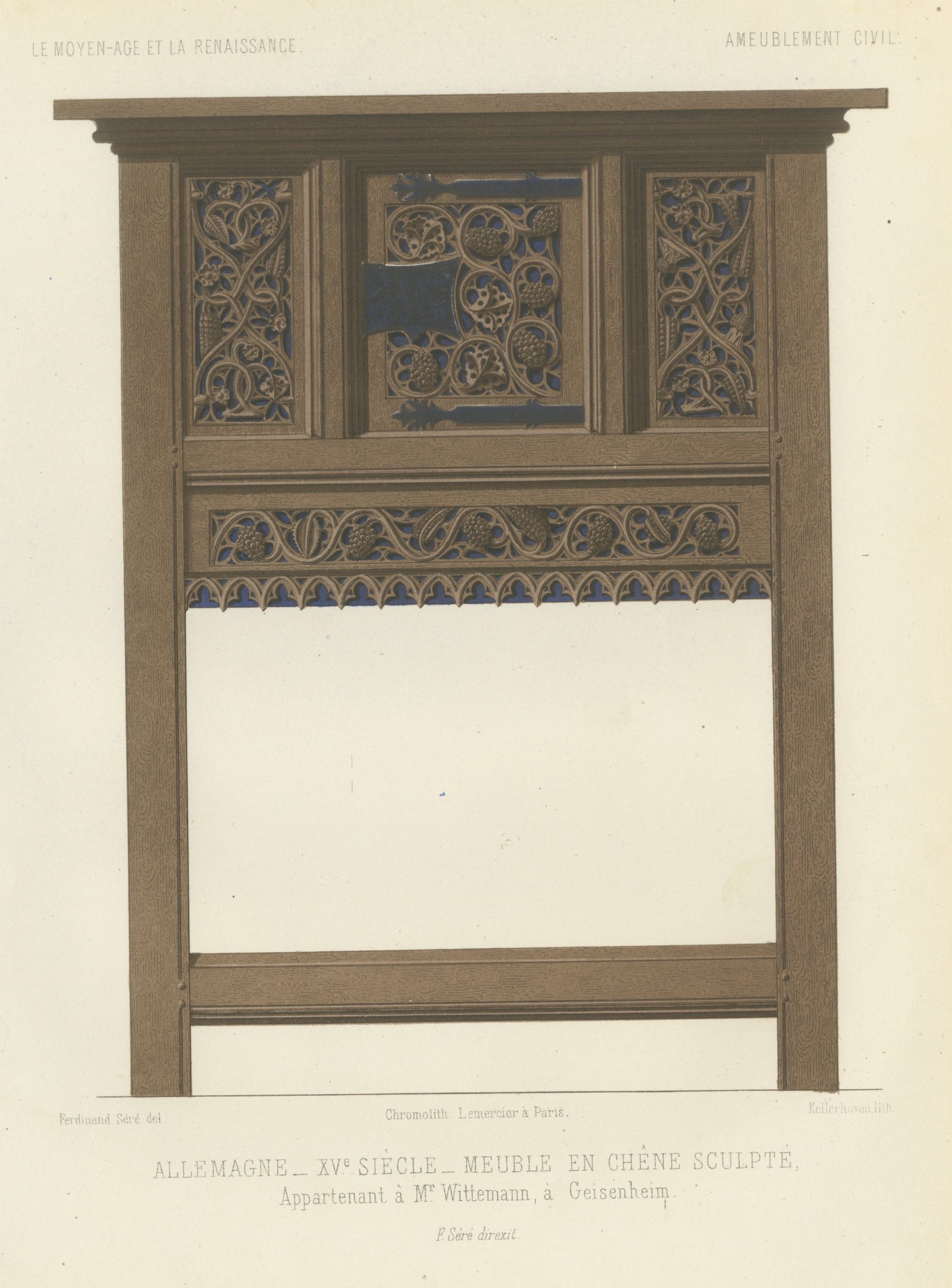
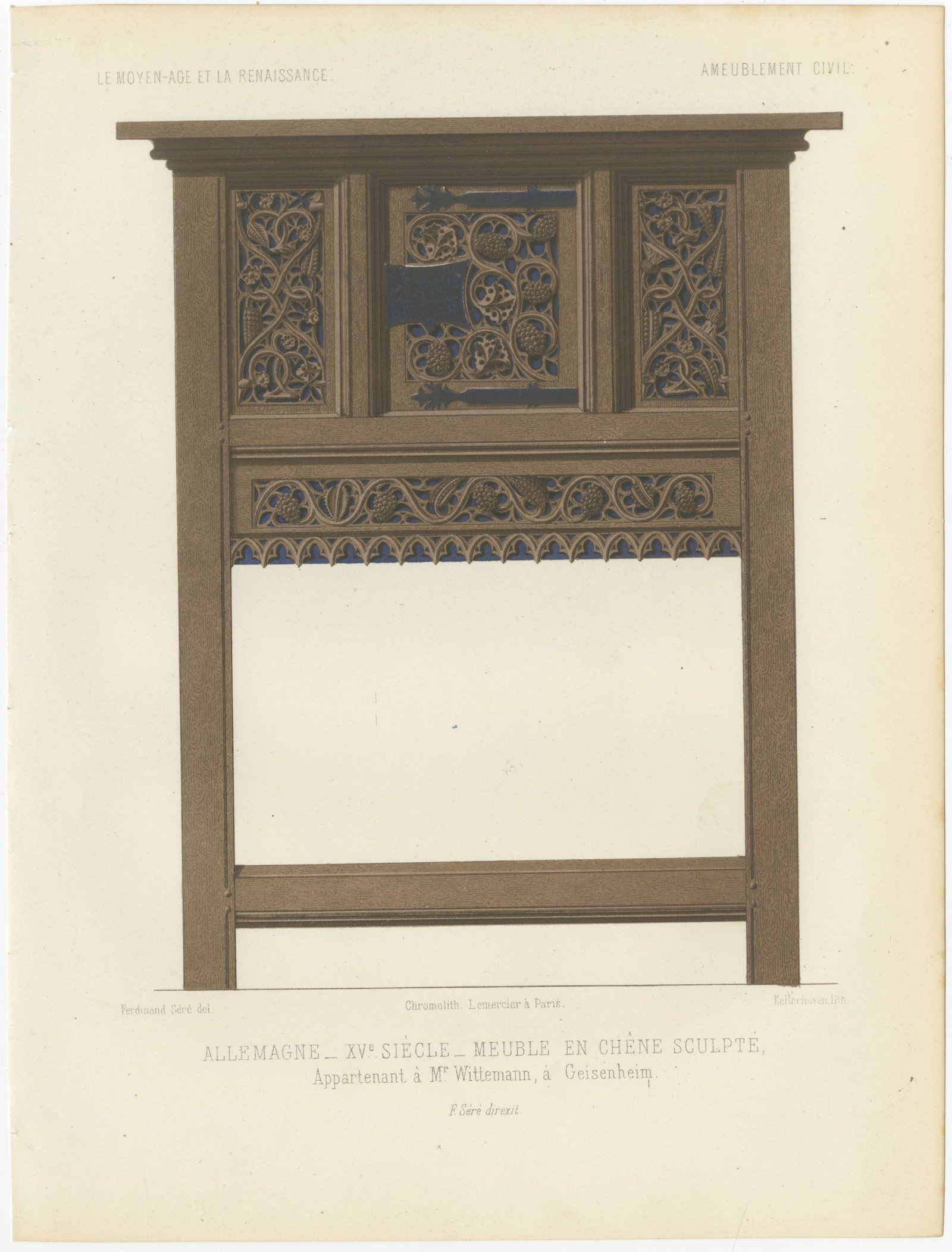
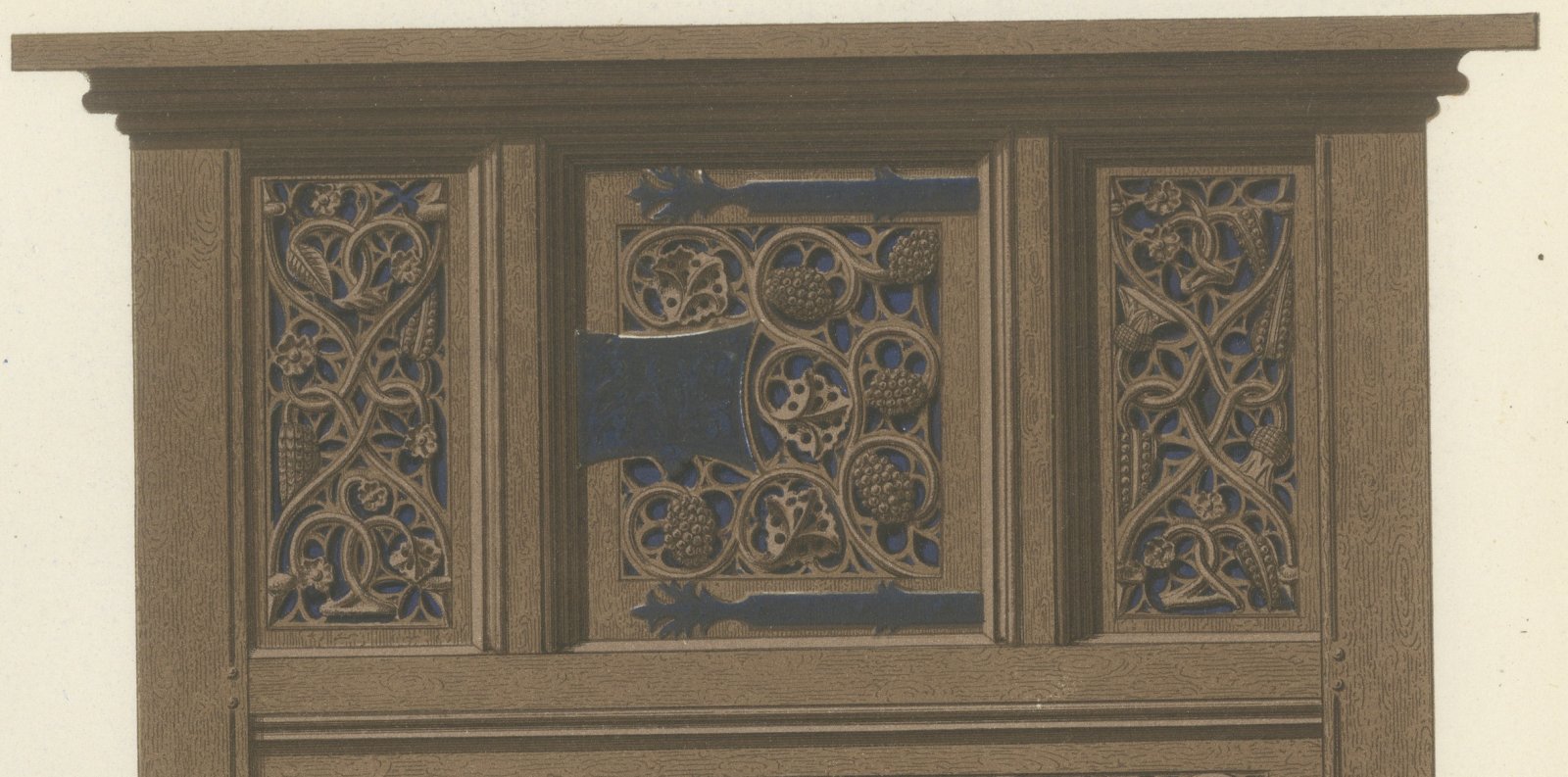
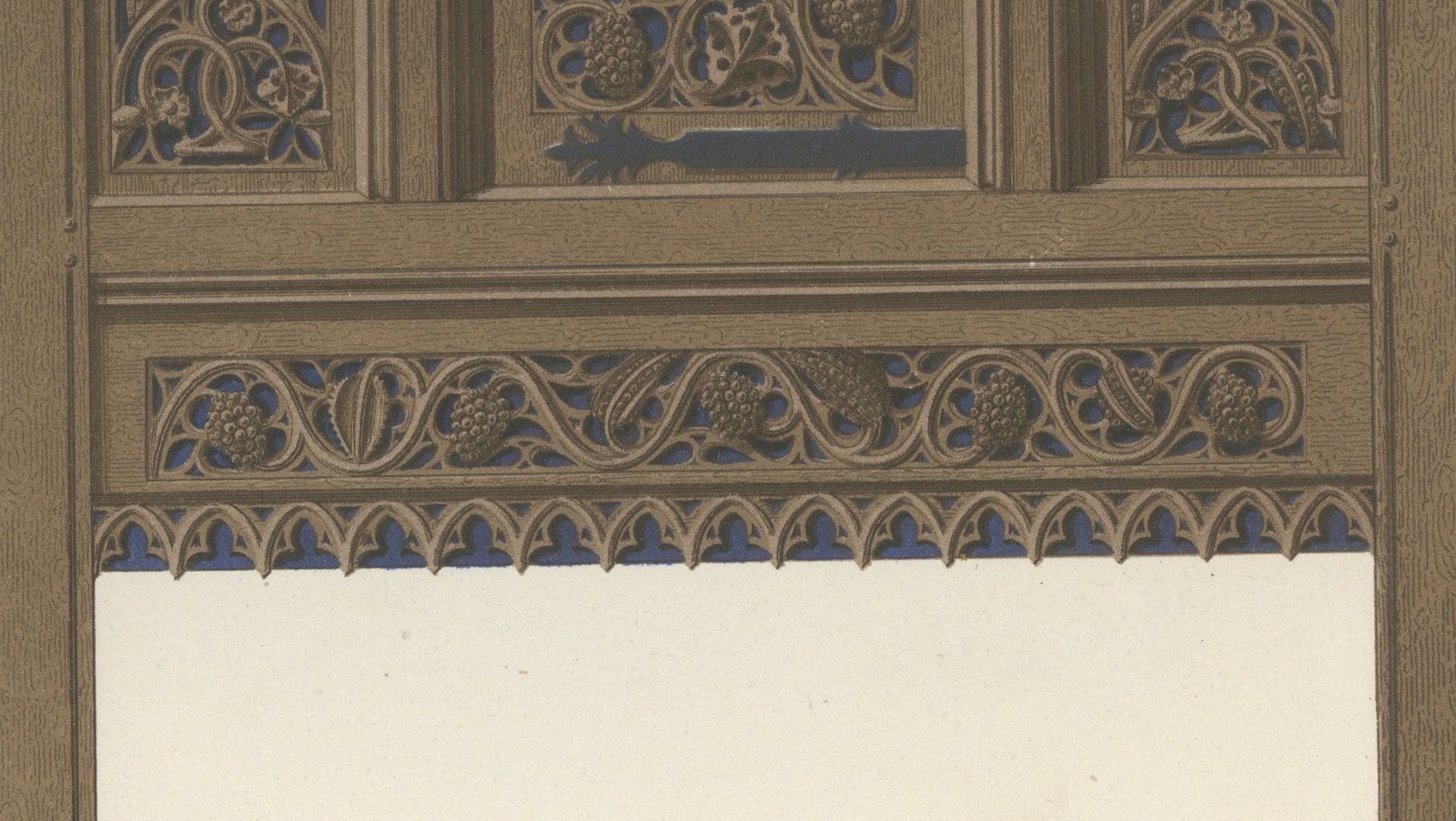
This is an original antique chromolithograph, printed in warm oak browns with a deep blue ground, lettered "ALLEMAGNE, XVe SIÈCLE, MEUBLE EN CHÊNE SCULPTÉ, Appartenant à Mr Wittemann, à Geisenheim." The piece is drawn in a straight front elevation. Under a molded cornice the upper stage holds three panels of pierced tracery, vine stems and grape clusters set against blue, the center panel being a door hung on long iron strap hinges. Below runs a pierced frieze of scrolling vine and grapes over a row of small cusped arches, and the lower part is open between the tall uprights, joined only by a plain rail near the floor.
The caption translates as "Germany, fifteenth century, carved oak piece of furniture, belonging to Mr. Wittemann at Geisenheim." The running head reads "AMEUBLEMENT CIVIL", meaning domestic furniture. The credits read "Ferdinand Séré del.", "Chromolith. Lemercier à Paris" and "Kellerhoven, lith.", with "F. Séré direxit" beneath the caption.
Le Moyen Âge et la Renaissance was published in Paris in five volumes between 1848 and 1851. Paul Lacroix, who also wrote as the Bibliophile Jacob, edited the text, and Ferdinand Séré directed the illustrations, which is why his name and the word direxit stand beneath every plate. The work surveys the manners, crafts, sciences and arts of medieval and Renaissance Europe, and its chromolithographed plates record objects held around 1850 in churches, museums and private collections. This plate is from the fourth volume, dated 1851, in the section on domestic furniture.
The upright format and warm browns suit a library, a study or a group of furniture plates hung together.
This is an original antique print, not a modern reproduction. This item is sold unframed.