Close-ups
Framed and on the wall
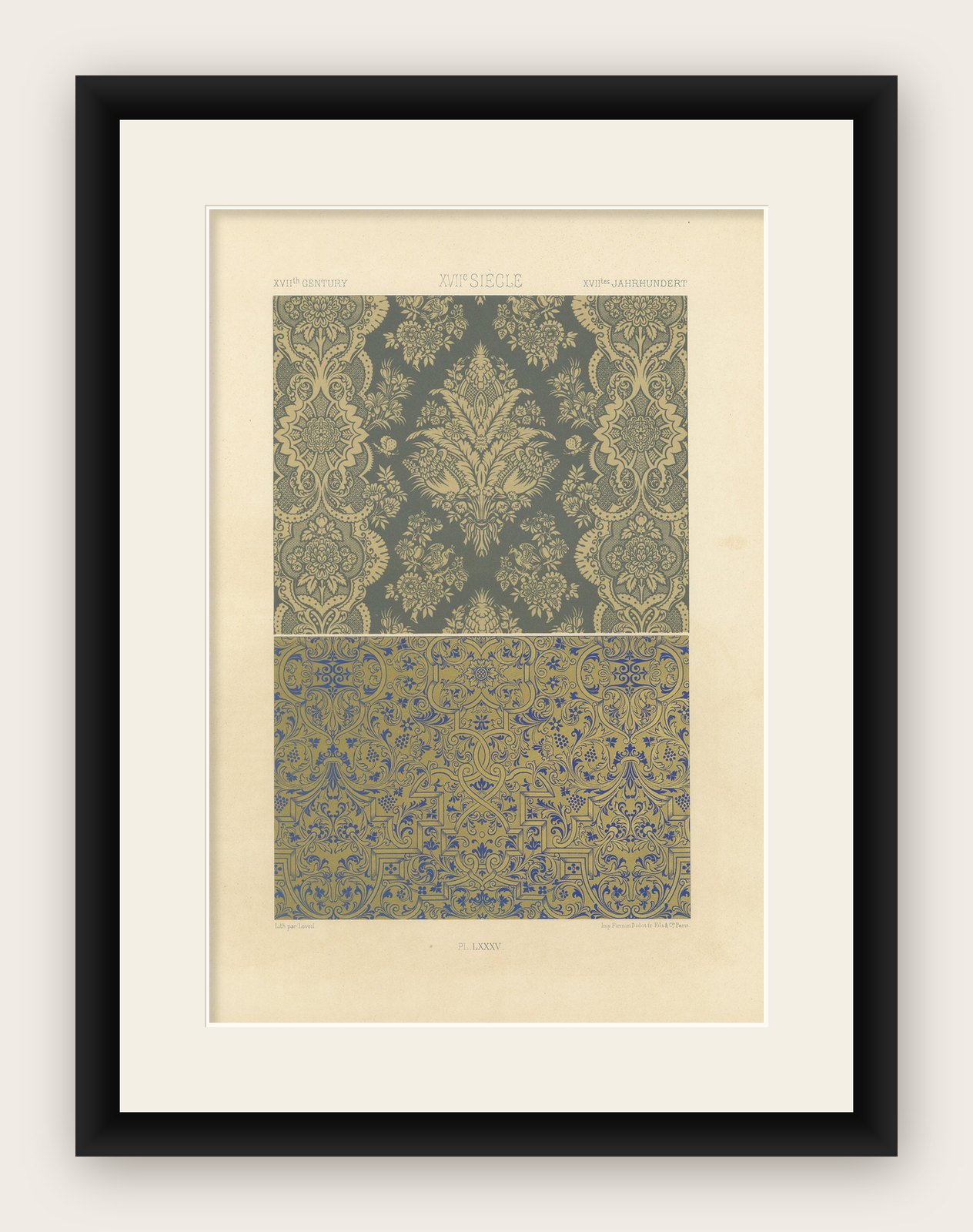
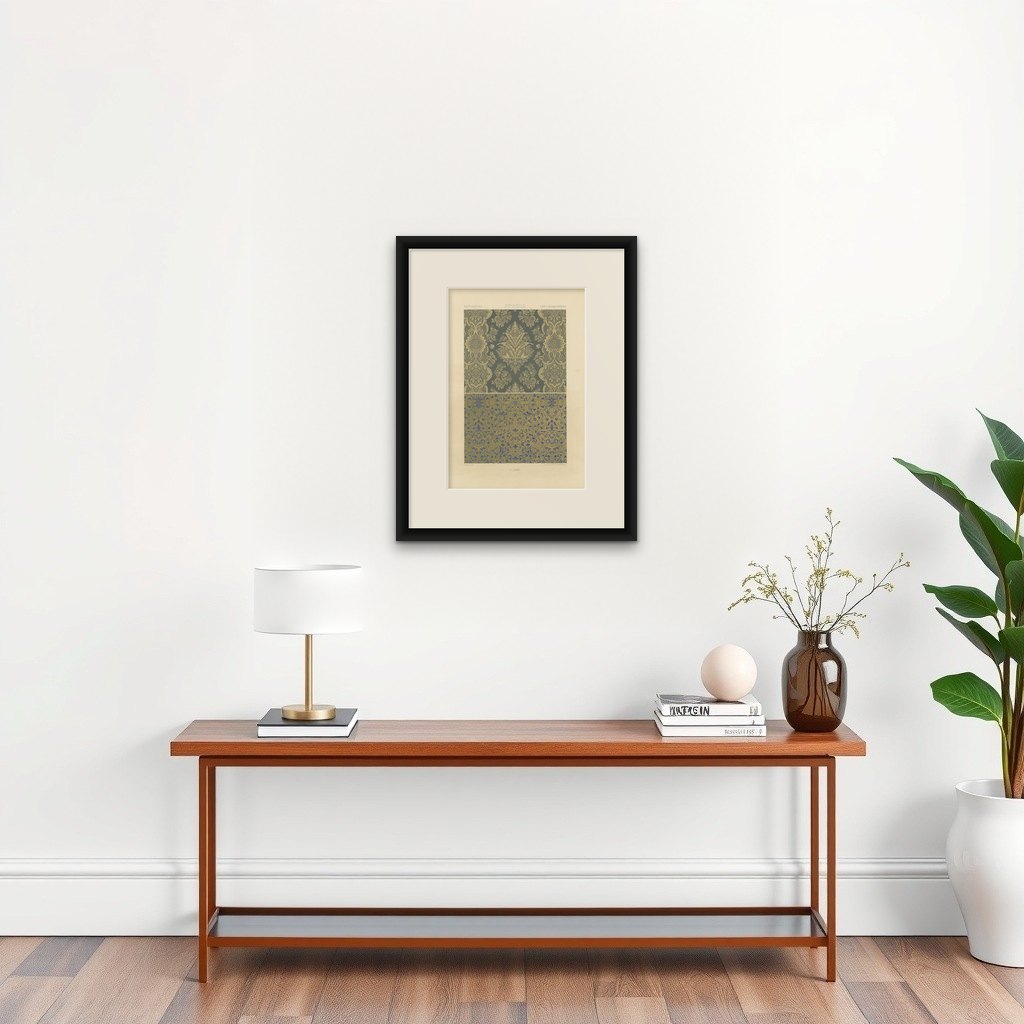
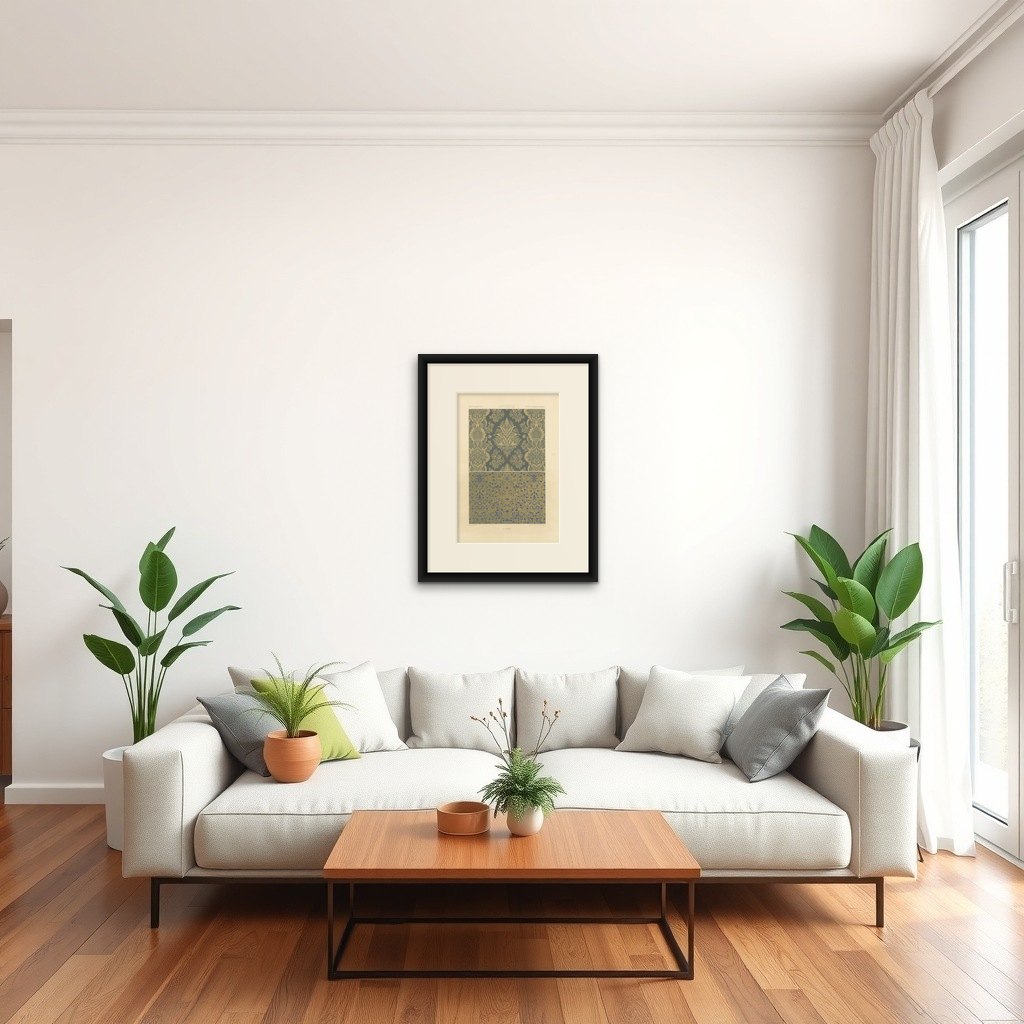
Frame and rooms are illustrations of how the print could look, drawn to its real size; it is sold unframed unless the description says otherwise.
Ornament & pattern
French Wallpaper and Textile Patterns, Damask and Scroll Motifs, ca.1869
€220
$250 · £185
Original print, not a reproduction
Ships worldwide from the Netherlands, flat, insured and tracked. 14-day returns. To buy, use Ask a question (info@antiquearchitectureprints.com) and we will reserve it for you.
- Date
- 1869
- Sheet size
- 15.9 × 11.3 in (40.4 × 28.8 cm)
- Condition
- Excellent. Condition. Crisp, clean impression with full margins. No visible tears, foxing, or staining. Slight toning to outer edges consistent with age. Paper is thick and stable with strong plate impression.
- Collection
- Ornament & pattern
- Era
- 1850 and after, The age of revivals
- Stock no.
- f_46126912
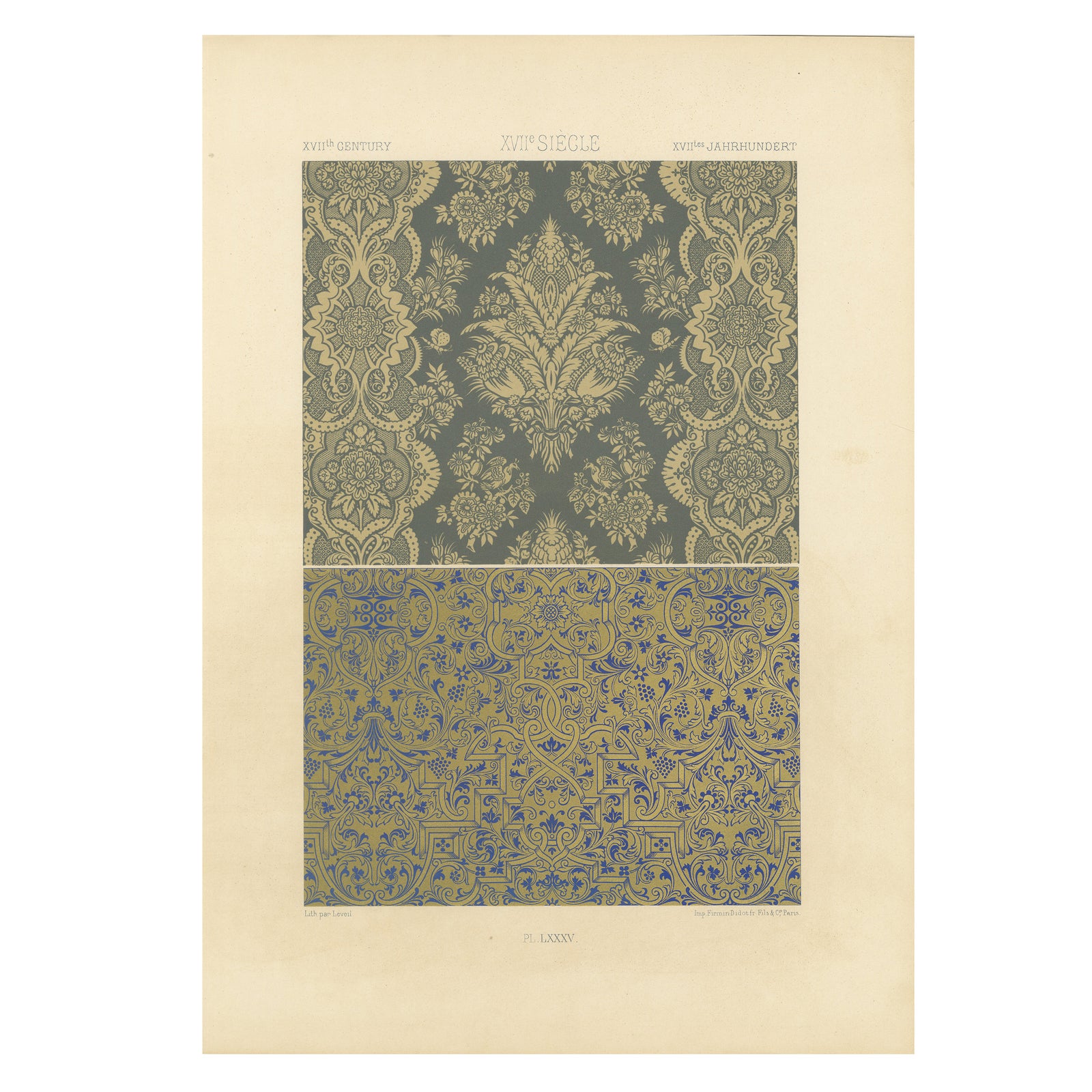
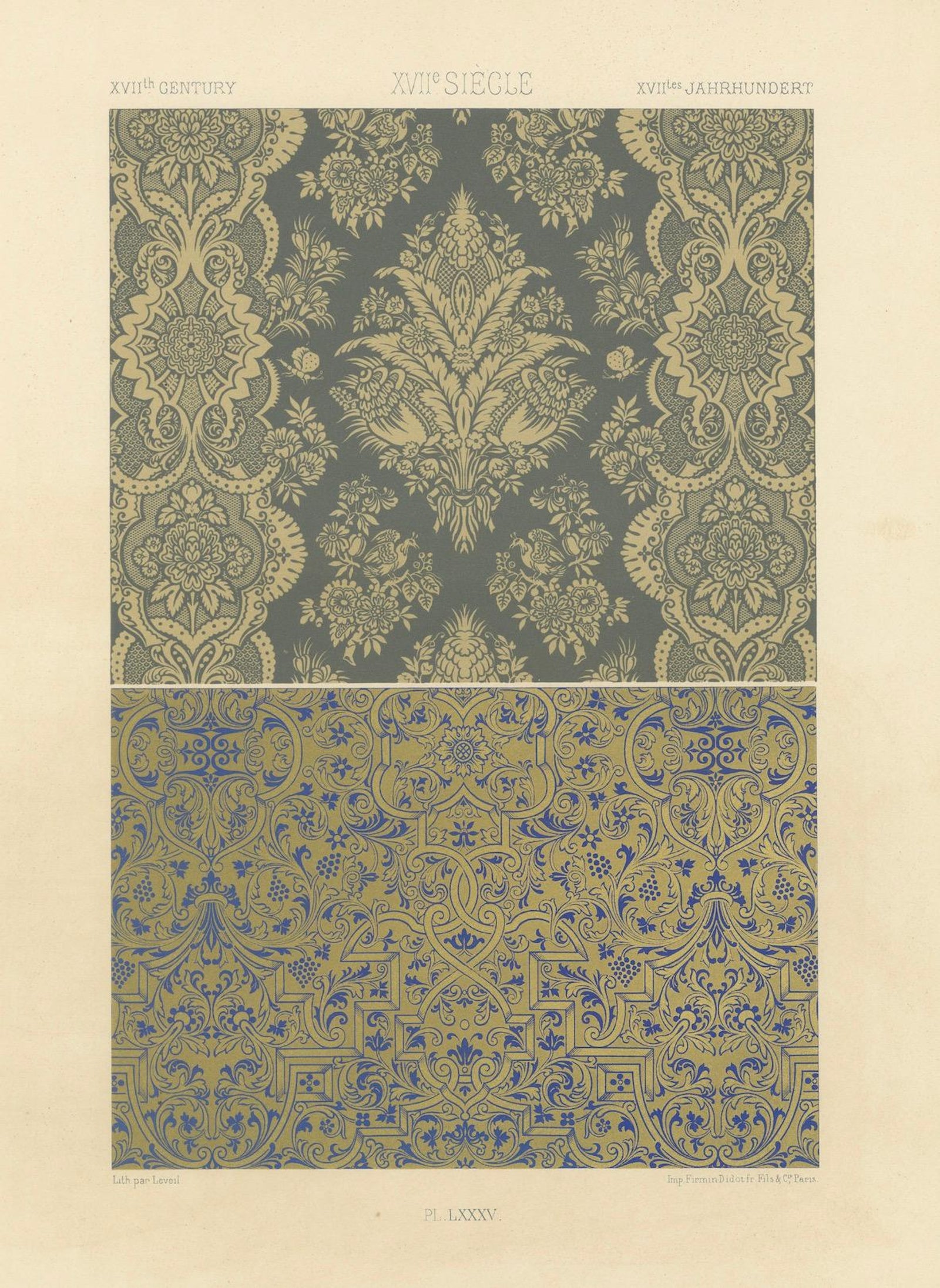
17th Century French Wallpaper and Textile Patterns, Damask and Scroll Motifs, Plate LXXXV
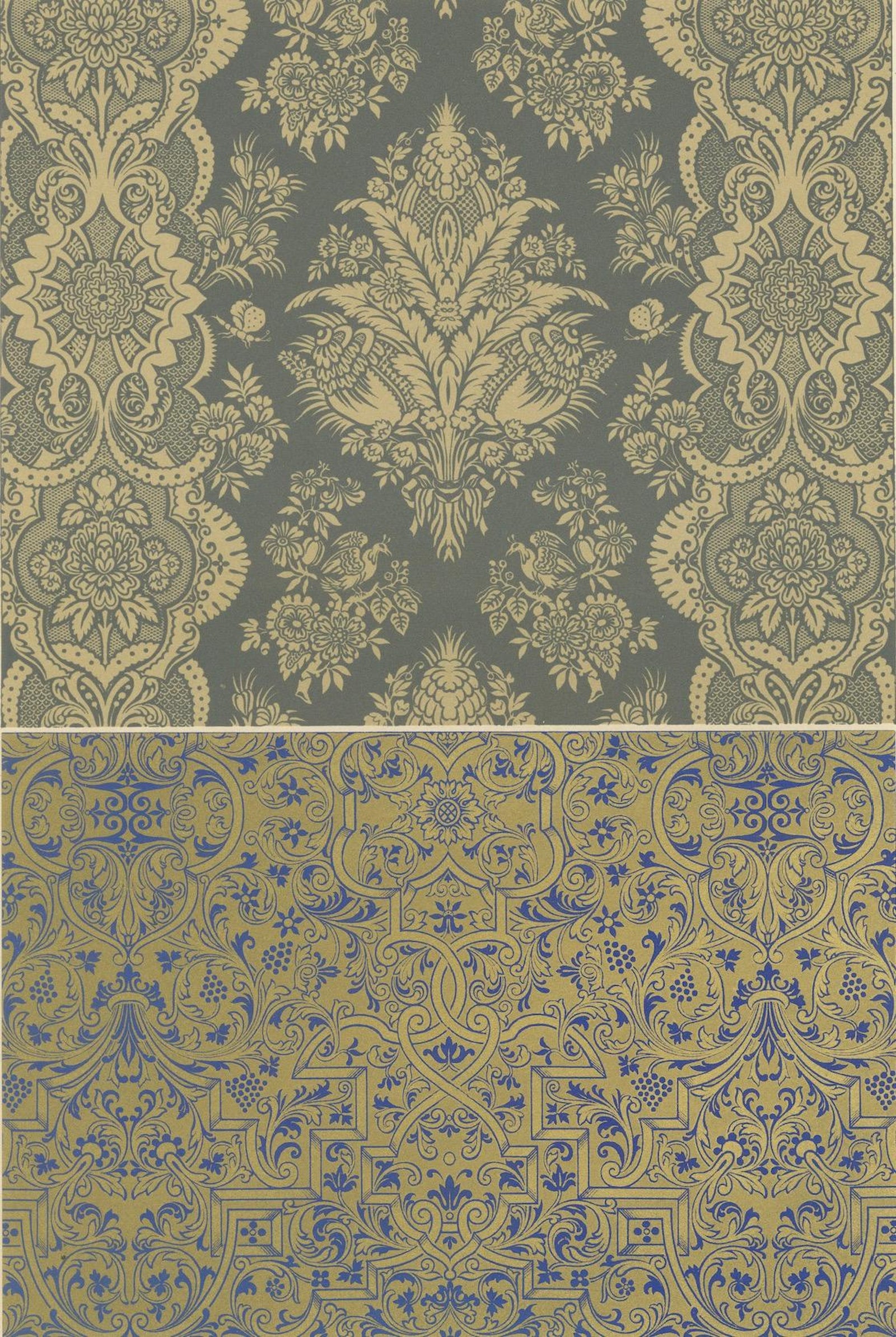
This elegant chromolithograph, Plate LXXXV from L'Ornement Polychrome, presents two exquisite examples of 17th-century French decorative patterns, likely intended for use in wall coverings, textiles, or tapestries. These richly ornamented surfaces reflect the opulent tastes of the Louis XIV period, emphasizing symmetry, floral motifs, and ornamental complexity in subdued yet luxurious tones.
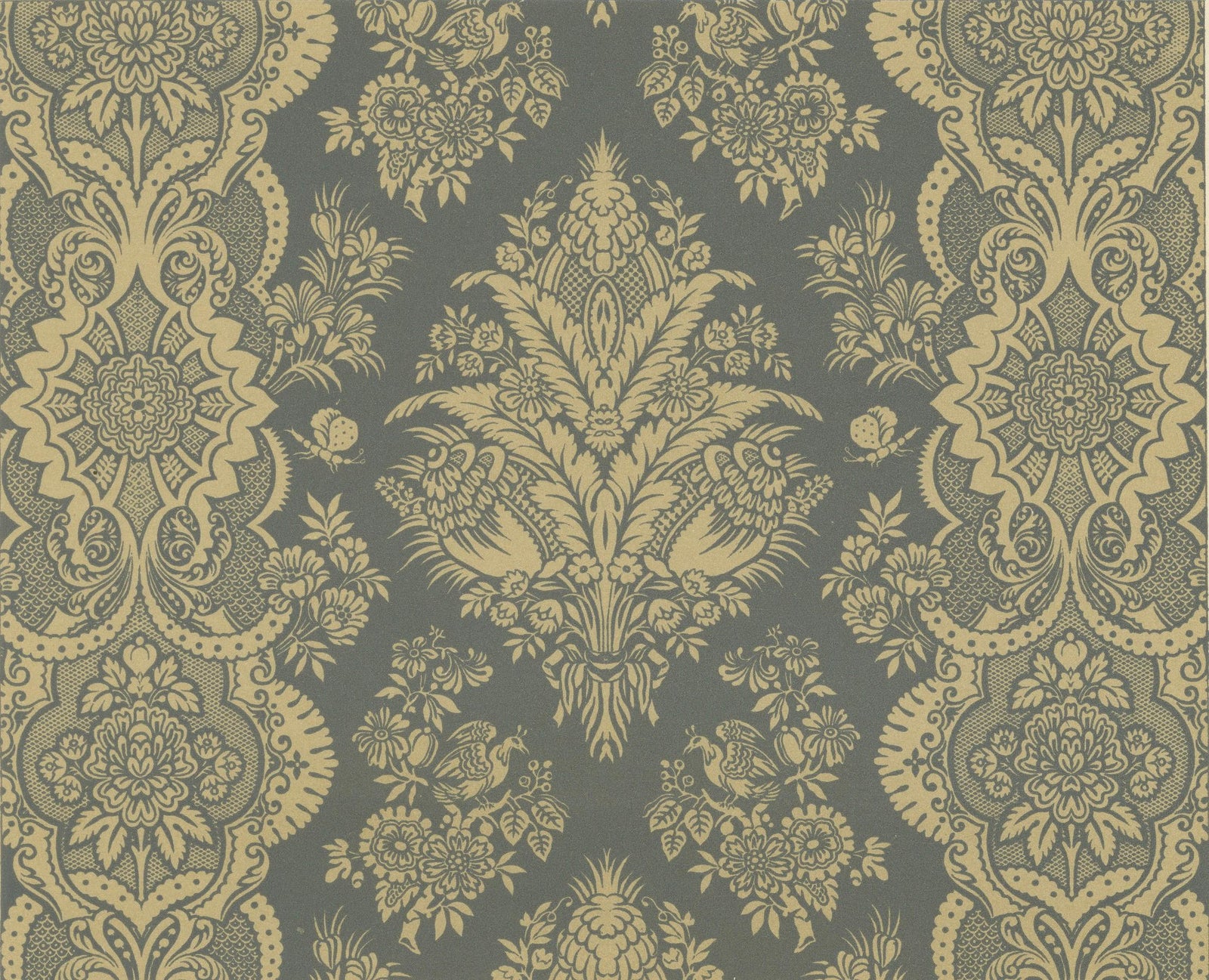
The upper half of the print features a damask-style floral pattern in gold-beige against a slate-gray background. Stylized acanthus leaves, peonies, and rosettes repeat in vertical arrangements, bordered by intricate oval cartouches filled with floral medallions. This pattern recalls the sumptuous woven fabrics used in aristocratic interiors of the late 17th century, particularly in court dress, upholstery, and wallpaper. The design’s large-scale motif and subtle color contrast would have created a lavish yet restrained backdrop in a formal salon or bedchamber.
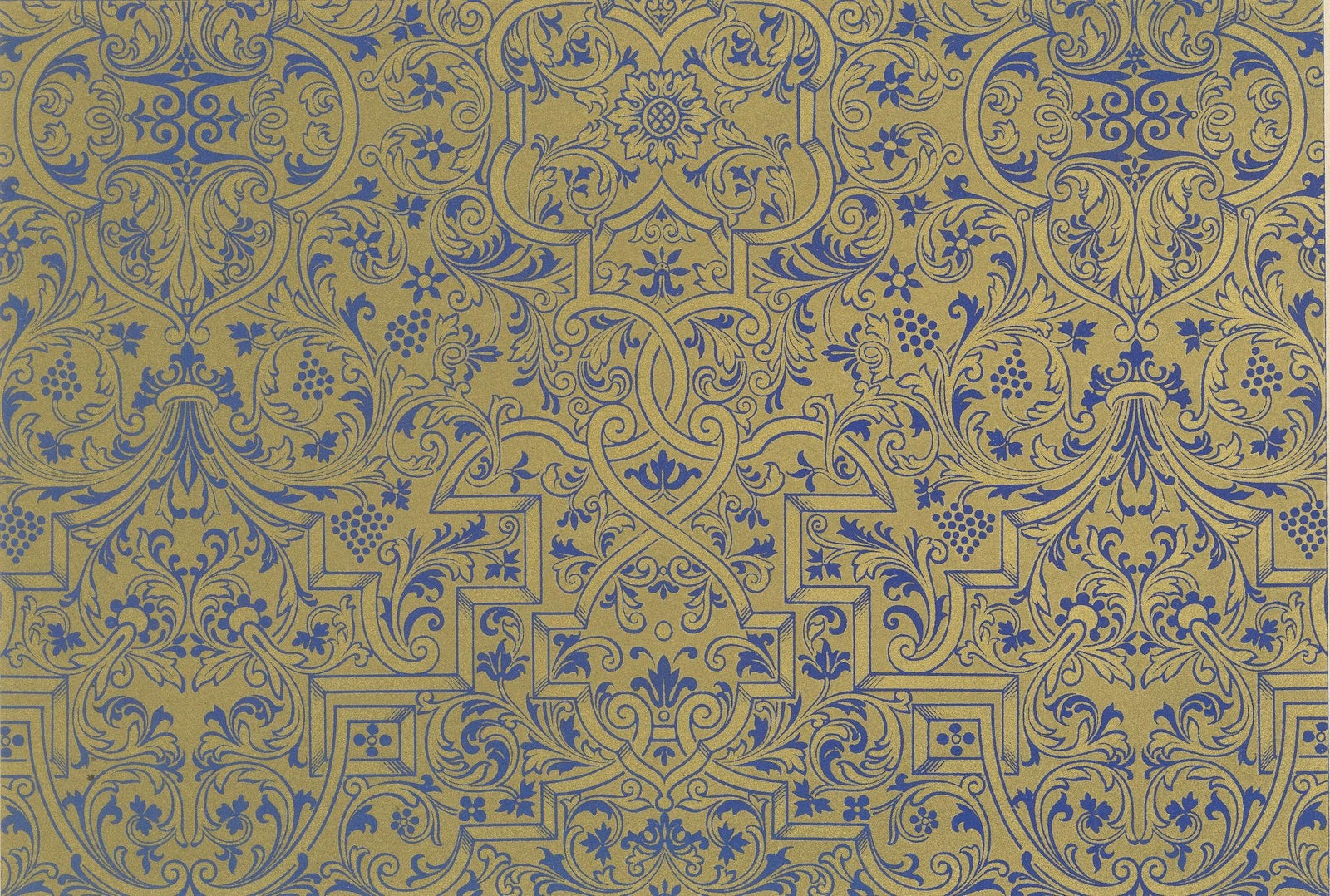
The lower panel displays a more tightly packed, scrolling foliate design in gold on a deep blue background. The pattern is denser and more geometric, forming nested arches, fleur-de-lis, stylized vines, and Gothic-inspired forms. This design may have been used in architectural friezes, leather wall hangings (cuir de Cordoue), or decorative bookbindings. The precision and interlacing scrollwork give it a timeless elegance and rhythmic structure.
Both designs were lithographed by Leveil and published by Firmin-Didot around 1869 as part of Auguste Racinet’s encyclopedic collection of global ornament. Racinet’s *L'Ornement Polychrome* brought historical design vocabularies to modern decorative arts and remains a treasured source for scholars, interior designers, and pattern-makers.
These patterns are ideal for those interested in textile history, wallpaper revival, or classically styled decorative schemes.
Condition: Excellent condition. Crisp, clean impression with full margins. No visible tears, foxing, or staining. Slight toning to outer edges consistent with age. Paper is thick and stable with strong plate impression.
Framing tips: Consider a gold or black frame with a soft gray or indigo mat to enhance the intricate contrast of both designs. This print pairs beautifully with classical, historic, or Art Deco interiors.
Technique: Chromolithograph
Maker: Leveil after Racinet, Paris, c.1869