Close-ups
Framed and on the wall
Frame and rooms are illustrations of how the print could look, drawn to its real size; it is sold unframed unless the description says otherwise.
Porcelain & ceramics
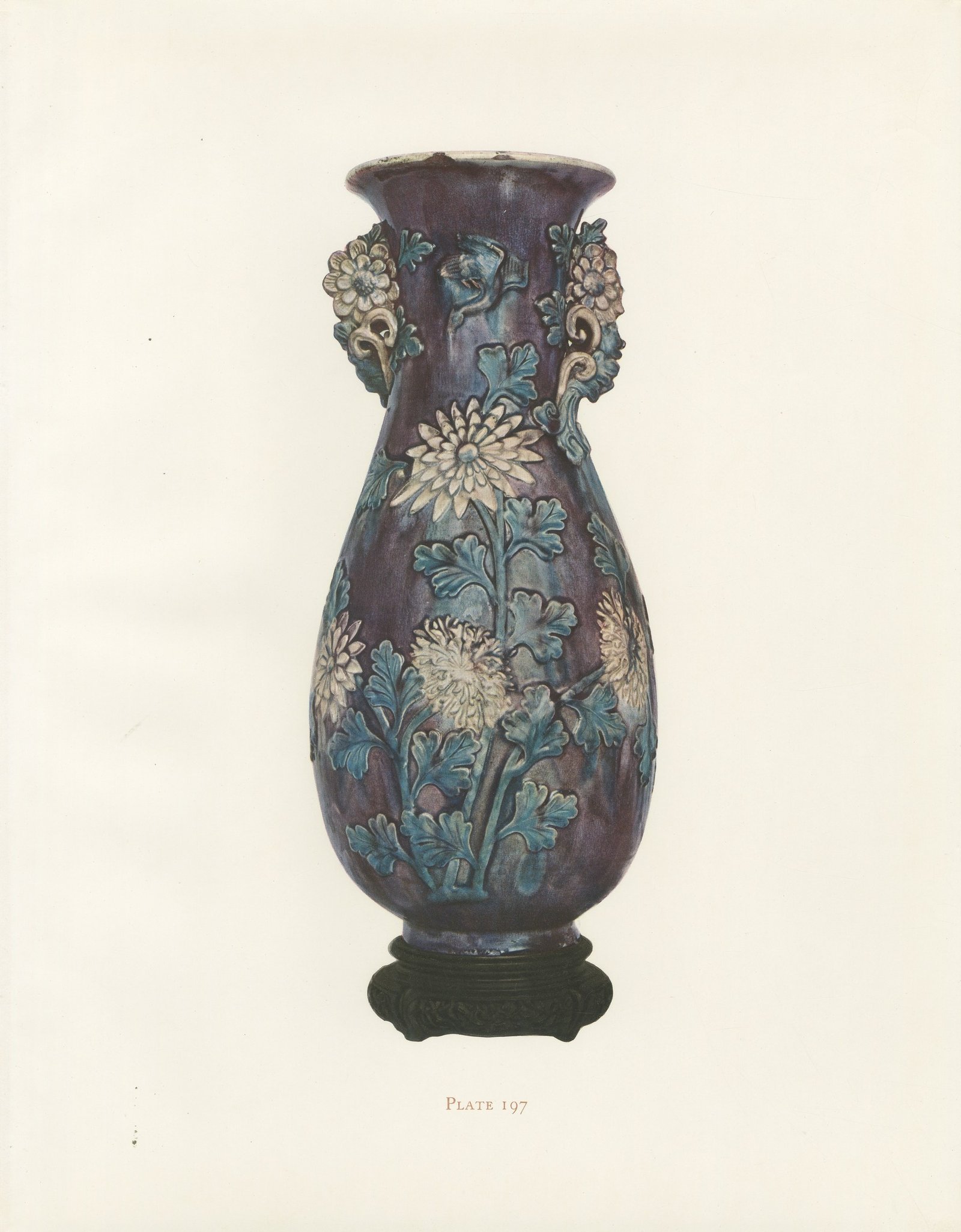
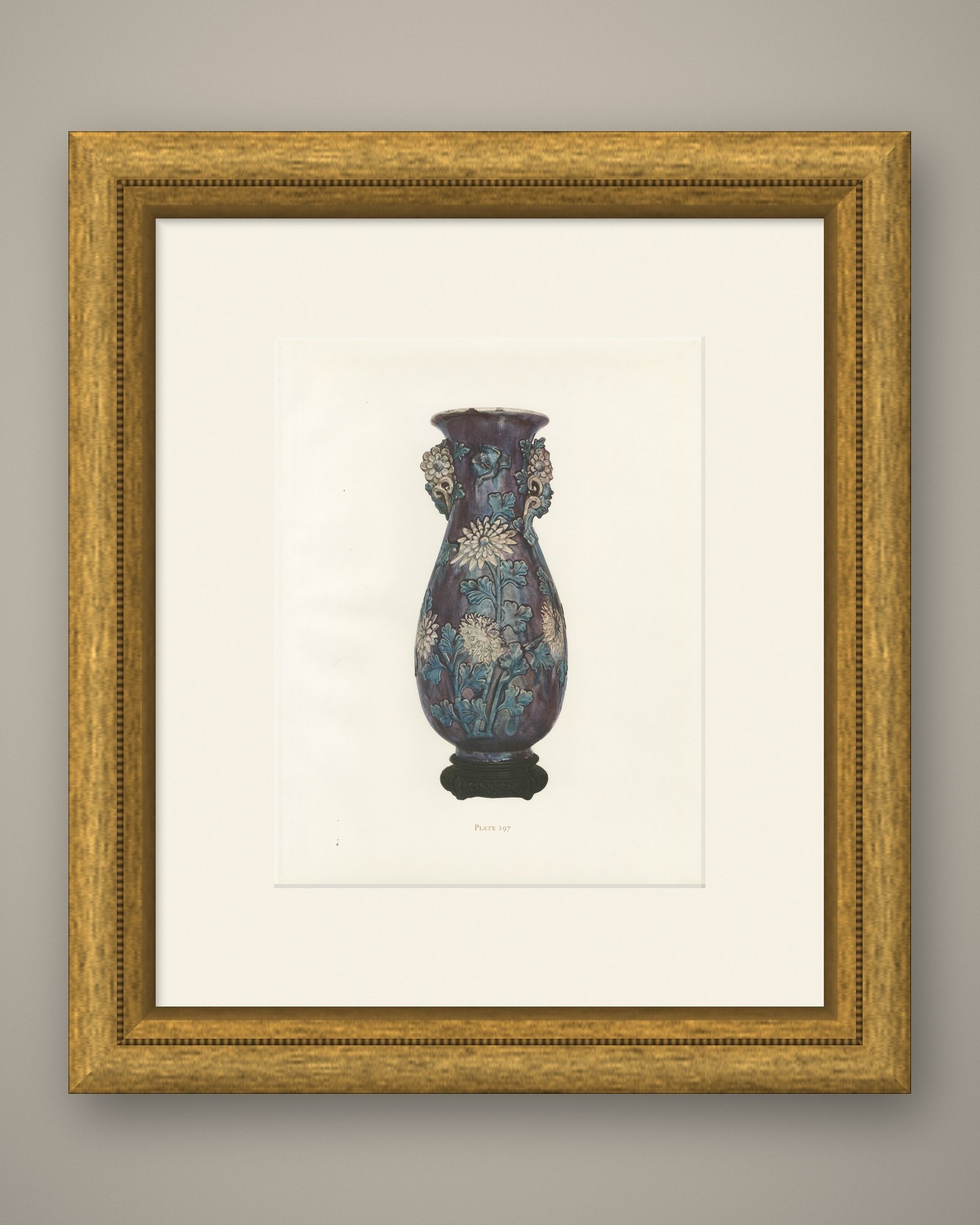
Flambe Glazed Ming Vase from the Salting Collection, Victoria and Albert, 1911
$280$21025% off
€192 · £160
Original print, not a reproduction
Ships worldwide from the Netherlands, flat or rolled, insured and tracked. 14-day returns.
- Date
- 1911
- Sheet size
- 12.2 × 9.4 in (31 × 24 cm)
- Coloring
- Printed color
- Condition
- Good. Even age toning. A few small foxing spots in the margin. All four corners complete.
- Collection
- Porcelain & ceramics
- Era
- 1850 and after, The age of revivals
- Stock no.
- BG-14405-197
What the condition grades mean
- Excellent
- Bright and clean, with no faults worth mentioning.
- Very good
- Only light signs of age, such as faint toning.
- Good
- Normal signs of age for a sheet of this period: toning, some foxing, small marks or neat old repairs.
- Fair
- Clear faults such as staining, tears or repairs, priced to match.
Every fault we see is written in the condition note, and the whole sheet is shown uncropped in the photos.
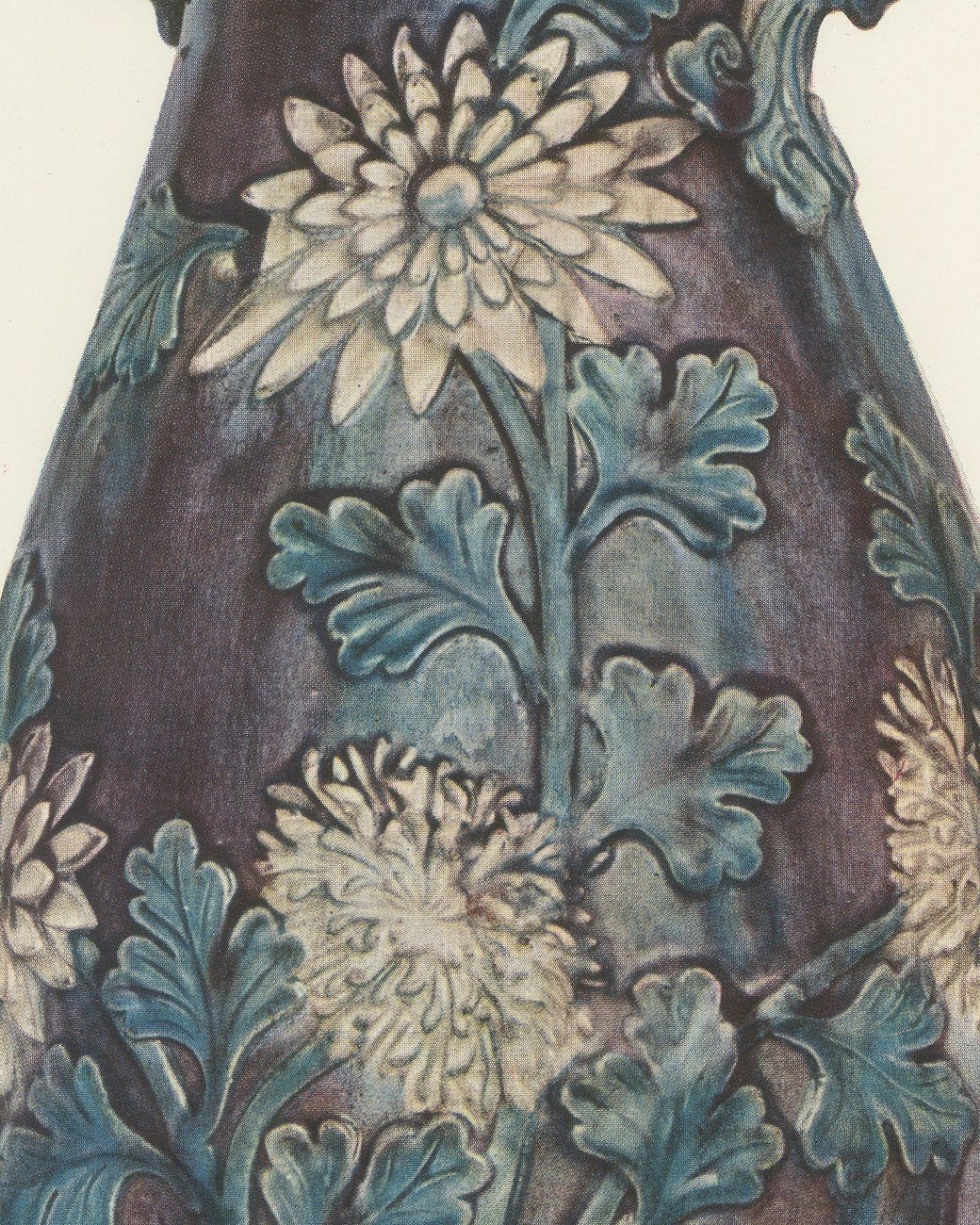
Plate 197 from Volume II of Gorer and Blacker's Chinese Porcelain and Hard Stones, an original 1911 color plate of a tall pear shaped vase with wide mouth in flambe glaze, molded in low relief with chrysanthemums rising from a rock and a crane. Tall pear-shaped vase, with a wide mouth. Decorated in the flambe glaze of the early period; the body appears to be a hard dark-red stoneware molded with a design, in low relief, of branches of chrysanthemums rising from a rock at the base with a crane flying above them. The effect is charming. The book gives it to the Ming period and records height 17 inches (43.2 cm); diameter 7 3/4 inches (19.7 cm). In the Salting Collection, Victoria and Albert Museum.
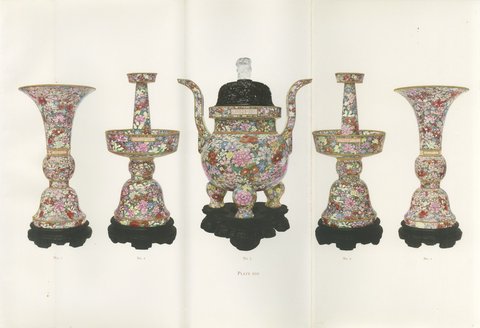
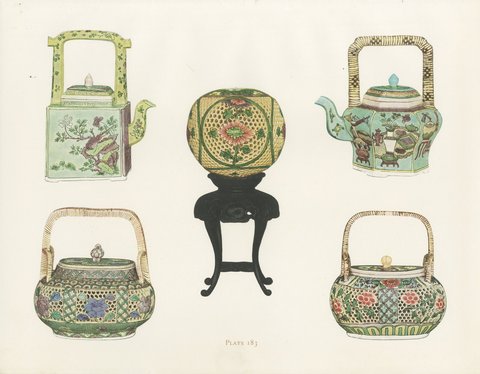
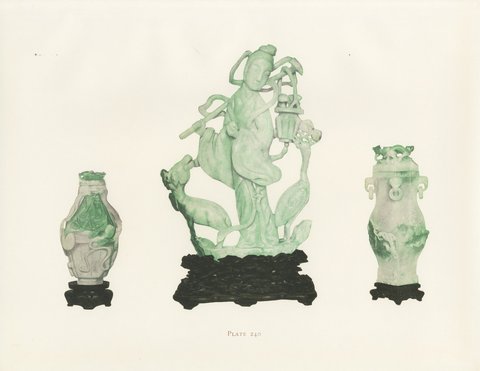
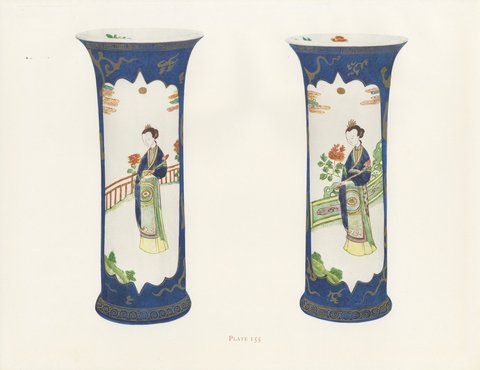
It was published in 1911 by Bernard Quaritch of New Bond Street, London, in Edgar Gorer and J. F. Blacker's Chinese Porcelain and Hard Stones, a work of two volumes and two hundred and fifty four color plates limited to one thousand numbered copies. The plates are color collotypes, a photographic process that reproduces continuous tone without a visible dot screen, which is why the glazes keep their depth on paper.
What gives these plates their standing is the quality of the collections they record. Pieces illustrated here passed through the great Edwardian cabinets, and several are now in museums, so the book is a photographic record of where this material sat a century ago.
Hung as a group with other plates from the same work, it builds into a decorative scheme with a common palette and a common hand.
This is an original antique print, not a modern reproduction.
Even age toning. A few small foxing spots in the margin. All four corners complete.
This item is sold unframed.
Explore