Close-ups
Framed and on the wall
Frame and rooms are illustrations of how the print could look, drawn to its real size; it is sold unframed unless the description says otherwise.
Castles & palaces
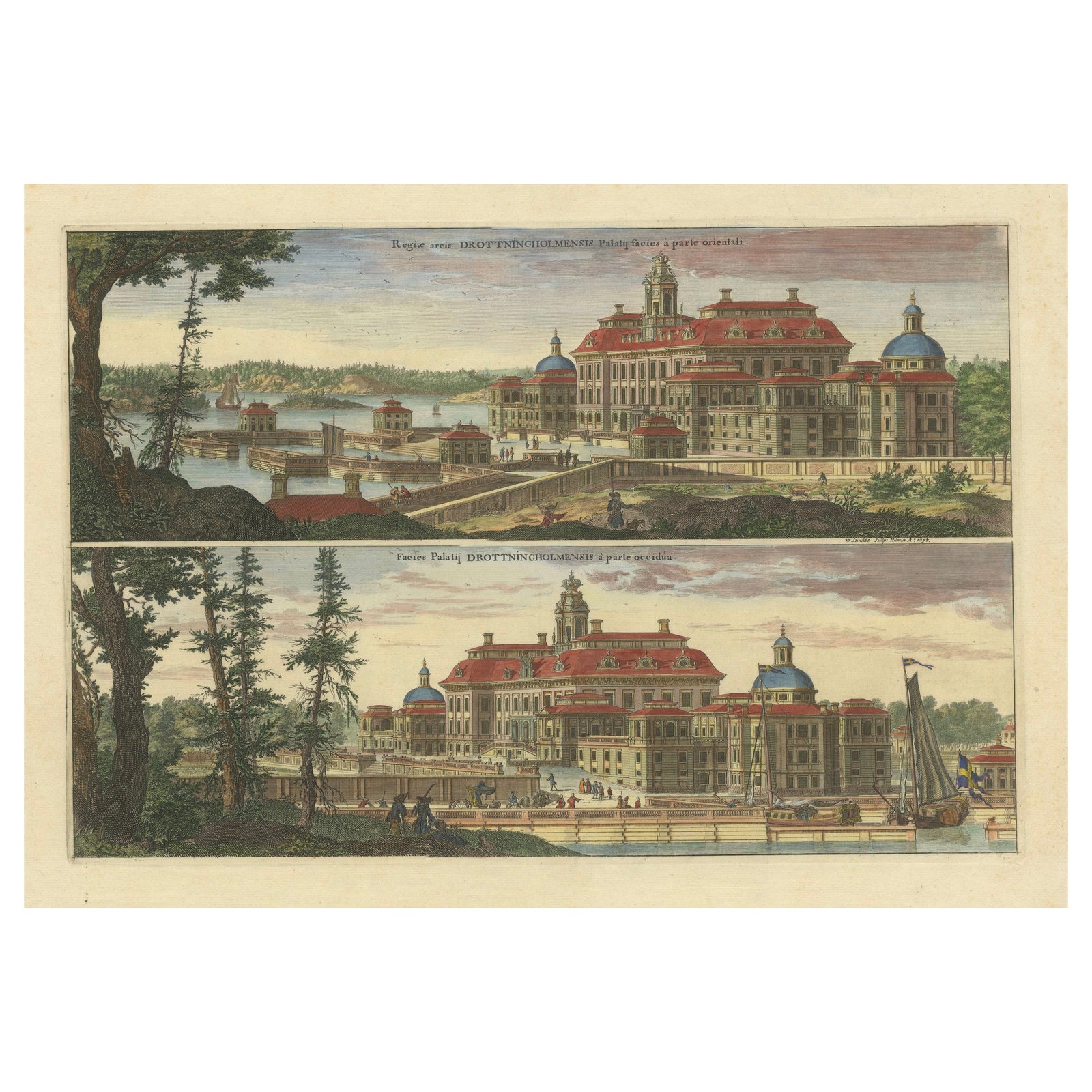
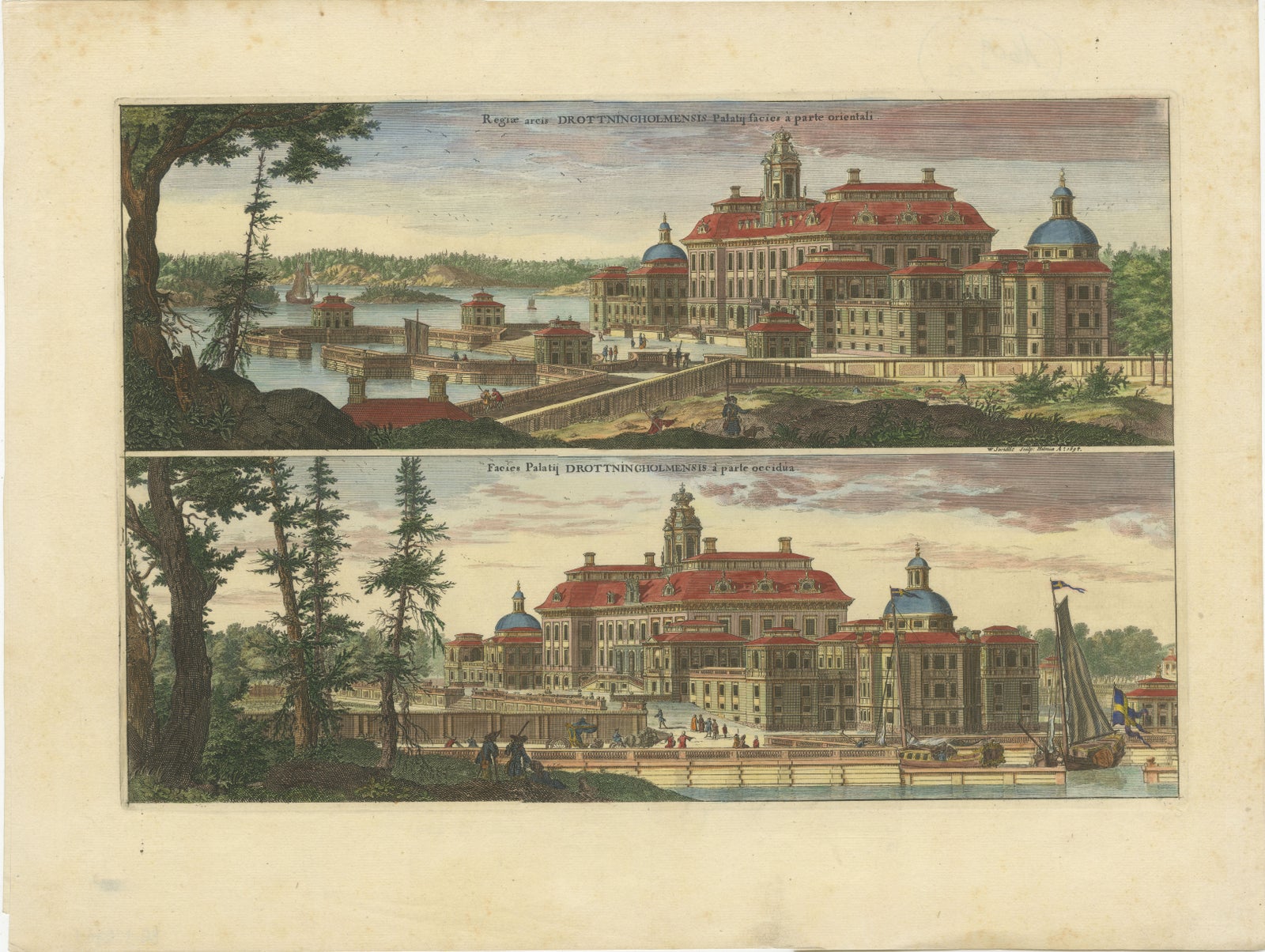
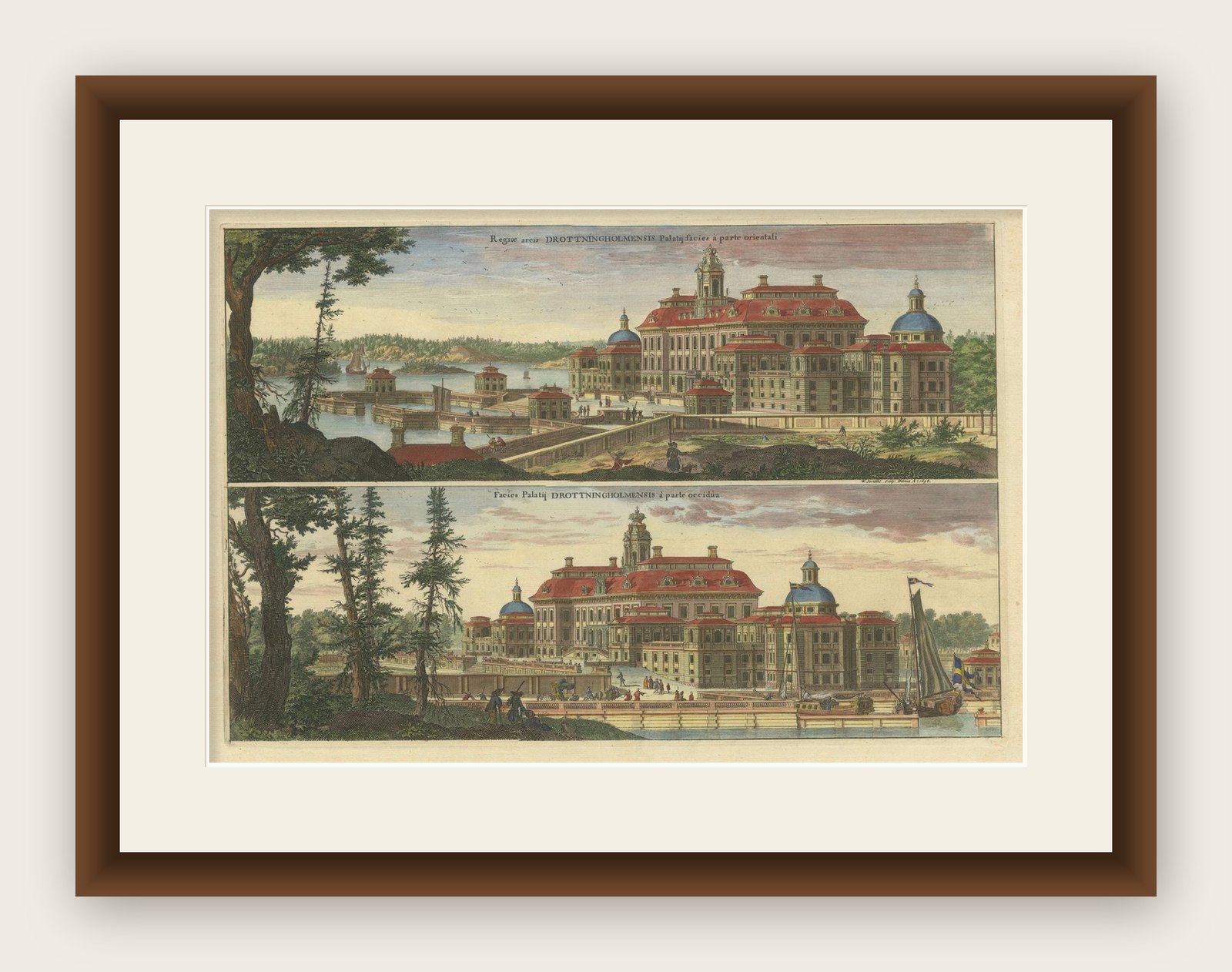
Drottningholm Palace in Sweden: East and West Views by Dahlbergh, 1707
$655
€580 · £490
Original print, not a reproduction
Ships worldwide from the Netherlands, flat, insured and tracked. 14-day returns. To buy, use Ask a question (info@antiquearchitectureprints.com) and we will reserve it for you.
- Date
- 1707
- Sheet size
- 13.5 × 17.5 in (34.4 × 44.5 cm)
- Condition
- Good. Very good. Visible plate mark. Very good antique condition with some signs of age- minor spots/stains mostly in the margins. Later hand-coloring.
- Collection
- Castles & palaces
- Era
- 1700 to 1789, Baroque to Neoclassical
- Stock no.
- f_38044772
Title: "Drottningholm Palace: East and West Views by Dahlbergh, 1707"
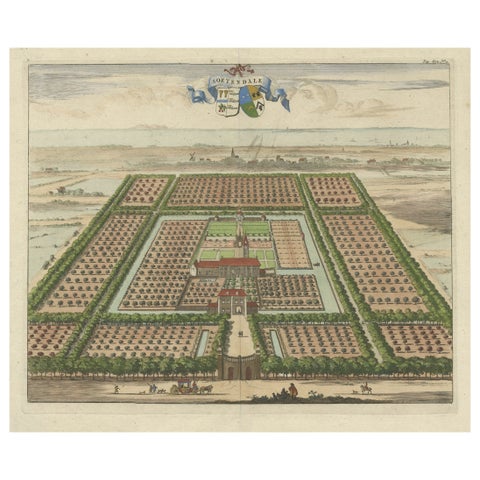
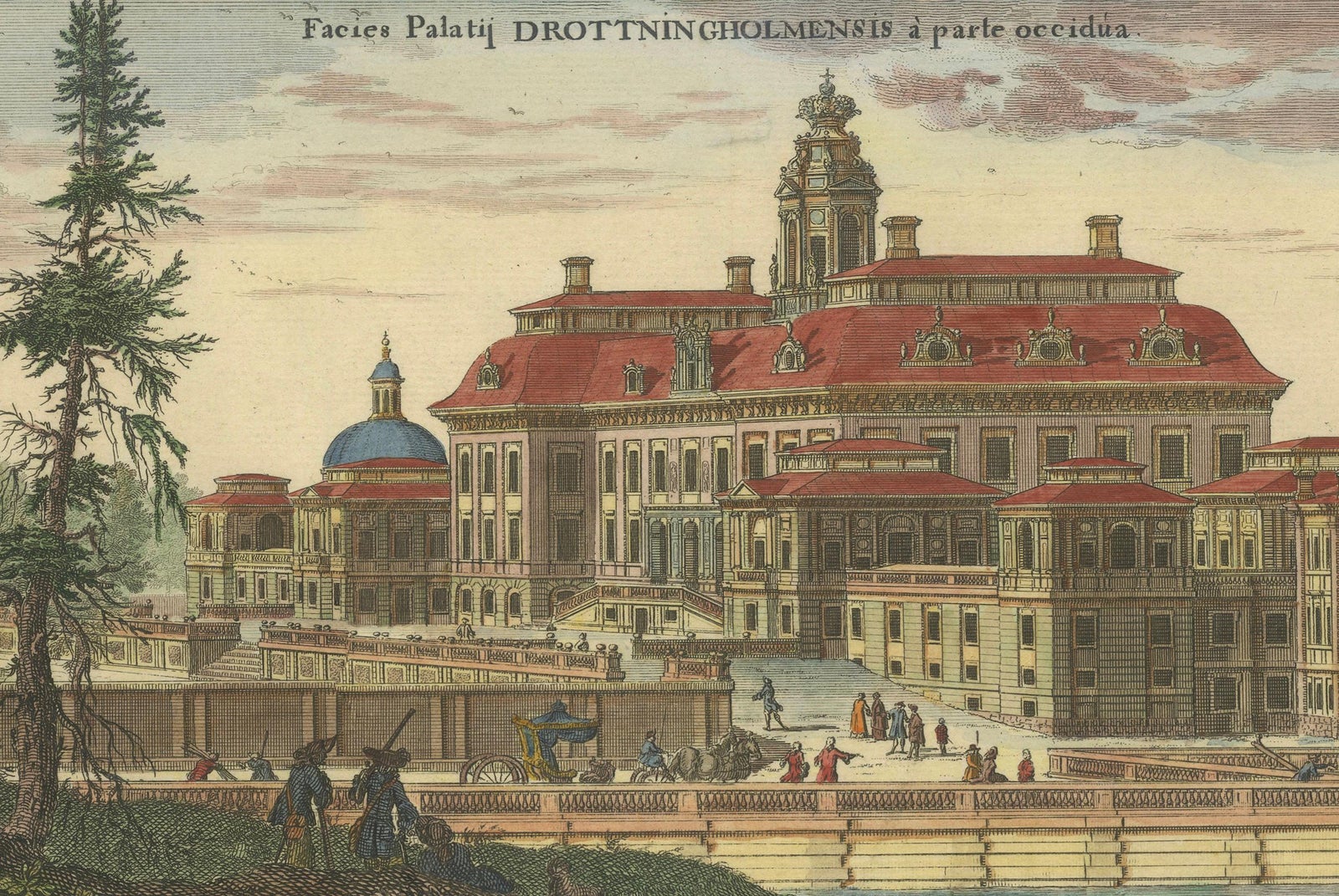
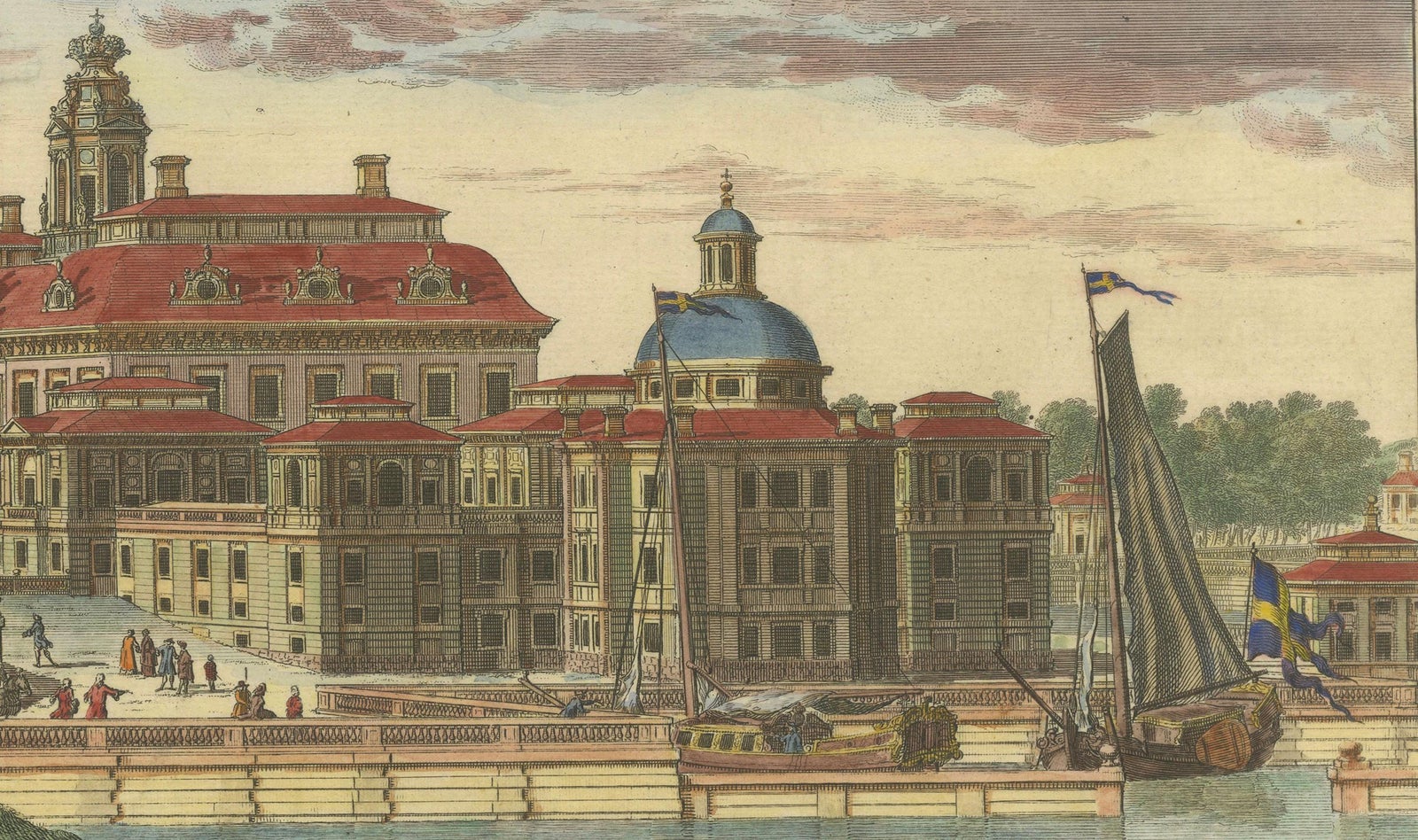
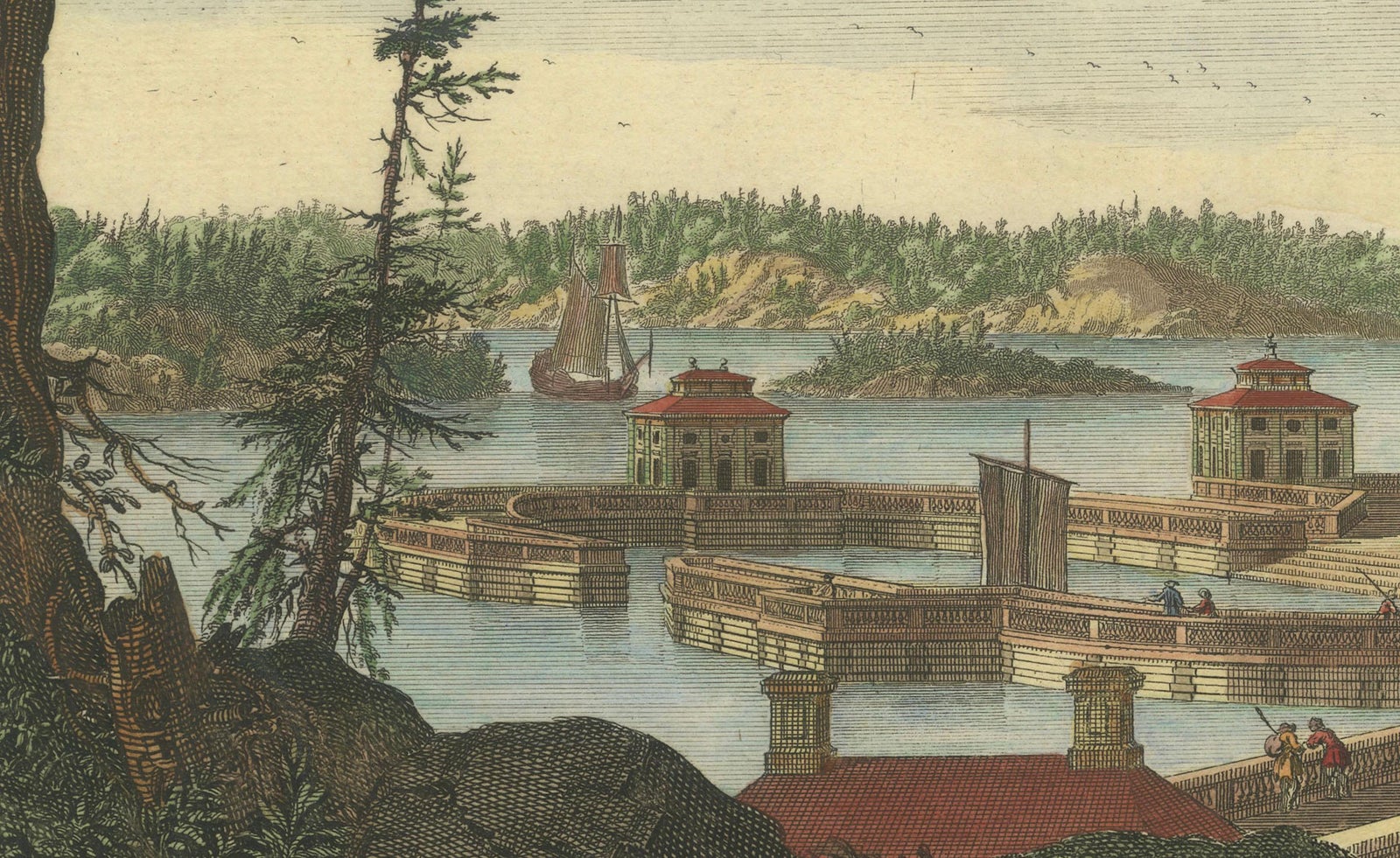
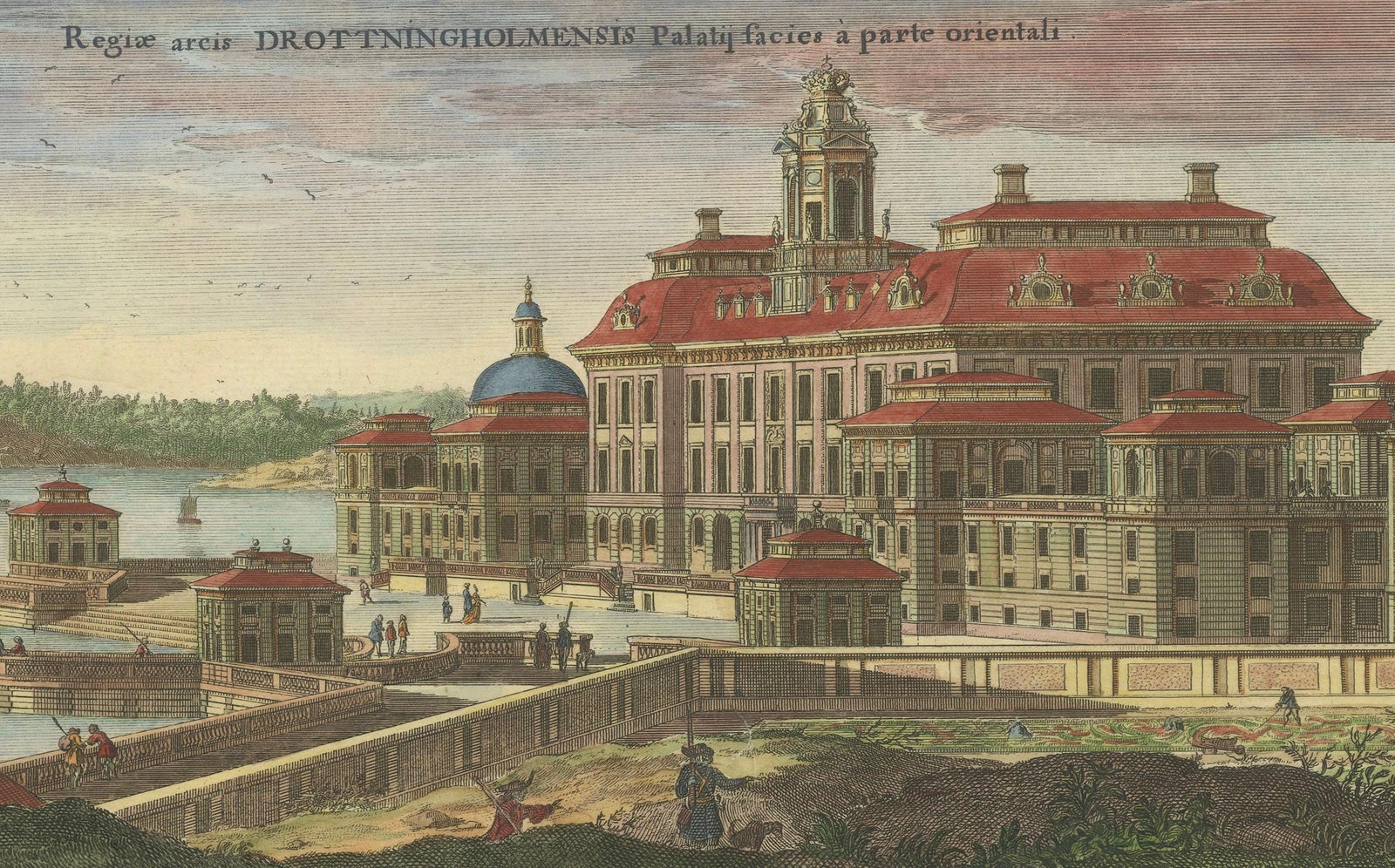
Description: This exquisite antique print from c. 1707, crafted by the renowned Swedish military officer and cartographer Erik Dahlbergh, presents two views of the majestic Drottningholm Palace, the private residence of the Swedish royal family and a designated UNESCO World Heritage site. These illustrations are part of "Suecia Antiqua et Hodierna," a comprehensive vision of Sweden's grandeur during its era as a major European power.
The upper image captures the palace's eastern façade, showcasing its regal architecture and landscaped gardens. The lower image offers a perspective from the west, depicting the palace’s proximity to the waterfront, complete with sailing vessels, a nod to the nation's maritime significance.
Dahlbergh drew inspiration from the topographical works of Matthäus Merian, a Swiss publisher, and was granted a royal privilege in 1661 to carry out this ambitious project. Though Dahlbergh’s undertaking spanned over a decade, the final collection of "Suecia Antiqua et Hodierna" was published posthumously, ultimately encompassing three volumes with 353 plates.
Each scene in this print is intricately detailed, not only in the architectural elements but also in the vibrancy of daily life, with figures prominently featured in the foreground. The work stands as a testament to Sweden's historical importance and to Dahlbergh’s dedication to capturing the nation's splendor through his art.