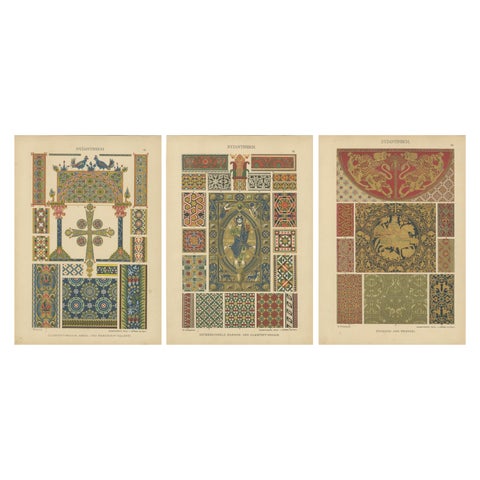
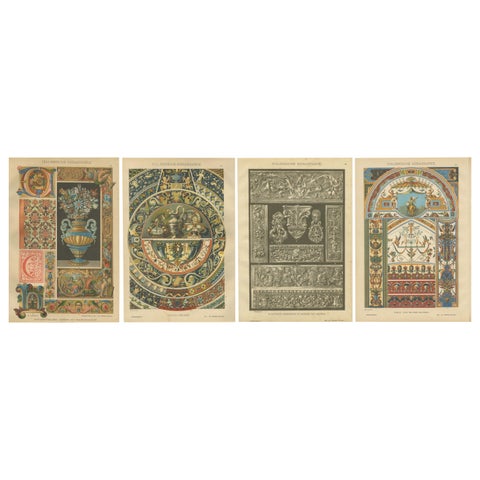
Close-ups
Framed and on the wall
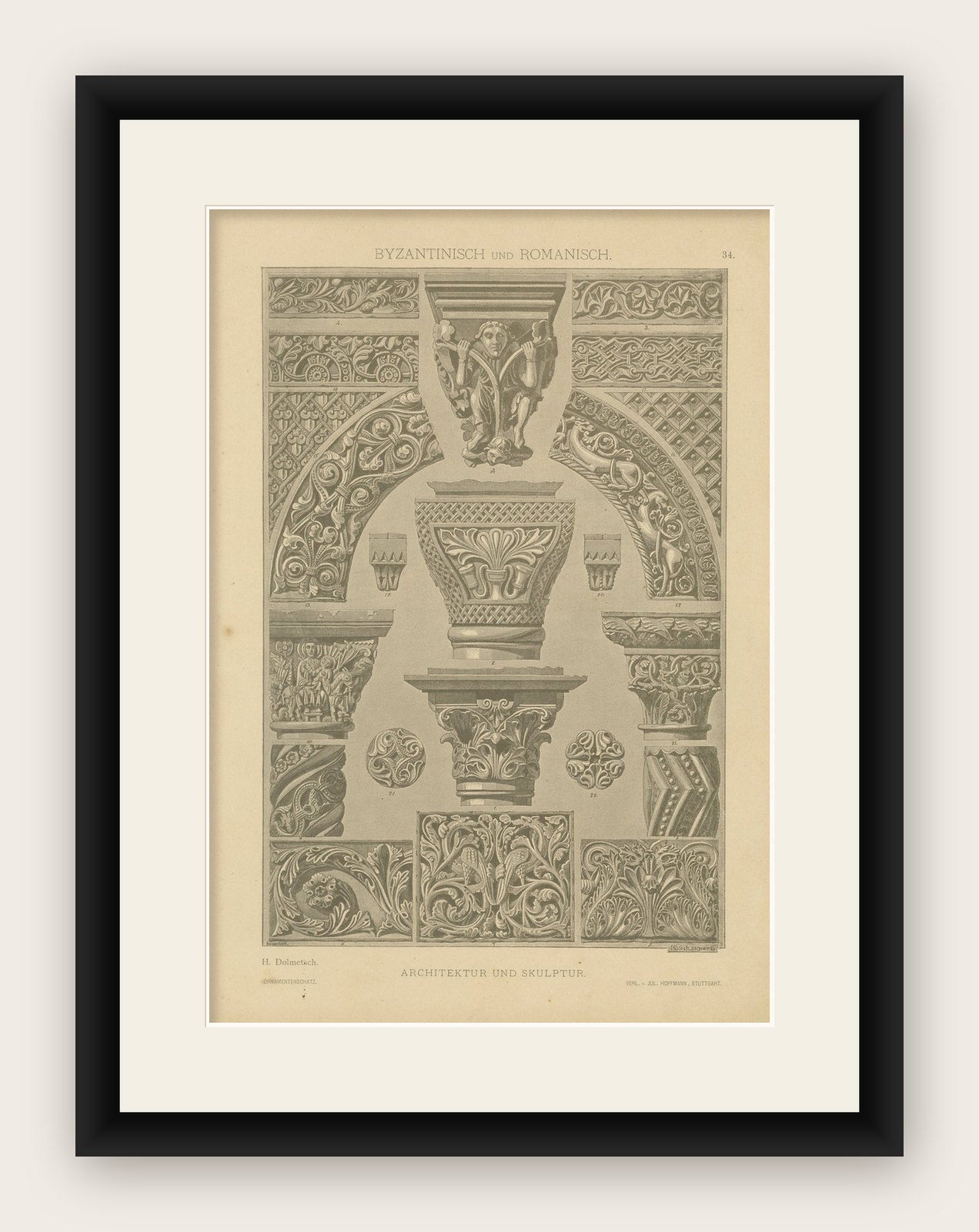

Frame and rooms are illustrations of how the print could look, drawn to its real size; it is sold unframed unless the description says otherwise.
Ornament & pattern
Byzantine and Romanesque Architectural Elements, Ornamentenschatz, 1887
$145
€130 · £110
Original print, not a reproduction
Ships worldwide from the Netherlands, flat, insured and tracked. 14-day returns. To buy, use Ask a question (info@antiquearchitectureprints.com) and we will reserve it for you.
- Date
- 1887
- Sheet size
- 13.8 × 9.8 in (35 × 25 cm)
- Condition
- Good. Given age. Very good considering age. General age-related toning and/or occasional minor defects from handling. Please study scans carefully.
- Collection
- Ornament & pattern
- Era
- 1850 and after, The age of revivals
- Stock no.
- f_41364332
Byzantine and Romanesque Architectural Elements, Ornamentenschatz, 1887
Description:
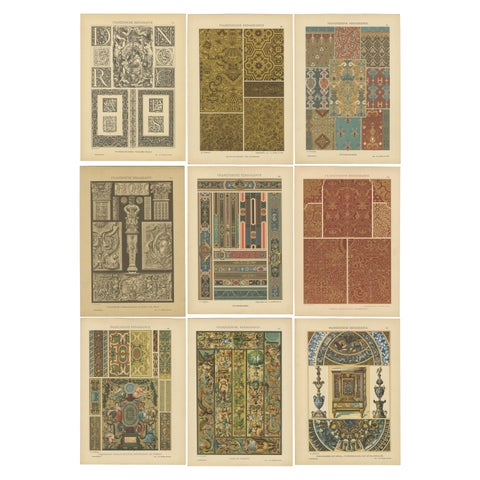
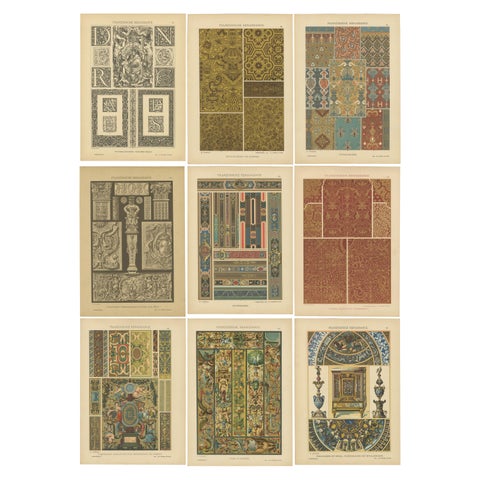
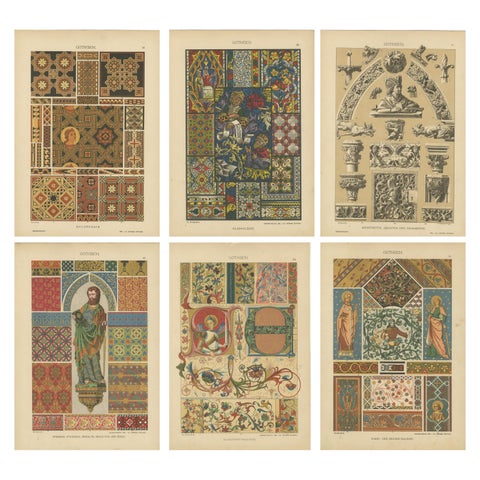
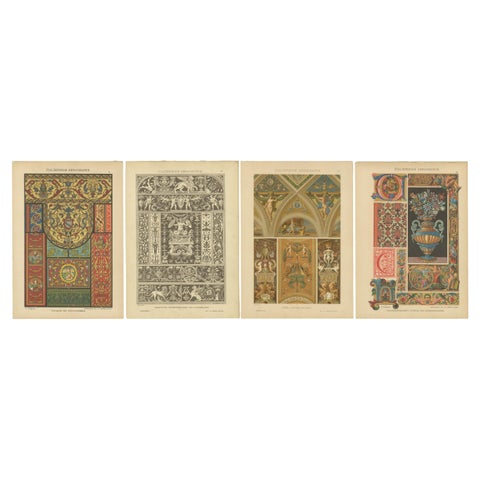
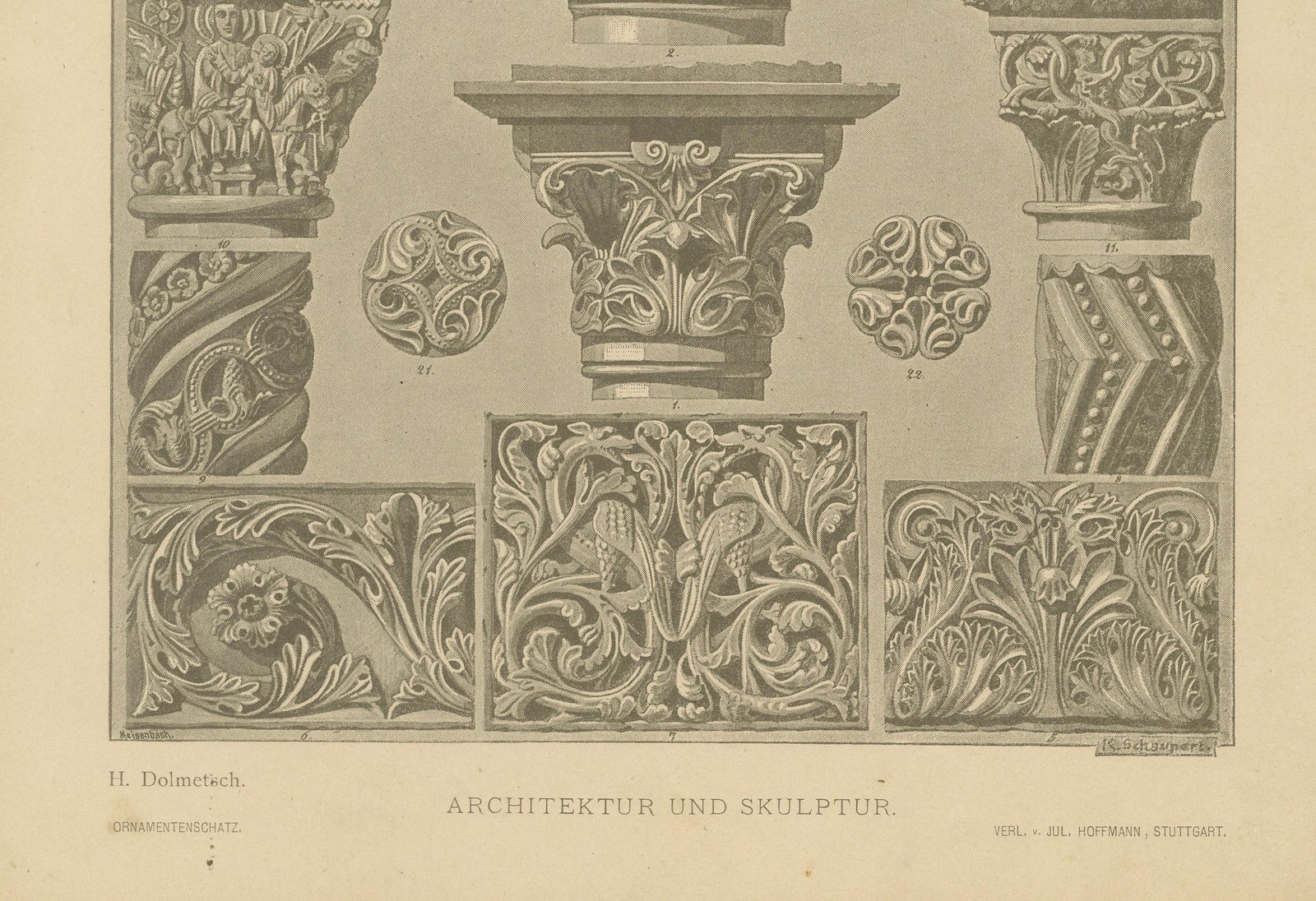
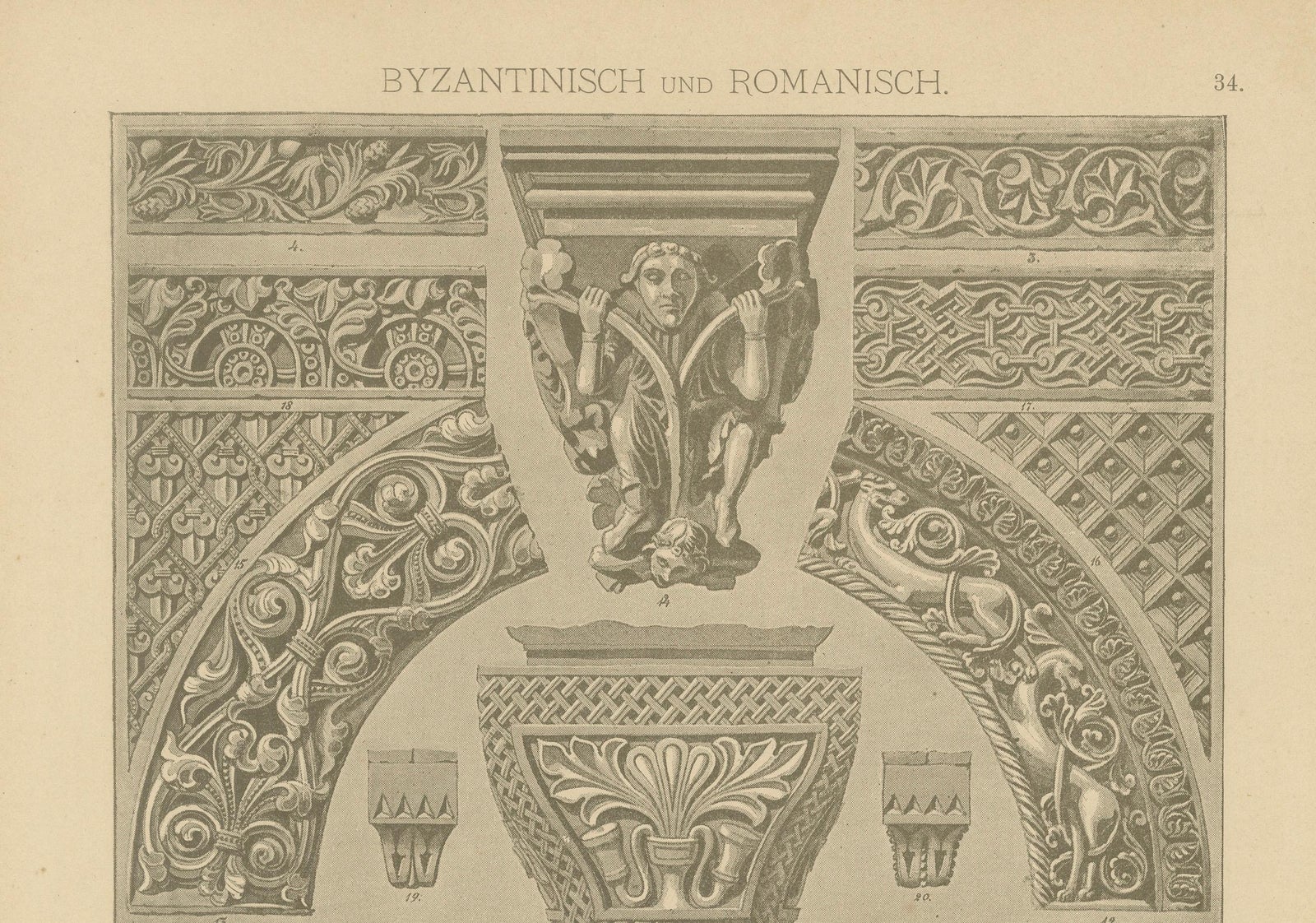
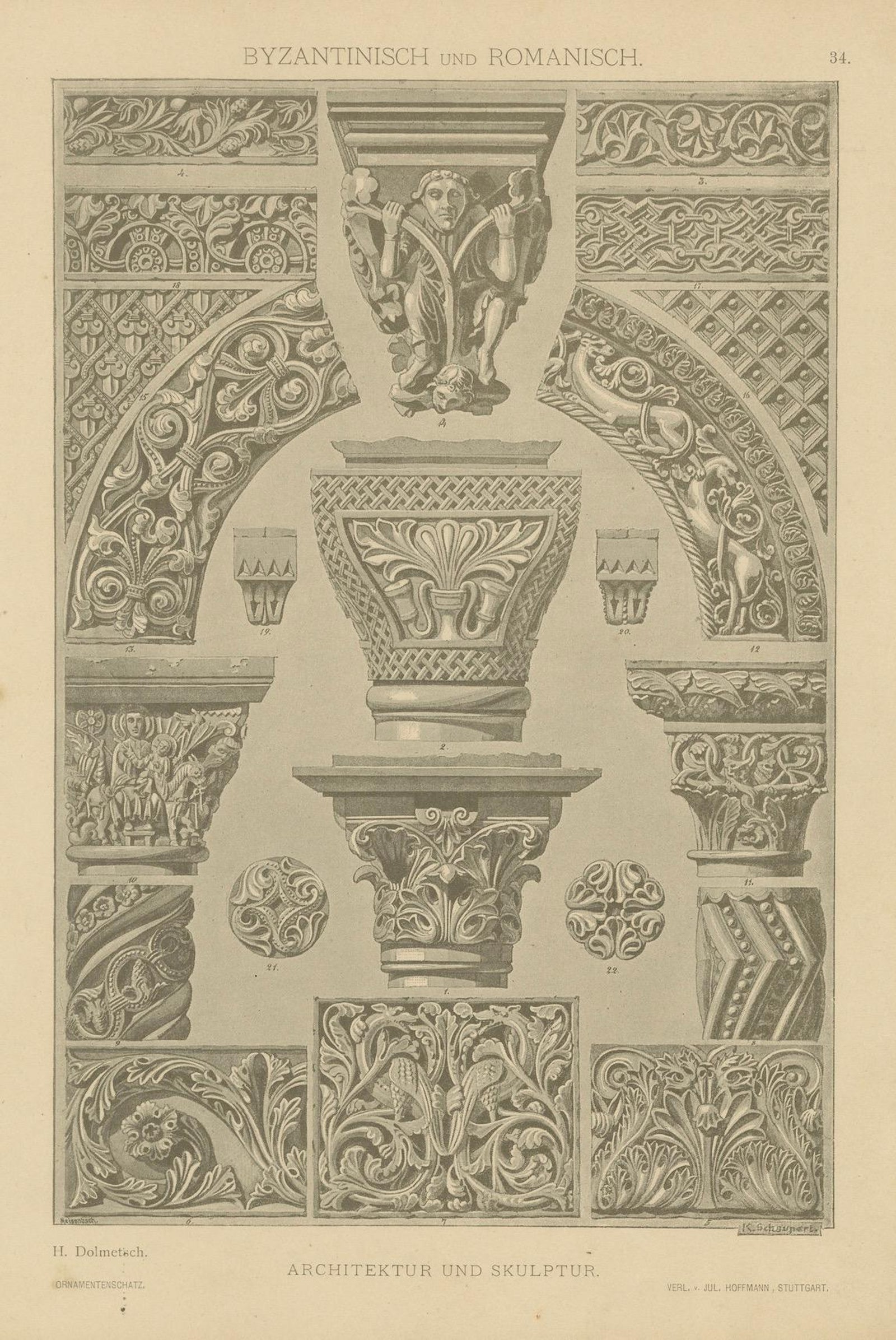
This print by H. Dolmetsch is part of the "Ornamentenschatz," a collection of detailed ornamental designs published by Verlag J. Hoffmann in Stuttgart, 1887.
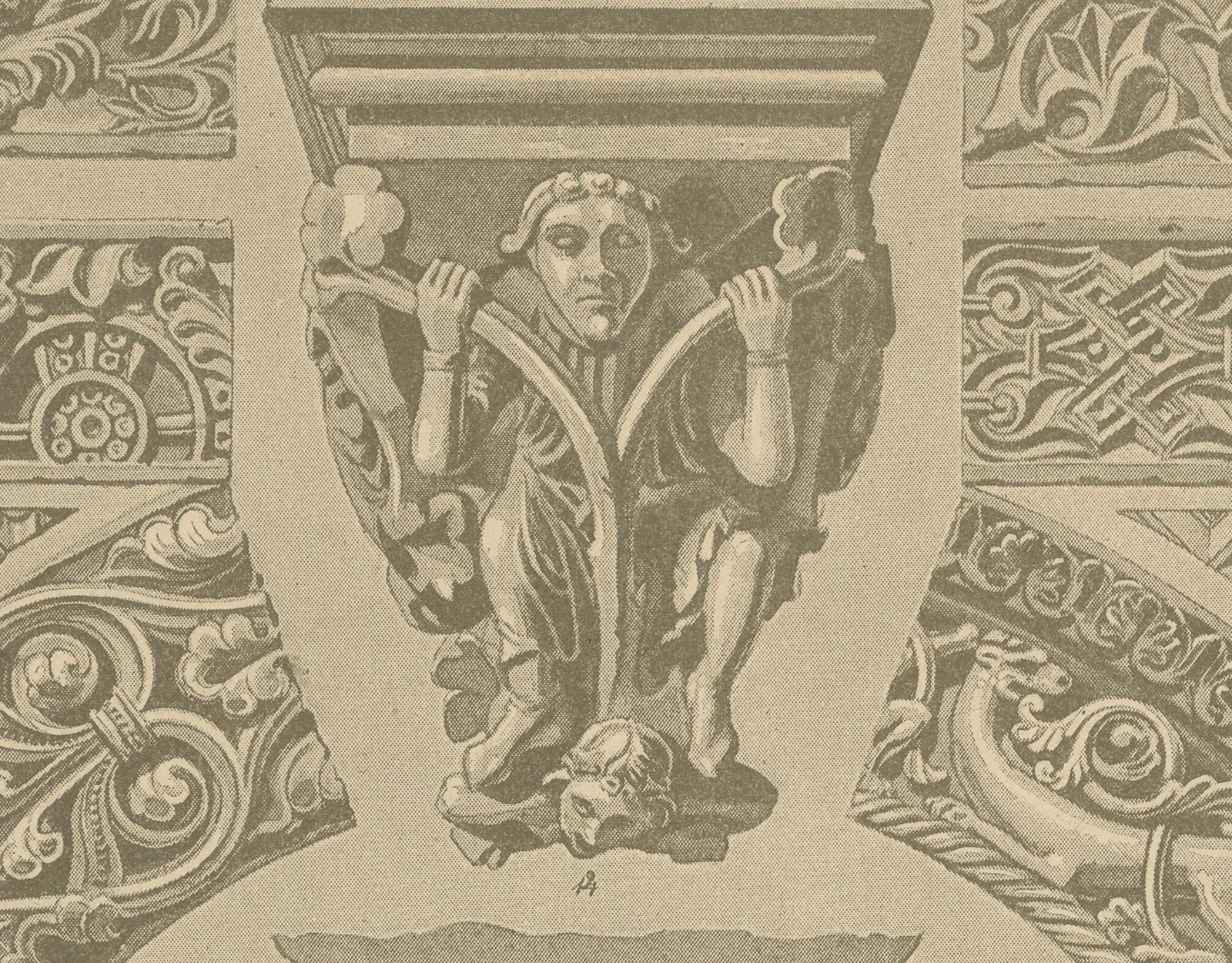
It illustrates various Byzantine and Romanesque architectural elements, including intricately designed capitals, friezes, and arches. Each element is rendered with precision, highlighting the stylistic features typical of these two influential architectural styles.
The artwork captures the essence of historical architectural ornamentation, from floral motifs to figurative sculptures that adorn ecclesiastical and secular buildings.
Attractiveness and Decorative Appeal:
This print is particularly attractive due to its detailed rendering of classical architectural elements. The meticulous attention to detail in the carvings and the depth of the relief work showcased here appeal to both historians and artists. The depiction of texture and light in the monochrome palette emphasizes the craftsmanship of the original stone and plaster work, making it a visually engaging piece.
Technique Used for the Print:
The technique likely used for this print is lithography, specifically grayscale lithography, which allows for detailed shading and depth to mimic the appearance of sculptures and carvings in stone. This method was ideal for accurately representing the intricate details of architectural elements in print form during the late 19th century, offering a way to document and disseminate architectural designs and decorations.