Close-ups
Framed and on the wall
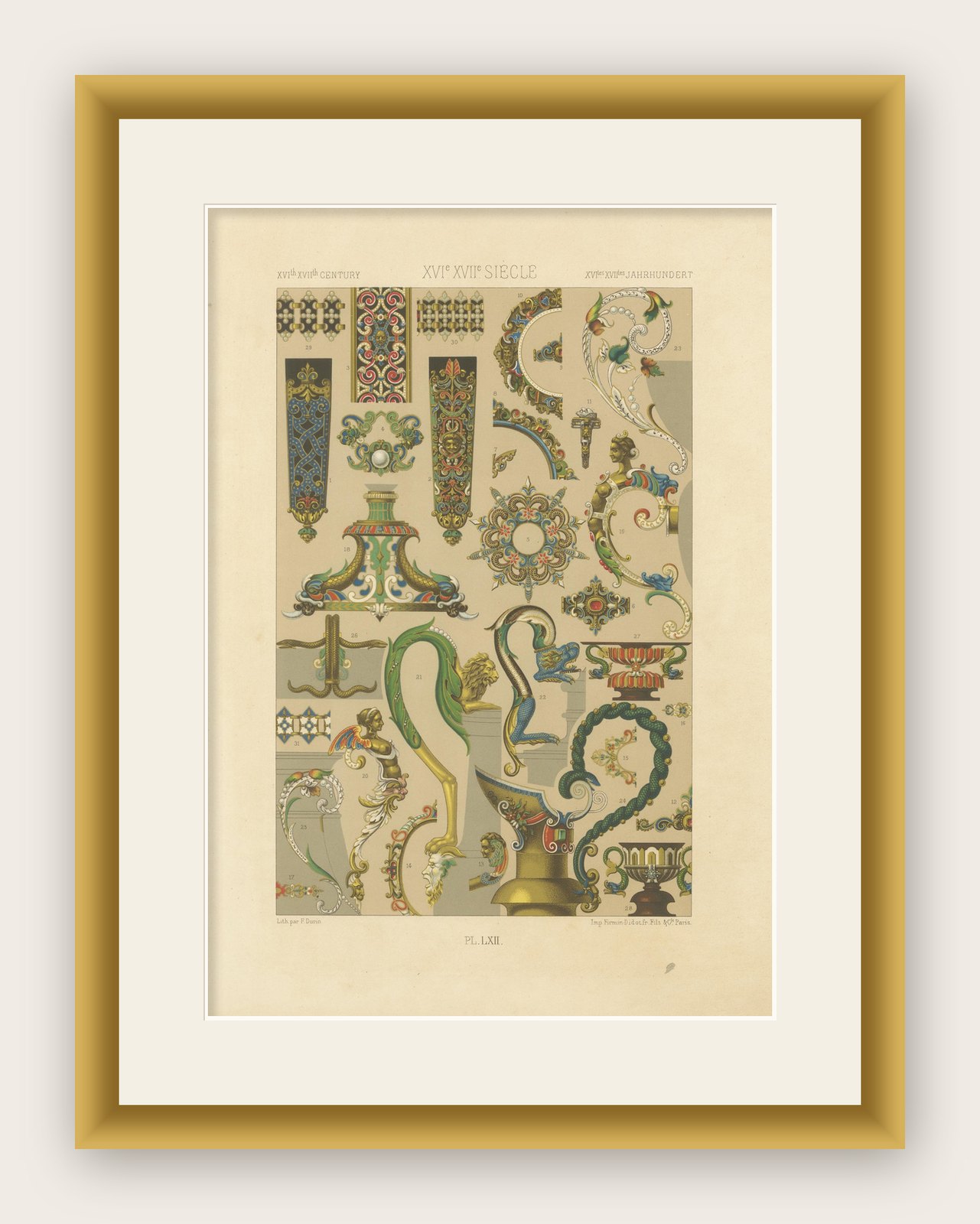
Frame and rooms are illustrations of how the print could look, drawn to its real size; it is sold unframed unless the description says otherwise.
Ornament & pattern
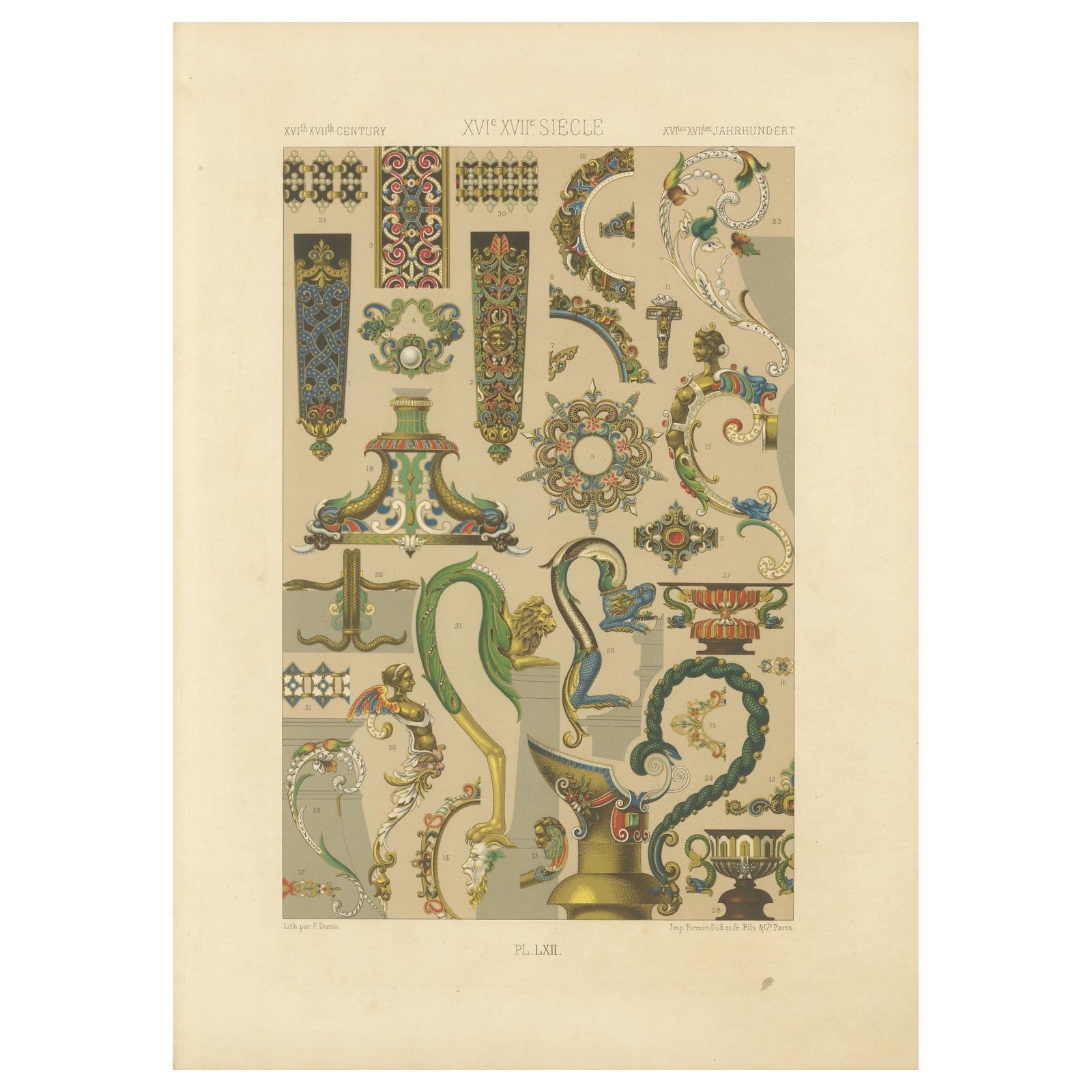
Baroque Ornament Details, 16th & 17th Century Design Elements, Plate LXII, 1869
£245
$325 · €290
Original print, not a reproduction
Ships worldwide from the Netherlands, flat, insured and tracked. 14-day returns. To buy, use Ask a question (info@antiquearchitectureprints.com) and we will reserve it for you.
- Date
- 1869
- Sheet size
- 15.9 × 11.3 in (40.4 × 28.8 cm)
- Condition
- Excellent. Vibrant colors, sharp impression, very light edge toning and minimal handling wear.
- Collection
- Ornament & pattern
- Era
- 1850 and after, The age of revivals
- Stock no.
- f_46123042
Baroque Ornament Details, 16th & 17th Century Design Elements, Plate LXII
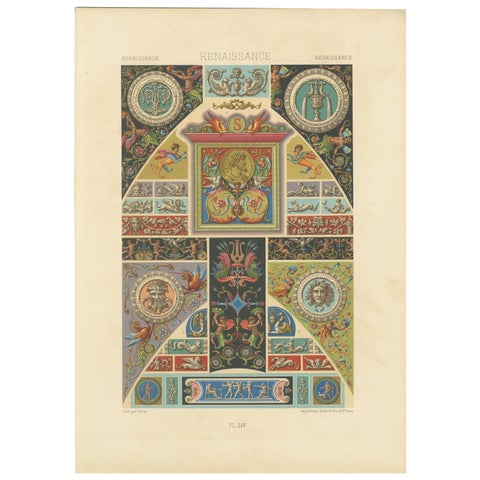
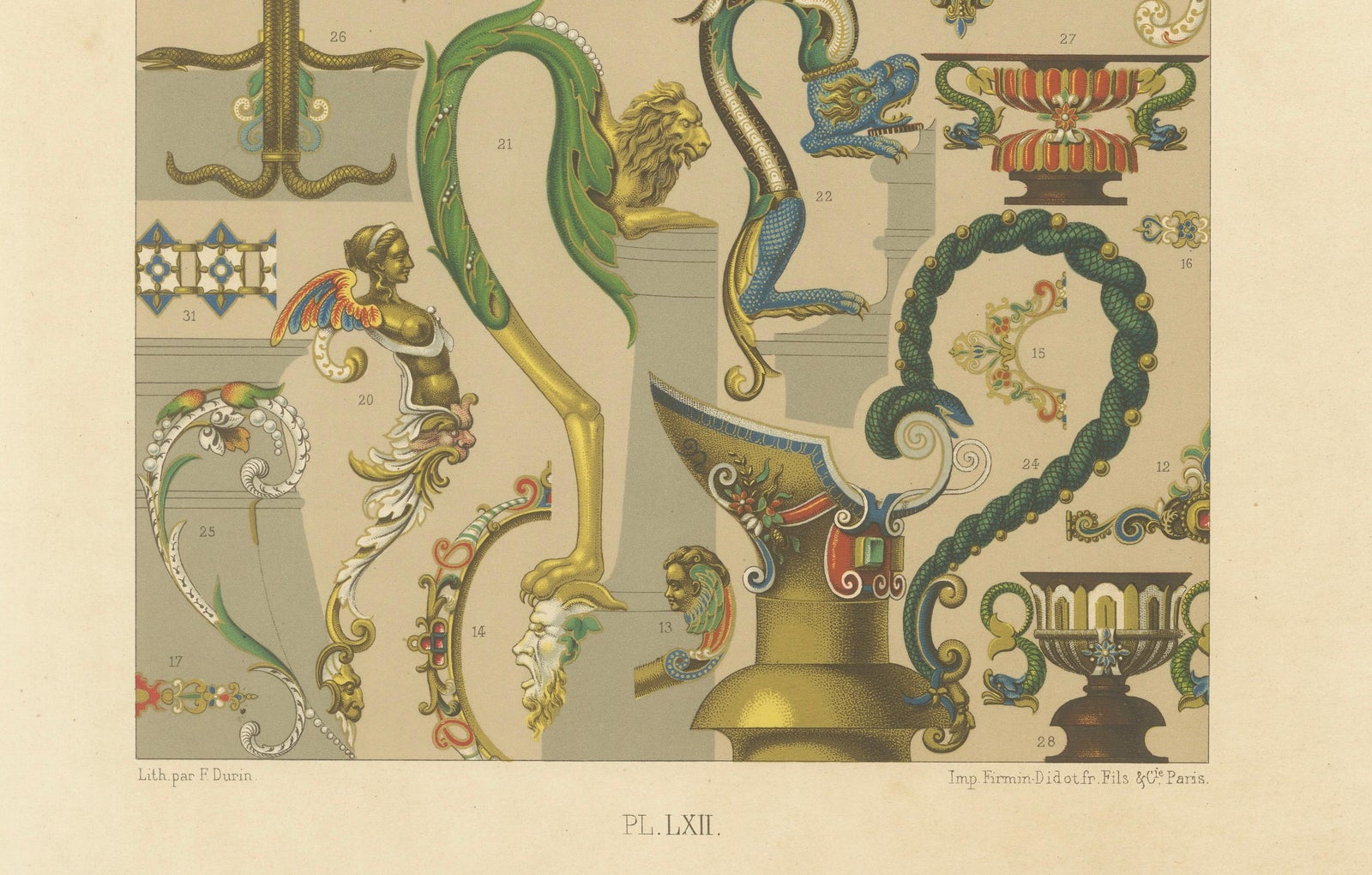
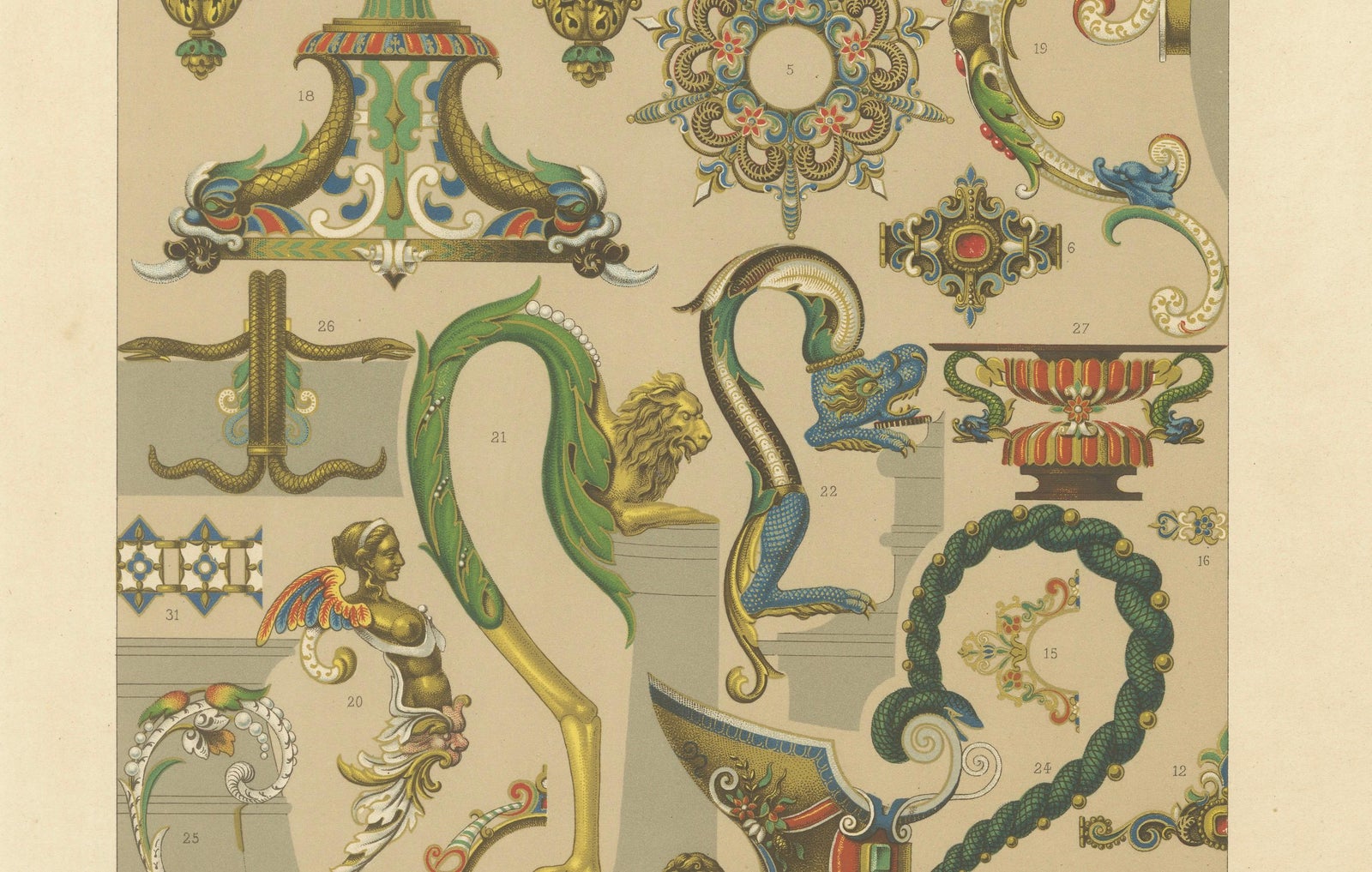
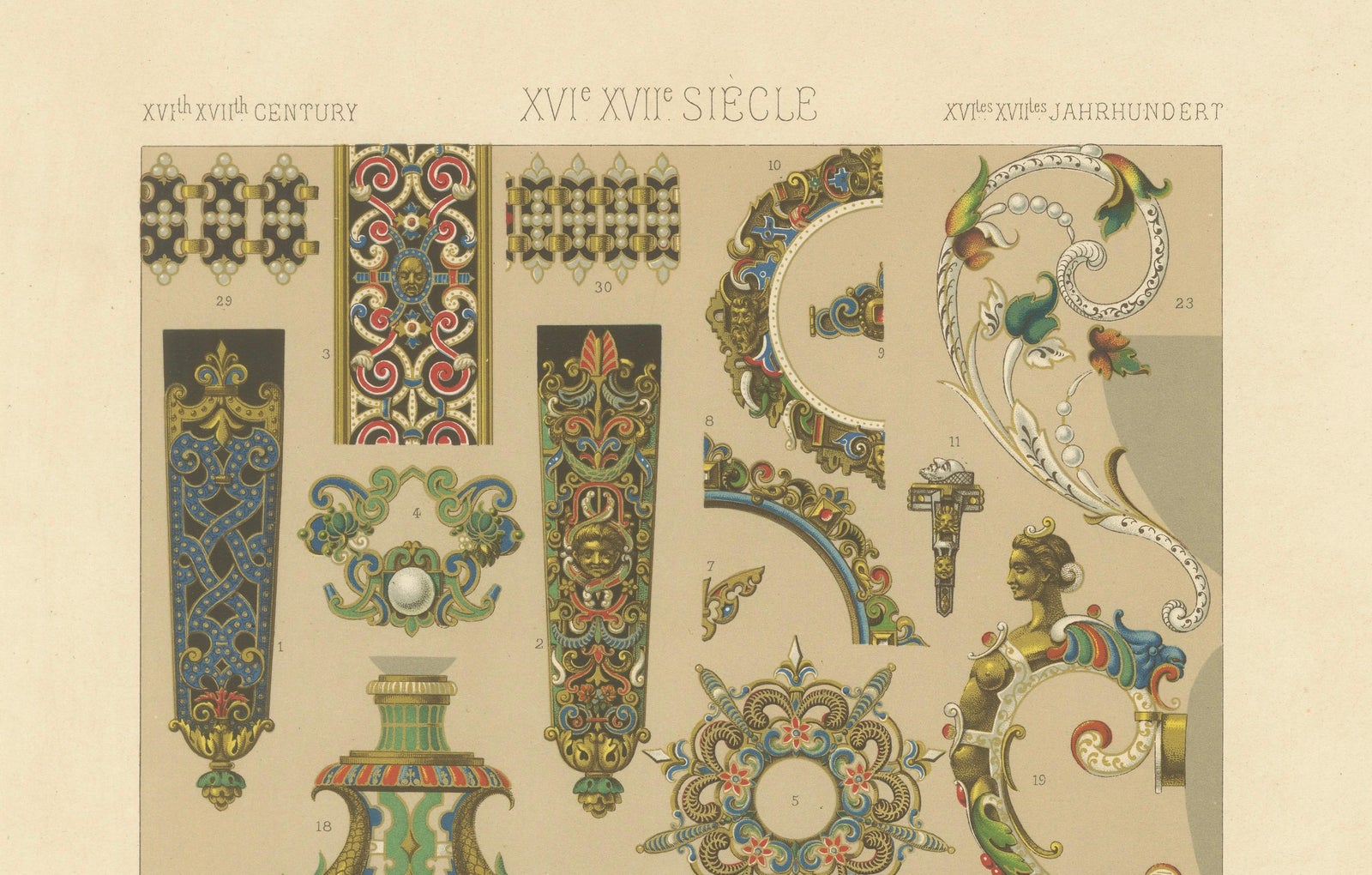
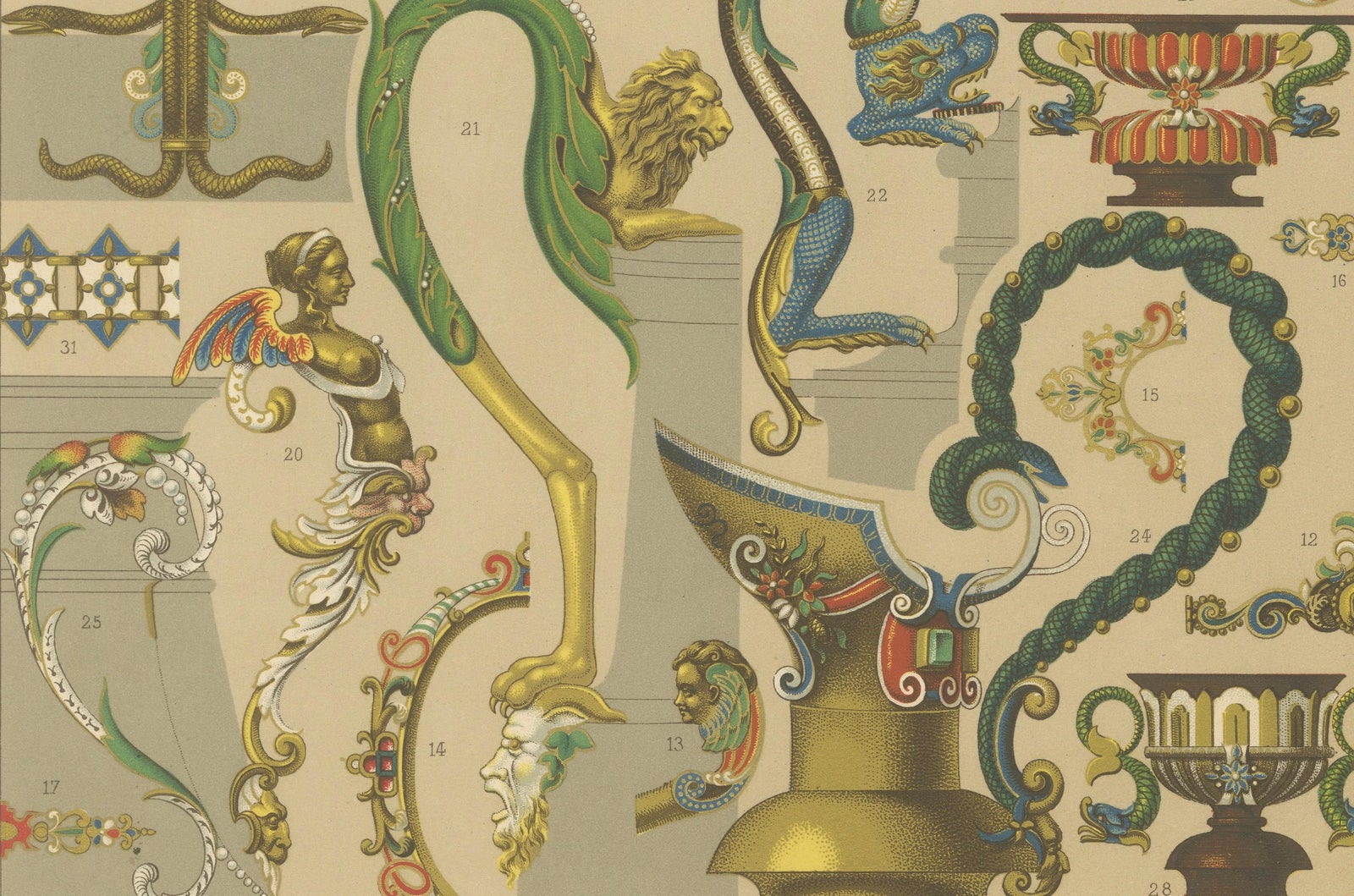
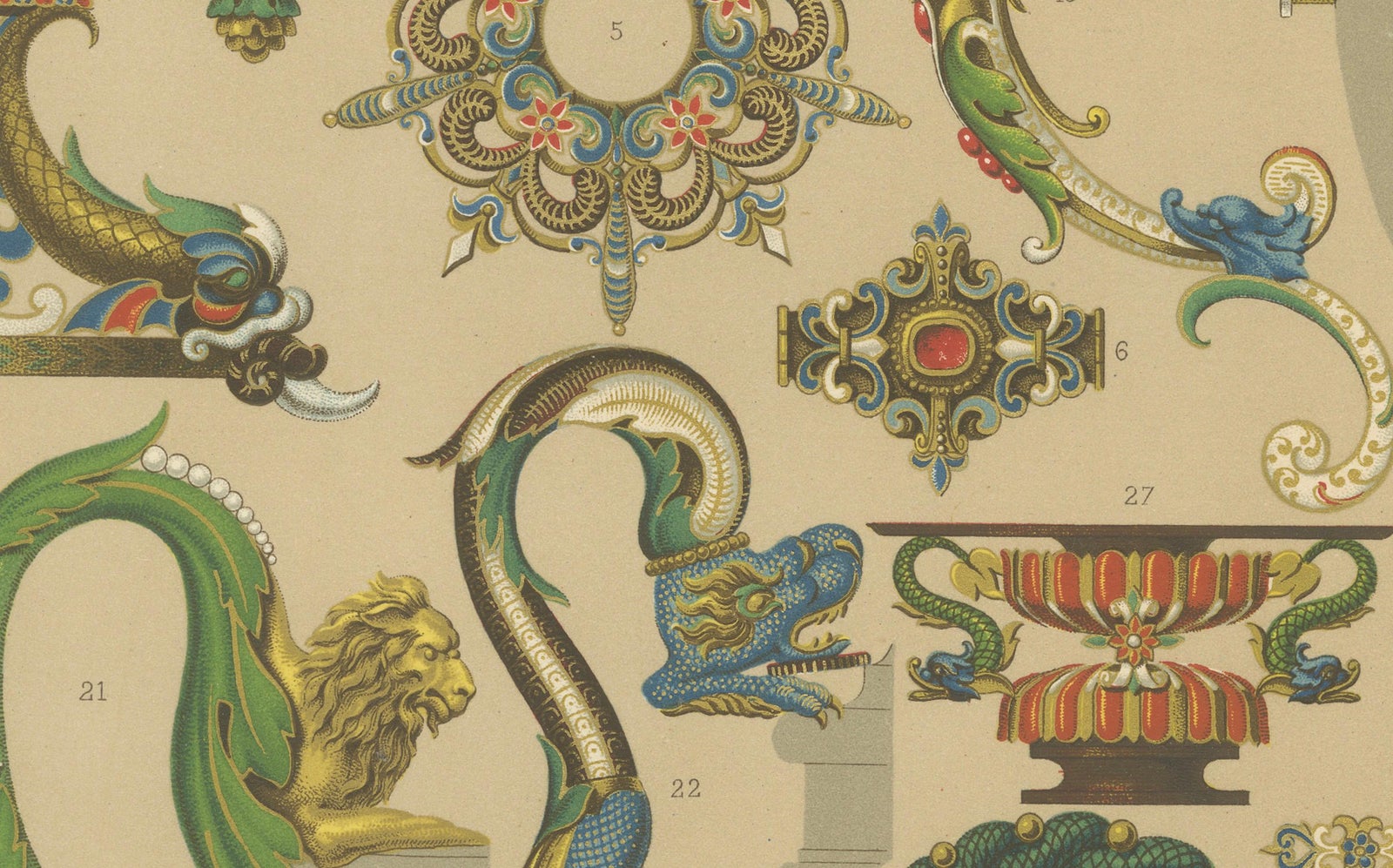
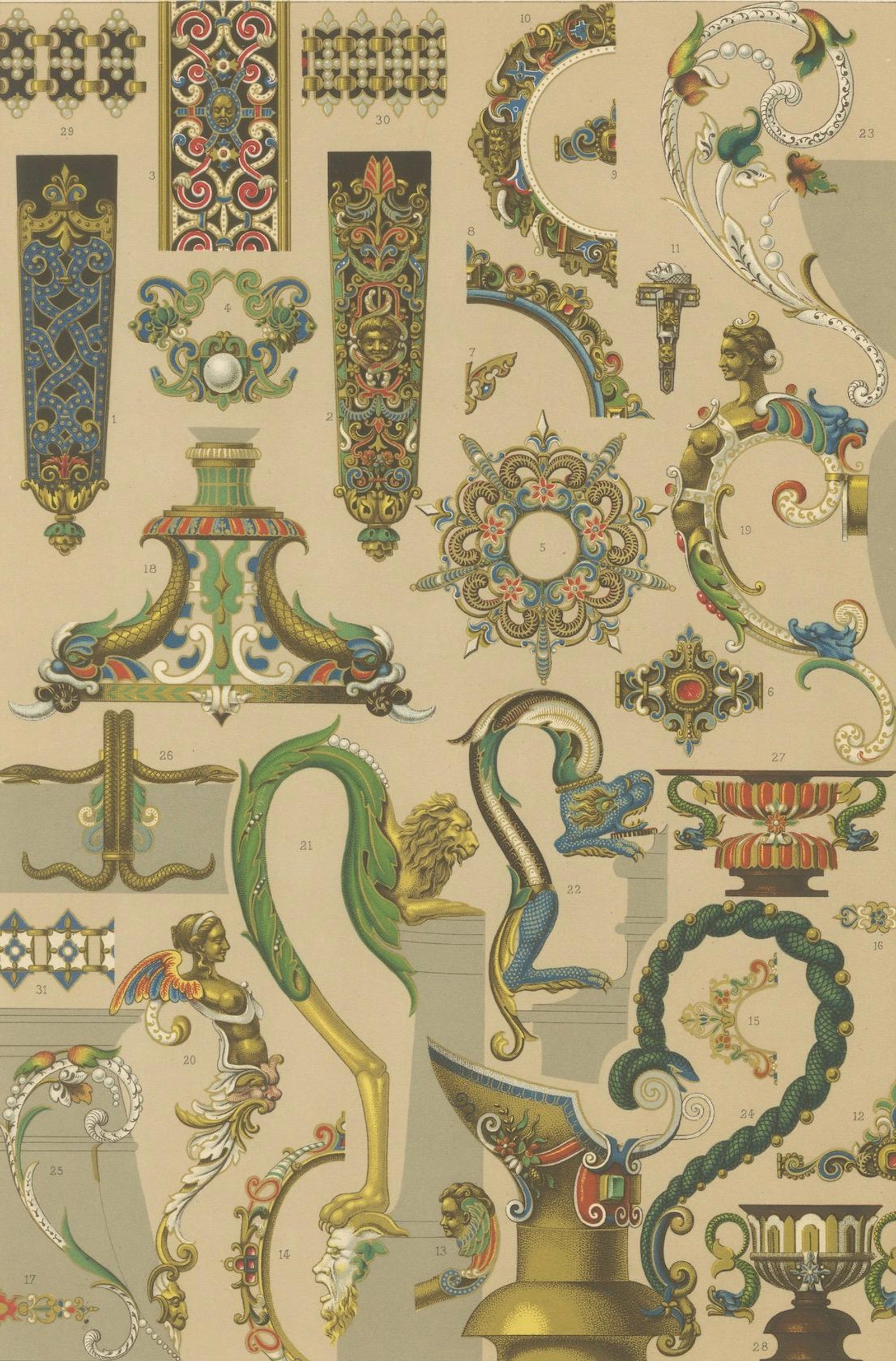
This vibrant chromolithograph, Plate LXII from L’Ornement Polychrome (Paris, c.1869), presents a remarkable array of Baroque decorative elements drawn from the rich design traditions of the 16th and 17th centuries. Lithographed by F. Darin and printed by Firmin-Didot Frères, this composition captures the exuberance and ornamental finesse characteristic of early modern European art.
The sheet showcases a dazzling collection of architectural and decorative motifs, including:
– Scrollwork and foliage flourishes, many culminating in stylized animal heads or fantastical beasts
– Cartouches and bracket feet adorned with grotesques, garlands, and enamel-like inlays
– Furniture and handle elements, such as drawer pulls, mounts, and volutes featuring dragons, lions, and human busts
– Polychrome moldings and applique forms, rich in jewel tones and metallic accents
– A central medallion resembling a pierced rosette, demonstrating symmetrical floral geometry and precision detailing
Particularly striking are the various zoomorphic forms, serpent-like dragons, lion masks, winged busts, and hybrid marine figures, typical of Mannerist influences transitioning into the flamboyance of the Baroque. The panel also includes column mounts, escutcheons, and stylized acanthus scrolls, suggesting origins in interior furnishings or metalwork embellishments.
Though highly decorative, these elements would have served practical and symbolic purposes, enhancing cabinets, church furniture, candelabra, or architectural frames. The symmetrical yet fluid designs reflect the Renaissance fascination with antiquity, while embracing the dynamic drama and opulence of the Baroque period.
This plate is not only a valuable visual record for art historians and designers, but also an inspiring resource for artisans, restorers, and collectors interested in period ornamentation.
Condition: Excellent. Vibrant colors, sharp impression, very light edge toning and minimal handling wear.
Framing tips: Highlight the composition with a dark burgundy or rich olive green mat, paired with a gold-accented frame to enhance the Baroque palette. A shadowbox frame would add depth and sophistication.
Technique: Chromolithograph
Maker: F. Darin (lith.); Firmin-Didot Frères, Paris, c.1869