Close-ups
Framed and on the wall
Frame and rooms are illustrations of how the print could look, drawn to its real size; it is sold unframed unless the description says otherwise.
Castles & palaces
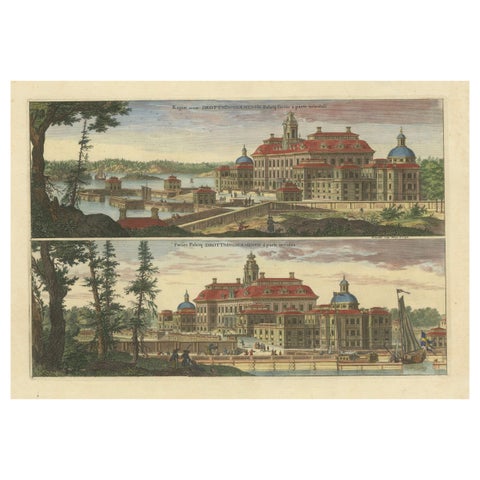
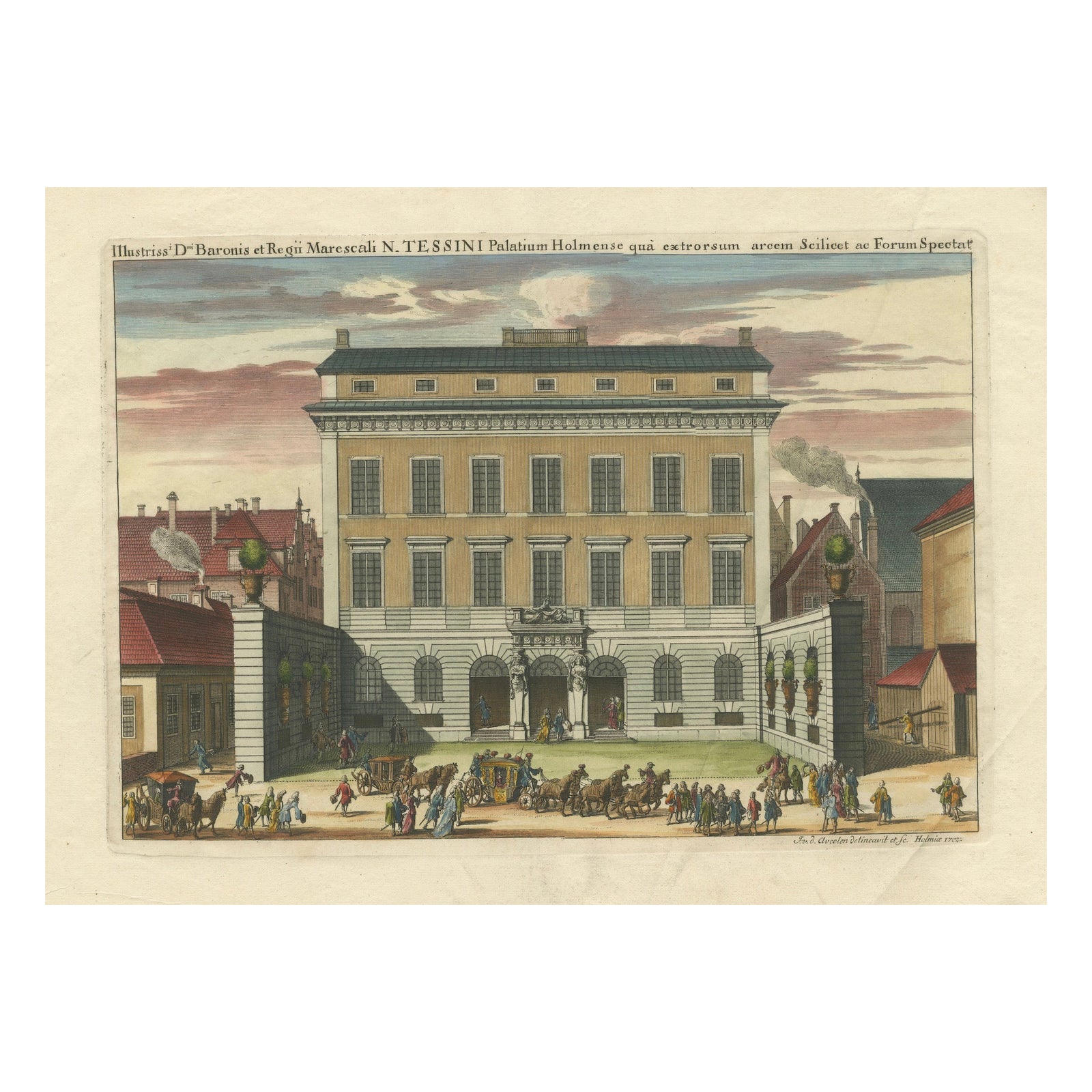
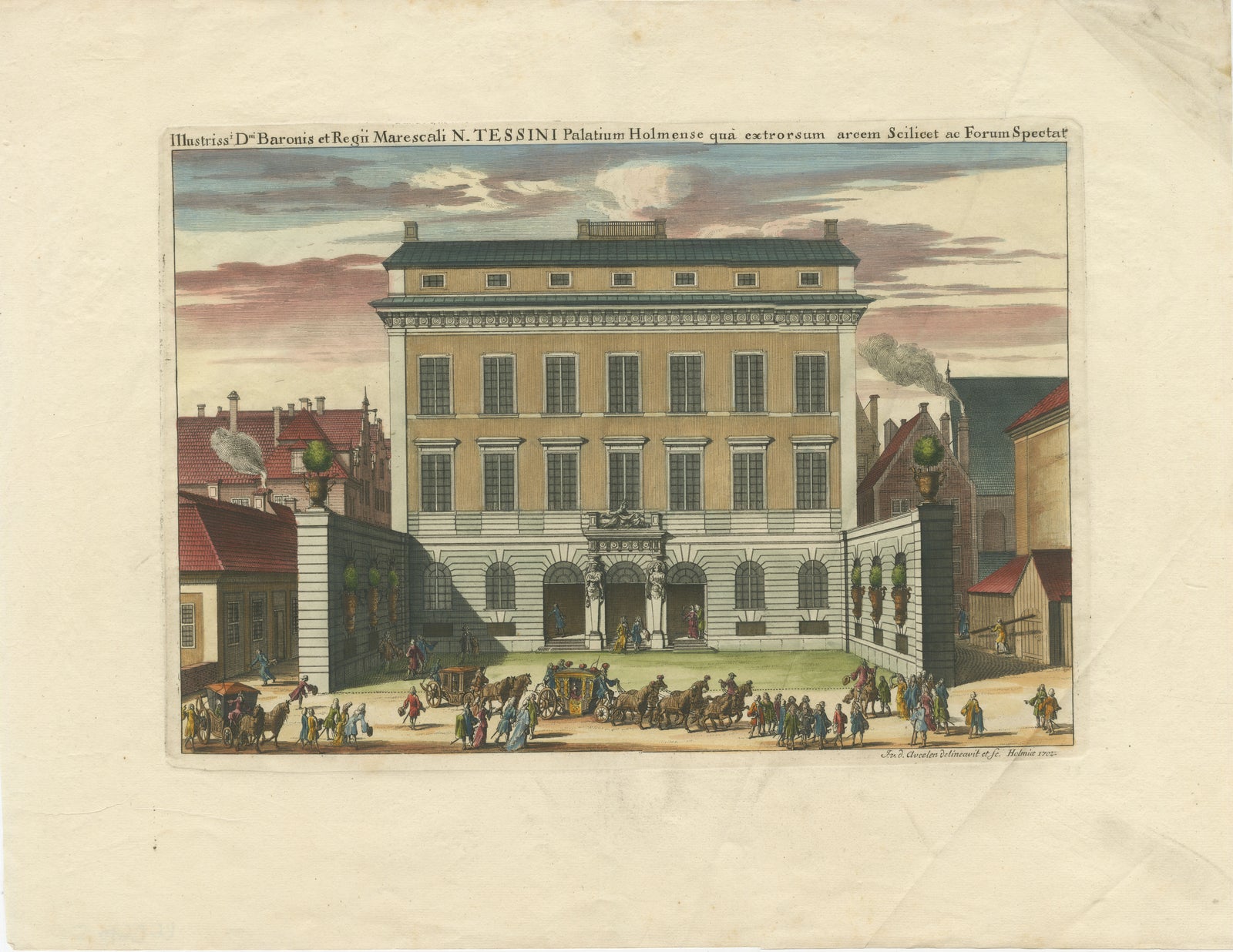
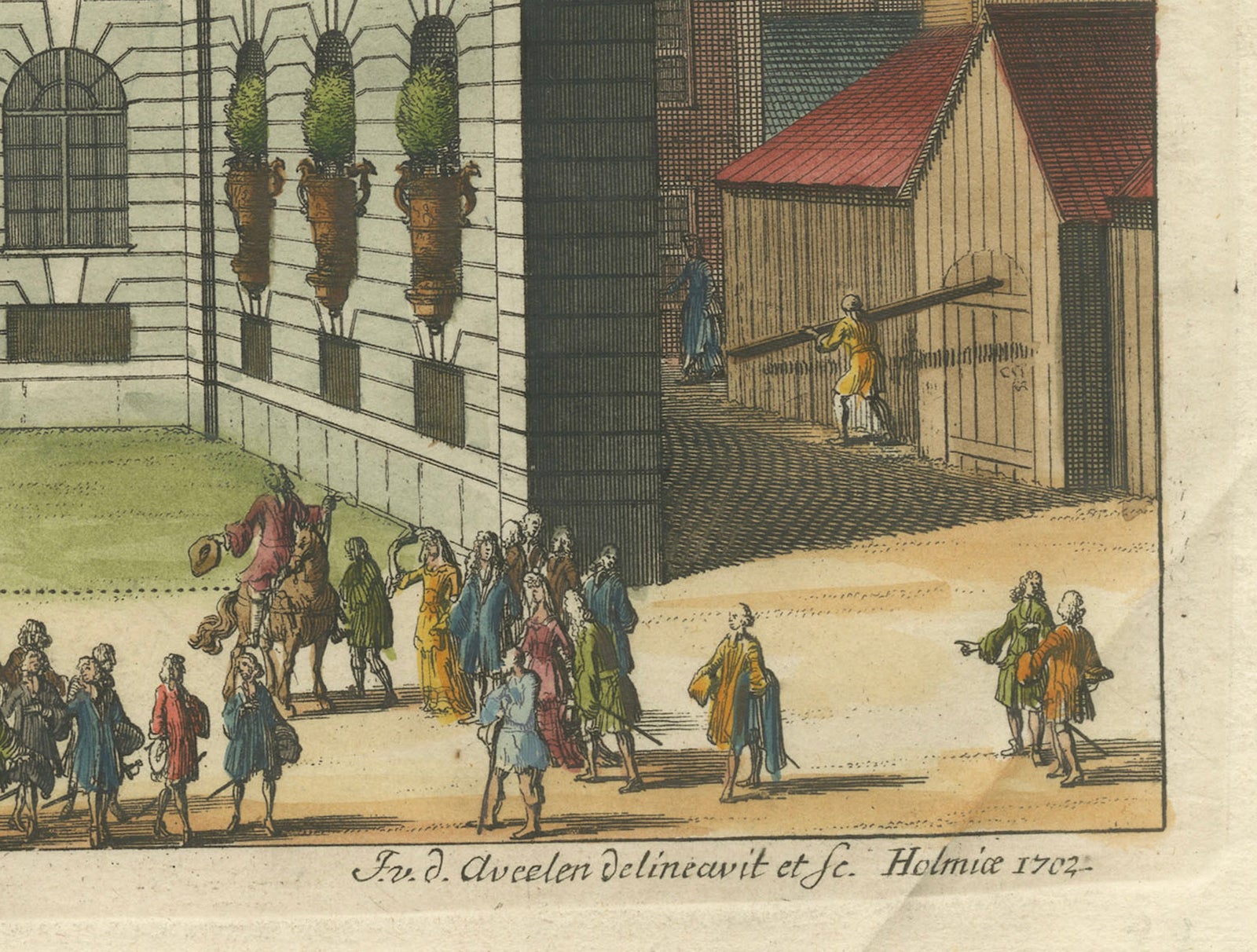
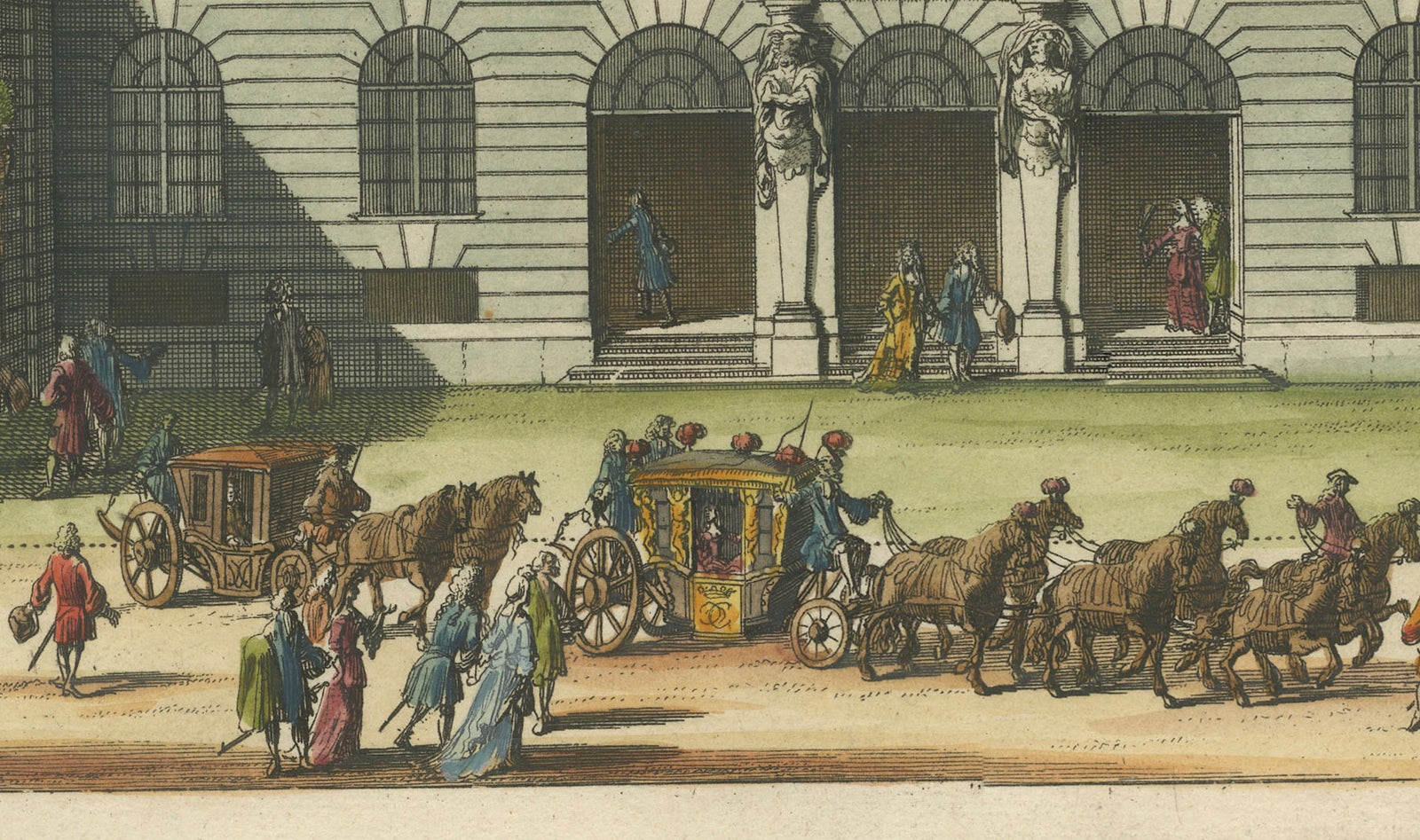
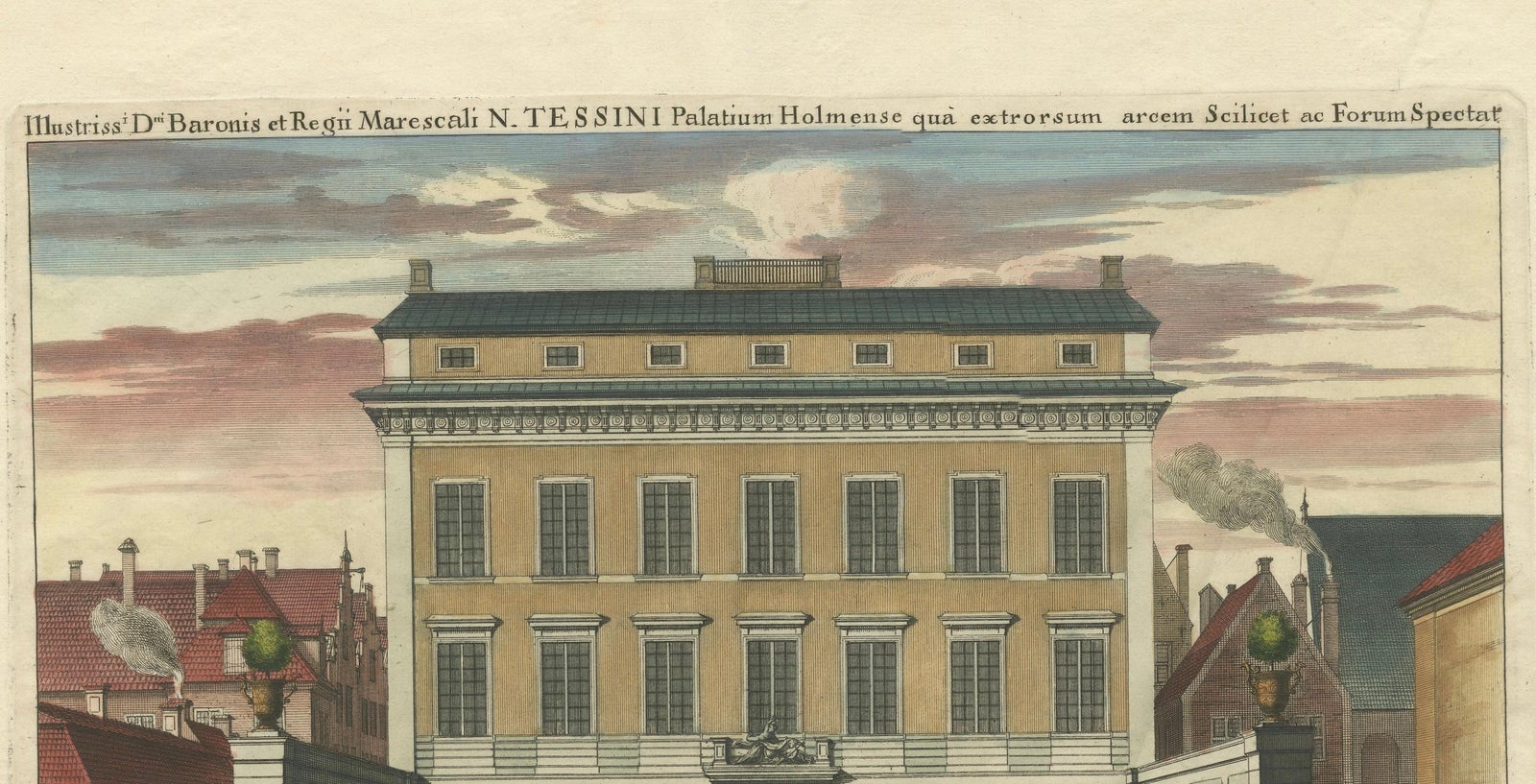
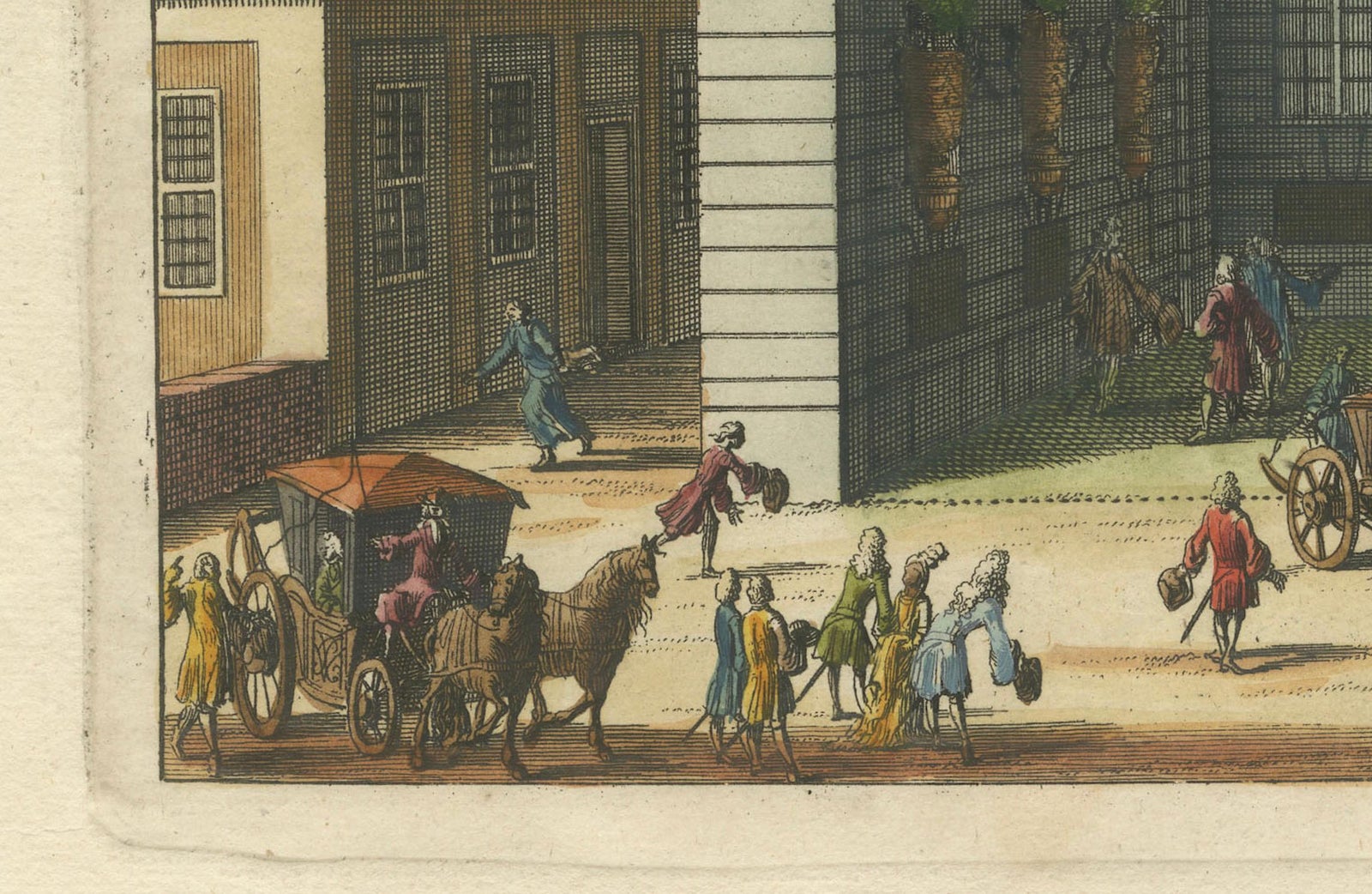
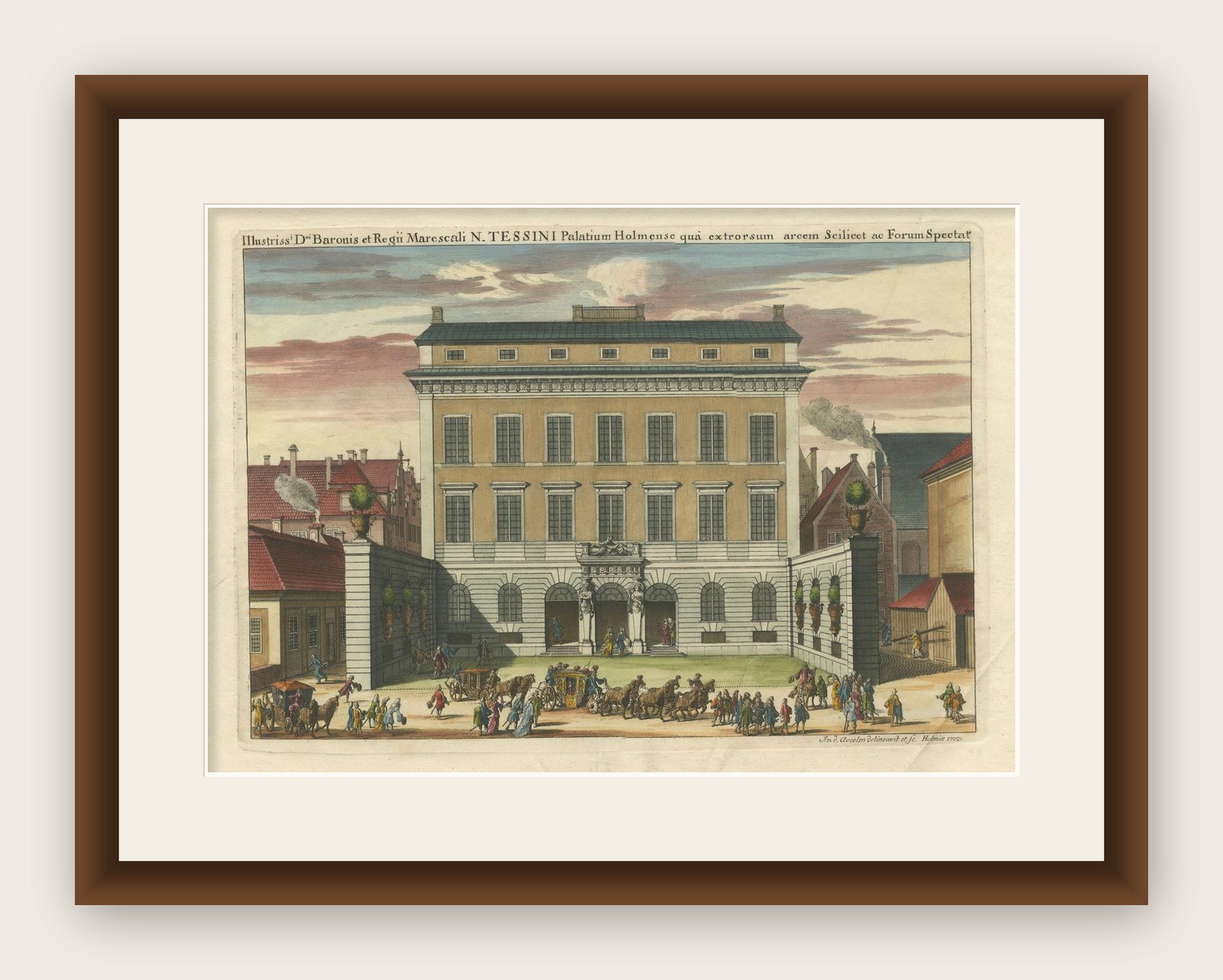
Baroque Dignity: Tessin Palace in Stockholm Captured by J. van den Aveelen, 1702
$430
€380 · £325
Original print, not a reproduction
Ships worldwide from the Netherlands, flat, insured and tracked. 14-day returns. To buy, use Ask a question (info@antiquearchitectureprints.com) and we will reserve it for you.
- Date
- 1702
- Sheet size
- 13.6 × 17.6 in (34.5 × 44.8 cm)
- Condition
- Good. Good. Hand-pressed paper, with minor soiling due to handling.Old folds on the right side of the paper. Study the images carefully.
- Collection
- Castles & palaces
- Era
- 1700 to 1789, Baroque to Neoclassical
- Stock no.
- f_38116272
The engraving provided is a hand-colored work by the artist and engraver, Johannes or Johan van der Aveelen,. He worked on engravings for Erik Dahlbergh’s project, "Suecia Antiqua et Hodierna," which was a grand collection of engravings showcasing the grandeur of Sweden's architecture and landscapes during the late 17th century and early 18th century.
The building depicted in the engraving is the Tessin Palace (Palatium Holmense), located in Stockholm, Sweden. It was named after the architect Nicodemus Tessin the Younger, who designed it. The palace was built as the residence for the Tessin family and served as such for a period before eventually being used by the Swedish Royal Family.
The engraving was completed in the year 1702, as indicated by the text on the image. Given the detailed baroque architecture and the surrounding activity, the palace is presented not only as a private residence but also as a fixture of public life.
More about the engraver:
Johannes van den Aveelen, also known as Jan van den Aveele or Aveelen, was a Dutch etcher and copper engraver born in 1650 in Leiden and who passed away in 1727 in Stockholm, Sweden. His life, particularly before his move to Sweden, is not extensively documented, but he is known for his significant contributions to Swedish cartography and topographical illustration.
In 1688, van den Aveelen was recruited by Erik Dahlbergh, a Swedish engineer and field marshal, to move to Sweden. His expertise was sought for the illustration of topographical and historical books. Upon his arrival in Stockholm, van den Aveelen was first commissioned to produce engravings for Samuel Pufendorf's history of Charles X Gustav of Sweden, titled "De Rebus a Carlo Gustavo Sveciae Regis."
However, his most notable work was his contribution to "Suecia Antiqua et Hodierna," a project initiated by Dahlbergh to glorify Sweden's historical and modern landscapes and architecture. In this work, van den Aveelen was responsible for creating 76 of the collection's plates, working from drawings made by Dahlbergh and often improving upon them.
Van den Aveelen's engravings for "Suecia Antiqua et Hodierna" are characterized by their detail and accuracy, reflecting the Baroque style's grandiosity. His works provide a valuable historical record of Sweden's cultural heritage from that era. Despite his clear artistic impact, the details of his personal life and training remain relatively obscure. He continued to work on "Suecia Antiqua et Hodierna" until his death in Stockholm in 1727.