Close-ups
Framed and on the wall

Frame and rooms are illustrations of how the print could look, drawn to its real size; it is sold unframed unless the description says otherwise.
Ornament & pattern
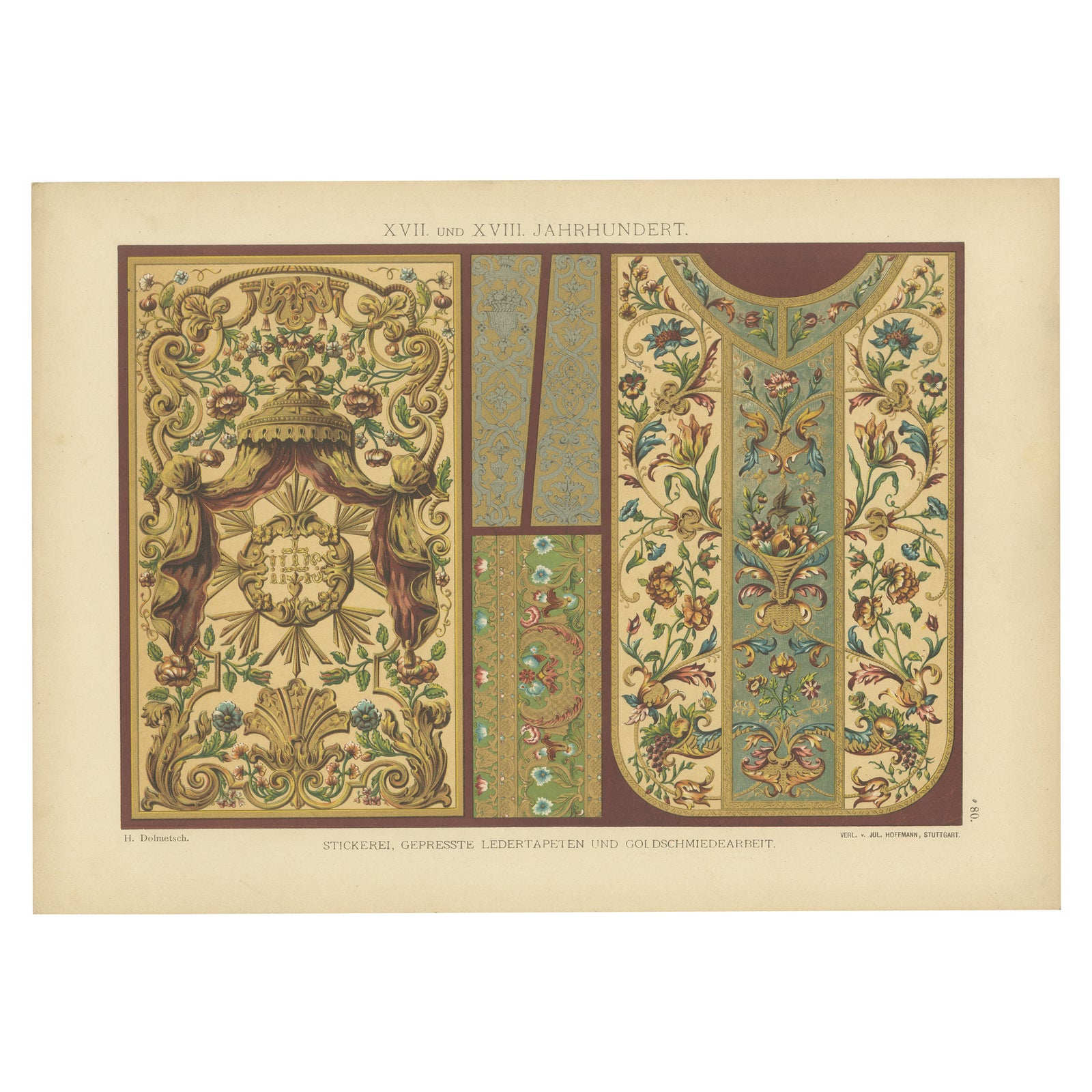
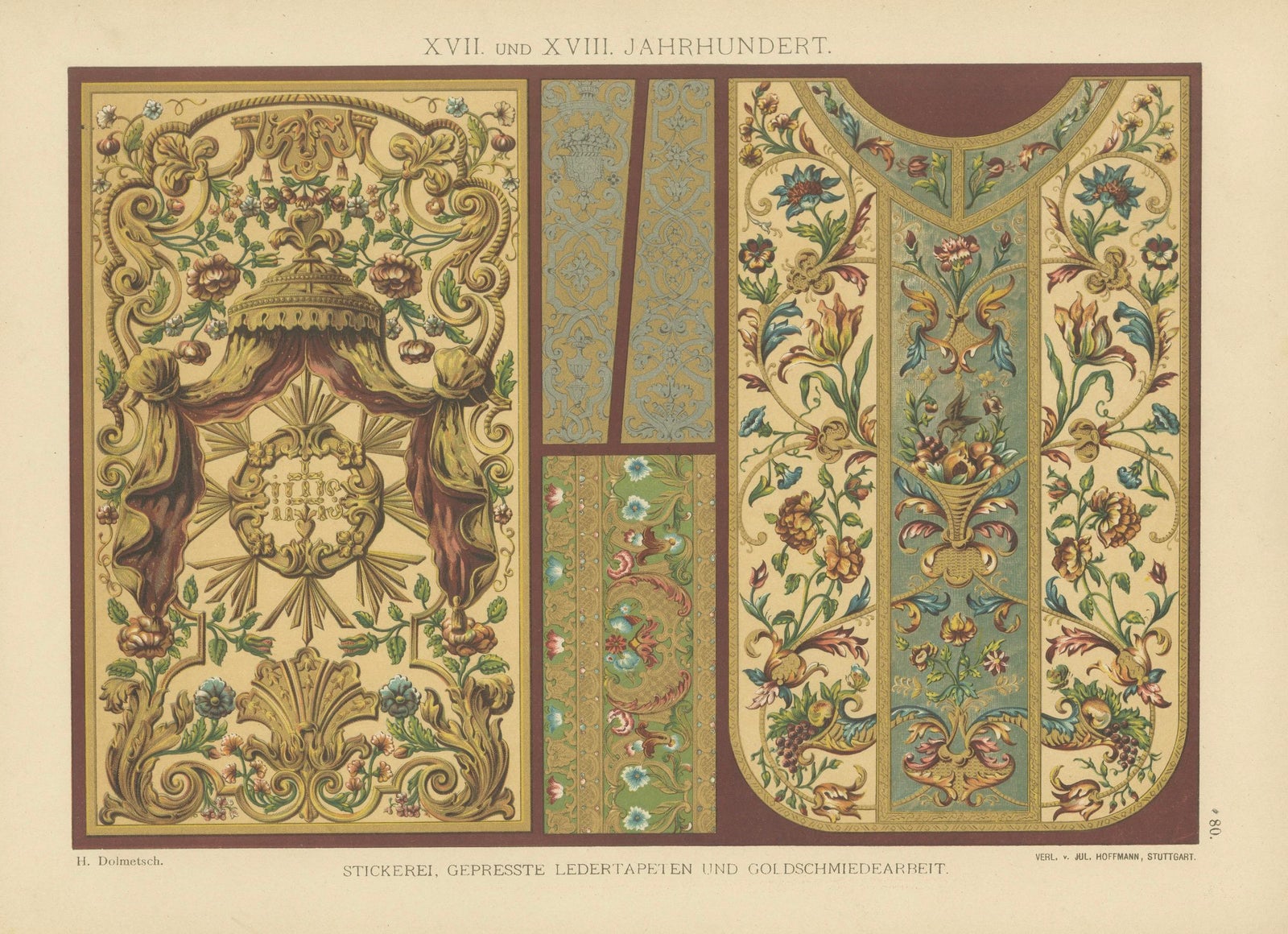
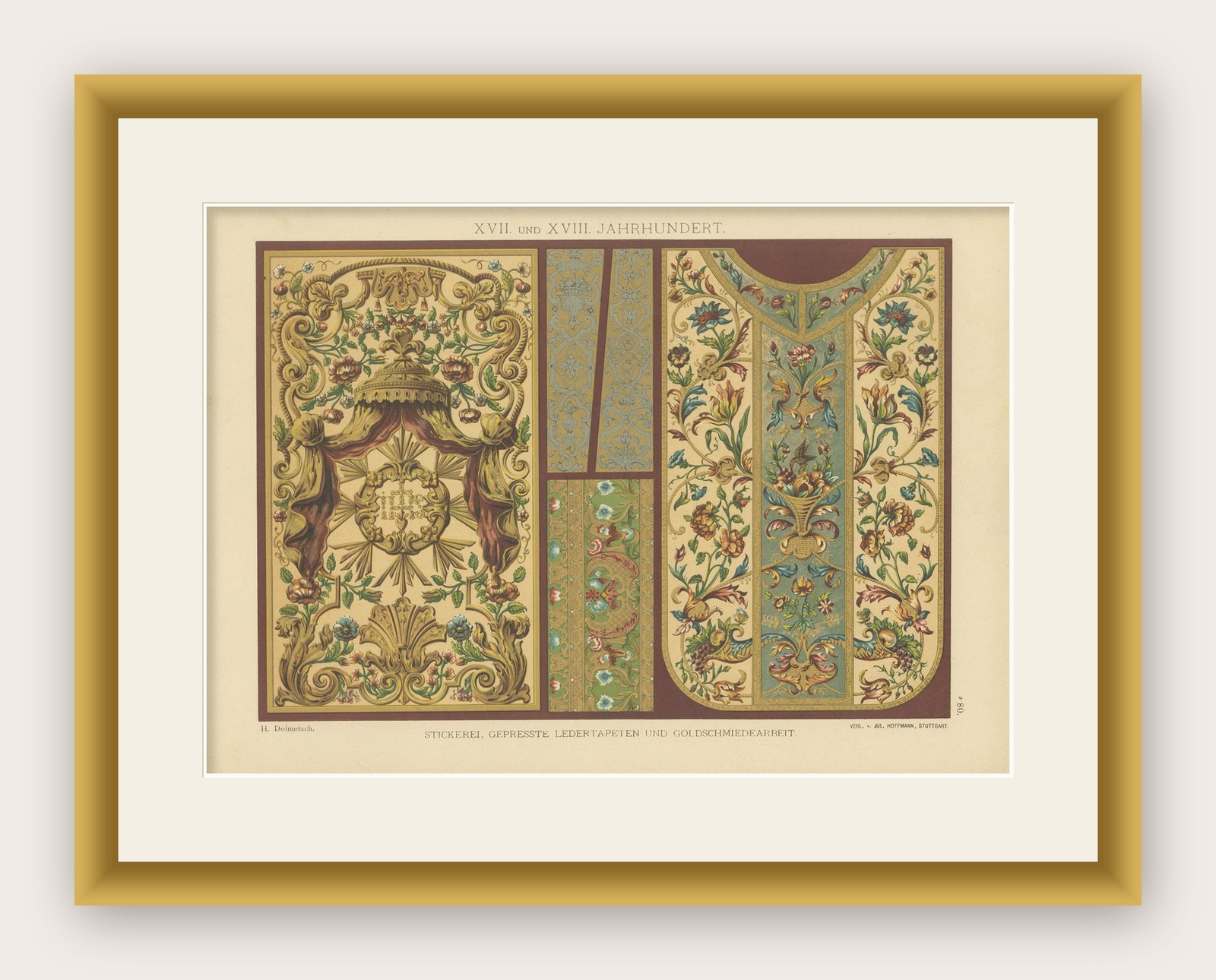
Baroque and Rococo: Lavish Decorative Artworks from the 17th-18th Century, 1887
£115£9025% off
$115 · €105
Original print, not a reproduction
Ships worldwide from the Netherlands, flat or rolled, insured and tracked. 14-day returns.
- Date
- 1887
- Sheet size
- 13.8 × 9.8 in (35 × 25 cm)
- Condition
- Good. Given age. Good considering age. General age-related toning and/or occasional minor defects from handling. Please study scans carefully.
- Collection
- Ornament & pattern
- Era
- 1850 and after, The age of revivals
- Stock no.
- BG-13766-2-80
What the condition grades mean
- Excellent
- Bright and clean, with no faults worth mentioning.
- Very good
- Only light signs of age, such as faint toning.
- Good
- Normal signs of age for a sheet of this period: toning, some foxing, small marks or neat old repairs.
- Fair
- Clear faults such as staining, tears or repairs, priced to match.
Every fault we see is written in the condition note, and the whole sheet is shown uncropped in the photos.
Title:"17th-18th Century Luxurious European Decorative Arts"
Description:
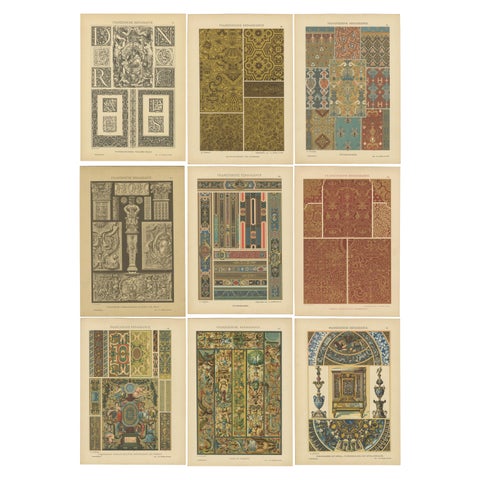
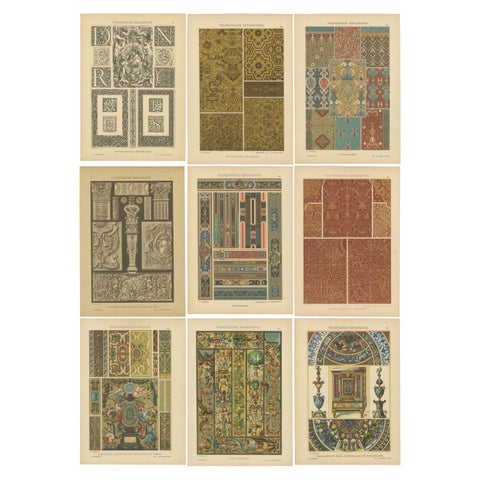
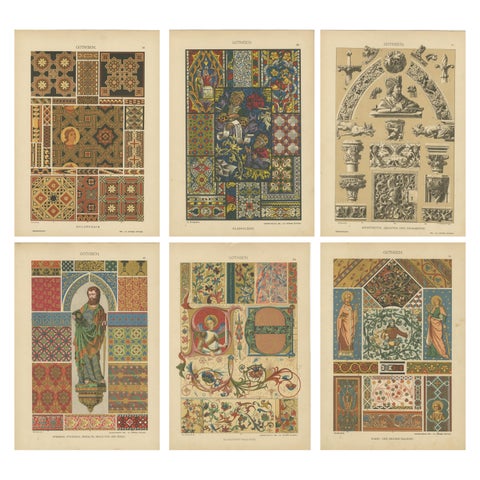
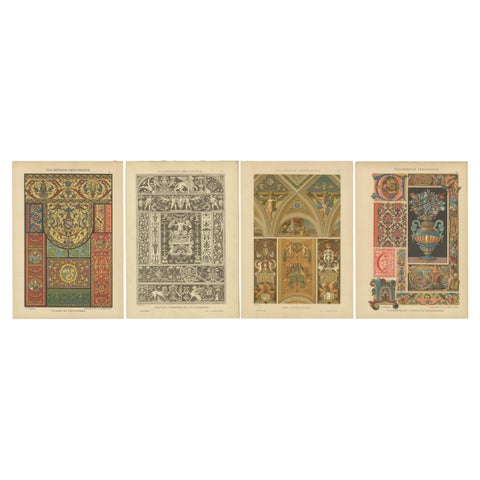
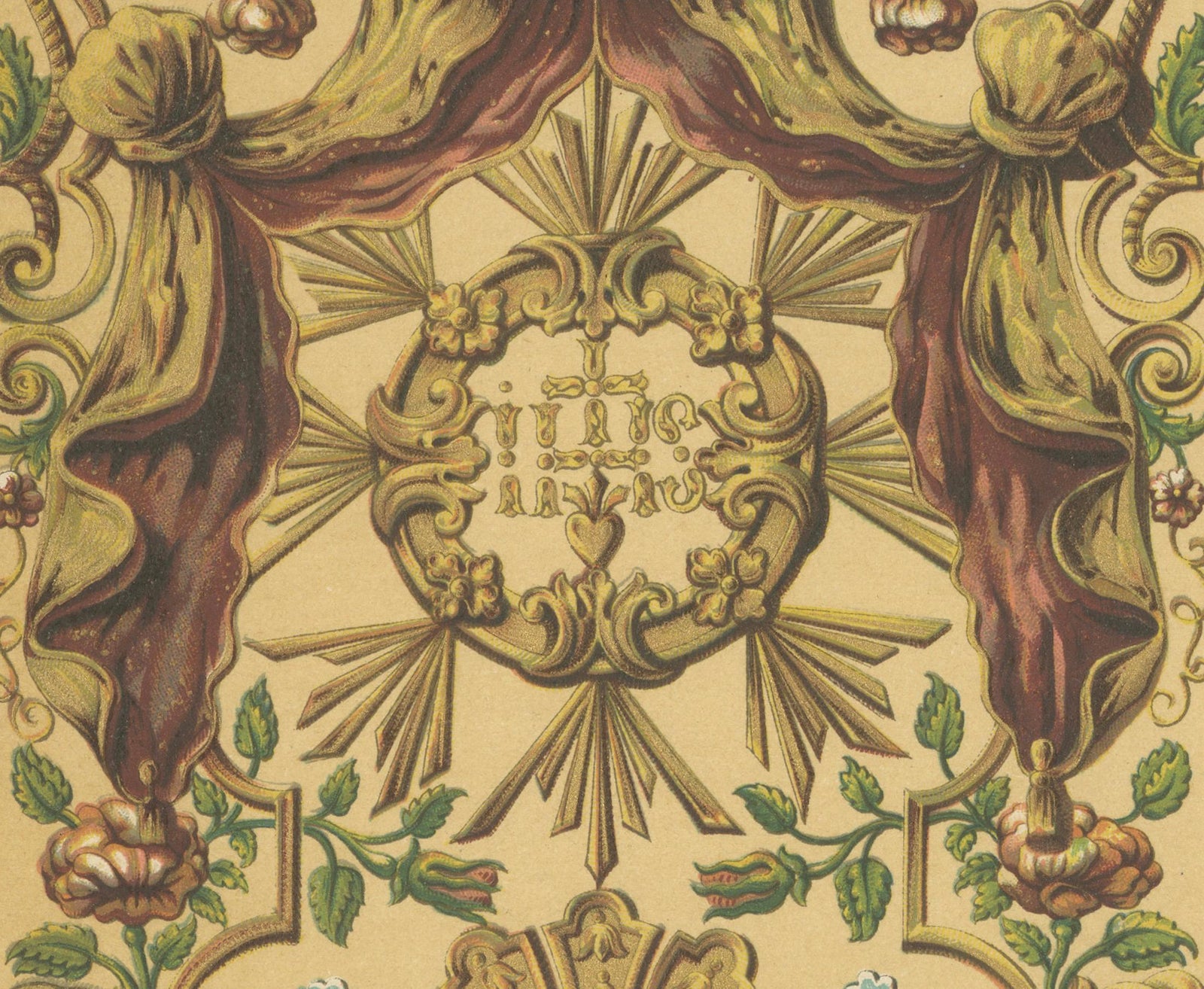
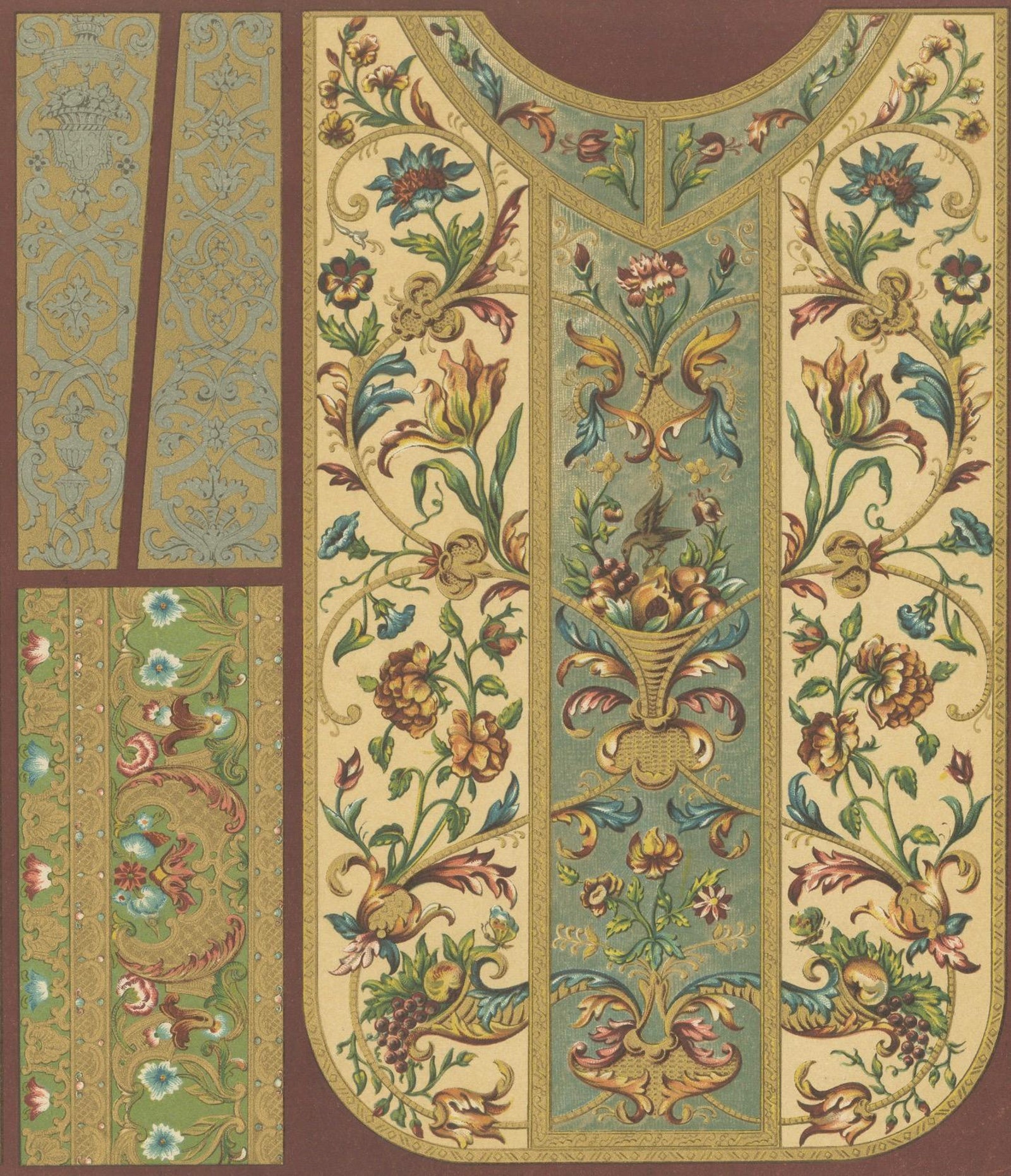
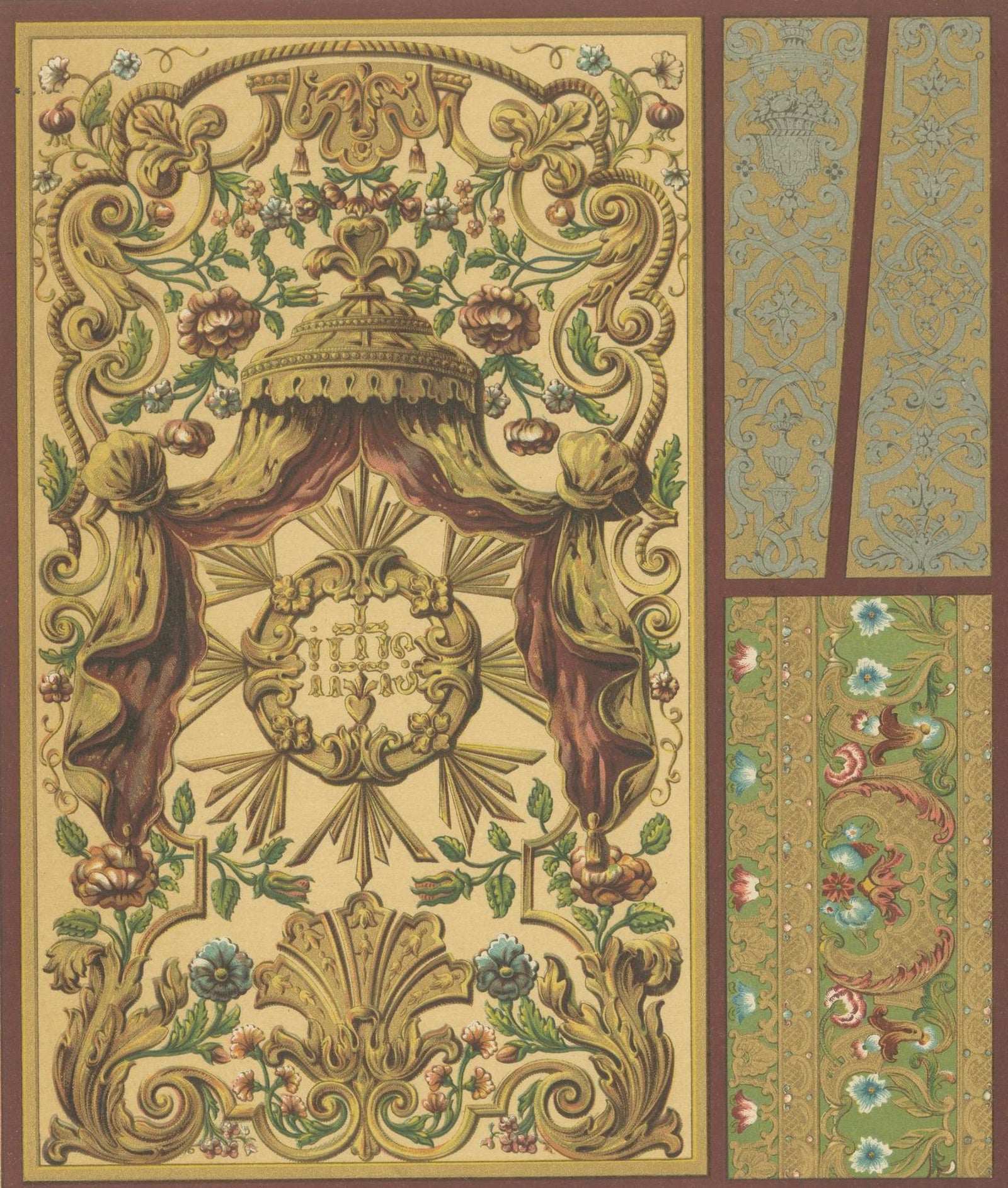
This print is part of the "Ornamentenschatz" collection by H. Dolmetsch, published by Jul. Hoffmann in Stuttgart. The collection dates back to the late 19th century and features a rich array of decorative arts from the 17th and 18th centuries. It includes designs for stitchery, embossed leatherwork, and goldsmithing, each detailed and colored to highlight the extravagant artistry of the Baroque and Rococo periods.
Attractiveness and Decorative Appeal:
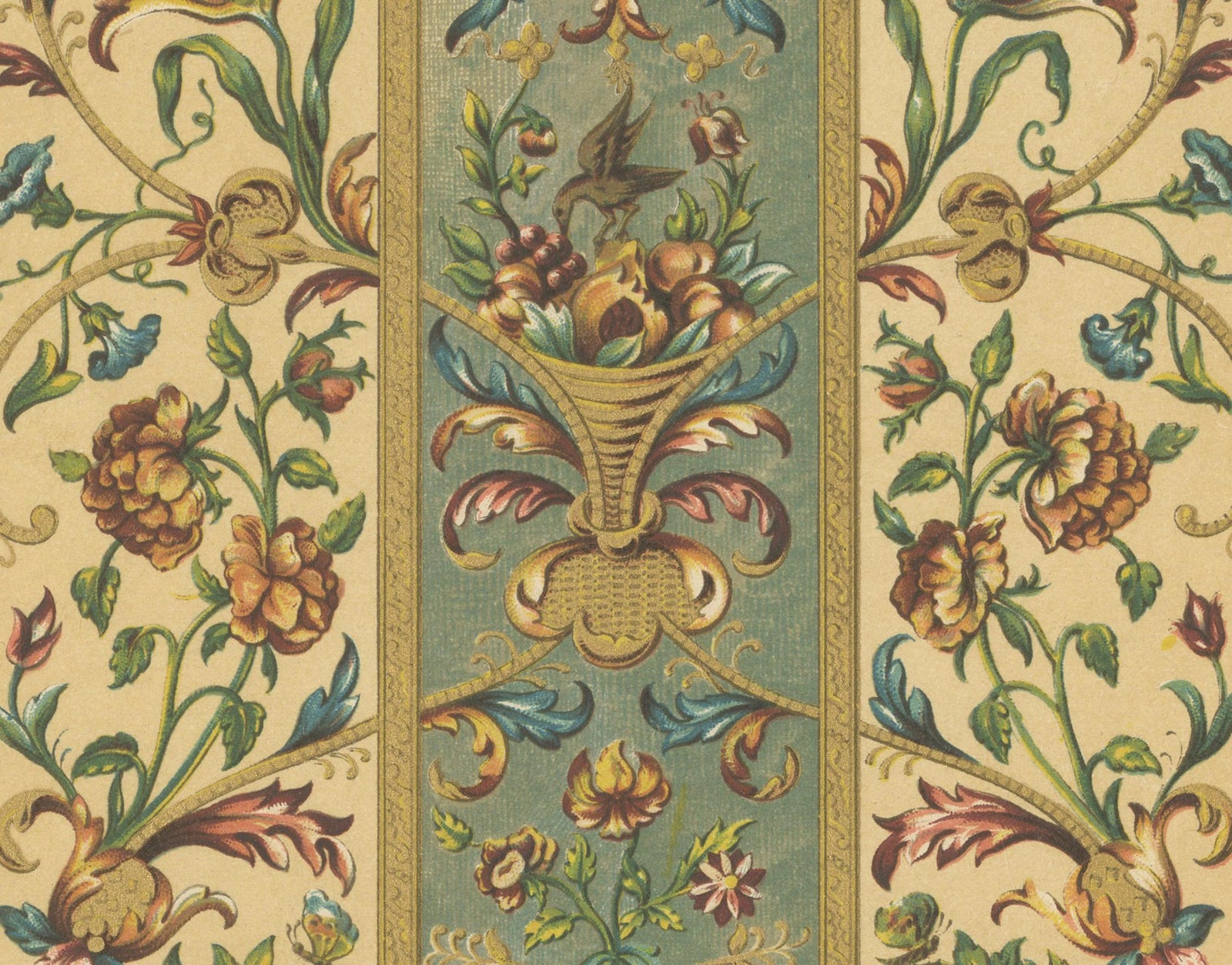
These prints capture the essence of their era with opulent details and a lush color palette. The attractiveness stems from the meticulous attention to detail and the lavish use of decorative motifs such as florals, fruits, and classical figures, all intertwined in ornate compositions. The craftsmanship displayed in these prints reflects both the artistic skills and the high aesthetic standards of the time, making them not only visually striking but also historically significant as examples of cultural artistry.
The technique shown in the print likely involves gold leaf application, which is one of the classic methods used to achieve a golden appearance in artworks, particularly from the periods shown (17th and 18th centuries).
Gold Leaf Application Technique
1. Preparation of the Surface: The surface, whether it's paper, wood, leather, or metal, is prepared with a layer of gesso or another type of base coat to make it smooth and ensure better adhesion of the gold.
2. Application of a Mordant: A sticky substance called mordant, often an oil-based size or a water-based adhesive, is applied to the areas designated to receive the gold leaf. The mordant is crucial as it needs to be tacky enough to hold the delicate gold leaf but not so wet as to cause it to wrinkle or tear.
3. Applying the Gold Leaf: Thin sheets of gold leaf are carefully laid onto the prepared area with mordant. This is a delicate process, typically done with a special brush or tool, as gold leaf is extremely thin and fragile.
4. Burnishing and Sealing: Once the gold leaf is applied, it is gently burnished, or pressed down, to smooth out any wrinkles and ensure it adheres well to the surface details of the design. A sealant may be applied over the gold leaf to protect it from tarnishing and wear.
Visual Effect
The use of gold leaf in decoration provides a rich, reflective quality that can't be matched by gold paint or other imitations. The reflective properties of gold enhance the depth and dimension of the artwork, giving it a luxurious and vibrant look that is highly prized in decorative arts.
This technique was popular for its visual impact and durability, used extensively in the ornamental arts to create luxurious and appealing decorations that signified wealth and status.