Close-ups
Framed and on the wall
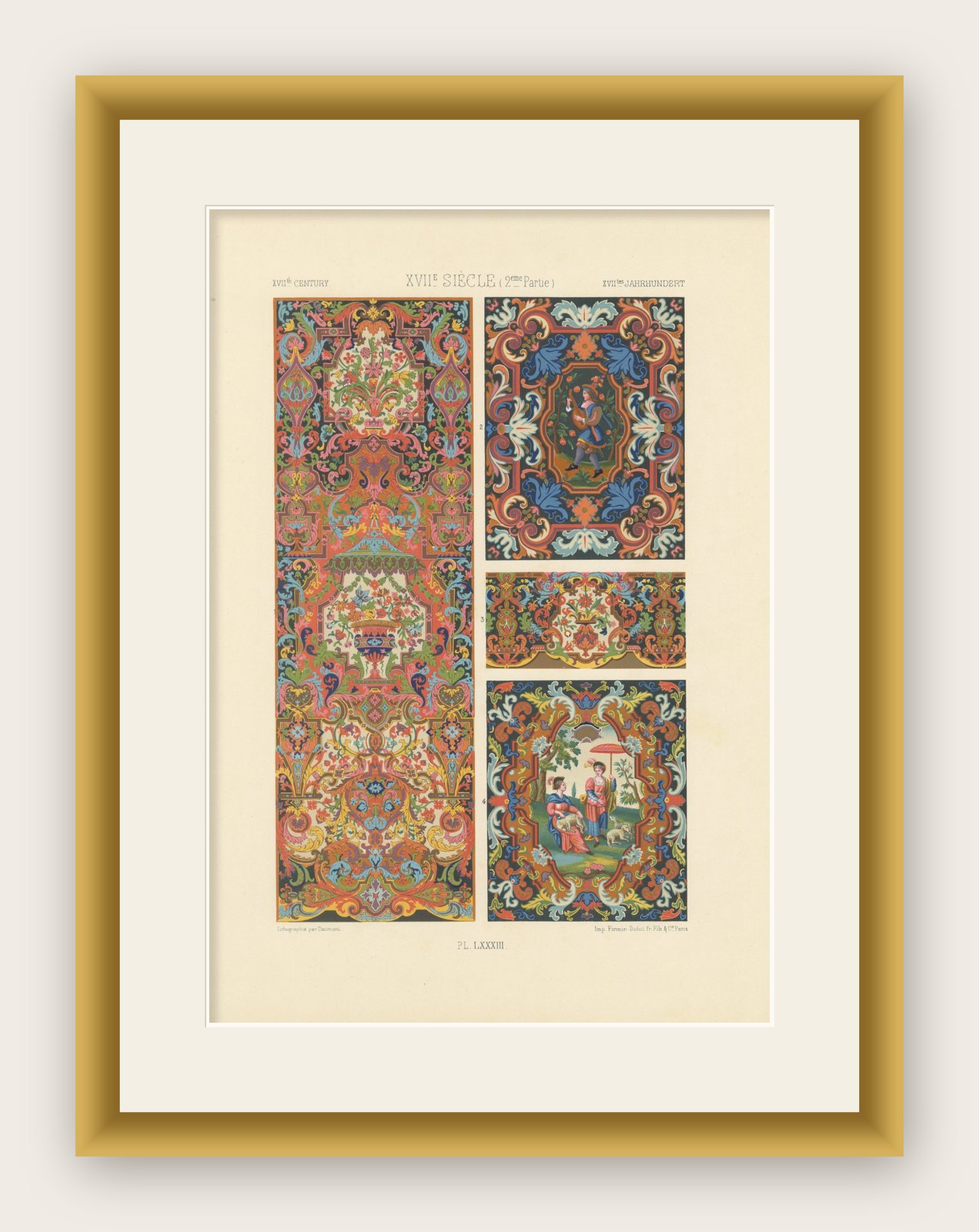
Frame and rooms are illustrations of how the print could look, drawn to its real size; it is sold unframed unless the description says otherwise.
Ornament & pattern
Baroque and Pastoral Motifs, Decorative Panels, Plate LXXXIII, ca.1869
€220
$250 · £185
Original print, not a reproduction
Ships worldwide from the Netherlands, flat, insured and tracked. 14-day returns. To buy, use Ask a question (info@antiquearchitectureprints.com) and we will reserve it for you.
- Date
- 1869
- Sheet size
- 15.9 × 11.3 in (40.4 × 28.8 cm)
- Condition
- Excellent. Condition. Rich, unfaded colors and clean image area. Very light marginal toning consistent with age. No tears, repairs, or foxing. Strong impression on high-quality paper.
- Collection
- Ornament & pattern
- Era
- 1850 and after, The age of revivals
- Stock no.
- f_46126832
17th Century Decorative Panels, Baroque and Pastoral Motifs, Plate LXXXIII
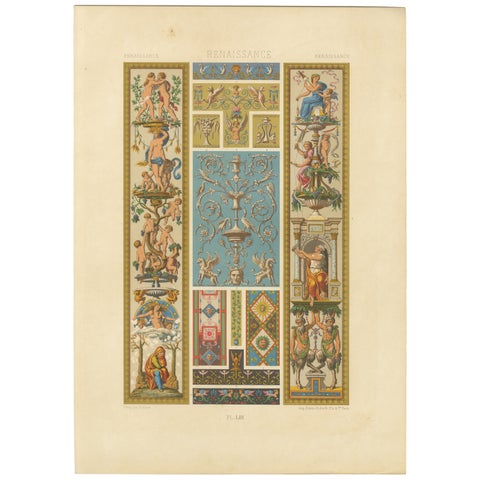
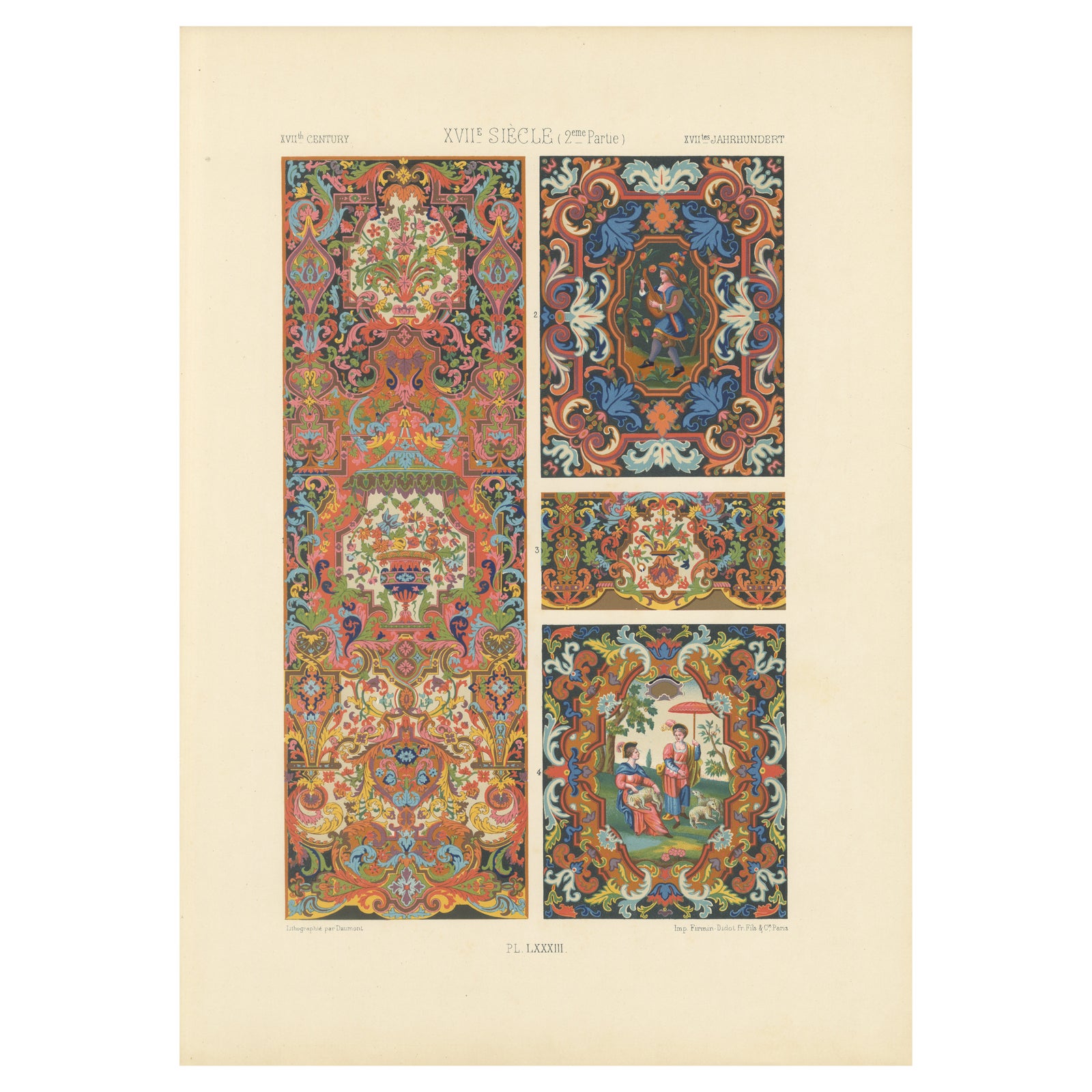
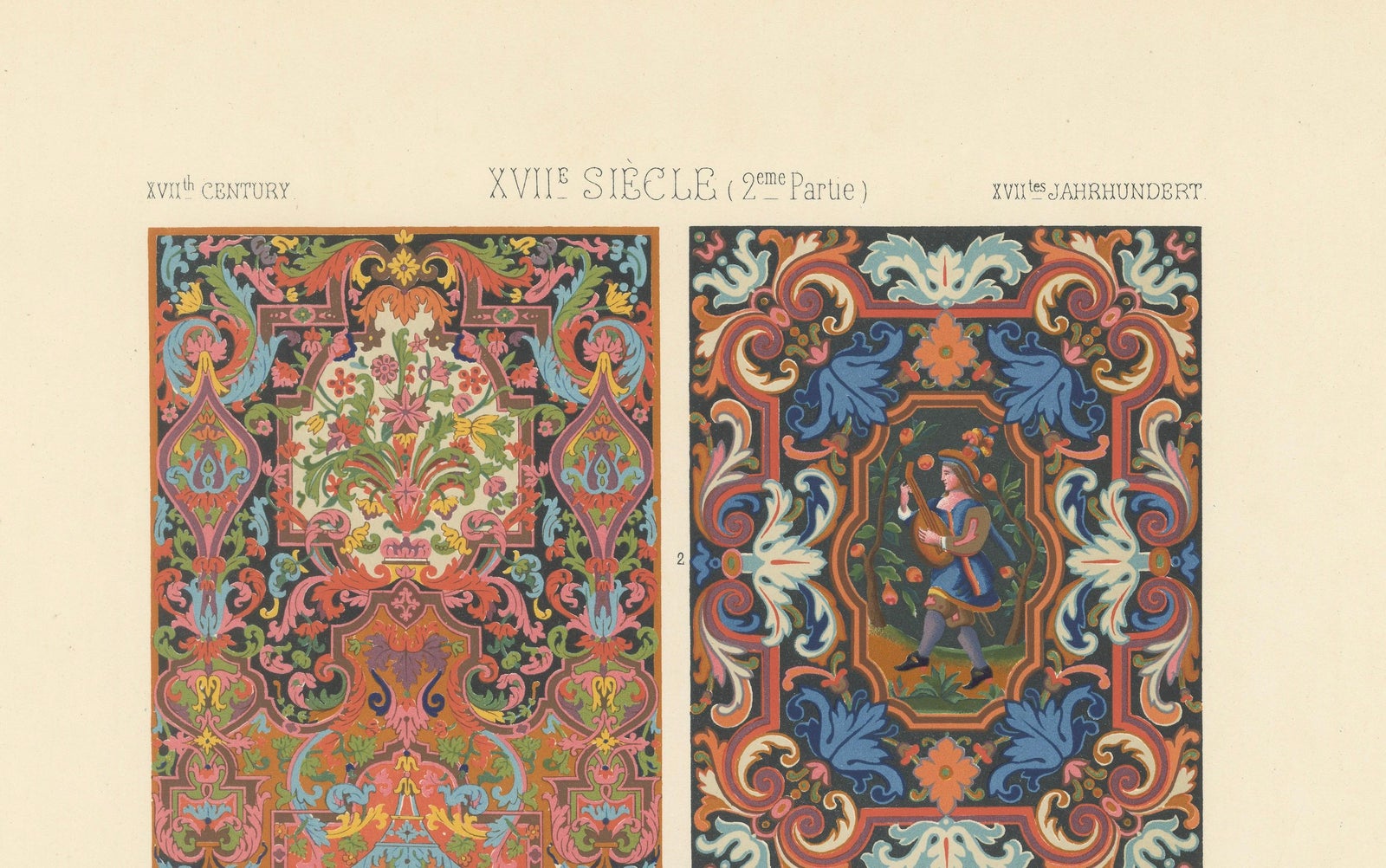
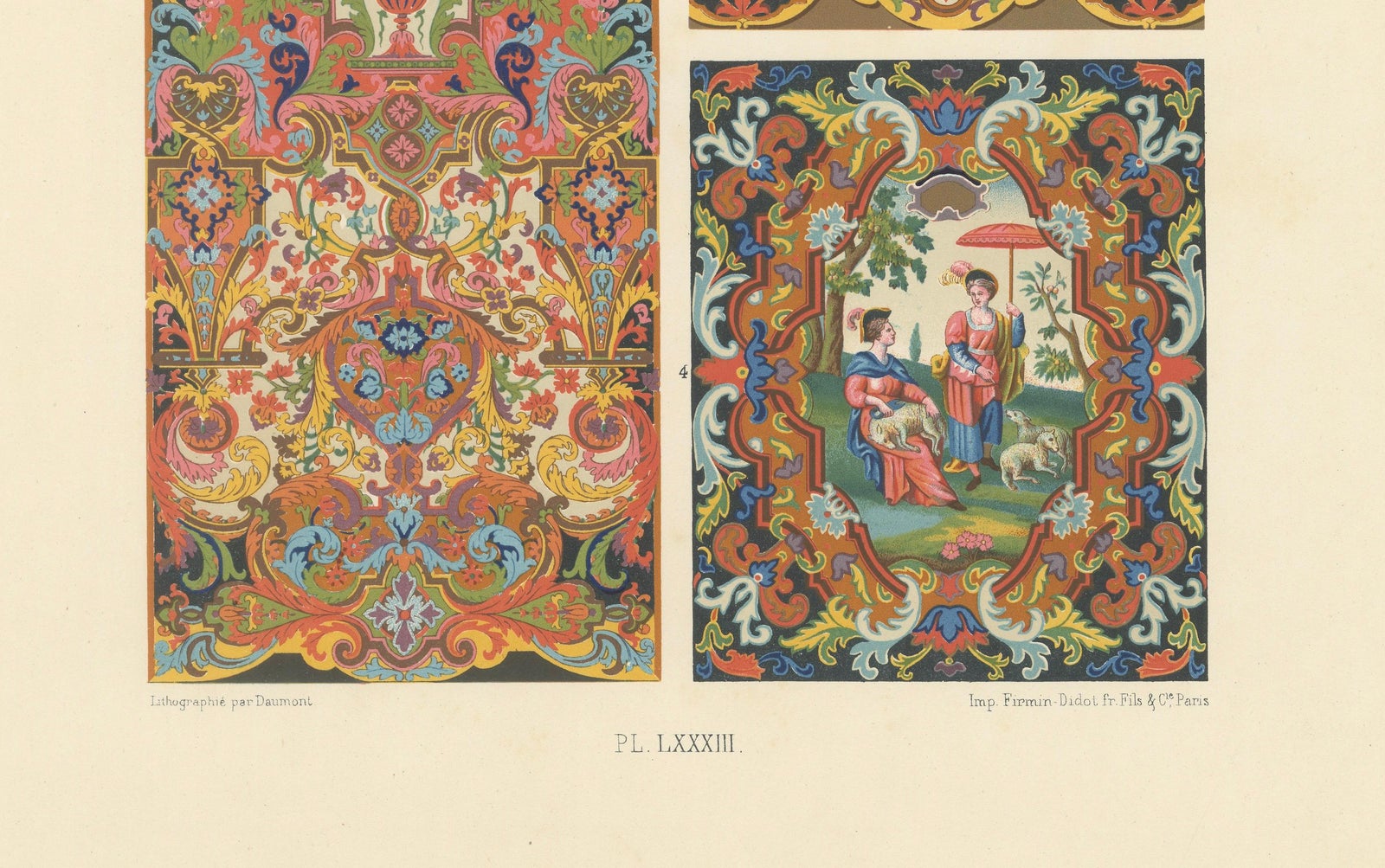
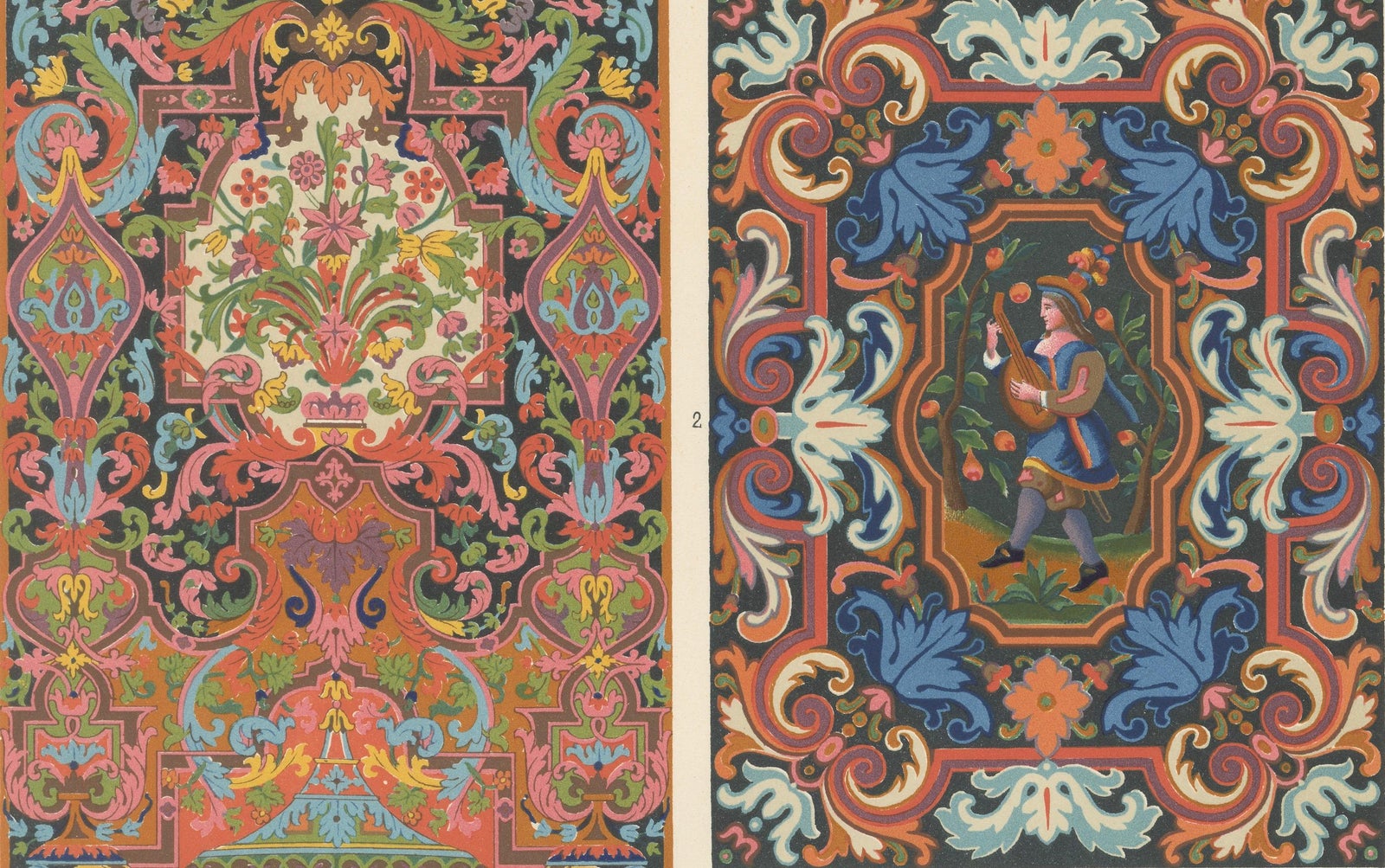
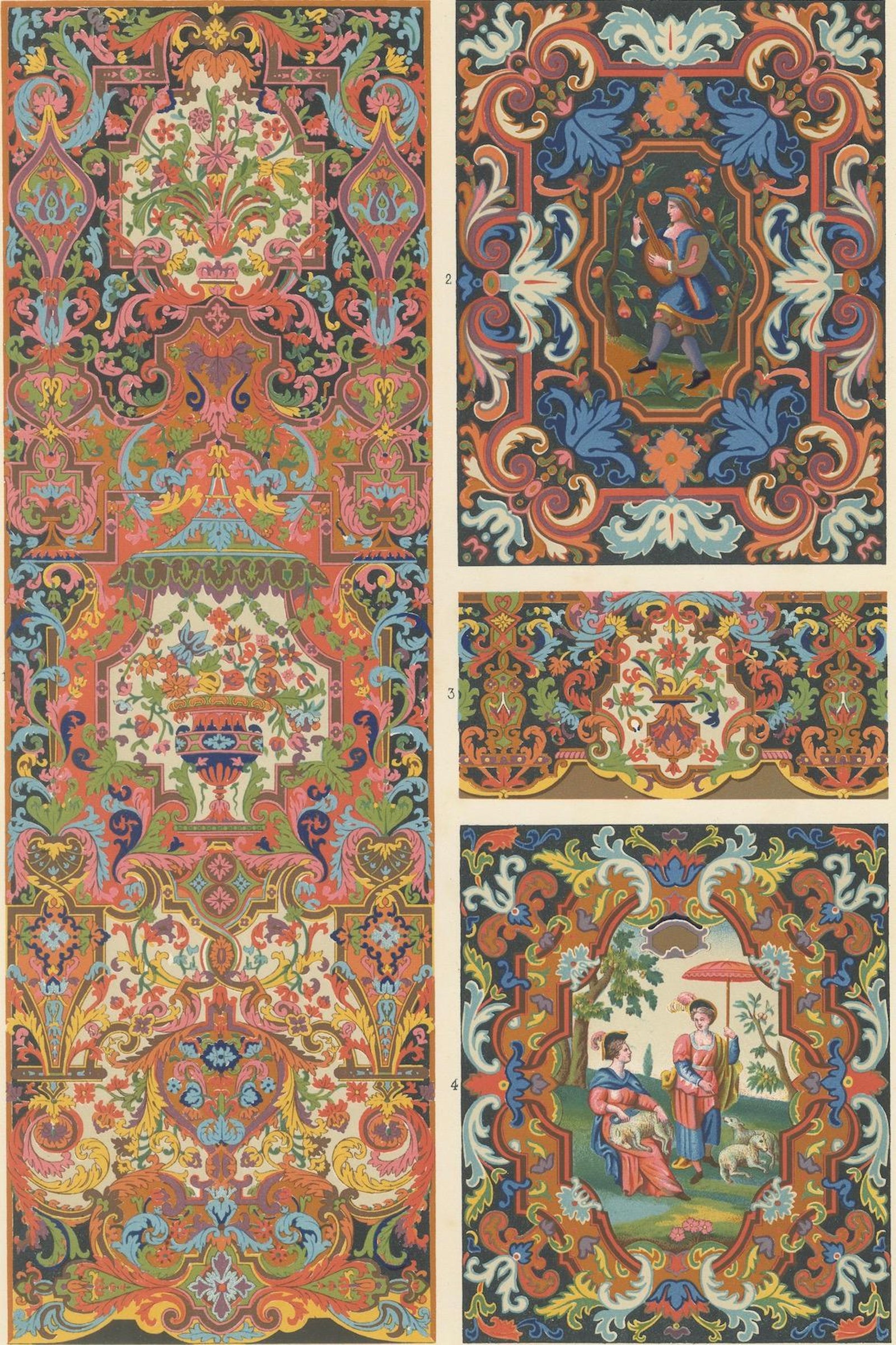
This exuberant chromolithograph, Plate LXXXIII from *L'Ornement Polychrome*, features a vivid selection of 17th-century French decorative panels showcasing the rich visual language of Baroque design. These intricate compositions combine floral arabesques, architectural motifs, and romantic figurative scenes, all executed in a palette of striking reds, blues, golds, and greens. The designs echo the grandeur of palace interiors from the reign of Louis XIV, particularly in painted ceilings and boiserie panels.
On the left, a large vertical composition is filled with opulent Rococo scrolls, ornate vases brimming with flowers, architectural flourishes, and layers of symmetrical embellishments. This type of panel was likely inspired by decorative paintings found in grand salons or state rooms, where such motifs symbolized abundance, refinement, and harmony.
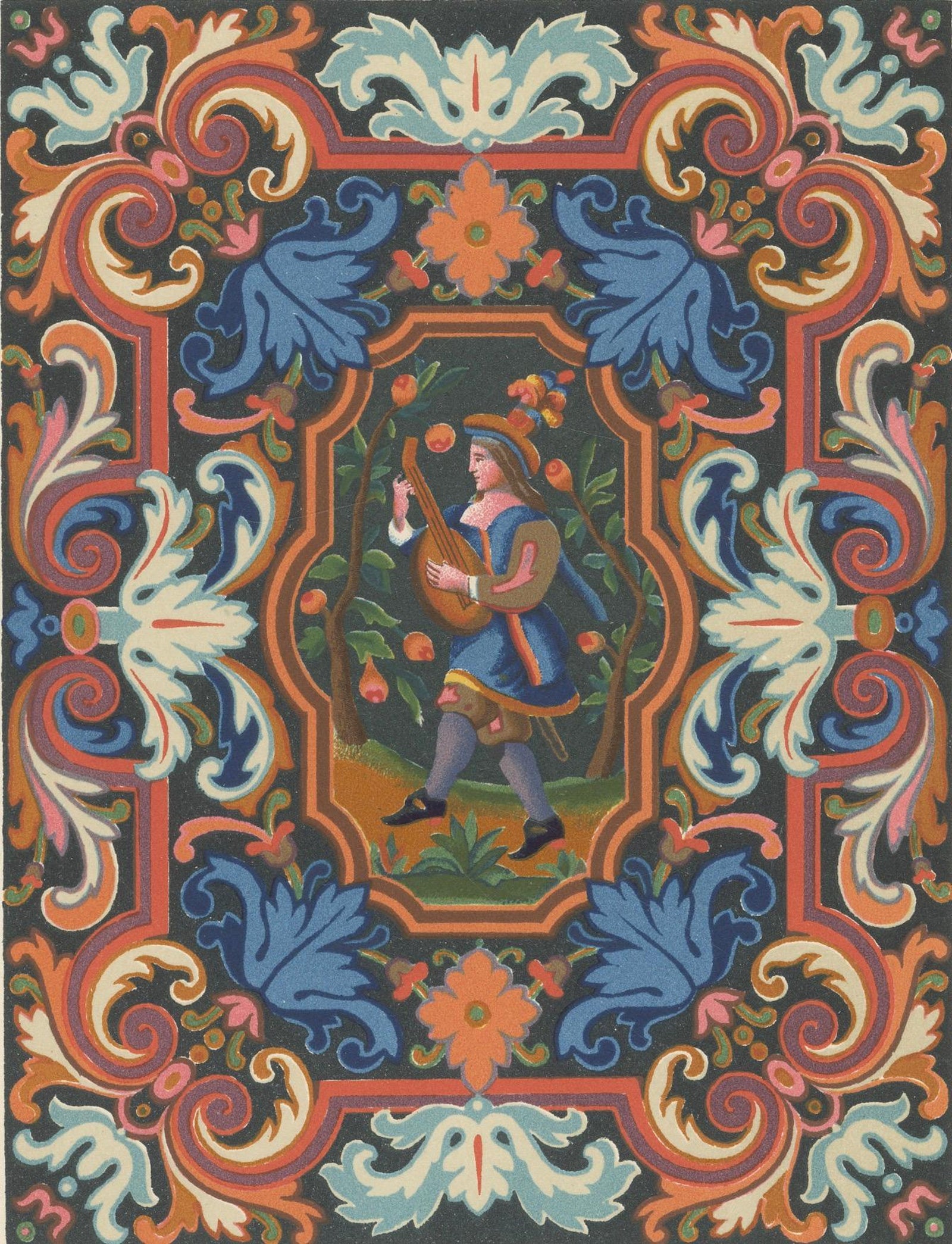
To the right, smaller panels offer a glimpse into the narrative and decorative versatility of the period. The top right panel shows a musician playing a lute, surrounded by scrolling blue and terracotta ornamentation, suggesting a ceiling or furniture inlay. Below it, another rectangular panel presents floral motifs nestled in richly scrolled gold and red frameworks.
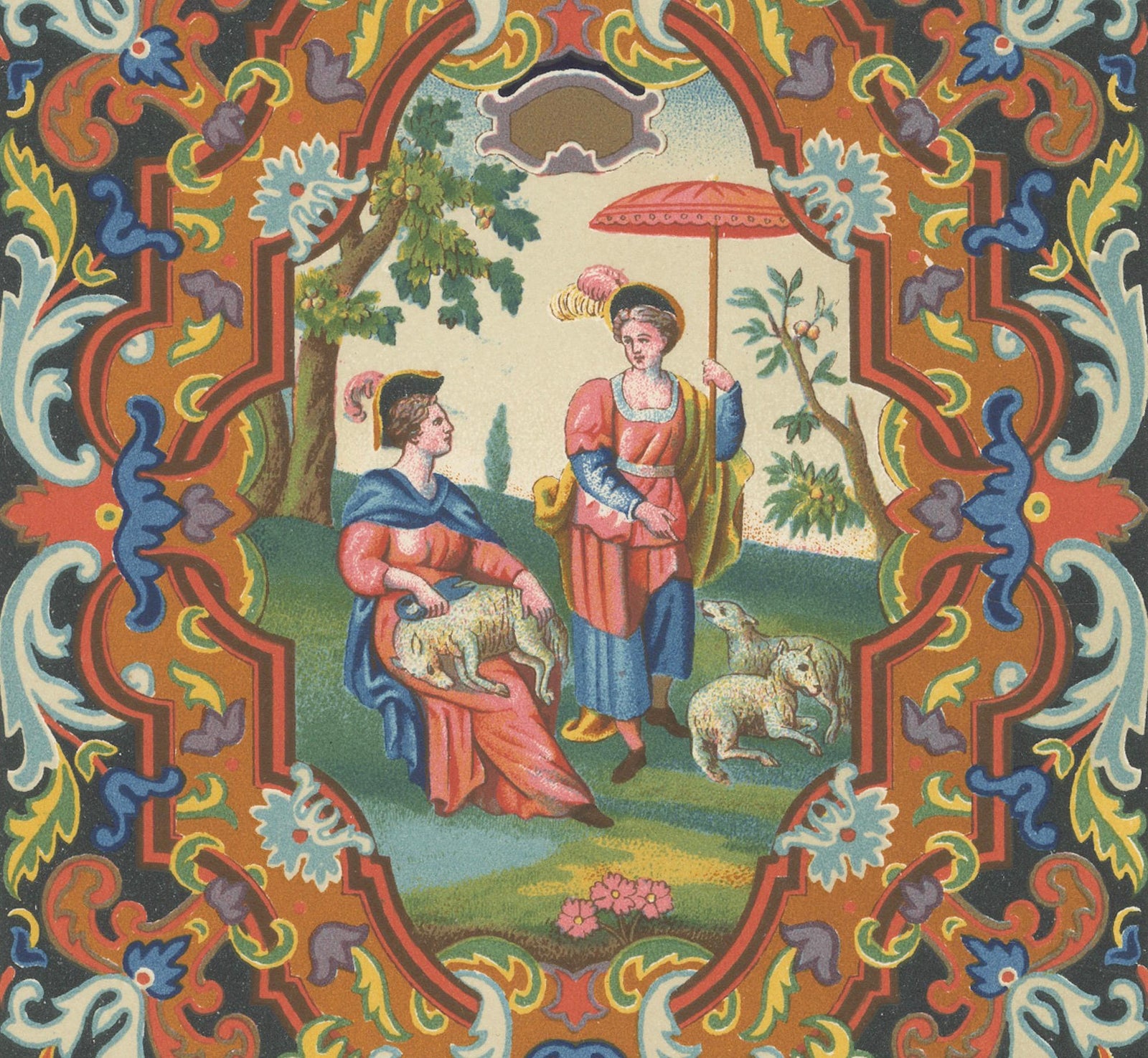
At the bottom right is a charming pastoral vignette: two figures in 17th-century attire converse under a parasol in a bucolic setting, surrounded by a richly ornamented frame. This scene likely references Arcadian themes popular in courtly decoration, blending classical serenity with idealized nature.
Lithographed by Daumont and printed by Firmin-Didot in Paris around 1869, this work was part of Auguste Racinet’s monumental survey of global ornament. The publication became a vital sourcebook for artists, decorators, and architects in the 19th century, particularly those involved in historicist and academic styles.
This print is a valuable reference for lovers of Baroque design and those seeking high-detail inspiration for classical interiors or decorative arts.
Condition: Excellent condition. Rich, unfaded colors and clean image area. Very light marginal toning consistent with age. No tears, repairs, or foxing. Strong impression on high-quality paper.
Framing tips: A gold or ebonized frame paired with a deep burgundy or ivory mat will highlight the vivid color palette. This piece is especially suited to classical, maximalist, or eclectic settings.
Technique: Chromolithograph
Maker: Daumont after Racinet, Paris, c.1869