Close-ups
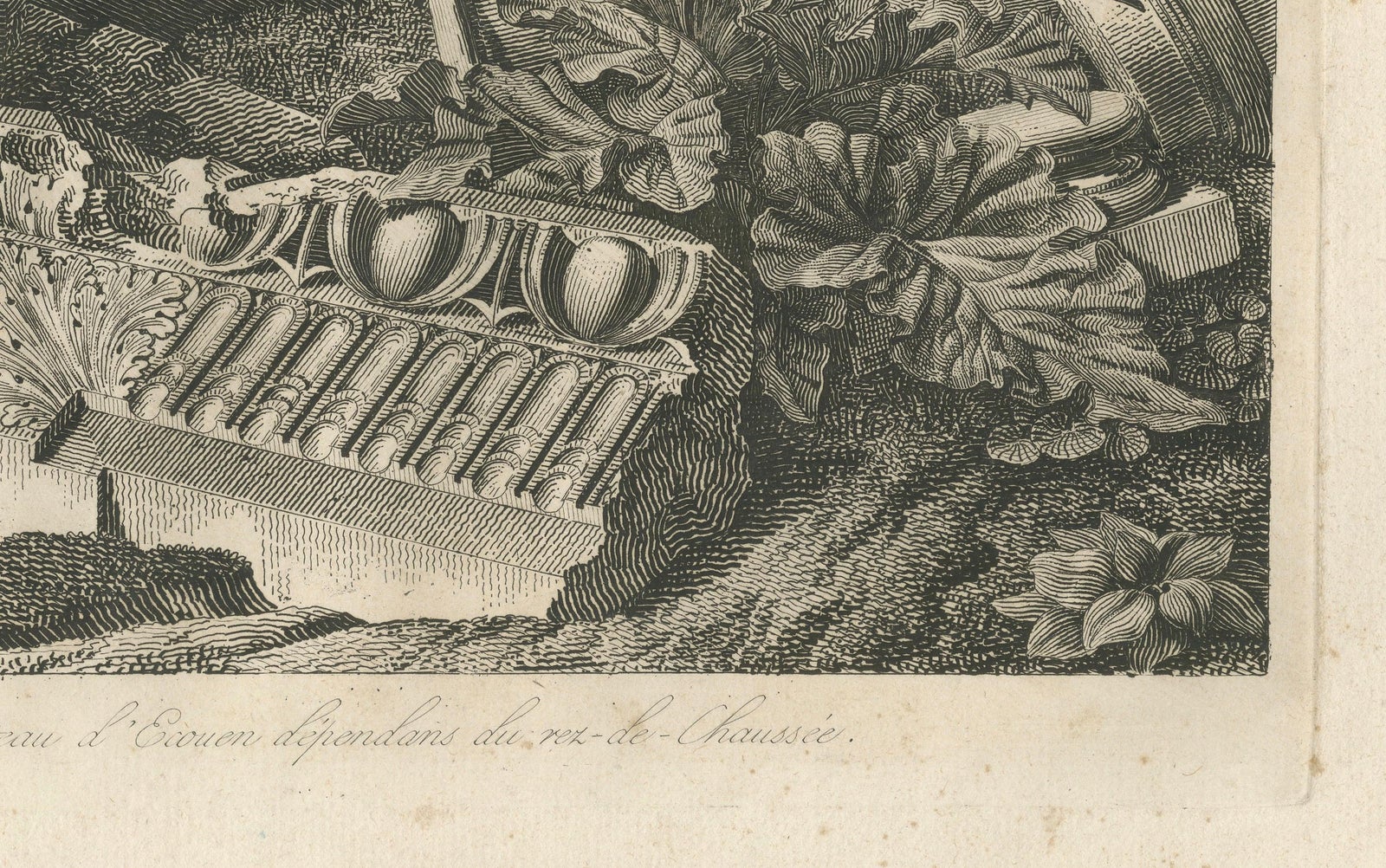
Framed and on the wall
Frame and rooms are illustrations of how the print could look, drawn to its real size; it is sold unframed unless the description says otherwise.
Castles & palaces
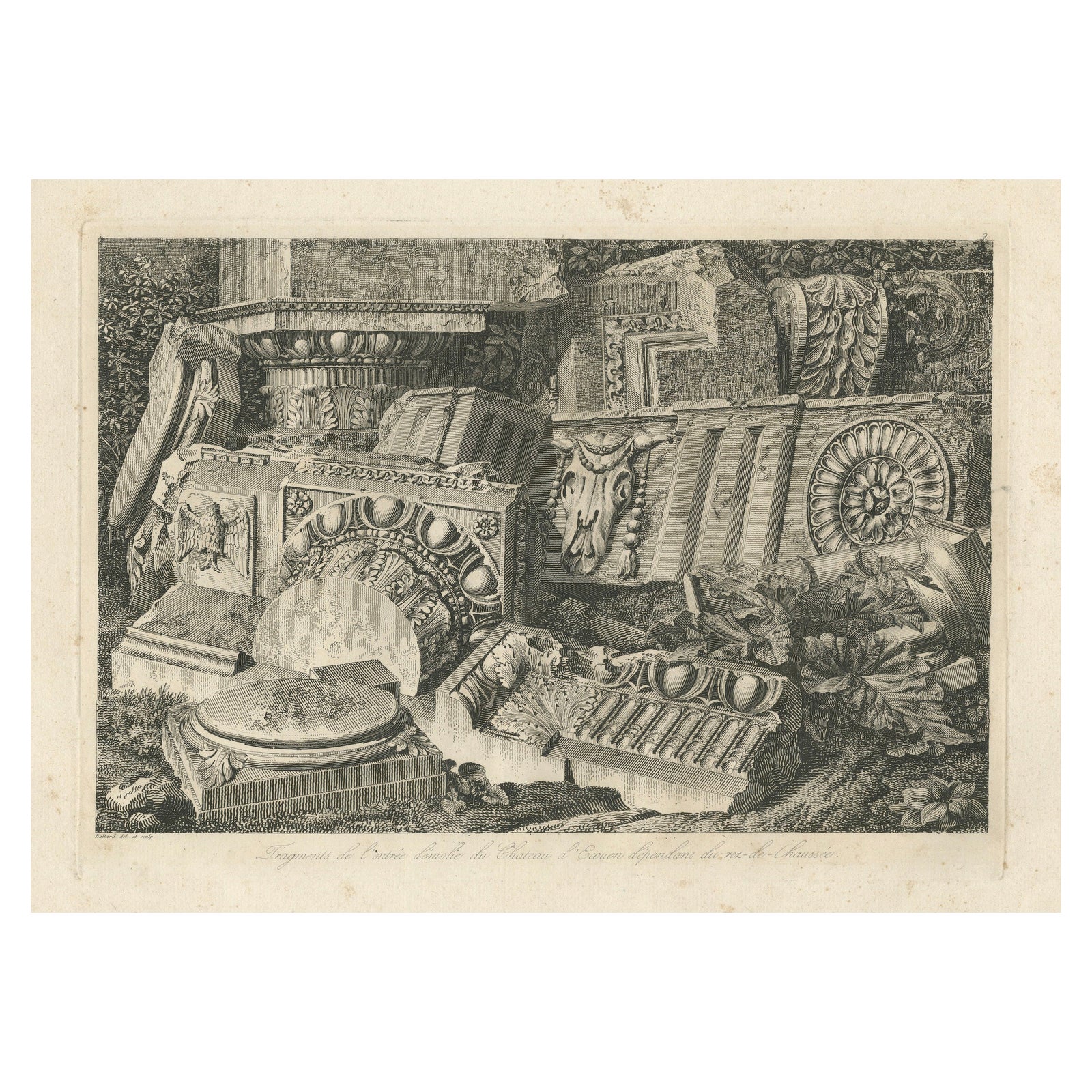
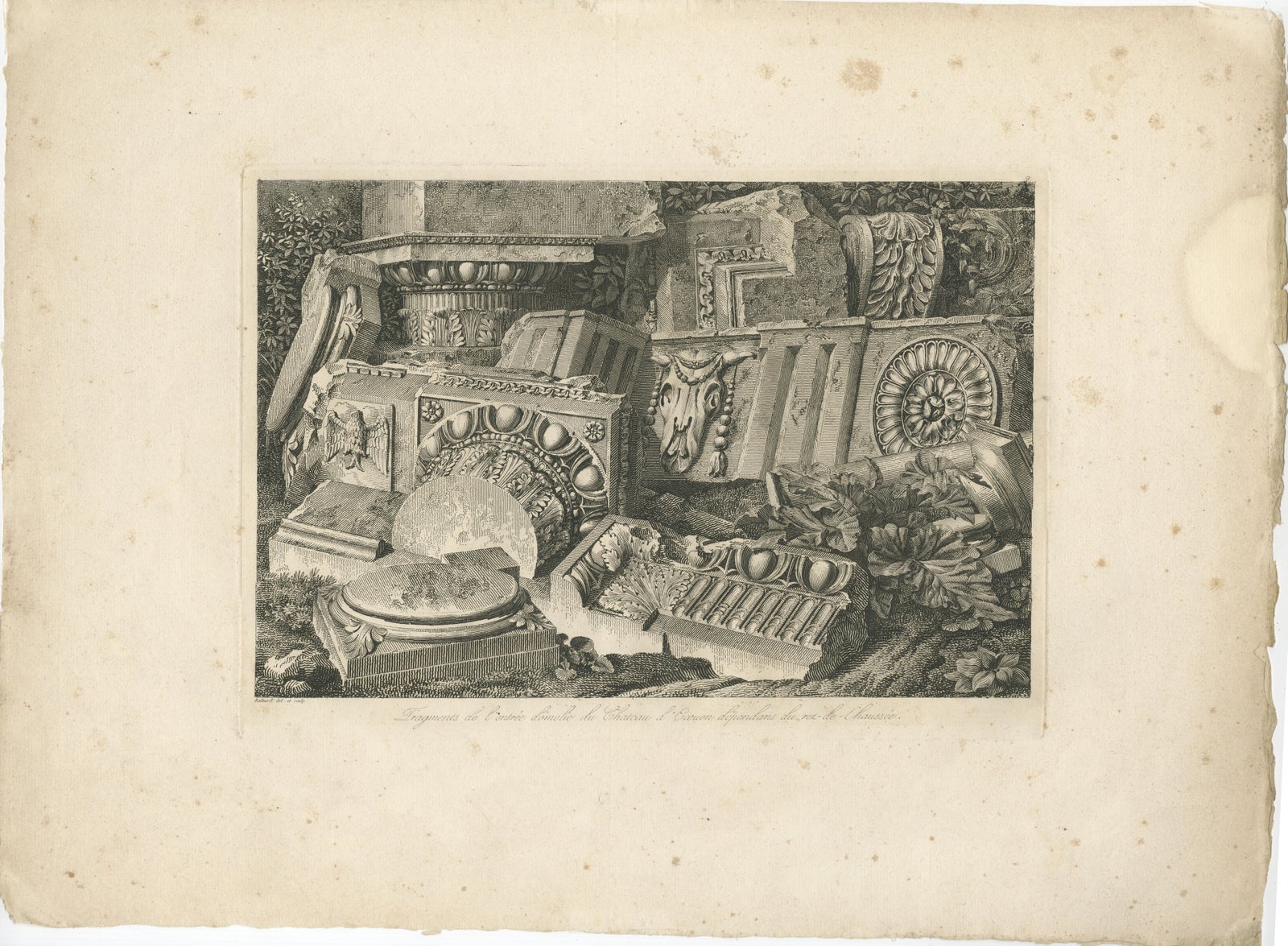
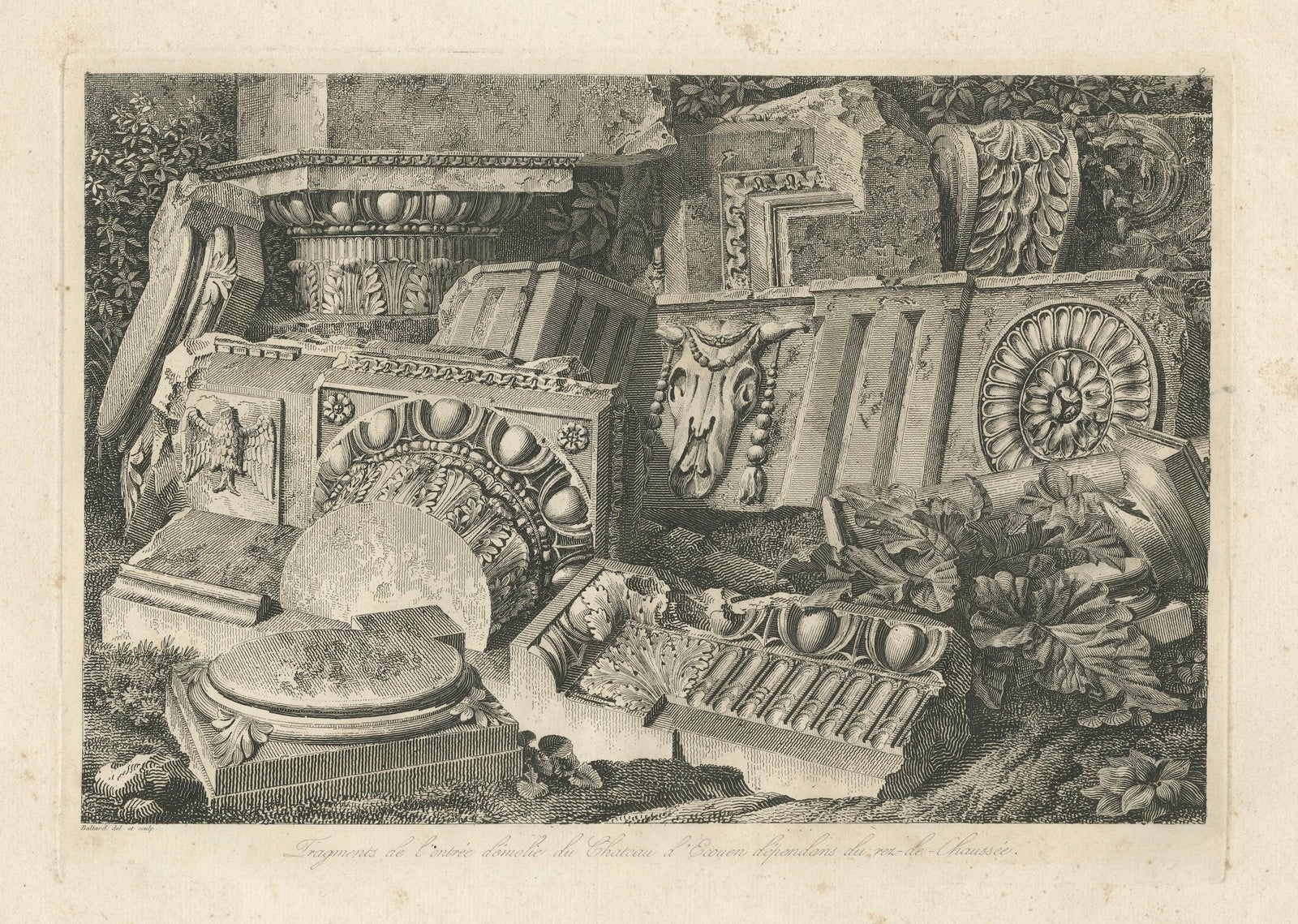
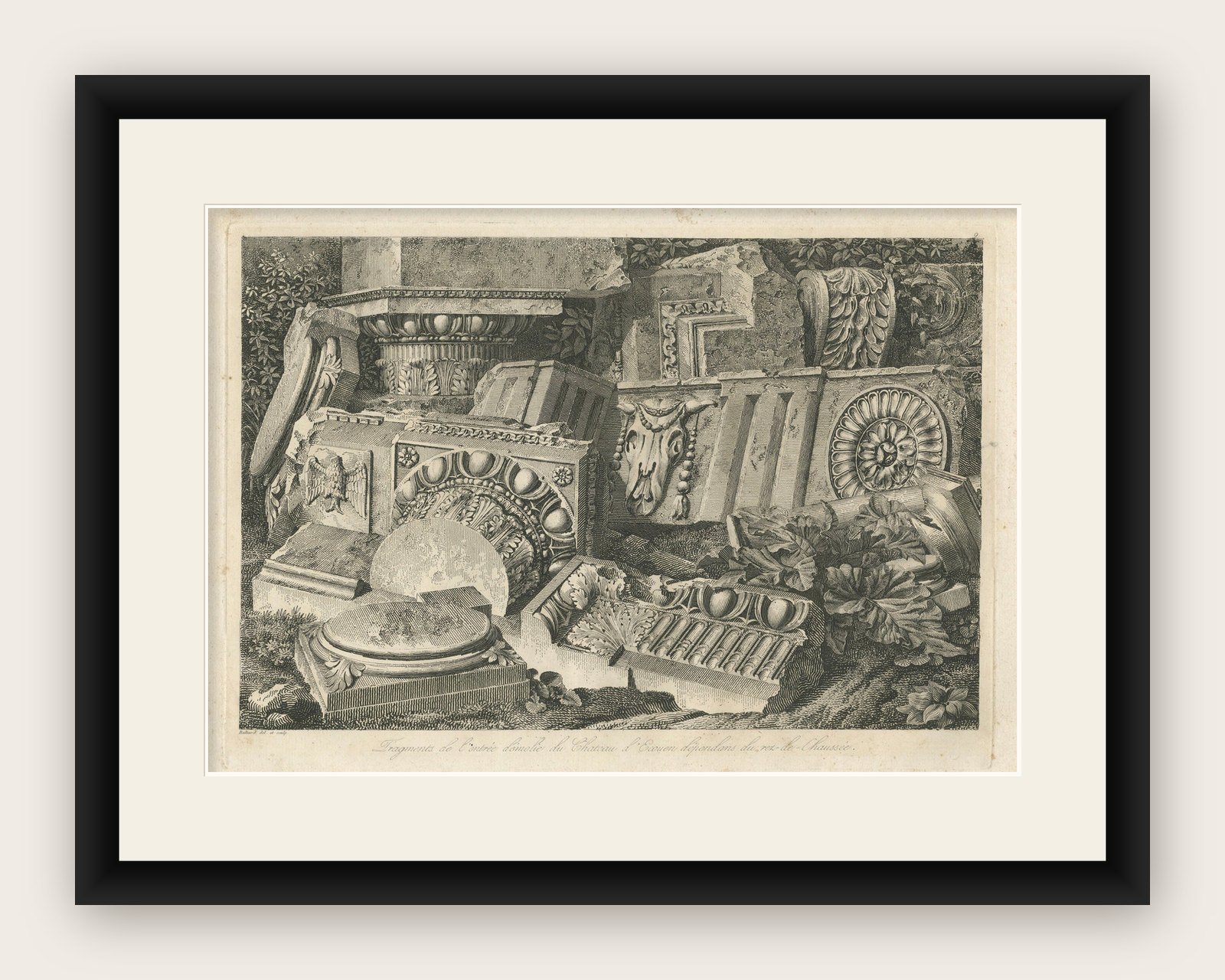
Architectural Fragments of Écouen Castle, Engraving by Baltard, c.1800
£295
$395 · €350
Original print, not a reproduction
Ships worldwide from the Netherlands, flat, insured and tracked. 14-day returns. To buy, use Ask a question (info@antiquearchitectureprints.com) and we will reserve it for you.
- Date
- 1800
- Sheet size
- 16.9 × 22.8 in (43 × 58 cm)
- Condition
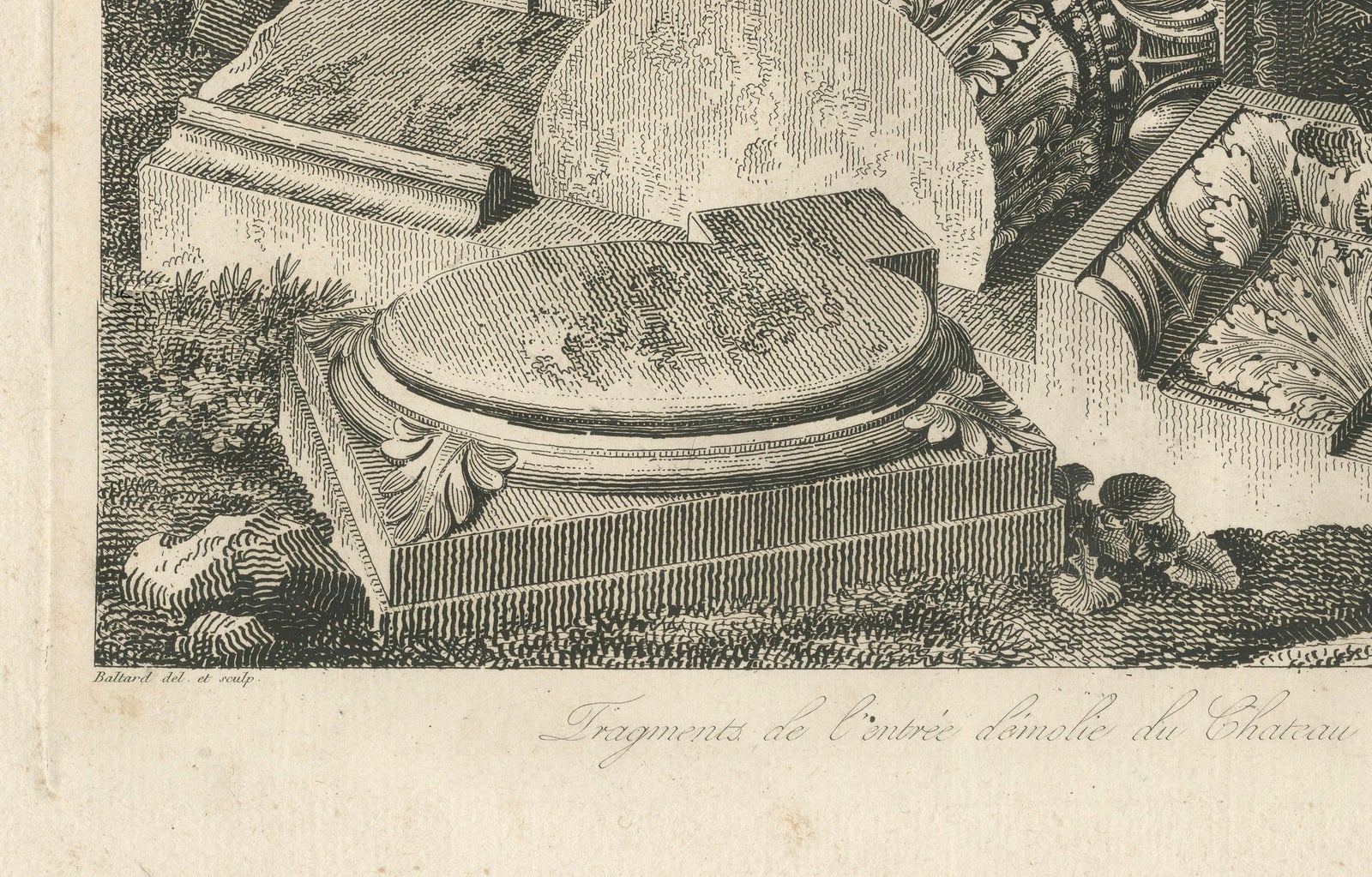
- Fair. Good impression with a clearly defined plate mark and wide margins. Some age-related foxing and mild toning around the edges, with faint water stain at lower right corner. The image area remains clean and finely detailed.
- Collection
- Castles & palaces
- Era
- 1790 to 1849, Neoclassical and Romantic
- Stock no.
- f_47340642
Architectural Fragments of Écouen Castle, Engraving by Louis-Pierre Baltard, c.1800
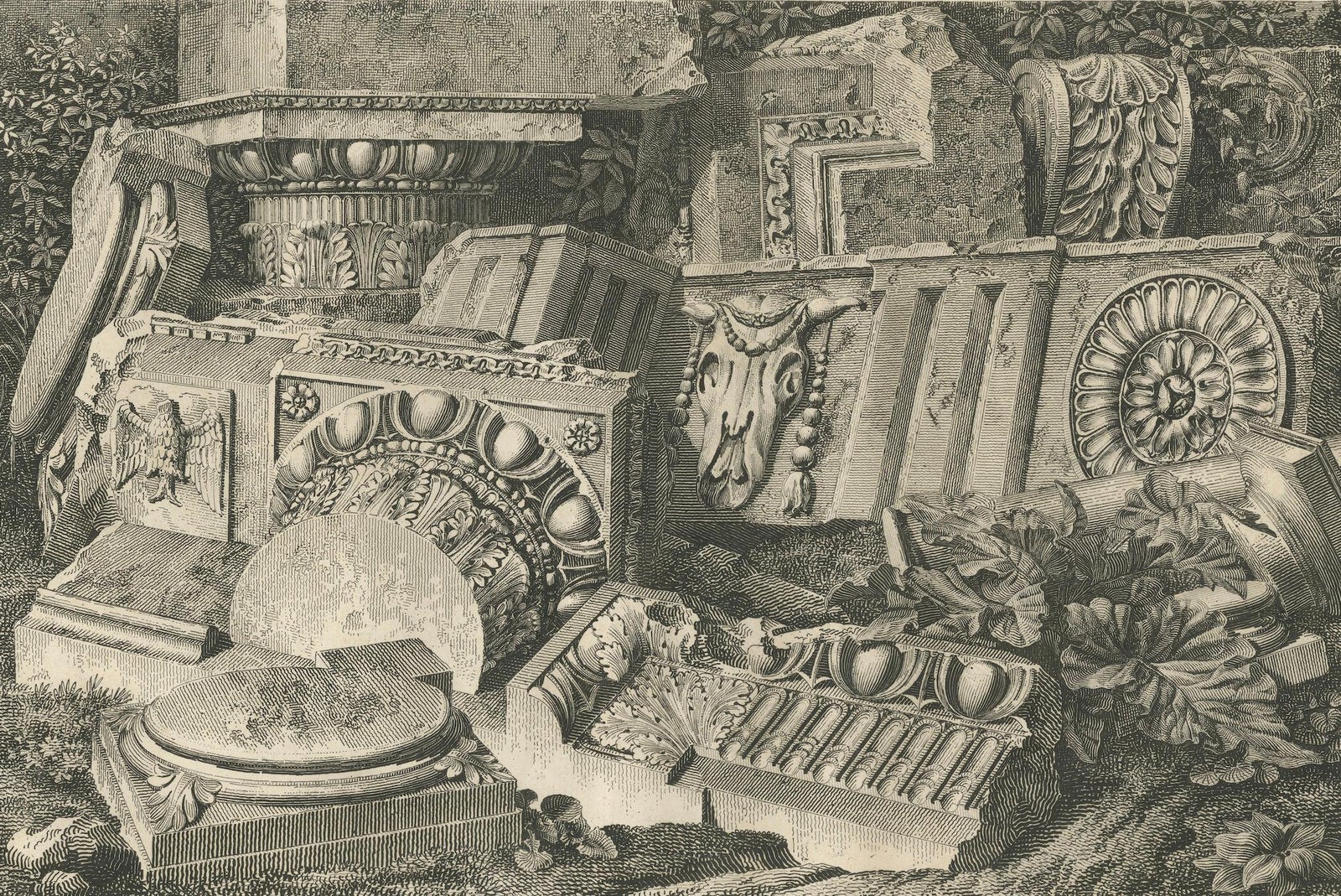
A masterful architectural engraving by Louis-Pierre Baltard (1764 to 1846), titled Fragments de l’entrée démolie du Château d’Écouen dépendants du rez-de-chaussée, published in Paris around 1800. This fine print presents a striking still life of classical architectural fragments, remnants of the entrance to the Château d’Écouen, rendered with extraordinary precision and sensitivity to texture.
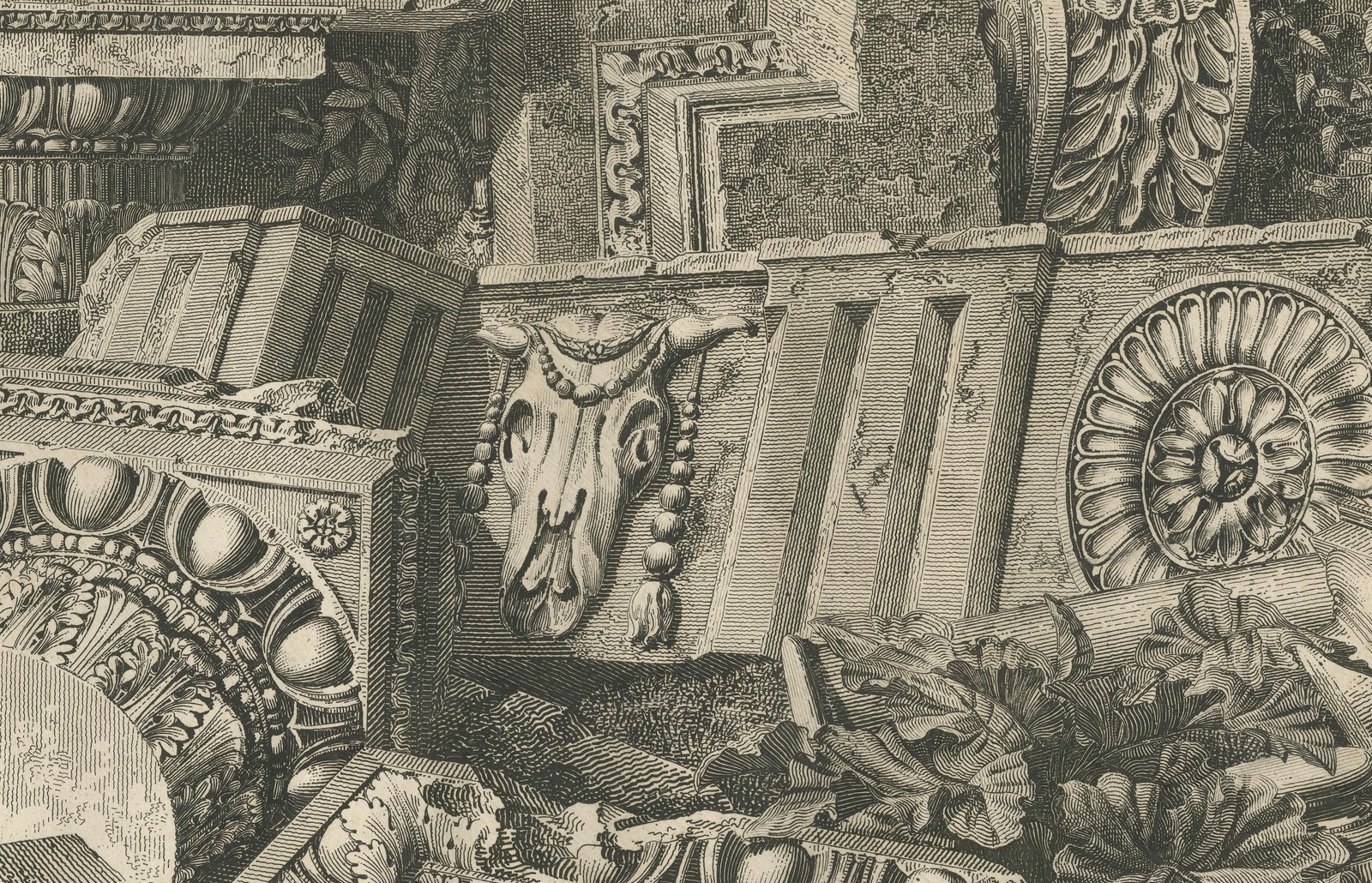
Baltard, both architect and engraver, here combines archaeological accuracy with artistic vision. The composition features a collection of broken capitals, friezes, and decorative elements, among them a sculpted ox head, acanthus leaves, rosettes, and egg-and-dart motifs, all arranged as though unearthed relics of a vanished grandeur. The effect is both melancholy and reverent, recalling the neoclassical fascination with ruins and the passage of time.
The Château d’Écouen, located north of Paris, was a Renaissance masterpiece built for Anne de Montmorency in the 16th century. By Baltard’s time, the château had suffered neglect and partial destruction, which he commemorated through this image of fallen ornaments and decayed splendor. His engraving serves as both documentation and elegy, capturing the decorative vocabulary of the French Renaissance, combining motifs derived from antiquity with the exuberant detail characteristic of the era.
This engraving is a fine example of Baltard’s technical mastery in line work and tonal variation. His use of deep shadow and intricate cross-hatching creates an illusion of tangible depth, evoking the material richness of carved stone. Prints like this were part of a broader 18th–19th-century tradition of documenting the architectural heritage of France as a means of preserving its artistic legacy during periods of change and reconstruction.
Condition report:
Good impression with a clearly defined plate mark and wide margins. Some age-related foxing and mild toning around the edges, with faint water stain at lower right corner. The image area remains clean and finely detailed.
Framing tips:
This engraving pairs beautifully with a warm ivory or parchment-colored mat. A gilt or dark wood neoclassical frame will highlight the intricate linework and classical motifs, suitable for both private collections and refined interior displays.
Technique: Engraving
Maker: Louis-Pierre Baltard, Paris, circa 1800