Close-ups
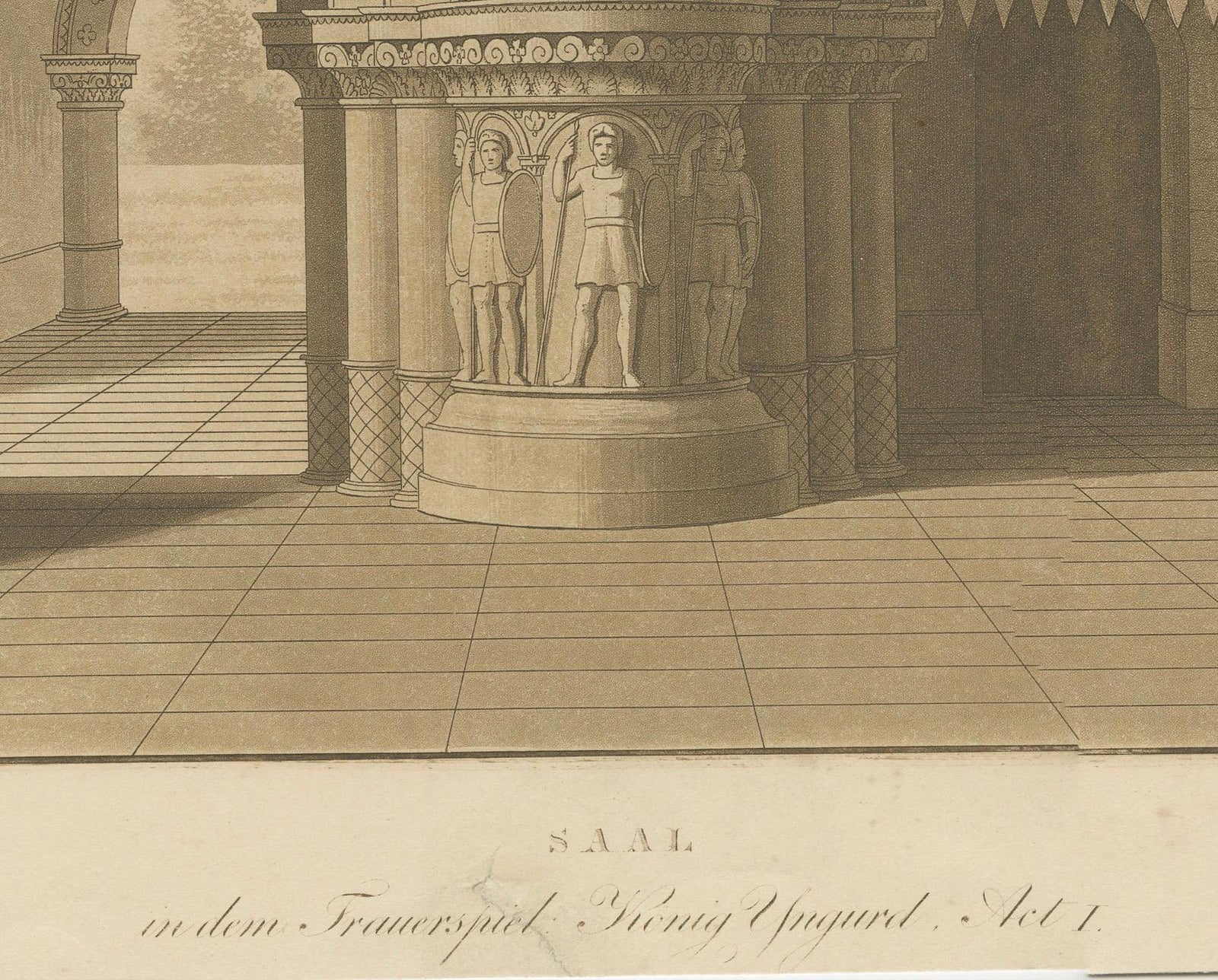
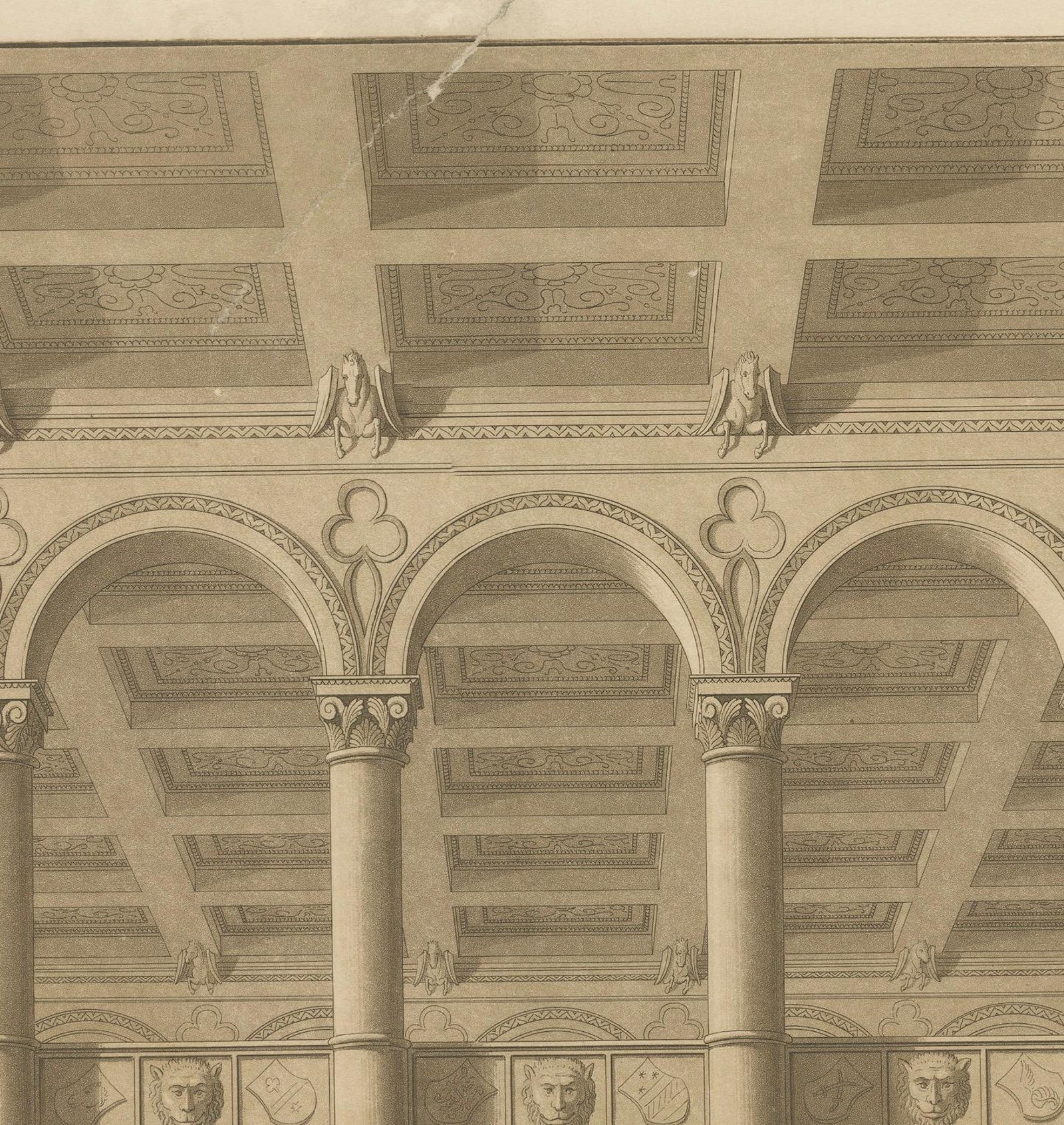
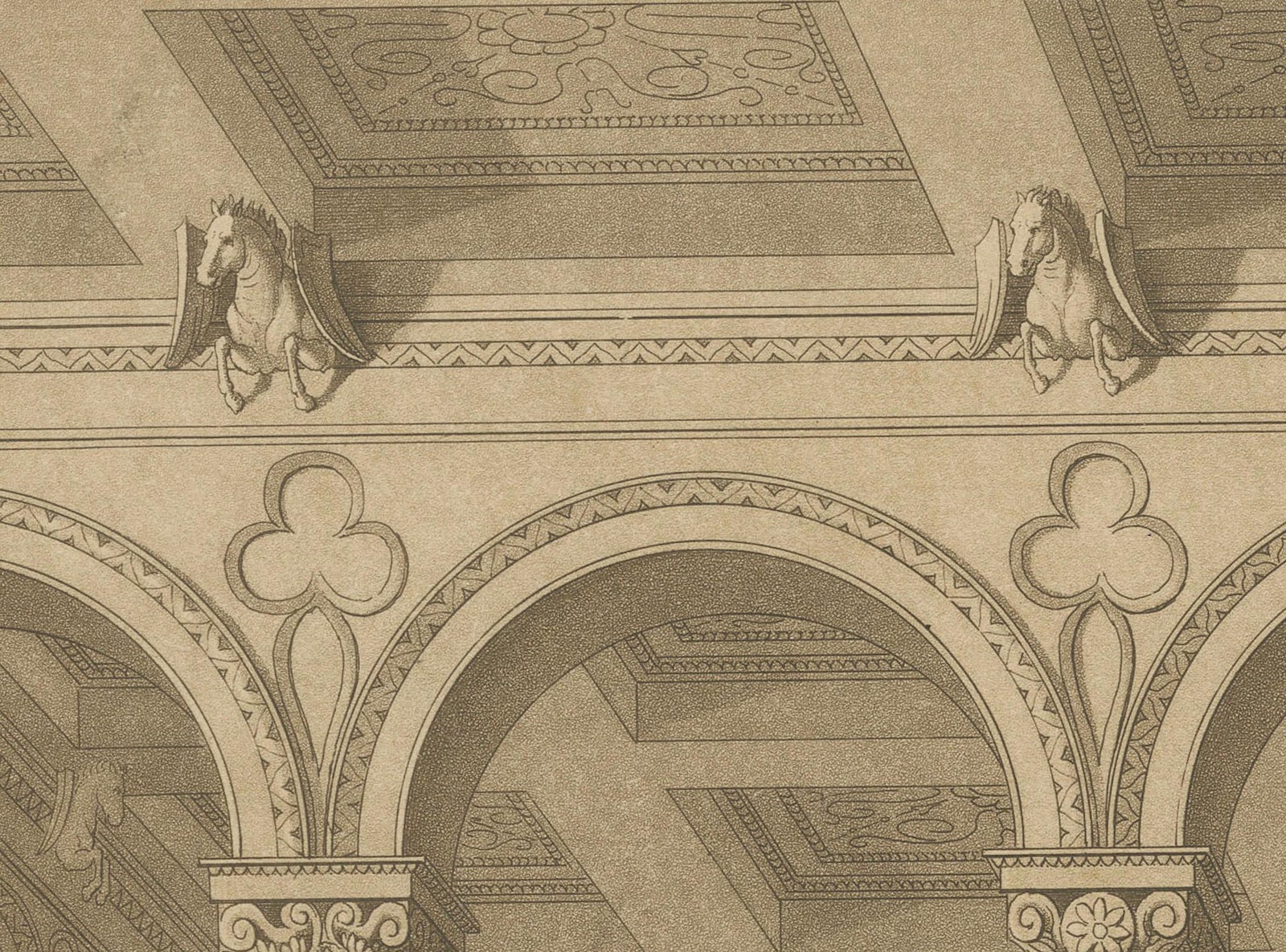
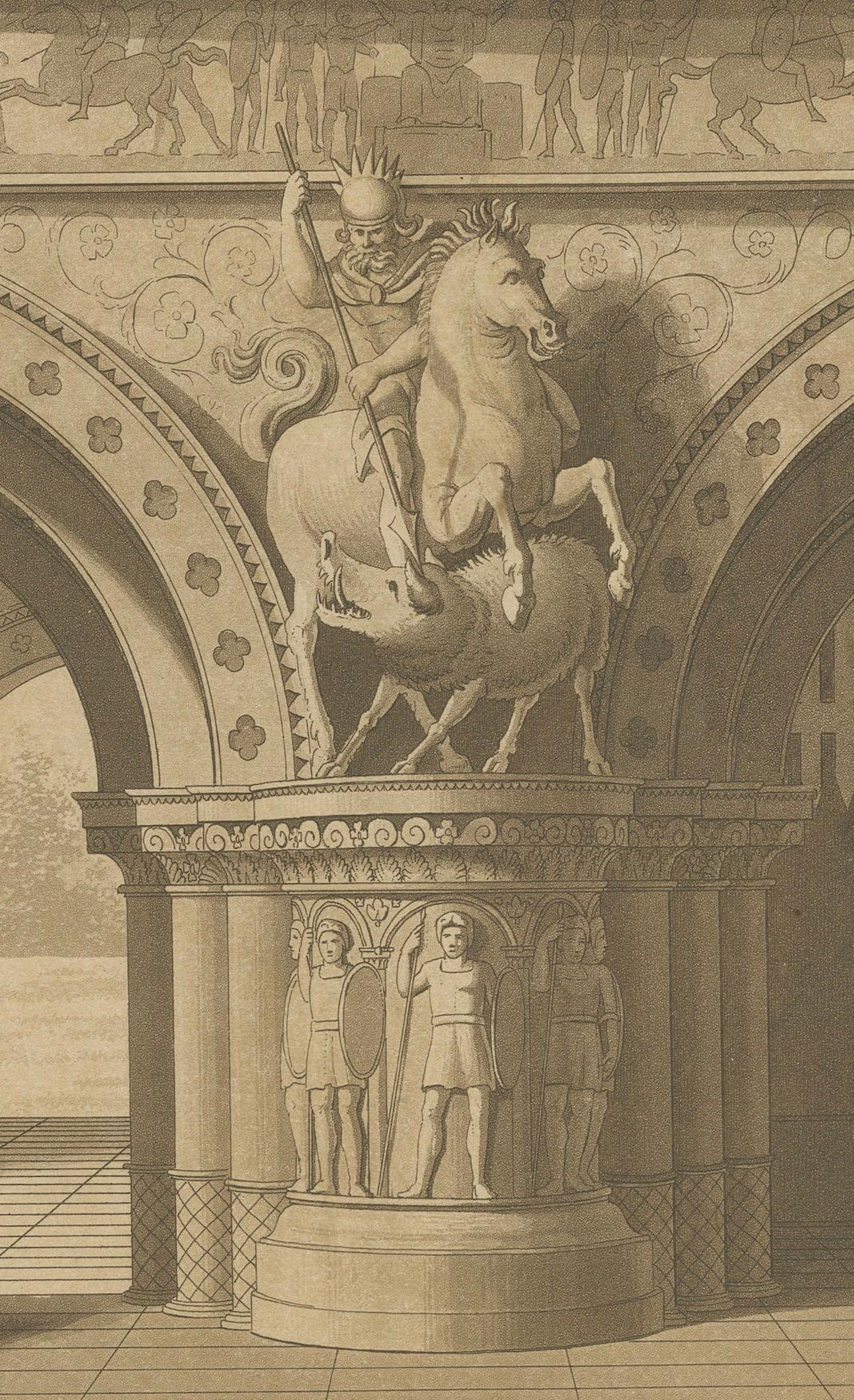
Framed and on the wall
Frame and rooms are illustrations of how the print could look, drawn to its real size; it is sold unframed unless the description says otherwise.
Rooms & furniture
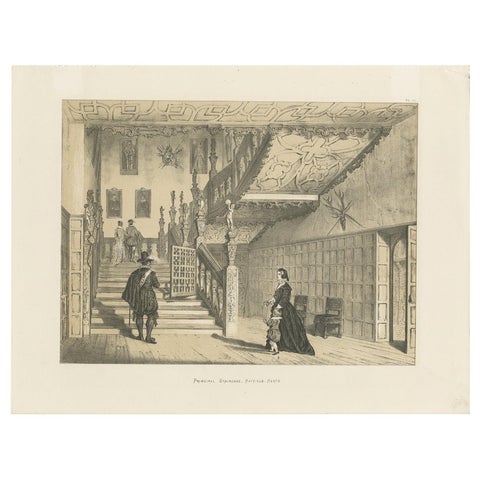
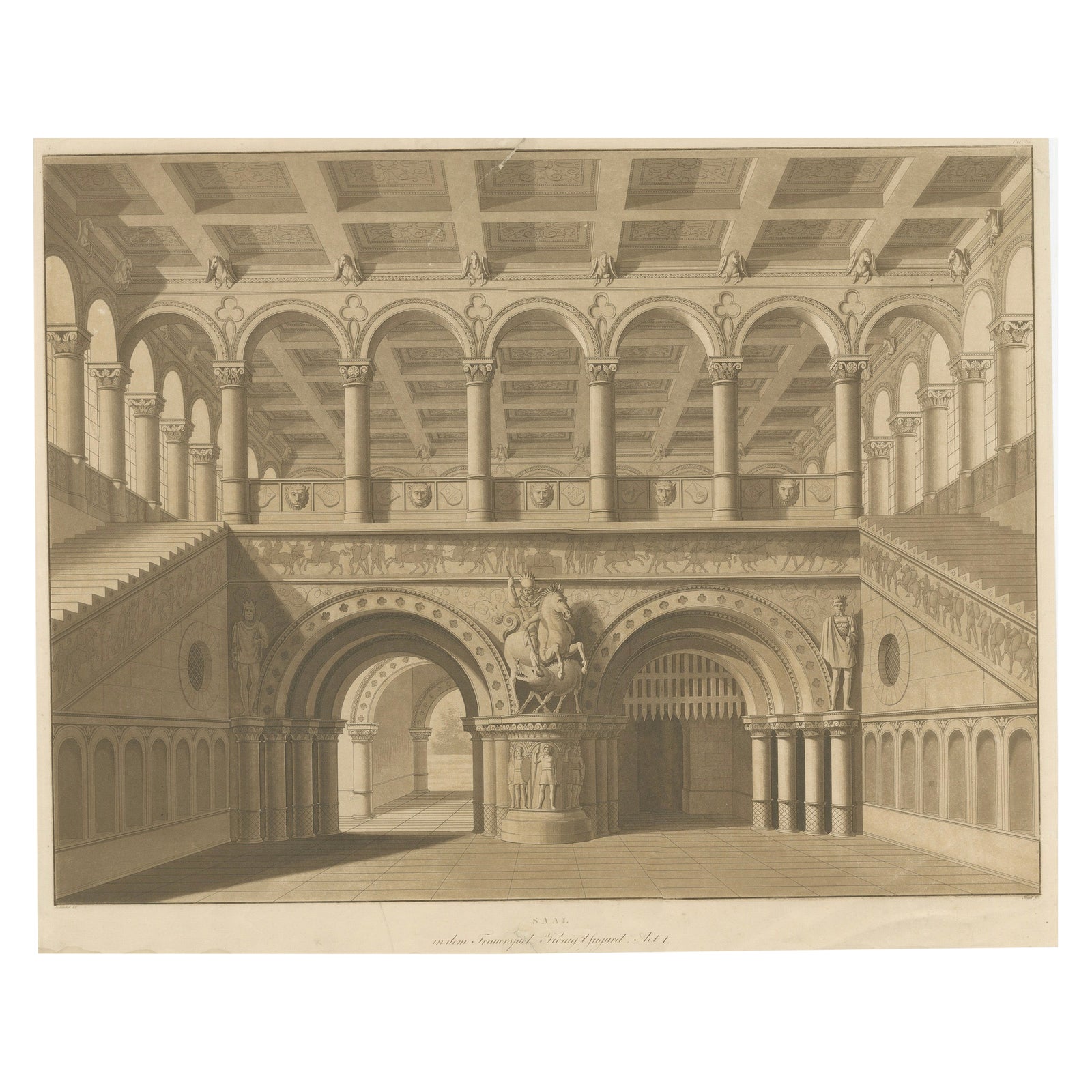
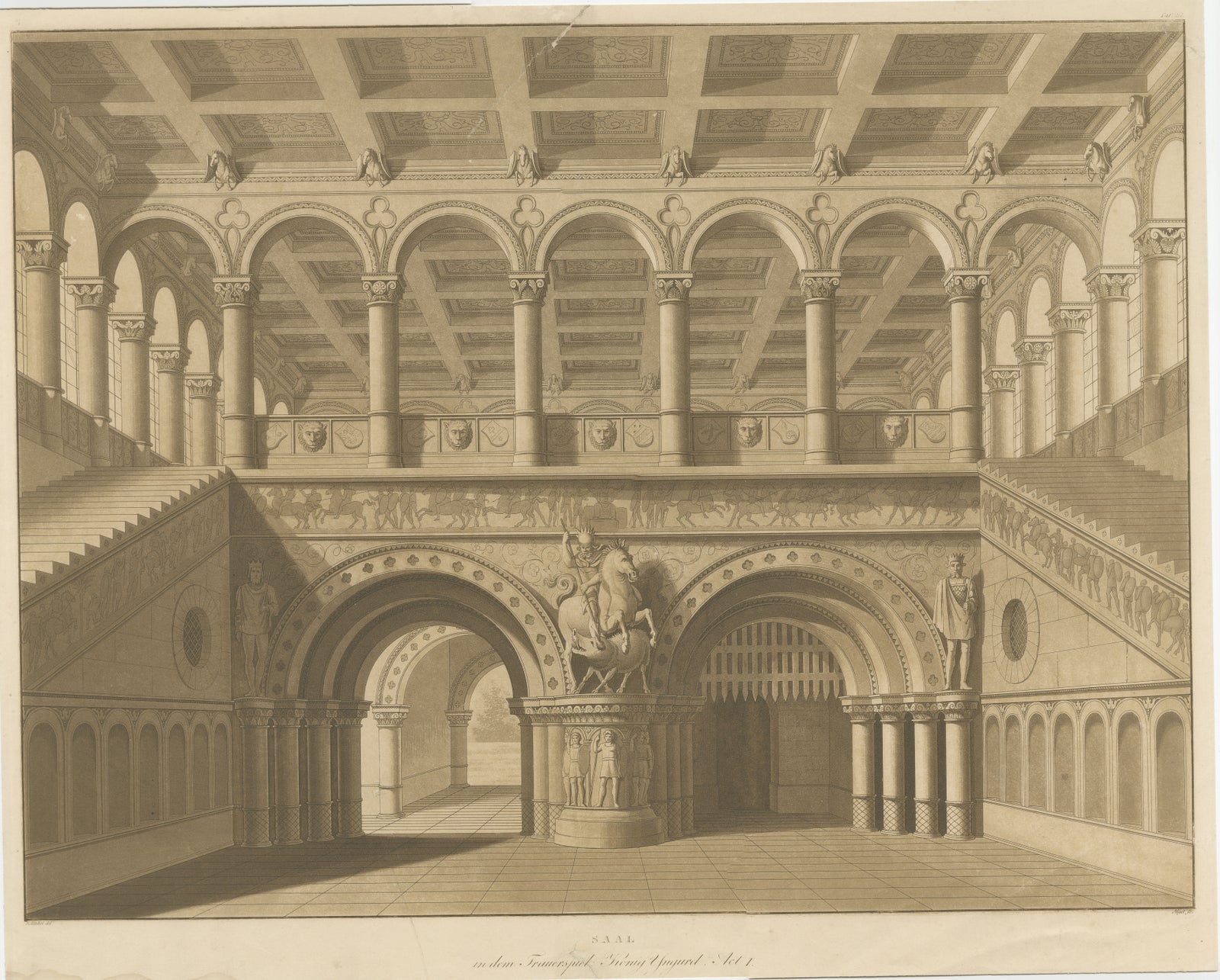
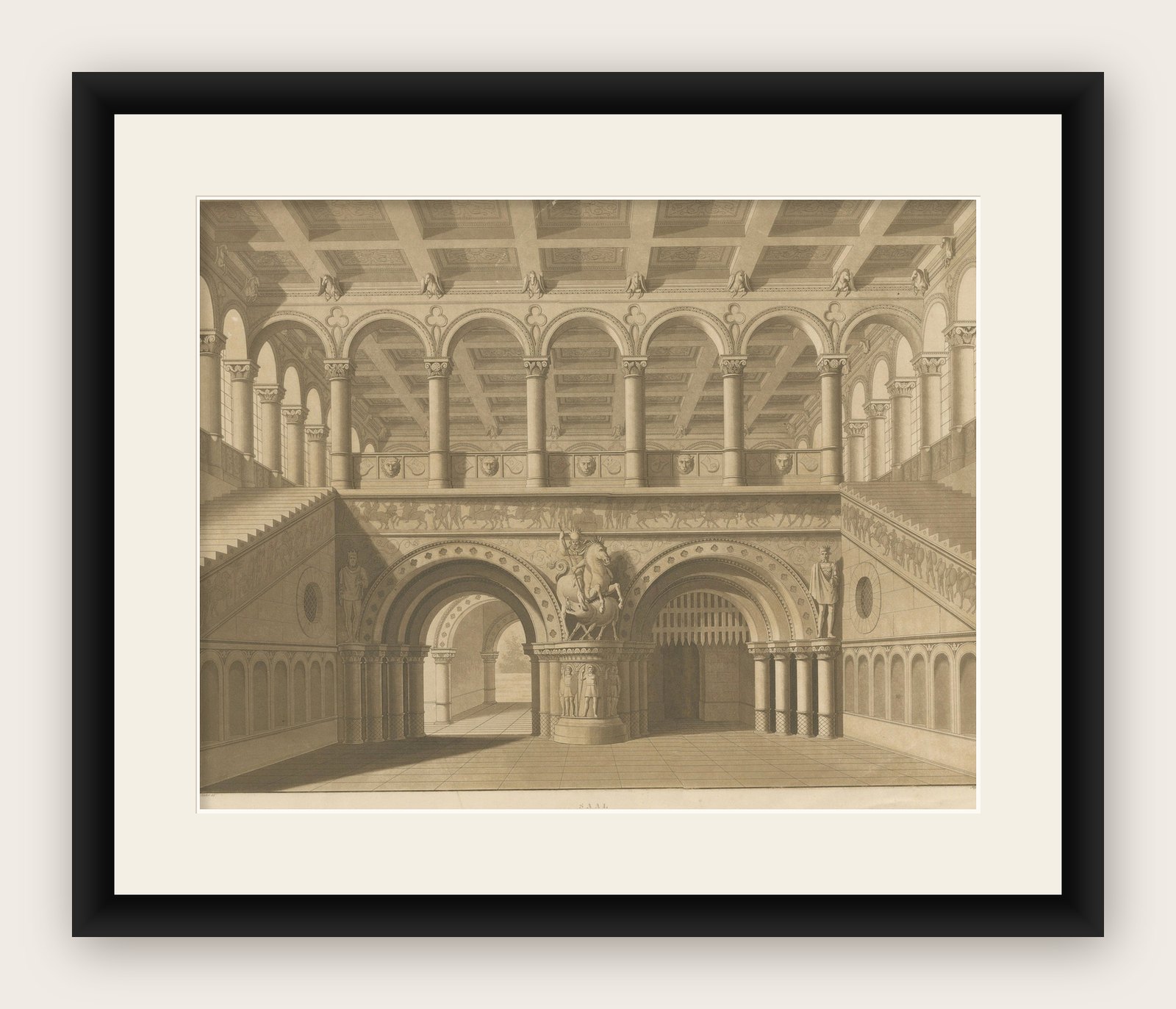
Architectural Elegance: Schinkel's Stairhall, Circa 1874
$615
€550 · £465
Original print, not a reproduction
Ships worldwide from the Netherlands, flat, insured and tracked. 14-day returns. To buy, use Ask a question (info@antiquearchitectureprints.com) and we will reserve it for you.
- Date
- 1874
- Sheet size
- 15.7 × 19.7 in (40 × 50 cm)
- Condition
- Fair. Repaired: Two small tears and one larger (middle top) have been restored on the reverse. Fair to good, with one disturbing tear visible in the top. Light damp stain at the left bottow, outside the image. A few light wrinkles due to handling. The image itself sharp.
- Collection
- Rooms & furniture
- Era
- 1850 and after, The age of revivals
- Stock no.
- f_37837482
The print titled "Saal in dem Trauerspiel Konig Yngard Act 1" is an architectural rendering from the first act of a tragic play, possibly fictional, involving a character named King Yngard. Created by the esteemed Karl Friedrich Schinkel, who was an architect and painter, this work likely exemplifies Schinkel's neoclassical influence and romantic sensibilities within a theatrical context. Schinkel was known for his stage designs, which were celebrated for their dramatic expression and detailed craftsmanship.
Friedrich Jügel, the draftsman, contributed with the technique of aquatint and etching, which are forms of intaglio printmaking that produce a tonal effect and were popular during this period for their ability to recreate the depth and nuances of watercolor paintings. The use of vellum paper indicates a high-quality print, as vellum was revered for its durability and smooth surface.
Given the dating of 1874, this particular print would have been produced posthumously, as both Schinkel and Jügel had passed away by this time. It suggests that the print is a later edition or reproduction of their original work, serving as a testament to the enduring appreciation of their artistic contributions.
The depicted stairhall is likely a dramatic and focal setting within the play, integral to the storytelling and designed to transport the audience into King Yngard's world. Schinkel's architectural genius would have been employed to not only create a functional stage setting but to evoke the emotional atmosphere of the play's narrative.