Close-ups
Framed and on the wall
Frame and rooms are illustrations of how the print could look, drawn to its real size; it is sold unframed unless the description says otherwise.
Antiquity & ruins
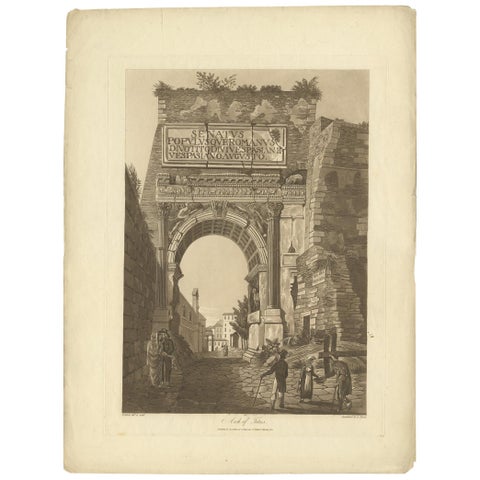
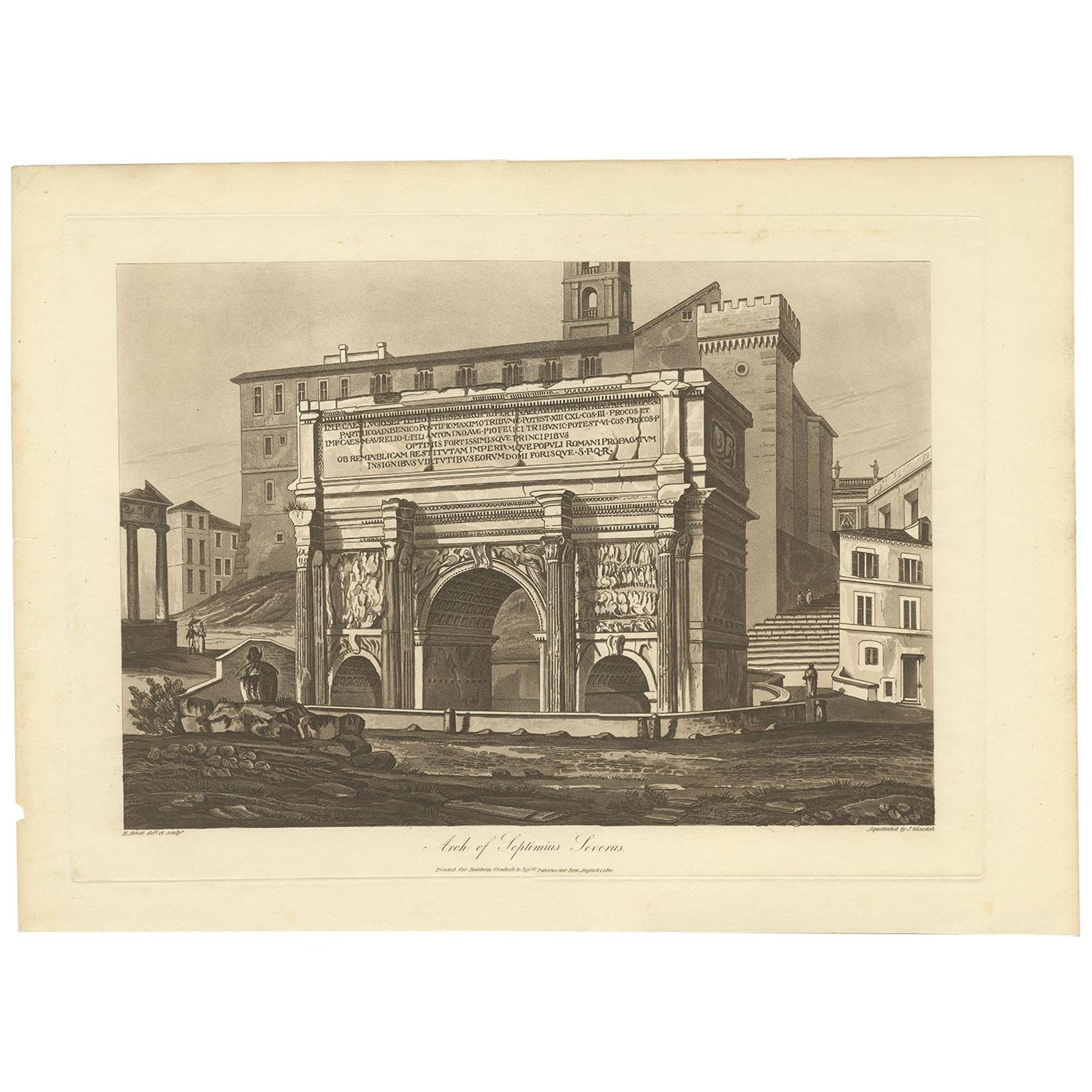
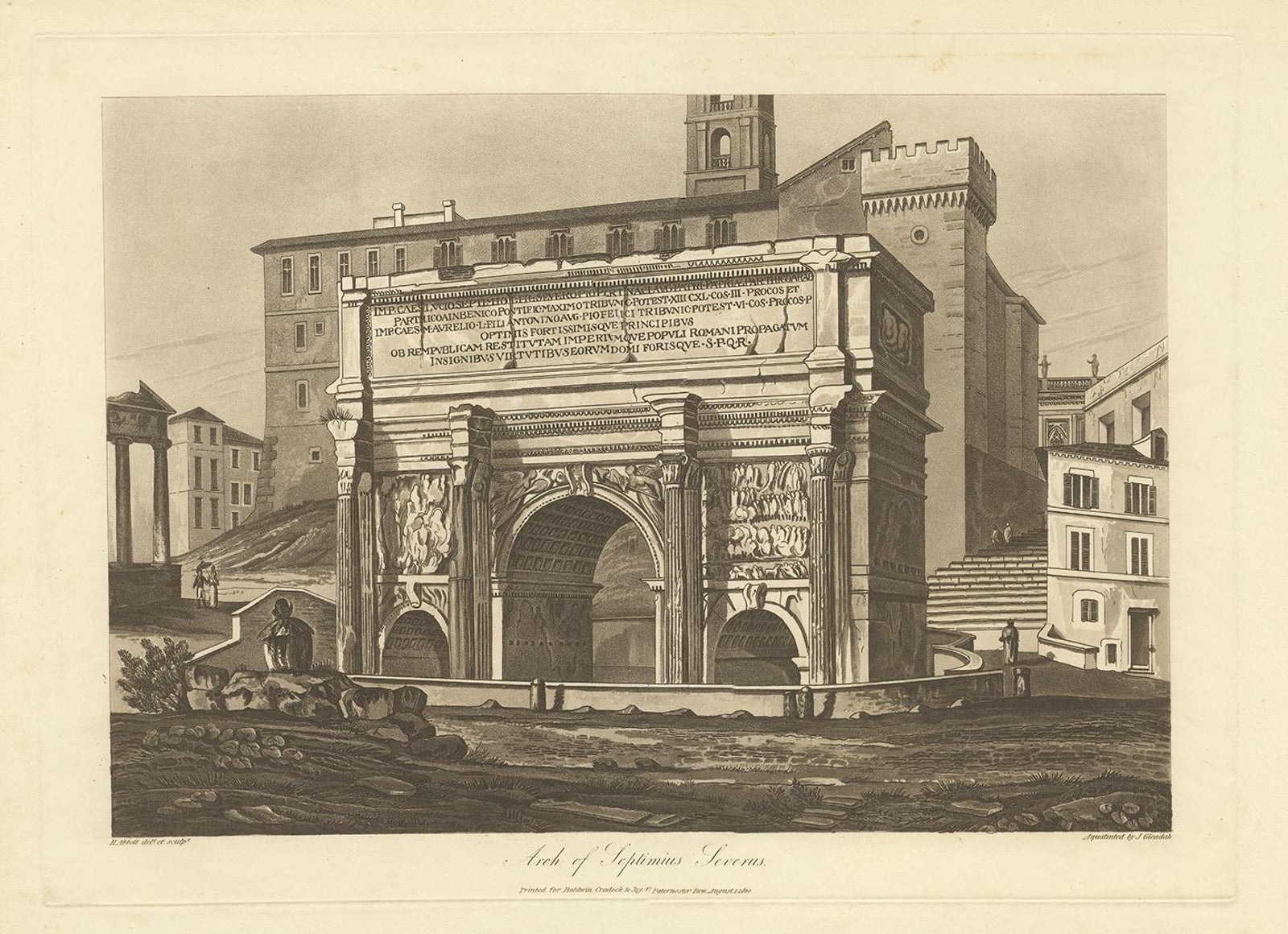
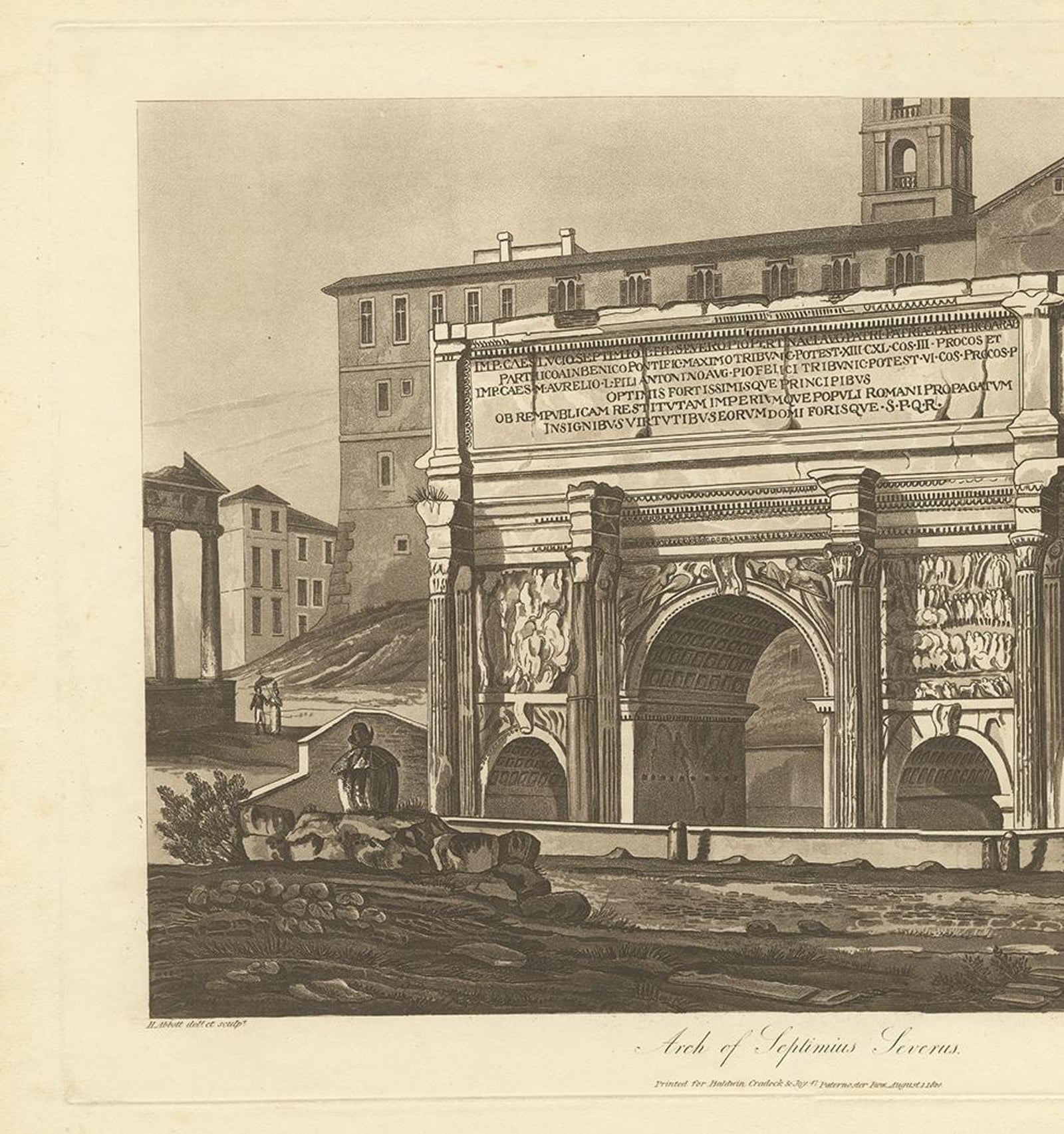
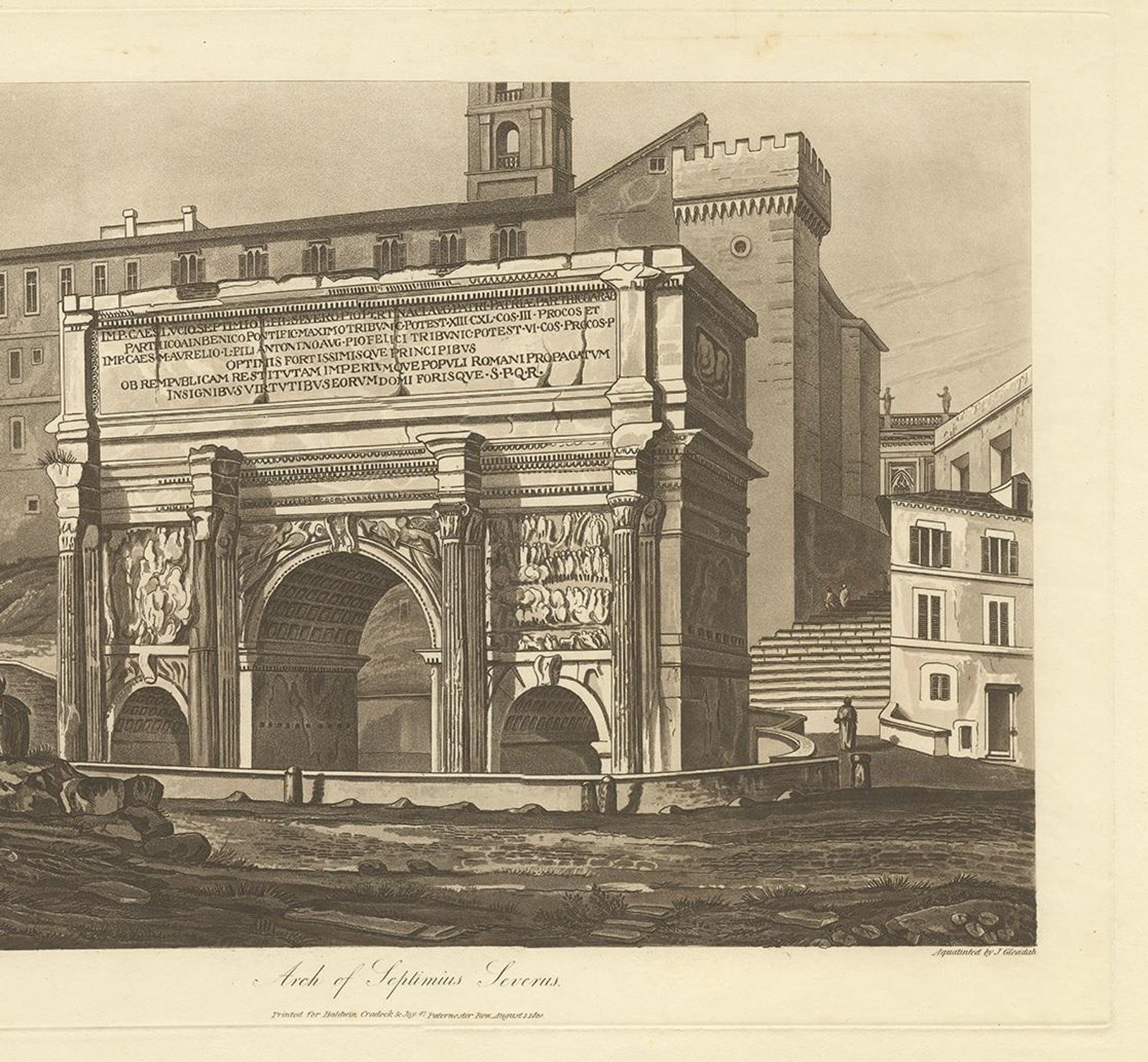
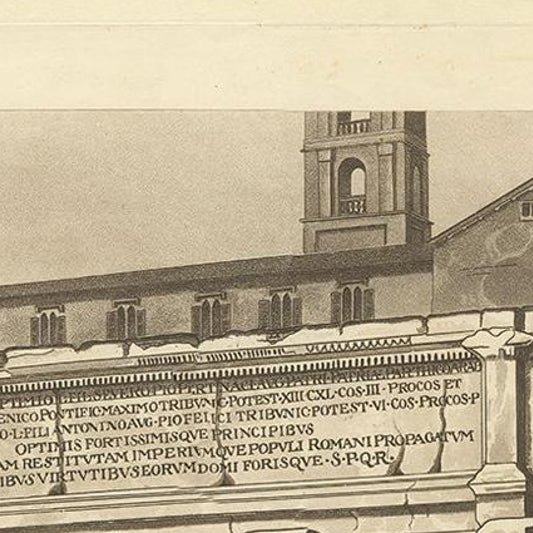
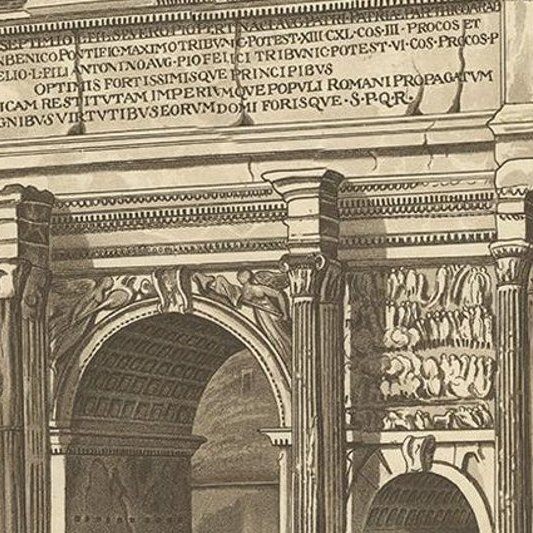
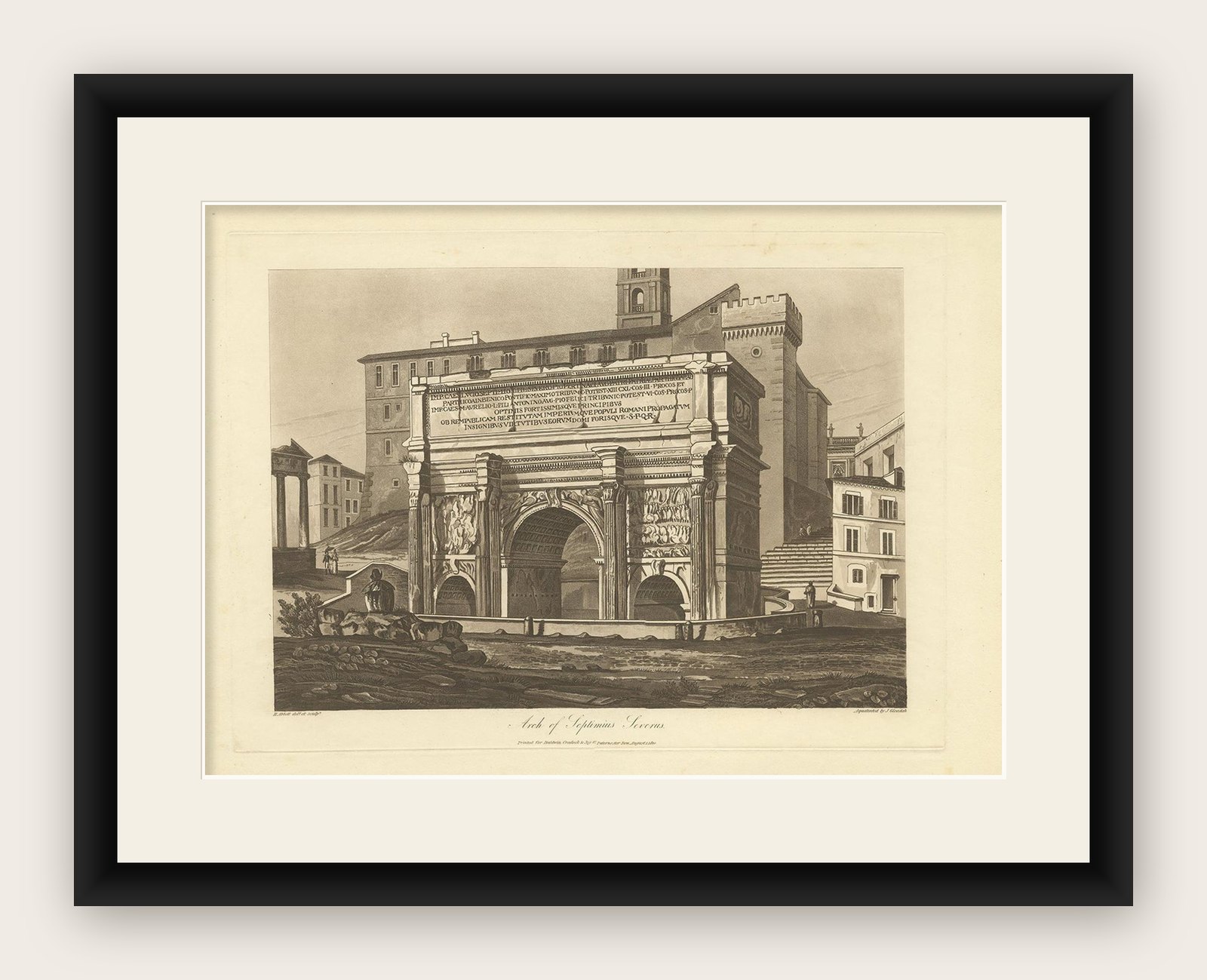
Antique Print of the Arch of Septimius Severus by Abbot '1820'
£340
$450 · €400
Original print, not a reproduction
Ships worldwide from the Netherlands, flat, insured and tracked. 14-day returns. To buy, use Ask a question (info@antiquearchitectureprints.com) and we will reserve it for you.
- Date
- 1820
- Sheet size
- 15.7 × 21.7 in (40 × 55 cm)
- Condition
- Good. Light soiling, minor wear. Few creases and tears, mainly in margins. Blank verso, please study images carefully.
- Collection
- Antiquity & ruins
- Era
- 1790 to 1849, Neoclassical and Romantic
- Stock no.
- f_17926362
Antique print titled 'Arch of Septimius Severus'. Large aquatint of the Arch of Septimius Severus. The Arch of Septimius Severus at the northwest end of the Roman Forum is a white marble triumphal arch dedicated in 203 to commemorate the Parthian victories of Emperor Septimius Severus and his two sons, Caracalla and Geta, in the two campaigns against the Parthians of 194/195 and 197 to 199.
This print originates from ' Antiquities of Rome : comprising twenty-four select views of its principal ruins and a description of each view' by Henry Abbot.
Explore