Framed and on the wall
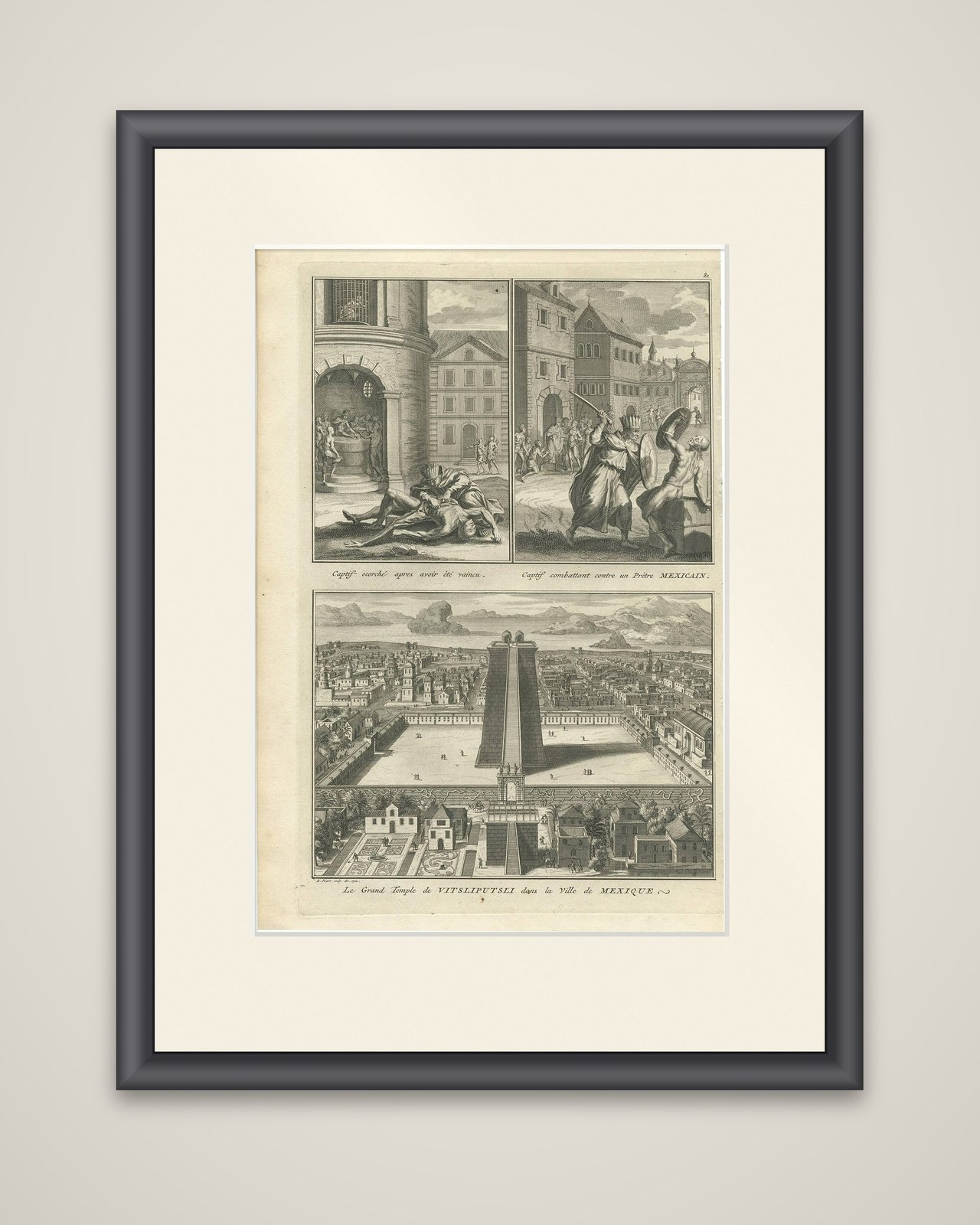


Frame and rooms are illustrations of how the print could look, drawn to its real size; it is sold unframed unless the description says otherwise.
Churches & temples
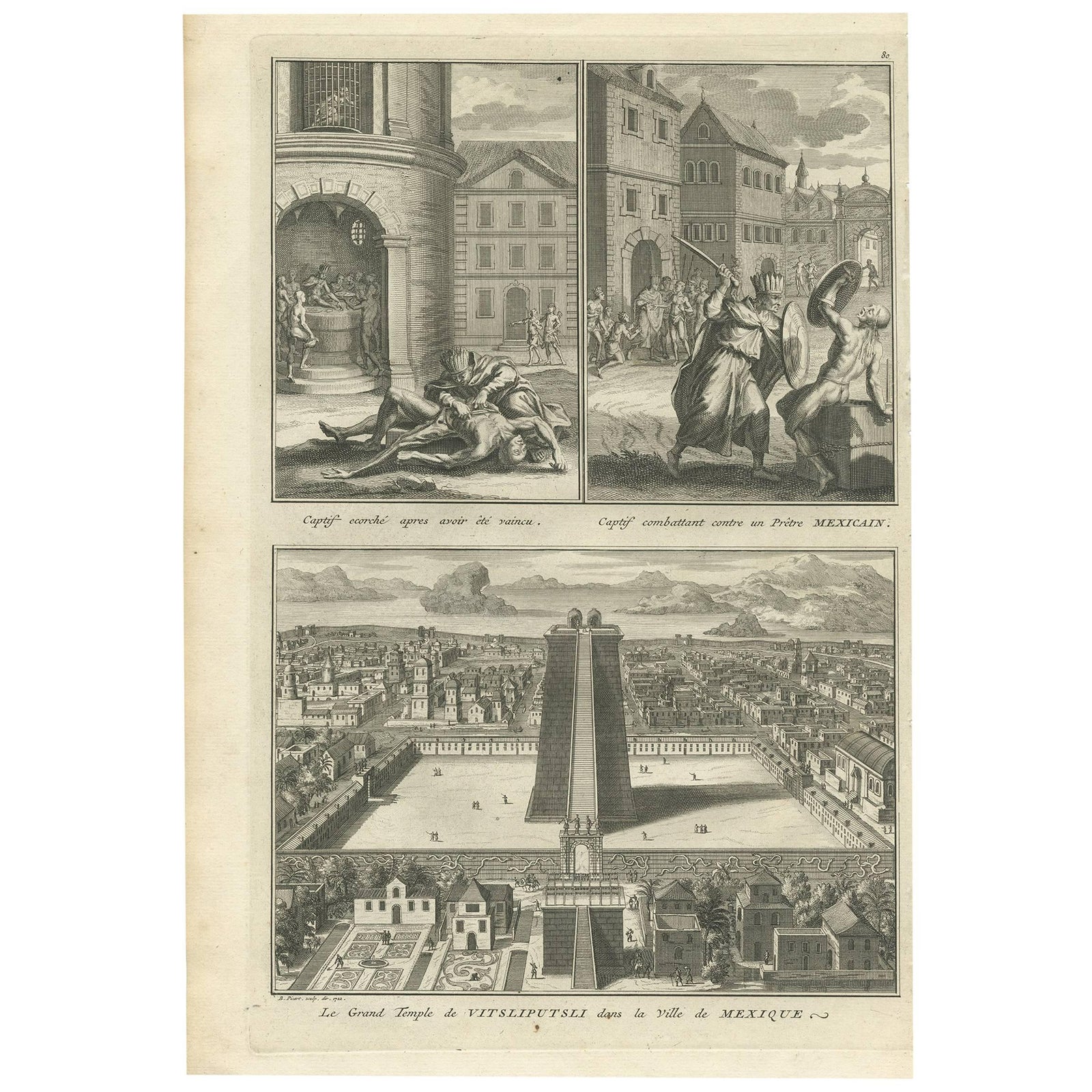
Antique Print of Captives and the Great Temple of Vitsliputsli "Mexico"
£115
$150 · €135
Original print, not a reproduction
Ships worldwide from the Netherlands, flat, insured and tracked. 14-day returns. To buy, use Ask a question (info@antiquearchitectureprints.com) and we will reserve it for you.
- Date
- Not stated
- Sheet size
- 14 × 9.5 in (35.5 × 24.1 cm)
- Condition
- Good. Please study image carefully.
- Collection
- Churches & temples
- Stock no.
- f_9870043
Three scenes of the Aztec world on one sheet, an engraving by Bernard Picart from the Dutch edition (1727-1738) of "Naaukeurige beschryving der godtsdienst-plichten, kerk-zeden en gewoontens van alle volkeren der waereldt". The captions are in French, and the sheet is credited "B. Picart" at the lower left.
At upper left, "Captif ecorche apres avoir ete vaincu" shows a defeated captive lying dead on the ground beside a round stone structure. At upper right, "Captif combattant contre un Pretre Mexicain" has a bound prisoner fighting a priest in a feathered headdress, with a shield and a sword. The large lower view is "Le Grand Temple de Vitsliputsli dans la Ville de Mexique": the stepped temple rises in the center of a walled precinct, with the city and its lake behind, and European-style buildings and gardens in the foreground.
The plates belong to Picart's survey of the religious ceremonies and customs of all nations, first issued in French between 1721 and 1725, the most elaborate history of world religion up to that time. They were adapted from earlier sources, including de Bry, and the architecture is drawn in an European style.
Explore