Close-ups
Framed and on the wall
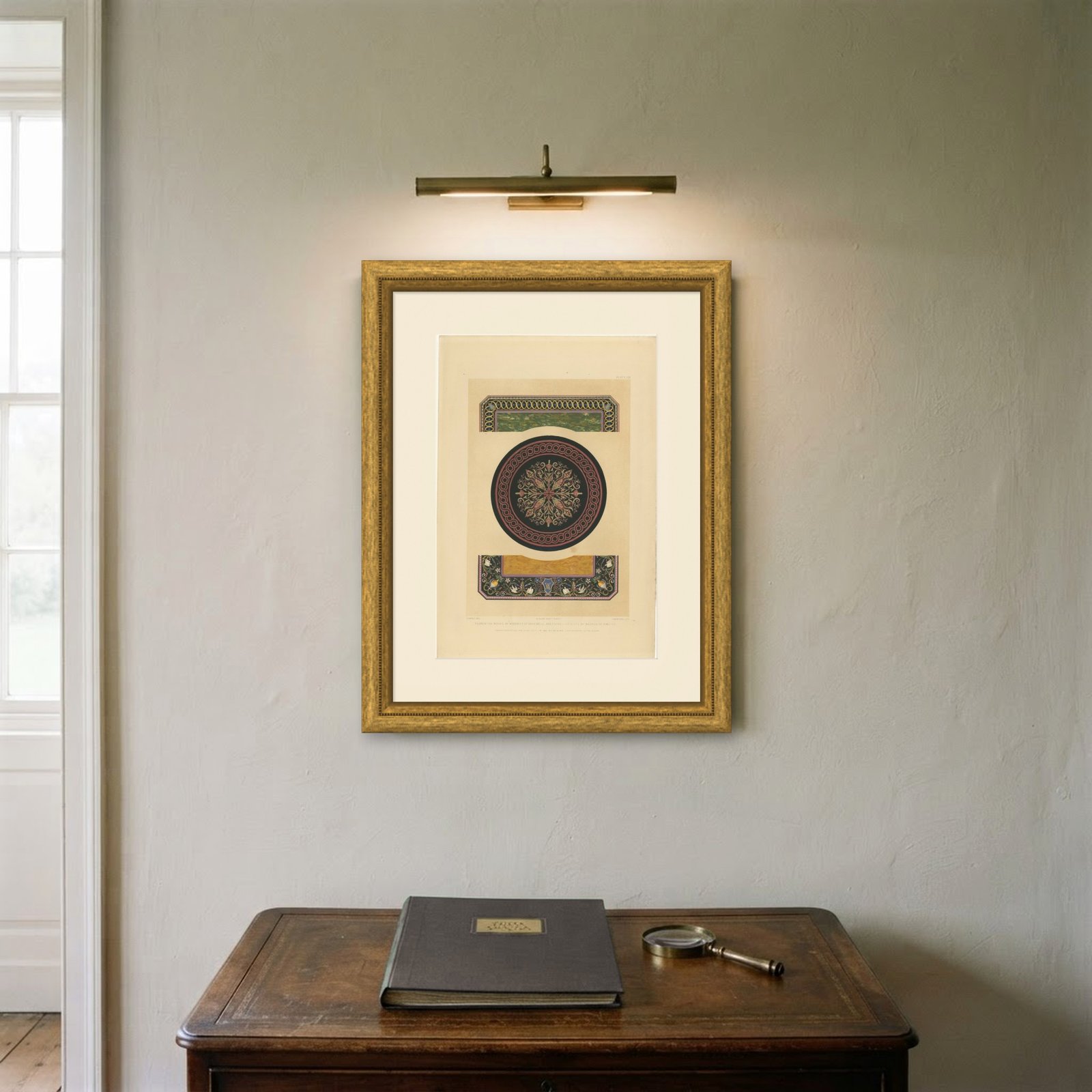
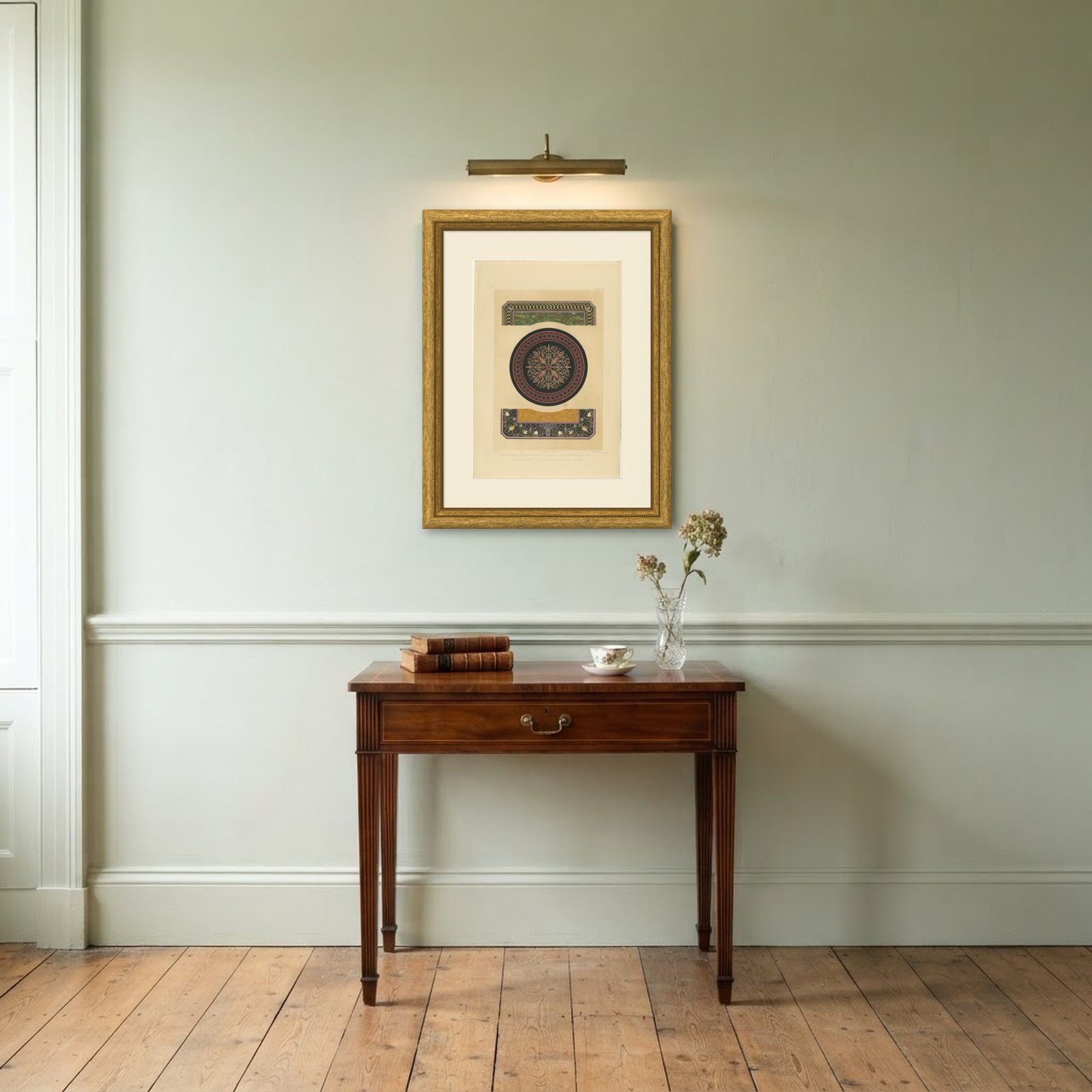
Frame and rooms are illustrations of how the print could look, drawn to its real size; it is sold unframed unless the description says otherwise.
Ornament & pattern
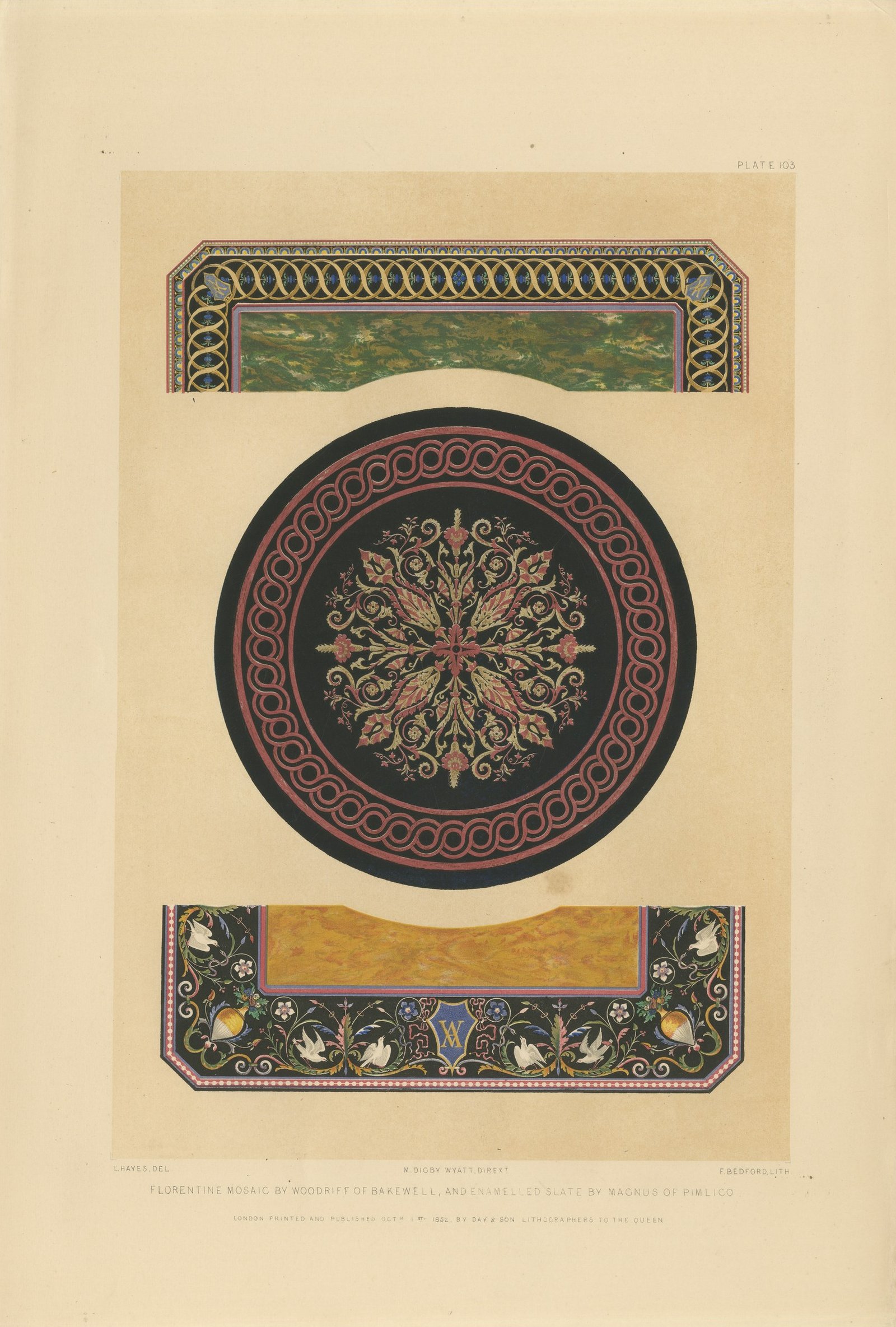
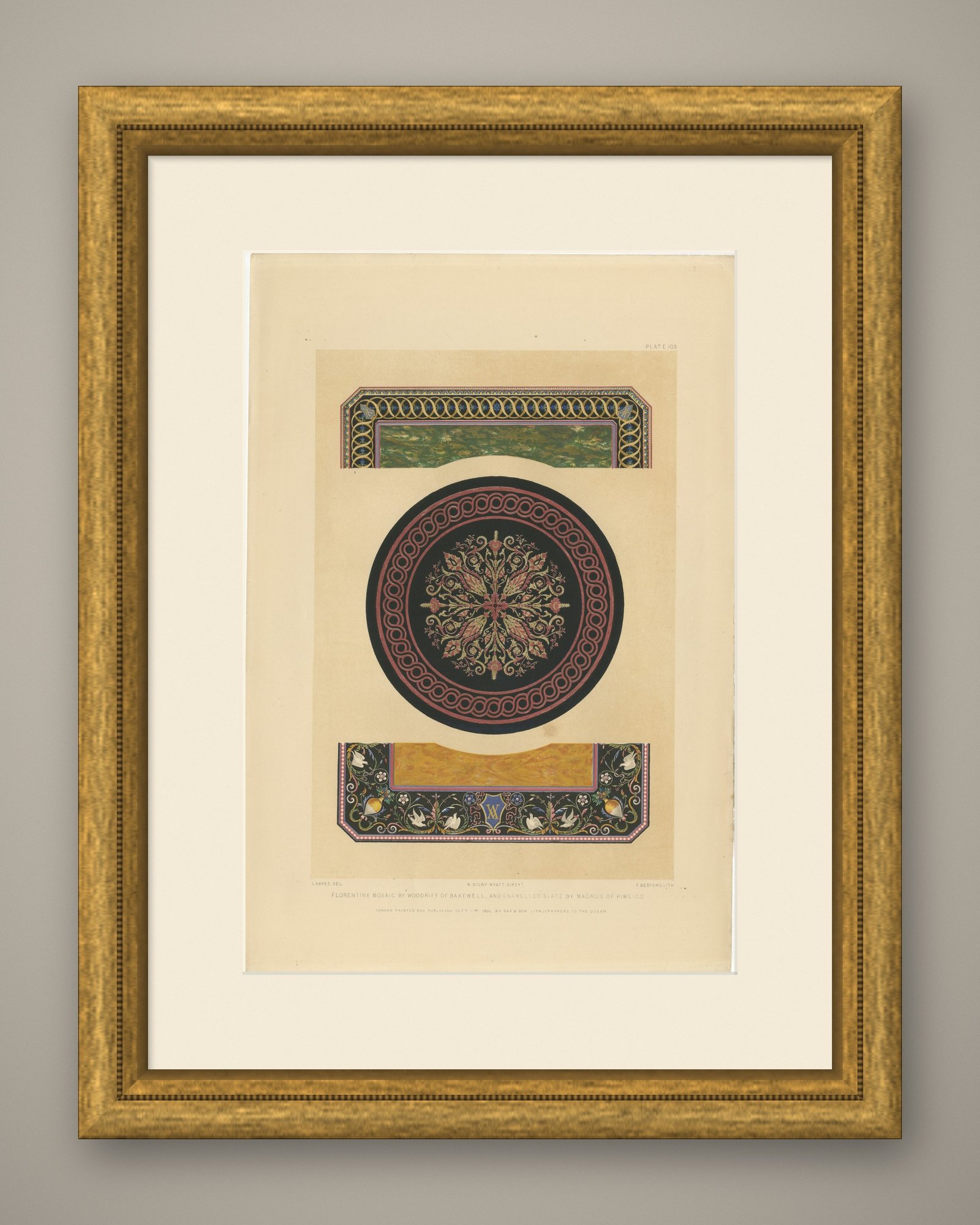
Antique Florentine Mosaic Table Top and Enameled Slate Panels, 1852
€465€32630% off
$360 · £275
Original print, not a reproduction
Ships worldwide from the Netherlands, flat or rolled, insured and tracked. 14-day returns.
- Date
- 1852
- Sheet size
- 20.3 × 13.4 in (51.5 × 34 cm)
- Technique
- Chromolithograph
- Coloring
- Printed color
- Condition
- Good. Light to moderate age toning. Light handling wear to the upper left corner. A few foxing spots and scattered specks in the margins, with faint soiling along the right edge. The printed image is clean and the color strong.
- Collection
- Ornament & pattern
- Era
- 1850 and after, The age of revivals
- Stock no.
- BG-14491-103
What the condition grades mean
- Excellent
- Bright and clean, with no faults worth mentioning.
- Very good
- Only light signs of age, such as faint toning.
- Good
- Normal signs of age for a sheet of this period: toning, some foxing, small marks or neat old repairs.
- Fair
- Clear faults such as staining, tears or repairs, priced to match.
Every fault we see is written in the condition note, and the whole sheet is shown uncropped in the photos.
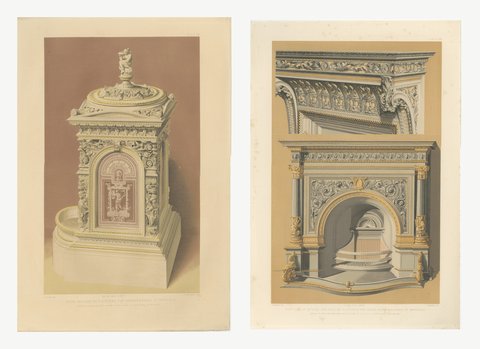
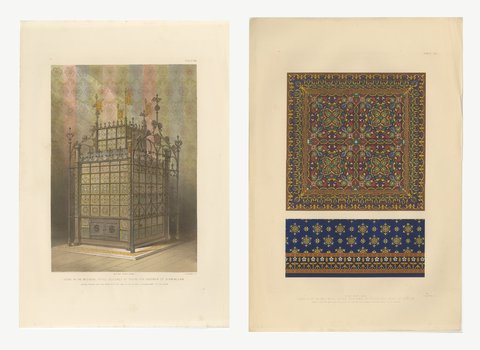
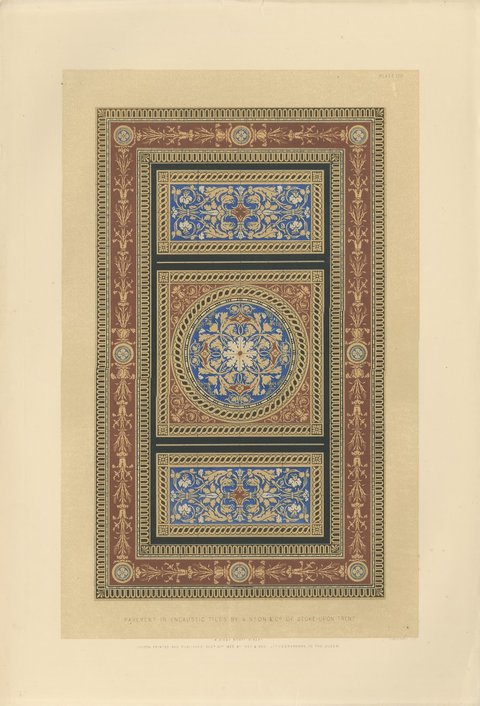
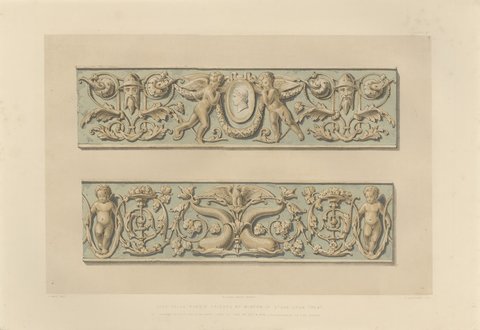
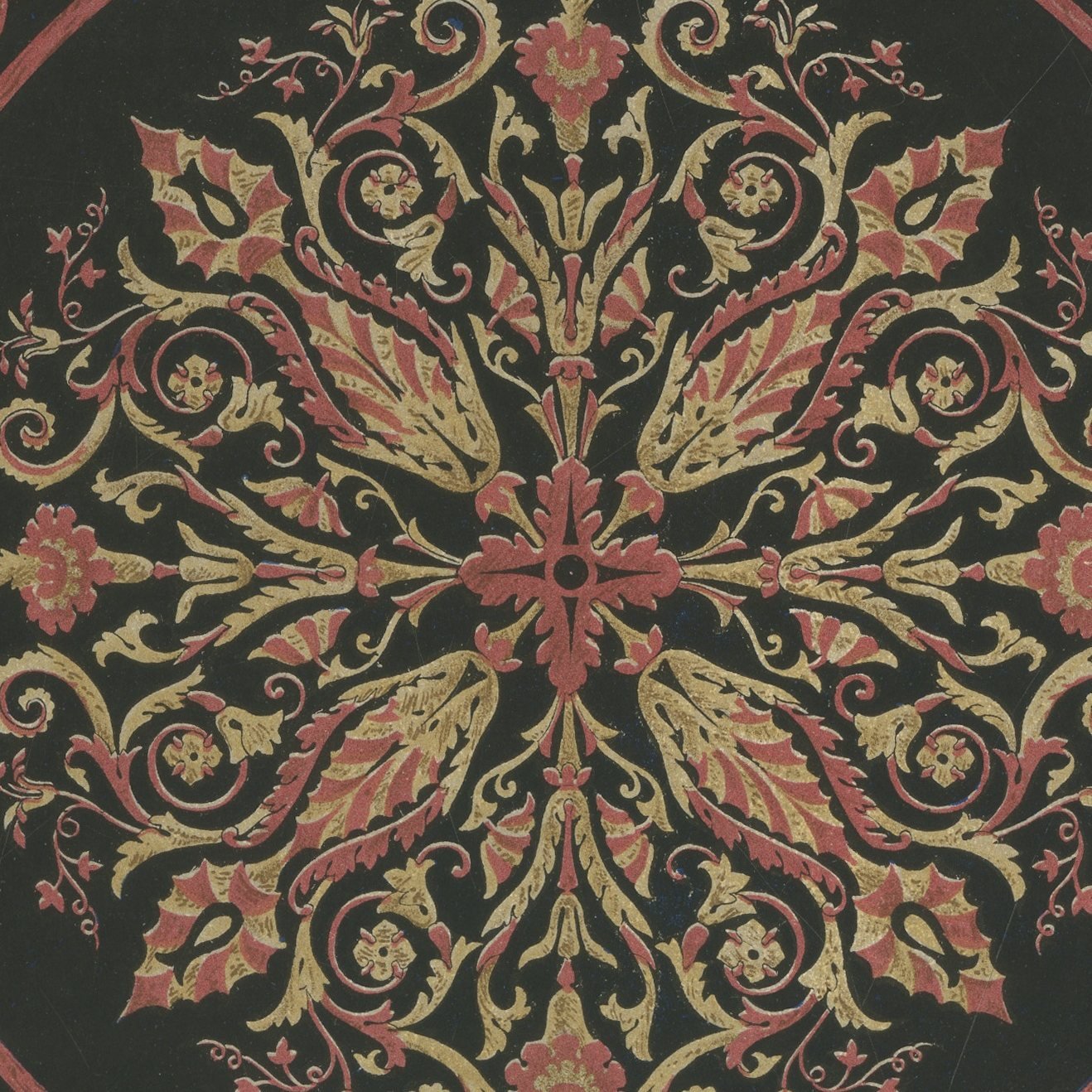
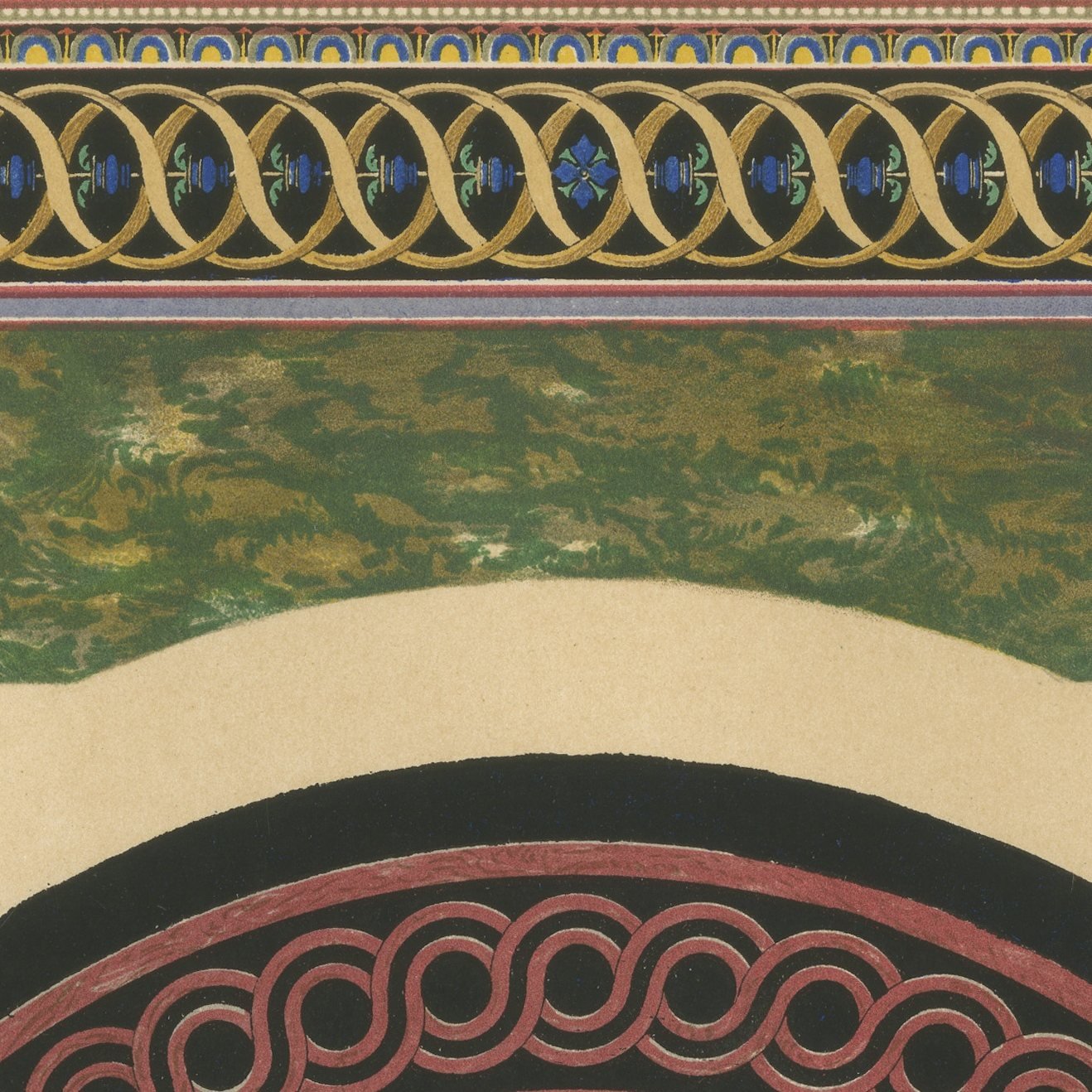
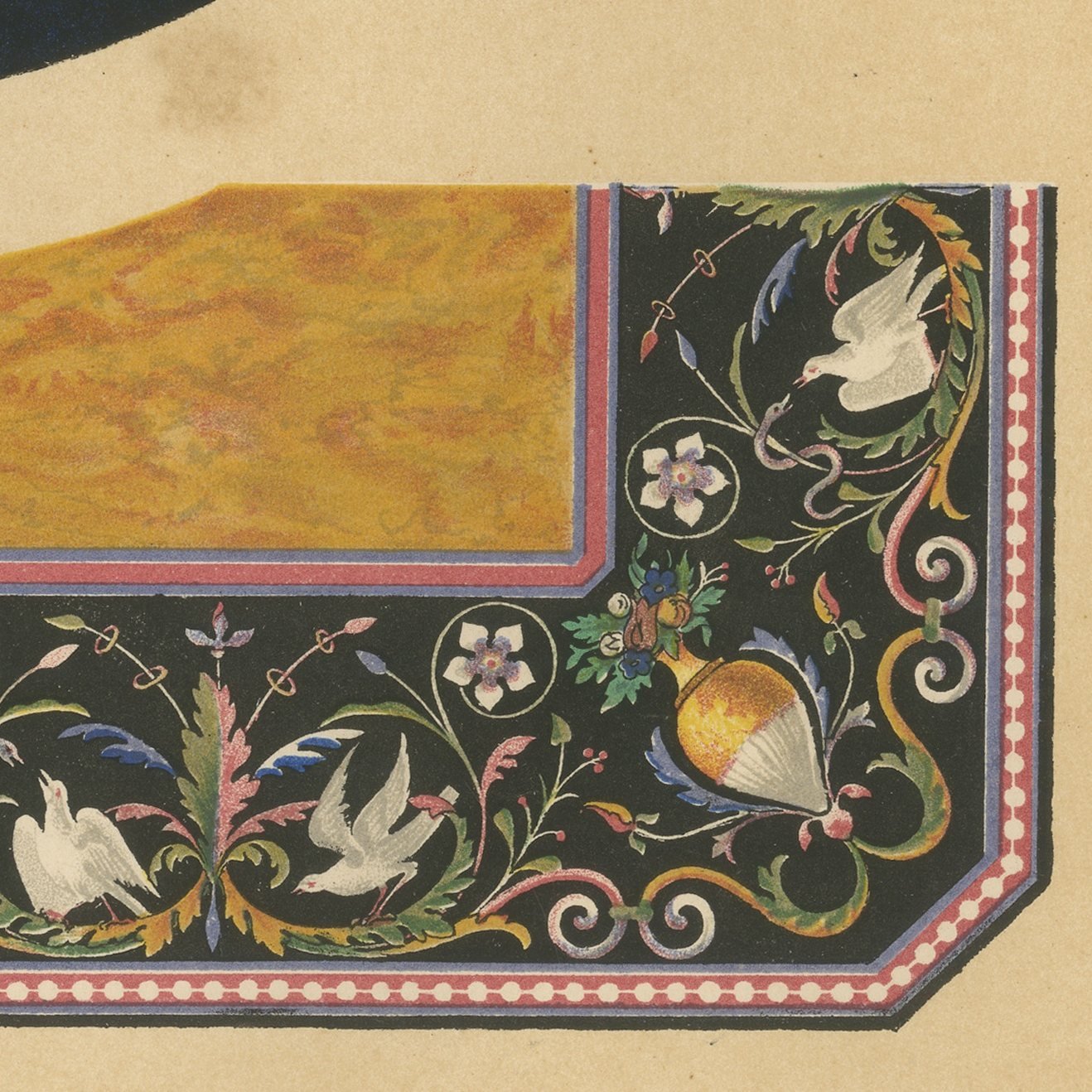
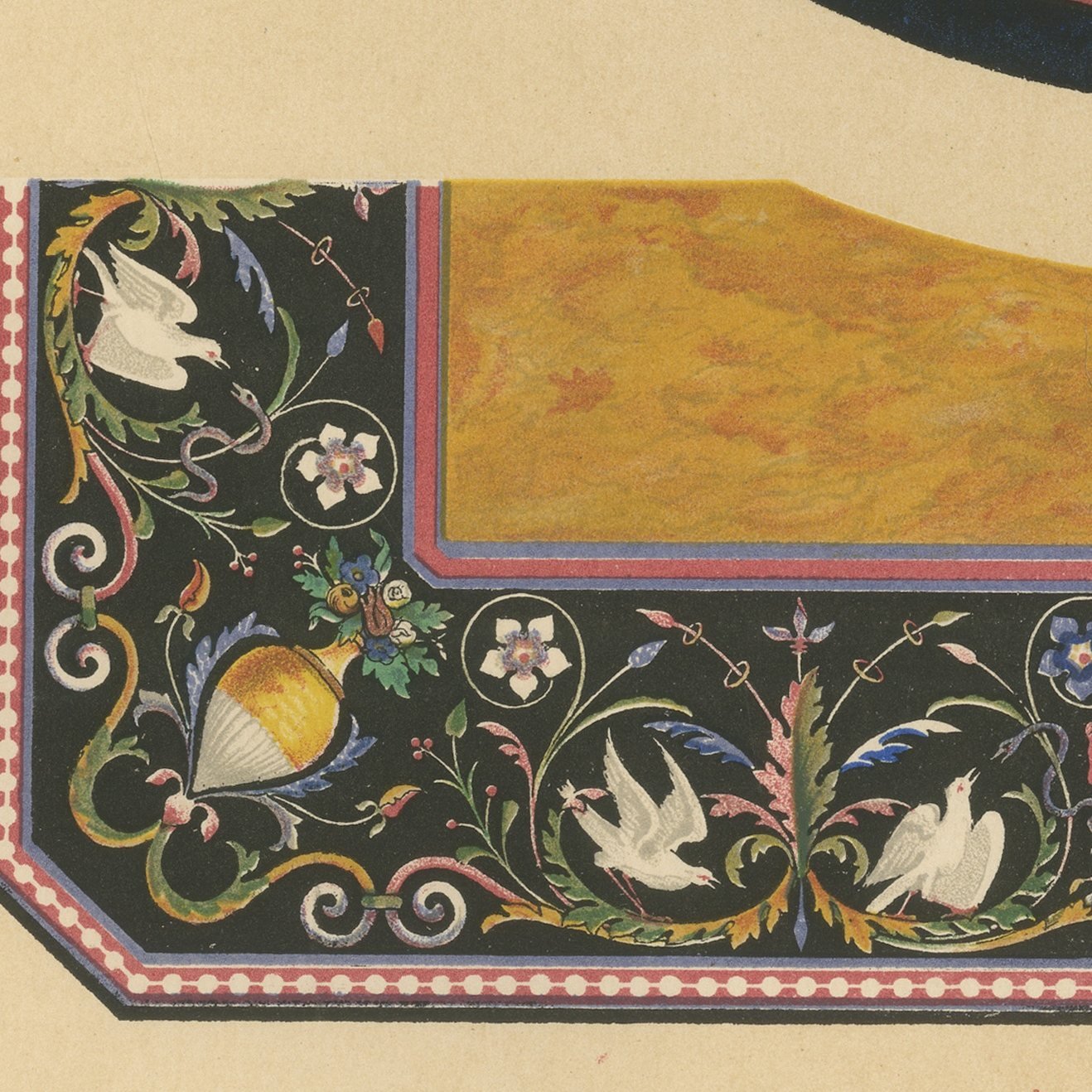
This original antique chromolithograph of 1852 shows a Florentine mosaic table top by Thomas Woodruff of Bakewell in Derbyshire together with two panels of enameled slate by Magnus of Pimlico, three designs sharing one sheet. At the center is a circular table top of black marble, inlaid in the Florentine manner with a star of flowers and foliage in colored stones and ringed by a guilloche border in red and gold. Above and below it are two rectangular panels of enameled slate, one with a field of green marbling inside a gilt and enamel border, the other with a yellow field framed by a dark band of birds, fruit and flowers on blue and black. The lettering beneath names the sheet as Florentine Mosaic by Woodriff of Bakewell, and Enamelled Slate by Magnus of Pimlico, with L. Hayes as draftsman, M. Digby Wyatt as director and F. Bedford as lithographer, and the imprint of the first of October 1852.
The plate comes from The Industrial Arts of the Nineteenth Century, Matthew Digby Wyatt's record of the Great Exhibition of 1851, published in London by Day and Son, lithographers to the Queen, between 1851 and 1853 and dedicated by permission to Prince Albert. It was issued to subscribers in forty parts in printed paper wrappers, and the two volumes together carry about a hundred and sixty large folio plates. The project came from the publishers, who approached Wyatt soon after the exhibition opened wanting to show, on a large scale, what color printing could do for industrial education. Chromolithography was then new and costly, and each color on a sheet was printed from its own stone. Francis Bedford, John Sleigh, John Alfred Vinter and their colleagues drew and lithographed the plates under Wyatt's direction, and every plate carries its own imprint and date.
Bakewell and the neighboring village of Ashford in Derbyshire were the English home of inlaid black marble, worked in open imitation of the Florentine hardstone mosaics, and pieces from that trade were shown at the Crystal Palace beside the Italian originals. The firm lettered on the sheet as Woodriff is Thomas Woodruff, inlayer in black marble, whose tables shown in 1851 won prize medals. George Eugene Magnus of Pimlico had found a way of enameling slate so that it could stand in for marble at a fraction of the cost, and his panels were among the more ingenious English products of the exhibition. The plate sets the two beside each other, a handmade luxury and its industrial answer, which is the argument of Wyatt's whole book in a single sheet. It frames well for a dining room, a hall or a study.
Light to moderate age toning. Light handling wear to the upper left corner. A few foxing spots and scattered specks in the margins, with faint soiling along the right edge. The printed image is clean and the color strong.
This is an original antique print, not a modern reproduction. This item is sold unframed.