Close-ups
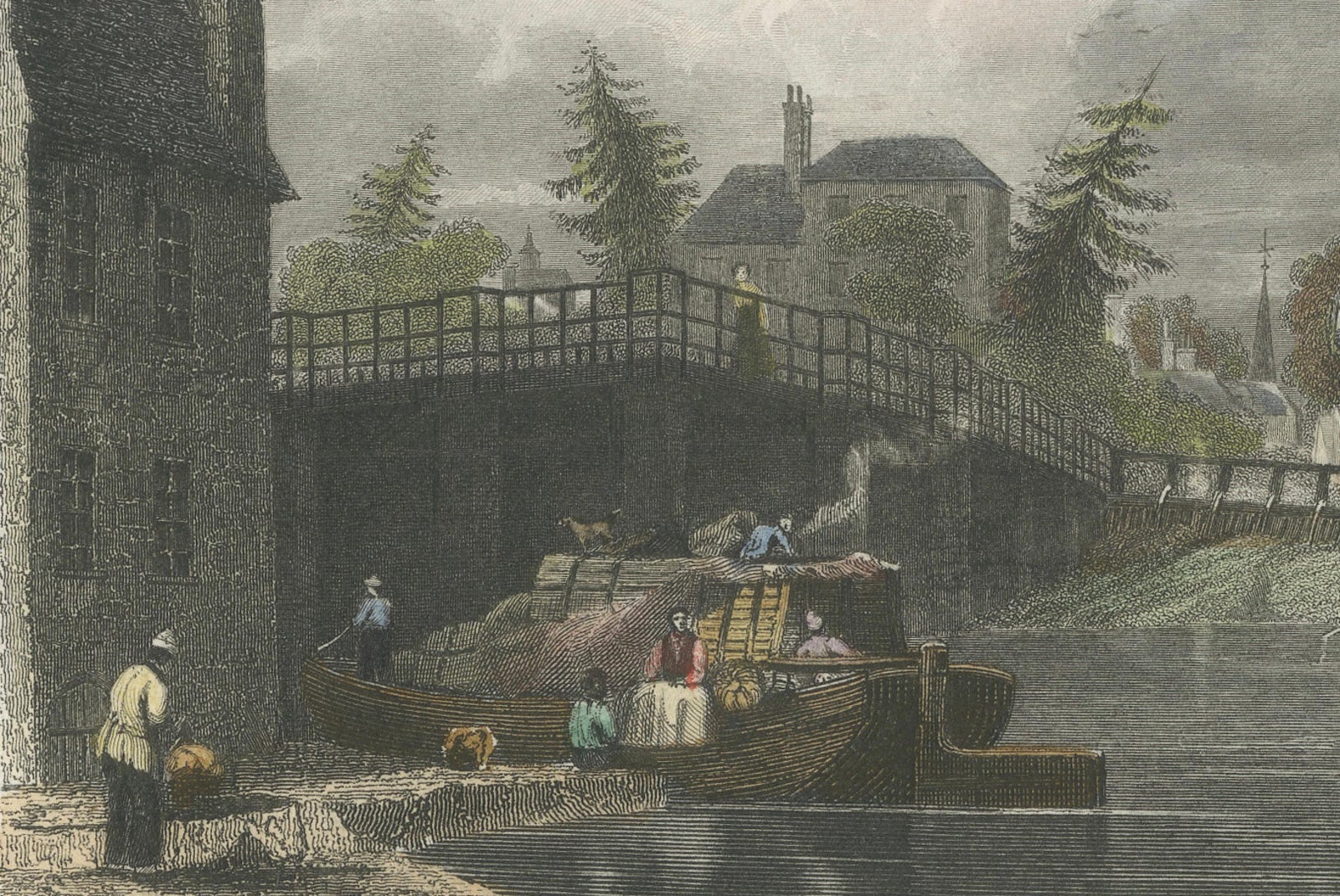
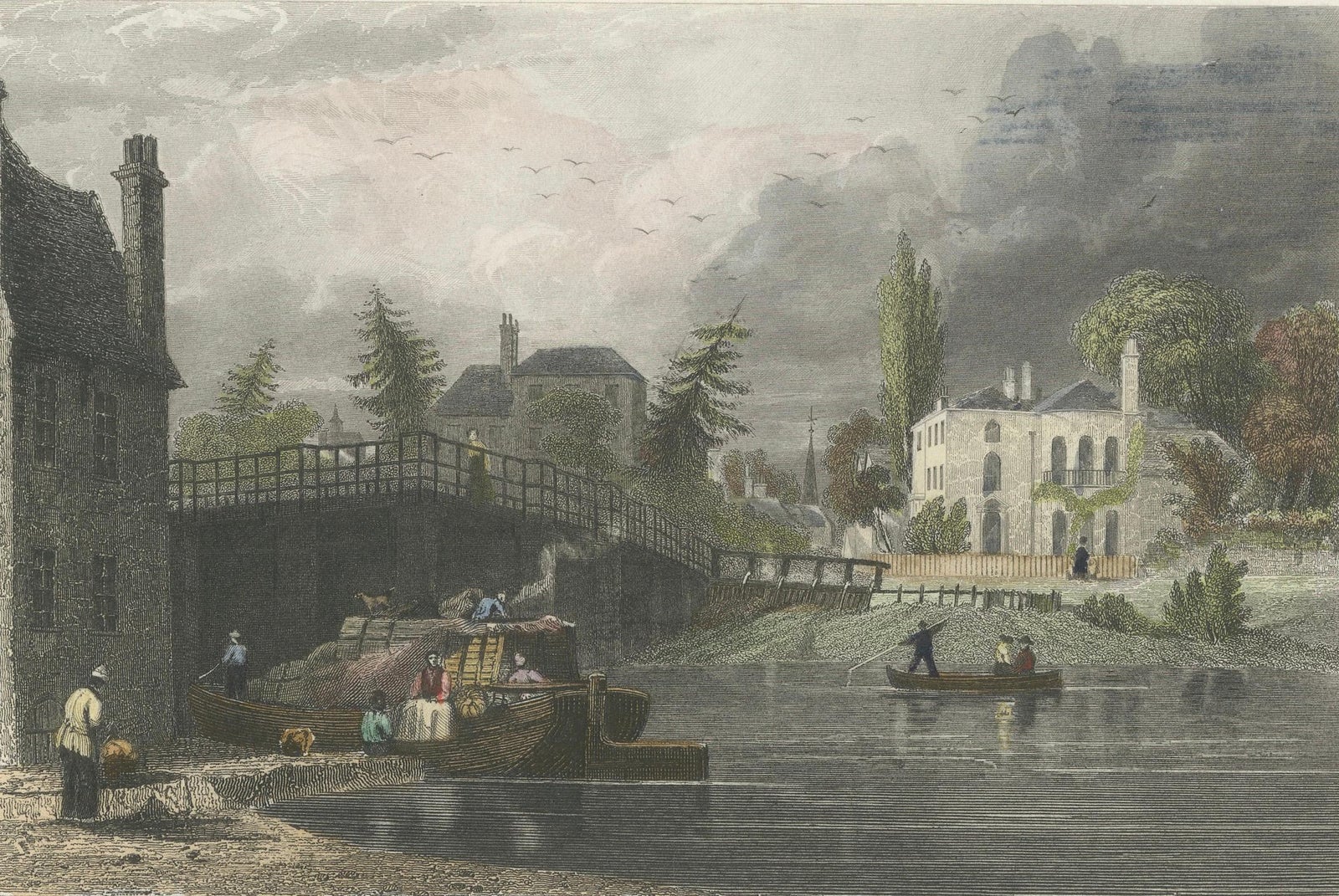
Framed and on the wall
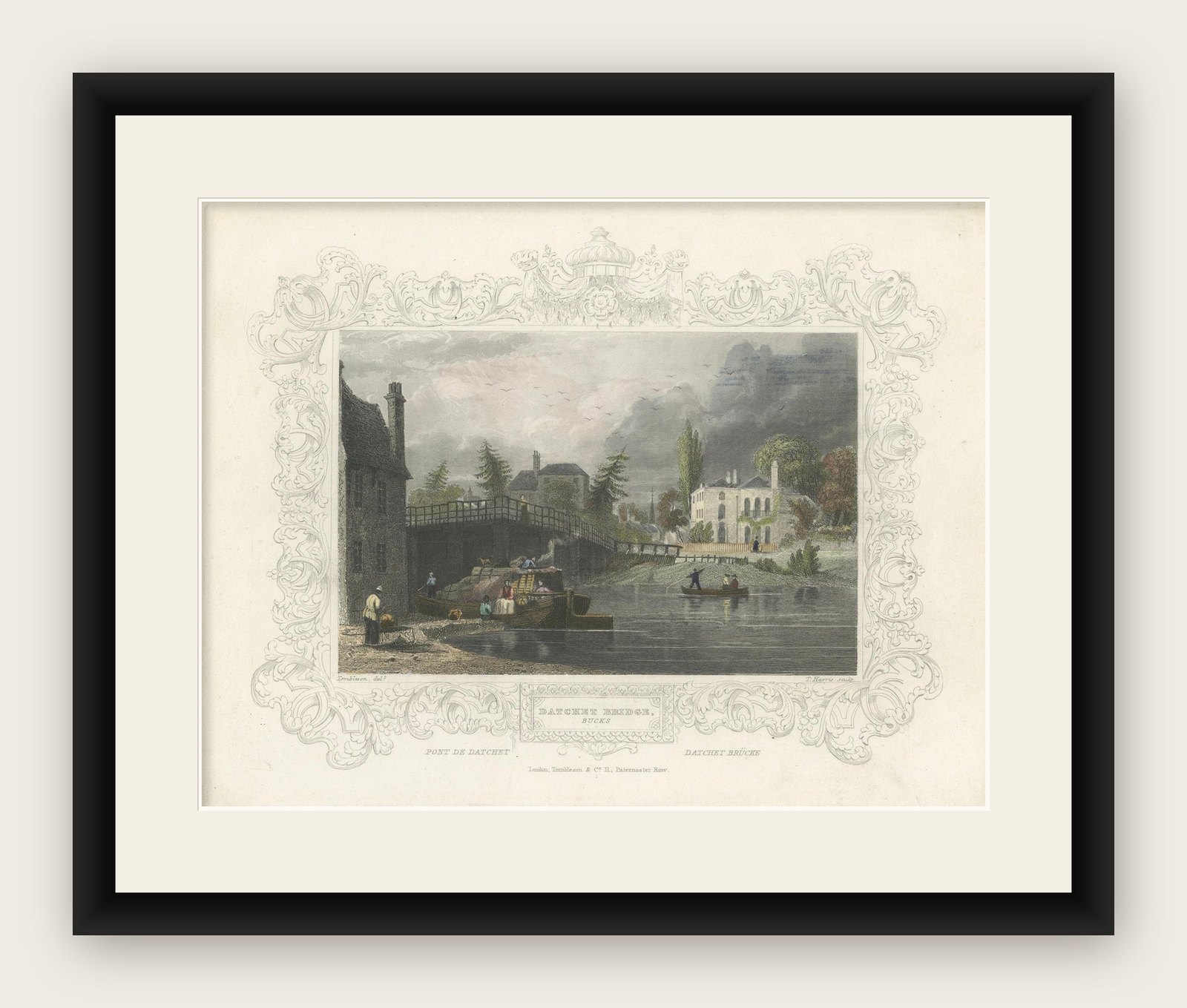


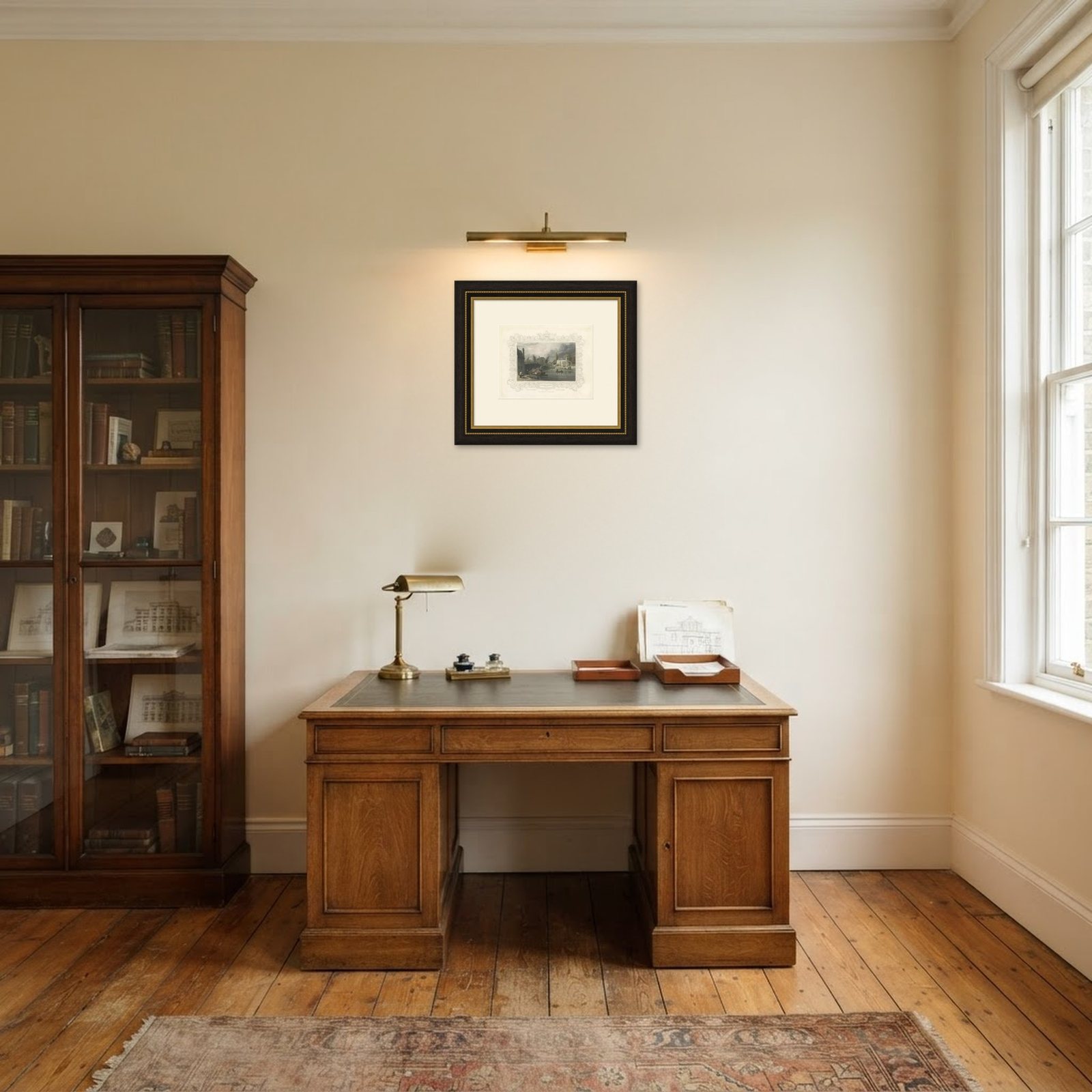
Frame and rooms are illustrations of how the print could look, drawn to its real size; it is sold unframed unless the description says otherwise.
Bridges & monuments
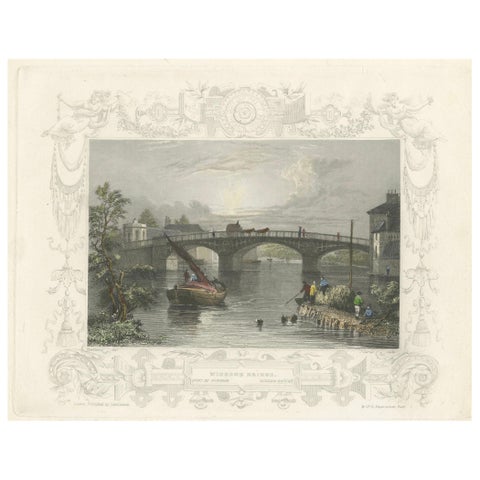
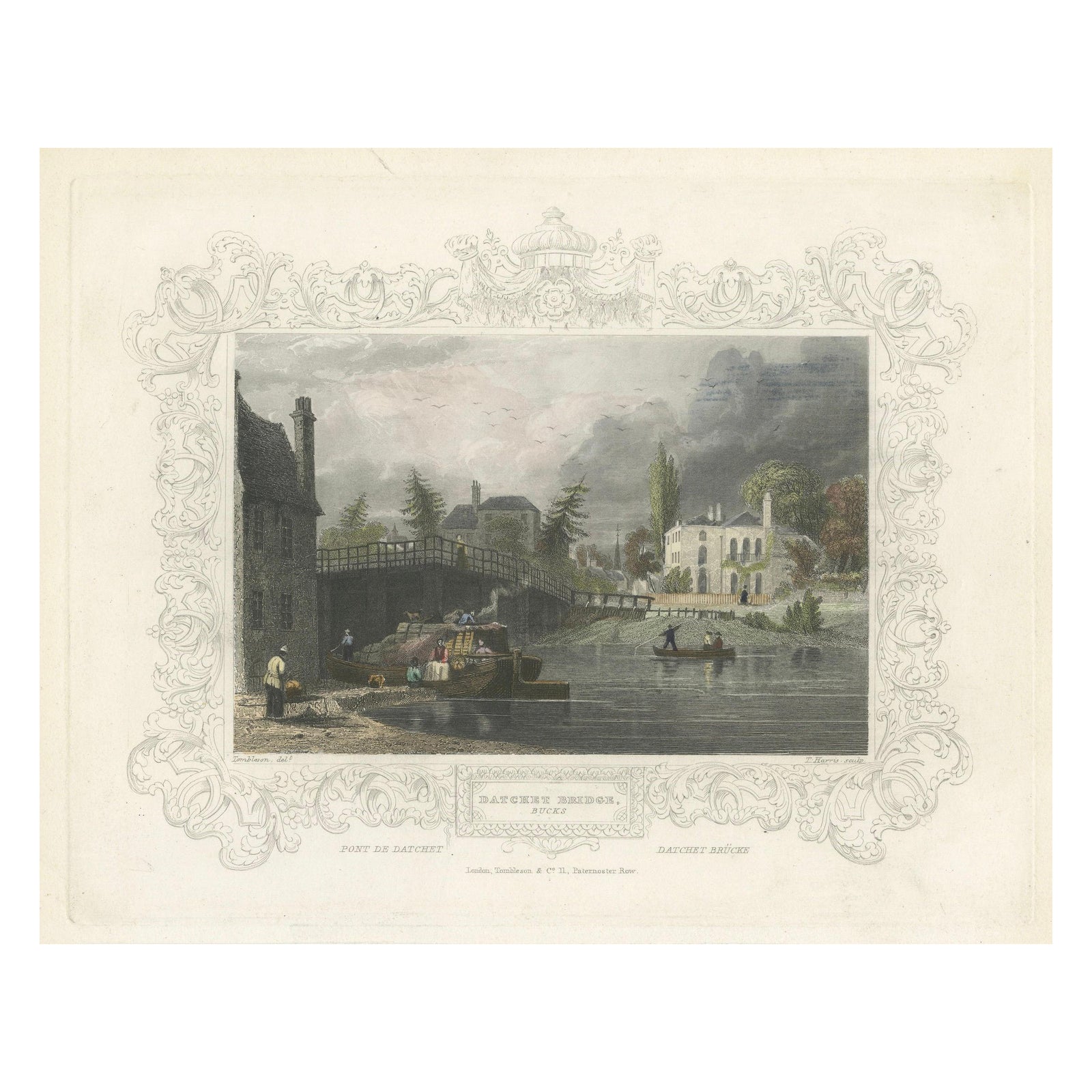
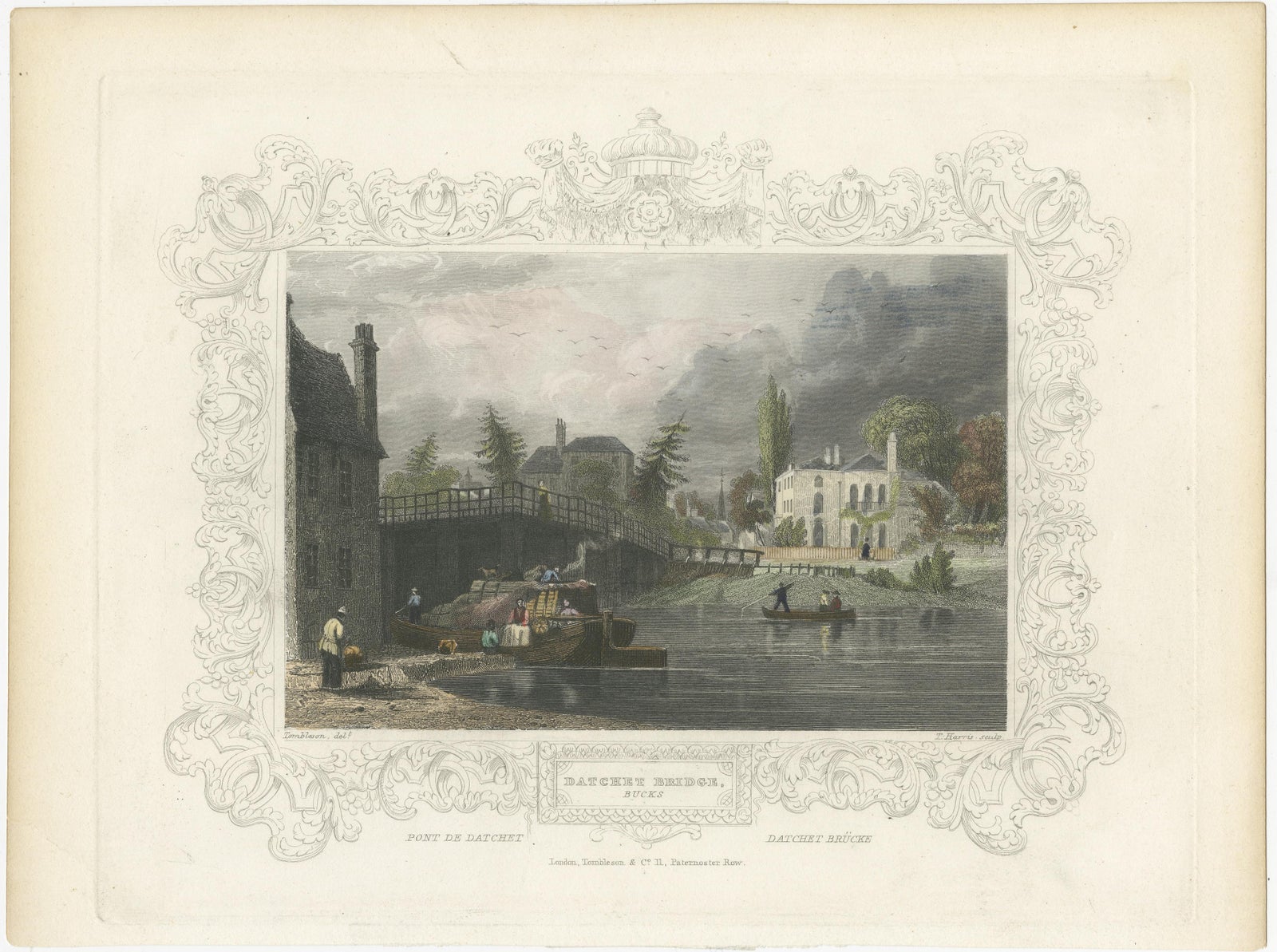
Antique engraving of Datchet Bridge on the Thames, Tombleson, c.1832 to 1834
£225£16030% off
$210 · €189
Original print, not a reproduction
Ships worldwide from the Netherlands, flat or rolled, insured and tracked. 14-day returns.
- Date
- 1832
- Sheet size
- 8 × 10.4 in (20.4 × 26.3 cm)
- Condition
- Good. Condition report: Very good condition with strong impression and bright, clean paper. Minor toning to margins consistent with age, but no major defects, except small tear outside the plate mark. Plate mark is visible, adding to authenticity.
- Collection
- Bridges & monuments
- Era
- 1790 to 1849, Neoclassical and Romantic
- Stock no.
- BG-13600-35
What the condition grades mean
- Excellent
- Bright and clean, with no faults worth mentioning.
- Very good
- Only light signs of age, such as faint toning.
- Good
- Normal signs of age for a sheet of this period: toning, some foxing, small marks or neat old repairs.
- Fair
- Clear faults such as staining, tears or repairs, priced to match.
Every fault we see is written in the condition note, and the whole sheet is shown uncropped in the photos.
Antique engraving of Datchet Bridge on the Thames, Tombleson, c.1832 to 1834
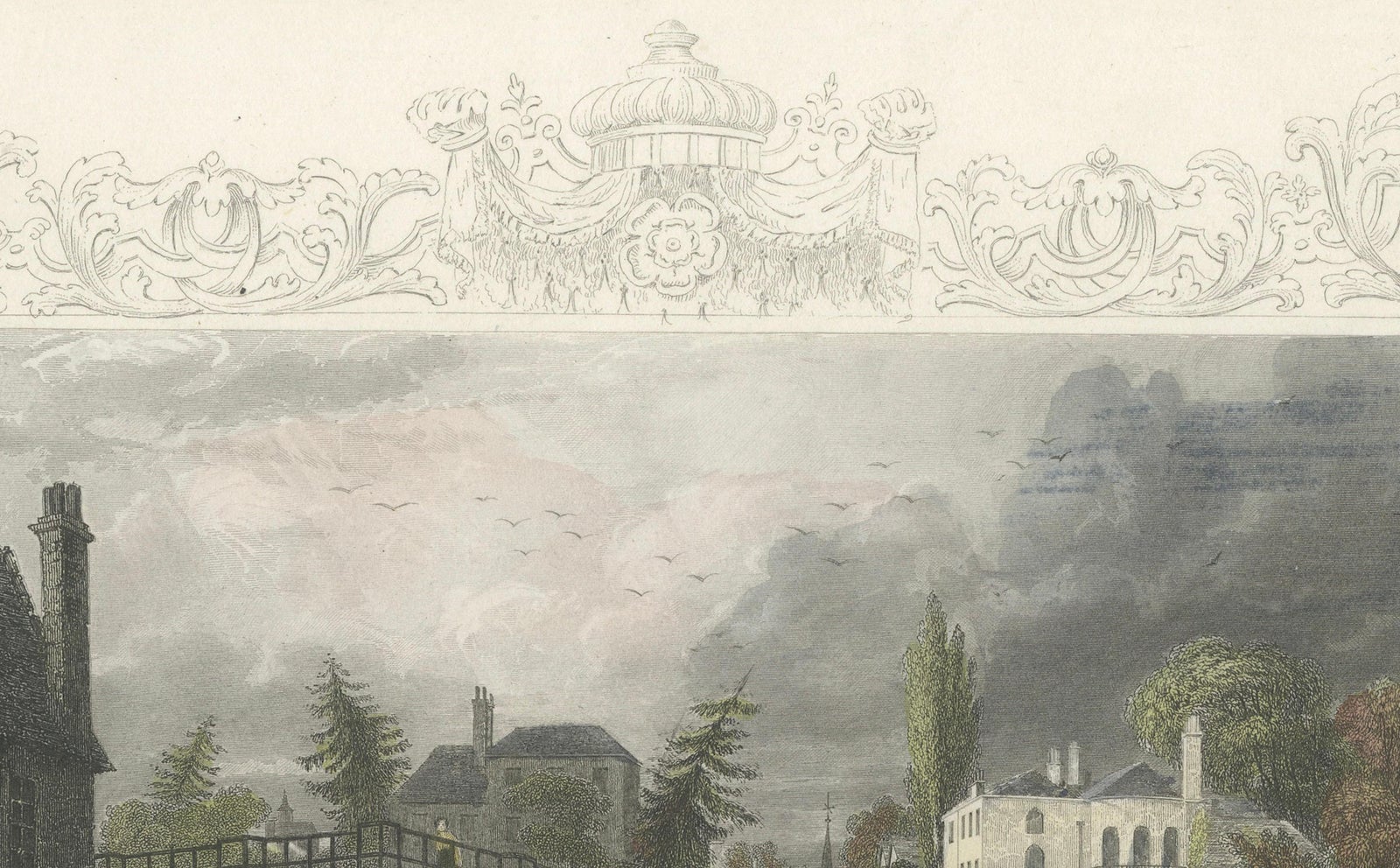
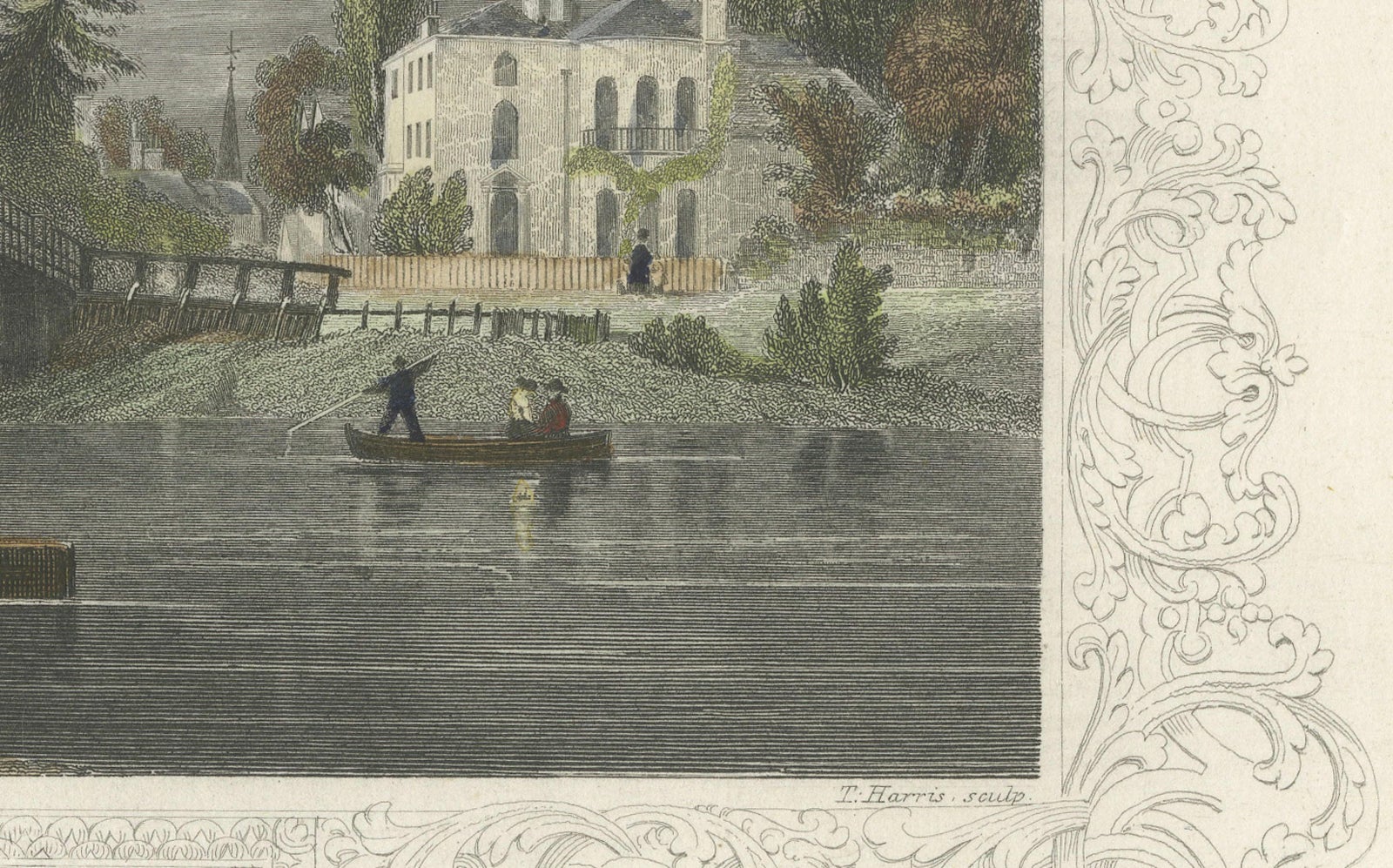
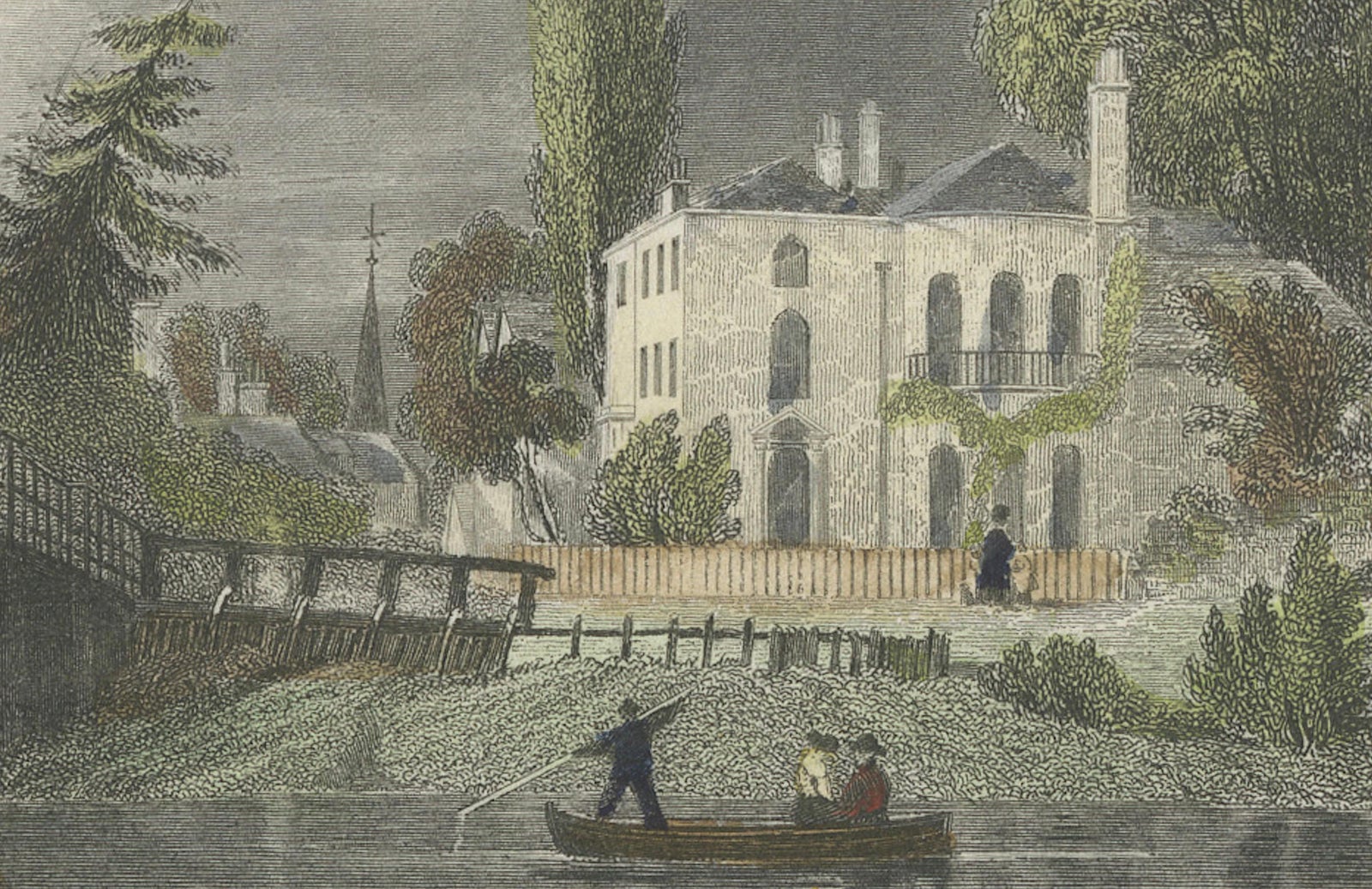
This elegant antique engraving presents a rare and atmospheric view of Datchet Bridge, which once spanned the River Thames near Windsor, linking the village of Datchet in Buckinghamshire with Windsor in Berkshire. At the time William Tombleson drew this scene, the wooden bridge was still in use, although it was notoriously fragile and frequently damaged by floods and traffic. In fact, the bridge was demolished in 1836, only a few years after this engraving was published, making this image an important historical record of a vanished Thames crossing.
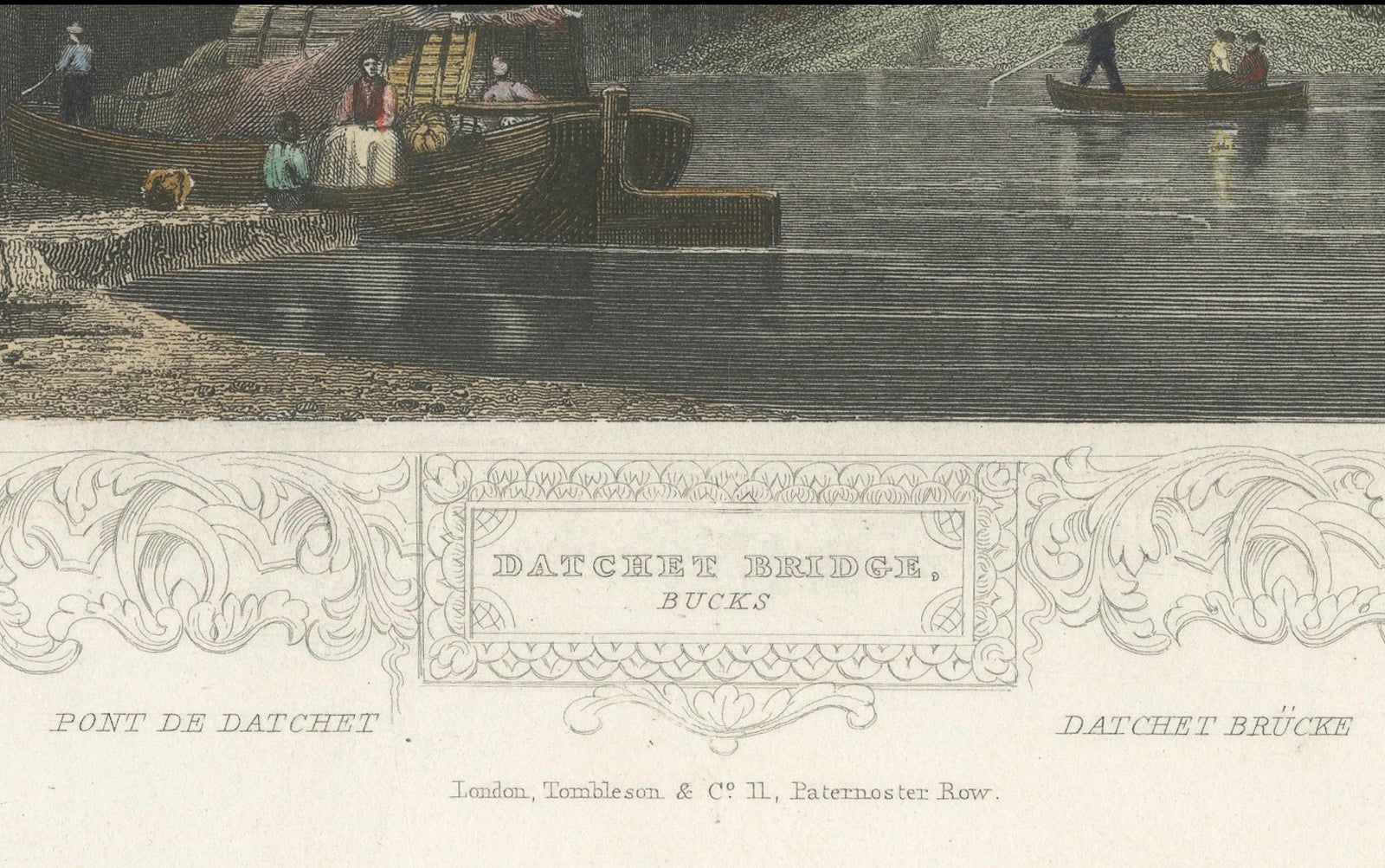
The composition is finely balanced, showing the timber structure of the bridge to the left, where laborers and townsfolk are gathered by a barge unloading its cargo. A woman in traditional dress stands prominently in the foreground, lending a human touch to the riverside activity. To the right, the river flows gently towards an elegant villa set within landscaped grounds, its neoclassical design enhanced by carefully placed trees and garden walls. Small rowing boats add movement to the water, while the sky, rendered with dramatic tonal contrasts, suggests an unsettled English day.
The artist is William Tombleson (1795 to 1846), an English draughtsman best known for his topographical works, particularly Views of the Thames and Medway (1832 to 1834) and Views on the Rhine. His drawings were engraved by skilled printmakers such as Thomas Higham, whose precise linework is evident here in the careful rendering of timber, water, and foliage. Published in London by Tombleson & Co. at 11 Paternoster Row, with editions also distributed on the continent, these prints catered to a wide audience eager to admire the picturesque river scenery of England. The richly decorative border surrounding the image is a hallmark of the series, featuring intricate scrollwork and a central cartouche framing the title in English, French (Pont de Datchet), and German (Datchet Brücke), underscoring the international reach of the publication.
For collectors, this engraving offers more than just a view of the Thames. It captures a fleeting moment in local history, preserving the appearance of Datchet Bridge shortly before its disappearance. The blend of topographical accuracy and artistic embellishment makes the work appealing not only to those with an interest in English heritage and riverside architecture but also to collectors of decorative 19th-century prints.
Condition report: Good condition with strong plate impression and crisp detail. Light toning in the margins consistent with age, but no major blemishes but a small tear outside the plate mark. Plate mark clearly visible, adding authenticity.
Framing tips: This print would display beautifully in a dark wood or gilt frame, paired with a cream or ivory mat to draw attention to the hand-colored figures and the delicate architectural detail. A double mat with a soft green or gray inner line would further enhance the landscape and emphasize the ornate border.
Technique: Engraving with original hand-coloring
Maker: William Tombleson (artist), Thomas Higham (engraver), London, c.1832 to 1834
Explore