Framed and on the wall
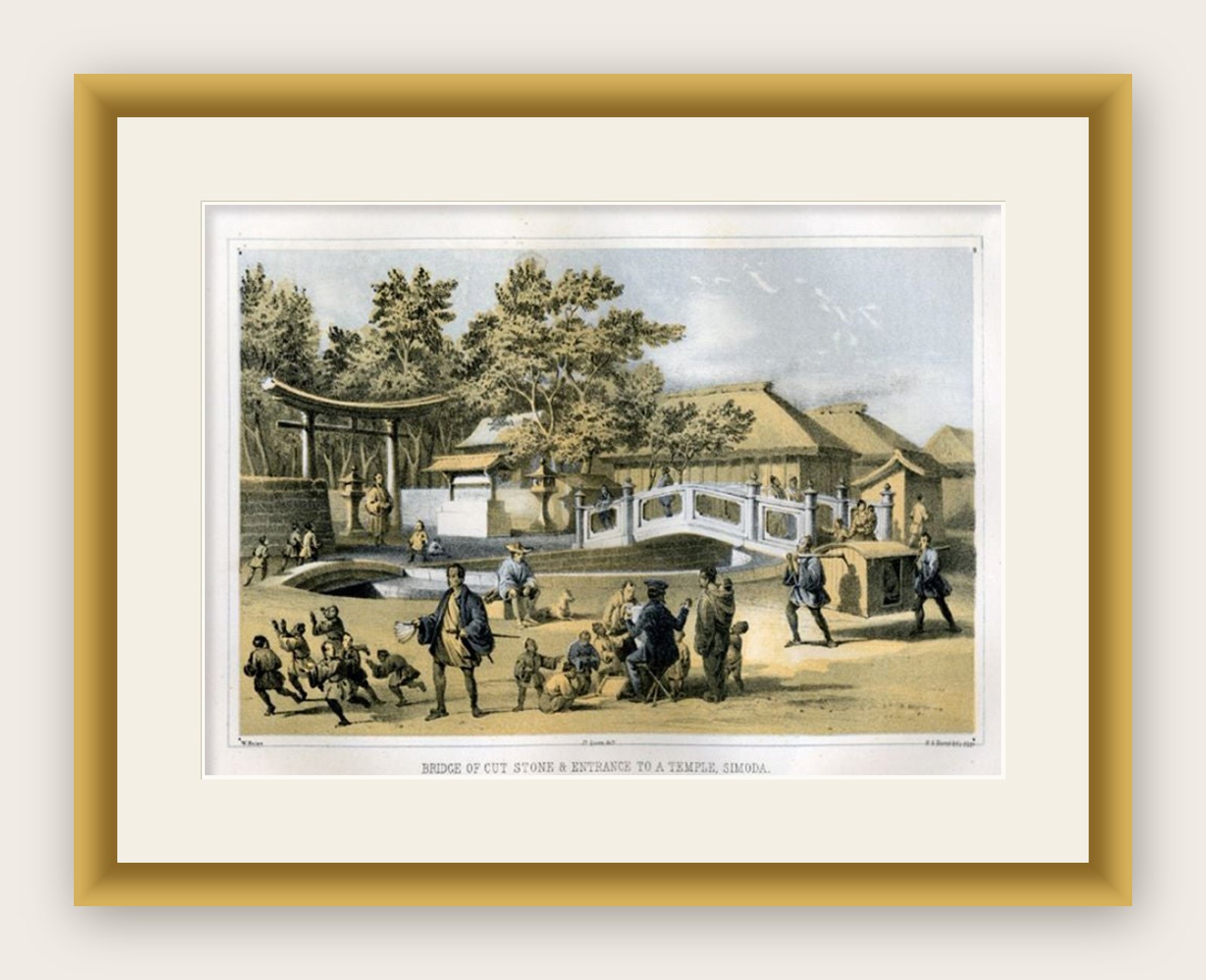
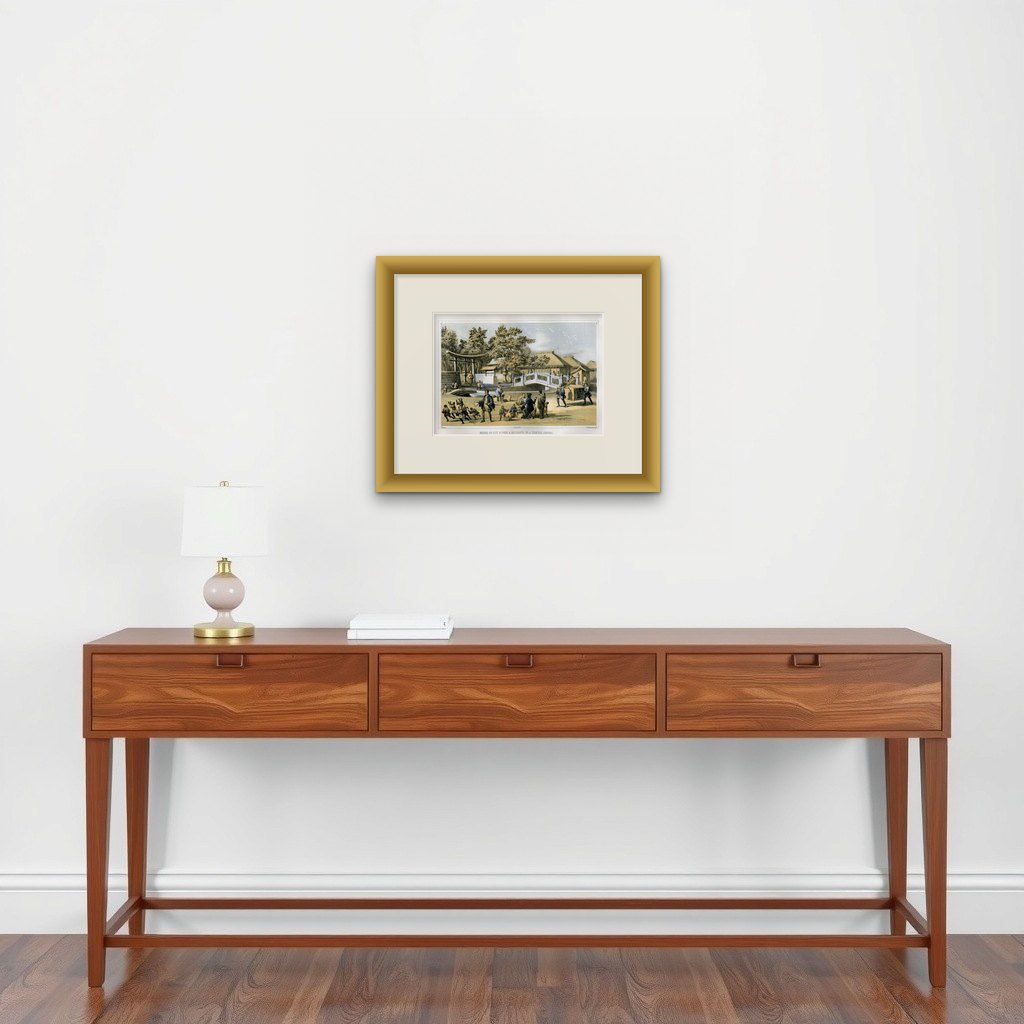

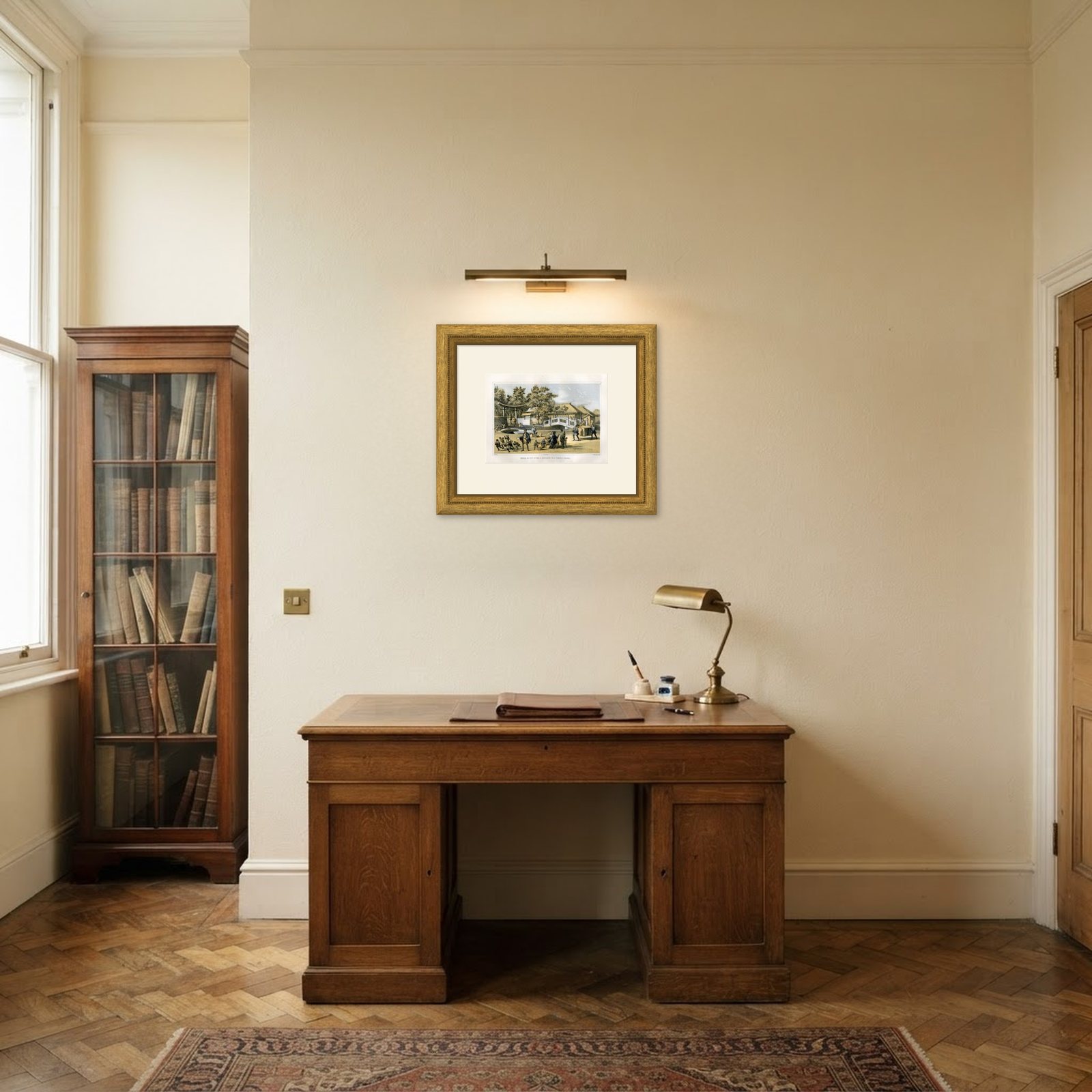
Frame and rooms are illustrations of how the print could look, drawn to its real size; it is sold unframed unless the description says otherwise.
Churches & temples
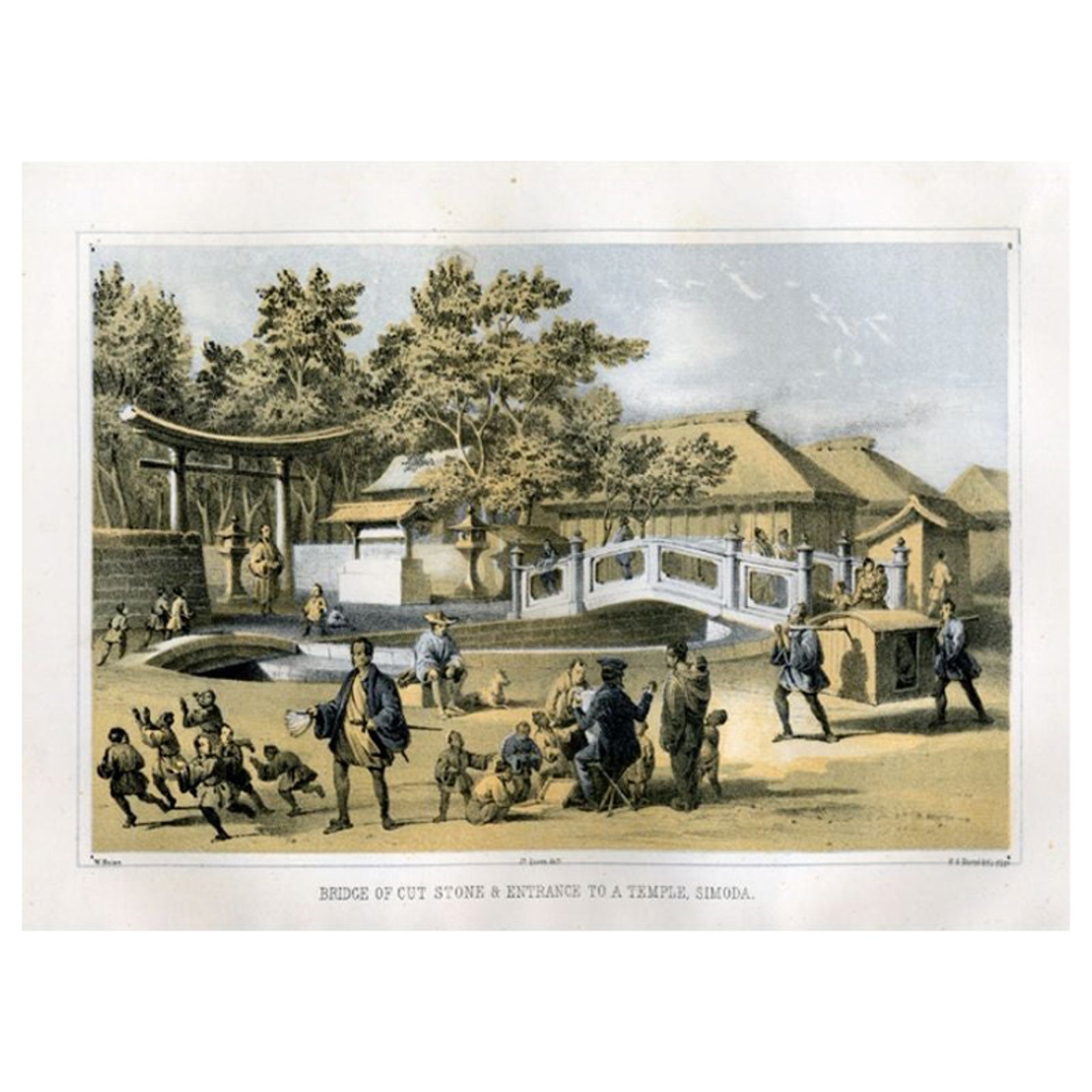
19th Century Temple Entrance and Stone Bridge in Shimoda, Japan, 1856
€230€16130% off
$175 · £135
Original print, not a reproduction
Ships worldwide from the Netherlands, flat or rolled, insured and tracked. 14-day returns.
- Date
- 1856
- Sheet size
- 8.9 × 11.4 in (22.5 × 29 cm)
- Condition
- Good. General age-related toning. Minor foxing, please study image carefully.
- Collection
- Churches & temples
- Era
- 1850 and after, The age of revivals
- Stock no.
- PCT-6956
What the condition grades mean
- Excellent
- Bright and clean, with no faults worth mentioning.
- Very good
- Only light signs of age, such as faint toning.
- Good
- Normal signs of age for a sheet of this period: toning, some foxing, small marks or neat old repairs.
- Fair
- Clear faults such as staining, tears or repairs, priced to match.
Every fault we see is written in the condition note, and the whole sheet is shown uncropped in the photos.
This antique print is titled "Bridge of Cut Stone & Entrance to a Temple," depicting a scene in Shimoda, Japan. The print originates from the book "Narrative of the Expedition of an American Squadron to the China Seas and Japan, Performed in the Years 1852, 1853, and 1854, Under the Command of Commodore M.C. Perry," authored by Francis L. Hawks.
The print shows a detailed view of a temple in Shimoda, with a stone bridge in the foreground. People are depicted engaging in various activities, giving a glimpse into daily life around the temple. Some individuals are seen walking across the bridge, while others are gathered around the entrance area, with children playing and adults conversing. The temple buildings are surrounded by lush trees, and a Torii gate is visible on the left side of the scene, adding to the authenticity of the Japanese setting.
The artwork is a lithograph created by artists W. Heine and E. Brown, showcasing their skill in capturing the cultural and architectural details of the location. The composition and style reflect the mid-19th century perspective of Japan as observed by Western explorers.